
You’ll get a practical, renter-friendly plan that fits tight budgets and small apartments. Start by eliminating what you don’t need, take inventory, then pick the right mix of rods, shelves, bins, and DIY-friendly storage. This simple process gives the best results for daily use.
The post previews cheap wins under $25 and $50 and smart upgrades that need no drilling. I call out pros and cons, who each option fits best, and alternatives when your storage lives in an entryway, bedroom, bathroom, or kitchen.
Expect honest, usefulness-first tips. You’ll solve clutter, wrinkled clothes, shoe piles, and lost accessories without damaging walls. If you want overflow fixes, see a related roundup of small-space solutions for narrow areas.
Key Takeaways
- Follow a three-step process: purge, inventory, choose storage.
- Find renter-safe, no-drill options that remove cleanly.
- Cheap buys can deliver big wins; smart upgrades change daily use.
- Each tip lists pros, cons, and who it’s best for.
- Alternatives cover overflow storage in other rooms.
What “Cheap” vs “Smart” Means for Closet Storage in 2026
Cheap and smart upgrades aim at different problems. Cheap fixes clear visible clutter fast. Smart upgrades reduce steps, improve visibility, and make the layout last without permanent changes.
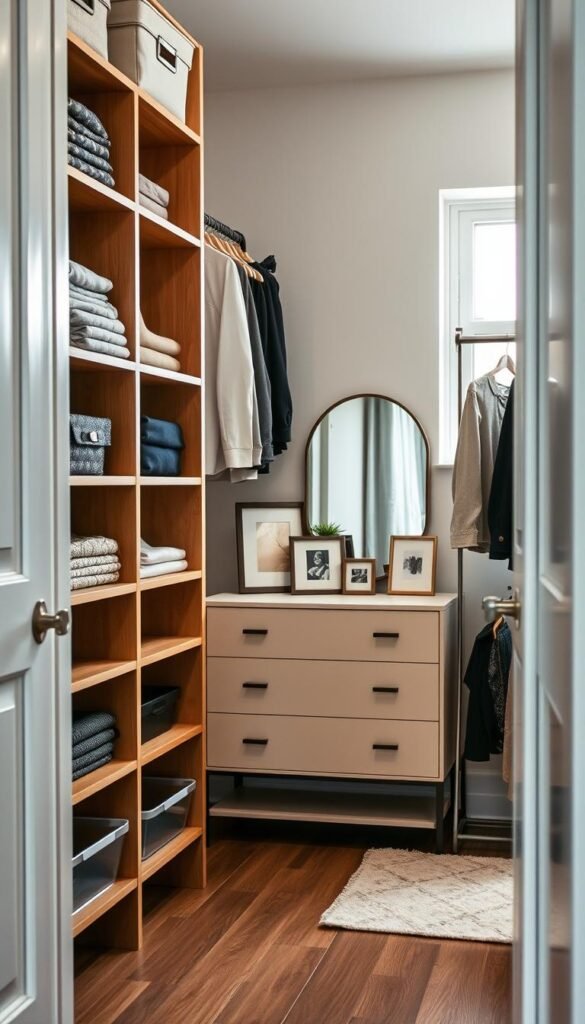
Cheap means quick, low-risk add-ons that you can install in minutes. Expect prices under $25 or under $50 for slightly larger pieces. These are for immediate wins: hang a hook, add bins, or thin nonslip hangers to stop slipping and free rod space.
- Cheap: fast setup, low cost, immediate declutter.
- Smart: planned changes that boost access and visibility over time.
- Renter rules: prefer tension, over-the-doors, adhesive, and freestanding systems.
„Check door clearance first so organizers don’t block swinging or sliding doors.“
Safety matters. Always check weight ratings for hanging items and over-the-door hooks. Evaluate value by setup time, capacity, and how cleanly you can undo it at move-out. For overflow solutions and more renter-safe options, see a helpful home problem solver mix.
Quick Closet Reset Before You Buy Anything
Do a fast reset first. Clearing out frees up real space and makes any buy worth it. Spend 20–30 minutes and follow the steps below.
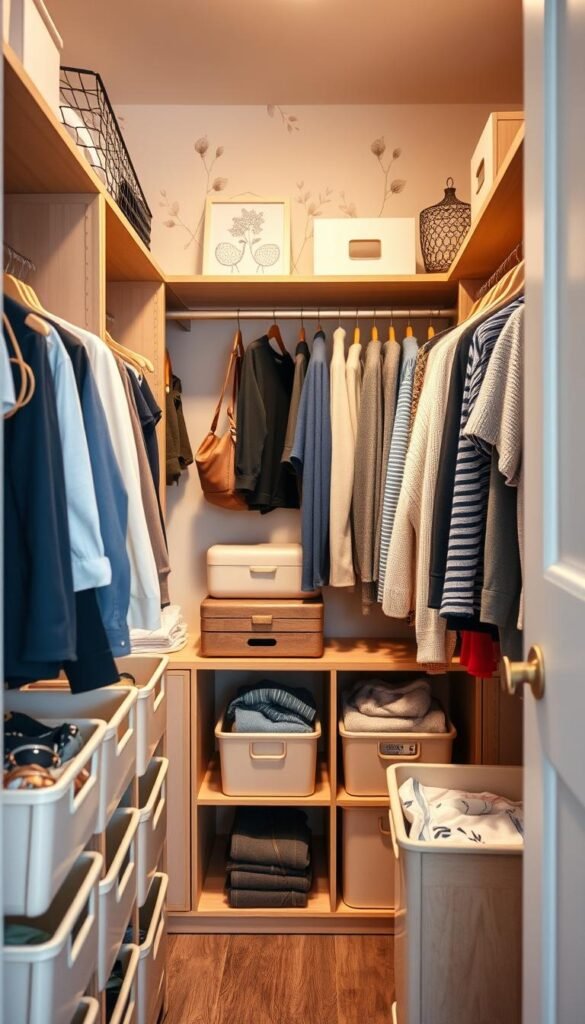
Edit first
Remove what you don’t need. Try a simple rule: if you haven’t worn it in a year, consider donating or selling.
Set aside a small “maybe” box and revisit it in 30 days. This stops the pile of things from sticking around.
Inventory and count
Quickly count hanging items, folded stacks, shoes, and accessories. Write totals on a note.
This simple inventory prevents buying bins or rods that don’t fit your load.
Group by use and create zones
Sort by daily, work, workout, seasonal, and special occasion. Hang wrinkle-prone pieces and fold sturdy tees and sweaters.
Assign zones: hanging, folded, shoes, accessories, and a single overflow bin. Keep everyday items at eye level for easy access.
Label from day one so routines stick and the system stays easy to maintain.
For overflow tips and laundry-friendly storage, see laundry and overflow solutions.
Small Closet Layout Basics That Make Every Inch Count
First, know your type: reach-in, walk-in, or wardrobe. That choice decides what fits and what will feel crowded.
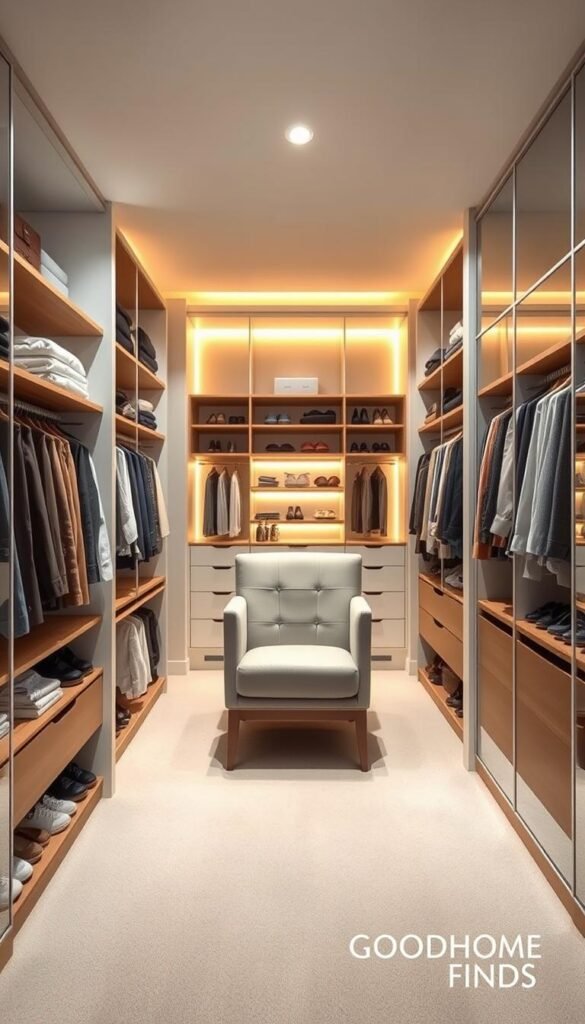
How types and dimensions change what works
Reach-ins are usually 24–30 inches deep and 3–8 feet wide. They favor single rods, shallow shelves, and vertical shoe storage.
Small walk-ins often start near 4×4 feet. They need zoning so shoes, daily wear, and seasonal bins each have a place.
Wardrobe units work well in a room without built-ins. They are freestanding and need door clearance planning.
Design rules pros use
Accessibility: keep daily items at eye level, seasonal items high, heavy items low.
Vertical space: stack shelves and add hanging tiers to free floor area.
Symmetry: matching halves or clear zones help you scan and return things faster.
Pro tip: measure door swing and wall clearance before buying hooks or over-the-door racks.
| Closet Type | Common Size | Best Add-ons |
|---|---|---|
| Reach-in | 24–30″ deep, 3–8′ wide | Double rods, vertical shoe racks, slim shelves |
| Small walk-in | ≈4×4 ft or larger | Zoned shelving, corner towers, motion lights |
| Wardrobe | Varies by unit | Freestanding rods, stacked bins, door hooks |
Measure, Plan, and Pick the Right Storage Mix
Start by measuring the full interior so new pieces actually fit and nothing blocks a door. Use those numbers to guide your planning and avoid returns.
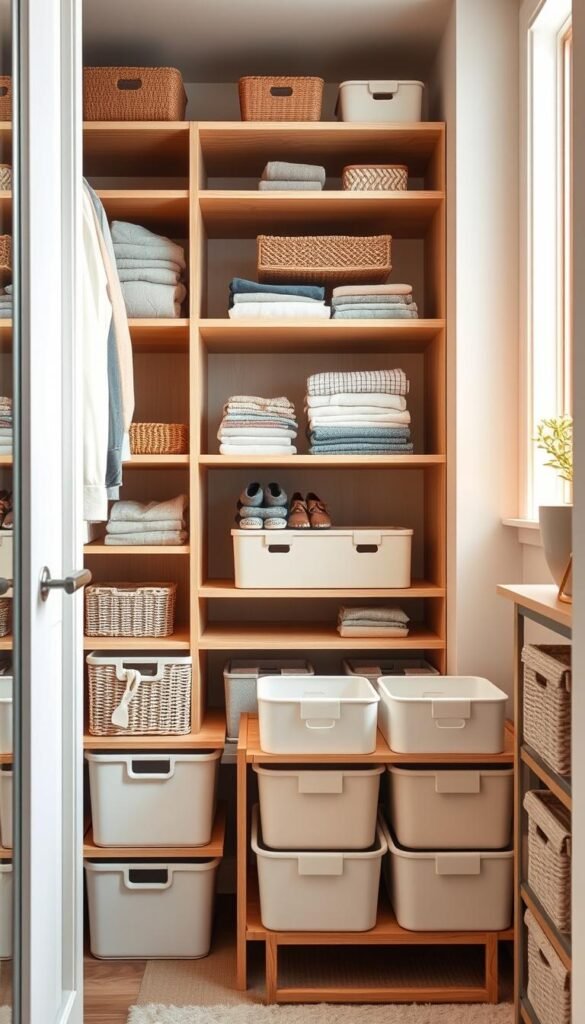
Quick measuring checklist
- Depth: wall to front edge — will a shelf or rack sit flush?
- Width: total opening and any obstructions.
- Height: floor to ceiling and usable hanging height.
- Door swing: include clearance for hinges or sliding tracks.
Pick the right combo
Match function to form. Use rods for wrinkle-prone shirts and dresses. Add drawers for socks and small items. Place cubbies or open shelves for quick-grab items and folded stacks.
Durability and safety: heavy stacks belong on solid shelves or built-in supports, not lightweight hanging fabric.
Renter-friendly tip: choose tension racks, freestanding units, and modular pieces you can reconfigure. For tested product picks, see a useful best organization finds.
Budget Game Plan: Closet Upgrades Under $25 and Under $50
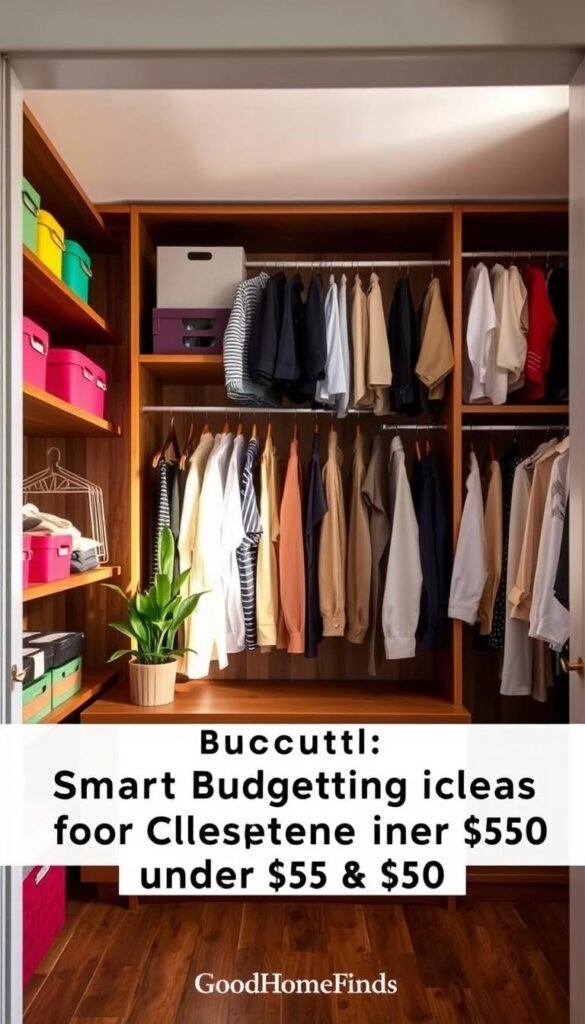
A little money in the right places delivers big wins for tight storage and small spaces.
Priority order: visibility first so you stop rebuying, then capacity, then convenience. Start with items that let you see outfits at a glance. Add bins and a few sturdy hangers next. Finally pick convenience pieces like hooks or a removable shelf.
Safety and durability checks
Durability checklist: smooth edges to avoid snags, stable frames, and realistic weight limits for doors and rods. Check door clearance and adhesive weight ratings if you use over-the-door hooks or Command-style strips.
Avoid overloading rods. Plan around what you store. Modular organizer systems can hold more than clothes — sports gear, cleaning supplies, even extra dishware — when chosen correctly.
When to step up to under-$50
Move to the higher tier when a piece changes layout or adds a new level, such as a double-hang rod or a hanging shelf. These purchases often shift where things live and increase usable vertical space.
Keep breathing room. Leave a little empty space so your system stays easy to use and your daily routine is faster.
| Price | Setup time | What it holds | Best use for renters |
|---|---|---|---|
| Under $25 | Minutes | Hangers, hooks, soft bins, small accessories | Visibility upgrades and light storage |
| Under $50 | 10–30 minutes | Double rods, hanging shelves, stackable bins | Add a second level or more capacity without drilling |
For a deeper look at product trade-offs between cheap and premium options, see the cheap vs premium storage guide.
Cheap Closet Ideas Under $25 That Pay Off Immediately
A few under-$25 pieces will free space and cut morning decisions in half. These buys are renter-friendly and easy to install. They add real capacity and improve visibility without permanent changes.

Slim, nonslip hangers
What: thin velvet or metal hangers that grip fabric.
Pros: save rod space and stop slipping. Cons: some velvet traps lint on knits.
Best for: crowded rods with many shirts. Swap in gradually and hang wrinkle-prone pieces first.
Over-the-door hooks
What: multi-hook strips or single hooks that hang over the door.
Use them for bags, hats, scarves, or a “tomorrow” outfit. Check door clearance and weight limits before loading.
Best for: renters who need quick, no-drill hanging options.
Labeled soft bins
What: collapsible fabric bins for socks, underwear, and seasonal items.
Label with a simple system: category on the short side and a colored dot for quick scanning.
Best for: closets without drawers that need tidy folded storage and fast access.
Under-shelf hanging baskets
Add a new layer under a shelf for tees and workout gear. Choose smooth hooks and check knits for snag risk.
Best for: reach-in spaces that need vertical stacking without added hardware.
Command-style clips for belts and jewelry
Stick small clips to painted walls or the inside door for necklaces and belts. They stop tangles and come off cleanly when you move.
Renter tip: follow package removal instructions and test a small area first to avoid finish issues.
| Item | Typical Cost | Pros | Best Use |
|---|---|---|---|
| Slim nonslip hangers | ≈ $10–$20 (pack) | More rod capacity; fewer slips | Overcrowded shirts and blouses |
| Over-the-door hooks | $5–$15 | No drilling; instant hanging | Bags, hats, outfit prep |
| Labeled soft bins | $8–$20 | Collapsible; neat folded storage | Socks, underwear, seasonal items |
| Under-shelf baskets / clips | $7–$18 | Adds a new layer; renter-safe | Tees, workout gear, jewelry |
Cheap Closet Ideas Under $50 for Small Apartments
You can double storage and improve visibility with a few renter-friendly buys under $50. These choices focus on easy setup, clear sight lines, and stable stacks so daily routines get faster.
Double-hanging with a removable tension rod
Fit a tension rod under an existing top rod to create a second hanging level. It works best in reach-in spaces with enough vertical height.
Pros: big capacity boost without drilling. Cons: avoid long garments below or they will get buried.
Hanging fabric shelf organizer
Use a hanging organizer for sweaters, purses, and rolled clothing. It is cheap and maximizes vertical shelves in the rod zone.
Durability note: expect some sag if you overload; rotate heavy items to lower bins.
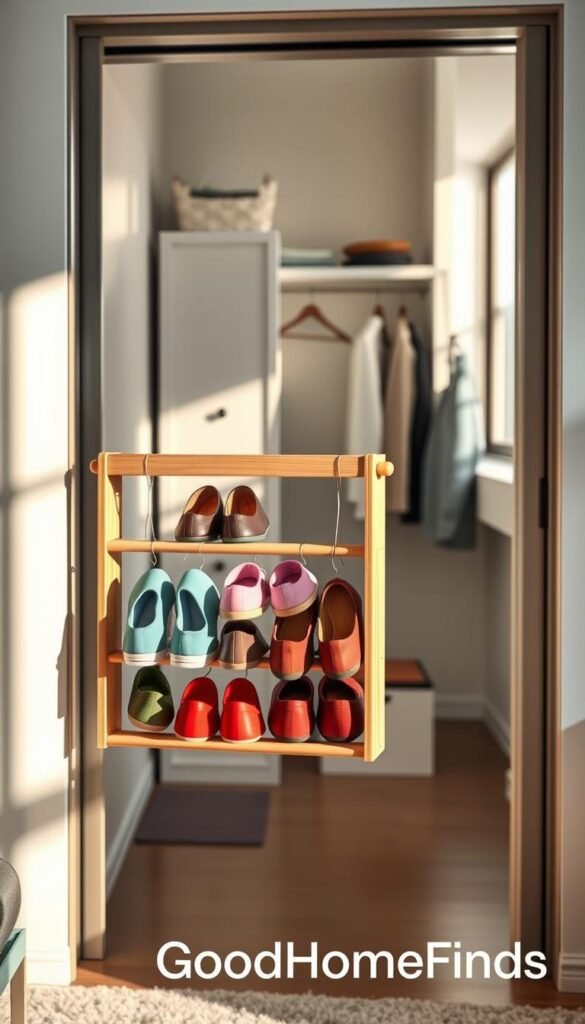
Shoe storage: rack vs vertical cubbies
An entry shoe rack keeps pairs visible and fast to grab each morning. For tight floors, vertical cubbies save footprint while holding more shoes.
Who it’s for: renters with limited floor space who need quick access to shoes and pairs.
Clear stackable bins for folded stacks
Clear bins stop stacks from toppling and make retrieval simple. Visibility matters for daily use. Choose stable lids and non-slip bases.
Quick safety check: pick stable bases, avoid sharp edges, and don’t overload a door with heavy bags plus shoes.
| Solution | Typical Cost | Best for | Notes |
|---|---|---|---|
| Removable tension rod | ≈ $10–$25 | Double-hanging shirts, pants | Works in reach-in closets with tall ceilings |
| Hanging fabric organizer | $15–$30 | Sweaters, purses, rolled clothes | Lightweight; rotate heavy items lower |
| Entry shoe rack / cubbies | $20–$45 | Shoes, daily pairs | Choose vertical cubbies if floor space is tight |
| Clear stackable bins | $8–$30 | Folded stacks, seasonal items | Clear sides speed retrieval; stack securely |
The 5+5 Closet Ideas That Add “Smart” Function Without Permanent Changes
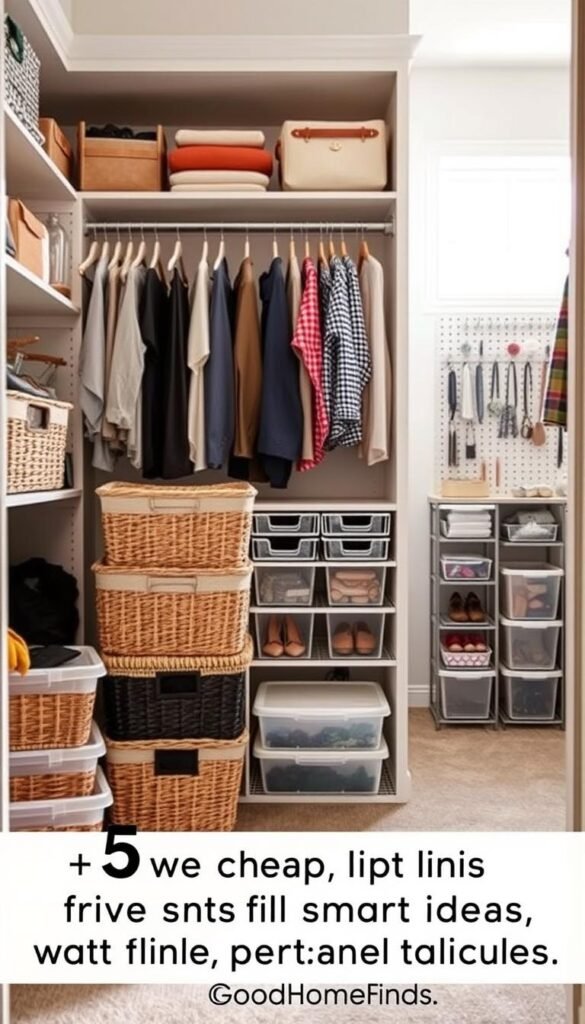
Smart solutions add function, not bulk; they streamline how you find and use items. A practical upgrade reduces steps, boosts visibility, and holds up when you move.
What makes an upgrade smart
Smart means three things: it reduces steps, improves visibility, and stays stable over time. If a piece meets all three, it saves daily effort and is worth the cost.
Choose by apartment size
- Studio: compact, multi-use zones and vertical racks.
- One-bedroom: split hanging vs folded zones for faster access.
- Shared: labeled bins and clear boundaries for personal space.
Plan for growth. Pick modular or tension options so you never buy the same thing twice.
| Apartment Type | Smart focus | Renter-safe options |
|---|---|---|
| Studio | Multi-use vertical zones | Freestanding shelves, tension rods |
| One-bedroom | Dedicated zones and visibility | Adjustable shelving, clear bins |
| Shared | Labels and personal organizers | Over-door hooks, removable dividers |
Smart Closet Ideas for Better Hanging Space and Fewer Wrinkles
A smart hang-and-shelf plan makes mornings faster and keeps garments looking fresh.
Double rod layout for shirts and pants
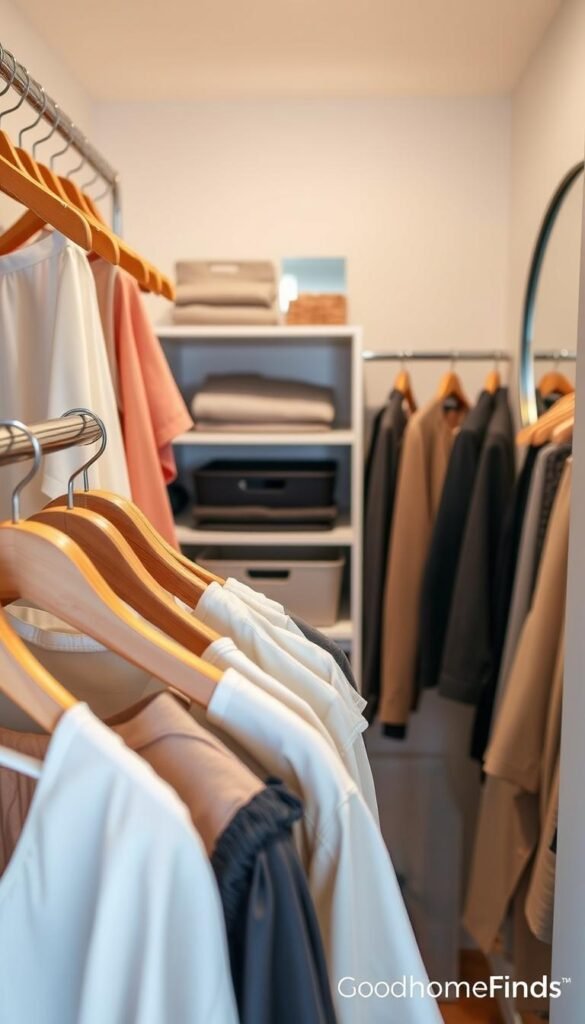
Use a removable or tension-based rod to add a second level. In a reach-in, a double setup can roughly double hanging capacity.
Top rod: hang shirts and delicate tops that wrinkle easily. Bottom rod: place pants, skirts, and durable items folded on hangers.
Quick how-to: install a tension rod under the existing rail, keep hangers thin, and leave breathing room between garments to cut creasing.
High rod + open shelving below for mixed wardrobes
Fit a single, higher rod for long coats and dresses. Install open shelves or clear bins below for folded sweaters and seasonal items.
This keeps long garments uncrushed and gives tidy folded space at waist height for easy access.
Pros, cons, and who it’s best for
| Layout | Pros | Cons / Best for |
|---|---|---|
| Double rod | More hanging space; faster outfit view | Less room for long garments; best for workwear-heavy wardrobes |
| High rod + shelves | Keeps long garments wrinkle-free; adds folded storage | May need a step tool for shorter users; best for mixed wardrobes |
Safety reminder: don’t overload rods. Spread weight, use quality hangers, and leave space so clothing can hang freely.
Smart Closet Ideas Using Modular Systems and Adjustable Shelves
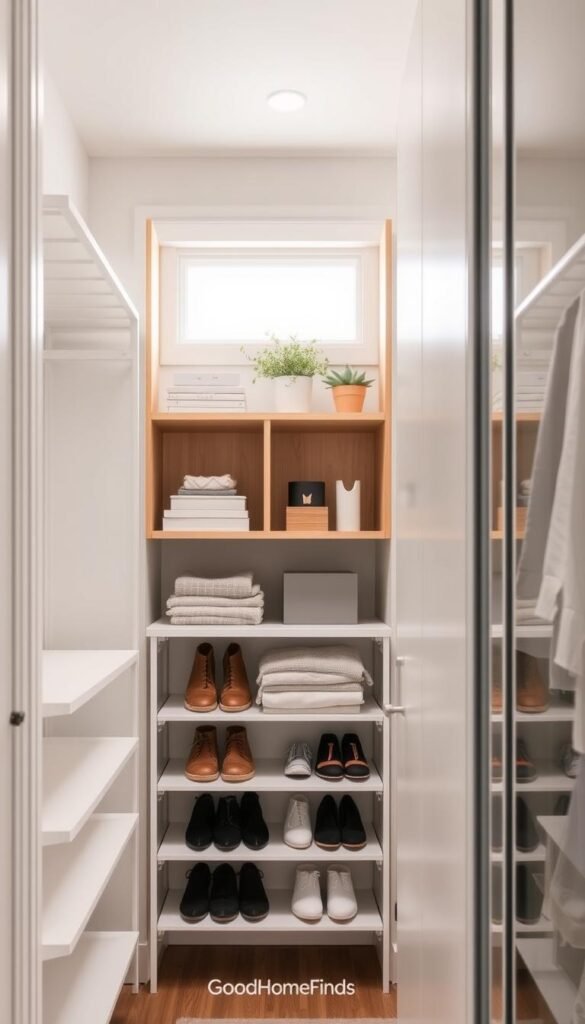
Modular systems let you add structure fast without permanent changes. They work well when your space lacks built-in shelves or drawers and you need a tidy layout quickly. Pick a kit that fits your height and width so nothing blocks doors or vents.
Expandable closet kits use compression poles, freestanding frames, or removable anchors. These options are renter-friendly and easy to remove at move-out. Install principles: measure first, build one side at a time, and keep heavier drawers low.
Corner tower shelving turns dead corners into vertical storage for shoes, bags, or folded shirts. A narrow tower uses a small footprint and makes corner space usable without drilling walls.
Materials matter. MDF looks clean and costs less but swells with moisture. Plywood is the durability sweet spot for long life. Metal wire shelving is tough and adjustable but add liners to protect knits.
Alternatives by closet type
Reach-in units favor symmetry: mirror halves for balance and matching shelves for visual order. Narrow walk-in layouts work best as an L-shape so a clear path stays open and storage sits along two walls.
Safety checklist: anchor freestanding towers, place heavy drawers low, and use anti-tip straps where allowed.
| Solution | Best for | Material notes |
|---|---|---|
| Expandable kit | Missing shelves/drawers | Plywood preferred; compression poles renter-safe |
| Corner tower | Small corners, shoes, bags | Metal wire or plywood; keep heavy items low |
| Freestanding shelves | Reach-in symmetry or L-shape walk-in | MDF for budget; avoid humid spots |
Smart Closet Ideas for Shoes That Don’t Eat Your Floor Space
A clear shoe plan saves minutes each morning and protects floor space.
Shoe tower layout: stack narrow cubbies or a tall tower to pair shoes at eye level. This „pairing fix“ keeps matches together and makes grabbing one pair fast.
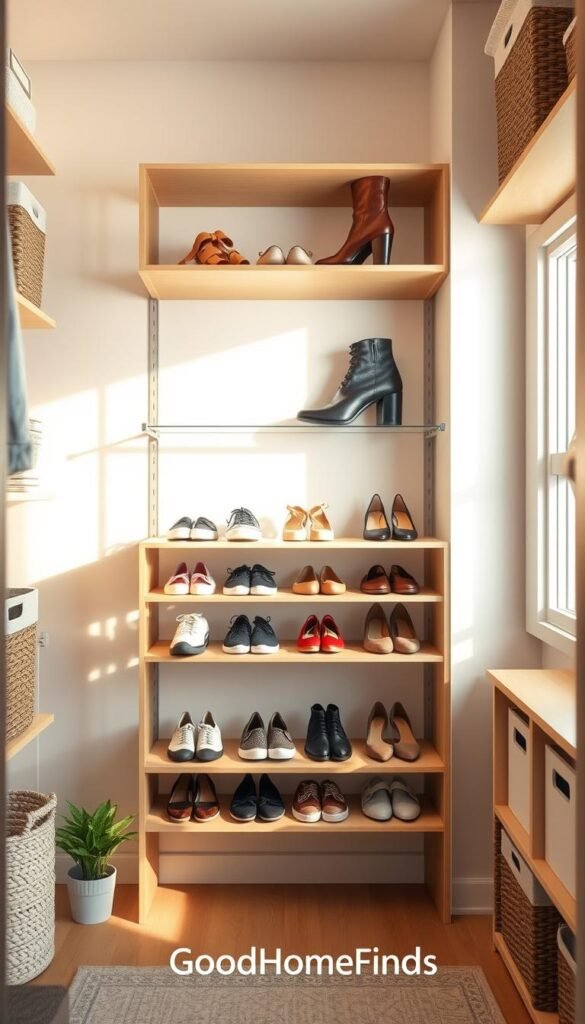
Shelf vs. over-the-door organizer
An under-hanging shoe shelf adds storage inside the hanging zone without touching the door. An over-the-door organizer frees floor but can limit door movement and add weight to hinges.
Open racks vs closed bins
Open racks air out shoes and show pairs instantly. They speed daily use and are best for commuters.
Closed bins cut visual clutter and are tidy in shared rooms. They can hide pairs you forget you own, so label or use clear fronts.
„Keep heavy pairs low and leave a clear path on the floor so daily access stays safe.“
| Solution | Pros | Best for |
|---|---|---|
| Shoe tower | Pairs visible; vertical use of space | Small wardrobes, tight floors |
| Under-hanging shelf | Uses hanging zone; saves floor | Reach-ins with tall hang height |
| Over-the-door organizer | Floor-free; quick install | Short-term renters with sturdy doors |
Renter-safe alternatives: if your door can’t handle weight, use a slim floor rack or vertical cubbies that sit on the floor. Anchor tall towers if allowed and avoid wobbly stacks.
Smart Closet Ideas for Accessories, Bags, and Small Items
Taming small items brings fast, visible order to tight storage spaces. Start with two simple moves: define a shelf zone for folded pieces and build a small accessory wall for grab-and-go gear. Both steps fix daily clutter without major work.
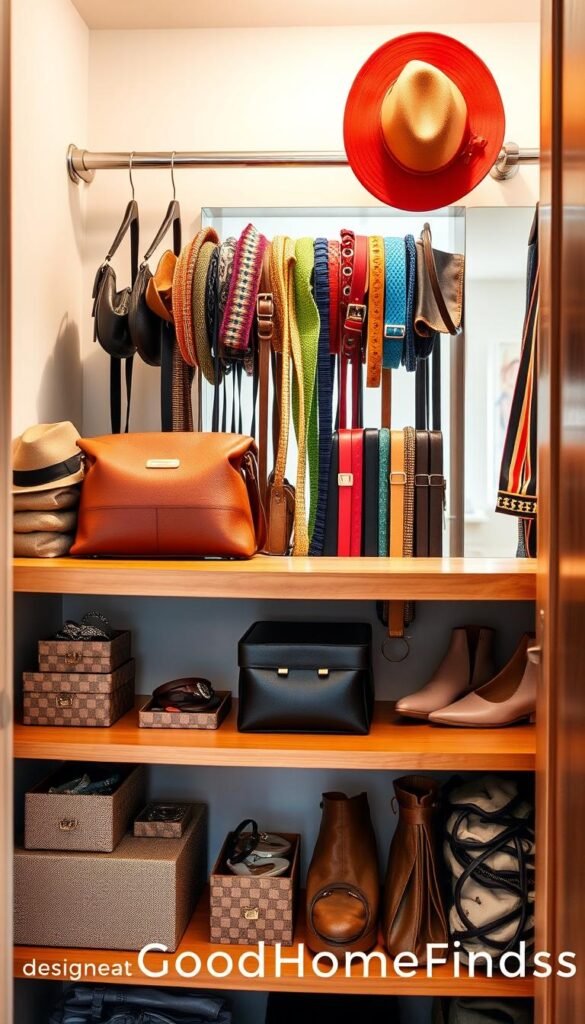
Slim shelf dividers that keep stacks upright
What they do: slide between folded stacks to stop topple and hold handbags upright so you can see options at a glance.
Pros: fast install, neat visual lines, and they preserve shelf space. Cons: check shelf thickness compatibility and remove carefully to avoid chipping paint.
Accessory wall with hooks, bins, and a drop-zone tray
Create a small wall setup using hooks for purses and hats, shallow bins for belts and small items, and a tray for keys and wallet. This turns empty walls into functional zones.
- Renter-friendly mounts: over-the-door racks, adhesive hooks, or freestanding peg systems.
- Best for: people who lose belts, scarves, or jewelry in drawers and need visual cues.
- Maintenance: a one-minute reset each night returns items to their zone and prevents clutter from growing.
„Keep zones small and consistent so daily routines stay fast and tidy.“
| Solution | Pros | Cons / Who it’s for |
|---|---|---|
| Slim shelf dividers | Keep linens, sweaters, handbags upright; clear visibility | Need correct shelf thickness; ideal for folded stacks and small wardrobes |
| Accessory wall (hooks + bins) | Quick access; keeps small items off surfaces | Requires wall or door space; best for commuters and busy mornings |
| Freestanding peg/slot system | No drilling; portable and renter-safe | Takes small floor space; good for renters who can’t use anchors |
Smart Lighting Ideas for Dark Closets (No Wiring Required)
Good lighting turns a dark storage area into a quick, usable space you actually want to keep tidy. A simple LED upgrade helps you find outfits faster and return items to the right zones.
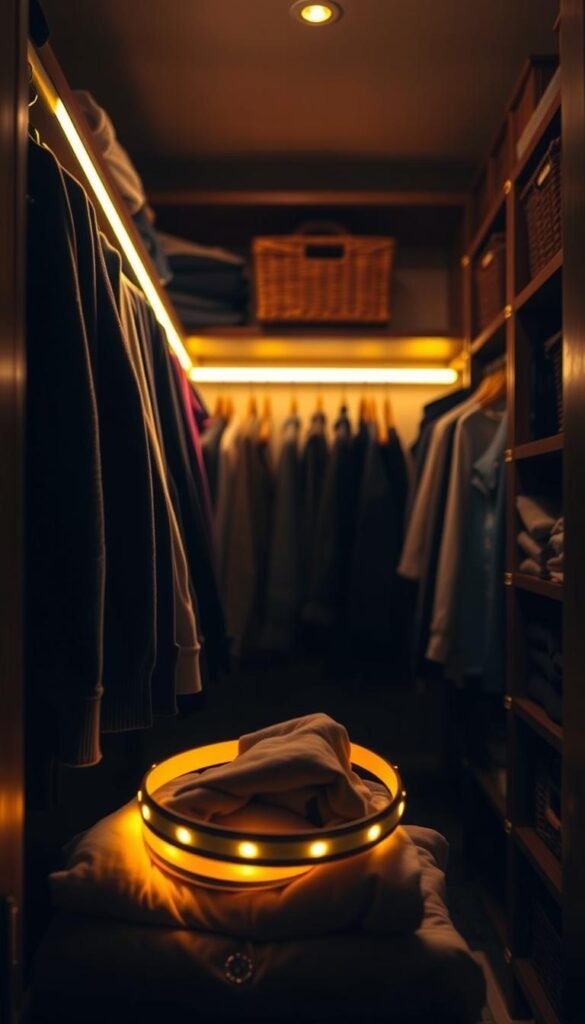
Motion-sensor LED bars: renter-friendly default
What to pick: battery-powered motion-sensor LED bars (for example, MCGOR 10-inch units). They mount with adhesive or magnets, offer multiple brightness levels, and use USB-C to recharge.
Placement tips
Mount lights to avoid shadows on rods. Aim a bar across hanging rails so shirts and rods are lit evenly. Add a strip above shelves and near the shoe rack so folded stacks and pairs are visible.
Maintenance and durability
Make a simple charging routine: detach one bar weekly, charge via USB-C, then swap back. Note motion mode may shorten as the battery drains.
Prep mounting surfaces: clean, dry, and let adhesive cure for 24 hours. Avoid humid or dusty spots to help the mount last and to protect finishes.
Why this is smart: better light saves time, reduces mistakes, and helps you keep zones neat.
For tested, renter-safe upgrades and more small-space fixes see best closet space solutions.
Daily Routines That Keep Your Closet Organized
A simple nightly habit keeps things usable and stops clutter from building up. Do two minutes at night and you’ll avoid big weekend cleanups.
The two-minute reset
Return items to their zones: hang wrinkle-prone clothes, fold sturdy tees, and drop small items into labeled bins. Close the door with a quick visual scan.
Weekly quick check
Once a week tie this to laundry day. Re-hang washed shirts, fold stacks neatly, and pull any mis-shelved pieces back to their zone. This keeps clean clothes from becoming a chair pile.
Seasonal swap and labeling
Use top-shelf bins for out-of-season gear. Label each bin with category + size + season (for example: „Coats • L • Winter“). That way you open fewer boxes and find items fast.
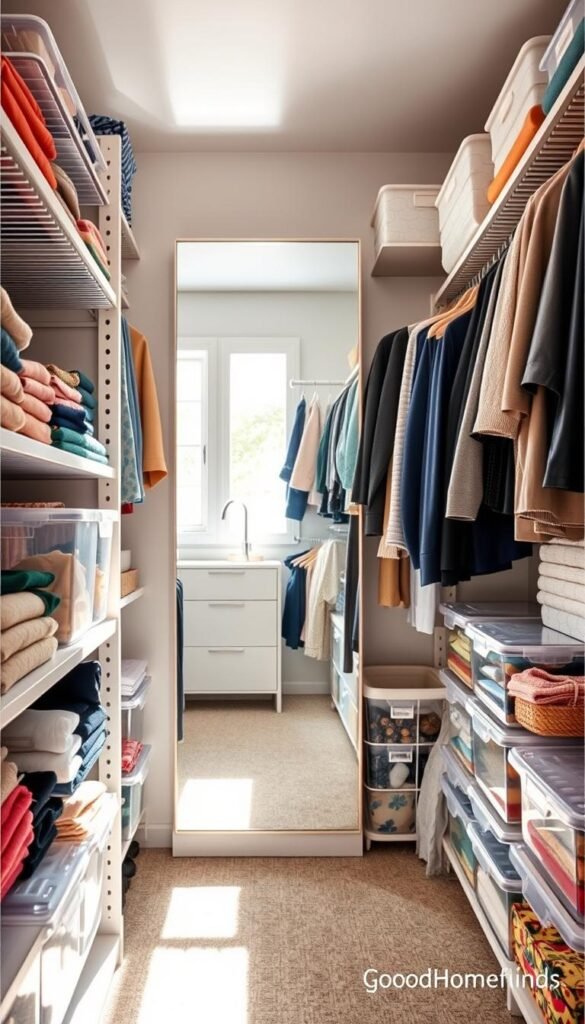
Keep folded items visible. Use dividers or clear bins so stacks don’t slip and things don’t get lost.
Shared-space tip: use color-coded labels or assign small zones so roommates know where each person’s items go. Consistent color or placement helps everyone follow the same system.
| Routine | Time | Why it works |
|---|---|---|
| Two-minute reset | Nightly | Keeps daily access smooth and prevents pileup |
| Weekly check | Weekly (laundry day) | Ensures clean clothes are stored and visible |
| Seasonal swap | Quarterly or twice a year | Top-shelf bins free daily space; precise labels save time |
Small-Space Alternatives Beyond the Closet (When Storage Overflows)
Overflow is normal; smart use of nearby rooms can multiply your usable storage without heavy installs. Use adjacent space to keep daily items handy and to protect the main wardrobe for seasonal or delicate pieces.
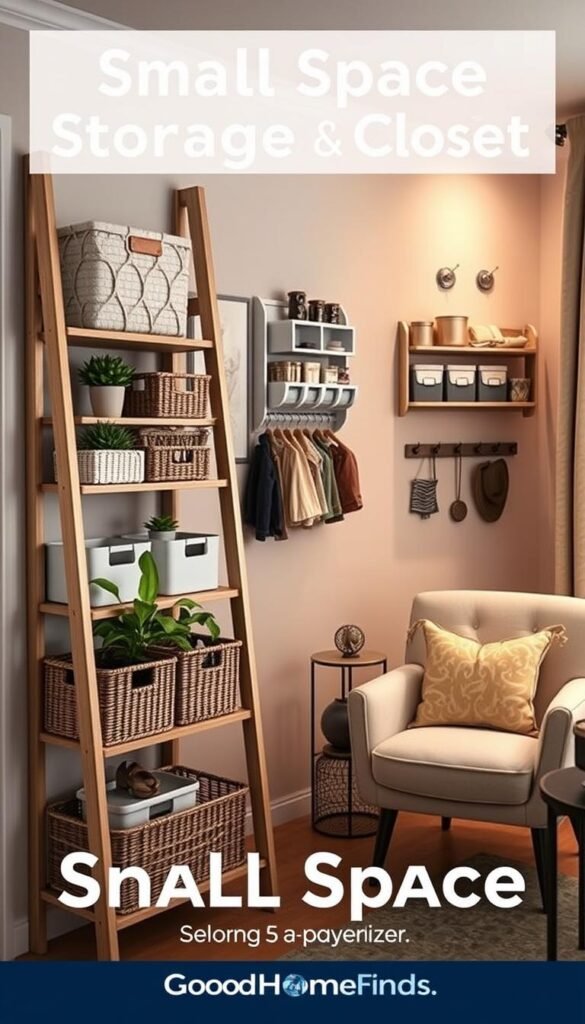
Entryway mini-wardrobe
Set up a row of coat hooks above a slim shoe rack to stop jackets and boots from crowding the main room. Choose over-the-door hooks or adhesive hooks rated for the load for renter-friendly installs.
Tip: keep the rack low enough to stay out of the door swing and pick a slim floor unit that won’t block traffic.
Bedroom wardrobe wall
Use freestanding shelving or a modular unit against a wall when built-ins are missing. Anchor tall pieces and use anti-tip straps where allowed to protect people and pets.
Best for: storing bulkier coats, spare bedding, or sports gear that steals closet space.
Bathroom and kitchen spillover
Move linens and cleaning supplies to a high, dry shelf in the bath or a labeled cabinet in the kitchen. Keep cleaning items separate from food and out of kids’ reach.
Rule of thumb: shift bulky coats, shoes, and rarely used supplies out of the main storage first. Studios should favor vertical racks and tall shelves. One-bedrooms can split categories by room. Shared homes benefit from labeled zones so everyone knows where things belong.
Small change: using nearby rooms for overflow often multiplies usable space without permanent work.
Conclusion
Conclusion
Wrap this up with one simple step: measure, pick a renter-friendly upgrade, and keep a short routine. A well-planned closet works best when you add smart zoning, vertical storage, and better visibility.
Quick recap: cheap fixes give fast wins; smart upgrades change daily use. Act on small pieces like slim hangers or under-shelf baskets, then add a modular shelf or lighting for lasting value.
Before you buy, measure height, depth, and door clearance. Choose one front improvement — visibility, shoes, or lighting — and make it your first win.
Keep the system with a two-minute reset, a weekly check, and a seasonal swap. For more tested small-space finds, see small-space finds.