
This guide helps you build practical systems that work in real life. You’ll get renter-friendly, drill-free solutions for small spaces. The focus is on easy setup, safety, and low-cost picks under $25 and under $50.
Start with decluttering, not shopping. Short, timed sessions help you make steady progress. That approach protects your deposit and keeps things usable day to day.
You’ll learn how executive function challenges affect planning and follow-through. Then you’ll practice a simple flow: understand why clutter happens, do a quick reset, and build systems that stick.
Expect clear, practical tips and product ideas for entryways, kitchens, bathrooms, closets, and laundry. Safety notes and pros/cons help you choose tools that fit your space and routines.
Key Takeaways
- Set realistic goals for a lived-in, durable setup.
- Declutter first; use small timed sessions to build momentum.
- Pick renter-friendly, drill-free solutions that save time.
- Budget suggestions include options under $25 and under $50.
- Focus on daily-use items and friction points to reduce rework.
- Prioritize safety: weight limits, tip resistance, and moisture-proofing.
Why ADHD Brains Struggle With Clutter (and Why It’s Not a Character Flaw)
Clutter often shows up because the systems your brain needs are missing, not because you lack effort. That simple shift matters. It changes the fix from willpower to practical supports you can build.

Executive functions that affect daily tasks
The executive functions that hit organization hardest are task initiation, planning, prioritizing, switching, and emotional control.
When you can’t start, it’s often brain energy, not laziness. The answer is to cut steps and decisions so the job requires less effort.
Working memory and object permanence
If you can’t hold the steps in your head, a multi-step job feels slippery and easy to abandon. Visible storage and labels combat that.
When items vanish into drawers, your brain stops tracking them. Clear bins and open hooks keep important items visible and usable.
Time blindness and funky time horizons
A four-minute chore can feel like forty. That skew makes starting painful. Use short timers and tiny goals to make time feel manageable.
You are not a failure for finding this hard. Many people feel shame about clutter. Practical systems—return paths, reduced friction, and visible homes for items—are the real solution. The rest of this guide shows specific, renter-friendly ways to build them.
| Challenge | What it feels like | Quick fix |
|---|---|---|
| Task initiation | Can’t start or procrastinate | Make the first step tiny; set a 5-minute timer |
| Working memory | Lose steps mid-task | Use checklists and visible stations |
| Time blindness | Under/overestimate effort | Short sprints and clear deadlines |
Mindset Shifts That Make Organizing Possible in Real Life
Treating progress as the goal, not perfection, makes practical systems stick in real life. Perfectionism often causes shutdown. That keeps you waiting for the ideal plan, the perfect container, or a free weekend that never comes.
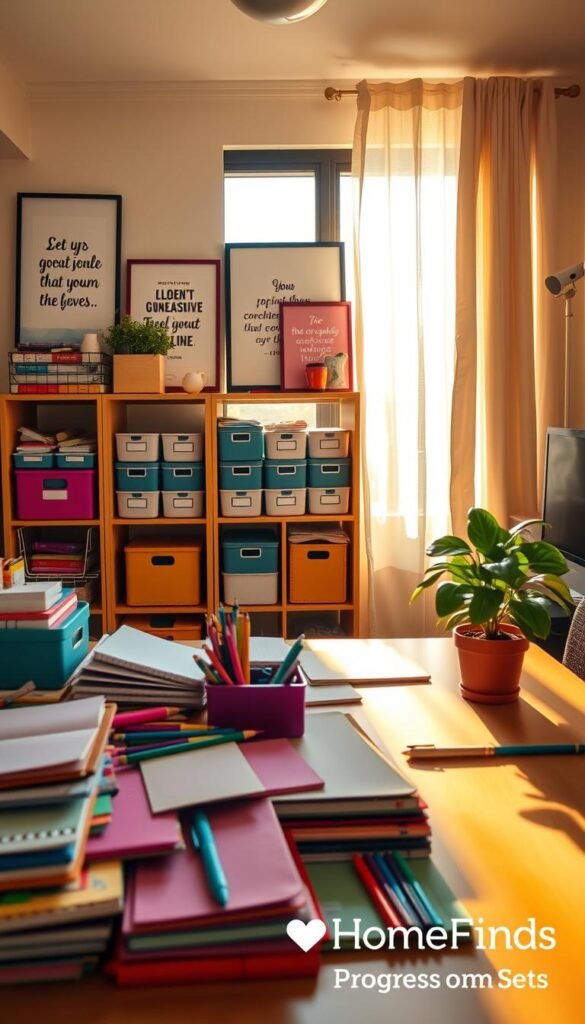
Progress over perfectionism to reduce shutdown and avoidance
Swap perfection for tiny wins. Celebrate a drawer cleared or a surface reset.
Small wins build momentum. They stop avoidance and reduce the chance you’ll abandon the project.
Small goals, monotasking, and using “before/after” photos
Work one drawer, one shelf, or one corner at a time. Monotasking lowers decision load.
Take a quick before photo. Later, the after shot proves progress when your brain might not notice it.
Pick the right time of day and pair tasks with rewards
Choose a time when your energy is highest, even if that’s not morning. Use short timers and music.
Try “just 15 minutes” to start. Pair the sprint with a real reward—podcast, favorite drink, or a break.
- Use a simple first step to make starting trivial.
- Try body doubling with a friend for hard projects.
- Keep routines short and repeatable for maintenance.
| Strategy | Typical time | Best for |
|---|---|---|
| 15-minute sprint | 10–20 minutes | Quick resets, low resistance tasks |
| Before/after photos | 2 minutes | Motivation and tracking progress |
| Body doubling | Varies | Starting or finishing larger projects |
For budget-friendly product ideas and simple picks that actually help get things done, see budget organizer finds.
Quick-Start Reset for Overwhelmed Days (No New Bins Required)
A fast reset beats perfection when the room feels noisy and you need to get started now.
Reset, not perfection. Use a clear, renter-friendly sequence so you don’t buy anything or make huge decisions.
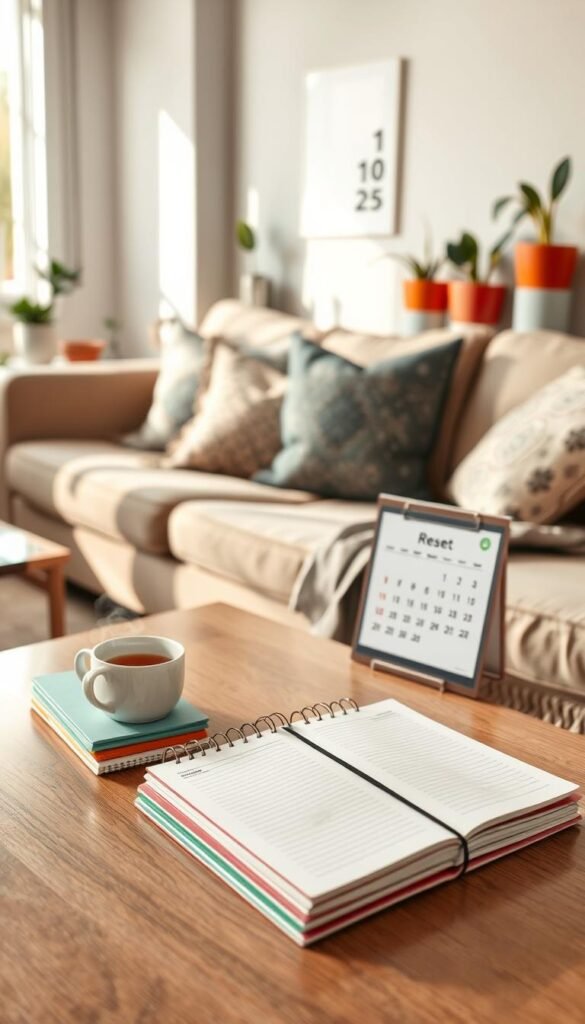
Trash, then food and dishes, then clothing
Start with trash. Removing obvious trash creates instant space and reduces visual clutter without sorting.
Next clear food and dishes. Washing or bagging food prevents smells and pests that make tasks harder.
Finish the sprint by moving clothing into one consistent spot. That single move calms the room fast.
The timer method: short sprints to beat task resistance
Set a timer for 10–15 minutes and work only until it rings. Rest five minutes, then decide whether to run another sprint.
Use a “goes somewhere else” container for items that belong in other rooms so you don’t leave the task.
- End step: Return obvious items to their spot and stack the rest neatly in one place.
- Daily maintenance: One 10-minute nightly reset keeps tomorrow from starting in overwhelm.
adhd home organization Systems That Stick in Small Apartments
Make the easiest action the default action. In a small space, where you put things should match where you actually drop them. That reduces friction and protects your routines.
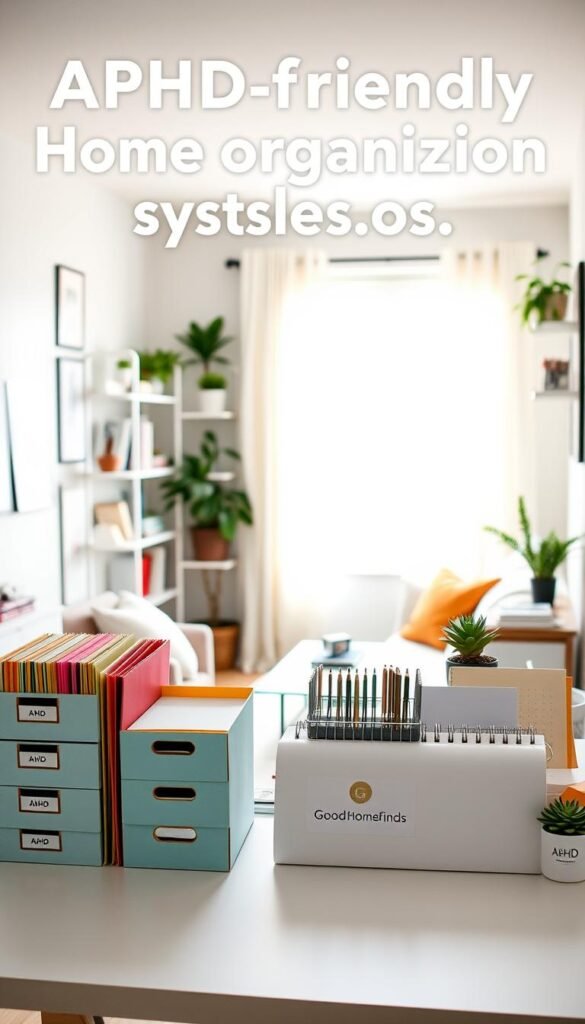
“Give everything a home” and keep it where you naturally use it
Track where you leave items for one day. Note where keys, wallet, and mail land. Then place a spot there for them.
The rule: the item’s home is the place you use it, not where you wish you used it. That small shift helps your brain return stuff without extra thinking.
Launch pad for keys, wallet, bag and daily essentials (no drilling)
Use a narrow console, slim shelf, or stick-on hooks by the door. Add a small tray for loose items and a catch-all bowl for keys.
Pros: faster mornings, fewer lost keys. Cons: it can turn into a pile unless you cap what lives there.
DOOM baskets and “not sure” boxes
Use one labeled basket for “Didn’t Organize, Only Moved” stuff. Keep it contained and limited in size.
For uncertain items, seal a dated box and set a 3–6 month review. Only reopen on the date. This stops repeated decisions and saves time.
Visible labels and clear containers to reduce re-cluttering
Clear containers plus big labels let returning items take seconds. Your brain does not need to remember where things go.
- Quick daily habit: 2–5 minutes to return the top 10 items to their homes.
- Best for: renters, small-space setups, and low-effort maintenance.
| System | Benefits | Best for | Notes |
|---|---|---|---|
| Launch pad (tray + hooks) | Less searching, routine build | Small entryways | Limit to essentials; tidy weekly |
| DOOM basket | Contains clutter, quick reset | Shared spaces, studios | Empty monthly; cap size |
| Not sure box | Stops repeated decisions | When you keep hesitating | Date and seal for 3–6 months |
| Clear containers + labels | Faster returns, visible items | Drawers and shelves | Readable labels; use consistent bins |
Budget-Friendly, Drill-Free Product Toolkit (Under $25 and Under $50)
Declutter first, then buy storage that matches real items and real routines. That rule prevents wasted money and keeps your space useful. Do a five-minute sweep before shopping.
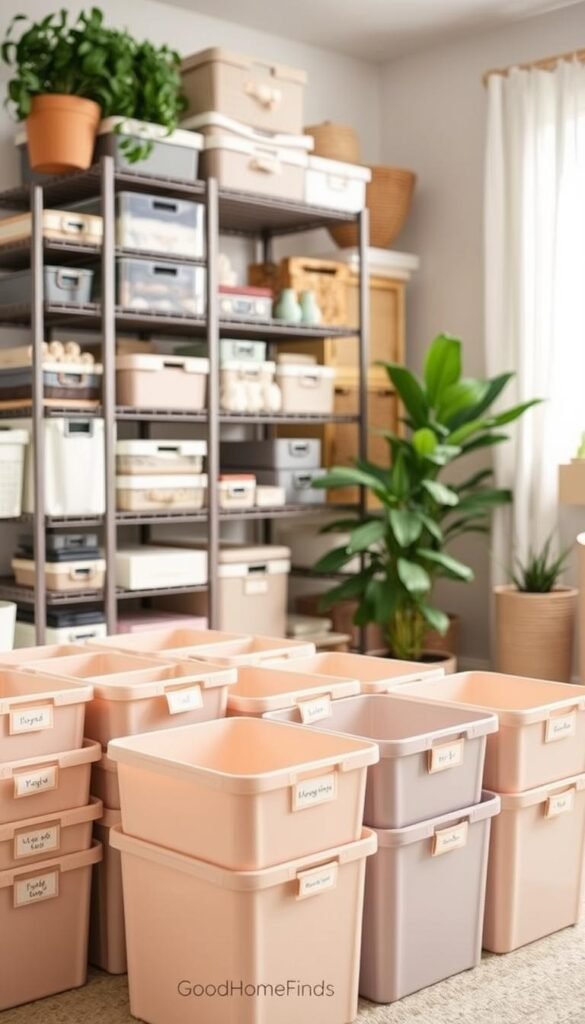
Under $25 essentials
- Adhesive hooks — check weight limits; great for keys and light bags.
- Over-the-door pocket organizers — clear sight for small items and supplies.
- Drawer dividers — make a messy drawer simple to scan and use.
- Small open bins — fast drop-in spots for daily items.
Under $50 upgrades
- Lidded baskets — hide overflow and calm visual clutter; add a label for quick returns.
- Tiered counter shelves — stack vertically to save space on counters and shelves.
- Slim rolling carts — create mobile centers; choose locking wheels to avoid tip risks.
- Basic shoe racks — keep entryways clear and prevent piles by the door.
Safety, setup, and maintenance
Quick safety checks (60 seconds): confirm weight ratings, avoid overloading adhesive hooks on textured walls, add non-slip pads, and pick carts with a wide base and wheel locks.
Easy setup means fewer parts, no tools, and clear instructions you can finish in one sitting. For maintenance, label bins, cap each basket, and do a 5–10 minute weekly reset per zone.
For a more detailed look at cost choices, see a practical comparison of storage cheap vs premium.
| Room | Recommended item | Approx. cost | Setup time |
|---|---|---|---|
| Entry | Adhesive hooks + tray | Under $25 | 10 minutes |
| Kitchen | Tiered shelf or clear bins | $25–$50 | 15–30 minutes |
| Bathroom | Over-the-door pocket organizer | Under $25 | 5–10 minutes |
| Closet/Other | Slim rolling cart or lidded basket | $30–$50 | 10–20 minutes |
Kitchen Organization for ADHD: Faster Meals, Fewer Dishes, Less Visual Clutter
When you stack upward, counters stay usable and mornings go faster. Start by clearing a 12–18 inch work zone and giving daily items a vertical home.
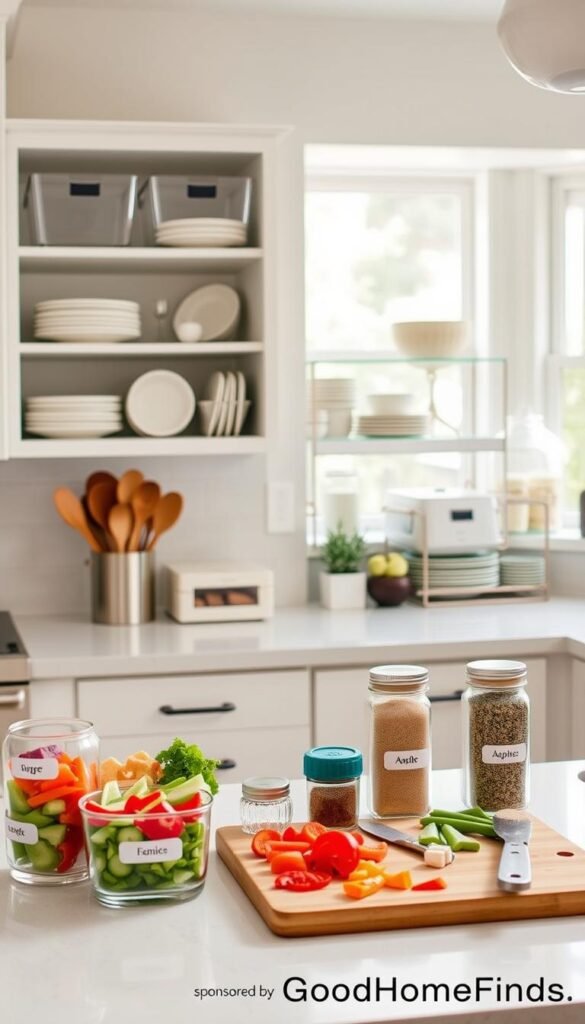
Countertop: make horizontal surfaces vertical
Use a small tiered shelf or riser for coffee, toaster, and frequently used jars. That moves things off the main work plane and keeps the counter clear for cooking.
Pantry and fridge zones with clear bins
Define simple zones: “breakfast,” “snacks,” “coffee/tea,” and “cooking basics.”
Clear containers and labels like “Grab-and-go” or “Dinner helpers” prevent food from vanishing behind other items.
Drawer and cabinet shortcuts
Put one divider in a drawer for utensils. Add one small bin for the tools you actually use. Keep scissors and a pen in a single, visible spot so they don’t roam.
„Simple zones reduce decisions. Your brain spends less energy when items live where you use them.“
Low-effort dish routine and quick maintenance
Keep the sink clear enough to use. Run the dishwasher at night and unload in the morning with a 4–5 minute timer.
Do a weekly 10-minute expired-food + wipe-shelf reset to stop clutter from creeping back.
Pros / Cons and who it’s best for
- Studio kitchens: Pros — vertical storage saves space. Cons — fewer distinct zones; limit items per shelf.
- Shared family kitchens: Pros — assigned shelves cut confusion. Cons — requires clear labeling and a “no mystery pile” rule.
| Goal | Best product | Why it helps |
|---|---|---|
| Free counter space | Tiered shelf / riser | Makes surfaces vertical; keeps daily items visible |
| Stop hidden snacks | Clear pantry bins + labels | Shows contents; reduces wasted food |
| Faster meal prep | Drawer dividers + small tool bin | Limits choices; keeps essentials at hand |
Practical picks: low-profile risers, clear plastic bins, and a simple drawer divider. For compact product ideas for small kitchens see best small kitchen solutions.
Bathroom, Closet, and Laundry Systems for Busy Weeks
Small, moisture-safe changes in the bathroom and closet cut daily friction and keep your routines usable.
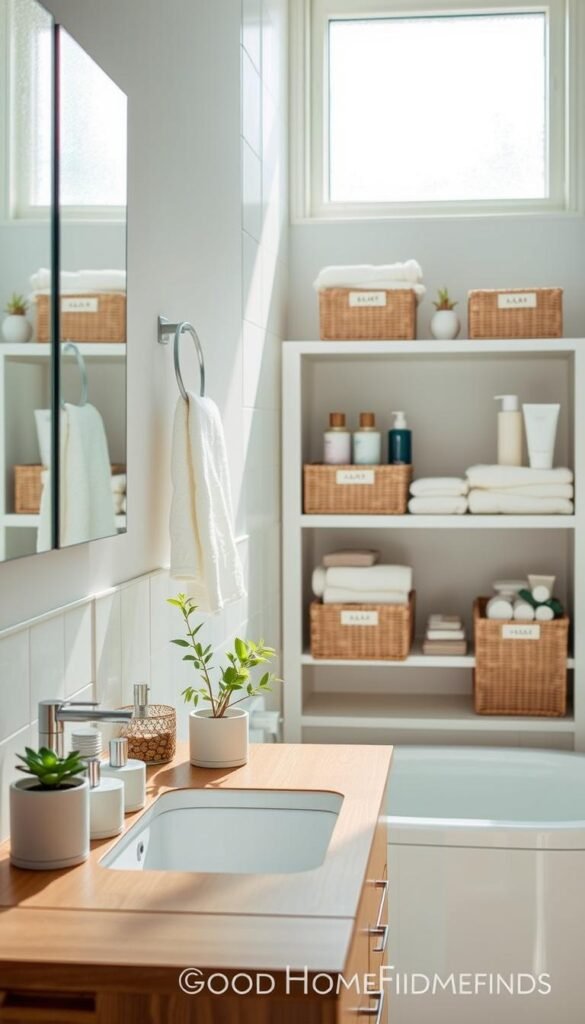
Bathroom
Pick drill-free, moisture-resistant storage. Use plastic under-sink bins that won’t warp and a draining shower caddy for soaps and bottles.
Category zones—daily skincare, hair, meds, and cleaning supplies—keep counters clear and stop items from migrating between places.
Closet
Use open bins for everyday things: gym gear, pajamas, and winter accessories. Clear boxes store off-season items so nothing disappears.
Simple rule: if a bin won’t close or a shelf bulges, you have too much in that category.
Laundry
Place the hamper where clothes actually come off. Two bins (lights/darks or wash-now/rewear) cuts sorting time and pile-ups.
Try one laundry start per day or a timed „Laundry Monday“ block. Short timers and theme days keep the task doable.
Alternatives by apartment size
- Studio: slim hamper and under-bed bins for overflow.
- One-bedroom: closet laundry center with labeled shelves.
- Multi-room/roommates: assign zones and label shelves to prevent mix-ups.
Maintenance: a 5-minute nightly clothes sweep and a 10-minute weekend reset keeps systems working without a full reorg.
| Area | Drill-free pick | Why it helps | Quick routine |
|---|---|---|---|
| Bathroom | Plastic under-sink bins + draining caddy | Resists moisture; visible supplies | 2-minute nightly putaway |
| Closet | Open bins + clear boxes | Fast access; clear off-season storage | 5-minute weekly sort |
| Laundry | Slim hamper + two labeled bins | Reduces sorting friction; matches flow | Start one load per day |
| Shared spaces | Labeled shelves or assigned baskets | Prevents mix-ups; keeps peace | 10-minute roommate reset weekly |
Conclusion
Choose one tiny project today and practice the same steps each time. Pick a drawer, one basket, or a single room surface. Run a short timer, sort fast, and stop when the bell rings. Small, repeatable wins train your brain and build steady progress.
Keep a nightly 10-minute close-down to return the top items to their spots. Protect your launch pad for keys and daily things by capping what lives there. Use DOOM baskets and dated “not sure” boxes as pressure valves, not guilt traps.
Measure before you buy and favor renter-friendly, safe tools. For product ideas that help get this done, see best organization finds. Next step: pick one zone, pick one tool, set one short timer, and ask a friend to body double if you need help.