You’re lucky enough to have an outdoor spot, even if it’s just 24–60 sq ft. This section shows renter-friendly, low-cost picks to make that area feel like an extension of your apartment. Each suggestion focuses on real use, not hype.
Balcony finds here means small, affordable upgrades you can order fast (often on Amazon) and use daily. Most items are under $25. When something costs more, I’ll note why it’s worth the extra for safety or durability.
Expect honest guidance on why it’s useful, who it’s for, and what to avoid. I judge picks by practicality, time saved, and how well they solve small-space problems.
Preview categories: floor fixes, privacy, lighting, foldable furniture, wall or rail shelves, vertical plants, and compact storage. You don’t need a full makeover—just a few smart pieces to make the space usable for coffee, reading, or simple dining.
Key Takeaways
- Focus on practical, renter-friendly items that save time and space.
- Most picks are under $25; higher-cost items are flagged for value.
- Each entry includes uses, audience, alternatives, and safety checks.
- Avoid flimsy clips, non-weatherproof fabric, or anything that can damage rentals.
- Treat the area like an outdoor room: cohesive, uncluttered, and functional.
How to Choose Balcony Finds That Actually Work in a Small Outdoor Space
Start by treating your outdoor spot as a tiny extra room, not an afterthought. Make a simple decision framework: measure, pick anchors, add one comfort layer, and skip gimmicks that look good but never get used.
Avoid two big mistakes: packing the area with too much furniture so it becomes an obstacle, or leaving it empty and unused. Pick 2–3 anchor pieces — floor, seating, and a surface — then add one comfort item like a lamp or a textile.

Match materials and tones to your interior so the doorway feels seamless. A practical shortcut is one main color and one accent color. That keeps budget finds looking intentional and curated, a tip any interior designer would endorse in plain language.
- Measure door swing, walking path, and railing height/width for clamp-ons.
- Keep tall items to the back or side so the view stays clear.
- Safety basics: never block exits, don’t overload railings, and secure light items for wind.
Renter-Friendly Interlocking Deck Tiles for a Better-Looking Balcony Floor
A quick layer of interlocking deck tiles transforms sad concrete into a finished floor in an afternoon. These snap-together pieces are renter-friendly and removable, so you can upgrade without altering the unit.

Why it’s useful
Instant visual upgrade: tiles hide stains and give the floor a cohesive look. They also make the surface more comfortable underfoot and stop chair legs from wobbling.
Real-life example
In a tiny apartment balcony you can lay a 3×3 grid in under an hour. That small change defines a seating zone and makes the area feel like an extension of your living room.
Price-value evaluation
Budget plastic or composite packs cost more than a runner but are quick, clean, and removable. Most affordable sets sold on Amazon come in 4–9 tile packs; buy enough to cover your seating area.
| Type | Typical cost (pack) | Pros | Cons |
|---|---|---|---|
| Plastic composite | $20–$40 | Lightweight, clip system, cheap | May warp, color fade |
| Wood-look/engineered | $35–$70 | Better look, warmer underfoot | Heavier, pricier |
| Rubber anti-slip | $30–$60 | Slip resistant, cushioned | Less „deck“ look, heavier |
Pros and cons
- Pros: renter-friendly install, instant finish, defines space, more comfort.
- Cons: cheap sets can trap water, fade, or show uneven concrete beneath.
Who it’s for
This is for renters who want a cleaner outdoor spaces look without permanent work. It also suits anyone tired of a grimy floor in a small balcony.
What to avoid
Skip indoor tiles outdoors, slick finishes, and options without drainage channels. Avoid very thin cheap tiles if your surface is uneven.
Alternatives and cheaper options
Consider an outdoor runner, a weather-rated peel-and-stick if truly rated for outside, or a simple outdoor mat for a low-cost walking strip.
Safety and quality notes
Check slip resistance and drainage. Confirm the tile system lets water pass through. Keep total added weight reasonable and follow any building load limits.
Outdoor Rug or Runner to Make Concrete Feel Like a Living Room
Roll out a runner and you instantly create a defined, cozy spot for morning coffee. A small outdoor rug visually softens hard concrete and makes the area read like a tiny living room.

Why it’s useful
Comfort and daily use: a quick-dry rug is nicer on bare feet, cuts echo off the floor, and makes you use the space more. Textiles add personality and a splash of color to tie indoor decor to your outdoor space.
Price-value evaluation
For under $25 you can find a narrow runner that defines a path and protects chair legs. Most budget options are lightweight and roll up for storage.
Pros and cons
- Pros: easy-clean, quick-dry, adds decor and warmth without taking room for furniture.
- Cons: cheap mats may trap water, mildew, or curl in heat. Patterns can fade in strong sun.
Who it’s for
This is ideal for renters and anyone who wants comfort without tools. It suits small balconies and narrow spots where a full refinish isn’t possible.
What to avoid
Avoid rugs not labeled outdoor-safe, rubber-backed mats that trap moisture, and fabrics that stay wet and become musty.
| Option | Typical cost | Best use |
|---|---|---|
| Thin polypropylene runner | $15–$25 | Narrow paths, quick-dry |
| Woven outdoor mat | $20–$35 | Colorful decor, removable |
| Foam pad (short term) | $10–$20 | Comfort underfoot at a single spot |
Balcony Finds That Add Privacy Without Blocking Your View
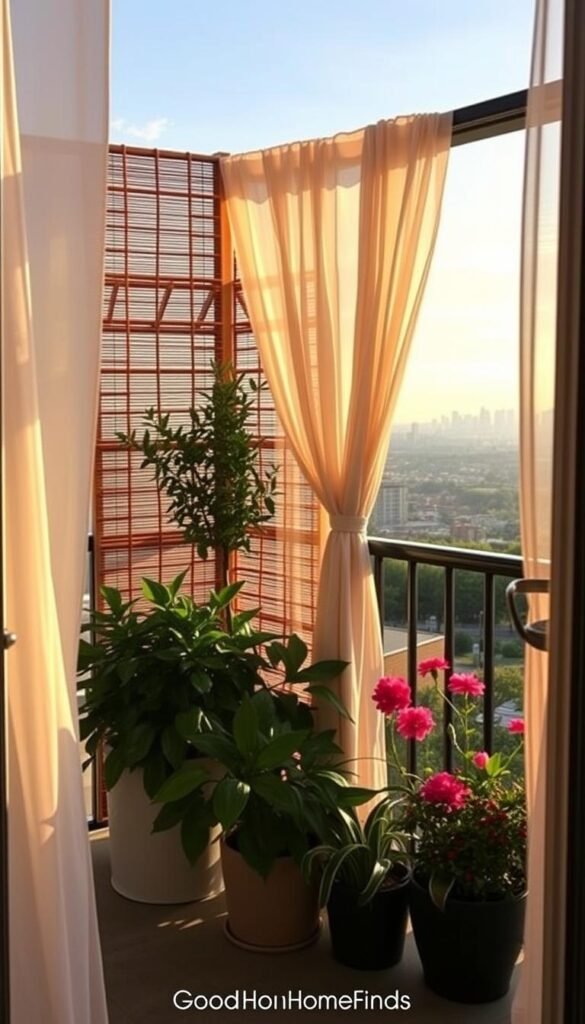
Small changes can give you privacy and keep the view you love, without permanent work. Think of this as adding a thin wall layer that keeps sightlines and airflow while cutting down on exposure.
Bamboo or reed half-screens for railings
How to use: attach a bamboo roll with zip ties for a quick half-height screen. It creates a fence-like edge that still lets light through.
Outdoor curtains and simple fabric panels
Use a tension rod, clamp frame, or tie fabric to posts for a softer look. A single panel gives filtered light and a cozier feel without drilling.
Why it’s useful
You’ll sit outside more when you’re not on display. Privacy makes this small outdoor space feel like a true extension of your home.
Who it’s for
This works for renters facing nearby units or anyone using small spaces for reading, coffee, or dinner.
What to avoid
- Avoid brittle bamboo that cracks, indoor curtains that mildew, and loose screens that flap in wind.
„Create a boundary layer, not a full enclosure.“
Safety and quality notes
Secure fastenings, check wind load, and never block fire exits. Make sure nothing can detach and fall for your safety and your neighbors‘.
Solar String Lights and Battery Lanterns for Cozy Outdoor Spaces
A simple string of lights and a battery lantern change how you use evenings outside. Pick options that need no outlet so you can install in minutes and enjoy the space after dark. This is one of the cheapest, highest-impact upgrades for small areas.

Why it’s useful
Good lights make your balcony usable after work. They extend usable time and lift mood for solo reading or casual dining.
Real-life example
Hang solar string lights along the railing and place a battery lantern on the table. Suddenly weeknight dinner under the stars feels effortless. No cords, no fuss, and it takes minutes to set up.
Price-value evaluation
| Type | Typical cost | Best use |
|---|---|---|
| Solar string lights | $15–$25 | Ambient edge lighting |
| Battery lantern | $10–$25 | Table light, adjustable levels |
| Combo pack | $20–$40 | Full quick setup |
Pros and cons
- Pros: no outlet needed, quick setup, soft warm glow, portable.
- Cons: cheap solar can be dim after cloudy days; batteries fade over time.
Who it’s for
Renters with no exterior outlet, people who host casual drinks, and anyone who wants a simple, renter-friendly lighting solution for a small place.
What to avoid
Avoid non-weather-rated battery compartments, weak clips that fall, and overly bright work lights that ruin atmosphere.
Safety and quality notes
- Choose IP44 or higher for weather resistance.
- Keep solar panels in real sun for charging; test placement first.
- Tidy cords to prevent trips and remove damaged batteries from outdoor use.
- Position lights so bulbs or batteries don’t sit against fabric or heat-sensitive surfaces.
Clip-On Umbrella Light or Adjustable Task Light for Reading Outside
A battery-powered clip light gives you direct, glare-free light exactly where you need it. These small task lamps are practical, renter-friendly, and portable.

Why it’s useful
String lights set the mood, but they don’t help when you want to read, journal, or work. A clip-on lamp creates a focused beam for a single spot. Clip it to an umbrella rib or the side of a chair and get bright light without lighting up the whole building.
Pros and cons
- Pros: targeted brightness, adjustable angle, portable, easy to reposition, affordable.
- Cons: weak clamps can slip on thin poles, cheap LEDs can be harsh, battery life varies by brand.
| Type | Typical cost | Best use | Notes |
|---|---|---|---|
| Clip-on LED with dimmer | $15–$30 | Reading, laptop tasks | Adjustable brightness, good for focused use |
| Battery task lamp with gooseneck | $20–$40 | Work sessions, journaling | Stable mount, flexible angle |
| USB-rechargeable clip light | $18–$35 | Short sessions, portable | No disposable batteries; check run time |
Who it’s for
This is ideal if you use your balcony as a quiet reading spot. It fits readers, students, and anyone who spends 20–30 minutes outside and needs focused light.
What to avoid
Avoid weak clamp jaws, models with no angle adjustment, and lamps that require rare batteries. Pick IP-rated fittings if the light may face moisture and choose a dimmer to reduce glare.
Foldable Bistro Table and Chairs That Don’t Eat Up Balcony Space
A small fold-down table and two slim chairs can turn a tight outdoor spot into a real dining nook in minutes. This setup gives you a usable surface and then disappears when you need floor room for other uses.

Why it’s useful
Practical, renter-friendly solution: a foldable table and chairs create a true dining surface without permanent change. They make quick dining, work, or a morning coffee feel intentional.
Real-life example
You place a mug and book on the table at sunrise. After coffee, fold the table and stow the chairs in two minutes. The same cleared space works for yoga or stretches.
Price-value evaluation
Full branded sets often cost more than $25. If you’re budget-first, buy one chair and a small table now. Upgrade to a matched set later for durability and style.
Pros and cons
- Pros: flexible furniture, easy storage, makes the space feel like an extra room for quick meals.
- Cons: cheap metal can wobble, paint chips, and surfaces get hot in sun.
Who it’s for
This is for renters who want daily outdoor dining and need furniture that adapts to multiple uses.
What to avoid
Avoid rust-prone steel without coating, weak locking hinges, and chairs that block the door swing. Steer clear of sharp edges.
Alternatives and cheaper options
Consider a single folding chair with a railing bar shelf, or a thrifted café chair paired with a small side table if you only need one seat.
| Option | Typical cost | Best use |
|---|---|---|
| Basic folding bistro set | $40–$120 | Two-person dining, quick setup |
| Single folding chair + small table | $15–$40 | Solo coffee, minimal budget |
| Railing bar / shelf | $20–$60 | Counter-height dining, saves floor space |
Railing-Mounted “Balcony Bar” Shelf for Dining, Drinks, or a Laptop
Clamp-on rails convert railing tops into a practical table without taking floor room. This renter-friendly option gives you a steady side surface for coffee, a laptop, or a quick meal while keeping your view clear.

Why it’s useful
Space-saving: it creates a usable table where a full set won’t fit. Use it for work sessions, casual dining, or as a drink ledge during sunset.
Price-value evaluation
Most clamp shelves are affordable and ship fast. They’re worth it if they replace a bulky piece of furniture you can’t fit. Higher-end models add sturdier clamps and weatherproof tops.
Pros and cons
- Pros: quick install, removes for move-out, defines a place to set things without cluttering the floor.
- Cons: fit depends on railing thickness, some tops flex, and cheap clamps can slip under load.
Who it’s for
Anyone with a narrow outdoor space who wants a reliable surface for a laptop, drinks, or light dining. It’s ideal if you need a small table alternative.
What to avoid
- Models with vague clamp specs.
- Hardware rated only for decorative rails.
- Shelves that slope toward the outside edge.
Safety and quality notes
- Confirm clamp range for your rail type and material.
- Keep weight centered and under the shelf’s load rating.
- Re-tighten fasteners after wind or rain and check for slip before each use.
For more small-space fixes and furniture ideas, see small space solutions.
Low-Profile Side Table That Always Gives You a Place for a Drink or Book
The smallest piece of furniture often makes the biggest difference in how you relax outside. A low-profile side table gives you a stable spot to set a coffee, a phone, or a paperback without blocking the view.

Why it’s useful
The simplest upgrade: you always need a place to set a drink/book. A compact side piece prevents spills and keeps your seating area tidy. Low tops keep sight lines open and let the doorway feel connected to the room.
Pros and cons
- Pros: preserves view, fits corners, lightweight, often under $25 for plastic or resin pieces.
- Cons: very light tables can tip in wind; tiny tops won’t hold a full plate well.
Who it’s for
This works for anyone who reads, scrolls, or snacks outside and wants the space to feel more livable. It’s ideal if you pair it with narrow seating and limited floor space.
What to avoid
Avoid narrow pedestal bases that wobble, untreated metal that will rust, and sharp edges that snag bags or knees. Skip ultra-light models with shallow feet if you expect wind.
Alternatives and cheaper options
If you need a budget route, use an upside-down storage crate, a plant stand that doubles as a table, or install a small wall-mounted fold-down shelf where allowed. For an upgrade, see quality living drink tables at living drink tables.
„A small side table turns a quick coffee break into a deliberate, usable moment.“
| Option | Material | Typical cost | Best use |
|---|---|---|---|
| Low plastic resin table | Resin | $15–$30 | Lightweight, weatherproof, budget |
| Compact metal side table | Powder-coated steel | $25–$60 | Sturdier top, better weight, higher durability |
| Wood-look composite | Composite | $30–$80 | Warmer look, better finish for style |
Want more small-space ideas? Check curated picks and hacks in the best small-space picks.
Hanging Planters and Railing Planter Boxes for More Plants Without Losing Floor Space
When floor space is tight, look up: hanging planters and rail-mounted boxes add a garden without stealing room.
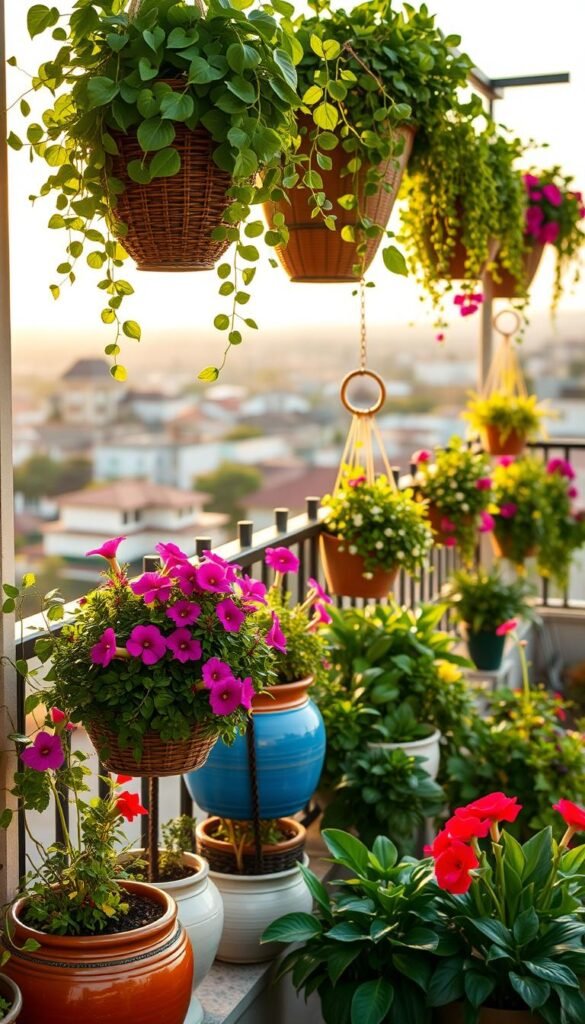
Why it’s useful: these options let you add plants and greenery without turning your small balcony into a maze. They free the floor and make a compact outdoor spot feel lush.
Real-life example
You can grow basil and mint in a simple railing box. Snip fresh herbs for weeknight cooking and waste less produce. It saves trips to the store and brightens your home meals.
Price-value evaluation
Individual hanging pots and small railing boxes often cost under $25. The value is high if they replace repeated grocery herb buys.
- Pros: saves floor space, adds color and privacy, easy to install.
- Cons: watering drips, hooks may rust, wind can tip light pots.
Who it’s for
Apartment renters, cooks who want fresh herbs, and anyone who wants a calmer outdoor spot.
What to avoid & safety notes
Skip planters with no drainage. Use trays or saucers and point drainage away from neighbors below. Confirm railing fit and load rating before you clamp or hang anything.
For sturdy hardware options, consider easy hanger brackets like these hanger brackets to secure rail-mounted boxes.
Plant Stands and Tiered Shelves to Build a Vertical Garden Corner
Stacked plant stands turn a tight corner into a layered green display without stealing floor room. A compact tiered shelf gives your plants a home and keeps the main walking area open. This is a practical, renter-friendly way to add greenery and style.

Why it’s useful
A tiered stand creates a vertical garden in one area so you don’t need dozens of pots spread across the floor. It saves time on watering and makes care easier because plants are grouped and reachable.
How to layer for depth
- Tall-back: put taller pots against the wall to anchor the view.
- Mid-level: place planters at seat or table height so foliage sits at eye level.
- Low bowls: add small ground pots for texture and fullness at the base.
Pros and cons
- Pros: organizes plants, adds privacy, and feels intentional without clutter.
- Cons: narrow stands can tip in wind and cheap coatings may rust and stain the floor.
Who it’s for
This is ideal if you want more plants but not less usable space. It works for renters and anyone after simple, effective design ideas.
What to avoid & alternatives
Avoid tall, lightweight stands with tiny feet or shelving that blocks your door. Cheaper options include stacked crates, a repurposed ladder shelf, or a wall grid if your lease allows. For DIY vertical inspiration see the vertical garden guide, or browse more small space ideas for compact solutions.
Self-Watering Spikes and Saucers to Prevent Messy Drips and Dead Plants

Self-watering spikes and saucers solve two annoying things: plants drying out and water dripping onto surfaces or neighbors. They are cheap, renter-friendly, and often sold in sets under $25.
Why it’s useful
Save time: spikes slowly feed water from a bottle so you don’t need daily watering. Reduce mess: saucers catch drips and protect the floor or railing.
Real-life example
You leave for a long weekend. A spike delivers steady moisture and your flowers don’t collapse when you return.
Price-value evaluation
Most kits cost under $25. They pay off by preventing dead plants and reducing daily care time.
Pros and cons
- Pros: consistent watering, fewer emergency rescues, less drip onto neighbors.
- Cons: not totally “set and forget”; spikes can clog or release water too fast in certain soils.
Who it’s for & what to avoid
This is for busy renters, travelers, and anyone who wants plants at home without constant fuss. Avoid using spikes in pots without drainage, overfilling bottles in direct sun, or assuming one size fits every pot.
„A small fix that saves time and keeps your greenery living—worth trying for any small outdoor spot.“
Weather-Resistant Cushion Covers and Simple Textiles for Cozy Seating
Soft, weather-ready textiles instantly make a small seat feel like part of your living room. Use fitted cushion covers and a lightweight throw to warm up seating without buying new outdoor furniture. Swap covers seasonally to refresh color and mood.

Why it’s useful
Weather-resistant covers protect cushions from sun and light rain. They let you refresh faded cushions without replacing frames. A washable throw is easy to bring inside after use and keeps fabric from mildewing.
Pros and cons
- Pros: quick comfort, easy cleaning with zippers, instant decor lift, ties the outdoor area to your living space.
- Cons: even outdoor fabrics can mildew if left wet, cheap zippers break, bright colors may fade in sun.
Who it’s for
This is ideal for renters with basic chairs or benches, anyone who wants a cozy reading corner, and people who like swapping colors without clutter.
What to avoid
Avoid using indoor pillow inserts outside, thick fabrics that stay damp, and loose covers that flap in wind. Don’t leave textiles wet overnight.
Alternatives and cheaper options
Try a single lumbar pillow or an outdoor seat pad for quick comfort. For more cushion options see outdoor throw pillows. Small swaps are a low-cost way to make compact spaces feel intentional.
Small Storage Finds for Balconies That Get Cluttered Fast
A two-minute tidy routine, backed by water-resistant storage and hooks, saves your outdoor area from becoming unusable.
Small spaces fill up quickly. Cushions, a lighter, plant tools, and a stray blanket can turn a pleasant place into a mess you avoid.

Water-resistant storage bag/bin for cushions and blankets
Pick a compact, water-resistant bag or bin sized for your cushions. Stash cushions and throws in seconds before rain. That prevents mildew and saves you time on cleanup.
S-hooks and over-the-rail hooks for tools, lanterns, and watering cans
Use rust-resistant S-hooks and over-rail hooks to hang watering cans, lanterns, and hand tools on the side rail. Hanging items frees the floor and keeps traffic clear.
Why it’s useful
Two-minute reset: these pieces make a quick tidy practical. You get a usable outdoor place instead of a catchall.
What to avoid
- Avoid fabric bins that are not water-resistant; they trap moisture and rot cushions.
- Skip hooks with sharp ends that scratch metal or fall in wind.
- Don’t use large, heavy boxes that block the door swing or overload rails.
Safety and quality notes
Choose rust-proof fittings and check weight limits before you hang anything. Secure fastenings so items don’t fall to the ground below. For reliable, renter-friendly options check a quick guide on balcony storage ideas and compact storage picks on best small-space solutions.
| Item | Typical cost | Best use |
|---|---|---|
| Water-resistant storage bag/bin | $15–$40 | Stash cushions, blankets, seasonal textiles |
| Rust-resistant S-hooks / over-rail hooks | $8–$20 (pack) | Hang lanterns, tools, small planters |
| Small outdoor tote with zip | $12–$30 | Quick grab-and-go storage for tools and accessories |
Pet-Safe Balcony Add-Ons for Apartments (Without Turning It Into a Cage)
A practical mesh or removable rail guard keeps pets safe without turning your outdoor spot into a cage. Choose one clean barrier that protects gaps and prevents slips while keeping your view and the feel of the space.

Why it’s useful
It lets you use the outdoor space without hovering. Thin wire mesh or a purpose-made rail guard blocks openings and stops curious paws from squeezing through. The net result is more time outside and fewer emergency rescues.
Who it’s for
This is for cat owners, small-dog owners, and anyone who wants a low-effort safety layer in a rented apartment. It fits people who want safety without a permanent change.
What to avoid
- Avoid flimsy plastic netting that tears and looks cheap.
- Skip sharp, exposed wire edges and weak zip ties that fail in sun.
- Don’t install solutions that block exits or overload railings.
Safety and quality notes for mesh and gaps
Measure gaps and attach points before buying. Secure mesh top-to-bottom and anchor into stable places. Check for climbable ledges and close any gaps where a paw or tail can slip through.
Comfort tip: hang a lightweight lantern or clip-on light to the mesh so it reads as decor, not a cage. For practical how-tos and product ideas see a focused guide on cat-proofing a balcony.
Conclusion
Make small, practical swaps and your outdoor spot will actually get used.
Start with the floor: a runner or a few interlocking tiles. Add one seating option and a compact table or side table. Finish with soft lights and one planter for greenery.
This starter setup—outdoor runner + clamp-on railing bar + string lights + a planter—works in almost any small balcony. It stays renter-friendly and keeps your view clear.
Edit your zone: fewer, better pieces beat lots of random decor. Measure rails, check drainage, and pick low-profile furniture to protect sight lines and privacy.
Want to upgrade? Swap the runner for wood-look tiles, add foldable chairs, or build a vertical garden. These buys save time, make the area feel like an extra room, and are worth it if you’re lucky enough to have this place at home.