
Small rooms often feel like puzzles. This guide sets clear, renter-friendly steps for tidy, no-drill organization that holds up to humidity and busy mornings.
The piece focuses on vertical choices and strong adhesive mounts that free counters, plus magnetic and zoned organizers that corral tiny items. Readers get practical product types, quick pros and cons, and renter-safe alternatives under $25 and under $50.
Measure first, pick mounting that won’t harm walls, and favor materials that resist rust and warping. The guide also explains how moving overflow to a linen or entry closet keeps daily routines smooth.
Expect realistic care tips: a daily wipe-down and a seasonal purge every three to four months to keep systems working long-term. The tone stays grounded and helpful, focused on less clutter, faster cleaning, and safer storage for medicines and toiletries.
Key Takeaways
- Start by measuring and zoning before buying anything.
- Go vertical: wall and door mounts free up floor and counters.
- Choose renter-safe mounting and rust-resistant materials.
- Use magnetic and adhesive organizers for tiny items.
- Move overflow to closets or entryway storage to protect daily use.
- Daily wipe-downs plus a seasonal purge keep systems working.
- Budget picks under $25 and $50 are included later in the article.
What to prioritize in a small bathroom before buying any organizers
Start with a quick measurement and a scan for unused nooks before shopping.
Measure first. Check width between the toilet and vanity, behind-door clearance, under-sink pipe layout, and vertical height above the toilet and door trim.
Map hidden “dead” zones
Common dead zones include behind the door, above the toilet, the gap beside the toilet, inside cabinet doors, and shower corners. Note which spots have usable wall space or floor space.
Pick renter-friendly mounting
Prioritize adhesive hooks, tension poles, over-the-door racks, and freestanding units. These avoid drilling and keep deposit risks low.
Choose humidity-proof materials
Sealed plastic and rust-resistant metal beat fabric, raw wood, and untreated wicker in wet rooms. Clear plastic bins resist spills and make it easy to find things.
| Consideration | Renters | Durability |
|---|---|---|
| Mounting | Adhesive, tension, over-door | Low-damage options preferred |
| Materials | Plastic/metal over fabric | Moisture-safe finishes last longer |
| Weight limits | Test gradually | Follow cure times and surface prep |

Quick transfer tip: the same measuring and material rules work when choosing closet bins, kitchen organizers, and entryway hooks. Declutter lightly first so new storage caps actual clutter.
Best wall storage for maximizing vertical room without drilling
Turn narrow wall strips into organized zones so toiletries and tools no longer crowd the sink. This keeps the counter clear and speeds daily routines.

Adhesive floating shelves for toiletries and perfume
Adhesive floating shelves are the simplest no-drill shelving win. They work best on smooth tile or sealed plaster and give a clean look for perfume, nail polish, and daily toiletries.
Placement tip: Put daily items on lower shelves and backstock higher to cut visual clutter and speed routines.
Stick-on mounts for toothbrushes, soap, and hair tools
Stick-on wall mounts clear counters and keep cords away from water. Use them for electric toothbrushes, soap dishes, and hair tools with safe cord clips.
Humidity note: Choose mounts with rust-resistant fittings and follow surface prep and cure times for best hold.
Magnetic containers for tiny essentials
Magnetic containers solve the “where did my bobby pins go?” problem. Attach small tins to a strip near the mirror for tweezers, clips, and nail clippers.
Wall baskets and hooks that replace bulky towel bars
Wall baskets hold rolled towels or hair products. Hooks give the smallest footprint and help stop towels on the floor in homes with kids or roommates.
Pros / Cons
| Product | Pros | Cons |
|---|---|---|
| Adhesive floating shelves | Easy setup, renter-friendly, neat look | Weight limits, needs smooth surfaces, avoid very steamy spots |
| Stick-on mounts | Clears counters, safer cord placement | Holds light items, surface prep required |
| Magnetic containers | Keeps tiny items visible and organized | Small capacity, needs metal strip or magnet-friendly surface |
| Wall baskets & hooks | Durable options, prevents floor clutter | May need anchors for heavy loads, aesthetic varies by material |
Alternatives by look: clear shelves for a lighter visual effect, metal baskets for durability, and simple hooks when minimal footprint matters.
Over-the-door organizers that free up cabinets and floor space
Turning a plain door into storage keeps counters clear and keeps items off the floor. Over-the-door units are a high-impact, renter-friendly fix when a cabinet or drawers are full.
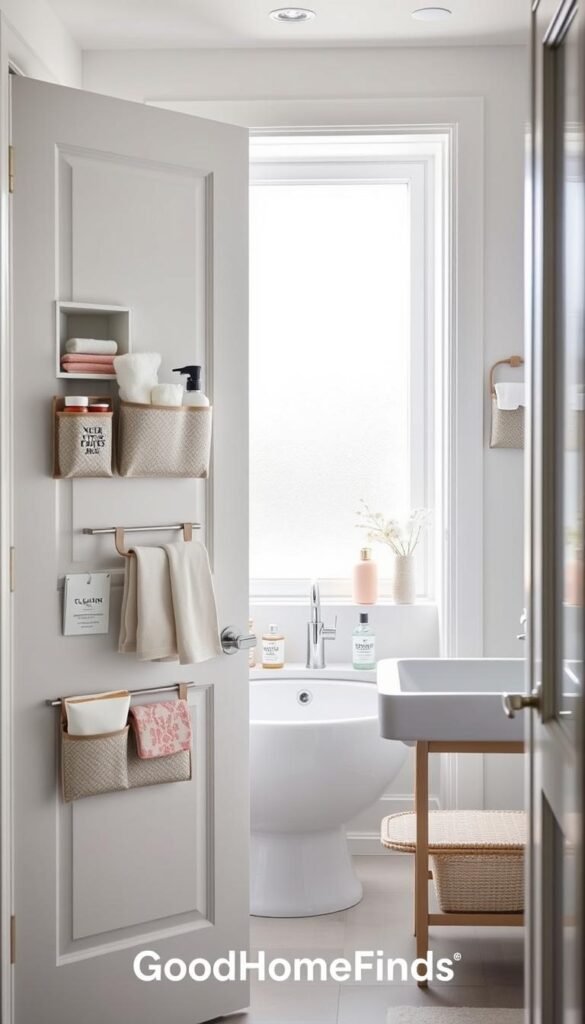
Why plastic or metal wins: Plastic and metal wipe clean, resist moisture, and hold up in humid rooms. Fabric pockets can sag, trap dampness, and develop mildew over time.
What to store — and what to avoid
Use these organizers for hair products, styling tools, backup toiletries, and light cleaning supplies that don’t need under-sink access. Avoid heavy glass bottles and full chemical containers on upper hooks.
Quick setup and safety tips
Measure door thickness and make sure the door still closes. Add felt pads to prevent scuffs—important for deposits. Store cooled heat tools securely and keep chemicals out of reach of kids and pets.
Who this works for: Ideal for renters, dorms, and shared bathrooms where counters get crowded fast. If door mounting isn’t possible, consider a slim rolling cart or adhesive wall baskets as an alternative.
Over-the-toilet storage that adds shelving without stealing floor space
Smart shelving around the toilet turns wasted vertical room into organized zones for towels, backup items, and daily picks.

Freestanding étagères for rentals and easy setup
Freestanding over-toilet étagères assemble quickly and avoid wall damage. They work well for renters who need stable, non-invasive storage.
Tip: level the feet, avoid overloading, and use anti-tip straps when allowed.
When a wall cabinet works better than open shelves
Wall cabinets hide clutter and cut dust on towels. Choose them when drilling is permitted and the wall is solid. If not, open shelves with bins deliver a similar look without holes.
Toilet paper storage and narrow-gap fixes
For tight gaps, a slim vertical cabinet or a narrow roll holder fits beside the toilet. Keep bulk packs in another room to avoid crowding the immediate area.
| Option | Pros | Cons |
|---|---|---|
| Freestanding étagère | Renter-friendly, no drilling, quick install | Limited weight, needs level floor |
| Wall cabinet | Hides clutter, less dust, cleaner look | Requires mounting, may need anchors |
| Narrow toilet paper cabinet | Fits tight gaps, stores rolls discreetly | Small capacity, specific sizing needed |
Sizing checklist: measure tank height, baseboard depth, and lid clearance so doors and lids open fully. If the wall is too tight, consider adhesive shelves above the tank or an over-the-door organizer as an alternative.
Under-sink organizers that work around plumbing (and stop the “black hole” effect)
That awkward dark zone beneath the sink turns into a “black hole” unless drawers and bins give things a clear home. Access matters more than capacity: pull-out units let users reach items without digging around pipes.

Pull-out, adjustable drawers for daily items
Adjustable pull-out drawer systems slide past plumbing and bring toothpaste, skincare, and hair tools forward. Pros: easy reach, reduced spills. Cons: higher cost but far less wasted space.
Stackable bins with handles for backups
Stack clear plastic bins for cleaning and backup supplies. Handles make lift-out retrieval simple. They wipe clean and resist liquid damage.
Clear containers and a simple zoning plan
Transparent containers cut duplicate buying and speed expiry checks. A practical zone layout: daily extras, cleaning supplies, and rarely used items — label each bin to keep clutter low.
Sink-skirt trick for pedestal sinks
For vanities without cabinets, a Velcro sink-skirt hides stacked bins while keeping access easy. It’s renter-friendly and quick to install.
- Quick note: pull-outs prevent wasted depth; bins are budget-friendly but need labeling discipline.
Drawer and vanity organizers for toiletries, makeup, medicine, and hair tools
Drawers and vanities act like small vaults: they hide clutter and keep daily items within reach. Clear tray sets and shallow containers make it easy to see what’s there. This stops counters from filling up each morning.

Modular drawer-tray sets form stable zones that don’t shift. A simple layout: AM skincare | PM skincare | dental | hair tools & styling | makeup. Use non-slip liners so trays stay put when a drawer opens.
Sample “caps” and the one-bin rule
Limit backups with a small sample bin and one-bin rule for extras. When the bin fills, replace before buying more. This physical cap stops slow accumulation of extra products and keeps drawers tidy.
Medicine and first-aid storage
Keep medicine in a lidded container inside a top drawer or locked vanity compartment. Store away from heat and direct humidity when possible. During the seasonal edit, check expiration dates and discard expired items.
| Option | Pros | Cons |
|---|---|---|
| Modular trays | Affordable, flexible, clear view | Need occasional re-sorting |
| Deep lidded containers | Good for medicine, hides clutter | Can become dump zones without labels |
| No-drawer alternative | Over-door pockets or slim cart with lidded bins | Less discreet; may need more frequent tidying |
Quick habit: glance through drawers during the seasonal purge and replace only what’s used. This keeps vanity drawers functioning as active, useful storage rather than a hidden mess.
Shower storage that keeps bottles off the floor and easier to clean
Clear shower shelving keeps bottles up and out of puddles so cleaning is faster and safer. Keeping items off the floor reduces grime rings, speeds wipe-downs, and cuts slip risks from scattered bottles.

Tension-pole caddies for maximum vertical shelving
Tension-pole caddies are renter-friendly and install without tools. They stack shelves vertically, drain well, and can be adjusted to avoid the showerhead.
Good for: renters, families with many bottles, and showers with open corners.
Hanging caddies vs. corner shelves — pick by shower design
Hanging caddies work when the showerhead allows a hook and a curtain is used. Corner shelves suit glass-door stalls and shallow ledges.
Tip: measure ledge depth and check where the nozzle sits before buying.
Wall-mounted dispensers to cut clutter and wipe-down time
Dispensers remove multiple bottles and make daily cleaning faster. Choose adhesive mounts rated for wet rooms and refill on a routine to avoid build-up.
Durability advice: favor stainless or coated metal and quick-drain shelves to limit rust and mildew.
Shower-curtain height hack
Raise the rod as high as practical and use a longer curtain to visually enlarge a tight shower. The taller line hides cluttered tile and helps a small bathroom feel roomier.
| Option | Pros | Cons |
|---|---|---|
| Tension-pole | Adjustable, no drill, good drainage | May wobble if overloaded |
| Hanging caddy | Easy install, good for curtains | Can snag or drip on floor |
| Corner shelves | Stable, blends with glass doors | May need anchors |
Countertop clutter fixes that still look tidy in real life
Design a small, washable station on the vanity so morning items live in one place and wipe-downs take seconds.

Tray method for daily-use goods
Use a single tray to corral daily-use products like perfume, hand lotion, and the one toothbrush used each day. A washable tray keeps spills contained and makes clearing the counter fast.
Do: keep only AM essentials on the tray. Wipe the tray and counter each night.
Don’t: store backup stock, rarely used products, open razors, or piles of samples on the counter. These items invite clutter and slow cleaning.
Mini canisters for small items
Use lidded mini containers for cotton swabs, hair ties, and bobby pins. Lids reduce dust and create a neater look without extra effort.
Safety note: store hair tools unplugged and cooled away from the sink splash zone. This prevents water-and-electric hazards during busy mornings.
Quick reset: a one-minute wipe each evening doubles as a declutter checkpoint and supports daily organization in a small bathroom.
Freestanding small-space helpers for bathrooms with no cabinets
Mobile and leaning furniture lets renters add organized zones that move with them. Freestanding pieces work when walls won’t accept mounts, layouts are awkward, or a landlord forbids drilling. These portable options create instant storage and keep daily clutter off counters.
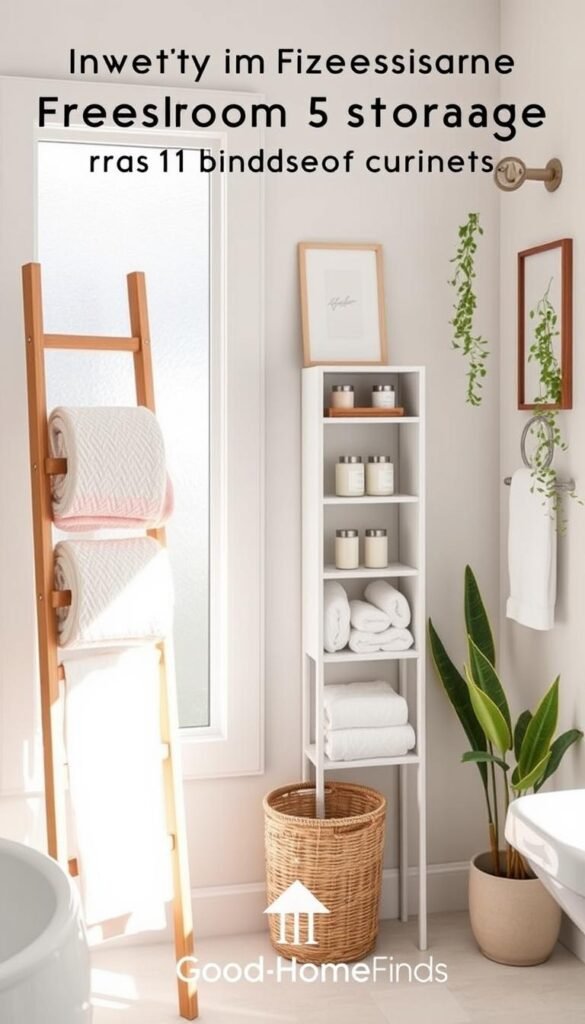
Slim rolling carts that slide between the toilet and vanity
Slim rolling carts fit narrow gaps beside the toilet and pull out for access. Use them for daily skincare, extra toilet paper, and cleaning wipes.
Tip: add non-slip pads or a wheel lock so the cart stays stable during use.
Ladder towel racks and leaning storage
Leaning ladders add vertical towel hanging without drilling. Space rungs to allow air-drying and prevent damp piles.
Best for: renters who want height without hardware. They keep towels visible and tidy.
Stools and small tables as flexible landing zones
Use a small stool to hold a folded towel or a lidded bin of toiletries. These pieces double as seating and serve guests well.
Hamper placement to stop floor piles
Place a decorative hamper where towels usually fall. This simple move prevents towels from piling on the floor and keeps shared bathroom routines neater.
| Option | Pros | Cons |
|---|---|---|
| Slim cart | Mobile, fits gaps, holds daily items | Can look busy if overfilled |
| Ladder rack | No drill, good drying, tall profile | Needs wall footprint, may tip if overloaded |
| Stool / hamper | Flexible landing, hides laundry | Need ventilation to avoid odor |
Overflow tip: store bulk towels on a closet shelf with dividers or in an entryway bin to keep the bathroom calm and functional.
Budget picks that pull the most weight under $25 and under $50
Affordable items can change daily routines without drilling or big spend. Focus on durable, wipeable pieces that work on rented walls and in humid rooms.

Under $25 — quick wins
- Adhesive hooks (~$17): instant hanging for towels and robes; renter-friendly. Best for renters and families who need fast vertical storage.
- Magnetic bins and small tins: keep tiny items visible near the mirror; low-cost and movable.
- Clear drawer trays (~$19): tame vanity drawers and separate daily from backup products.
- Floating shelf sets (~$20): add a neat display shelf without holes; use for light bottles and decor.
- Narrow toilet-paper cabinet (~$19): fits tight gaps and stores rolls discreetly.
Under $50 — longer-lasting value
- Over-the-door organizer (~$37): sturdy plastic or metal racks free cabinets and hold extras. Best for renters who need big capacity without hardware.
- Stackable handled bins: easier transport and better durability for linen or backup stock.
- Under-sink pull-outs (~$40): slide past plumbing to make deep shelves usable.
- Towel rack with hooks: combines hanging and hook storage to keep towels off the floor.
Quick pros/cons: sub-$25 items are instant wins but usually have lower weight limits. Spending up toward $50 often improves stability and longevity.
| Price Range | Setup Time | Tools Needed | Best Zone | Main Problem Solved |
|---|---|---|---|---|
| Under $25 | 5–15 min | None | Door / Wall / Drawer | Quick declutter of daily items |
| $25–$50 | 15–45 min | Optional basic tools | Under-sink / Over-door / Toilet | Better capacity and stability |
Maintenance note: choose wipeable materials and avoid fabric pockets in wet zones. Regular wipes and a seasonal check keep cheap items looking and working like new.
Alternatives by apartment size and bathroom layout
Match storage type to layout: what fits physically matters more than style.
Studios and micro-apartments benefit from vertical fixes that don’t crowd walking paths. Use adhesive shelves and hooks on clear wall runs and over-the-door racks to keep items off the floor. These keep the room usable while adding storage within reach.

One-bedroom apartments
Add over-toilet shelving to gain open shelving near daily routines. Combine that with under-sink drawers to pull items past plumbing for easy access. This creates a daily / backstock split that reduces morning clutter.
Two-bedroom and shared layouts
Duplicate zones so each person has their own trays, toothbrush area, and towel hooks. Use separate labeled bins for personal backup items to avoid mix-ups and reduce daily arguments.
If there’s a linen closet
Use shelf dividers to stop towels from toppling. Add labeled bins for guest toiletries, backstock, and cleaning refills so everything has a clear home. A tidy closet is calm but remember it’s less convenient than bathroom storage.
Practical alternative: if no closet exists, move bulk paper goods and extra towels to an entryway or bedroom shelf in labeled bins. This keeps the bathroom for daily items only and prevents overfilling counters.
| Apartment Type | Top Fix | Why it works |
|---|---|---|
| Studio / Micro | Wall & door mounts | Maximizes vertical room without blocking traffic |
| One-bedroom | Over-toilet shelving + under-sink drawers | Balances daily access and backstock storage |
| Two-bedroom / Shared | Duplicated zones + labeled bins | Reduces conflicts and speeds routines |
| No linen closet | Entryway / bedroom closet bins | Stores bulk items without crowding the bathroom |
Overflow strategies that move bulk out of the bathroom (without losing convenience)
Think small: keep only daily essentials in reach and move overflow to a nearby closet or entryway. This keeps counters and shelves usable and makes cleaning faster.

- Bulk toilet paper packs and extra towels.
- Large cleaning refills and seldom-used styling tools.
- Unopened backup toiletries and bulk personal care boxes.
Backstock rules
Set simple limits so extras don’t creep back. Keep no more than two extra towels and two spare rolls on-site. Store larger packs in a linen closet, bedroom closet, or entryway cabinet.
Convenience and safety
Keep a small, labeled “refill” bin in the room with one full roll and one towel for quick swaps. Store the rest nearby so refilling is one quick trip.
Safety note: keep cleaning products and chemicals locked or on a high shelf away from toiletries. Avoid storing medicines in very humid areas; use a dry closet when possible.
No linen closet? Use a high bedroom shelf or an entryway cabinet for paper goods and towels. Overflow control is often the cheapest storage approach because it reduces the need for extra racks and organizers.
Easy routines that keep bathroom storage solutions working long-term
A few minutes each day prevent months of catch-up later. Small, regular habits protect organized zones and cut the chance that clutter silently grows behind a tray or in a bin.
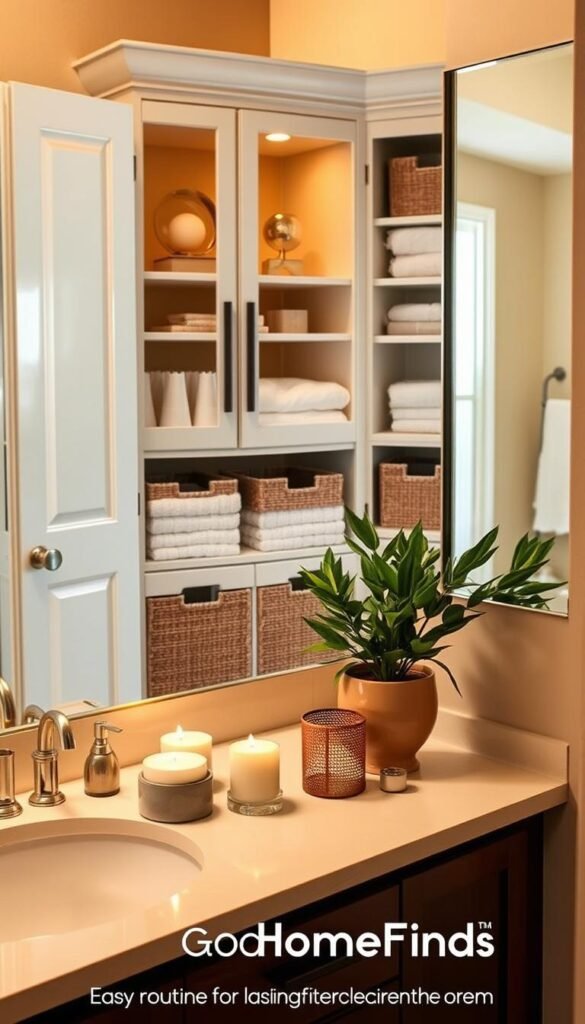
Daily reset
Wipe sinks and counters every evening. Clearing surfaces forces a quick sort of items and shows what doesn’t belong.
Ann Lightfoot’s idea: “always organize a little so you’re never organizing a lot.” A one-minute wipe keeps trays and hooks usable.
Seasonal edit
Every 3–4 months, remove empties, expired makeup, and “someday” products. Toss or recycle and keep a fast medicine check for expiration dates.
Update a simple first-aid list so medicine is safe and easy to find.
Labeling and zoning
Use clear labels like “Dental,” “Hair,” “Backstock,” and “Cleaning.” Labels reduce friction and help everyone return items correctly.
Adopt a one-in, one-out rule for samples and travel products to keep storage caps from overfilling.
| Routine | Time | Why it helps |
|---|---|---|
| Daily wipe | 1–2 min | Stops surface clutter |
| Seasonal edit | 20–30 min | Removes expired products |
| Labeling | 10–15 min | Makes maintenance team-friendly |
Durability tip: choose wipeable bins, trays, and hooks over porous fabrics so systems resist humidity and stay clean with minimal effort.
Conclusion
Start small, start smart. Tackle one stressed zone first — a counter, under-sink drawer, over-the-door rack, or shower shelf — and build from there. Small, steady changes make a big difference in daily routines.
Priorities: map dead zones, pick renter-friendly no-drill mounts, choose moisture-safe materials, and set simple caps to stop backups. Wall and toilet areas often unlock the largest gains without losing floor access.
Keep a quick daily wipe and a seasonal edit to prevent re-clutter. If bulk items don’t fit, move overflow to a closet or entryway for safer, renter-friendly storage.
Next step: pick one product from the budget list, install it in under an hour, and reassess what additional shelves or storage the home truly needs.
2 Comments