Practical home tools, not hype. This guide shows what actually saves you minutes each day. You’ll get renter-friendly picks that fit small spaces and shared walls.
Robot vacuums can run on schedules while you’re out. Cordless stick models like the Dyson V15 Detect work across floors and carpets and offer up to 60 minutes of runtime for quick jobs.
Expect clear tradeoffs. We cover floors, carpets, bathrooms, windows, and small daily messes. Each item lists setup time, maintenance, noise, power use, and storage needs.
You’ll see budget vs premium choices so you can decide what upgrade is worth it. If a tool misses corners, tangles on hair, or needs frequent emptying, we’ll say so.
Smart home basics are included only when they help. App control and voice assistants get a simple pass or fail, not a sales pitch.
Key Takeaways
- You’ll find practical picks for real daily use.
- Focus on renter-friendly, small-space needs.
- We compare budget vs premium and real tradeoffs.
- Each pick lists setup, upkeep, noise, and power use.
- No hype — we call out limits like hair tangles or emptying.
What to expect from today’s cleaning tech in real homes
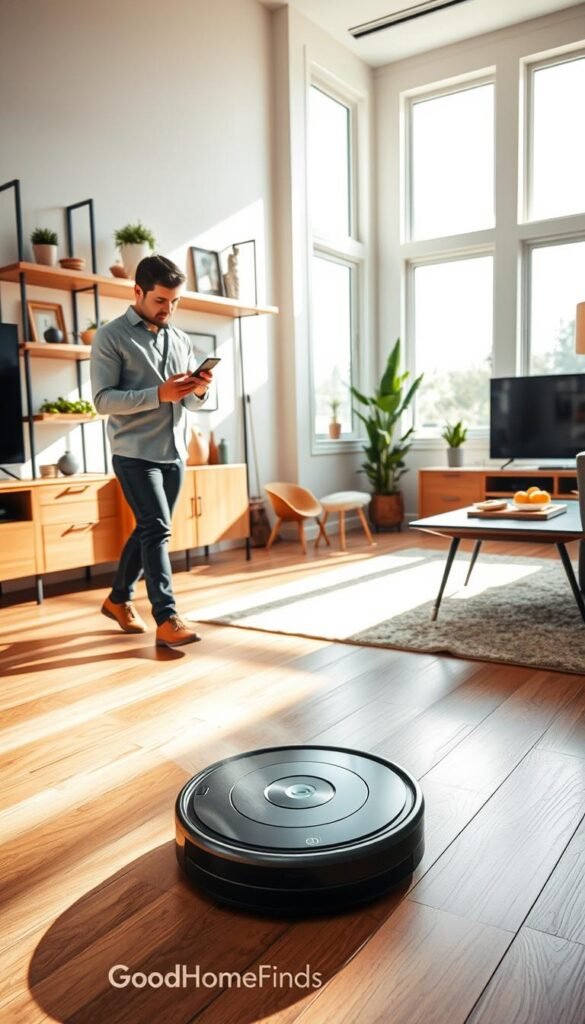
Practical home devices make routine upkeep easier, but they don’t make clutter disappear. You get real wins for daily dust control and fast spot cleanup. Scheduled robot vacuums can run via app or voice so you skip the daily sweep.
Real benefits: where you actually save time (and where you won’t)
What helps: fewer panic deep-cleans, steady dust reduction, and quicker spill response.
Limits: if you never declutter the floor, automated cleaners slow down. Skip filter and brush upkeep and performance drops. Simple upkeep still matters.
Small-apartment reality check: space, storage, and daily clutter
In small spaces pick tools that store vertically and dock neatly. You probably don’t have a spare closet, so look for compact docks and upright storage.
Cords, shoes, kids’ toys, and tight chair legs are common reasons vacuums get stuck. Make a quick sweep first and then let devices do the rest.
Safety and energy saving basics to look for
Look for stable docks, reliable charging behavior, and safe water handling on wet tools to avoid slips and leaks. Noise still happens, so schedule runs around calls and naps.
What matters most: simple controls, easy emptying, washable parts, and clear replacement schedules. That combination saves time more than any marketing buzzword.
„Small, consistent actions beat marathon cleans.“
- Process change: you do lighter tasks more often instead of long scrubs.
- Power note: battery tools need charging; plug-ins draw bursts of power—plan usage.
- Features to favor: app scheduling, washable filters, and easy-access bins.
How we picked these cleaning gadgets (no hype, just practical wins)
You should be able to set it, forget it, and get real time back—so that’s how we chose.
We focused on power use, noise, and easy upkeep. These factors affect daily life in small apartments.
What we prioritized: power, noise, and maintenance
Power use: Does the battery last through a routine run? How often will you charge it? We note runtime and whether a device replaces another tool.
Noise: We rate whether a vacuum or mop will bother shared walls or interrupt calls. Scheduling options matter.
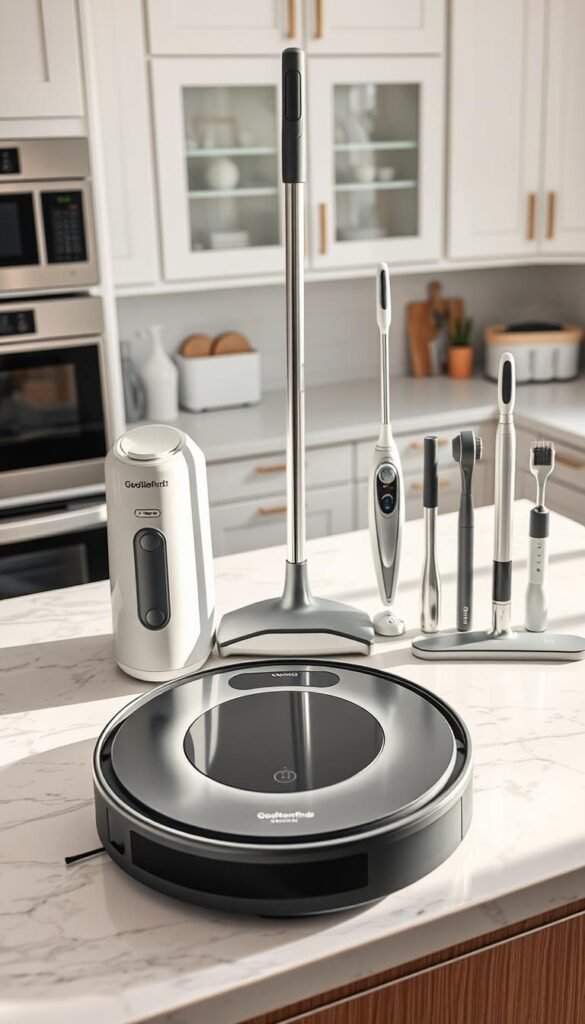
Maintenance: Hair wrap, filter washing, tank rinsing, and brush cleaning are the hidden costs. Models with self-empty docks cut upkeep—Roborock Q5+ is a good example.
Compatibility that matters
Voice control helps when it reduces friction. Roomba 694 works with Alexa, Siri, and Google Assistant. Wyze Robot Vacuum relies on app control. Simple apps beat gimmicks for daily use.
- Renter-friendly: minimal drilling, compact design, easy storage.
- Practical list: we compare budget vs premium on hands-on convenience.
| Model | Battery / Power | Noise (real terms) | Maintenance | Compatibility |
|---|---|---|---|---|
| Roomba 694 | Moderate runtime, quick charging | Low-medium; OK for daytime runs | Bin emptying, filter wash | Alexa, Google, Siri |
| Wyze Robot Vacuum | Good runtime for small homes | Medium; can schedule | Brush care, app alerts | App control |
| Roborock Q5+ | Strong suction, self-empty dock | Medium-high on max power | Reduced emptying, filter checks | App + voice options |
„We pick tools that cut weekly time, not just add shiny features.“
Best cleaning tech gadgets for floors: robot vacuums that run while you’re busy
A robot that runs while you work can cut weekly floor upkeep to minutes. Set a schedule, clear obvious clutter, and let it handle dust, crumbs, and light pet hair.
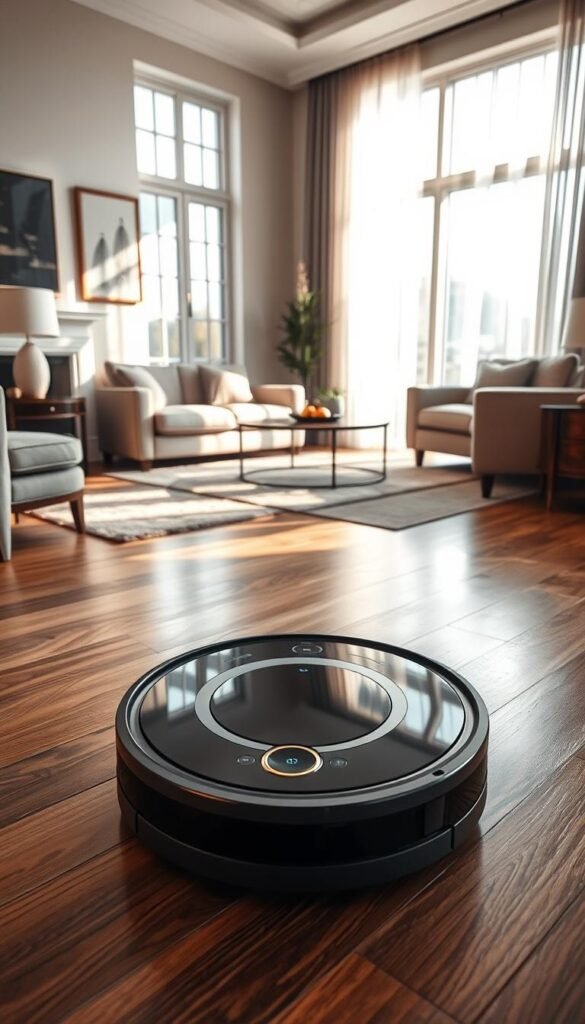
Budget buys: Roomba 694 and Wyze Robot Vacuum
The Roomba 694 offers scheduling and voice control with Alexa, Siri, and Google Assistant. Wyze brings smart app control and reliable furniture navigation.
Expect: good daily pickup on hardwood floors and low rugs. You’ll still need edge touch-ups and corner passes.
Premium upgrades: Roborock Q5+ and S7 MaxV Ultra
Q5+ adds a self-empty dock so you empty less often. S7 MaxV Ultra combines vacuuming and mopping with a self-cleaning, self-emptying base.
Real use cases, pros, and setup
- Small apartments: tight paths, thresholds, and chair legs can slow runs.
- Surfaces: excellent on hardwood floors; moderate on carpet—suction helps but maintenance matters.
- Noise & power: run when you’re out or during a set block to avoid interruptions.
Setup time: charge, run a first map pass, add no-go zones in the app, then tweak over a week.
„Keep floors decluttered and trim brush hair. No robot reaches every edge.“
Best cordless vacuum cleaners for quick pickups on carpets, furniture, and cars
When you need fast touch-ups, a slim cordless model becomes your go-to tool. Quick pickups save time on crumbs, entryway grit, couch mess, and car seats. A grab-and-go cleaner changes small daily routines into two-minute jobs.
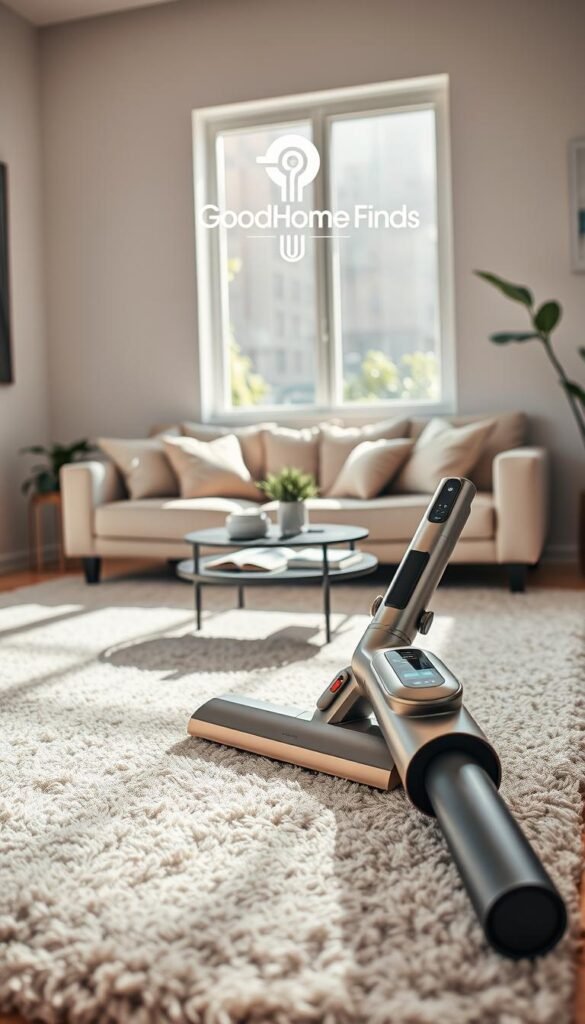
Premium pick: Dyson V15 Detect
The Dyson V15 Detect delivers strong suction power and up to 60 minutes runtime. It adapts power by floor type and includes tools for upholstery and tight gaps. That smart behavior means you think less about settings and finish faster.
Value pick: Shark Navigator Lift-Away
Shark’s Lift-Away NV352 converts to a portable canister for stairs and furniture. Its HEPA plus sealed filtration traps 99.9% of dust and allergens. For renters who want solid performance without premium cost, it’s a practical choice.
“Cordless” reality and space requirements
Battery life drops on high power, so charge after short sessions. Noise can feel loud in apartments, so use short bursts. For storage, a wall-mount or slim closet spot keeps a stick out of the way in small home layouts.
- Maintenance: empty the bin, check the brush for hair, and wash filters.
- When to pay more: you use it daily and want top suction power.
- When to save: occasional deep cleans mean a value model will do the job.
„A quick, reliable stick turns small chores into tiny, repeatable wins.“
Deep-cleaning carpets and stains: portable spot cleaners and full carpet machines
Act fast on spills and pet accidents; small machines can turn a disaster into a ten-minute task. Treating stains quickly saves you money and keeps rugs usable in small apartments.
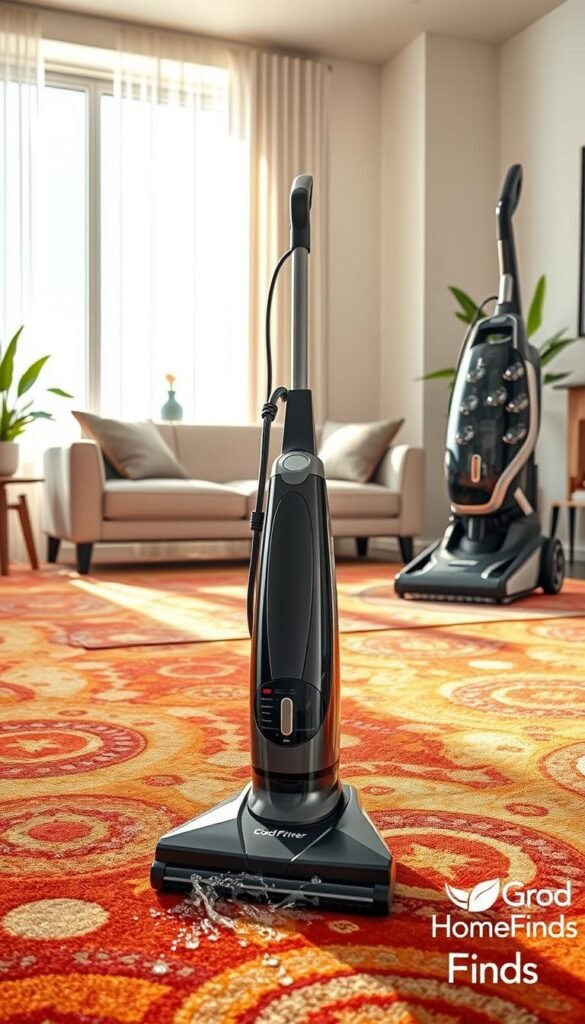
Set-and-walk-away option: BISSELL SpotBot Pet
The BISSELL SpotBot Pet lets you place it over a mess and do other tasks while it scrubs. It has an automatic brush and a hose mode for tight spots. For pet owners, it handles repeat accidents and muddy paw prints well.
Be practical: rinse the brush and empty tanks after use. Parts need drying to avoid odors.
Premium clean for rugs: Tineco Carpet ONE
Tineco Carpet ONE uses a heated wash at about 104°F to loosen grime faster. It senses pile and adjusts cleaning. Voice prompts and app support help with setup and monitoring.
For high-traffic carpet or frequent pet stains, the heated extraction saves time over multiple spot treatments.
Water use, drying time, and maintenance
Plan where you fill and dump tanks so you don’t drip water through hallways or shared spaces. Even with good extraction, rugs stay damp for hours. Clean early in the day and run a fan or open a window.
Dirty-water tanks smell if ignored. Brushes trap hair and dirt. Rinse tanks and brush rolls after every session and let parts air dry.
„A quick rinse and dry routine keeps machines ready and apartment odors away.“
- When a spotter is enough: occasional spills and small stains for renters.
- When to upgrade: families and regular pet accidents benefit from a full machine.
- Storage tip: measure a closet corner first; these units and hoses are bulkier than they seem.
Mops that feel less like mopping: steam cleaners and wet/dry vacuum mops
Small apartments make traditional mopping a hassle—buckets, streaks, and slow drying get in the way.
Here’s how to pick a more practical approach for kitchens and bathrooms.
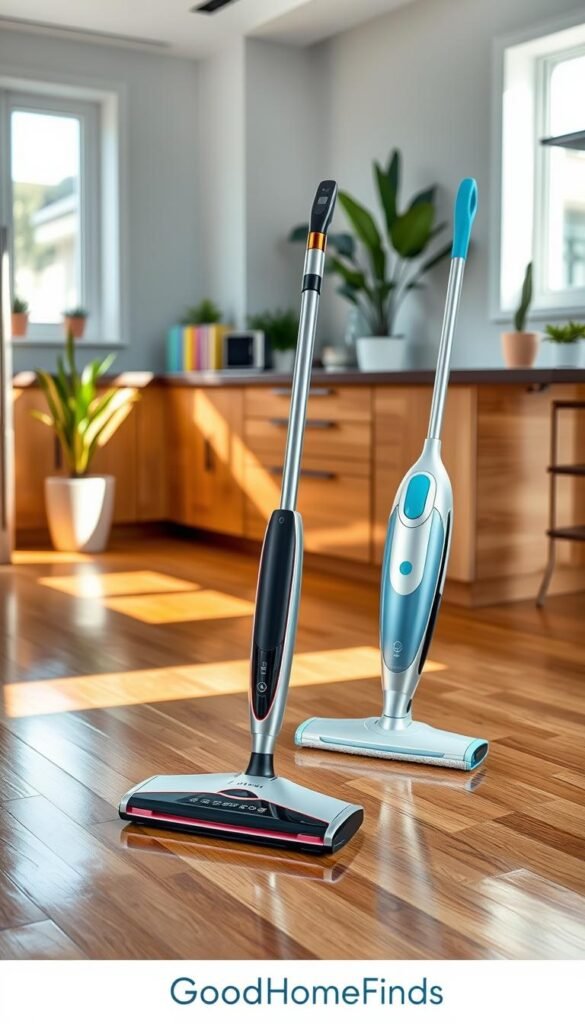
Chemical-light sanitizing with steam
Multi-surface steam mops use heat to sanitize counters and floors without heavy chemicals. They work well in kitchens and bathrooms where germs matter.
Steam loosens stuck-on grime, so you scrub less. Use a floor-safe guide for wood and laminate. Pads are usually washable, which cuts waste.
Faster floors with wet/dry vacuum mops
The Roborock Dyad-style wet/dry units combine powered rollers and suction. One pass washes and sucks up dirty water.
Real win: you aren’t pushing gray water around, and floors dry faster—useful when your entry, hall, and kitchen share the same path.
Reusable microfiber systems: low cost, low waste
Microfiber mop systems are budget-friendly and renter-friendly. Wash pads in the machine and reuse them dozens of times.
They won’t replace powered rollers for heavy grout work, but they excel at routine touch-ups and reduce single-use waste.
„Steam and wet/dry systems cut scrub time, but you still need to move chairs and hit edges.“
- Maintenance: launder pads, rinse rollers and tanks, and air dry parts to prevent odors.
- Noise & power: powered rollers and suction draw more power and run louder than a manual mop—schedule runs around calls.
- Storage: store tanks and pads in a small bin so accessories don’t become clutter in a closet or under the sink.
| Type | Where it shines | Drying time | Upkeep |
|---|---|---|---|
| Steam mop (multi-surface) | Kitchens, bathrooms; light sanitizing | Fast to moderate | Washable pads; follow floor-safe guidelines |
| Wet/dry vacuum mop (Dyad-style) | Hard floors, messy kitchens; faster drying | Fast | Rinse rollers; empty tanks; dry parts |
| Reusable microfiber system | Routine maintenance; small apartments | Moderate | Machine-wash pads; low-cost replacements |
Bathroom and grout helpers: electric power scrubbers that save your wrists
A handheld scrubber turns grout battles into short, focused sessions that spare your wrists. These rechargeable tools use a spinning brush head to remove soap scum, mildew, and grime from tile and tubs with less elbow work.
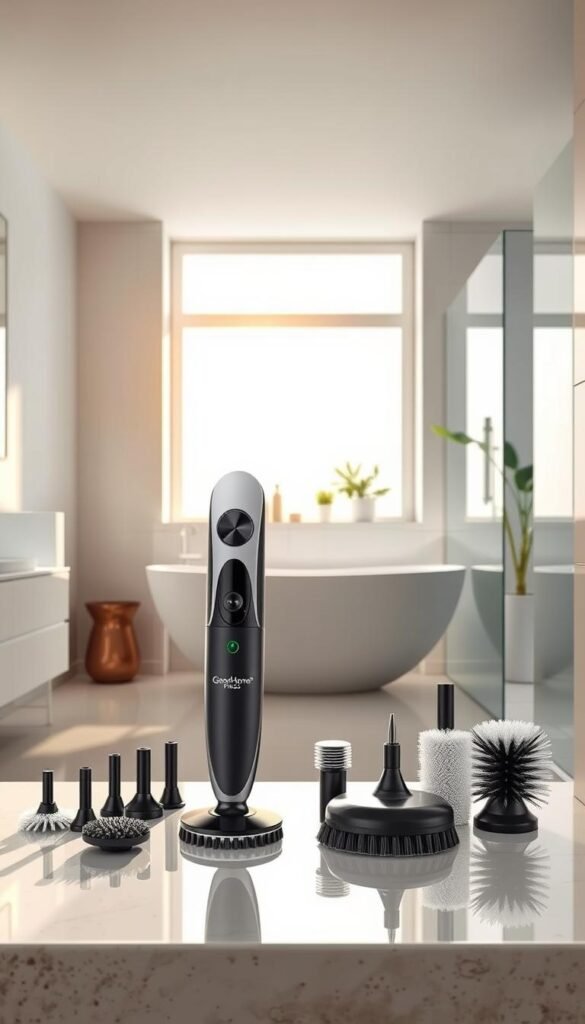
Where they help most
- Tubs and shower tile
- Grout lines and sink edges
- Faucet bases and the ring around drains
Pros, cons, and safety
Pro: real wrist relief and targeted power for stubborn spots.
Con: a spinning brush can fling water and cleaner if you go too fast or use too much liquid.
„They cut the effort but you still need to control the splash.“
Setup, upkeep, and storage
Charging takes a few hours. Swapping heads is simple. Rinse heads after use, let them dry, and replace worn bristles so you don’t smear dirt next time.
Store in a drip-safe bin under the sink and keep chargers away from water. Expect a short, loud-ish run—avoid late-night scrubbing in thin-walled apartments.
Hands-off window cleaning for apartments with lots of glass
If your apartment has floor-to-ceiling glass, a window robot can remove the ladder and sore shoulders from the job.
These units are worth it when you have large expanses, high panes, or spots that are risky to reach. They save physical effort more than every single minute, but they make the task feel like background work.
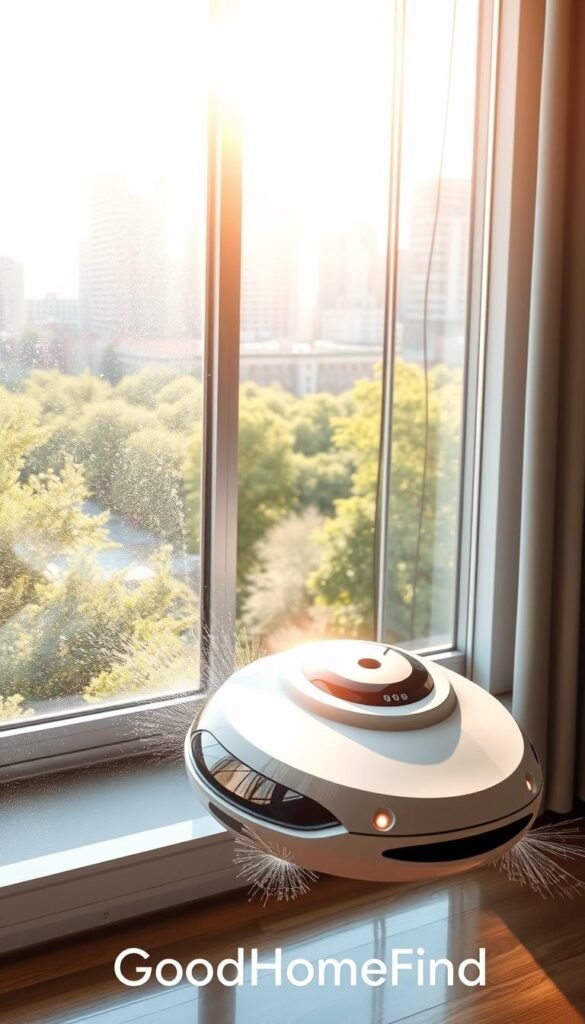
Premium pick: ECOVACS Winbot W2 Omni
Why it suits tall or awkward windows: the Winbot W2 Omni comes with a portable charging station that avoids outlet juggling. Its 12-stage protection and insurance add real peace of mind on high panes.
Use it for multi-pane balconies or full-height living-room walls where safety and steady performance matter.
Budget pick: HOBOT 298
The HOBOT 298 is a practical lower-cost choice. It cleans about 1 m² in 2.4 minutes, uses a brushless DC motor that is described as nearly silent, and offers app monitoring on Android and iOS.
Pick this if you want speed and app control without the premium price tag.
Noise reality for a work-from-home day
“Quiet” here means less annoying, not inaudible. Motors and suction are still noticeable. Run robots between calls or when you step out for errands to avoid interruptions.
„They save shoulder strain and make window care less frequent, but they are not whisper-quiet.“
Setup, safety, and upkeep
- First runs: stay home for the first few cycles to confirm attachment and tethering.
- Safety: attach the tether, use the portable charger where outlets are scarce, and follow the 12-stage checks on premium models.
- Maintenance: pads clog fast with outdoor grime. Expect frequent swaps and washes in rainy or dusty seasons.
| Model | Key feature | Practical note |
|---|---|---|
| ECOVACS Winbot W2 Omni | Portable charger, 12-stage protection, insurance | Better for tall/awkward panes and renters who want extra safety |
| HOBOT 298 | 1 m² per 2.4 min, brushless motor, app monitoring | Faster runs, lower cost, good for large glass areas |
Practical takeaway: these robots reduce strain and routine effort. They cut the pain of ladder work and make glass upkeep manageable in small-space life. Expect some audible noise, plan a few minutes for setup, and swap pads often to save yourself more time down the line.
Small tools that make a big difference for daily cleaning
Small, quick tools keep tiny messes from becoming full weekend projects. They lower friction so you deal with spills and dust right away. That saves time and effort in small apartments.
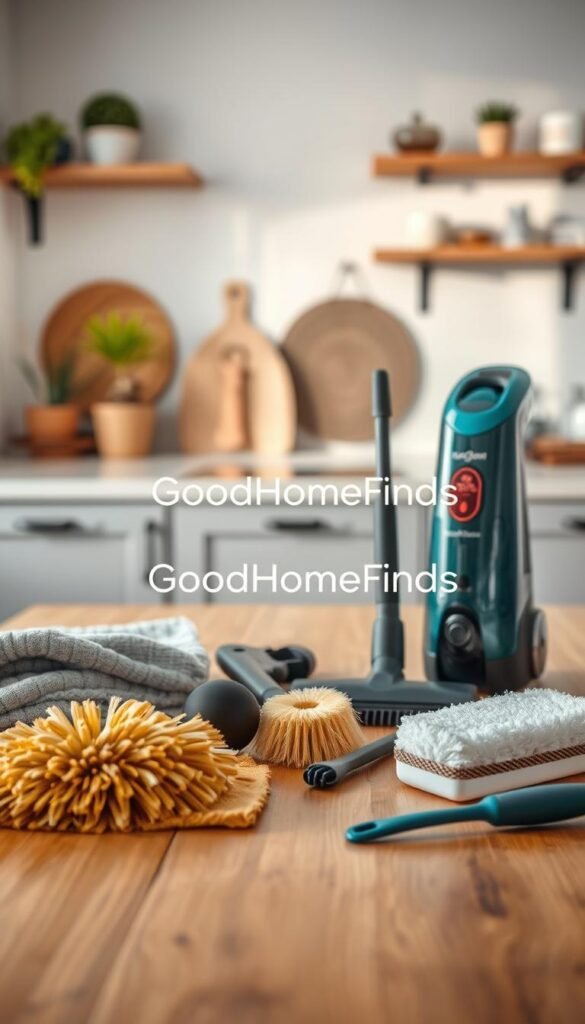
Handheld convenience
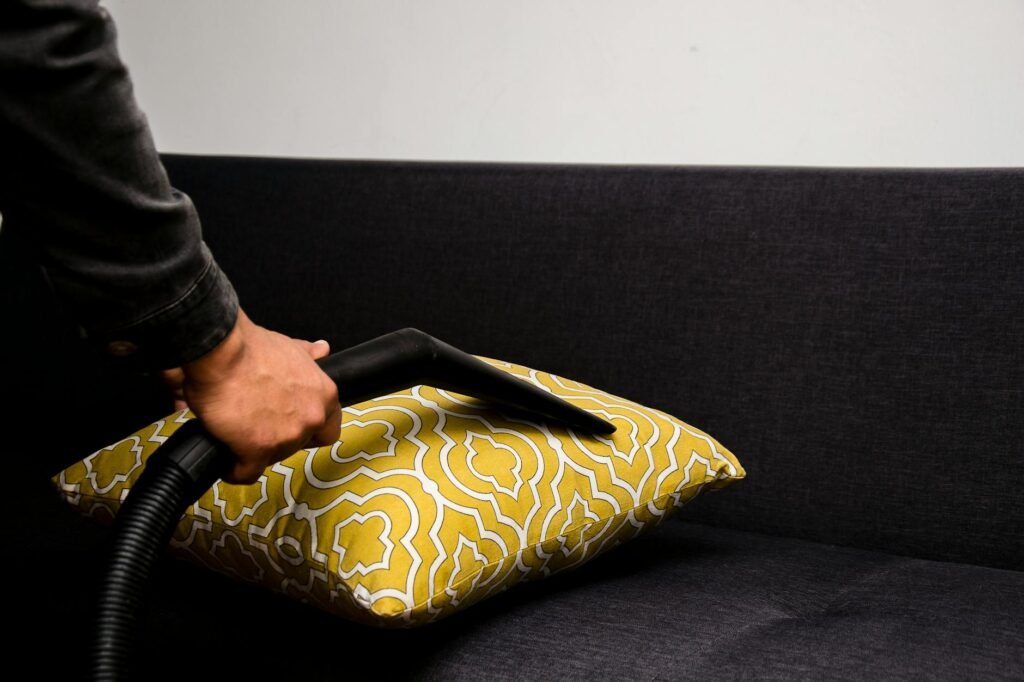
Black+Decker Dustbuster Furbuster is handy for cereal under couch cushions, crumbs between car seats, and quick sofa touch-ups. The XL extendable crevice tool reaches narrow gaps. A motorized pet brush grabs hair on upholstery fast.
Baseboards and bends
Baseboard Buddy-style wands clean low moldings without kneeling. You sweep hair and trapped dust along hallways in one pass. Your back thanks you.
Low-waste wipes and gels
Reusable Swedish dishcloths replace paper towels for counters and fridge spills. They last ~6 months and rinse clean. Biodegradable cleaning gel (Pulidiki-style) lifts dust from keyboards, vents, and remote controls where sprays fail.
„Small tools remove the friction that keeps you from doing quick upkeep.“
- Empty handheld bins and wash filters after use.
- Rinse dishcloths and let them air dry.
- Store gel sealed and keep a single caddy so tools don’t clutter your space.
| Tool | Use case | Key feature | Upkeep |
|---|---|---|---|
| Dustbuster Furbuster | Couch crumbs, car seats, tight corners | XL crevice tool; motorized pet brush | Empty bin; clean filter weekly |
| Baseboard Buddy | Hallways and low moldings | Long handle; angled head | Rinse pad; air dry |
| Swedish dishcloths | Counters, spills, quick wipe-downs | Reusable; low-waste | Machine wash; lasts ~6 months |
| Biodegradable cleaning gel | Keyboards, vents, remote controls | Gum-like lift for tight spaces | Store sealed; replace when dirty |
Pet hair and odor control without adding more chores
If you live with a pet, hair and odors are routine—so focus on fast, repeatable fixes, not marathon sessions.
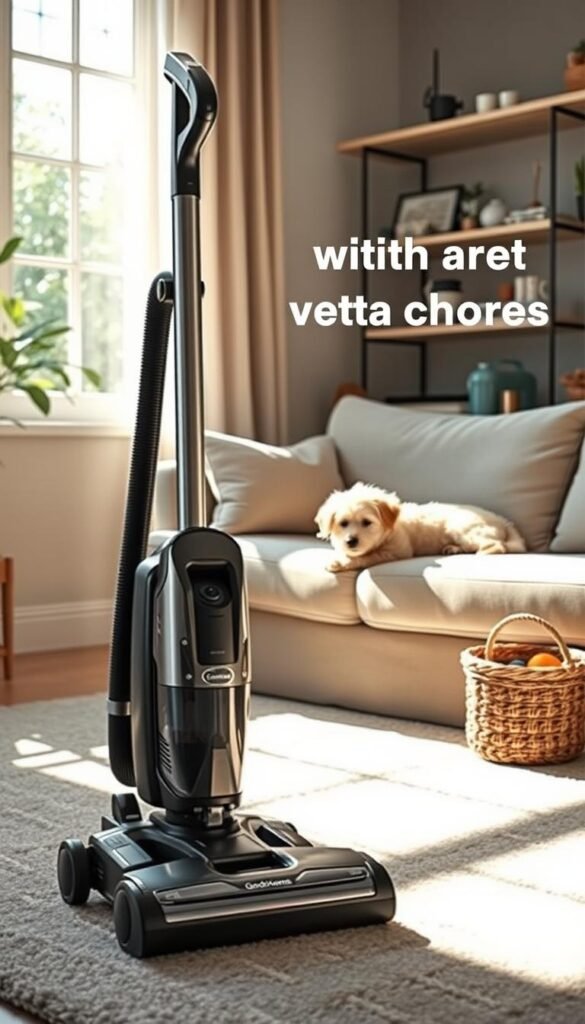
Pet hair removal brushes beat disposable lint rollers for regular upkeep. Use a rubber or microfiber brush on sofas, rugs, and car upholstery. These tools pull fur into clumps you can flick into the trash or a bin.
Where they help most: upholstery, area rugs, and car seats. In tight apartments, quick brush passes stop hair tumbleweeds from collecting along baseboards and under chairs.
Fridge odor helpers that actually work
Stainless deodorizers sit in a corner and neutralize lingering smells without taking shelf space. They also help extend produce life by cutting ethylene buildup.
Pair a deodorizer with a small produce saver drawer or paper towels to absorb extra moisture. That reduces waste and keeps the fridge fresher between deep cleans.
What to watch for: maintenance and myths
Don’t fall for “set it and forget it.” Bins, pads, and filters still need attention.
- Wash brush pads and microfiber heads weekly if you use them daily.
- Empty handheld bins and shake out collection cups.
- Replace or clean filters on vacuums and air units on schedule—dirty filters worsen dust and allergies.
Practical routine: spend 10 minutes once a week to wash washable parts, wipe bins, and check brush rolls. That small habit keeps pet mess from snowballing and saves you time over the month.
„A short, repeatable routine beats one long scramble.“
Power consumption, noise, and space requirements: what to check before you buy
Before you pick a model, pause and map how it will live in your apartment. That short check saves headaches later and keeps daily use practical.
Energy and how devices use it
Battery tools need small, frequent charges. They are handy for quick jobs and grab-and-go use. Plug-in cleaners use more power in short bursts and work well when you want one long session.
Think about your routine. If you prefer short touch-ups, favor models with easy charging. If you deep-clean weekly, a plug-in may suit you better.
Noise and where it matters
Noise is more about room and timing than the device. What sounds fine in a kitchen may be disruptive near bedrooms or shared walls.
Schedule noisy runs when you’re out, or use short bursts for apartment-friendly use. Robots running on a schedule reduce perceived noise by running while you’re gone.
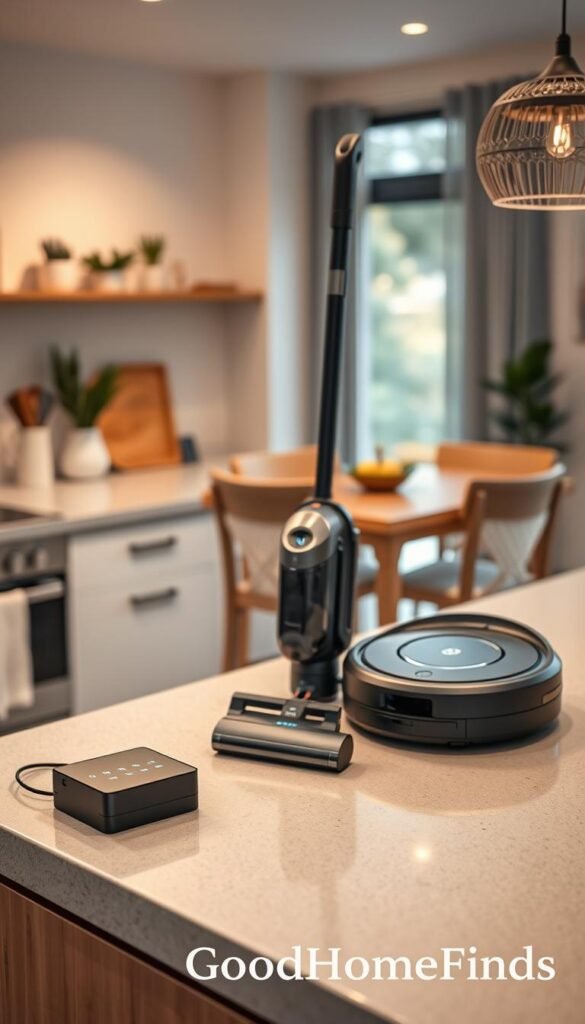
Space and storage planning
Measure where a dock or dock+bin will sit. Self-empty docks save hands-on time but need floor space. Wet tools bring tanks, pads, and solution bottles that require a dry spot to store and a sink to fill and dump water without making a mess.
Keep chargers tidy with a small cable clip or a shallow bin. Define one shelf or corner for spare brushes, pads, and solution so they don’t become tripping hazards.
- Pre-buy checklist: how it’s powered, how loud it is, and where it will live.
- Practical tip: measure a dock corner and test a charging cable route before you buy.
- Safety note: plan a drying spot for pads and a stable place to fill/dump water to avoid slips.
„Choose the model that fits your daily routine and your space, not the one that looks neat on a shelf.“
Who needs this, setup time, and common mistakes (so you don’t waste money)
Match devices to how you live: schedule-heavy, hands-off, or grab-and-go. That simple fit decides whether a tool saves you real time or just takes shelf space.
Who needs this
If you’ve got a busy household, pets, allergies, or a small apartment, these picks speed up daily cleaning. Busy people gain the most from scheduled robots and self-empty docks. Pet owners and allergy sufferers benefit from stronger filtration and quick pickup tools.
Setup time
Quick wins take minutes: handhelds, reusable wipes, and a dishcloth. Longer jobs take an afternoon: robot mapping, no‑go zones, and placing a dock. If you hate apps, choose simpler models; if you love scheduling, app control and voice assistants give real payoff.
Common mistakes
Don’t buy premium for features you won’t use. Skipping routine maintenance hurts performance—filters, brushes, and tanks need regular care. Also check compatibility with your phone or voice assistant before you spend.
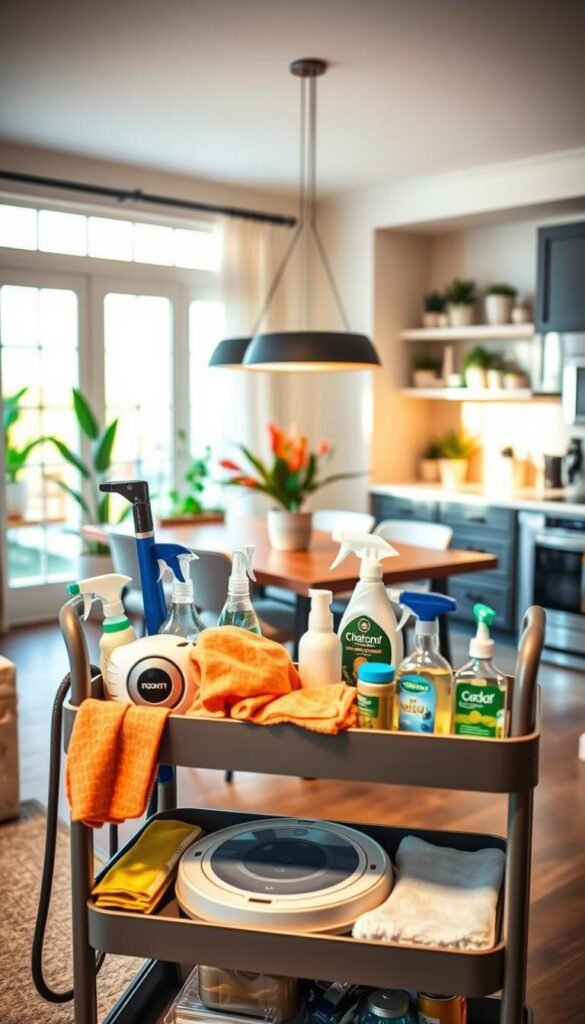
Budget vs premium: pay more only when it cuts daily friction—self-empty docks, faster drying, or better filtration. A short, practical list wins: one floor tool, one quick pickup, and one wipe-down item for most small homes.
Conclusion
Practical picks, matter more than extra features. A small, reliable lineup saves more time than a shelf full of shiny gadgets.
You get real wins for floors and quick messes with a scheduled robot or a solid vacuum and routine handhelds. They cut dust, dirt, and surface hassles when you actually use them weekly.
For kitchens and bathrooms pick one mop approach and one cordless tool. Check power needs and water handling. Measure storage and drying spots before you buy so setup fits your apartment.
Choose budget when it meets daily needs. Choose premium only if it removes a repeated pain—self-empty docks or faster drying tanks. Plan mapping and the first charge on a day you are home.
A cleaner home is about reducing friction, not chasing perfection. Pick the few tools you will keep using and they will save you real time.