
This short list is built for real life. You get a small, practical toolkit you will use day after day. These picks focus on faster prep, cleaner counters, fewer ruined meals, and less frustration.
Most items aim to stay under $25 so you can set up a renter-friendly space without a big spend. A couple of worth-it products may slip above that when Amazon prices change. That is honest and normal.
Each recommendation comes with why it’s useful, who it’s for, and what to avoid. You’ll also see simple safety and quality checks. Serious Eats frames similar choices as true essentials after testing, and many options ship fast on Amazon.
Design matters. I chose tools that are easy to clean, made from reliable materials, and built for daily use. I avoid flimsy plastic, mystery coatings, and bulky bundles that waste space.
Key Takeaways
- This is a practical list for daily home cooking and small spaces.
- Most picks target a budget under $25; a few may cost more.
- Prioritizes Amazon availability for fast delivery.
- Each item includes pros, cons, and safety notes.
- Avoid flimsy plastics, unknown coatings, and useless bundles.
How we picked these everyday kitchen finds (affordable, useful, and easy to buy on Amazon)
We chose tools that you’ll reach for most mornings and that won’t clutter a small space.
Worth it under $25 means three practical things: you use it weekly or daily, it saves you time, and it prevents common problems like slipping, tearing, or inconsistent results.
We judged value by simple criteria: durability for the price, easy cleanup, and whether a tool does real work without gimmicks. We also looked for pieces that stack or store well so they don’t steal limited drawer space.
Safety and quality checks guided our picks. We favored food-safe materials, heat ratings for silicone, and items without mystery coatings. We avoided soft plastics and unknown metal alloys that wear fast.

What we skipped and why
- Unitaskers that do one odd job (like avocado pitters).
- Bulky gadgets that crowd small spaces.
- Cheap bundles that pad a set with duplicates instead of useful pieces.
Buying angle: we favored items with stable sizing and low defect risk for quick Amazon orders. Fit-sensitive items need more care in person.
Price note: prices shift. We give ranges and call out when paying a bit more is truly worth it for long-term quality and less upkeep.
Chef’s knife that actually stays useful (without paying premium prices)
A reliable chef’s knife changes daily prep from a chore into a quick, smooth task.
Recommended pick: the Mercer chef’s knife. It gives you a full tang build and a solid feel without a premium tag.
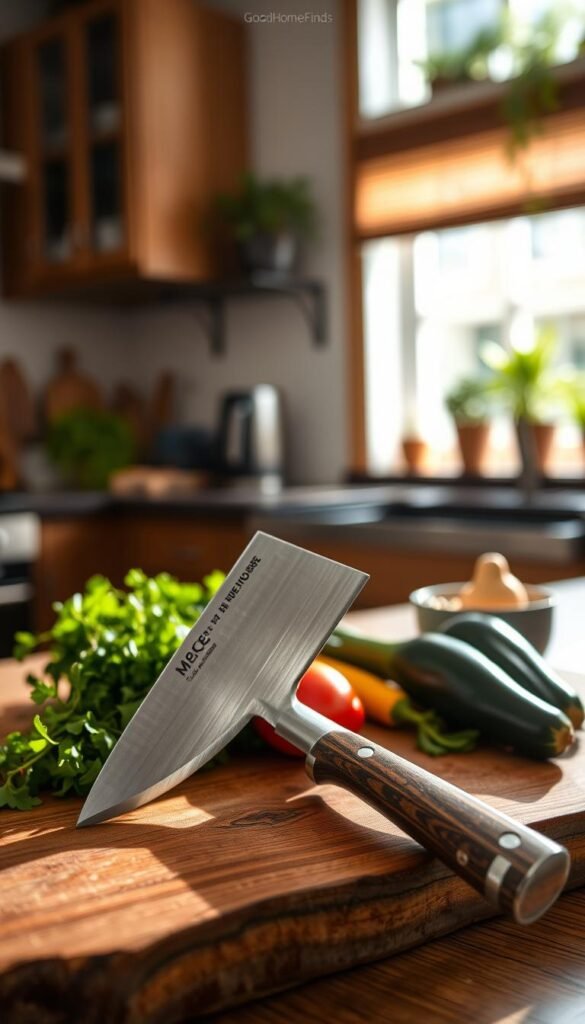
Why it helps: a sharp blade makes chopping faster and safer. You won’t push a dull edge through onions or tomatoes. That reduces slips and messy cuts.
Real-life example: use the Mercer to chop a week’s worth of vegetables in one session. The steady blade and comfortable handle cut prep time and wrist strain.
Who this is for
New cooks, small-space cooks, and meal-preppers who need one reliable workhorse. It replaces cheap single-use blades and fits most renter-friendly setups.
Price-to-value
Expect about $17–$19 on Amazon. That’s a sweet spot for a usable blade you can keep for years with basic care.
Pros and cons
- Pros: comfortable grip, full tang strength, good cutting performance for the price.
- Cons: you will need to sharpen it periodically and store it safely (not loose in a drawer).
What to avoid and alternatives
Avoid mystery steel with no specs, thick grinds that wedge in dense veg, and gimmicky sets where most pieces never see use.
If you can spend more, the Victorinox Fibrox is a solid upgrade under ~$40. If you need cheaper, a reliable store-brand starter knife will do in a pinch.
Paring knife for quick, precise tasks (strawberries, citrus, garlic)
When you need precise cuts, a paring knife saves time and reduces waste.
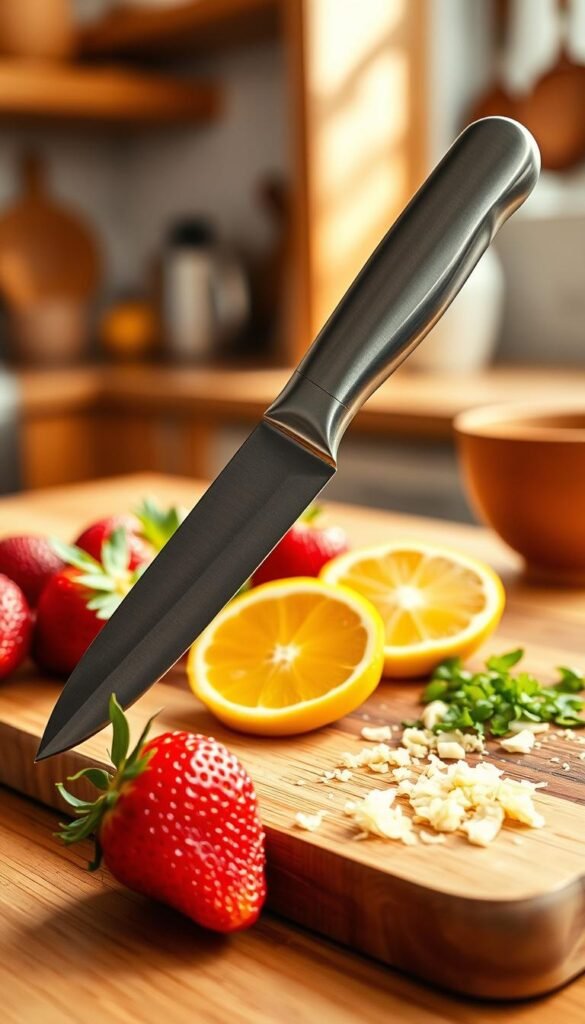
Recommended pick: Victorinox paring knife
Why this one: the Victorinox uses durable stainless steel and a slim profile that gives you control for small food jobs. It is light, easy to handle, and holds an edge for simple maintenance.
Real-life use example
Hull a full carton of strawberries in minutes. Segment citrus without losing juice. Trim garlic cloves and tidy green beans without dragging out a large board.
What to avoid
- Tiny novelty blades: they look cute but lack a stable grip and consistent cutting performance.
- Loose handles: a handle that twists is a real safety risk when cutting wet food.
Buying note: on Amazon, choose listings with clear photos of the handle-to-blade connection and a known brand name for simple, reliable quality.
Bread knife that won’t crush your loaf
A dedicated serrated knife keeps crusty loaves intact and saves you from squashed slices. It solves a simple, real problem: slicing soft crumb without pressing the bread flat.
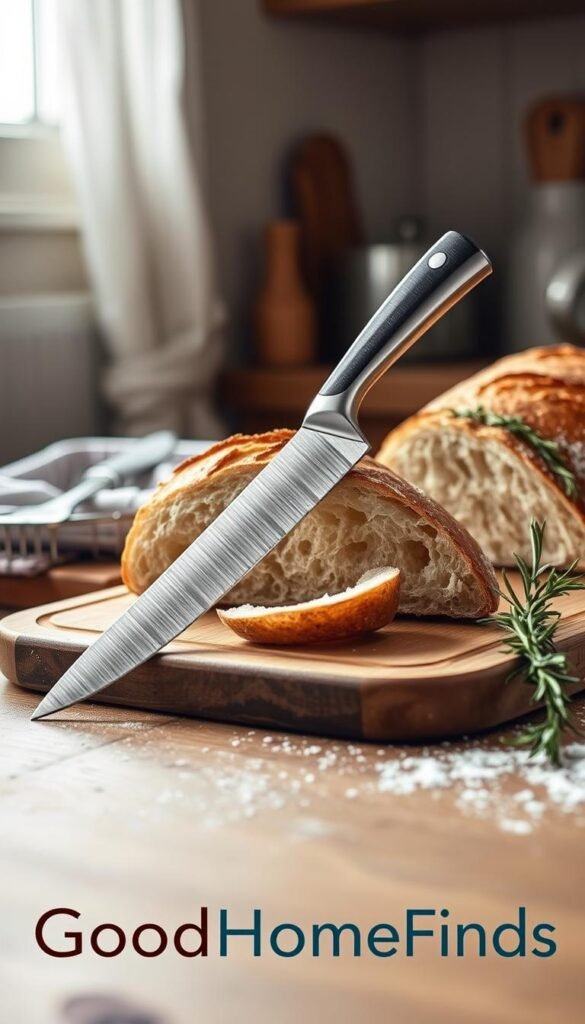
Recommended pick
Dexter‑Russell serrated bread knife — solid performance around $20 and often praised for reliable service on crusty sourdough.
Why serration matters
Serrated teeth grip a hard crust and slice cleanly. You saw gently instead of pushing hard. That keeps the interior intact and gives neat slices for sandwiches, cakes, and tomatoes.
Real-life use
Slice sourdough for lunch without tearing the crumb. Cut a ripe tomato into even rounds. Level cake layers for a tidy assembly.
Pros and cons
- Pros: great value and consistent cutting quality for regular home bakers.
- Cons: serrated edges are tougher to sharpen at home. Expect long service life, then professional sharpening or replacement.
Quick safety note: saw with a steady back‑and‑forth motion. Forcing a chef’s blade through a hard crust is both unsafe and likely to ruin the loaf.
Dishwasher-safe cutting board that won’t slide all over your counter
Small spaces need a cutting surface that stays put and cleans up in one go. The OXO Good Grips plastic cutting board with a juice groove fits that bill.
Recommended pick
OXO Good Grips plastic cutting board — dishwasher-safe, grippy feet, and a built-in juice groove.
Why it helps
The juice groove contains liquid when you slice meat or ripe fruit. That reduces splatter and keeps the counter drier.
Pop the board in the dish drawer or the dishwasher for a real sanitize. No oiling, no hand-scrubbing wood late at night.
Who this is for
This is for renters, busy families, and anyone who wants safer prep with low upkeep. If you handle raw meat often, a plastic board is easier to disinfect.
What to avoid
- Avoid thin boards that warp after a few washes.
- Avoid boards that slide under wet hands or have deep, scarred grooves that trap gunk.
Alternatives and buying tip
If you like the feel of wood, upgrade later and plan to oil it. Meanwhile, use two boards—one for raw meat, one for produce—to cut cross-contamination risk.
Quick buying tip: choose a size that fits your sink and dishwasher so you’ll actually clean it right away.
„Dishwasher-safe plastic boards are the practical choice for real life.“
Y-peeler that makes prep faster (and doesn’t clog)
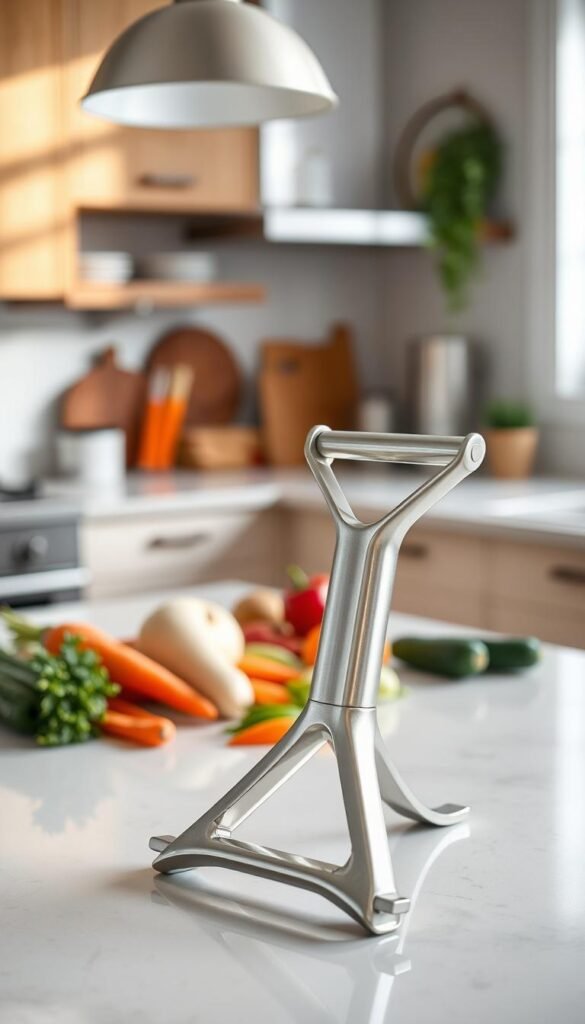
The right Y-peeler turns a fiddly job into a quick step you barely notice. It’s a small tool that saves time and cuts waste when you peel veg for a week of meals.
Recommended pick
Kuhn Rikon Original Swiss Peeler — sharp, simple, and dishwasher safe. Pro cooks and consumer tests praise its reliable blade and low fuss design.
Real-life use example
Peel a week’s worth of carrots in one go. The sharp Y blade moves smoothly so you finish faster and don’t lose fingers of carrot to thick strips.
What to avoid
Avoid dull swivel peelers that clog and tear skins. Skip bulky, fake-ergonomic handles that cause wrist fatigue and slow your work. Rinse the peeler right away and store it safely for safe use and a longer blade life.
„A sharp Y-peeler moves cleanly and quietly; it’s the small tool that quietly saves the most prep time.“
| Feature | Why it matters | Quick tip |
|---|---|---|
| Sharp Y blade | Peels thinly and reduces waste | Replace if it starts to chatter |
| Light handle | Less wrist strain during prep | Look for simple shapes, not bulky grips |
| Dishwasher safe | Easy cleanup after heavy use | Rinse first to avoid clogging |
Why it helps: a clean, comfortable handle and a sharp blade make routine prep work faster and more pleasant in a small home kitchen.
Can opener that won’t rust, slip, or hurt your hands
A reliable opener turns canned staples into dinner without a wrestling match. Choose a model that focuses on comfort, latch reliability, and simple maintenance.
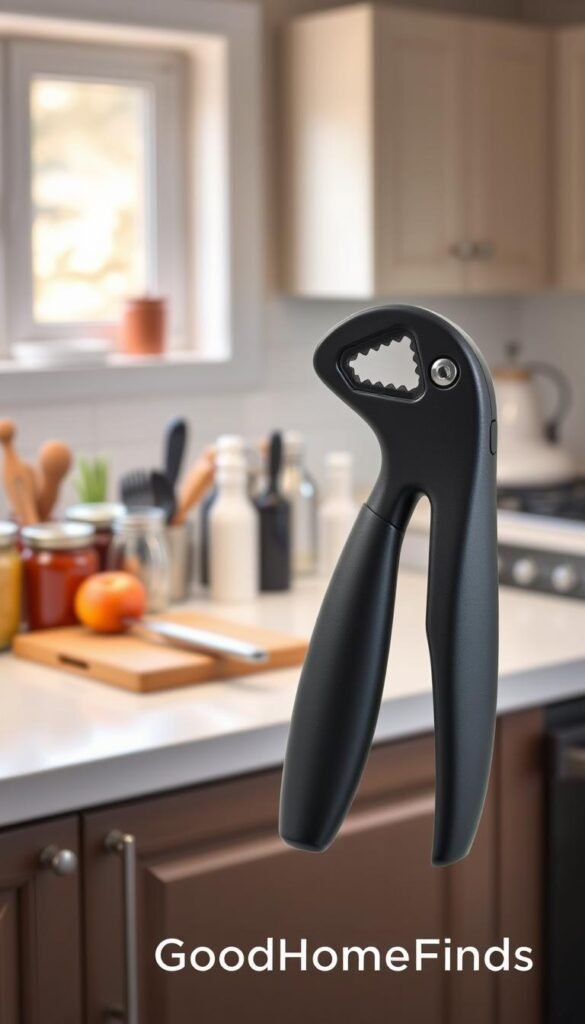
Recommended pick: OXO Good Grips can opener (easy-turn knob)
Why this one: the OXO Good Grips can opener latches firmly and uses an easy-turn knob. The grippy handle reduces slips and the design lowers hand strain when you open several cans in a row.
Why it’s useful
The easy-turn knob makes long turns feel lighter. A reliable latch keeps the opener steady so lids come off cleanly. That prevents sharp-lid accidents and shredded hands during prep.
Real-life use: open canned beans and tomatoes for weeknight chili without fighting the tool or ending up with bent lids.
Cheaper option: what to check before buying
If you choose a basic manual opener, inspect the latch, knob action, and metal quality first. Look for a firm latch, smooth rotation, and metal parts that look sturdy—not thin or poorly plated.
- Value note: paying about $20 once often beats replacing rusty, frustrating openers every year.
- Care tip: dry the opener after washing to cut rust risk in humid spaces.
| Feature | Why it matters | Quick check |
|---|---|---|
| Sturdy latch | Prevents slipping and jagged lids | Clamps firmly on a test can |
| Grippy handle | Reduces hand fatigue and slips | Hold it dry; feel the comfort |
| Durable metal parts | Controls rust and long-term quality | Avoid thin, flaking plating |
„Poorly made openers don’t latch and rust.“
Wooden spoon and silicone spatula combo that covers most cooking jobs
You only need two solid utensils to handle most stirring, scraping, and folding tasks.
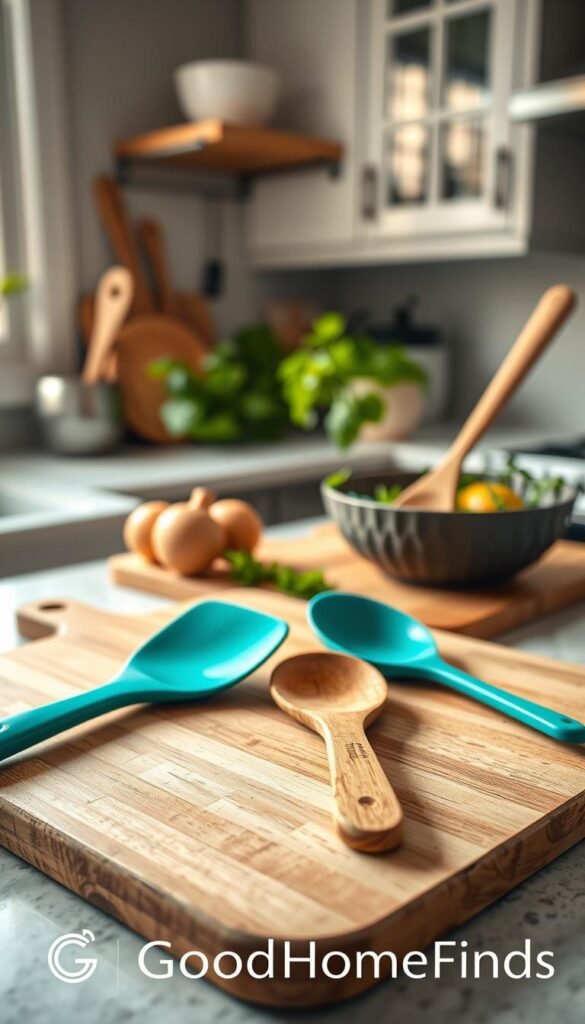
Recommended pair: a simple teak wooden spoon and a high-heat flexible silicone spatula.
Why these two
Teak spoon: teak resists water and lasts longer than painted or soft woods. It’s sturdy for stirring soups in a pot and for deglazing pans without sliding or chipping.
Silicone spatula: choose one rated up to 600°F. A flexible blade scrapes sauce corners, folds batter, and handles hot pan edges without melting or scratching nonstick surfaces.
Real-life use
Use the spoon to scramble eggs, then switch to the spatula to finish a quick pasta sauce. You’ll get by with minimal clutter and very little cleanup.
Safety and care
- Avoid soft silicone that warps near heat.
- Skip painted wood and utensils with glued seams that can split.
- Wash promptly, don’t soak wood for hours, and don’t leave tools resting on hot pans.
Upgrade path: add a whisk or ladle later, but this two-tool combo covers most daily use with solid quality and easy clean habits.
Fish spatula that’s secretly the best pancake and egg flipper
A thin, nimble spatula quietly fixes more flipping mistakes than a thick, clumsy turner ever will. This one tool earns its place by handling delicate food with care.

Recommended budget pick
Winco fish spatula — thin, slightly flexible, and often under $10. Serious Eats and Food & Wine note that its slim blade slides under pancakes, eggs, and fish without tearing.
Who it’s for
This is for anyone who cooks breakfast, reheats leftovers, or flips delicate items like fish, tofu, or tray-baked cookies. It improves the ease of daily prep in a small kitchen.
Why it helps
The thin edge slips beneath food so flips are cleaner and less stressful. Use it to lift a perfect pancake, turn an over-easy egg without breaking the yolk, or remove roasted veggies from a sheet pan intact.
Safety and buying tips
Safety note: avoid metal blades on nonstick coatings to prevent scratches. When you need nonstick-safe options, pick silicone-tipped models.
Buying tip: look for a sturdy handle connection and a thin, slightly flexible blade — not a thick “burger flipper.”
| Feature | Why it matters | Quick check |
|---|---|---|
| Thin, flexible blade | Slides under delicate food without tearing | Should bend slightly when pressed |
| Sturdy handle joint | Prevents wobble and improves control | Grip and twist test before buying |
| Nonstick compatibility | Protects coated pans | Choose silicone tip if needed |
Locking tongs that feel “restaurant sturdy” at home
A firm pair of locking tongs changes how reliably you handle hot food at the stove. You get steadier control, fewer splatters, and less torn meat when you cook.
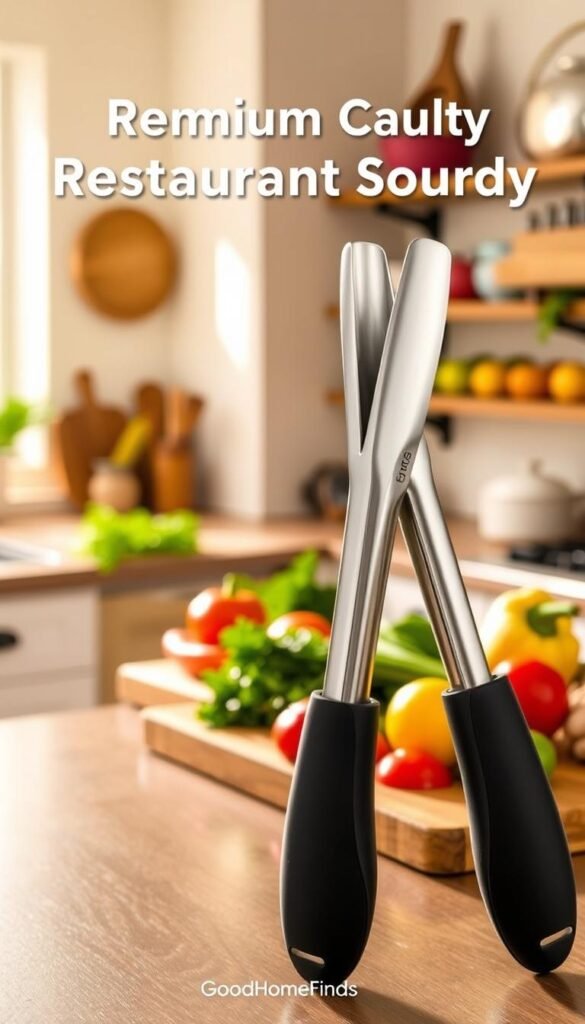
Recommended pick: OXO locking tongs
Why: these tongs have grippy handles, a smooth hinge, and a quick-release lock that stores flat. Serious Eats praises them for years of reliable use and notes they can lift a whole chicken without slipping. They usually run about $18, so they fit a modest budget and high quality needs.
Real-life use
Turn chicken thighs skin-side down and back up without ripping the skin. That keeps the meat intact, reduces flare-ups, and helps your dinner look and taste better.
Alternatives and care
If you use nonstick pans, choose silicone-tip tongs to protect the coating. Check the hinge for smooth action and avoid leaving tongs sitting in a hot pan where grips can melt.
„Good tongs give you control so flips and turns are safer and cleaner.“
- Practical win: firm grip beats fancy extras.
- Storage: quick-release lock keeps them compact in a drawer.
- Care tip: rinse and dry the hinge to prevent grime and stiffness.
Kitchen scale that improves cooking and baking with less cleanup
Weighing ingredients saves time and cuts down on dirty measuring cups. It also makes your results repeatable, which matters for baking and sauces.
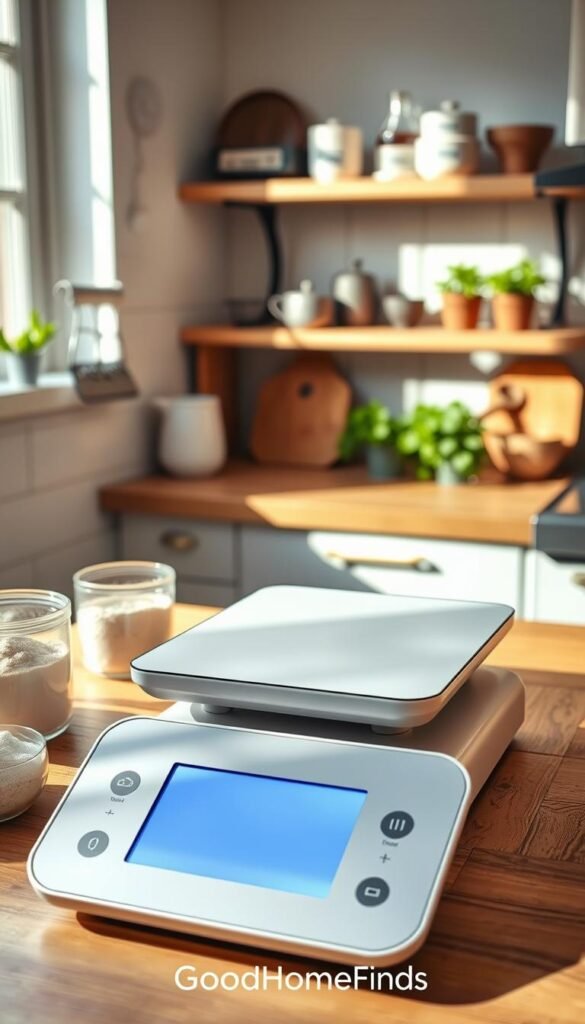
Recommended pick: the Escali digital scale. Serious Eats notes its accuracy and minimal features. It has a simple display, a responsive tare, and a four-minute auto-shutoff.
Why it helps
Weighing lets you build a recipe in one bowl. Place the bowl, tare, and add flour, sugar, or proteins directly. You wash fewer tools and get consistent results for baking and meal prep.
Price and practical notes
The Escali often lists near $27 on Amazon. That price is worth it if you bake a few times a month or meal-prep regularly.
Cheaper option checklist
- Clear screen for quick reads.
- Reliable tare button so you can add ingredients without reweighing.
- Max weight that fits large bowls to avoid overload errors.
Quality matters more than smart features. A stable platform and responsive buttons beat flashy apps. If you find a model with a stainless steel top, it will be easier to wipe clean, but function comes first.
„A small scale saves dishes and gives you consistent baking results.“
Mixing bowls that stack neatly and get used every day
A tight-nesting bowl set saves drawer space and shows up in more recipes than you expect.
Recommended pick
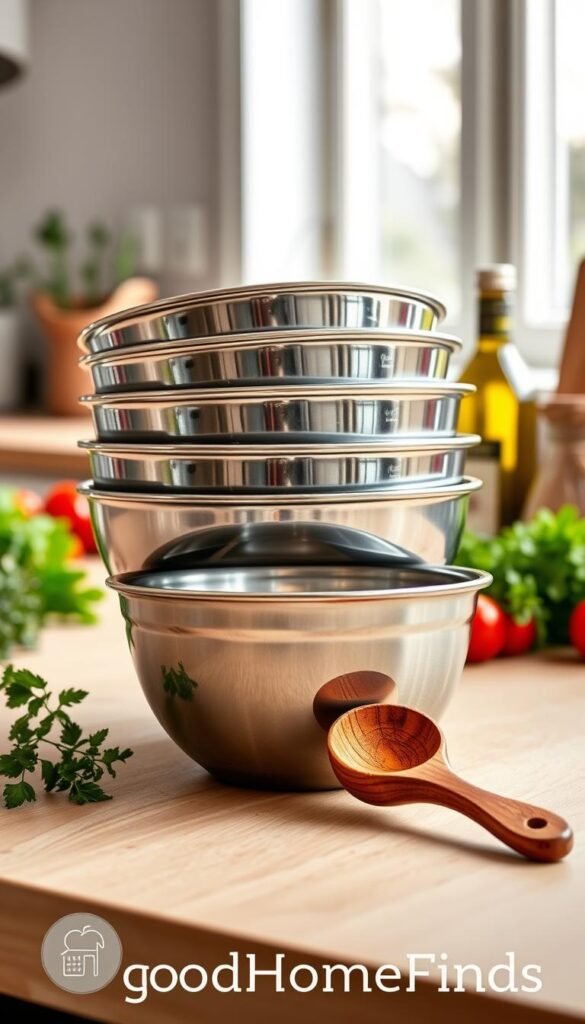
Stainless steel mixing bowl set— choose a stackable trio (small, medium, large) that nests tightly and won’t take over your cabinets.
Why it helps
You’ll use these bowls for marinades, batters, tossing salad, holding chopped veggies, and short-term leftovers. Stainless steel rinses clean and won’t keep smells like some plastics do. They are light, durable, and fast to dry.
Who it’s for
This is for meal-preppers, busy households, and small-space cooks who need tools that do more than one job in a compactkitchen.
Practical sizing and a smart trick
A three-piece grouping covers most needs without excesssize. Use the largest bowl as a catch bowl next to your cutting board to collect scraps or to hold a pot lid while you cook.
„Stackable stainless steel bowls are the low-effort, high-use items that make prep simpler and cleanup faster.“
- Quick tip: pick a set that nests with non-slip rims so bowls won’t clang when you pull one out.
- Real-use example: stage onions, cilantro, and sauce in separate bowls for taco night, then rinse and stack for a quick wash.
Mesh strainer for smooth sauces, better baking, and fewer clumps
When you want a smooth sauce or lump-free dusting of sugar, a good strainer does the heavy lifting.
Recommended pick
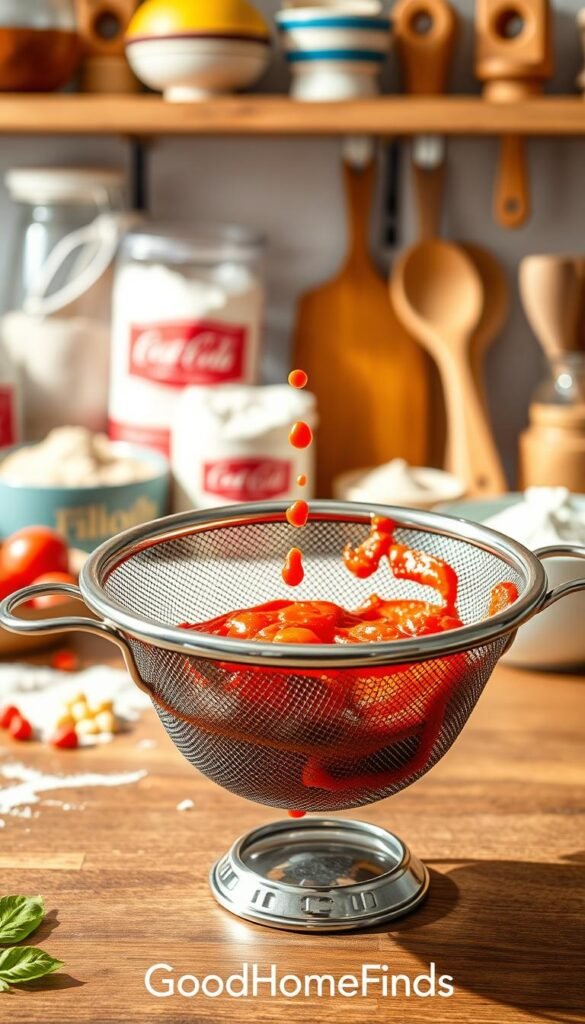
OXO fine-mesh strainer — fine mesh with a sturdy hook and strong steel rim. It’s the kind of tool you don’t think about until you need it, then you reach for it again and again. It usually stays under $25 and fits a renter-friendly setup.
Why it’s useful
Use it to strain seeds from tomato sauces and salsas for a silky finish. Sift powdered sugar over cakes when baking to avoid clumps. Rinse quinoa and other small grains without losing them down the drain.
Real-life example
Make a quick tomato sauce, then press it through the strainer to remove skins and seeds. The sauce becomes smooth and more restaurant-like in texture with very little extra work.
Quality signals and easy use
Look for a solid handle joint and a hook that rests on a bowl. A firm hookup keeps the strainer steady when it’s full. A steel rim helps it hold shape and makes cleanup easier.
What to avoid
- A fraying mesh that snags food and traps bits.
- Weak handle joints that wobble when the strainer is loaded.
- Sizes that don’t fit your most-used bowls. Pick a diameter that sits stable so it won’t tip.
„A fine-mesh strainer is a small tool that solves big texture problems.“
Sheet pans and a cooling rack for easy dinners and better roasting
Sheet pans and a simple wire rack turn oven roasting into one-pan dinners with less fuss.

Pick rimmed sheet pans in half, quarter, and eighth sizes so you match your oven and storage. A half sheet fits most ranges. Quarter and eighth pans work well for toaster ovens and small counters.
Why add a wire rack
A wire cooling rack that fits inside a sheet pan lets hot air circulate under food. That airflow helps roast meat with crisp skin and keeps bottoms from going soggy. Fat drips to the pan below for an easier clean.
Real-life use
Roast chicken thighs on a rack inside a rimmed pan. The skin gets crisp and the pan stays cleaner. When you’re done, let the pan cool and then soak or toss in the dishwasher for easy clean results.
What to avoid and quality notes
Avoid flat cookie sheets with no rim, pans that warp at high heat, and mystery coatings that flake. Look for rolled rims and clear material listings. Skip ultra-cheap options with vague specs.
| Feature | Why it matters | Quick tip |
|---|---|---|
| Rimmed pans | Contain juices and fit oven racks securely | Choose rolled edges for strength |
| Rack fit | Improves airflow for crisping meat and roasting | Measure pan interior before buying a rack |
| Material & finish | Controls warping and long-term quality | Avoid vague „nonstick“ claims; prefer labeled steel |
„Rimmed pans and a matching rack give you better roasting and fewer dishes to wash.“
Salad spinner that turns “wet greens” into weeknight salads you’ll actually eat
A single tool that dries a big batch of lettuce can change how often you reach for salads. If you buy greens regularly, a classic salad spinner pays back in saved prep time and less waste.
Recommended pick
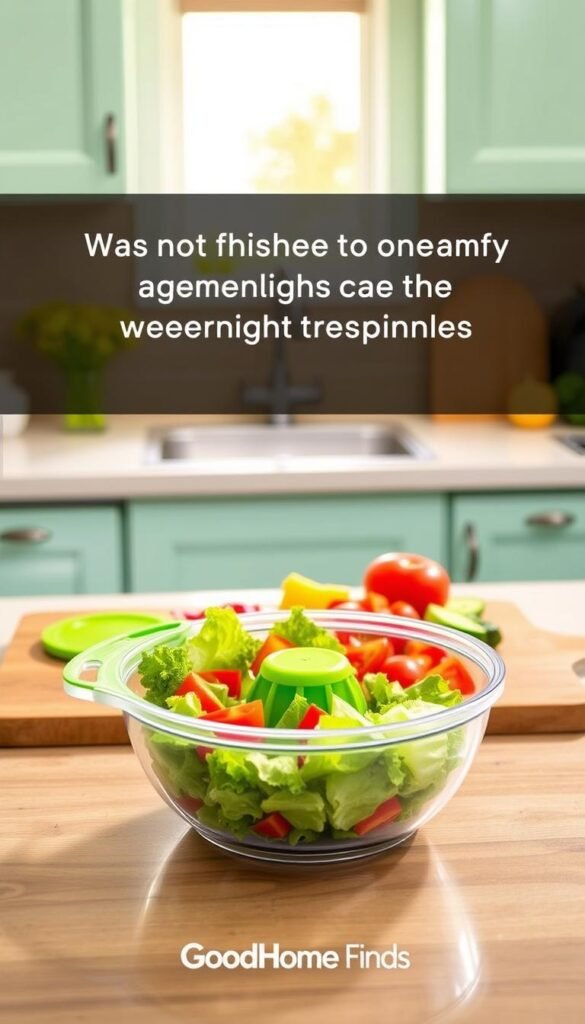
Classic salad spinner — often around $25 on Amazon. Serious Eats and testers note it removes water quickly and keeps leaves crisp for days.
Why it’s useful
Removing water fast prevents soggy salads and helps dressings cling better. That means more appealing food at dinner and less tossing out wilted greens.
Real-life use: wash a head of romaine, spin it dry on Sunday, and you’ll have crisp leaves ready for salads, wraps, or bowls all week.
Cheaper alternative
A colander plus a clean towel works in a pinch. It saves on price, but it takes more effort and often leaves damp spots that shorten storage life.
| Option | Pros | Cons |
|---|---|---|
| Salad spinner | Fast drying, stores greens longer, easy use | Upfront cost (~$25) and needs drying between uses |
| Colander + towel | Low cost, no extra gadget | Slower, more manual steps, leaves trapped water |
| Salad spinner care | Keeps tool odor-free and lasting years | Must disassemble and dry after washing |
„Spin greens dry and you’ll reach for salads more often.“
Care tip: rinse the basket, leave it open to dry, and wipe the lid so the spinner stays fresh and problem-free for years of use.
Instant-read thermometer for safer, less overcooked meat (and better bread)
A thermometer that reads in seconds helps you pull roasted meat and bread at the right moment. It removes guessing and keeps juices where they belong.
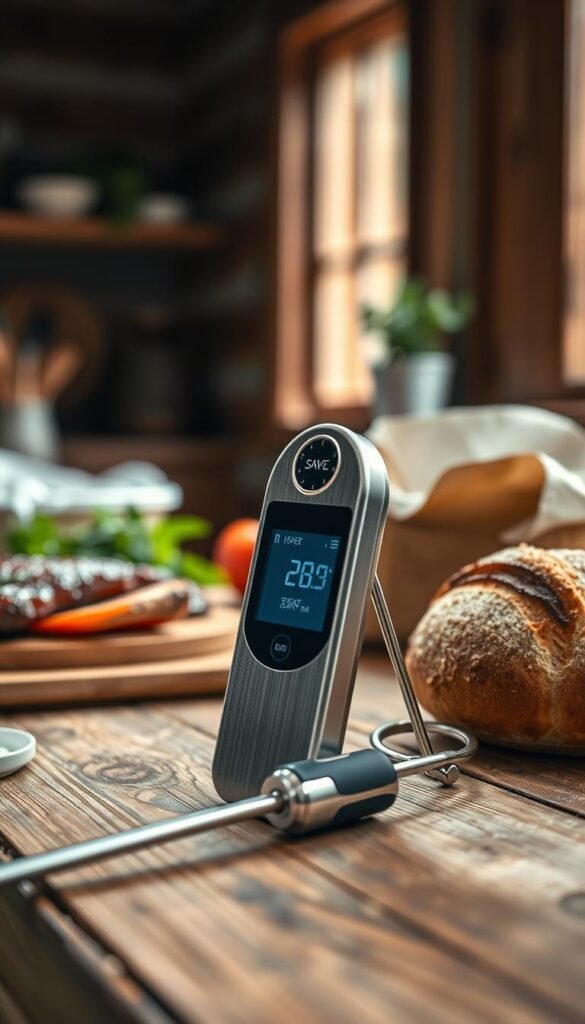
Recommended pick
ThermoPop 2 — fast, accurate, and priced for real life. Serious Eats calls it an “unbeatable value.” It gives stable reads in 1–2 seconds and ships on Amazon for easy use.
Why it helps
Use it in the oven to stop overcooking. You’ll pull chicken or roast when it hits the target temp instead of cutting and losing juices. That improves food safety and quality.
Who this is for
New cooks who want confidence. Grillers wanting consistent doneness. Meal-preppers who batch-cook proteins for the week.
What to avoid
- Slow probes that take ages to settle.
- Small, unclear screens you can’t read over steam.
- Products that claim “instant” but are actually leave-in probes.
Safety note
Follow USDA temps, wipe and sanitize the probe between raw and ready-to-eat food, and avoid cross-contamination. For a faster, pricier upgrade consider the Thermapen ONE, but the ThermoPop 2 is plenty for most home cooks.
Instant reads mean safer meat and fewer dry dinners.
Best everyday kitchen finds shopping tips: what to avoid, what to upgrade later
Buy items that solve real prep problems; skip the flashy features that collect dust. This keeps your space clear and your spending honest.

What to avoid
Avoid cheap gadget bundles that pad a set with tools you never use. They take space and add clutter.
Skip listings that claim mystery coatings or vague metal types. Those often flake or rust fast.
Avoid oversized tools that don’t fit your drawer or oven; size matters in a small space.
When it’s worth paying more
Upgrade later for truly durable colanders, a solid pan set, or a Dutch oven if you braise and stew a lot. These items last a year after year and pay off in performance.
Cast iron and good stainless pans often cost more than $25 but can be a smart long-term buy if you cook frequently.
Fast-delivery strategy
On Amazon, order standardized tools—peelers, tongs, spatulas, thermometers—if you need them last-minute. Be cautious with pans and lids; check reviews for warping, loose handles, and coating issues before you buy.
Practical rule: if a product doesn’t make prep faster or safer, it’s likely clutter.
| What to check | Why it matters | Quick sign to avoid |
|---|---|---|
| Material listed | Predicts long-term quality | Vague „metal“ or „nonstick“ |
| Repeated complaints | Shows real use problems | Rust, warping, flaking |
| Size fit | Prevents wasted space | Oversized or ill-fitting pieces |
Conclusion
Start small: a thoughtful shortlist cuts clutter and gets real meals on the table faster.
Begin with the essentials you’ll use most: a solid knife, a stable cutting board, and a few durable tools like tongs, a peeler, and an instant-read thermometer. These pieces save you time, reduce mess, and make food come out better.
Prioritize easy-clean designs and clear material labels. Choose stainless steel or food-safe plastics, respect heat limits on silicone, and avoid vague steel or coating claims.
Buy what you need now and upgrade later. Order missing items for fast delivery, test them in real use, then add a quality set only if it fits your routine and space.
Practical step: make a short list, buy one or two items at a time, and build a reliable home setup without wasting money or drawer space.
One Comment