Your family fridge can get chaotic fast. You open the door and hunt for milk, leftovers, or snacks. A few clear zones save you time each day and cut food waste.
You can set up a renter-friendly system with bins, trays, and labels. No drilling. No permanent changes. Use simple, removable pieces that are easy to undo when you move.
This article shows a step-by-step way to reset your unit, check food-safety temperatures, and create family-friendly zones for dairy, produce, meat, drinks, and leftovers. Then you’ll see tools, budget picks under $25 and under $50, and quick routines to keep it tidy.
Value over hype: recommendations focus on usefulness, durability, and easy cleanup—not trendy gadgets. The same zone-and-bin logic also works in small kitchen sinks, a bathroom counter, or a closet shelf.
Use simple nightly resets and labeled zones to reduce forgotten leftovers and lower your grocery costs. For more space-savvy solutions, see a practical guide here: fridge space solutions.
Key Takeaways
- Create clear zones so frequently used items stay front and center.
- Choose renter-friendly bins, trays, and labels—no tools needed.
- Focus on food safety: raw meat on the bottom, dairy inside, produce ventilated.
- Start small with options under $25 or upgrade under $50 for better stacking.
- Use a 60-second nightly reset and a 15–30 minute full edit weekly.
- Zone logic scales to small spaces across your home for daily life.
Start With a Full Fridge Reset: Empty, Sort, and Clean Fast
Start by emptying the whole fridge so you can spot hidden jars, sauces, and mystery containers. Lay items on the counter in groups so you can see what you actually have. This makes it quick to find leftovers and odd jars that need a date check.
Sort with a simple, realistic flow
Use four piles: trash/compost, use first, keep, and needs a plan. Be honest on expiry labels. Condiments and jars that have sat for years often belong in trash.
Clean safely—no harsh scrubbing
Remove removable shelves and drawers to soak in hot, soapy water. Wipe the interior with a microfiber cloth and mild soap. Avoid abrasive cleaners that scratch plastic and trap odors.
Deodorize and finish the reset
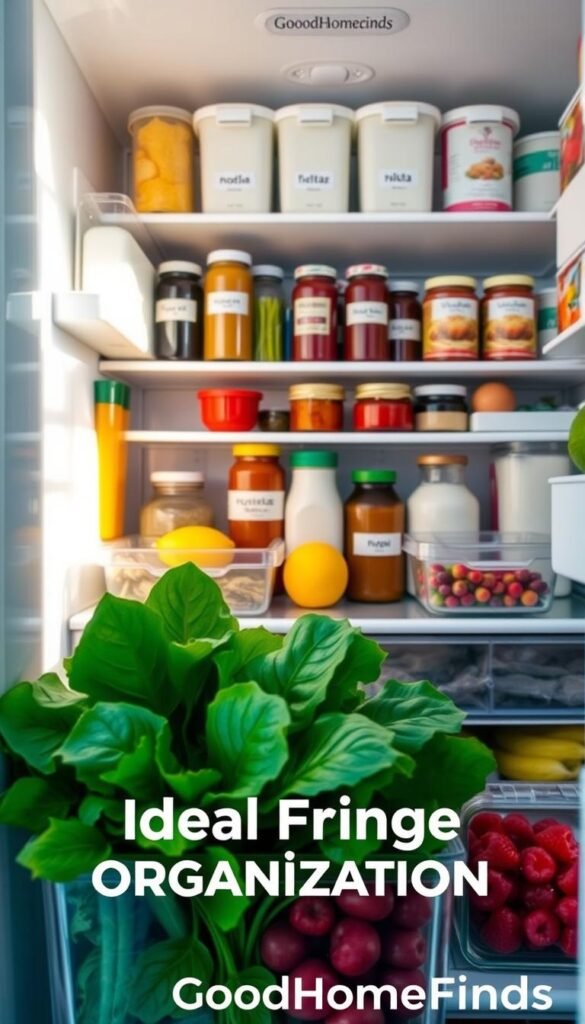
Place an opened box baking soda in the back fridge area to cut smells without using prime shelf space. Wipe spills immediately so they don’t turn into sticky glue for future clutter.
Reset kit to keep on hand: microfiber cloths, dish soap, a small sponge, and a trash bag. Don’t put anything back until you decide zones—otherwise the unit returns to random storage.
Use Fridge Temperatures to Organize Food Safely (Door vs Shelf vs Drawers)
Place items by temperature so food lasts longer and your family eats safer meals.
Why the door belongs to condiments and long‑life jars
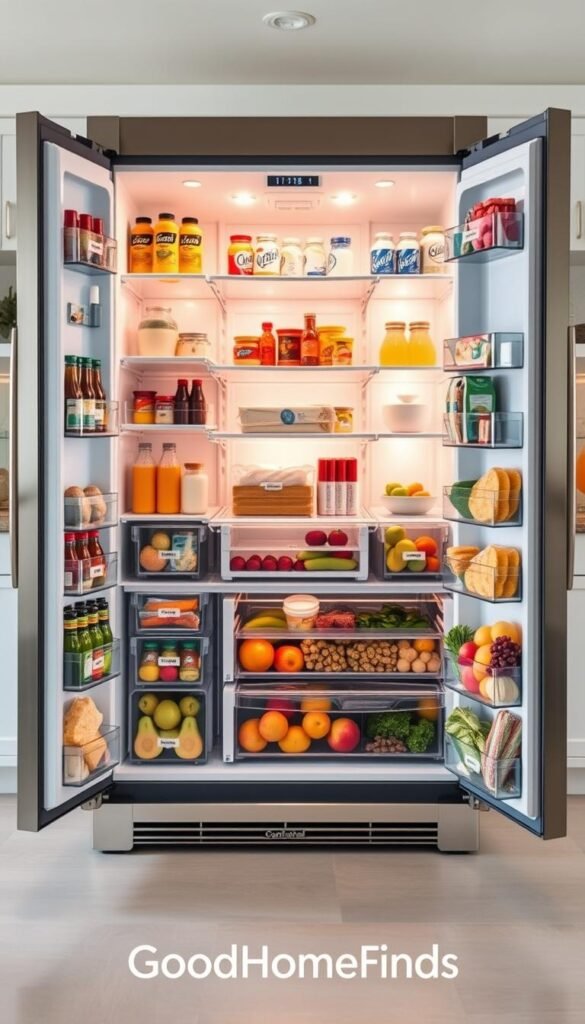
The door is the warmest spot. It sees the most air each time you open it. That makes it ideal for stable condiments like jam, mustard, and hot sauce.
Avoid storing milk in the door unless you drink it quickly. Milk cools less consistently there and can spoil faster if you sip slowly.
Put raw meat on the back and bottom for safety
The back and bottom are the coldest areas. Keep raw meat, fish, and poultry there to slow spoilage and lower bacteria growth.
Safety tip: store meat on a tray or in a sealed bin on the bottom shelf. That prevents drips and cross‑contamination if packaging leaks.
Use drawers for produce and airflow control
Crisper drawers help fruits and vegetables last longer. Their vents let you control humidity so leafy greens don’t go soggy and berries resist mold.
Short on drawer space? Keep an overflow bin on a low shelf and rotate items forward so produce gets used first.
- Bottom-and-back rule: coldest = meat and seafood.
- Door rule: warmest = condiments, jars, and sealed sauces.
- Drawer rule: controlled airflow for produce to make food last.
Durability note: Temperature zones are consistent across most models, so this renter‑friendly method works in apartments and small kitchens. When zones match daily habits, everyone—kids included—can return items to the right spot and food waste drops.
For quick picks that help keep zones consistent, see a short list of useful tools here.
Best Fridge Organization Zones for Busy Families
A visual zone plan makes it obvious where to drop things and how to find dinner fast.
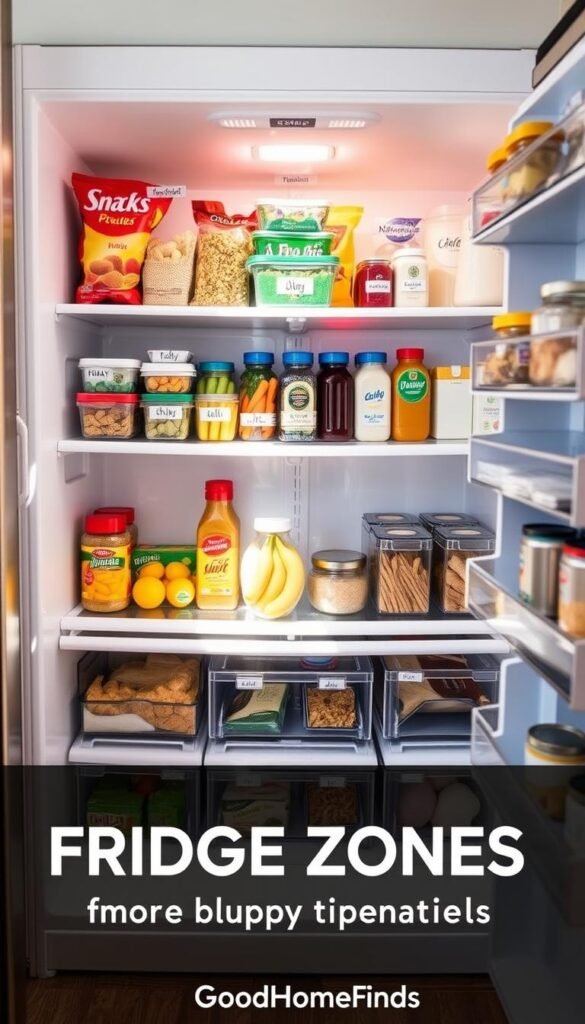
Top shelf: Use this for leftovers and takeout you need to eat soon. Keep shallow, labeled containers so nothing gets shoved behind tall items.
Middle shelf — daily grab: Put milk, cheese, dairy, and kid-friendly snacks here. Eye-level placement makes it easy for kids to help themselves without searching.
Bottom shelf — no-leak zone: Store raw meat low and on a rimmed tray or removable bin. That simple barrier stops drips and protects other food below.
Door shelf: Reserve for sauces and condiments. Avoid storing milk here long term because temperature swings speed spoilage.
Front-of-fridge “expiring soon”: Keep a small tray at the front for items you want to use within 48 hours. This visual cue cuts waste and speeds dinner choices.
- Family order rule: open items go in front; unopened backups go behind.
- Repeat the same zones across shelves so everyone knows the right place.
- Choose renter-friendly trays and bins that lift out for quick cleaning.
| Zone | Primary items | Simple tool | Quick action |
|---|---|---|---|
| Top shelf | Leftovers, takeout | Shallow clear containers | Label + date; rotate forward |
| Middle shelf | Milk, cheese, snacks | Small bin for kid items | Place frequently used in front |
| Bottom shelf | Raw meat | Rimmed tray or pull-out sheet | Store on tray; clean weekly |
| Door / Front | Condiments / expiring items | Small bottle rack + tray | Use door for sauces; front tray for „use first“ |
For compact solutions that fit small apartments, see practical options for small kitchens small-kitchen solutions.
Renter-Friendly Fridge Containers and Tools That Make Everything Easy to Find
Small, removable bins and trays change how you find things in one minute. They require no drilling and lift out for quick cleaning.
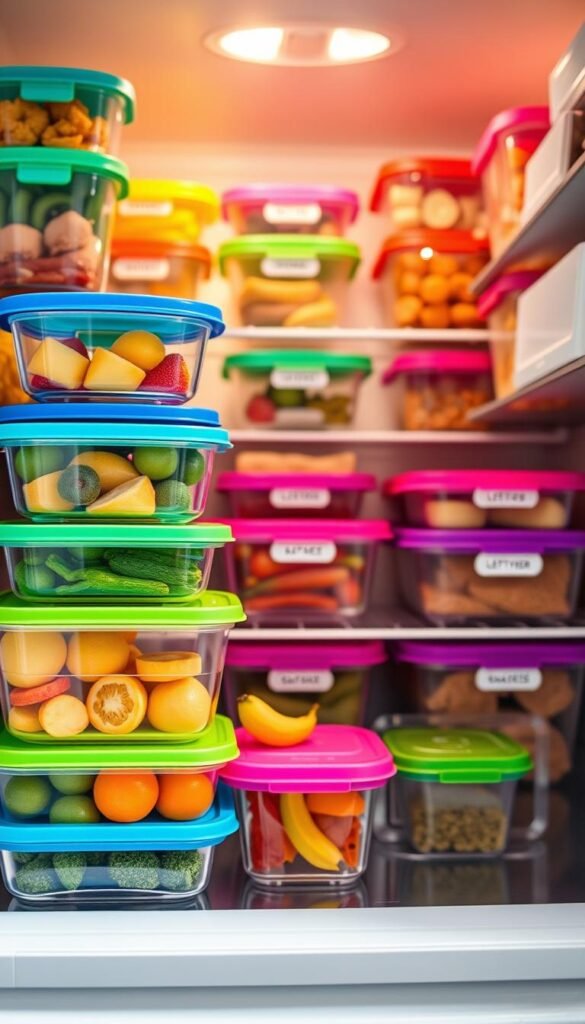
Shallow clear bins for fast visibility
Shallow, clear containers corral loose lemons, yogurt cups, and small jars. You can see what you have at a glance. That beats perfect stacking because you can lift a whole category out in seconds.
Rimmed baking sheets as pull-out trays
Use rimmed baking sheets to create restaurant-style pull-outs. A half sheet works well, but 1/4 or 1/8 sizes fit many small units better. They stop lids from toppling and make small clusters portable.
Turntables and stackable food storage
A Lazy Susan prevents sauces from getting lost in the back. Lidded, stackable food storage containers save shelf space and are easy to grab for meal prep and kids’ snacks.
Labels that keep the system honest
Label categories like „Snacks,“ „Use First,“ and „Meal Prep.“ Simple labels help everyone unload groceries to the same spot and keep storage containers useful across other rooms—under-sink bins, closet shelves, or an entryway drop zone.
Durability note: choose clear plastic or metal trays that wash easily and resist staining for real-life use. For affordable starter options, see a compact kit here: organizer Finds for budget setups.
Budget Picks Under $25 and Under $50 (With Pros, Cons, and Best‑For)
A few purposeful picks can cut search time and keep milk and snacks easy to find. Start small and choose durable pieces that lift out for cleaning. The right kit helps you set zones fast without drilling or permanent changes.
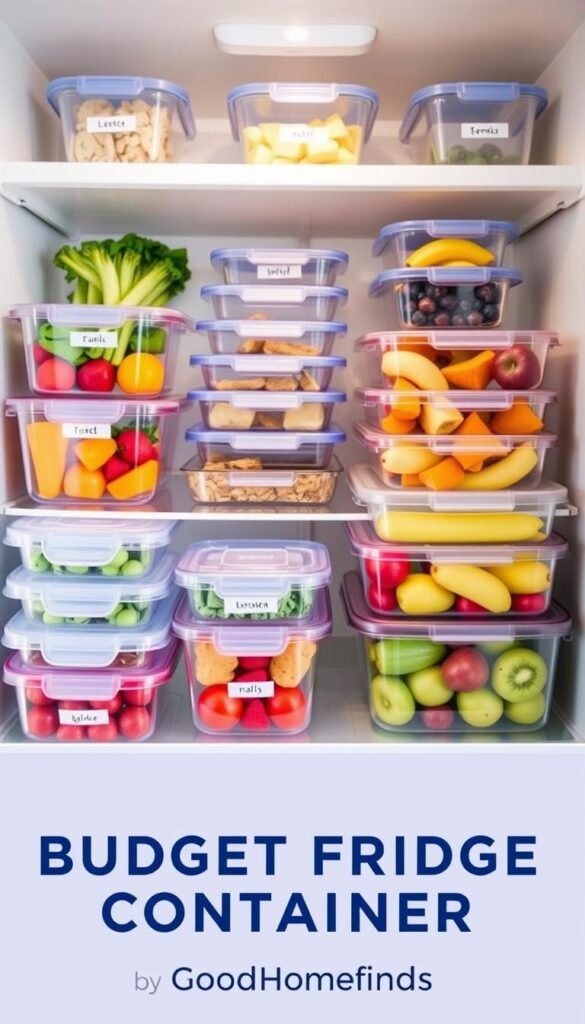
Under $25: the no‑drill starter kit
What to buy: 1–2 shallow clear bins plus a mini rimmed tray or half sheet pan.
- Pros: cheap, visible, fits most shelves, quick to install.
- Cons: limited capacity; may need a spare for snacks or produce.
- Best for: small rentals, mini fridges, and a single shelf “use first” zone.
Under $50: the family upgrade kit
What to buy: 3–4 clear bins for zones, one Lazy Susan for condiments, and a set of lidded stackable containers for leftovers.
- Pros: better stacking, less waste, faster cleanup, kid‑friendly access.
- Cons: higher upfront cost; choose sizes to match your shelf heights.
- Best for: families with toddlers, teens who grab snacks, and meal preppers.
Quick comparison
| Item | Pros | Cons | Best use |
|---|---|---|---|
| Clear plastic bins | Visibility, cheap, lift‑out | Can crack if thin | Snacks, dairy, kid bins |
| Rimmed trays | No‑leak staging, pull‑out ease | Bulky if oversized | Raw meat staging, messy jars |
| Turntables | Easy access to condiments | Needs flat shelf space | Door shelf or condiment corner |
| Lidded containers | Stackable, keeps leftovers fresh | Takes vertical space | Meal prep, leftovers |
Safety and fit tips
Choose thicker plastic that resists cracking in cold temps. Look for smooth edges that wipe clean. Measure shelf heights before buying so containers and turntables actually fit.
Tool to zone match: bins = snacks and dairy; trays = low‑shelf meat staging; turntables = condiments near the door; stackables = leftovers.
For a short comparison of cheap vs premium storage picks, see this practical guide: storage cheap vs premium.
Daily Routines and Easy Maintenance That Keep Your Fridge Organized
Small daily actions stop clutter from building and save you time when dinner comes around.
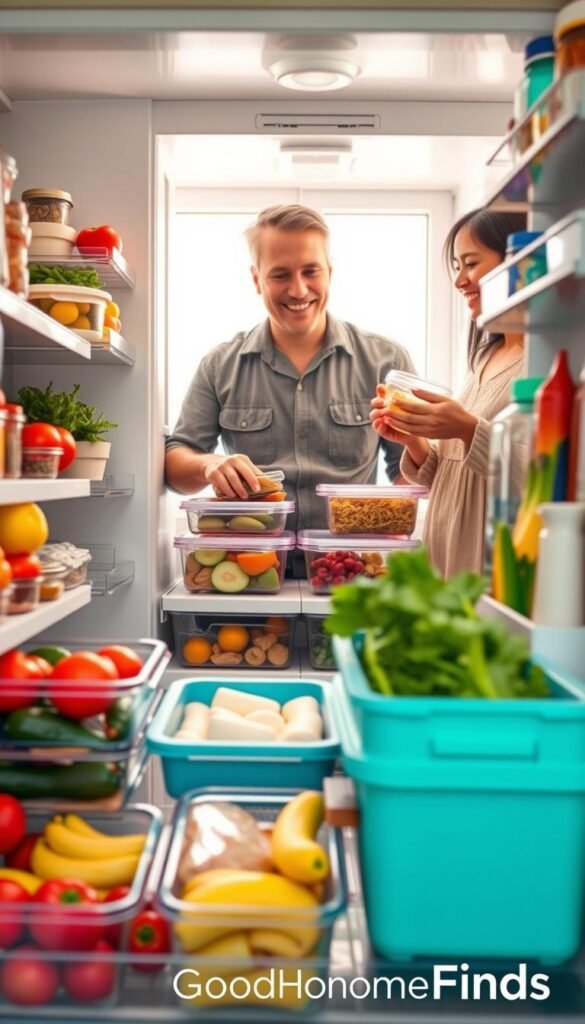
Weekly five‑minute reset
Do this once a week: wipe visible spills, toss obvious waste, and pull the „use first“ tray to the front.
Move expiring items forward so the family sees them. Replace a box baking soda in the back to cut odors.
Grocery unload routine
Group like items as you unpack. Remove bulky packaging when it helps you stack containers. Keep taller bottles where they fit to avoid tipping shelves.
Quick rule: label bins and keep similar items together so kids and guests can put things back in the right place.
Quick inventory that saves time
Use a dry‑erase sheet on the door or wall. Track produce, meat, and dinner ideas at a glance. Update it as you unpack groceries so you skip digging for ingredients.
Food safety and odor control
Always store raw meat low and on a rimmed tray to prevent drips and cross‑contamination. Wipe sticky drips immediately.
Keep one box baking soda at the back and change it every 1–3 months to reduce smells and give food a neutral home.
Same habit, different room: a five‑minute reset works for an entryway bin, a bathroom counter, or a closet shelf. Small resets beat big overhauls.
Mindset tip: aim for a system your family follows automatically. Practical routines save you time and keep food usable, not perfect displays. For a short kit that helps with clutter and meal flow, see this kitchen problem mix.
Conclusion
Make the system stick by choosing one do‑it‑today change and repeating it nightly.
Reset, sort by temperature, set family zones, and keep a short weekly edit. Place condiments in the door, produce in drawers, leftovers visible on shelves, and raw meat low to stop leaks.
Renter‑friendly containers and simple storage containers do most of the work. A front „use first“ tray cuts waste and speeds weeknight decisions.
Start small: one or two tools under $25, then upgrade under $50 for more zones and stackable food storage. Prioritize safety and durability—easy‑to‑clean surfaces and stable trays are worth it.
One last tip: the same zones-and-bins approach calms other small spaces in your home. For small‑space solutions beyond the kitchen, see a short guide for bathroom and compact spaces.