
This modern, family-focused guide shows renter-friendly, no-drill ways to make the refrigerator work harder for busy households. It prioritizes function, safety, and quick setup over perfect styling.
Expect practical product suggestions with clear pros and cons, plus notes on what works best for kids, and budget callouts under $25 and $50. The plan stresses daily routines and easy maintenance so systems hold up in real life.
Readers will get a step-by-step path: reset, zone, organize shelf-by-shelf, protect produce and dairy, store meat safely, and prevent freezer pileups. The goal is more usable space — faster finding, fewer forgotten foods, and less waste.
Recommendations rely on bins, trays, labels, and routines rather than drilling or permanent changes. Options cover small and full-size refrigerators and include quick decision tools like pros/cons and a comparison plan families can use tonight.
Key Takeaways
- Focus on renter-friendly, no-drill fixes that fit active homes.
- Follow a clear, shelf-by-shelf routine to cut clutter and waste.
- Choose affordable bins and trays with budget notes under $25 and $50.
- Prioritize safety for produce, dairy, and meat in daily habits.
- Use simple labels and zones so kids and adults can maintain order.
What “More Fridge Space” Really Means for Busy Families
Practical shifts — zones, clear containers, and a weekly reset — change how the refrigerator works for a family.
Everyday pain points and direct fixes
Families often lose leftovers behind jars and let vegetables wilt in dark drawers. Condiments multiply in the door and kids grab snacks without returning things.
Fix types: visibility (clear bins), containment (airtight trays), and rules (one-in, one-out).
Small vs. full-size: how systems change
Small refrigerators demand choosy shopping and slim packaging. A few bulky items can block airflow and access.
Full-size models hide clutter longer, so labeling and containment keep older dairy and meals front-and-center.
„If an item keeps getting lost, give it a home; if it leaks, give it a container; if it expires, put it up front.“
- More room often equals clearer sightlines and fewer duplicate purchases.
- Set a short weekly reset to check dates and move older items forward.
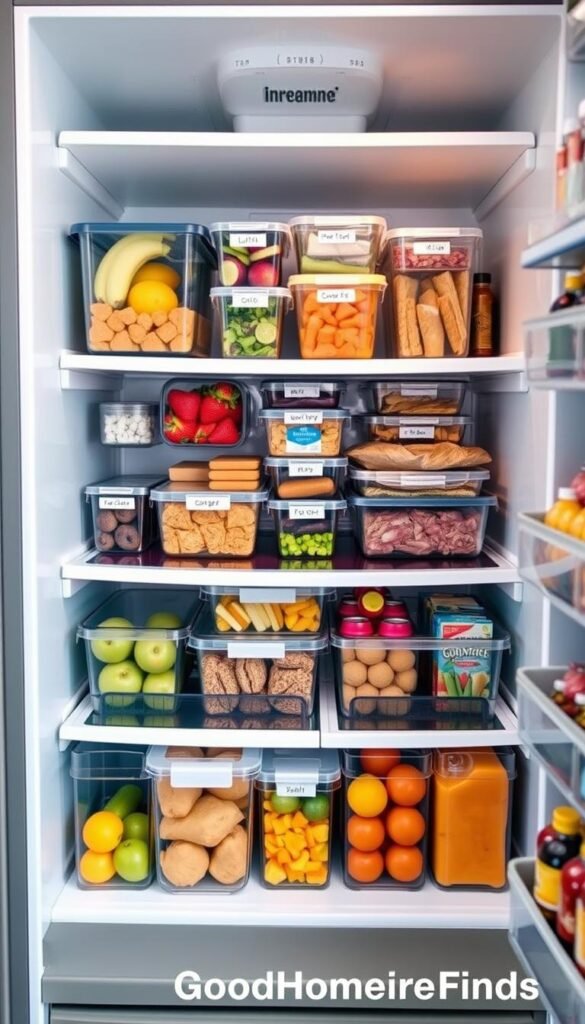
| Problem | Typical Fix | Why it helps |
|---|---|---|
| Lost leftovers | Clear labeled bin | Faster finding reduces waste |
| Wilted vegetables | Ventilated produce bin | Better air and visibility |
| Condiment clutter | Door caddy or transfer to shelf | Frees door and avoids duplicates |
Reset Your Fridge Fast: Edit, Clean, and Start with a Blank Slate
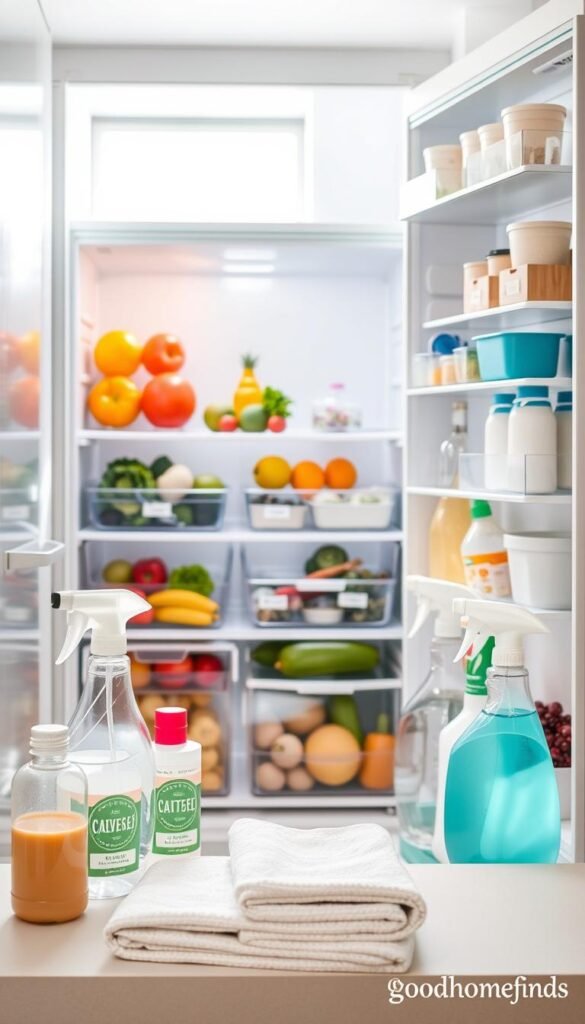
Clear, quick resets keep a busy household from letting clutter and expired groceries take over. This short routine works for renters and families who need a repeatable method that fits into a packed day.
Do the “never skip the edit” pull-everything-out method
Start by emptying the refrigerator so every item is visible. Keep a trash bag and a donate box nearby to remove expired or unwanted goods immediately.
Consolidate duplicates and group like items on the counter while deciding what returns. Aim to finish the edit in 15–30 minutes.
Quick clean routine: wipe shelves and drawers while the fridge is empty
Use warm soapy water or a gentle, food-safe cleaner to wipe surfaces. Remove drawers and wash them if possible, then dry thoroughly before restocking to prevent slipping and mold.
Safety note: keep raw proteins low on the counter while you work and return them last, once shelves are dry.
Declutter rules that prevent overstuffing and food waste for small areas
- Avoid buying more than what fits comfortably; shop for 1–2 weeks at a time.
- Prioritize items that will be eaten within seven days and limit single-use condiments unless there is a plan to use them.
- Adopt a two-minute scan after grocery unload to catch expired dairy, wilted produce, and duplicate jars before they become clutter.
Fast restock order: place long-lasting items first, dry shelves, then return perishable and leak-risk foods last, keeping raw meat on the lowest shelf to reduce cross-contamination.
Set Up Containment Zones That Stick (Even When Kids Help)
Clear zones make it easy for everyone to find snacks, meals, and staples at a glance.
Designate simple, family-proof zones: dairy, snacks, vegetables/fruit, raw meat, drinks, and a marked „Tonight’s dinner“ or leftovers area. Keep each place consistent so kids learn where things go.
Choose clear bins and removable labels for visibility and renter-friendly use. Transparent containers let you see contents fast and lift groups of items out to restock.
Why clear bins beat piles
Bins reduce visual clutter and stop small packages from falling to the back. They speed restocking: grab a bin, refill, and return it.
Labeling that works
Use broad category labels like „Snacks“ and „Veggies.“ Removable label strips or label sleeves are durable and renter-safe. Broad labels let the system flex as groceries change.
Door strategy
Keep frequently used condiments in the door, but avoid overloading it. If temperature swings occur, store milk and other perishable dairy on main shelves instead of the door.
- Kid rule: place a snack bin at child height with only approved „yes“ foods.
- Product picks: clear plastic bins, adhesive label strips, and simple airtight containers for leaks.
- Quick safety note: store raw meat low and in sealed containers to prevent drips.
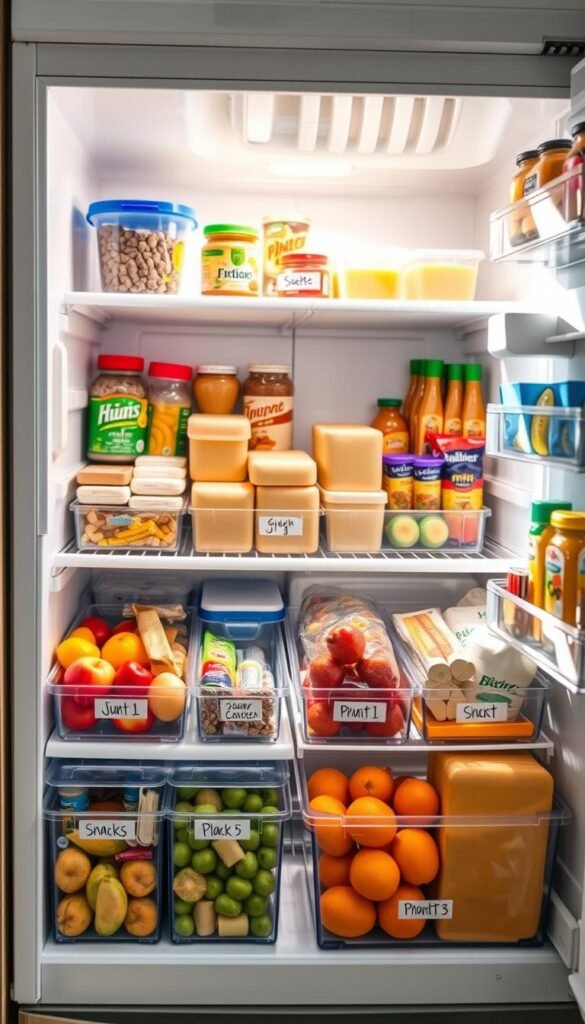
| Zone | Recommended container | Why it helps |
|---|---|---|
| Dairy | Clear shallow bin | Keeps cheese and yogurt visible and easy to grab |
| Snacks | Open-top bin at kid height | Limits rummaging and supports independent choices |
| Raw meat | Airtight container on bottom shelf | Prevents leaks and reduces cross-contamination |
| Veggies/Fruit | Ventilated clear bin | Improves airflow and visibility to reduce waste |
Best fridge space solutions for Shelf-by-Shelf Organization
Small adjustments on each shelf free up meaningful room and speed up daily meal prep.
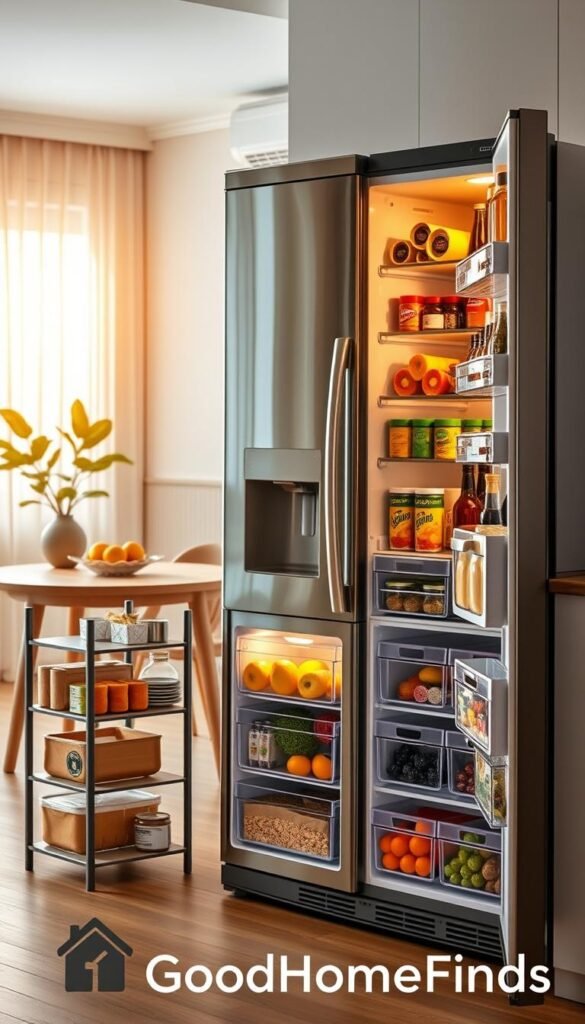
Top shelf: keep ready-to-eat items and quick snacks visible. Use a low-profile turntable for jars and condiments so everything is a spin away.
Middle shelves: place daily staples and prepared meals. Stackable clear bins or shallow drawers work well here; they use vertical space without blocking airflow if not overstacked.
Bottom shelf: store leak-risk foods and bulky containers. Use one airtight container for raw proteins and keep larger bottles toward the back.
Leftovers zone: assign one clear bin or tray labeled for leftovers. Apply the rule: leftovers go in this bin first, groceries second. That prevents the nightly shuffle.
Remove bulky packaging: break down cardboard multipacks and transfer single items to clear containers to reclaim visible space and reduce clutter.
| Option | Pros | Cons |
|---|---|---|
| Bins | Group items, boost visibility | Too many cut flexibility in small units |
| Turntable | Easy access on tight shelves | Not ideal for heavy jars |
| No containers | Flexible layout, quick adjust | More visual clutter, lost items |
Practical tip: adopt an essentials-only bins approach (snacks, leftovers, produce) for small refrigerators to balance order and flexibility.
Produce and Dairy Without the “Forgotten Drawer” Problem
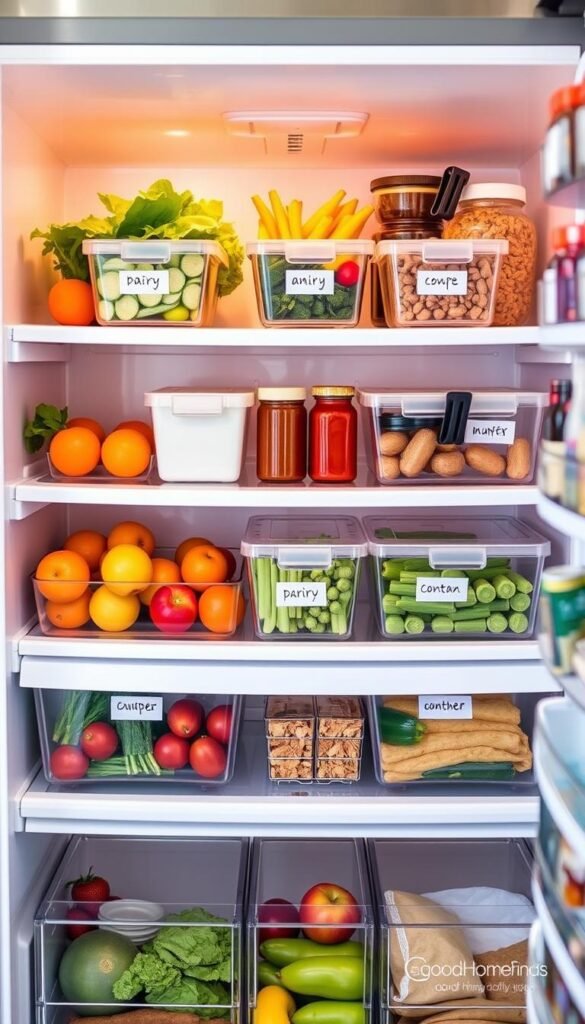
Visible produce turns forgotten greens into quick snacks and fewer trips to the trash.
When a refrigerator hides items, vegetables wilt and fruit gets bruised. Visibility is the simplest fix before installing anything complex.
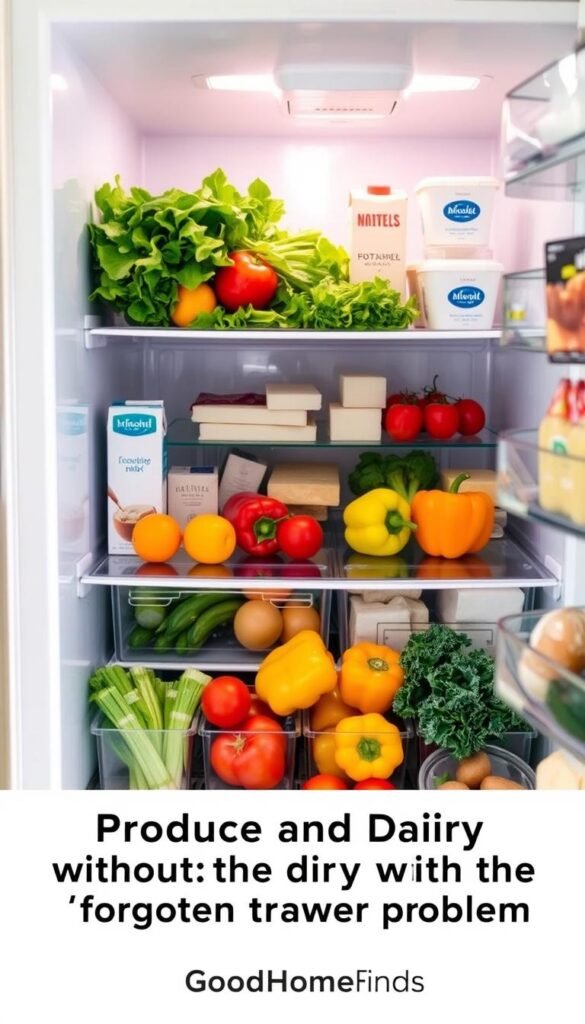
Rethink drawers with ventilated bins
Clear, ventilated bins replace opaque drawers. They improve airflow and make contents obvious at a glance. These work well for households that shop weekly and need a visual reminder to eat perishables.
Divide fruit from vegetables
Use divided bins to separate produce and prevent bruising. Kids can grab grapes without crushing salad greens. Dividers speed up snack prep and cut waste.
Group grab-and-go dairy
Keep eggs, yogurt, cheese, and butter together on one shelf or shallow container. Morning decisions drop and breakfasts are faster.
- Maintenance tip: do a one-minute midweek produce scan to toss or use wilting items.
- Renter-friendly note: choose removable containers that require no tools.
| Product | Key benefit | Best for |
|---|---|---|
| Ventilated clear bin | Improves airflow and visibility | Weekly shoppers wanting less waste |
| Divided bin | Prevents bruising; speeds snacks | Families prepping kids‘ snacks |
| Shallow dairy tray | Keeps eggs and yogurt together | Busy mornings and grab-and-go items |
Meat, Leftovers, and Food Safety in a Family Fridge
Keep raw proteins low and contained to protect other foods and simplify cleanups.
Place raw meat on the lowest shelf. This reduces cross-contamination if packaging leaks. It also keeps kids from accidentally moving heavier items at higher levels.
Use a rimmed tray or a shallow leak-catching container under packages. It catches drips and makes cleanup quick without any permanent change.
One-in, one-out restocking
Move older items to the front and new ones to the back. This simple habit cuts waste and saves time when planning meals.
Airtight containers for leftovers
Airtight, stackable containers prevent spills and control odors. Keep a designated leftovers container or zone so weekday lunches are a grab-and-go task.
Glass containers last longer and resist stains. Plastic is lighter and kid-friendly but replace it if warped or scratched.
- Nightly habit: label leftovers with day-of-week and return them to the designated zone.
- Use shallow trays under meat for an extra safety layer and easier cleaning.
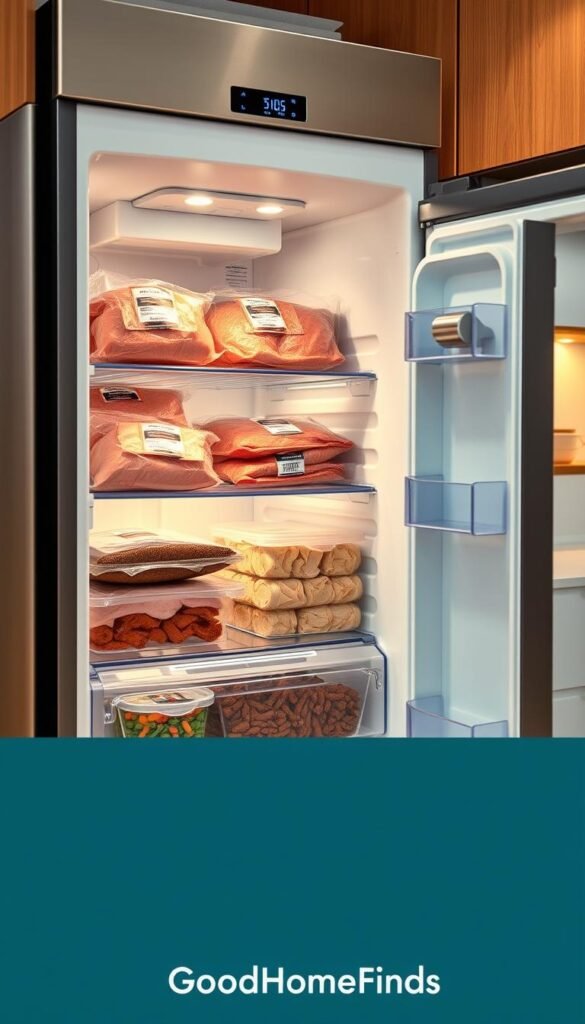
| Item | Recommendation | Why it helps |
|---|---|---|
| Raw meat | Bottom shelf over a rimmed tray | Stops leaks from contaminating other food |
| Leftovers | Airtight, stackable containers in a labeled zone | Speeds lunches and reduces waste |
| Container choice | Glass for durability; plastic for lightness | Balance durability, weight, and kid use |
Freezer Space Solutions That Prevent “Freezer Tetris”
Visibility, not volume, is the main problem—items stored upright are found and used more often.
Keep frozen foods upright
Wire file sorters work like folders for meals, meat, and vegetables. Slide flat bags and boxed meals upright so each item is visible. This cuts search time and reduces freezer burn.
Category bins for small freezers
Use a few renter-friendly bins for weeknight meals, breakfast items, and treats. Label each bin so kids grab approved snacks and the door stays closed less often.
Turntable and tray alternatives
On tight shelves, a low-profile turntable or flat tray keeps small items from disappearing. These options are tool-free and easy to move when unpacking groceries.
„Keep similar items grouped and upright; you’ll cook from the freezer more often.“
- Best-for: file sorters for flat bags and boxes; bins for odd shapes like ice packs and popsicles.
- Monthly five-minute reset: toss freezer-burned items and re-stand bags upright.
- Choose durable, no-drill organizers made of plastic or wire for renter-friendly setup.
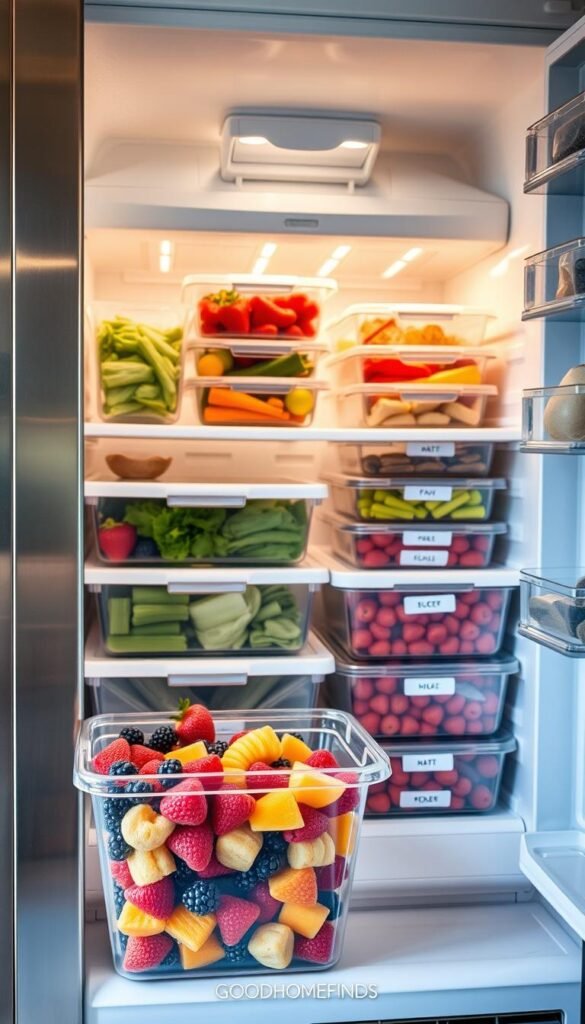
| Organizer | Works best for | Why choose it |
|---|---|---|
| Wire file sorter | Meals, boxed vegetables, flat bags | Keeps items upright and visible |
| Category bins | Small freezers with mixed shapes | Groups items, limits kid rummaging |
| Turntable/flat tray | Grab-and-go snacks and jars | Easy access on tight shelves |
Budget-Friendly Fridge Organizing Items Under $25 and Under $50
A focused shopping plan under $50 gives quick, practical wins for refrigerator order without overbuying.
Under $25 picks
Labels, one or two basic clear bins, a slim tray for deli packets, and a simple cleaning kit form a high-impact starter set.
These items fix visibility, contain leaks, and make a weekly wipe-down fast. They cost little and set habits that keep order.
Under $50 picks
For slightly more, add stackable drawers, a low-profile turntable for jars, ventilated produce bins, and divided bins for snacks.
These containers add vertical storage and better airflow, but measure shelves first to avoid fitting issues.
- Budget-first strategy: start with the smallest set that solves the biggest pain point—usually snacks, leftovers, or produce visibility.
- Pros/cons at a glance: labels are cheap and high-impact but need buy-in; stackable drawers increase capacity but reduce tall-item flexibility; ventilated bins cut waste but require proper sizing.
| Item | Cost range | Setup time | Durability | Best-for |
|---|---|---|---|---|
| Removable labels | <$5 | 5 min | Low–Medium (adhesive) | All households |
| Clear bins / slim tray | $10–$25 | 5–10 min | Medium (plastic) | Small refrigerators, kids |
| Stackable drawers / ventilated bins | $25–$50 | 10–20 min | Medium–High | Families, meal preppers |
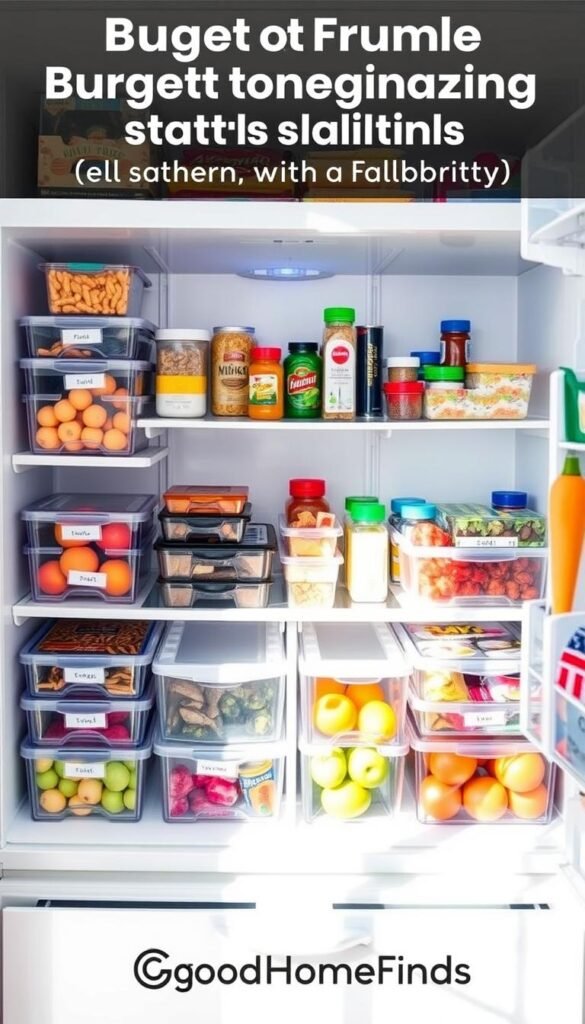
Apartment-Friendly Add-Ons and Overflow Storage Around the Refrigerator
An easy way to create more usable fridge room is to move the right items out of it. This keeps perishables front and center and prevents the kitchen from becoming a catch-all. The approach stays renter-friendly and safety-focused.
Top-of-appliance bins and heat-aware storage
Use decorative lidded bins on the top for coffee, tea tins, or bar supplies. The top of the unit gets warm, so avoid candles or anything that can melt.
Choose baskets that match cabinets and keep lids on to stop dust. A sheet pan can also be used to dry produce or herbs in a single layer before longer storage.
Keep-out-of-reach zones for family safety
Designate a high bin for candy, alcohol, or special-occasion items. Lidded containers prevent tipping and keep small hands safe. Labels help kids and caregivers know what belongs up high.
Overflow spots that reduce refrigerator crowding
Create a small entryway drop zone for grocery backstock and a closet shelf for paper goods. Pantry-adjacent bins hold snacks that don’t need chilling. These moves reclaim shelf room without drilling or permanent changes.
Small-home alternatives by layout
| Layout | Quick setup | Why it works |
|---|---|---|
| Studio | One top bin + one pantry bin | Minimizes spread across rooms |
| Two-bedroom | Dedicated closet shelf for extras | Keeps kitchen functional for daily use |
| General home | Bathroom/closet bins for backstock | Stops the fridge from becoming overflow |
Conclusion
Close the project with a short, doable plan that anyone in the household can follow tonight.
Action plan: edit and clean first, set broad zones, pick a small number of clear containers, and keep leftovers and produce visible and protected.
A simple daily and weekly rhythm keeps order. Do a 60-second nightly reset to return things and check leftovers. Once a week, scan for expired items, wilted produce, and overfilled condiments.
Safety first: keep raw meat low and contained, use airtight containers for leftovers, and avoid overcrowding that harms cooling and food safety.
Small budget buys under $25 can help immediately; a couple of under-$50 upgrades save time and reduce waste. This renter-friendly approach works in any kitchen and helps the home run more smoothly.


3 Comments