Cooking in a small space should be practical, not cluttered. You want tools that save time, cut cleanup, and fit a studio or apartment shelf.
This short roundup focuses on sensible picks under $50. It draws on testing wisdom from Serious Eats and Food & Wine. Not every gadget earns room in your cabinet. Some single-use tools do, when they are proven and compact.
Below you’ll find a clear list of renter-friendly kitchen gadgets that improve accuracy, prep speed, and food storage without promising miracles. I’ll note setup difficulty, maintenance, noise, power use, and whether an item works in thin-wall apartments.
Expect honest pros and cons. I’ll also explain what to check before you buy: size, sink fit, and dishwasher compatibility. The roundup is organized by accuracy, small-batch prep, microwave cleanup, drying, storage, and coffee gear.
Key Takeaways
- Focus on compact, low-noise tools that free up counter and shelf space.
- Under $50 can boost accuracy, speed, and cleanup for daily use.
- Watch size, power draw, and dishwasher fit before you buy.
- Some categories perform better above $50; we’ll call that out.
- Each pick lists setup, maintenance, safety, and apartment compatibility.
Real benefits you’ll notice in a small kitchen
A few compact tools bring real, daily wins in a tight cooking space. You’ll see less mess, fewer repeat meals, and faster cleanup without adding clutter.
Save time on food prep and cleanup
Less work, more meals. Drawer-friendly tools cut steps and reduce counter crowding. That means you spend less time chopping and washing.
Many picks wipe clean or fit the dishwasher. Fewer dirty bowls and knives make weeknights easier.
Reduce food waste with smarter storage tools
Better seals and compact containers stretch shelf life. That keeps herbs, avocados, and leftovers usable longer.
Good storage choices save money and cut trips to the store.
Improve safety and lower energy use
Grips, lids, and quick-read thermometers cut spills and guessing. You handle hot pans and jars with more confidence.
Pick no-plug or low-watt options first. They use less power than always-on appliances and avoid extra heat in small spaces.
| Benefit | Feel | Example tool | Renter-friendly |
|---|---|---|---|
| Faster prep | Fewer steps | Bench scraper | Yes |
| Less cleanup | Fewer dishes | Collapsible colander | Yes |
| Less waste | Longer freshness | Airtight containers | Yes |
| Safer cooking | Fewer spills | Instant-read thermometer | Yes |
Who needs this (and who can skip it)
Match what you buy to how often you cook and where you store things. Think about your daily habits before adding more tools to a small space.
Who benefits
- Apartment cooks with tight counters and limited storage. Low-noise, compact items win here.
- Busy households that cook several nights a week. You get faster prep and easier cleanup.
- Meal preppers who portion, label, and store leftovers. Small tools cut mess and save time.
- Anyone moving up from starter tools that bend, slip, or give wrong measures.
Who can skip
If you rarely cook, dislike washing extra parts, or already own solid gear, skip it. Don’t buy something that will sit in a drawer.
Simple self-check
If you won’t use an item weekly, it probably doesn’t earn its space. Compact sizes and clear utility matter more than a long feature list.
How we chose these under-$50 kitchen gadgets
We picked items that solve real friction in small spaces and hold up to regular use. Our selection comes from hands-on testing and rules of thumb used by Serious Eats and Food & Wine.
We prioritized unitaskers that earn their space
Unitasker that earns its space means it solves a repeated problem better than your current method. If it saves a step or prevents waste weekly, it stays in the drawer.
Durability and easy cleaning
We looked for fewer parts, fewer crevices, and materials that last. Stainless steel and solid hinges often beat brittle plastic under daily wear.
Dishwasher safe matters when it truly speeds cleanup. If a part warps in the machine, we mark it for hand-wash instead.
Real-life usefulness
Practical metrics guided choices: does it speed prep, cut spills, or make results repeatable for baking and meat? We value consistent performance over novelty.
Apartment fit: size, noise levels, and storage
Size rules: a compact footprint or drawer-friendly form wins. We check noise levels for thin-wall units and prefer low-watt or no-plug options when they do the job.
| Criterion | Why it matters | What we tested |
|---|---|---|
| Energy & safety | Limits heat and risk in small spaces | Low-watt, no-plug options and safe grips |
| Setup & maintenance | Quick start and easy cleaning keep use frequent | Time to first use, part count, and wipe-down ease |
| Durability & materials | Daily use needs metal and sturdy joins | Stainless steel, solid hinges, reinforced seals |
Quick buying checklist: space, size, power consumption, and noise
Check four simple factors before a purchase so your counter stays useful, not full. Use this renter-friendly list to avoid tools that sit unused.
Space requirements
Decide where it will live. If it stays on the counter, it must earn daily use.
Drawer-friendly items save countertop room. Measure shelf depth and overall size before you buy.
Power and plug notes
Look at power consumption. No-plug options like presses or scrapers cost nothing to run and add no heat.
Consider outlet placement. If the plug lives behind the microwave or toaster, you’ll hate daily unplugging.
Noise levels
Avoid loud plug-ins in thin-wall apartments. Early-morning grinding or noisy motors irritate neighbors and roommates.
Maintenance and compatibility
Check for trapped parts, tight lids, and spots that don’t dry. Those things breed smells fast.
Also confirm fit with pans and racks. Measure pot diameter for spill stoppers and confirm dishwasher fit for taller tools and oven-safe liners.
„If it won’t live where you use it, it won’t get used.“
- Where will it live, and will you use it weekly?
- Can you handle cleaning, cords, and outlets day-to-day?
- Does the footprint justify permanent counter space?
Best kitchen device upgrades for cooking accuracy under $50
Accuracy matters most when recipes hinge on exact weights and temps. The right small tools take guesswork out of baking, coffee ratios, and safe reheats.
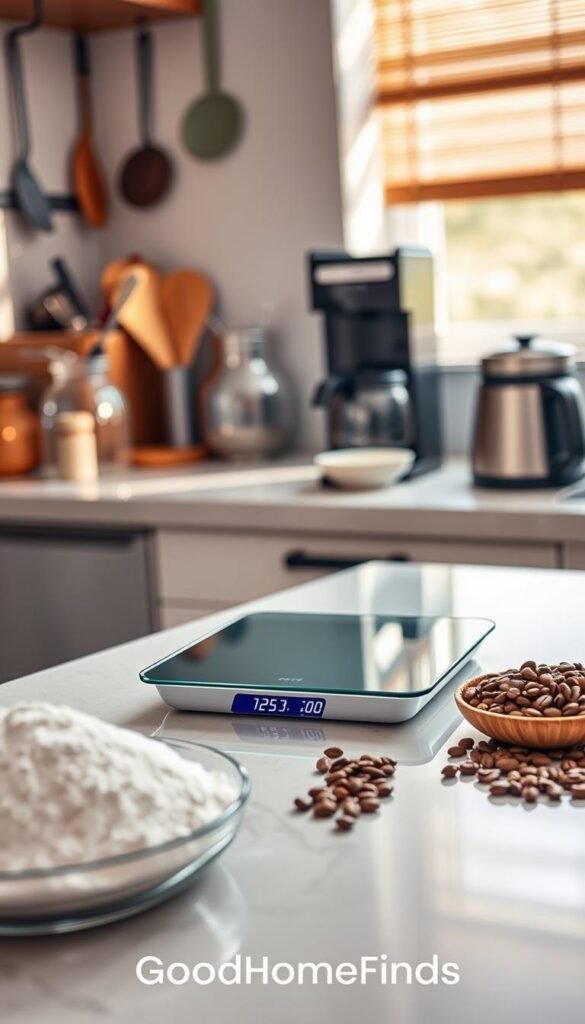
Digital kitchen scale (Escali-style)
Why it helps: A simple digital scale gives repeatable portions for baking and coffee and cuts measuring-cup clutter.
Pros: Accurate, easy to wipe down, often under $30.
Cons: Limited to bowl-size items; batteries need occasional replacement.
Instant-read thermometers: budget vs premium
Premium models like the Thermapen ONE read in 1–2 seconds and hit about ±2°F. They cost more but speed up checks for meat, oil, and reheated leftovers.
Budget instant-reads under $50 are slower and slightly less precise. Still, they beat guessing and help you avoid undercooked food.
Spill stopper lids and stovetop helpers
Silicone or stainless steel lids that fit 6–10 inch pots stop boil-overs for pasta and starchy water. They cut scrub time and keep burners cleaner.
Check pot opening diameter and whether the lid flattens for drawer storage. Dry lids fully to avoid smells.
- Use cases: precise baking, coffee dosing, checking chicken doneness, testing oil temp, and preventing boil-overs.
- Maintenance: Wipe scales, hand-wash thermometers if instructed, and air-dry silicone lids.
- Budget vs premium: Spend on a fast thermometer if you test temps daily; otherwise a scale plus a budget probe covers most accuracy needs.
Best kitchen device upgrades for faster food prep under $50
Small, no-fuss tools can shave minutes off prep and keep counters clear. Pick items that earn daily use and slip into a drawer when you’re done.
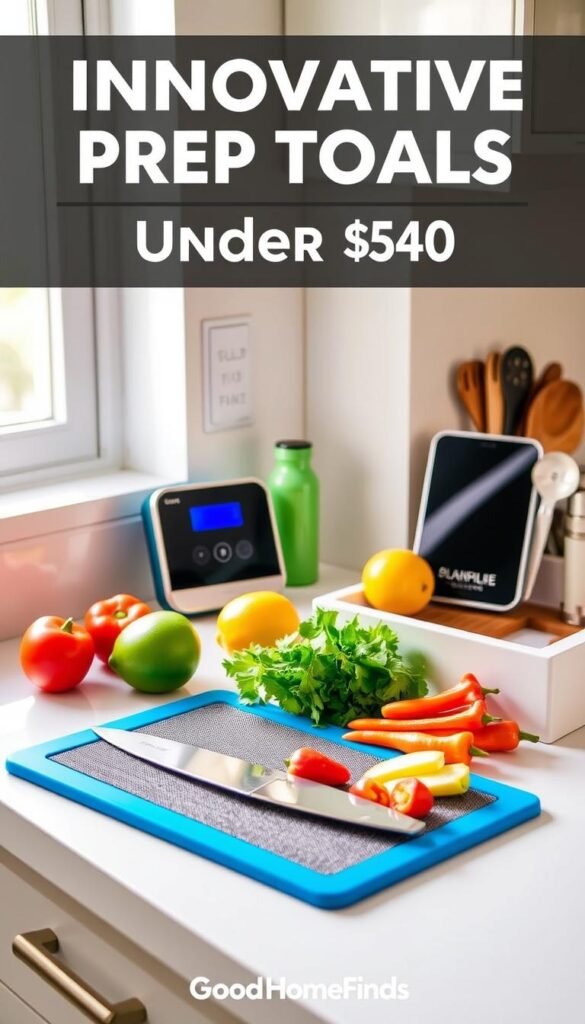
Easy-to-clean garlic press that saves your hands
Why it helps: An OXO-style press speeds garlic prep and keeps your fingers scent-free. Serious Eats found models with grippy handles and the ability to press unpeeled cloves especially handy.
Reality check: Some presses trap bits. Choose one with an easy-open basket or few crevices for quick rinsing.
Bench scraper for chopping, scooping, and quick counter cleanup
The bench scraper moves chopped food fast and clears flour or scraps with a single sweep. Food & Wine calls it a versatile, underrated tool.
Safety benefit: You use the scraper to transfer food instead of trying to push with a knife. It keeps your knife hand calmer and lowers slip risk.
Herb scissors: when they’re faster and when they aren’t
Herb scissors beat a knife for soft herbs and scallions. They save time for small garnishes.
For woody stems or large batches, a blade and a quick chop are usually the better way.
| Tool | Real win | Cleanup |
|---|---|---|
| Garlic press | Speed, no garlic-scent fingers | Rinse or quick brush |
| Bench scraper | Transfer and scrape fast | Wipe or dishwasher |
| Herb scissors | Fast garnish work | Rinse between blades |
All three are renter-friendly: no plug, no noise, no setup. They save you real time and cut clutter when you pick simple, durable pieces like a stainless steel scraper and a press that opens fully.
Best kitchen device upgrades for small-batch chopping and sauces
For single-batch salsa, dressings, and one-onion chores, a small processor hits the sweet spot.
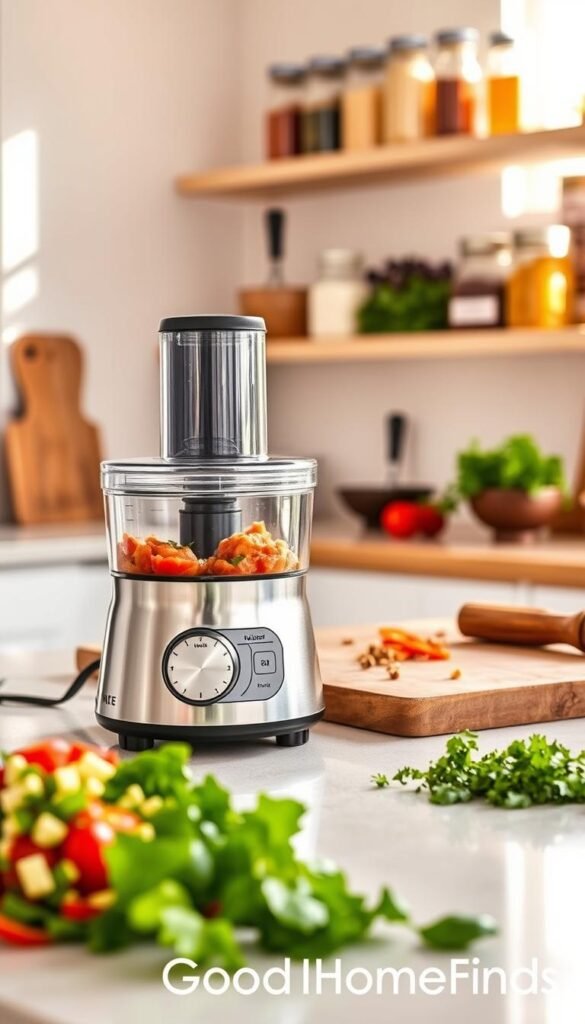
Mini food processor (4-cup class) is the practical choice under $50. Serious Eats recommends this size for chopping an onion, making salsa, and whipping dressings. It usually offers pulse and continuous modes plus a useful feed chute for adding oil or lemon while it runs.
Real use cases
You will reach for it when you need a quick salsa, a small batch of hummus, pesto, or a fast vinaigrette. It saves time and wrist work after a long day. A single onion for tacos or a handful of herbs becomes a five-minute job.
Space, noise, and setup
It’s still an appliance. Expect to store the bowl and lid on a cabinet shelf or tuck the whole unit in a closet. Rarely can it live assembled on a tight counter.
Noise levels can be high-pitched on small motors. Use it in daytime hours in thin-wall apartments to avoid complaints.
Setup is simple: fit the blade, lock the lid, and plug in. Check that the base clears your shelf height before buying.
Cleanup and maintenance reality
Cleaning takes more time than a single knife and scraper. You’ll wash a bowl, lid, and blade after many small jobs. If you dislike washing parts, a chef’s knife may be the faster choice.
Tip: Dry blades and lids fully to prevent smells and dullness. Hand-dry metal blades to keep edges sharp longer.
How it compares to full-size processors
Full-size units offer more power and capacity but cost more and need more storage. A 4-cup maker is a true small-batch helper, not a pro-level machine. Choose the mini if you want quick prep without a large footprint.
| Feature | Mini (4-cup) | Full-size processor |
|---|---|---|
| Typical cost | $30–$50 | $100+ |
| Best for | Small batches: salsa, dressings, one onion | Large batches, dough, heavy work |
| Storage footprint | Cabinet shelf height; can fit small cupboards | Requires deep cabinet or counter space |
| Noise levels | Can be high-pitched; short runs | Often louder but lower frequency |
| Cleanup | Bowl, lid, blade — moderate effort | More parts; longer wash time |
Best kitchen device upgrades for microwave messes and quick reheats
You can cut microwave cleaning time to minutes with a simple steam method. The real problem is small splatters. When ignored, they bake into a cement-like crust that takes too much time to remove.
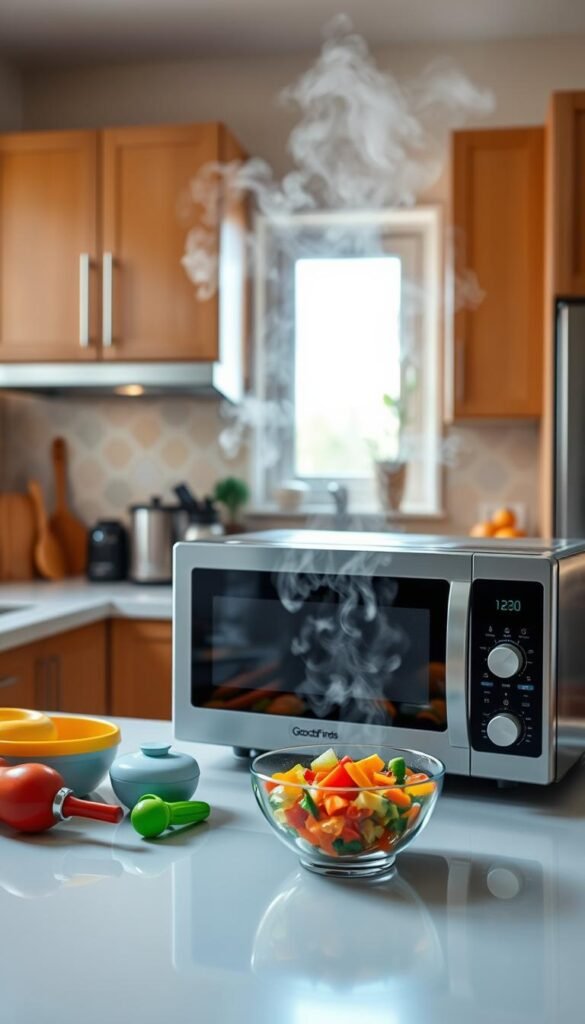
Microwave steam cleaner (vinegar + water)
How it works: Add a mix of vinegar and water to the steam cleaner or a microwave-safe bowl. Microwave for a few minutes. Let it sit so steam loosens stuck-on food. Wipe away with a cloth. Less scrubbing. Less frustration.
Where it fits and who should buy it
Popular Mechanics-style steam cleaners like the “Angry Mama” are small and renter-friendly. But remember: it’s another gadget. Store it in a cabinet or on a high shelf if you will actually use it monthly.
Simpler alternatives if you don’t want more gadgets
- Microwave-safe bowl with vinegar + water: same steam effect, no extra tool.
- Damp sponge or cloth heated briefly: creates steam quickly—handle with care.
Safety and maintenance
Let hot steam settle before opening the door. Use oven mitts or a towel when removing the bowl or cleaner. Rinse and dry the steam cleaner after use so it won’t keep a vinegar smell in your home.
Prevent repeat messes
Cover plates with a reused lid, microwave-safe plate, or a paper towel to stop splatters. Small habits like this cut cleaning and keep reheats tidy.
Best kitchen device upgrades for dishwashing and drying in tight spaces
If counter space is scarce, small drying solutions can reclaim usable work area fast.
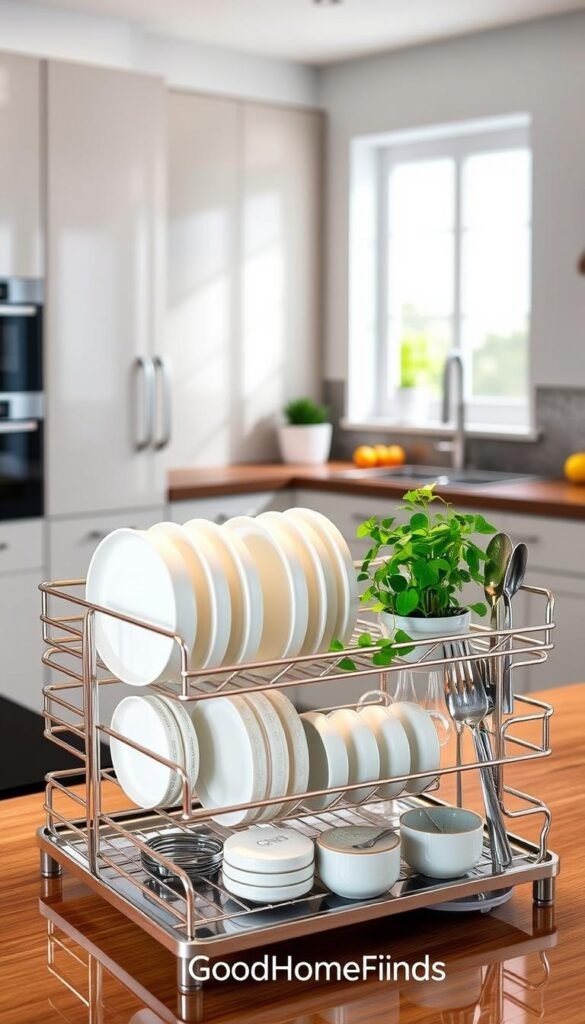
Roll-up over-the-sink drying rack uses the sink side you already have to free the counter. It rolls flat when you’re done and stores in a drawer or under a shelf.
Check sink width and faucet placement before buying. Make sure the rack fits without blocking the tap. Confirm the size clears your sink edges so it won’t wobble.
How you’ll use it
- Dry a cutting board or plate while you rinse other items.
- Rinse produce over the sink and let it drain directly into the basin.
- Rest a hot pan as a trivet without grabbing another item.
Sponge holders and magnets that save time
Sponge holders lift sponges so they dry faster and cause fewer counter puddles. Faster drying means less smell and fewer replacements.
A clean/dirty dishwasher magnet is a small, practical habit changer. It cuts re-washes and the „is that clean?“ guessing game in shared homes.
Maintenance: Wipe racks and holders after use so food gunk and trapped water don’t build up. Pick models with open rails and few crevices for easy cleaning and easy use.
| Tool | Real win | Compatibility check | Maintenance |
|---|---|---|---|
| Roll-up rack | Frees counter space, doubles as trivet | Measure sink width and faucet side clearance | Wipe dry; avoid trapped food |
| Sponge holder | Reduces puddles and smells | Mount on sink rim or adhesive to side | Rinse and air-dry weekly |
| Clean/dirty magnet | Prevents re-washes and confusion | Fits standard dishwasher door | Wipe occasionally |
These renter-friendly gadgets save space and reduce energy waste by favoring air-drying over extra cycles in the dishwasher. They are simple to install and offer real daily value in a small kitchen.
Best kitchen device upgrades for storage and less food waste
Small storage tricks cut food waste and free counter space in ways you’ll notice every week.
Reusable avocado huggers: Worth it if you eat half an avocado regularly. They seal the exposed side and slow browning for a day or two.
Pros: Compact, simple, renter-friendly. Cons: Not a miracle — it won’t keep an avocado perfect for a week. If you rarely buy avocados or already use airtight containers, skip it.
Bag stands for meal prep and leftover storage
Bag stands hold pouches open so you can fill them hands-free. They cut spills and speed portioning for meal prep.
Why it helps: Fewer torn bags and less wasted food from messes. They fold flat or nest for small space storage.
Collapsible clip-on strainers that save cabinet room
Clip-on strainers latch to a pot’s side and drain pasta or steam vegetables without a bulky colander. They free cupboard space and live in a drawer.
Compatibility: Check pot lip thickness and heat resistance. Test the grip before draining boiling water to avoid spills and burns.
- Cleaning: Silicone can trap odors if not dried fully. Wash, then air-dry to prevent smells.
- Safety: Ensure a stable grip while draining to reduce spills and burns.
- Practical way to reduce waste: Use bag stands and snug seals so leftovers get stored fast and eaten sooner.
| Tool | Real win | Drawer or shelf space | Note |
|---|---|---|---|
| Avocado hugger (Food Huggers) | Short-term freshness retention | Small, nests with other lids | Works best when used within 48 hours |
| Bag stand rack | Hands-free filling, fewer spills | Collapsible; fits narrow shelves | Speeds meal prep and reduces torn bags |
| Clip-on collapsible strainer | Drains without bulky colander | Flat when collapsed; stores in drawer | Confirm pot lip fit and heat tolerance |
Best kitchen device upgrades for coffee and daily electronics under $50
A compact coffee setup can change your morning routine without taking over counter space.
Milk frother around $50: models like the Instant Magic offer hot and cold foam and settings for plant milks. If you make lattes daily, it is worth the small footprint. If you brew once or twice a week, a handheld frother or whisk may do the job.
Space, noise, and cleaning
Check the unit’s size before you buy. Some frothers sit on the counter; others tuck into a cabinet. Rinse or wipe the frother after each use. Milk film builds fast and affects taste.
Budget vs premium coffee gear
Above $50 you find consistent grinders and more durable parts. Examples cited by Serious Eats include the OXO burr grinder class and higher-end Breville models. Those options improve extraction and last for years.
Travel heat and energy notes
Temp-control mugs (Ember class) are a nice-to-have for long desk sessions, but they cost well over $150. Small heating appliances add daily power draw. Weigh that against a good insulated mug for most home use.
„If you value daily quality, invest first in a grinder; for casual lattes, keep it simple.“
| Item | Real win | Consider |
|---|---|---|
| Milk frother (~$50) | Consistent foam | Cleaning, cabinet or counter space |
| Handheld frother | Low cost, small | Less consistent foam; easy storage |
| Temp-control mug | Keeps drink warm | High cost; energy use |
Best kitchen device upgrades for accessibility and safer handling
Small grip aids and compact openers make a big difference for hands that tire or hurt. They focus on one practical win: safer handling with less effort.

Under-cabinet jar openers for low grip strength
Who it’s for: people with arthritis, reduced grip, or anyone tired of wrestling lids. These Popular Mechanics–style mounts steady jars and remove torque from your wrist.
Setup: most models need a simple mount. If you rent, choose adhesive-backed options or removable screws and check cabinet lip size first.
Safety win: fewer slips, no towel tricks, and less chance of hot spills or wrist strain.
Electric can opener vs compact handheld
Stand-up openers can be bulky and eat counter space. A petite handheld electric opener (~$30) proved more reliable in tests. It lifts lids with a magnet and stores in a drawer.
- Real use: big cans for meal prep, pet food, and pantry staples—weekly tasks that benefit from a steady tool.
- Maintenance: wipe the cutting wheel, dry the unit, and avoid sticky buildup.
- Skip it if a manual opener already works well for you.
| Feature | Under-cabinet opener | Handheld electric |
|---|---|---|
| Space | Mounted, out of counter | Drawer or shelf |
| Setup | Mounting required | Plug-in, ready |
| Reliable | Very steady for jars | Reliable for cans |
Budget vs premium comparisons that matter (what to upgrade first)
When you decide between a low-cost option and a premium model, know which trade-offs actually matter for small-space cooking.
Air fryers: lookalikes vs tested favorites
Many under-$50 air fryers mimic the shape but cut power, airflow design, and basket quality. That can yield uneven browning and long cook times.
Serious Eats and Food & Wine note that tested models like the Instant Vortex class deliver more consistent results, clearer controls, and fewer frustration points after regular use.
Blenders: where price changes performance
A true high-speed blender often costs well above $50. Cheap blenders need extra liquid and still leave chunks in smoothies and soups.
For weekly blending, a Vitamix-class unit is a practical long-term investment. If you blend rarely, keep a compact pitcher or a hand mixer instead.
Instant Pot-style multicookers and pressure cookers
Most safe, feature-rich multicookers that sear well and last for years sit above the $50 mark. Under-$50 models may lack seals, power, or reliable presets.
Practical rule: buy under-$50 items where basic performance is already strong—scales, scrapers, presses—and save for larger appliances when they earn counter space and weekly use.
Setup time: what it takes to start using each type of upgrade
How fast you can use a new tool often decides if it stays or ends up in a drawer. Setup time matters in small apartments. Consider where it will live and how much effort the first use requires.
No-setup tools you’ll use immediately
No-setup items like presses, scrapers, and scissors work the moment you unpack them. They need zero parts, no learning curve, and fit easily in a drawer. That low friction makes them the safest buys under $50.
Under-10-minute setups
Small installs—under-cabinet jar openers, roll-up drying racks, and dishwasher magnets—take a few minutes. Most use adhesive or two screws. These quick changes reduce daily friction and don’t steal permanent space.
Plug-in tools: outlets, cords, and daily life
Plug-in items need planning. Check outlet placement and cord length. A Hamilton Beach electric knife, for example, has a 5-foot cord; that can limit where it lives and how you store it.
Think about noise, too. Loud appliances shrink your plausible use window in thin-wall apartments.
- Break purchases into three levels: no-setup, quick-setup, plug-in.
- Measure size and confirm product links for specs before you buy.
- If it can’t live where you’ll use it, you’ll stop using it.
Common mistakes that waste money, space, and time
Small choices add up fast—buying the wrong tool can clutter your shelf and waste your cash.
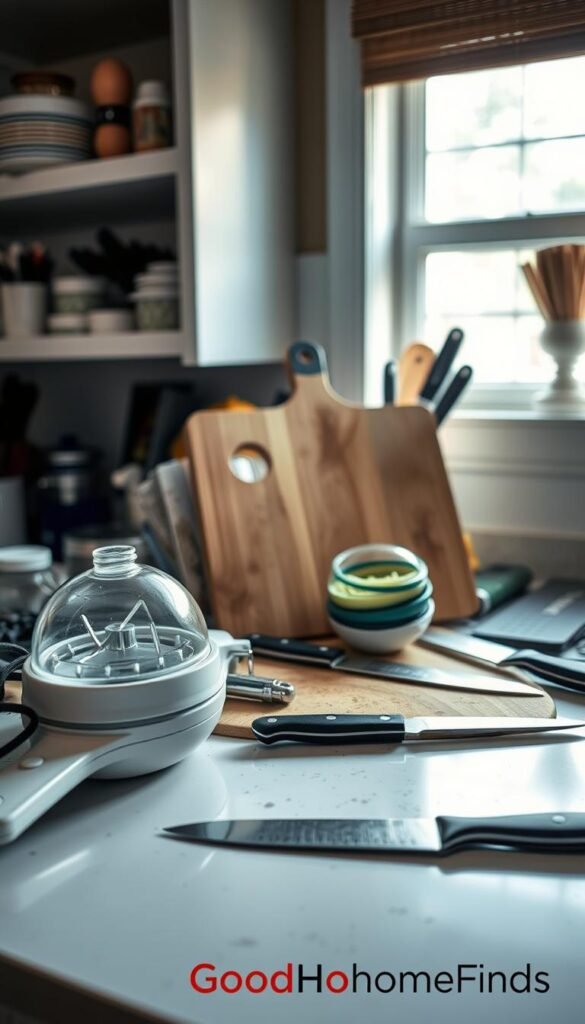
Bulky stand-up tools that don’t store well
Many renters buy stand-up appliances that look useful. In practice they take counter or cabinet room and get used twice.
Serious Eats notes stand-up electric can openers often struggle and eat space. That makes them a common cabinet regret.
Ignoring cleaning effort
Parts that trap food, hinges that hide gunk, and lids that leak turn a cheap buy into a cleaning chore.
When a tool takes longer to clean than it saves, it becomes expensive in time and frustration.
Overpaying for “multi-tools” you won’t use
Multi-tools promise many functions. Most do one job poorly. You end up using your normal tools instead.
Skipping compatibility checks
Measure before you buy. Check pot diameters for spill stoppers, sink width for drying racks, and dishwasher heights for tall items.
Confirming sizes saves returns, duplicates, and wasted trips to the store.
- #1 mistake: Buying a bulky stand-up gadget that becomes a “cabinet regret.”
- Cleaning trap: many cheap items are costly to maintain because of extra parts.
- Leaky lids and trapped-food hinges are daily frustration multipliers.
- Multi-tools that do everything usually do nothing well; you’ll reach for familiar tools anyway.
- Compatibility checks with pot and sink sizes avoid awkward fits and wasted cash.
| Mistake | Consequence | Smart fix |
|---|---|---|
| Bulky stand-up gadget | Lost counter or cabinet space; low use | Choose drawer-friendly or handheld options |
| Many small parts | Long cleaning time; odors and wear | Pick tools with few parts and simple rinsing |
| Leaky or trapped lids | Smells, mold, and ruined food | Test seals and dry fully after wash |
| Unchecked sizes | Won’t fit pot, sink, or dishwasher | Measure pot diameter, sink width, and rack height |
Simple rule: if you can’t explain when you’ll use it next week, skip it.
Maintenance and longevity: keeping cheap upgrades from failing early
Treating low-cost tools with simple care stretches their lifespan and usefulness. You don’t need special skills—just a few habits that stop rust, warping, and smells.
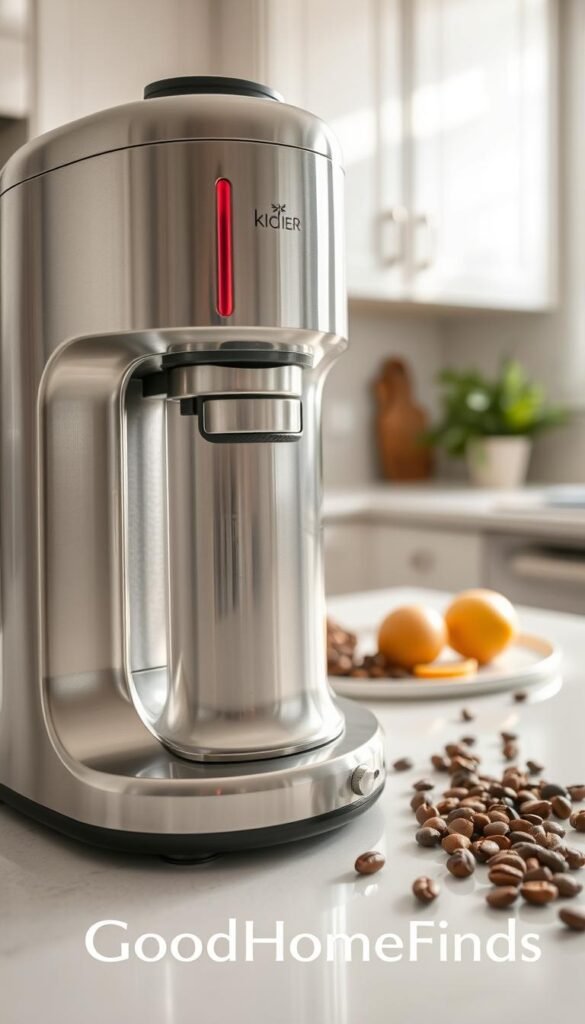
Stainless steel vs silicone vs plastic
Stainless steel parts last longest. A steel scraper or press resists bending and will often outlive all-plastic versions.
Silicone is flexible and heat-safe, but it traps moisture. Dry silicone strainers fully to avoid smells.
Cheap plastic can crack, warp, and hold odors. Replace plastic pieces that show stress or discoloration.
Dishwasher-safe reality
Many items say dishwasher-safe but wear faster there. Hand-wash sharp blades and thin plastic lids to keep edges and seals intact.
When in doubt, wash critical parts by hand and air-dry. That simple step can extend use by several years.
Storage habits that prevent rust and smells
Dry metal edges and don’t leave tools soaking. Store them standing or hanging so air circulates.
- Keep lids and small parts together in a container so you don’t lose seals.
- Rinse acidic food off quickly to avoid corrosion on metal and lingering odor in silicone.
- Don’t trap damp sponges or silicone in closed boxes—let them air out.
„A little care today saves a replacement purchase tomorrow.“
Conclusion
,
Pick one problem—mess, storage, or coffee—and solve it with a single, practical tool. Start small: a digital scale, a steel bench scraper, a garlic press, or a compact storage solution usually gives the most daily payoff.
Prioritize renter-friendly filters: space, size, noise, and cleanup effort. If an appliance or gadget won’t live where you use it, skip it or measure first.
Wait to buy pricier air fryers, blenders, or Instant Pot-style makers until you can commit to weekly use. Safety wins include clear temperature checks for meat and spill prevention for pans and the stovetop.
One rule: favor no-plug tools first, add plug-ins only if they earn counter time. Measure sink width, pot diameter, and dishwasher clearance via product links before checkout.