What „best kitchen gadgets home“ really means: tools that save you time, cut down guesswork, and keep counters clear. You want things that work well for everyday food prep and do one job cleanly.
This roundup sets a real-homes standard for U.S. apartments and small spaces. You’ll read options that are renter-friendly, quiet enough for shared flats, and mindful of power limits.
What we include: accuracy tools, countertop appliances, coffee gear, and small prep items organized so you can jump to what fits your style. We avoid gimmicks, fragile one-hit items, and stuff that is a pain to clean.
Key buying filters: space, noise, power draw, maintenance, and safety. Our goal is clear: fewer wasted ingredients, more consistent results, and less reliance on a full-size oven when you don’t need it.
Key Takeaways
- You’ll get practical, renter-friendly choices for small-space cooking.
- Focus on tools that save time and reduce food waste.
- No hype. No fragile single-use gear.
- Filters to weigh: space, noise, power, maintenance, safety.
- Clear value: budget vs premium, and what’s actually worth it.
Real benefits you’ll actually notice in a busy kitchen
You don’t need gimmicks to save time; you need tools that reduce steps and frustration.
Saving minutes matters. On weeknights, a compact appliance that browns or heats faster means less active prep. You weigh ingredients once, use a fast temp check, and skip extra pans. That reduces cleanup and makes you more likely to cook again.
Saving time on weeknights without adding clutter
Good tools remove steps, not add rituals. A small air fryer crisps leftovers in minutes. A scale cuts measuring fuss. But if a device takes valuable counter space, it becomes friction you avoid.
More consistent results for meat, baking, and vegetables
Consistent temps stop overcooking meat and give repeatable baking results. Vegetables come out crisp or tender as intended. Fewer ruined meals means less waste and less guesswork.
Energy savings compared with running a full-size oven
For small batches, a countertop unit usually uses far less power than an oven. That saves money and shortens preheat time. Choose the right tool when you don’t need to heat a full oven.
Safer cooking with fewer burns, spills, and guesswork
Better controls and instant-read checks reduce steam surprises and oil splatters. You open lids less and cut into meat only when the thermometer says go. That makes cooking less risky and more relaxed.
Quick note: If you want a simple starter mix of renter-friendly options, see this smart budget mix to find compact, useful picks that earn their space.
Who needs this and who should skip it
Not every compact appliance earns a spot on a crowded counter—here’s how to tell.

Small-apartment cooks who need compact, multi-use tools
Who it’s for: You if counters are limited and you want tools that do two or three jobs well. Meal preppers get the most value because fewer items go bad and you save time prepping batches.
Meal preppers and families
Pros: saves food waste, simplifies batches, reduces pans. Cons: extra parts to clean and one more thing to store.
Coffee lovers weighing grinders and machines
A burr grinder is a daily win for fresher coffee. An espresso rig asks for dialing, descaling, and routine attention. Choose based on how often you brew.
When to skip
- If you lack reachable cabinet space, skip large countertop-only items.
- If noise bothers roommates, avoid loud motors.
- If you hate cleaning many parts, stick to simpler appliances.
| Who | Gets Value | Storage Reality |
|---|---|---|
| Small renters | Multi-use items, batch cooking | Must fit a cabinet or be resented |
| Meal preppers | Vacuum sealers, rice cookers | Storeable shelves or bins |
| Coffee fans | Grinder + brewer daily | Place near water and outlets |
Counter-hog test: if it won’t slide into a reachable cabinet, you’ll resent it in weeks. Spend money where accuracy and durability matter, and choose simpler options when results are already good enough.
How we picked gadgets for real homes in the U.S.
Our picks came from years of testing and repeat reviews by trusted sources. We leaned on long-term reports from Serious Eats, Food & Wine, and Wirecutter rather than new, flashy launches.

What matters: durability, easy cleaning, safe use, and available replacement parts. Those filters cut out many trendy one-offs.
Worth the space means you use it weekly, it stores without drama, and it cuts mess or improves results noticeably.
- We count repeated reviews and lab-style testing, not single impressions.
- Examples: Thermapen ONE is praised for ~1–2 second reads and ~±2°F accuracy by Serious Eats and Food & Wine.
- Escali Primo is Wirecutter’s trusted pick since 2017 for simple accuracy and tare that reduces dishes.
Performance alone isn’t enough in an apartment. Noise, smell, and storage height shape whether a great design fits your space.
We recommend premium gear only when accuracy or daily convenience pays back over time. The goal is fewer, longer-lasting purchases—not a pile of tools.
For a renter-friendly starter list, see this starter mix.
Quick buyer checklist: space, noise, power, and maintenance
Start your buying checklist with a quick walk-through of where the item will live. Measure the counter footprint, note cabinet height, and mark where cords can safely run. That simple check prevents impulse buys that never fit.
Space requirements: footprint, height, and storage reality
Measure depth and height before you buy. Think about where you’ll store the unit when not in daily use. A compact size that tucks onto a shelf stays useful; a bulky one will get ignored.
Noise levels: what will bother roommates and neighbors
Grinders, blenders, and sealers can be loud. If you share walls, opt for quieter models or plan use times. Noise matters in real life more than spec sheets suggest.
Power consumption: when watts matter (and when they don’t)
Higher watts often mean faster heating or blending, but only when you use the tool often. For small batches that replace an oven, higher power can save energy overall. For occasional use, lower wattage is fine.
Maintenance: descaling, sharpening, and replacement parts
Know the maintenance before you buy. Expect descaling for coffee machines, blade sharpening or replacement, gasket changes, and nonstick wear. The right way to protect quality is regular, simple care.
- Quick checklist: measure counter, check cabinet height, test outlet reach.
- Ask: Will this get used weekly? If not, skip it.
- Value tie-in: the most useful items are the ones you clean, store, and use safely every week.
Cooking accuracy essentials that prevent overcooking
You can stop poking meat and start trusting numbers. Accurate tools are the fastest upgrade you can make without buying a large appliance.

Instant-read thermometer for fast, reliable checks
Why it helps: a quick thermometer gives near-instant temperature reads so you stop cutting into steaks or guessing chicken doneness. The Thermapen ONE reads in about 1–2 seconds and stays within ~±2°F, making it ideal for meat, bread, and frying oil checks.
Real use: test chicken thighs, check steak carryover, confirm reheated leftovers, probe bread crumb temp, and verify oil before frying.
Digital scale for baking and fewer dishes
Why weigh: an Escali Primo delivers consistent baking results and saves dishes with tare. You add ingredients to one bowl, press tare, and keep going instead of measuring multiple cups.
Wirecutter and Food & Wine praise the Primo for accuracy and easy cleaning. That reliability makes baking and portioning simpler and faster.
Pros, cons, and what breaks first
- Pros: faster, safer cooking; fewer ruined meals; better portion control.
- Cons: premium thermometers raise the price; cheap scales can glitch with spills or humidity.
- What breaks first: probe tips and battery doors on thermometers; sticky scale buttons and moisture damage on low-end models.
Setup and care: both tools are plug or battery ready. Wipe probes and keep scale surfaces dry. Replace batteries every few years to avoid false reads.
Best countertop air fryer picks for small spaces
A compact air fryer often earns its place on a crowded counter because it delivers fast, crisp results with minimal fuss. For small apartments, it saves time and cuts messy oil frying from your routine.

Why pick a compact square-basket model
Instant Vortex / Vortex Plus stands out for even browning, an easy interface, and a wide square basket that fits more at once. Serious Eats and Food & Wine note its consistent results and simple controls.
Real use cases you’ll actually do
You’ll reheat pizza and fries without sogginess. You’ll crisp Brussels sprouts or other vegetables in minutes. You’ll roast quick proteins like salmon or chicken cutlets. Frozen snacks become weeknight staples.
Power, noise, and smell in apartments
For small batches, an air fryer can beat an oven for energy because it heats faster and wastes less space. Expect fan noise during cycles and stronger aromas with fatty or spicy foods. Run a hood fan or open a window for ventilation.
Maintenance and safety
Care tip: protect the basket coating by avoiding metal tools and scrubbing with a soft brush. Clean grease buildup to reduce smoke and sticking. Let the basket cool before washing and keep vents clear during use.
„A roomy square basket and reliable controls make daily use less fussy and more repeatable.“
| Factor | What to expect | Quick fix |
|---|---|---|
| Energy use | Lower than a full oven for small batches | Use for 1–3 servings to save power |
| Noise | Fan hum during cycles | Run when roommates are out or use quiet mode |
| Smell | Stronger with fatty foods | Ventilate, use liners, clean often |
| Maintenance | Coated basket needs care | Avoid metal, hand-wash, dry fully |
Rice cookers that earn their keep (budget vs premium sizes)
A reliable rice cooker pays for itself when you can set it, walk away, and get perfect rice every time.

Why it matters: if you cook rice once a week, a cooker saves time and prevents wasted food. It handles simple grains without constant attention. That alone can justify a small counter footprint.
Budget workhorse: fast cooking and steady Keep Warm
The Hamilton Beach model is a clear budget workhorse. Serious Eats found it cooked rice faster than many pricier units and kept rice tender for hours without drying out.
What you get: quick cycles, reliable Keep Warm, and plain controls that are easy to trust on weeknights.
Small-batch option for tight storage
If cabinets are tight, consider a compact 3-cup Zojirushi or similar. Smaller models match single-serve needs and avoid leftover mush in the fridge.
They save space and store under a shelf when not in daily use.
Space and cleanup: coatings, lids, and sink-friendly parts
Look for a nonstick inner pot that rinses easily. Avoid metal scrubbers; use soft brushes to protect the coating.
Removable lids and simple steam caps make washing easier in a small sink. If the lid is hinged, check if it detaches for rinsing.
Real use cases: plain rice, grain bowls for meal prep, simple sides for stir-fry night, and a hands-off base while you cook proteins.
„Set it and move on with dinner prep—rice that stays tender for hours changes weeknight planning.“
| Model type | Best for | Quick note |
|---|---|---|
| Budget (Hamilton Beach) | Fast cycles, daily use | Good Keep Warm, solid quality for the price |
| Compact (3-cup Zojirushi) | Small households, tight storage | Fits small pots and cups needs; stores easily |
| Premium multi-size | Large batches, precise settings | Higher price but extra features for frequent cooks |
Skip it if: you rarely cook grains. A simple pot on the stove can be cheaper and takes no extra storage space.
Multicookers that replace multiple pots without a learning curve
Multicookers shine when you need hands-off results without babysitting a stove.

Why it’s worth it: a multicooker saves time and reduces the number of pots you scrub. The Instant Pot Pro is our pick for safer venting and better searing. Serious Eats highlights its improved steam-release switch and stronger sear for browning before pressure cooking.
Real-life benefits
You’ll make beans without constant checking. You’ll cook soups, shred chicken for tacos, and batch grains for the week.
It cuts active cooking and frees up stove space.
Design and downsides to plan for
The unit is tall. It releases a lot of steam and the lid can be awkward to store in small spaces. That makes placement and storage the main trade-offs.
Renter-friendly placement and safety basics
- Keep it away from low cabinets and open shelves.
- Route cords so they cannot be snagged.
- Always vent over an open space. Wait for natural pressure release when recipes say so.
„Don’t improvise around hot steam. Treat the valve and lid with respect.“
| Feature | What it gives you | Quick tip |
|---|---|---|
| Hands-off cooking | Reliable soups, beans, and shredding | Use preset functions for repeatable results |
| Searing / sauté | Better browning without extra pans | Sear then pressure-cook in the same pot |
| Size & storage | Tall profile that may crowd counters | Store lid vertically or on a shelf |
| Safety | Safer venting on newer models | Follow vent rules and wait before opening |
Bottom line: If you want reliable, low-effort cooking and fewer pots in use, a multicooker is practical. It saves time and, over months, often saves money compared with frequent takeout. Pick a model with safe venting and easy lid storage for smaller kitchens to get the most value and quality.
Blenders and immersion blenders for everyday cooking
A reliable blender should match what you actually make for dinner, not what looks impressive on a counter.
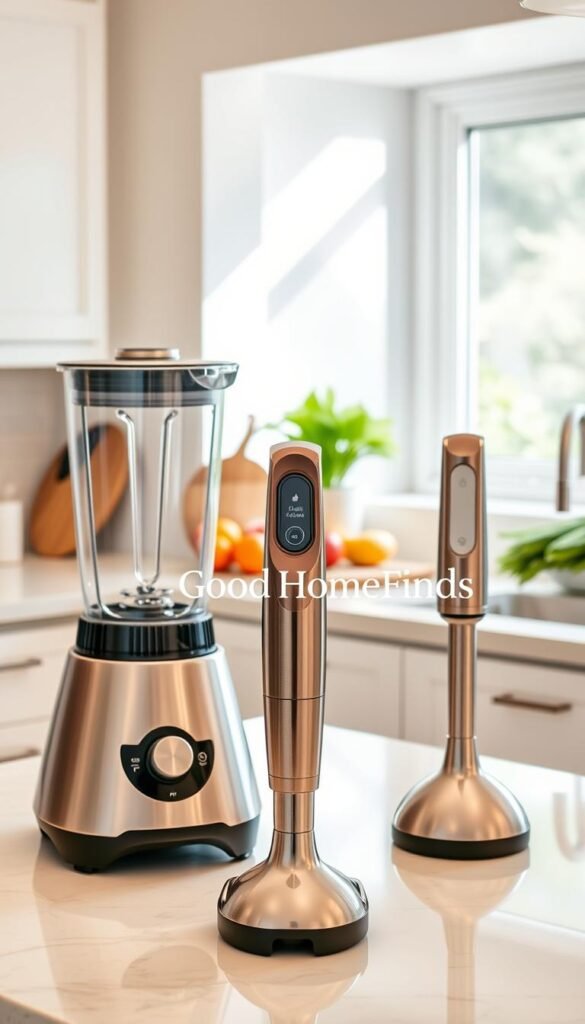
Premium power: the Vitamix 5200 is praised for long-term quality and variable speeds. It makes silky soups, smooth sauces, and frozen blends with consistent texture. It is worth it if you blend often and value durability.
Budget vs premium
Under $200: the Oster Extreme Mix gives strong performance for smoothies and sauces. Food & Wine notes its intuitive design and value.
Space, noise, and real use
High-speed blenders are loud. If you live with roommates, blend when it won’t disturb others. Pitcher height affects storage; tall jars often live on the counter.
Low-mess option
An immersion blender saves storage and lets you blend right in the pot. Food & Wine recommends models like All‑Clad for small-space use. For more immersion options, see this immersion blender guide.
- Quick cleaning: rinse blades immediately, avoid food drying under the blade, and wipe seals to prevent smells.
- Maintenance: check gaskets and tighten bases periodically.
„Choose the tool that fits your recipes and your storage, and you’ll actually use it.“
Sous vide and vacuum sealers for meal prep and less food waste
If you want perfectly even doneness and hands-off batch cooking, sous vide is a practical upgrade.

Who it helps: you if meal prep matters and you dislike overcooked proteins. The Breville Joule keeps a steady temperature and is easy to set. In testing it heated a gallon of cold water in about 22 minutes, so long cooks reach target temps reliably.
Sous vide pick and vacuum sealer comparison
Breville Joule: steady control, app guidance, and hands-off cooks.
Anova Precision Pro vs Anova Precision: the Pro adds a built-in bag cutter and storage for convenience. The simpler Precision saves money but still seals airtight.
Real use cases and wins
- Batch-cooking chicken or pork for weekly meals.
- Steaks that hit the same doneness every time.
- Vegetables with consistent texture and less waste.
- Freezer organization that reduces freezer burn and saves money.
Setup, noise, and maintenance
Setup is easy: pick a container, clip the circulator, bag food, and seal. Prevent leaks by not overfilling bags and using single-layer flat seals.
Vacuum sealing makes a short loud noise; in an apartment it’s noticeable but quick. Wipe gaskets after wet jobs, store bags within reach, and dry seals before stowing to keep the unit reliable.
„Vacuum sealing speeds marinades and cuts freezer waste—small steps that save time and food.“
Coffee gadgets that feel worth it every morning
Start your morning routine by asking one simple question: will you reach for this every day?
If the answer is no, skip the counter space. If yes, pick tools that save time and make a reliably good cup with simple upkeep.

OXO Burr Grinder — value grinder
Why it fits: simple controls, steady grind, and low fuss. Serious Eats highlights it as a solid value pick for consistent grounds when you’re half-awake.
Note: grinders are loud. Grind during reasonable hours and store the hopper to reduce dust.
Breville Smart Grinder Pro — premium control
This model gives more settings and a clear display. More control means better extraction but also more dialing in. If you love tweaking, it pays off. If not, it can add time to your routine.
Breville Bambino Plus — espresso reality
Fast heat-up and a forgiving interface make this a good starter espresso machine. Still, expect regular descaling, tamping practice, and milk-cleaning habits to keep shots consistent.
Ratio Six — drip splurge
The Ratio Six offers one-button brewing and long heat retention via a thermal carafe. It’s a good pick if you sip slowly and value neat design and steady warmth.
Milk frother — nice-to-have
Instant Magic Milk Frother works well with plant-based milks and has multiple temp/foam settings. It’s useful for lattes but adds another item to clean and store.
„Ask if you’ll use it every morning. If yes, the counter spot is earned.“
| Item | Why choose it | Practical trade-off |
|---|---|---|
| OXO Burr Grinder | Simple, reliable grind for daily drip/espresso | Loud; modest price |
| Breville Smart Grinder Pro | Detailed control, clear display, finer tuning | More tweaking, higher price |
| Breville Bambino Plus | Fast heat, beginner-friendly espresso | Regular cleaning and descaling needed |
| Ratio Six | One-button pour-over-style brew, thermal carafe | Higher price, extra counter footprint |
| Instant Magic Milk Frother | Plant-based foam, multiple settings | Extra part to clean and store |
Quick tips: use filtered water, follow descaling schedules, and accept that grinders are noisy. If you want a longer guide to coffee and espresso gear, see this coffee gear guide.
Small but mighty tools that save time in food prep
A few well-chosen handhelds speed prep more than another countertop appliance. They tuck in a drawer, clean up fast, and get you to a finished plate sooner.

Garlic press (OXO): the OXO garlic press turns cloves into garlic paste quickly. Serious Eats notes it works even with unpeeled cloves. You get fast flavor without garlic-scented fingers. Rinse or pop it in the top-rack for easy cleanup.
Bench scraper
Why it helps: moves chopped ingredients in one pass and clears counters for quick transfer to bowls or pans. Food & Wine calls it a versatile multitasker for cutting, portioning, and cleaning.
Fish spatula
Use it beyond fish. The thin, slotted head slides under eggs, pancakes, and delicate fillets with less tearing. It’s a quiet, daily-use tool that saves wasted food and patience.
Food mill
When to pick one: for silky sauces and lump-free mashed potatoes. A hand-powered food mill removes skins and seeds without heavy blending. It’s especially useful for canning or making small batches of sauce.
Mini food processor
A compact processor handles quick chopping and small sauces without the storage overhead of a full machine. It beats manual cutting for pesto, dressings, and quick salsas. Look for dishwasher-safe bowls and a single, easy-to-store blade.
„Small tools often save more time than a large appliance because they’re easy to grab and simple to clean.“
| Tool | Real use | Cleanup | Storage tip |
|---|---|---|---|
| OXO garlic press | Garlic paste fast, no peeling required | Rinse, top-rack dishwasher safe | Drawer or utensil cup |
| Bench scraper | Move chopped ingredients; clean counters | Wipe or rinse; no crevices | Slide into cutting board slot |
| Fish spatula | Flip delicate foods without tearing | Dishwasher safe; quick hand wash works | Thin shelf or utensil holder |
| Mini food processor / Food mill | Small sauces, salsas, smooth mash | Fewer parts; dishwasher-safe bowls preferred | Store blades in bowl or small box |
Quick notes: choose tools with fewer crevices and dishwasher-safe parts. Good grips and simple designs reduce cleaning friction and make you actually use them. For a wider gear list that fits small spaces, see this Serious Eats roundup.
Cookware upgrades that matter more than trendy gadgets
Small shifts in core cookware beat flashy new tools for real, regular value. You use pans and boards every day. Upgrading those basics improves searing, cleanup, and overall results more than another single-use device.

Stainless steel skillet
Why upgrade: a quality stainless steel skillet gives better browning and even heat. Food & Wine praises Made In for even heat and durability, so you get crisper crusts and fewer “steamed instead of seared” outcomes.
What you’ll notice: more consistent color on meat, more reliable pan sauces, and a tool a serious cook or chef trusts for daily cooking.
Nonstick pan
Nonstick is ideal for eggs and low-mess work. Food & Wine notes Made In’s durable coating and higher heat tolerance.
Real talk: nonstick has a limited lifespan. Avoid metal tools, keep heat moderate, and replace when coating degrades.
Dutch oven
Why it’s worth it: Staub gets top marks for durability and price-to-performance. It shines for braises, soups, and one-pot meals.
Tradeoff: it’s heavy and tall. In small apartments it can crowd the bottom of a cabinet or the oven when stored.
Cutting board
Spend on a solid wood board like John Boos. It’s stable, easy on knives, and lasts for years when oiled occasionally.
- Care basics: hand-wash wood, oil it, avoid sudden cold water on hot enamel, and don’t overheat nonstick pans.
- Value note: paying more for quality often lowers long-term price by reducing replacements and frustration.
„Good pans and a sturdy board change the way you cook every night.“
For a practical list of chef-recommended tools and to compare picks, see this chef must-have tools and this everyday finds for renter-friendly options.
Setup time: what it takes to get each gadget working
Good setup is simple: clear a spot, wash parts, and confirm outlet access. That short routine gets most items into reliable use quickly. Plan storage before you buy so tools don’t live in a box.

Plug-and-go tools
Low effort: thermometers, digital scales, air poppers, and simple choppers need minimal unpacking. Wash a probe or bowl, insert batteries or plug in, and you’re ready to use.
They’re ideal first purchases for a small renter space because setup is nearly instant and maintenance is light.
Moderate setup
Air fryers, rice cookers, and blenders need a first wash, a dedicated spot, and a quick run-through of the manual. Leave clearance for vents and a reachable outlet. Expect a short learning curve for presets and loading sizes.
More involved
Sous vide and vacuum sealers require extra planning. You’ll need a container, rolls of bags, and space to store them. Set a routine to dry seals and check clips to prevent leaks. These items repay effort, but they are more of a project to start.
Ongoing setup
Coffee gear is a daily commitment. Dialing grind, descaling, and water routines are constant. Factor in regular cleaning schedules and a stable place near water to keep your routine smooth.
- Practical tips: check outlet placement and cord length before buying.
- Storage: plan cabinet or shelf spots so the item tucks away easily.
- First clean: always wash removable parts before first use to avoid odors and manufacturing residue.
„Break setup into honest tiers so you buy items you’ll actually use, not projects that sit in a box.“
Common mistakes that waste money, space, or food
A single oversized appliance can turn a helpful tool into wasted counter clutter in days. Measure first. Think about where it will live when not in daily use. If it blocks your only prep area you’ll stop using it.
Buying appliances that don’t fit
Buy for real cabinet and shelf heights, not photos. An item that won’t slide into a shelf becomes a permanent counter hog.
Tip: tape the footprint on your counter and try a dry run before purchase.
Ignoring noise until it’s too late
Motors matter in apartments. Morning grinders, blenders, and vacuum sealer bursts can annoy roommates and neighbors.
Think. Check dB listings in reviews and plan use times. Quiet models keep routines workable.
Overpaying for features you won’t use
Extra presets, „smart“ modes, and many attachments rarely change results. They add cost and cleaning work.
Buy tools that do the jobs you actually do every week, not every possible trick.
Skipping maintenance: dull blades, dirty seals, clogged filters
Neglect cuts performance and wastes food. Dull blades slow prep and bruise produce. Dirty seals ruin vacuuming and cause leaks.
Set a small care routine: sharpen or replace blades, wipe seals, and clean filters after heavy use.
Unsafe shortcuts with steam, hot oil, and high heat
Quick hacks to save time can cause burns or fires. Don’t block vents, skip venting steps, or push nonstick pans beyond their rating.
Safety first: use proper tools, keep lids and mitts handy, and respect steam and oil warnings.

„Read reviews and testing notes for durability and cleaning ease before you buy; they save you money and frustration.“
| Common mistake | What goes wrong | Quick fix |
|---|---|---|
| Too large for space | Blocks prep, unused | Measure, tape footprint |
| Too loud | Disturbs others | Check dB in reviews; choose quiet hours |
| Over-featured models | Higher cost, more cleaning | Buy for daily use only |
| Poor maintenance | Food waste, failures | Routine cleaning and blade care |
Bottom line: prioritize fit, noise, and simple upkeep. Use reliable reviews and real testing results to avoid common traps and spend your money wisely.
Budget vs premium: where spending more is worth it
Spend where it matters: accuracy and durable cookware deliver real returns in small apartments.
Pay extra for items you use daily and can’t easily replace. Thermometers and digital scales give safety and repeatable results. A sturdier stainless skillet or reliable nonstick pan lasts years and cuts wasted meals.

Pay more for accuracy and durability
When to splurge: thermal probes, scales, and core pans. They save time and prevent ruined food. Over months, the higher quality often pays back in fewer replacements and safer cooking.
Go budget when performance is already solid
Many rice cookers and blenders under $200 hit the mark. If a model from a trusted brand tests well, a lower price often gives nearly identical results for basic use.
When premium is mostly convenience
Higher price sometimes buys presets, smart controls, or a nicer finish. That improves comfort but not always food. Use price and quality as your filter: pay up for lasting value, skip premium bells if they only add convenience.
Best value bundles for small apartments
Build a compact set that earns its space:
- Thermometer + digital scale = accuracy for safety and baking.
- One great pan (stainless or durable nonstick) for daily cooking.
- One countertop appliance you truly use weekly (rice cooker or compact air fryer).
„Simple rule: pay for durability when replacement is annoying; save when the upgrade is mostly extra buttons.“
| Spend type | Why pay more | Save when |
|---|---|---|
| Accuracy & cookware | Safety, repeatable results, long life | Never; worth the investment |
| Rice cookers & blenders | Convenience | If basic models meet your use, pick budget |
| Coffee machines / smart features | Faster routine, nicer interface | If you care more about look than function |
Practical decision rule: buy durable where replacement is painful. Save when the upgrade only adds presets. Keep your set small, renter-friendly, and easy to clean so you actually use these picks.
Conclusion
Close your list with a simple rule: buy what you will actually use every week. Choose accuracy tools and a solid pan first. They save time, reduce wasted food, and improve everyday cooking.
Then add one countertop appliance that matches your routine. Measure space, expect noise, check power, and pick maintenance you can handle. Small, multi‑use items replace many single tools and free storage.
Start small. Measure, pick one upgrade, and build over time. For a compact essentials checklist, see this kitchen essentials list. For transparency on recommendations, read this affiliate disclosure.