
This guide lists renter-friendly options that fit tight spaces and modest budgets. It focuses on no-drill installs, quick setups, and choices that move easily when the lease ends.
Readers will get clear categories: vertical storage, closed bins to hide clutter, sorting systems, drying gear, folding workarounds, and compact ironing or steaming mounts.
The article separates affordable picks under $25 from small upgrades under $50, so a setup can grow in steps.
Every recommendation stresses easy setup, durability, and renter-safe installation. A short safety note flags weight limits, secure placement above machines, and kid and pet risks.
Expect practical picks with pros and cons, best-for guidance for families, roommates, and solo renters, plus ideas for closet or shared multi-use spaces. The guide also covers spill prevention, lint management, and quick weekly resets to keep the system working well.
Key Takeaways
- Focus on vertical and hidden storage to save floor space.
- Choose renter-safe mounts and no-drill options when possible.
- Build in steps: under $25 fixes, then under $50 mini-upgrades.
- Check weight limits and secure items near machines for safety.
- Look for easy-clean systems that help lint, spills, and weekly resets.
What Makes a Small Space in Real Homes (and Why It Matters)
Small doesn’t mean unusable. In many rentals the washer and dryer live in a closet, a hallway alcove, a mudroom corner, or a narrow sunroom strip. Each layout changes what organizers will actually fit.
Size matters because inches add up. A bulky shelf can block a door, hide a vent, or stop a washer lid from opening. In tight footprints, wasted space becomes a daily hassle.
Common constraints include limited floor area, little-to-no cabinetry, and shared use with coats, cleaning gear, or pantry overflow. These realities push choices toward slim, removable options.

Quick measuring checklist before buying
- Width between appliances and the nearest wall.
- Depth in front of machines for door swing and walking space.
- Ceiling height and usable wall length for vertical storage.
- Clearance for vents, hookups, and dryer exhaust.
- Reach measurements: shoulder height for heavy detergent, and whether a shelf blocks a top-load washer or front-load dryer door.
Closet layouts usually need thin, removable fixes — over-the-door hooks, tension rods, or freestanding narrow shelves — instead of bulky furniture. Match each constraint to a strategy: use vertical storage to save floor space, closed bins to hide clutter, and rolling carts for narrow gaps.
Renter-Friendly Setup Rules: No-Drill, No-Damage, Easy to Undo
A few careful choices let a small space gain useful storage while leaving walls and doors and trim untouched.
Prioritize removable fixes that protect paint and drywall. Start by measuring the area and mapping where items will hang or sit. That avoids incompatible hardware and wasted effort.
Practical hardware that won’t leave holes
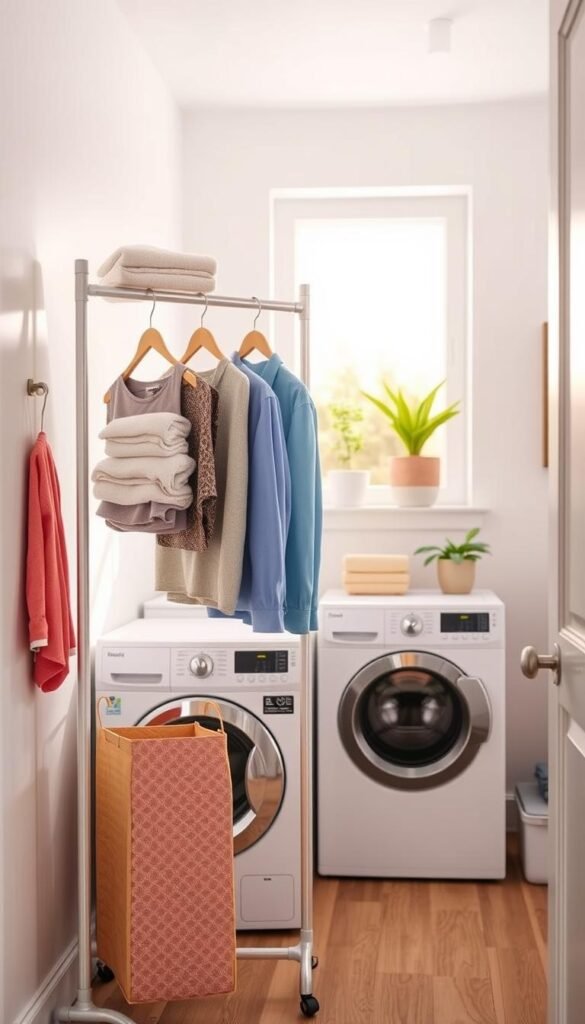
Over-the-door hangers add vertical space for supplies without screws. Tension rods create hanging zones or simple curtains. Adhesive hooks work for very light items like a lint brush or delicates bag.
Weight limits and a safe approach
Use adhesives for items under a pound. Reserve over-the-door racks for moderate loads such as small bottles. For heavy or frequently used items, choose a freestanding rack or shelving unit.
Keep anything off vents and away from hot appliances. Avoid storing flammables near heat sources. Make sure hooks and rods cannot fall behind machines and snag hoses or cords.
Door and trim protection plus easy removal
Pick padded hangers and confirm the door closes smoothly. Clean surfaces with rubbing alcohol before applying removable adhesive tabs.
- Save original packaging and screws for move-out.
- Test adhesive on a hidden spot first.
- If in doubt, choose a stable freestanding option — it’s often the safest no-damage way to add capacity and preserve functionality.
Best laundry room solutions for Vertical Storage Without Remodeling
Vertical storage transforms tight corners into useful places without ripping out walls. It preserves floor space and keeps sorting paths clear, making it the highest-impact upgrade for a small laundry room.

Floating shelves and narrow wall shelving
Floating shelves reclaim awkward wall runs above machines or beside door frames where cabinets won’t fit. Choose narrow depths (8–10 inches) to avoid blocking vents or lids.
Over-the-washer shelving
Install a shallow shelf above the washer to hold detergent, stain remover, and daily essentials. Position shelves so they don’t hit top-load lids or hide hookups.
Floor-to-ceiling freestanding shelving
When drilling is not allowed, a tall freestanding unit acts like cabinetry. Use baskets and lidded bins for a closed look that stays renter-friendly and moves easily.
Corner shelves for dead space
Corner shelving captures unused bits of wall in mudroom corners or narrow sunroom-style layouts. It expands capacity without changing the footprint.
Open shelves vs. closed cabinets: quick pros and cons
- Open shelves: cheaper, easy access, but can increase visual clutter.
- Closed cabinets/cabinetry: hide mess and look tidy, yet cost more and often require installation.
„Use fabric bins or lidded baskets on open shelving to get a cabinet-like feel without drilling.“
Durability note: Prioritize sturdy materials and stable freestanding units that won’t wobble near appliances. Use wall anchors only if permitted by the lease.
Closed Storage That Hides Clutter (Even If You Don’t Have Cabinets)
A tidy stack of lidded baskets can turn open cubbies into a near-cabinet look without any drilling. Closed storage matters when the washer sits near living spaces. It keeps the view calm and the home feeling orderly.

Opaque bins and lidded baskets for open cubbies
Choose opaque storage baskets and lidded bins that slide easily. Match shelf depth so lids clear the front edge. Fabric or woven bins hide mess and add texture like cabinets.
Labeling systems that keep shared laundry rooms functional
Use clear, short labels by category: soaps, stain care, ironing. Add a personal label for roommates or family members to prevent mix-ups.
„Labels cut hesitation—grab the right bottle and move on.“
Clear jars for small items and when not to use them
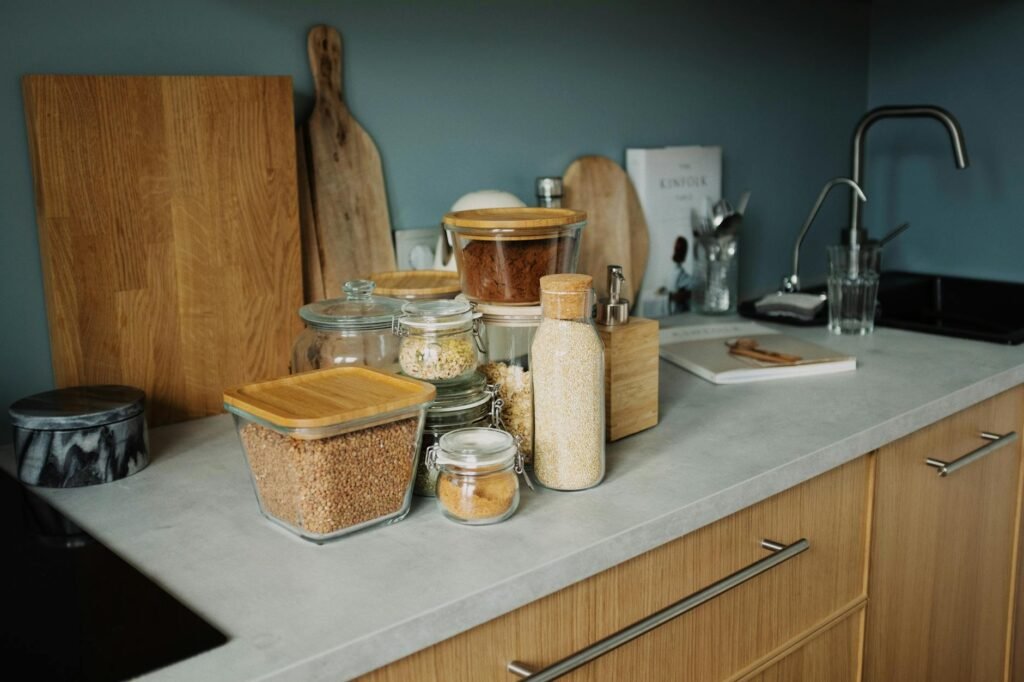
Glass or clear jars work well for clothespins and pods because they show when to refill. Avoid glass on top of machines or where kids can reach tempting contents.
Plenty but controlled: keep only current-week supplies in easy reach and store backstock elsewhere. For renters, baskets mimic cabinets without drilling and make move-out simple.
Store Supplies by Frequency to Make Laundry Faster (Daily Routine Friendly)
Frequency-based storage puts the most-used essentials at arm level so chores move with fewer steps. This simple method reduces hesitation and keeps work zones clear.
What to keep within easy reach: detergent, dryer sheets, stain remover, and a small microfiber cloth for quick wipe-downs. These items should sit on a shelf near the dryer or on a countertop next to the machine so they are grab-and-go.
Reserve high shelves for backstock and infrequent items. Use lidded bins to keep bottles secure and out of sight. Place heavy jugs as low as possible. Avoid stacking items that could tumble from vibration.

Contain spills and leaks: choose a shallow tray under detergents on a counter, or line the bottom of a tote or basket with vinyl or plastic. A tray protects a countertop and catches drips; a lined basket keeps spills from reaching shelves or the sink area.
- Lazy Susan: ideal for tight shelves — turns for quick access to bottles.
- Tray: best for drip control on a countertop or near the sink.
- Handled tote: supports grab-and-go trips when supplies live far from the wash area.
One-hand rule: keep daily essentials reachable without moving other items or stepping around hampers. This small habit speeds routines and reduces spills.
Maintenance cue: do a quick weekly reset—check levels, wipe trays, and return backstock to its bin—to keep the system working smoothly.
Budget-Friendly Organizers Under $25 That Solve the Biggest Pain Points
Small, renter-safe gear often removes the biggest headaches without changing a space. The right picks focus on access, spill protection, and durable materials for a shared utility setup.

Quick under-$25 shopping list
- Over-the-door organizer — stores lint rollers, sprays, and dryer balls to keep floors clear and items visible near the washer.
- Handled caddy or leak-lined basket — easy to carry and protects other areas if a bottle leaks.
- Non-slip shelf liners & drip trays — protect countertops and the tops/sides of appliances from drips and rings.
- Labels and small baskets — group by category: soaps, ironing, cleaning, and paper goods for fast restock and shared use.
Durability and safety notes
Choose thicker plastic, reinforced seams, and wipe-clean fabrics that tolerate humidity. Avoid overloading pockets on a hanging piece and keep chemicals secured.
„Group items by use and keep heavy bottles low — it reduces spills and makes refills simple for everyone.“
Upgrades Under $50 That Feel Like a Mini Remodel (Without the Commitment)
Targeted, renter-friendly purchases under $50 deliver big daily wins without tools or wall damage. These picks add usable storage and work surfaces that slip into narrow layouts.
Slim rolling cart: a narrow cart slides into the side gap beside a washer dryer set. It stores pods, stain sprays, and brushes. Choose one with locking wheels and rust-resistant metal. Best for singles or couples with limited supplies.

Freestanding shelving + baskets
A tall freestanding shelving unit paired with lidded baskets creates vertical order without anchors. Pick shelves deep enough for bottles but shallow enough to keep vents clear. This combo fits families or roommates who need more categories.
Collapsible drying rack
Look for a fold-flat rack that stores between the wall and washer or behind a door. It frees floor space when not in use and supports delicates when air-drying. Rust-proof joints and a compact fold are key selection points.
Compact ironing options
Choose a slim ironing board that slides beside appliances or a small foldable board that fits on a shelf. Keep a heat-safe mat with it and store the board upright so it won’t block doors or access to machines.
„Locking wheels, corrosion resistance, and proper dimensions make these under-$50 upgrades worth the space they use.“
Sorting Systems That Don’t Eat Floor Space
A compact sorting plan turns scattered piles into a steady flow from dirty to folded. The goal is to cut piles on the floor and create a clear next step for clothes and towels.
Multi-bin sorters that fit narrow spaces
Choose vertical or slim multi-bin units that take up minimal floor width. Slim footprints slide beside machines or tuck into a closet when doors allow. Use labeled baskets or fabric bins so everything has a place.
Slide-in labeled hampers for lower shelves
Slide-in hampers on an open lower shelf keep the floor clear and counters usable. Label each slot for whites, colors, towels, or rags so the right load goes to the washer without extra steps.
Rolling hampers with casters
Rollers cut steps: move a hamper to the bedroom, then to the washer, then to a folding spot. Pick models with sturdy frames, breathable liners, and wheel locks for slick floors.
Best for: families, roommates, solo renters
Families benefit from labeled-per-person or per-type sorters. Roommates should use clear category or name tags. Solo renters can use a two-bin system to save space and time.
Workflow tip: Keep incoming dirty items on one path and clean items on another. This simple separation prevents re-messing folded piles and makes the whole process one smooth way.

Drying Solutions for Small Spaces: Go Vertical, Fold Flat, or Roll Away
Small homes benefit most from drying approaches that collapse, stack, or slide out of sight. Pick a path that fits layout and tolerance for visible clothes.

Wall-leaning and folding drying racks for tight areas
Wall-leaning racks and fold-flat frames free floor space when not in use. Set them up near a vent for faster drying and fold them flat against the wall when finished.
Tension-rod hanging for drip-dry items
Tension rods create no-drill hanging between two walls or inside a closet. They work well for shirts and delicates that need drip-dry care. Use adjustable rods rated for wet weight and add a shallow tray below to catch drips.
Dual-rod hanging setups and where they work
Stack two rods on a narrow wall run to double capacity without widening the footprint. Place the lower rod above a hamper or near a vent for efficient use of vertical space.
Pros, cons, placement, and safety
Pros: faster drying and higher capacity. Cons: visible clothes can create visual clutter in open-concept design.
- Place racks where they won’t block machine doors or walkways.
- Keep hanging items away from hot surfaces and electrical outlets.
- Do not overload rods; check weight ratings before adding wet clothes.
Folding and Countertop Ideas When You Have Zero Counter Space
A compact fold zone turns a tight washer area into a reliable place to sort and fold without taking over other rooms.
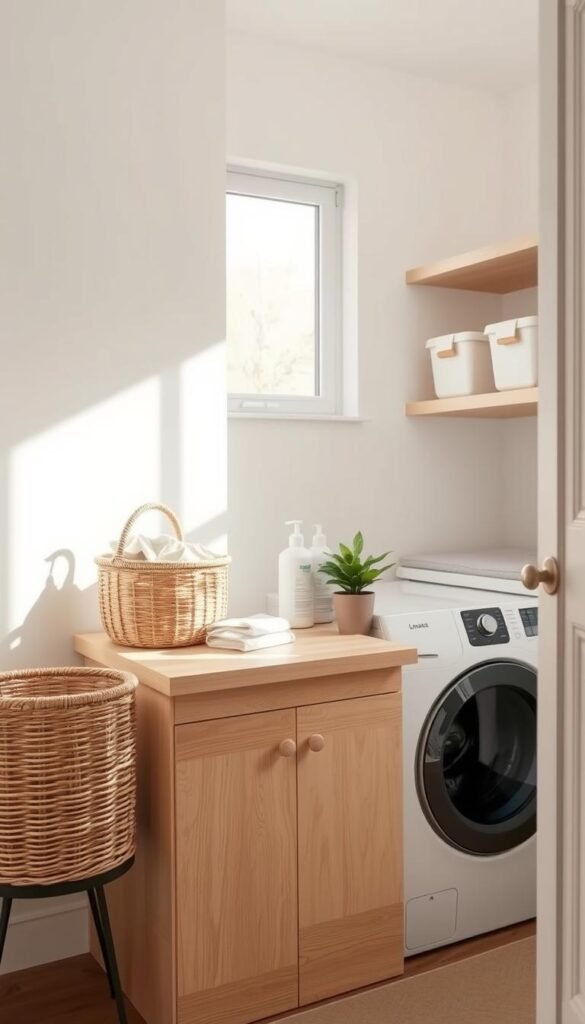
Portable folding mats work well when there is no counter. Choose a mat that rolls or folds flat and has a non-slip base. Use a washer-top protector only when safe: confirm the washer does not vibrate heavily, the surface stays dry, and heat won’t damage the mat.
For more stability, a fold-down or freestanding folding surface gives a real counter feel without drilling. Look for units that fold flat against the wall or nest behind a door. Locking hinges and rubber feet keep the top steady while folding.
Keep the fold zone clear
A shallow shelf above machines can free the top by holding routine items. Place a neat row of baskets on that shelf so the surface below stays open for folding only. This reduces trips and dropped items.
- Place the folding surface near where clothes come out of the dryer to cut steps.
- If the laundry place is a closet, a removable surface often outperforms a fixed counter.
- Wipe the fold area regularly and keep a small lint brush handy for quick cleanups.
„Reserve the top for folding—keep supplies just above it so the work area stays clear.“
Ironing and Steaming Essentials That Store Small
Ironing and steaming can stay useful in a tiny space when tools tuck away neatly and set up in seconds. A compact kit that fits a narrow gap will be used more often than a bulky board that never gets unpacked.
Compact tool picks:
- Mini ironing boards: tabletop or folding mini boards work for quick touch-ups and fit beside appliances in a narrow side gap.
- Slim standing boards: freestanding slim boards slide between a washer and wall without drilling and stay renter-friendly.
- Handheld steamer: a small steamer is a good alternative for renters who avoid a full board. Allow a safe cool-down area after use.

Heat-safe storage and burn-prevention basics
Always let irons and steamers cool fully before returning them to storage. Coil cords neatly and keep hot plates away from plastic bins or chemicals.
Quick safety checklist:
- Use a heat-resistant pad if placing an iron temporarily down.
- Avoid balancing tools on a washer lid; vibrations can cause falls.
- Store devices out of children’s reach and label the storage place if shared.
„Choose tools that fold or nest into a slim slot; functionality depends on how easy they are to store and access.“
| Tool | Footprint | Renter friendly | Storage tip |
|---|---|---|---|
| Mini tabletop board | Small, folds flat | Yes | Store on a shelf or under a bed in a heat-safe bag |
| Slim freestanding board | Thin vertical profile | Yes | Slide into gap beside machine; lock feet when in use |
| Handheld steamer | Very compact | Yes | Cool fully; store upright on a shelf away from sprays |
Create Zones So Laundry Doesn’t Take Over the House
Divide the space into clear zones so daily tasks stop spilling into living areas. Each item should have one home and one purpose. This keeps surfaces tidy and habits simple.
Zone map:
- Wash — detergent, measuring tools, and pre-wash pods.
- Stain-treat — sprays, a small towel, and a bin for soaking items.
- Dry — dryer supplies, lint tools, and a small basket for delicates.
- Fold — a clear surface or portable mat kept free for folding.
- Storage — backstock bins and labeled baskets on a high shelf.
Shared or multi-purpose areas: in a mudroom or entry combo, create firm boundaries. Assign a shelf for coats and a separate bin for pet gear. Use labeled baskets so household members know where to put items.
Utility micro-zone: carve a slim niche for a vacuum or mop, a narrow bin for microfiber cloths, and a labeled basket for paper goods and spare supplies. This keeps utility items accessible without crowding the main workflow.
If a sink exists, place stain-treat and hand-wash items nearby. If not, keep a portable tote that can travel to the nearest sink for pre-treating and rinsing.
„Zones reduce steps, cut searching time, and make shared use predictable for everyone.“

Easy Maintenance Habits: Keep the Room Clean, Safe, and Ready
A short, repeatable upkeep routine keeps small utility spaces safe and working without adding chores. The focus is spill control, lint management, and a weekly reset that protects floors and preserves functionality.
Spill prevention & leak containment
- Store detergents and other liquid supplies in a shallow tray or lined baskets to catch drips.
- Wipe any spills immediately and avoid overfilling dispensers.
- Keep a small absorbent towel or pad nearby and do not place leaky bottles above eye level.
Lint management for the dryer area
- Empty the lint trap after every load.
- Check surrounding surfaces and vents weekly for buildup.
- Keep the vent path clear of baskets and stray clothing to maintain airflow and reduce fire risk.
Weekly reset checklist
- Return supplies to labeled zones, toss empties, and wipe shelves.
- Re-stack baskets so nothing teeters and check floors for damp spots.
- Confirm vents and cords are unobstructed to keep machines running safely.
„Small habits cut risk—if a step gets skipped often, simplify the setup: fewer containers, clearer zones, more open space.“

Small-Space Organization Beyond the Laundry Room (Kitchens, Bathrooms, Closets, Entryways)
Clutter often migrates when storage is tight; a simple plan stops it at the source. Set small, repeatable rules for adjacent areas so clothes and towels do not drift into the washer area.
Kitchen
Limit backstock to one spare of common items and store the rest elsewhere. Use labeled bins for paper goods and cleaners so supplies don’t overflow into the laundry zone.
Bathroom
Keep a designated bin for dirty towels and a clear shelf for clean backups. Rotate linens weekly so fresh items have a known home and do not pile up waiting for folding.
Closets
Place a hamper where people actually undress, not where you wish they would. Add a small “drop zone” for re-wear clothes to cut floor piles and reduce extra loads.
Entryways
Use hooks and small bins for uniforms, gym gear, and reusable bags. Corral sweaty items immediately so they do not end up scattered and cause surprise wash days.
Keep it renter-friendly: choose movable bins, labels, and portable racks over built-ins. Fewer roaming piles means fewer steps and less re-sorting when it is time to wash.

„A simple plan for nearby spaces reduces clutter migration and makes laundry tasks faster.“
Comparison Tables: Pick the Right Setup for Your Apartment Size and Lifestyle
Match one clear need—drying, sorting, or clutter control—to an affordable fix in minutes. This section is a decision hub to pair space, budget, and weekly habits with practical ideas.

Under-$25 vs. Under-$50 essentials
| Item | Setup time | Durability | Best for |
|---|---|---|---|
| Door organizer, labels, tray/liner, caddy | 5–15 min | Light–moderate | Closets, renters, quick fixes |
| Slim cart, freestanding shelving, collapsible drying rack, compact ironing board | 10–45 min | Moderate–high | Couples, small families, frequent users |
Drying options
| Option | Capacity | Footprint | Renter friendly |
|---|---|---|---|
| Folding rack | Medium | Collapsible | Freestanding |
| Tension-rod hang | Low–Medium | Vertical | No-drill |
| Dual-rod wall setup | Medium–High | Stacked vertical | May need anchors |
Hamper & sorting systems
| Type | Solo | Couples | Families/Roommates |
|---|---|---|---|
| Multi-bin sorter | Good | Very good | Great – saves steps |
| Slide-in labeled hampers | Perfect | Good | Useful |
| Rolling hampers | Handy | Handy | Best for transit |
Closet vs. dedicated space: In a tight closet, prioritize slim, vertical, and removable pieces. In a dedicated area, add freestanding cabinets or cabinetry and clearer zone design to mimic a small remodel without walls.
„Start small: pick one pain point and add one compact idea at a time.“
Conclusion
Small changes that prioritize vertical use, mobility, and clear labels yield big daily wins. A compact plan turns clutter into a predictable routine. Maximize shelves and vertical storage so the floor clears and every item has a place.
Choose renter-friendly hardware: no-drill hangers, stable freestanding pieces, and portable carts that protect walls and cabinets. Measure first and match picks to how laundry actually flows in the room.
Start with under-$25 fixes—door organizers, labels, and drip trays—then add under-$50 upgrades like a slim cart, extra shelves, or a collapsible drying rack. Respect weight limits, keep airflow around appliances clear, and manage lint to cut risk.
Do a short weekly reset so the laundry room and adjacent spaces stay tidy. Refer to the comparison tables to pick the right setup for your washer dryer layout and household size.
5 Comments