Practical, lease-friendly fixes help people add storage and reclaim space without leaving holes or risking a deposit. This guide previews no-drill gear, simple installs, and quick checks for durability.
The approach is room-by-room: entryway, closet/bedroom, kitchen, bathroom, and living room/office. Each pick focuses on real apartments and real use, not showroom styling.
Recommendations split by budget. Expect fast fixes under $25 and stronger upgrades under $50. Tradeoffs are clear so readers can balance cost and longevity.
Durability checks mirror Wirecutter-style tests—jiggle-tested racks, loaded hooks with bags, and stuffed under-bed bins—to see what survives daily life. The guide also covers vertical strategies, safety tips, and simple maintenance routines to prevent clutter and keep walkways clear.
Key Takeaways
- Lease-friendly, no-drill options can add meaningful storage in tight apartments.
- Clear budget tiers: quick fixes under $25; sturdier choices under $50.
- Room-focused list makes picking gear fast and practical.
- Durability matters: look for products that pass simple wobble and load checks.
- Studio and roommate setups get tailored alternatives to reduce clutter without shrinking walkways.
What “no-drill” really means for renters: surfaces, weight limits, and lease-friendly setup
No-drill setups let people add storage without risking deposit disputes or new holes in painted surfaces. This section defines common attachment types, surface compatibility, realistic weight limits, and quick durability checks. The goal is clear, practical guidance for safe, damage-free installs.
Renter-safe attachment types
- Over-the-door: Hangs on a door frame for coats, keys, and daily-access items. Use for high-access hanging needs.
- Tension systems: Poles and shelving that press between floor and ceiling—good for vertical space without wall screws.
- Adhesives & suction: Best for light loads and compatible surfaces; avoid in humid zones unless rated for moisture.
- Freestanding: Shelves and racks that carry heavier loads and reduce risk of wall damage.
Match organizers to common surfaces
Painted drywall can peel under harsh adhesives. Tile holds certain adhesives and suction devices better, but grout lines matter. Laminate doors may show residue; test a hidden spot first. In bathrooms, expect adhesives to weaken faster from humidity.
Quick durability checks
- Wobble test: jiggle a shelf or rack before loading.
- Load test: hang a bag or jacket on hooks to check real stress versus the advertised limit.
- Daily-use stress: simulate repeated tugs and door slams to spot weak mounts.
Cleaning and placement note: Dust and residue cut adhesive grip. Wipe surfaces before installing. Choose a place away from moisture and clear of the door swing for safer, longer-lasting use.
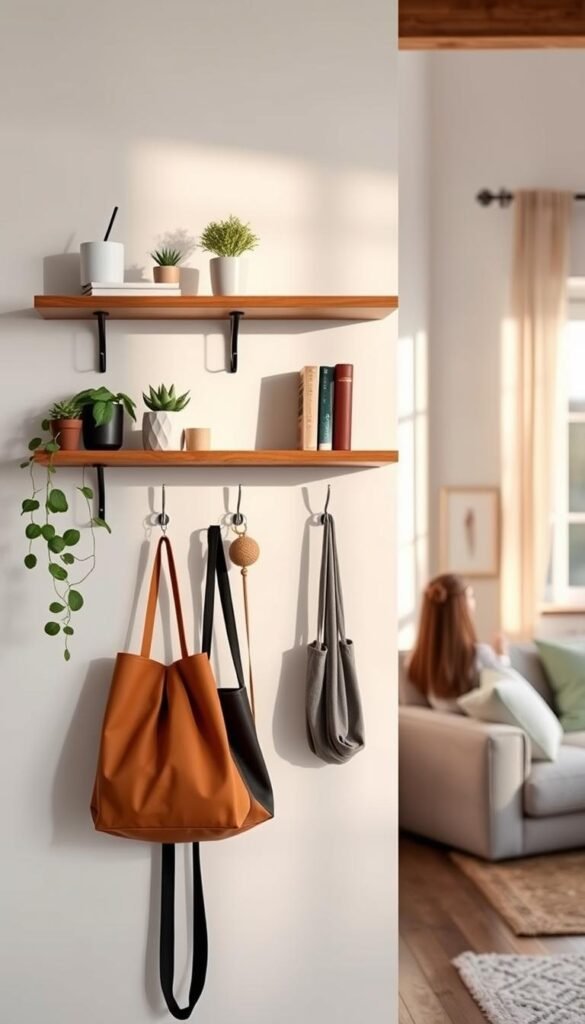
Budget game plan: renter-friendly organizers under $25 and under $50
Focus spending where it shows: entryway and kitchen counters get priority. Fix visible clutter first with simple, low-cost items. Then move to load-bearing areas like shoe shelves and closet zones with sturdier buys.
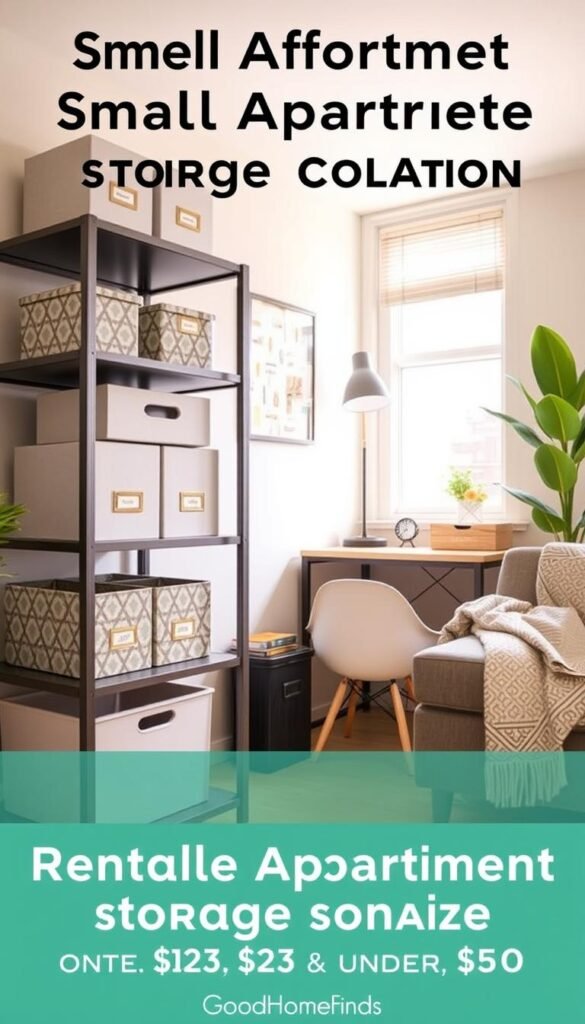
Under $25: quick wins for cords, counters, and drop zones
- Cable clips and a small cable box to hide cords and tame countertop chaos.
- Clear snack bins and narrow mail baskets for pantry and entryway clutter.
- Drawer dividers for small accessories and a simple hanging shoe pocket for light shoes.
Under $50: upgrades for durability and heavy use
- Heavier-duty shoe rack that resists jiggle under load.
- Freestanding shelving or a tension rod system for closet double-hang.
- Sturdy under-sink risers and metal bins that hold supplies without sagging.
Value for renters means easy to move, easy to clean, flexible between apartments, and unlikely to mark doors or walls. Measure door thickness, shelf depth, and under-bed clearance before buying to avoid returns.
| Room | Under $25 pick | Under $50 upgrade | Best for |
|---|---|---|---|
| Entryway | Mail basket | Metal shoe rack | Studio / one-bedroom |
| Kitchen | Cable box / clear bins | Stackable freestanding shelf | One-bedroom / roommates |
| Closet | Drawer dividers | Tension-rod double-hang | All layouts |
Common mistakes: buying flimsy racks that wobble, overloading adhesive hooks, or choosing oversized bins that waste vertical space.
Entryway organization without holes: shoes, coats, bags, and keys in one small area
A small entry can hold a surprising amount when each item has a clear spot. This section shows no-drill approaches that keep a door area tidy and safe while protecting paint and hardware.
„Over-the-door racks are the fastest way to add hanging storage without altering a surface.“
Over-the-door hooks and racks for coats, hats, and everyday bags
Over-the-door hooks and racks give instant hanging for coats, hats, and bags. Choose models with rubber pads where metal meets paint to avoid scratches.
Tip: Test hooks with a heavy bag before regular use. If the door rattles, add felt strips or a slim bumper to cut noise.
Stable shoe racks that won’t “jiggle” on uneven floors
Pick a shoe rack with a wider footprint and adjustable feet. These features stop wobble on uneven floors.
Do a quick push test: press the rack from different angles to confirm it passes the “jiggle” check before you load shoes.
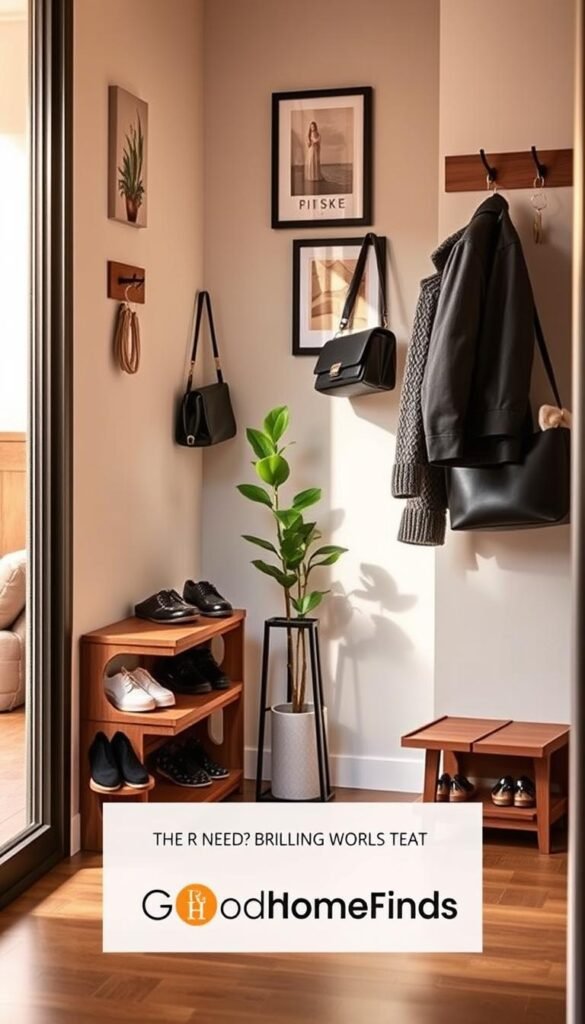
Drop-zone solutions: trays, baskets, and slim consoles for keys and mail
Use a shallow tray for keys and a labeled basket for mail to keep small items from scattering. A slim console fits longer hallways when width is tight.
Best for: studios vs longer hallways vs shared apartments
- Studios: rely on door-mounted racks and multi-hook strips to save floor space.
- Longer hallways: a narrow bench or console adds seat and drop-zone surface.
- Shared apartments: assign separated hooks or bins per person to avoid mix-ups.
Pros & cons: Over-the-door gear is convenient and fast to install but can affect latching and may rattle. Freestanding racks hold heavier shoe loads but need floor clearance and a stable base.
Measure door thickness, check latch clearance, and add felt pads where metal meets paint to prevent marks and keep the entryway safe and tidy.
Closet and bedroom upgrades: maximize storage with no-drill shelves, rods, and dividers
A few low-effort swaps can dramatically increase closet and bedroom storage. Focus on zoning so clothes and accessories have clear homes. Small changes avoid tools and protect painted surfaces.
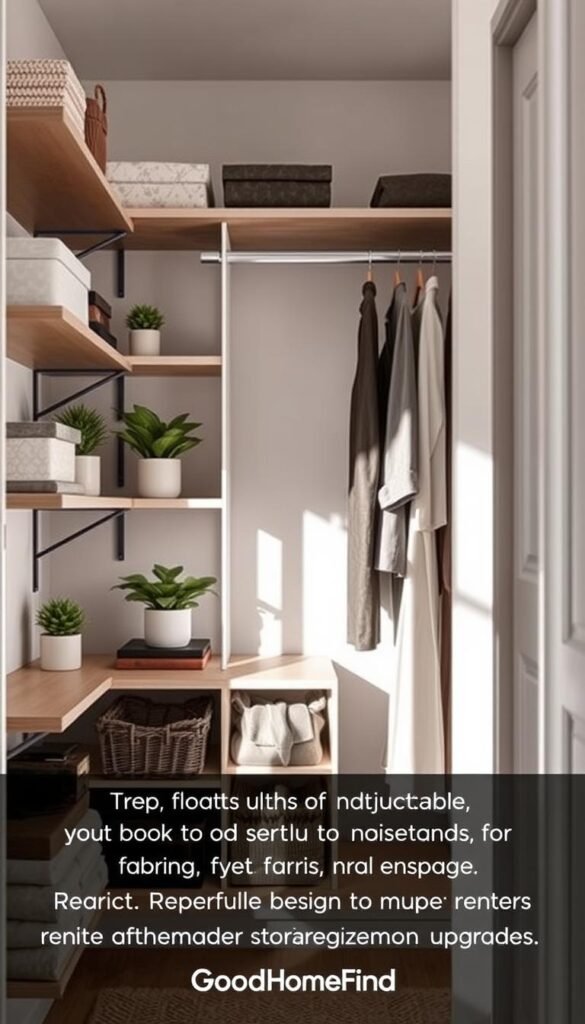
Closet zoning and drawer care
Use hanging organizers for folded clothes and drawer inserts for accessories. Add shelf dividers to stop stacks from toppling. Test drawers: load with towels or jeans to confirm they still glide and do not bow.
Tension rods and forgotten corners
Tension rods create double-hang space: shirts above, pants below. A short rod can reclaim a corner for scarves, belts, or light hanging items. Tighten rods firmly and recheck after a day.
Under-bed bins and easy-slide tips
Pick low-profile bins sized to bed clearance. Lids keep dust off off-season clothes and linens. Vacuum under the bed seasonally. Add felt sliders or choose smooth bottoms so bins pull easily. Avoid overpacking.
Quick pros & cons
- Hanging organizers: fast to install but use rod space.
- Tension rods: flexible but need secure tension.
- Under-bed bins: great capacity; require labels and access care.
| Upgrade | Use | Best for |
|---|---|---|
| Hanging organizer | Folded clothes, shoes | One-bedroom closets |
| Tension rod | Double-hang, scarves | Any closet with depth |
| Under-bed bin | Off-season clothes, linens | Studios and small bedrooms |
Kitchen organization for small apartments: keep essentials visible, clean, and easily accessible
In tight apartment kitchens, doubling vertical space often makes the biggest difference. Small changes—like adding instant risers or clear bins—help keep frequently used items where they are easy to grab.
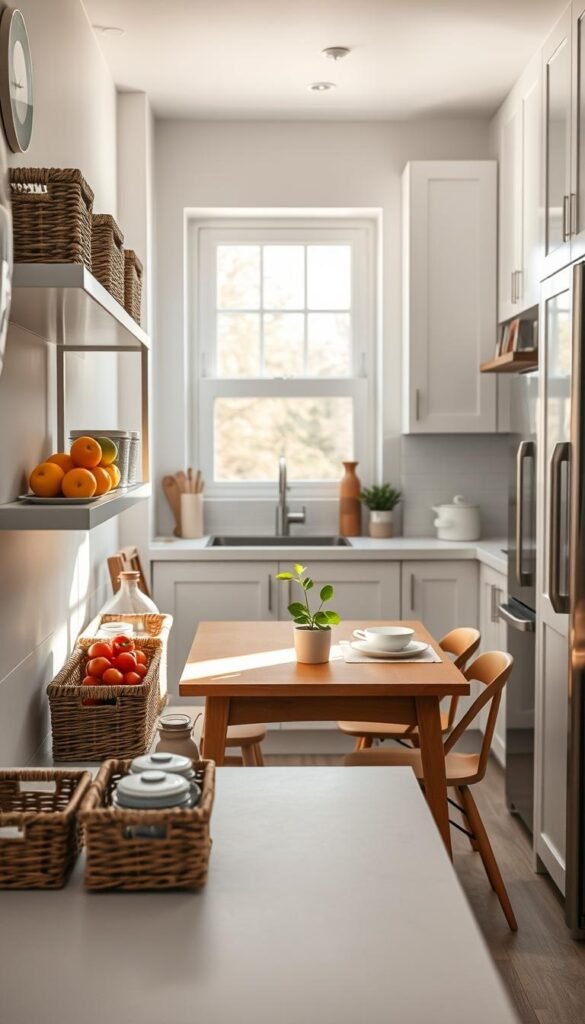
Countertop and cabinet risers act as instant shelves that double usable area for mugs, plates, or pantry jars. They need no mounting and clear the counter quickly.
Under-shelf baskets are ideal for lightweight snacks, wraps, and small supplies. Measure shelf thickness and basket depth so doors still close. Test clearance before filling.
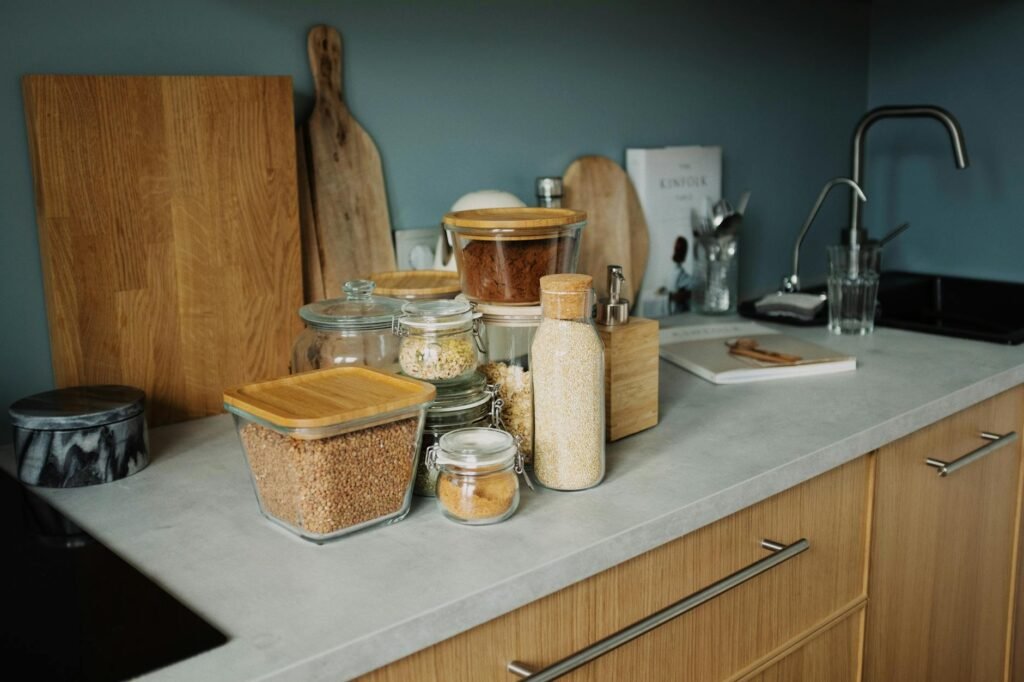
Stackable bins group like items—snacks, baking, spices—and keep essentials visible. Choose clear or labeled bins so things stay easily accessible.
Over-the-cabinet hooks hang towels, cutting boards, or small tools. Add felt pads to prevent scuffs and confirm doors latch flush after installation.
Pantry overflow strategy
- Daily: everyday items kept at eye level for quick access.
- Weekly: bulk snacks and meal kits on a middle shelf.
- Backstock: overflow and bulk below or in stackable bins.
| Feature | Pros | Cons |
|---|---|---|
| Risers / shelves | Instant vertical space, no tools | Can shift if overloaded |
| Under-shelf baskets | Good for light items, hidden use of shelf gap | May block door if too deep |
| Stackable bins | Groups supplies, keeps items visible | Needs labeling to avoid lost items |
Quick checklist: confirm stability (won’t tip when pulled), pick wipeable, food-safe materials, and keep textures that resist odors. For cleaning, do a brief weekly wipe-down of risers and bins to prevent sticky buildup and crumbs.
Bathroom organization without drilling: tiny vanities, tight showers, and shared storage
Small bathrooms demand big thinking: use height and smart bins to stretch limited counters. This keeps grooming items reachable and off the sink.
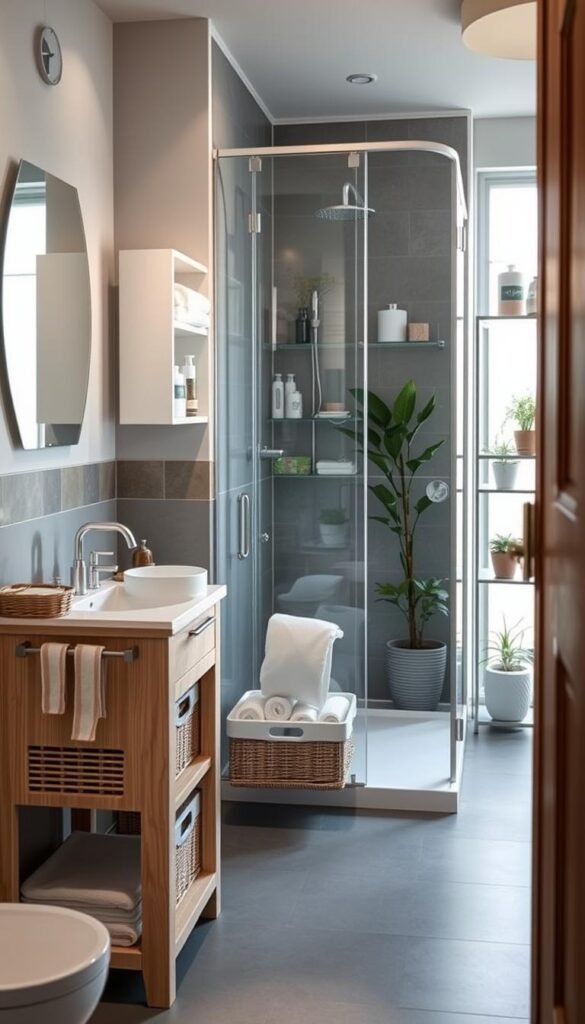
Tension caddies and pole organizers
Use a tension shower caddy or pole organizer to capture vertical space in a tight shower. Tighten carefully and check rubber feet on wet tile to prevent slipping.
Stable over-to-toilet options
Choose narrow freestanding units with anti-tip straps or a back-of-tank tray instead of tall, wobbly shelves. Stability matters more than looks in a small bathroom.
When to use adhesive hooks
Adhesives work on smooth tile and dry walls after full cure. Skip them on textured or constantly humid surfaces. Reserve hooks for light items, not heavy bottles that get yanked.
Vanity fixes and shared-bath tactics
Install drawer dividers and small bins to group skincare and grooming tools. Add an under-sink riser for a second level and label bins for shared counters.
Two-minute daily reset
Quick cleaning: wipe the sink rim, faucet base, and shower ledge each morning. This prevents grime so storage stays useful, not extra work.
Living room and home office: reduce visual clutter with hidden storage and flexible furniture
Multipurpose pieces let a tiny room work as both a lounge and a productive home office.
Storage ottomans are a go-to. They hide throws, games, and daily items. Pick a model with a supported hinge or removable lid so it opens easily and stays stable.
Nesting tables replace a bulky coffee table. Pull them out as needed for guests or work and tuck them away to keep walking paths clear.
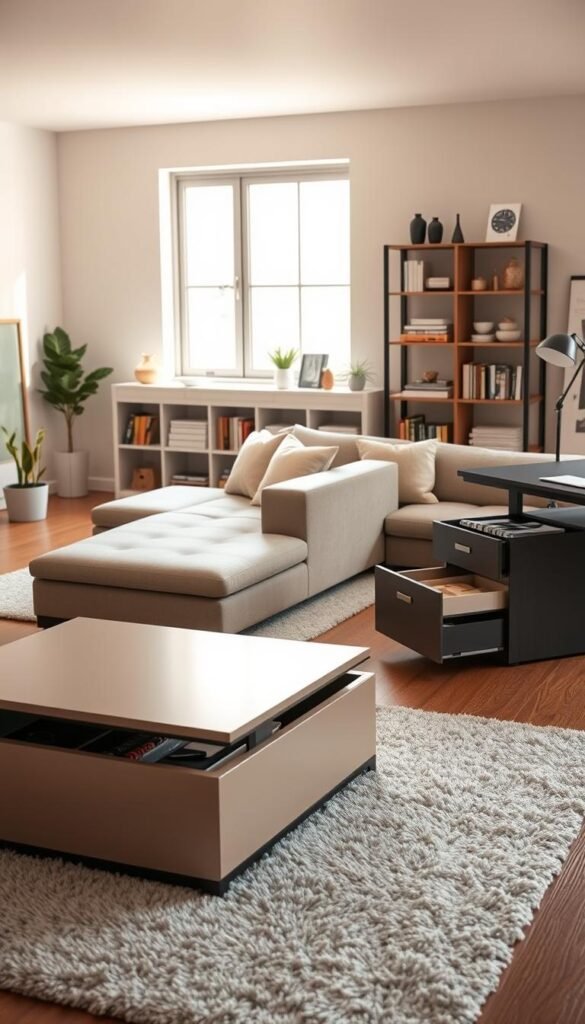
Decor bins, book bins, and quick-reset gear
Lidded baskets corral cords, toys, or magazines while matching room colors to reduce visual clutter. Book bins make fast pickups simple and keep shelves tidy.
For home office use, choose a small rolling file cart, a slim desktop organizer, and one „close-it-and-done“ box for end-of-day resets.
Cable and router containment
Use a cable box for visible power strips and an adhesive-free cable sleeve along baseboards. Under-desk trays that clamp on avoid drilling and keep floors clear.
„Keeping floors free of cords and loose items reduces trips, speeds vacuuming, and makes a small room feel larger.“
| Piece | Use | Why it fits small spaces |
|---|---|---|
| Storage ottoman | Hidden storage for textiles and games | Seating + storage saves floor space |
| Nesting table set | Flexible surface; coffee table alternative | Easy to store; keeps paths clear |
| Rolling file cart | Paper storage and mobile work surface | Fits under desk or beside sofa |
Best renter organization solutions for vertical space without wall damage
Using height instead of footprint is the quickest way to add useful space without altering walls. Vertical methods keep floors open for walking and furniture while adding multiple storage layers.
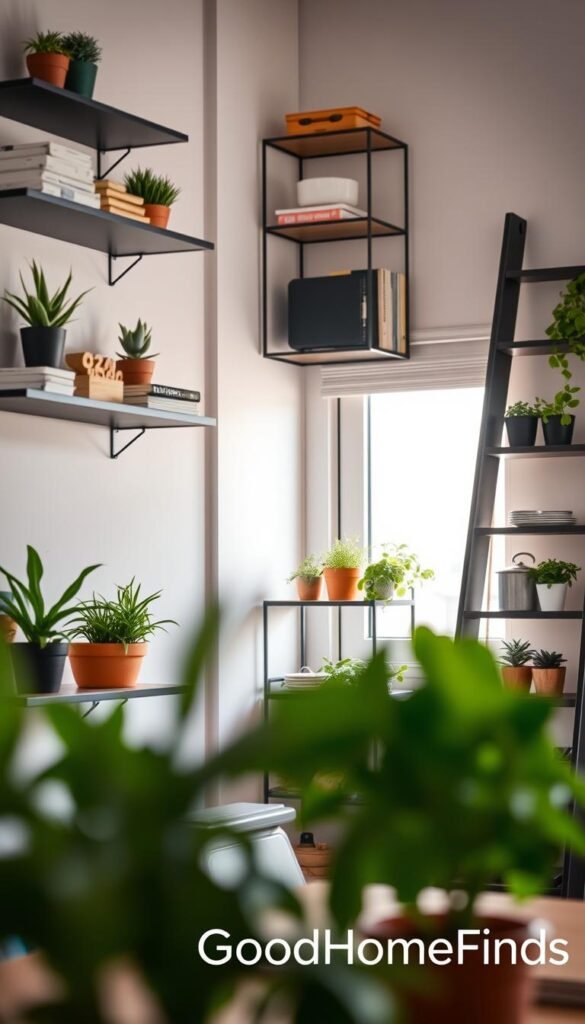
Over-the-door systems for bedrooms, bathrooms, and utility closets
Hang racks and slim pockets on the back of a door to store shoes, hair tools, or cleaning supplies. Leave a half-inch clearance to ensure latches work.
Tip: Add felt pads where metal meets paint to prevent scuffs and reduce rattle.
Freestanding shelving: when it beats floating shelves for renters
Freestanding units hold heavier loads and move easily between apartments. They avoid anchors and can create zones in a one-bedroom.
Tradeoff: they take more visual space than floating shelves but win on capacity and stability.
Pegboard-style organizing — drill-free alternatives
Choose freestanding peg panels, leaning grid panels, or clamp-on rail systems to mimic pegboard function. These options give flexible hooks and baskets without drilling.
| Type | Strength | Best for |
|---|---|---|
| Door-mounted pockets | Fast, low-footprint | Studios, closets |
| Freestanding shelves | High capacity, mobile | One-bedrooms, shared rooms |
| Leaning/grid panels | Flexible, visual | Home office, craft areas |
Stability reminder: place heavy items low, use wide bases, and add renter-safe straps when feasible to reduce tipping risks.
Safety and damage prevention: keep shelves, racks, and hooks from failing
Simple checks and smart placement keep shelves and racks from causing damage or accidents. Focus on stability first, then surface care.
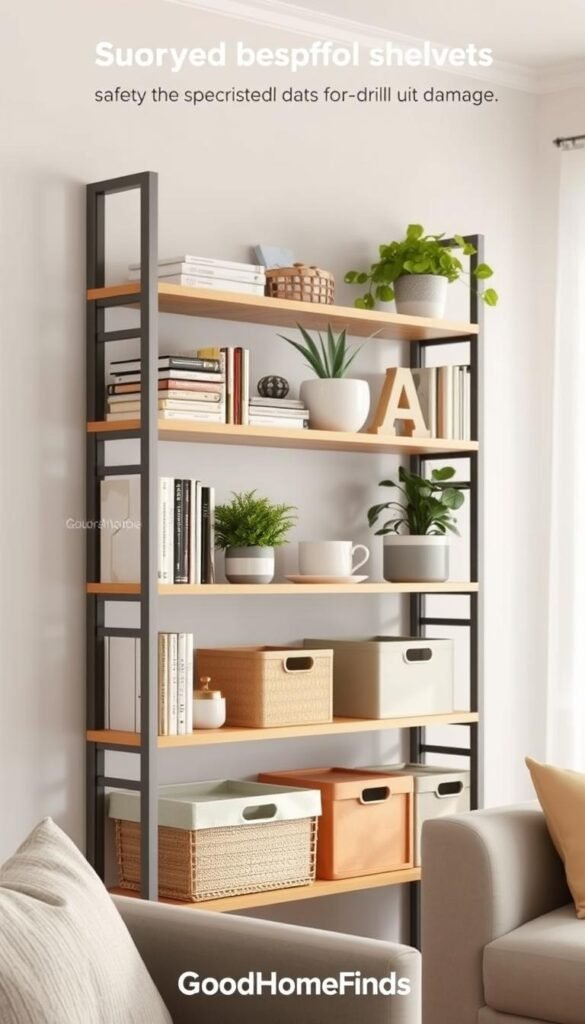
Load limits, tipping risks, and kid/pet considerations
Practical load rule: aim at 60–75% of an item’s rated weight. Dynamic pulls—yanking a bag from hooks—can spike loads well above static numbers.
Place heavier objects on the bottom shelf or lowest rack. Give tall units wider footing and consider anti-tip straps when children or pets are present.
How to prevent scuffs, dents, and sticky residue
Use felt pads behind over-the-door hooks and soft bumpers where metal meets paint. Prep surfaces by wiping with isopropyl alcohol before adhesives are applied.
Removal tip: warm adhesives with a hairdryer and peel slowly to reduce paint pull and sticky residue.
Placement rules for high-traffic, door swing, and moisture zones
Keep units out of main walk paths and confirm a door clears by at least a half-inch. Avoid adhesive mounts in humid zones unless rated for moisture.
- Five-minute safety audit: shake-test racks, check for wobble, confirm exits aren’t blocked, and move heavy items lower.
| Risk | Quick fix | Why it helps |
|---|---|---|
| Tipping | Wider base, heavier bottom | Stops forward fall |
| Paint scuffs | Felt pads | Prevents metal abrasion |
| Adhesive residue | Proper cure + heat removal | Less paint damage |
Easy maintenance systems: make organizing stick with simple daily and weekly routines
A simple rhythm of quick resets makes organized spaces stay useful. Small, repeatable actions prevent clutter and keep surfaces ready for daily life.
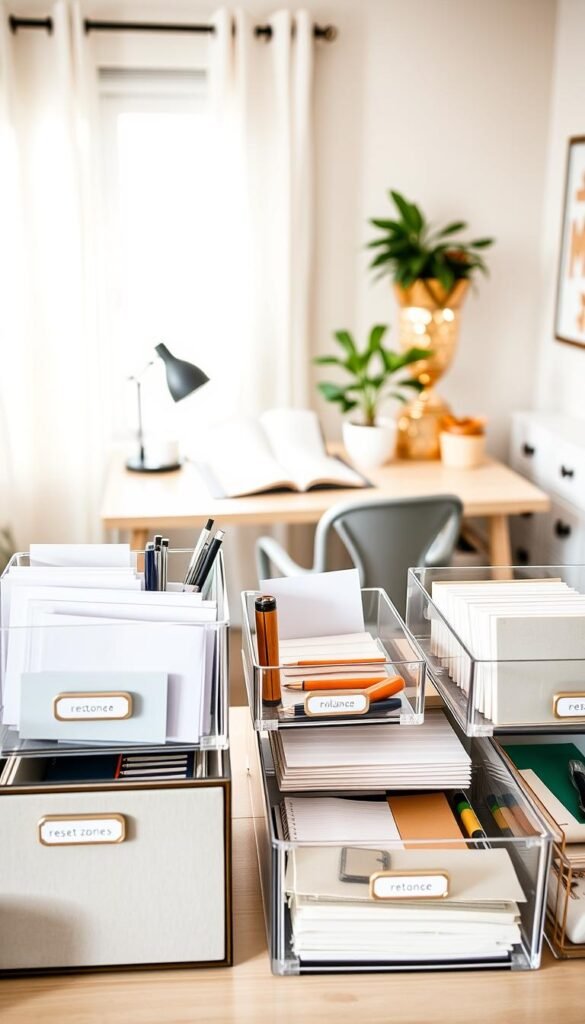
Quick daily habits and reset zones
Reset zones are tiny landing spots that stop things from scattering. Examples: an entryway tray for keys, a small counter bin for mail, and a sink caddy for toiletries.
- Empty each zone once a day into its home.
- Follow a one-in-one-out rule for accessories and extra items to avoid overflow.
- Use a single temporary bin for miscellaneous things and clear it weekly.
Weekly cleaning and label-light systems
Spend 10 minutes each week on a quick reset: empty drop zones, wipe surfaces, and return items to shelves. This small effort prevents major catch-ups.
Label-light systems work well with partners and roommates. Use simple icons or one-word labels on bins so everyone knows where items belong without overcomplicating the process.
„Maintenance is the difference between buying organizers and staying organized.“
| Task | Time | Why it helps |
|---|---|---|
| Daily zone sweep | 5 minutes | Stops clutter growth |
| Weekly reset | 10 minutes | Keeps surfaces clean |
| Temporary bin clear | Weekly | Prevents roommate disputes |
Choosing the right setup for your apartment size: studio, one-bedroom, and roommate layouts
Small homes need choices that match layout, daily habits, and how much visual clutter a household tolerates. This short guide highlights priorities for three common layouts and gives clear product types and budget tiers to fit each situation.
Studio priorities
Keep floors open. Favor door-mounted racks, slim vertical shelving, and low-profile under-bed bins to protect walking paths.
Use vertical tools that don’t require drilling—tension poles, over-the-door pockets, and freestanding narrow shelves work well for tight footprints.
One-bedroom priorities
Zone closets and tame kitchen cabinets. Add hanging organizers, a tension double-rod, and cabinet risers so daily items stay accessible without crowding counters.
Reserve freestanding shelving for overflow and label bins so seasonal items are easy to swap.
Roommate priorities
Set shared rules and clear personal zones. Use separated bins per person, labeled hooks, and one shared tray for communal items to avoid disputes.
Agree on counter limits and weekly resets to keep shared spaces functional and fair.
| Apartment type | Recommended item types | Typical budget tier | Visual-clutter tolerance |
|---|---|---|---|
| Studio | Over-the-door racks, under-bed bins, tension poles | Under $25 / under $50 | Low — prefer hidden storage (ottomans, lidded bins) |
| One-bedroom | Hanging organizers, risers, freestanding shelves | Under $25 / under $50 | Medium — mix of open shelves and closed bins |
| Shared apartment | Separated bins, labeled hooks, slim consoles | Under $25 / under $50 | Variable — set rules for open vs hidden storage |
- Measurement checklist: door thickness, under-bed clearance, closet rod height, and cabinet depth.
- Measure before buying to avoid returns and ensure a snug, damage-free fit.
Conclusion
Start with small investments and real-world testing to stretch storage without altering walls. Choose no‑drill fixes that match surfaces, realistic loads, and daily use. Test stability before full loading and favor easy-to-clean materials so systems stay useful.
Follow the budget path: quick under-$25 swaps for immediate control, then under-$50 upgrades where strength matters. Aim to maximize storage while keeping items easily accessible and low-maintenance.
Room recap: entryway drop zones, closet and under-bed overflow, kitchen risers and clear bins, bathroom vertical gear, and living-room hidden storage that doubles as seating.
Note on floating shelves: they often need drilling. For leased apartments, prefer freestanding units or over-the-door mounts to protect paint and hardware.
Simple plan: pick one problem area, measure the place, pick one no‑drill type, test stability, and do a weekly reset to keep the system working.