Quick, renter-friendly fixes can make a cramped cooking area feel useful again. You’ll get no-drill options that protect walls and move with you. These tips focus on saving counter space, adding vertical storage, and getting cabinets to work harder.
In a real 22-square-foot micro-kitchen, a roll-up dish rack, magnetic storage on the fridge side, and a slim rolling cart changed the flow. A microwave cart added surface area and open shelving above the sink freed counters.
Throughout this guide I’ll show practical picks: roll-up racks, sink covers, magnetic shelves, and slim carts. Each item includes pros and cons, who it fits, and renter-safe setup tips.
Budget lanes are clear up front: quick wins under $25 and bigger gains under $50. I’ll also call out tiny space realities like heat near the oven and narrow walkways so you avoid bulky gear that blocks traffic.
What to expect: easy installs, durable picks, and safety notes. The same logic helps bathrooms, closets, and entryways because small-space rules repeat.
Key Takeaways
- Focus on reclaiming counter space first, then add vertical storage.
- Choose renter-friendly, no-drill fixes that you can take when you move.
- Quick upgrades under $25 and best value buys under $50 will boost daily cooking.
- Pick slim, heat-safe organizers to fit narrow walkways and tiny kitchen layouts.
- Each tool will include pros, cons, and who it’s best for.
How to Choose Small Kitchen Solutions That Actually Work in Rentals
Before you buy anything, take a tape measure and find the real pinch points in your cooking room.
Quick audit: note counter space, cabinet depth, pantry reach, and the sink area where clutter piles up. Measure width, height, and depth. Check door swing and drawer pull clearance so items actually fit.
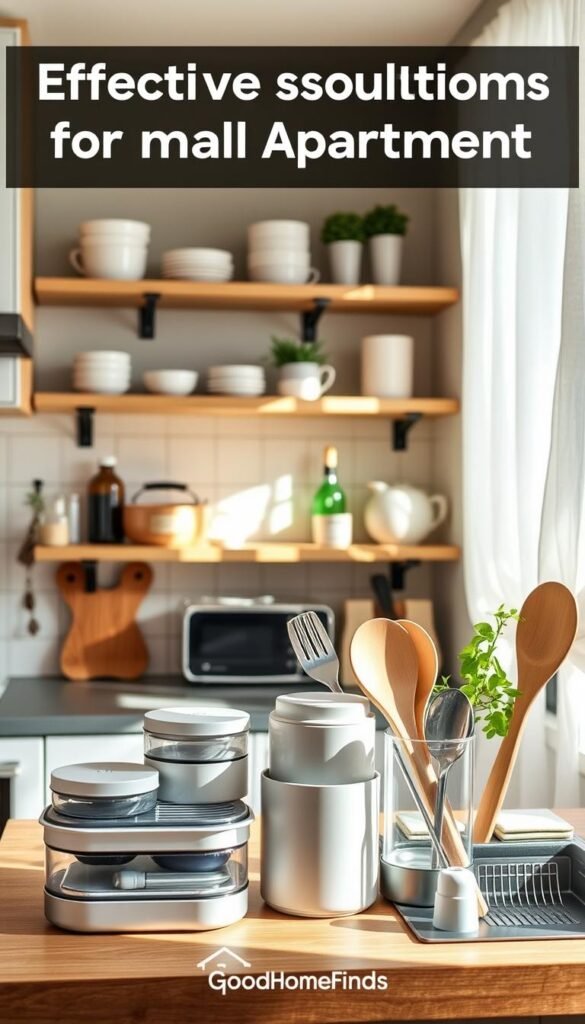
Renter-first installation choices
No-drill fixes win for rentals. Magnetic racks, over-the-door hooks, over-cabinet hangers, and clean-removal adhesive are low risk. They protect walls and move with you.
„Measure twice, install once. If it takes more than 15 minutes or leaves holes, choose another option.“
Match gear to how you cook
If you heat quick meals, pick grab-and-go storage and a slim cart. For daily prep, add prep surfaces like sink covers and fold-down shelves. Batch cooks need stackable containers and staging zones.
Declutter before you buy
Remove duplicates and gadgets you never use. This often frees more room than a new organizer.
- Audit what you use weekly.
- Donate or box aspirational tools.
- Keep only items that earn counter or cabinet real estate.
Practical stop-doing list
- Don’t buy tall countertop bins that block outlets.
- Don’t add shelves that prevent cabinet doors from closing.
- Don’t place heavy cookware on weak adhesive hooks.
| Need | Renter-friendly option | Why it works |
|---|---|---|
| More prep surface | Roll-up rack or sink cover | Creates instant counter space and stores flat when not used |
| Extra cabinet space | Over-cabinet hooks & under-shelf baskets | Adds storage without drilling or permanent changes |
| Poor vertical use | Magnetic shelves and rails | Use fridge side or walls for spices and tools |
Rule of thumb: measure, declutter, then pick a no-drill option that fits your cooking habits. For more focused picks and product ideas, see this compact kitchen guide.
Best small kitchen solutions for maximizing counter space
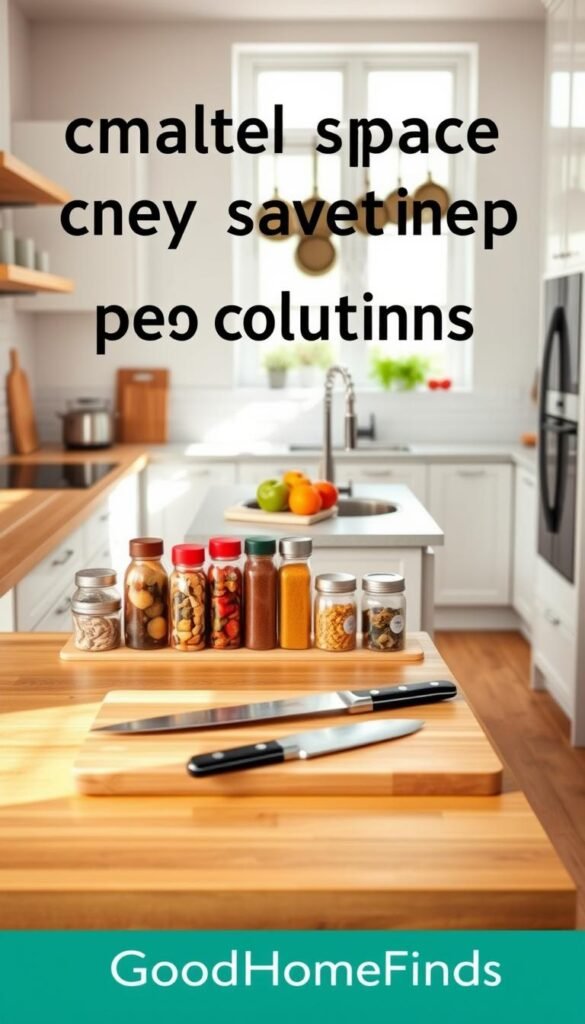
Freeing countertop area is the quickest way to speed up meal prep. Start by prioritizing one clear work spot that fits a cutting board and a mixing bowl. This “work surface first” rule makes daily cooking easier and cuts wasted steps.
Roll-up dish drying rack over the sink
What it does: sits across the sink to dry dishes or act as extra prep space, then rolls away when you need full sink access.
Pros: renter-friendly, lightweight, stores flat.
Cons: limited capacity; can wobble on narrow sink lips.
Who it’s for: renters and cooks who need temporary surface without drilling.
Stovetop and sink-cover cutting board strategy
Use a sturdy sink-cover board or a stove-top cutting board to add instant workspace. Always confirm burners are completely cool before placing a cover over the stove.
Safety notes: never cover hot burners; pick boards with non-slip feet; remove covers before turning on any heat.
Countertop drawer + pull-out shelf unit
Stack small appliances on a shallow pull-out unit (example size: 17¼ x 15½ x 5¼ inches). Place a coffee maker or kettle on top and store cords and small tools inside.
Why it helps: reclaims lower counter real estate and keeps frequently used appliances ready without crowding the work spot.
| Tool | Best for | Setup time | Main tradeoff |
|---|---|---|---|
| Roll-up rack | Temporary prep & dish drying | 30 seconds | Limited load, stability on narrow sinks |
| Sink/stove cover board | Instant cutting surface | 1–2 minutes | Must avoid heat; size must match surface |
| Countertop drawer unit | Appliance stacking | 5–10 minutes | Takes under-counter space; cost higher than covers |
Alternatives by apartment size: In micro apartments, prioritize sink and stove covers to gain surface fast. In larger small spaces, invest in a countertop drawer unit to stack appliances and clear the main counter.
For curated product mixes that match these picks and renter-friendly installs, see this compact appliance and prep mix.
Vertical Storage Without Drilling: Shelves, Rails, and Smart Workarounds
When counter space runs out, look up—walls and the area under cabinets hold a lot of unused storage. Adding vertical options frees your main work spot and keeps daily tools within reach.
Open shelving over underused areas
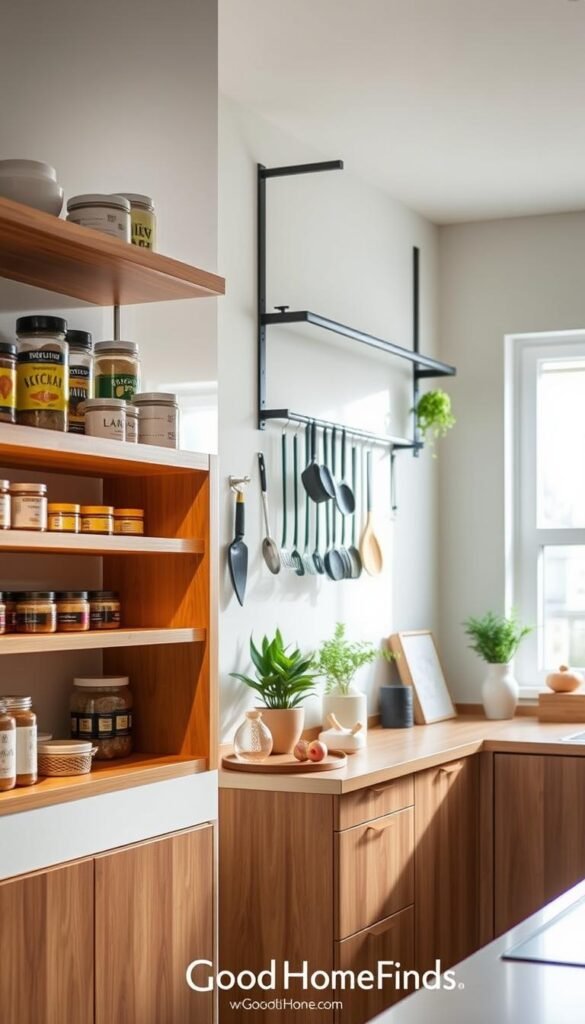
Why it helps: open shelving above the sink or a narrow run stores spices and dry goods and clears cabinets. Many renters call this a game-changer because it creates visible, grab-ready storage.
When it works: store lightweight, frequently used items. Use matching jars or baskets to reduce visual clutter and keep the room calm.
When it backfires: avoid open shelving over cooking zones that get greasy. In studios, too many visible items can make the room feel busy.
Under-cabinet add-ons and rails
Install Command-strip backsplash rails for towels and small tools. Use under-cabinet hanging baskets for soap backups and rotating holders for mugs.
„Keep frequently used items off the counter and within arm’s reach.“
- Pros: frees cabinets, keeps tools handy, renter-friendly.
- Cons: hang too low and you crowd the sink or prep zone; check weight limits on adhesive mounts.
Placement rule: keep metal items rust-resistant near steam. Keep anything above the stove heat-safe and out of flame range.
Quick tip: choose two uniform containers or baskets for open shelving to make the display feel intentional and minimize clutter.
Cabinet Space Upgrades That Don’t Require Renovation
Cabinets often hide wasted vertical space that makes your storage feel full even when shelves look half-empty. Fixing that starts with simple add-ons that clip or stack inside existing cabinetry.
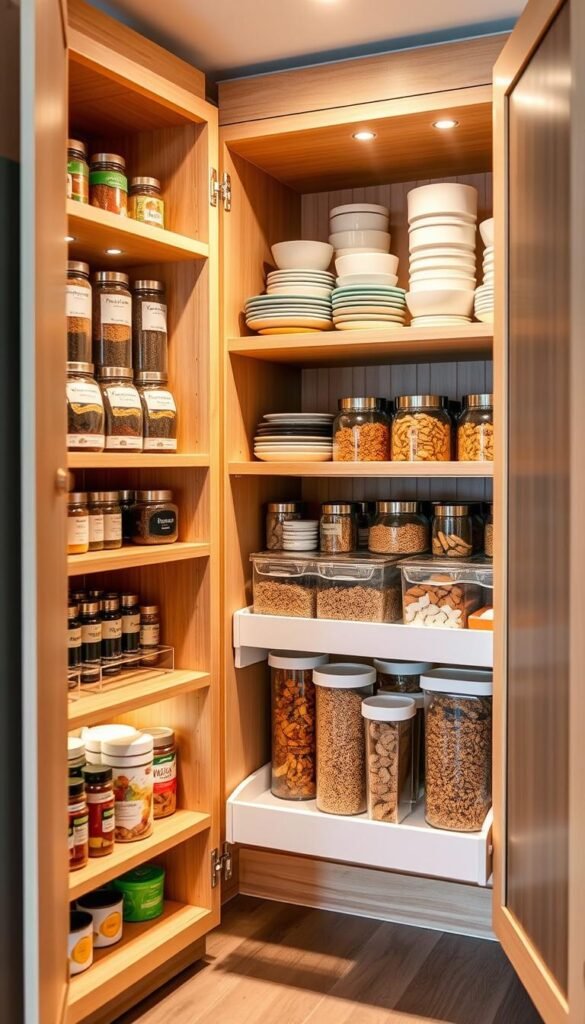
Under-shelf baskets for a bonus shelf
What they do: clip onto a shelf to create a thin shelf below for wraps, dish cloths, or dishwashing supplies. They free the main shelf for taller items.
Pros: renter-friendly, removable, low cost.
Cons: can snag tall items if spacing is tight; check clip width before buying.
Best for: storing light items and cleaning supplies in cabinets above or beside the sink.
Stacking shelf racks to double usable height
Place a sturdy rack inside a cabinet to create a second tier for plates, bowls, lids, and dry goods. Look for racks with non-slip feet so stacked dishes stay stable.
Pros: fast setup, cheap, creates clear zones.
Cons: reduces vertical room for tall items; choose size to match your plates and pans.
Best for: snack items, dishware, and lids where you want quick visual access.
When pull-out shelves help — and when they waste space
Pull-outs shine in deep base cabinets that hide heavy pots and pans in the back. They turn a cabinet into a pantry-like pull system so you access items without bending or digging.
When worth it: deep lower cabinets holding pans, pots pans, and heavy equipment.
When to skip: shallow cabinets where the drawer hardware uses more usable width than it saves.
Tip: measure depth, height, and door swing before ordering pull-outs. Hardware needs clearance.
| Upgrade | Best for | Setup effort | Main tradeoff |
|---|---|---|---|
| Under-shelf basket | Light items, wraps, towels | Minute clip-on | May limit tall items |
| Stacking shelf rack | Plates, bowls, lids | Instant, no tools | Takes vertical clearance |
| Pull-out shelf | Pots pans, heavy cookware | Measurement and install | Cost and hardware footprint |
| Two-tier drying rack (inside cabinet) | Drying and staging dishes | Quick placement | Requires moisture-friendly materials |
Durability checklist: choose rust-resistant finishes, wipe-clean materials, and weight ratings that match the items you store. If you keep pans or heavy jars, prefer metal pull-outs or reinforced racks.
For curated product picks that match renter-friendly cabinetry upgrades, see this organization guide.
Drawer and Tool Organization for Faster Daily Cooking
A well-organized drawer cuts five minutes off your weekday meal prep by keeping the right tool at hand.
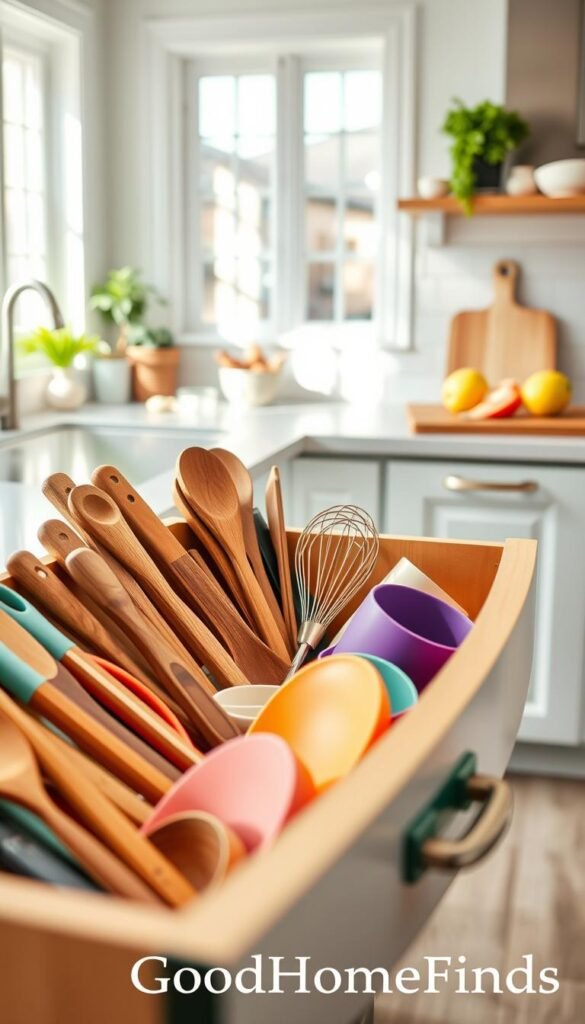
Compact utensil organizers for narrow drawers
Choose organizers made for narrow spaces. Stacked or angled compartments use height instead of width. They hold spatulas, tongs, and cutlery in an orderly stack. This works better than flat trays in tight drawers.
Zone tools by task
Group items by how you cook. Keep prep tools near your main work area. Store cooking tools by the stove. Keep baking tools together and cleanup tools near the sink.
Real-life goal: stop digging for one item and shave time off every recipe.
- Pros: instant order; faster reset after cooking.
- Cons: some organizers limit odd-size tools.
One-hand rule: place your most-used tool where you can grab it with one hand while stirring or holding a pan.
If drawers are tiny, use renter-friendly overflow: adhesive hooks on a cart side, a magnetic strip, or an over-cabinet rail for lightweight tools. For product ideas and compact drawer organizer picks, see this compact drawer organizer picks.
„Reset a drawer for 60 seconds each night to keep clutter from returning.“
Use the Side of Your Fridge as a Storage Wall
A fridge side can serve as a hidden storage wall that frees counters and keeps tools close at hand. This is a renter-friendly, no-drill trick that reclaims valuable prep space and keeps daily items within reach.
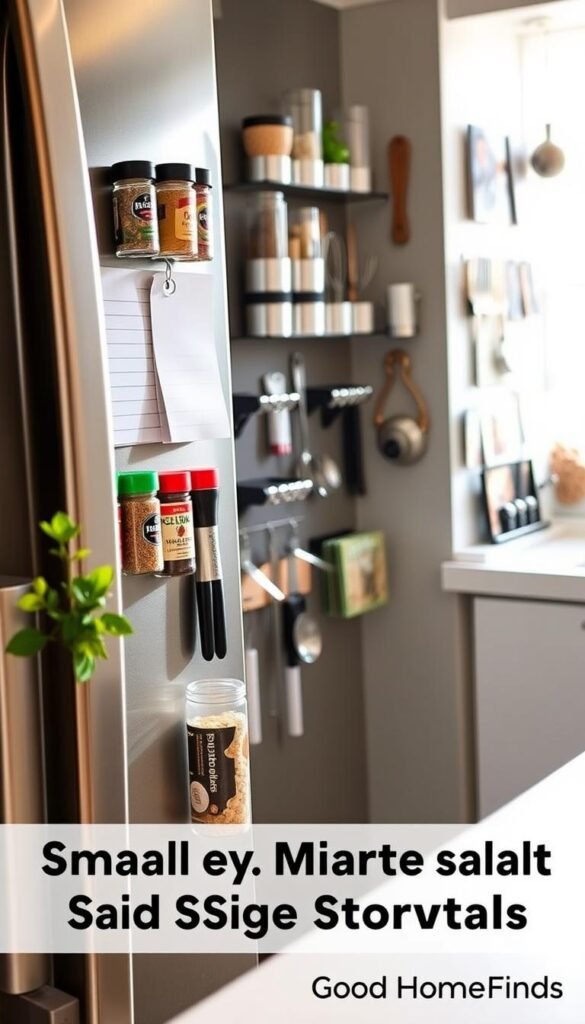
Magnetic knife bar
Why it works: a magnetic bar stores knives and scissors off the counter. It clears drawer clutter and gives safer, visible access when mounted at a proper height.
Safety note: place the bar above child and pet reach. Mount at adult eye level and keep blades pointed inward.
Magnetic spice shelves
Pick shelves with a raised lip around the perimeter. They stop jars from slipping and keep frequently used spices right where you cook.
Magnetic clips for tools
Use strong clips to hang a broom, duster, or grabber. Lifting these items frees floor space and makes cleanup faster.
Non-magnetic fridges
For non-magnetic panels, apply a thin adhesive magnetic sheet, then attach your organizers. This keeps the no-drill approach while adding a magnetic surface.
„Position the fridge side as bonus wall space — it doesn’t steal counter area and it makes tools easier to reach.“
| Item | Pro | Con |
|---|---|---|
| Magnetic knife bar | Frees counter; visible, quick access | Needs safe height; weight limit |
| Magnetic spice shelf | Keeps jars handy; raised lip prevents tipping | Limited load; must match jar sizes |
| Magnetic clips | Clears floor clutter; quick to grab tools | Not for heavy items; adhesion varies |
| Adhesive magnetic sheet | Adds magnetic surface to any fridge | Surface prep required; removable limits |
Wipe-clean tip: magnets near cooking zones collect grease and dust. Choose finishes you can wipe in seconds to keep this wall usable and hygienic.
Spice and Pantry Organization in Small Kitchens
A visible spice layout makes weeknight cooking faster and less frustrating.
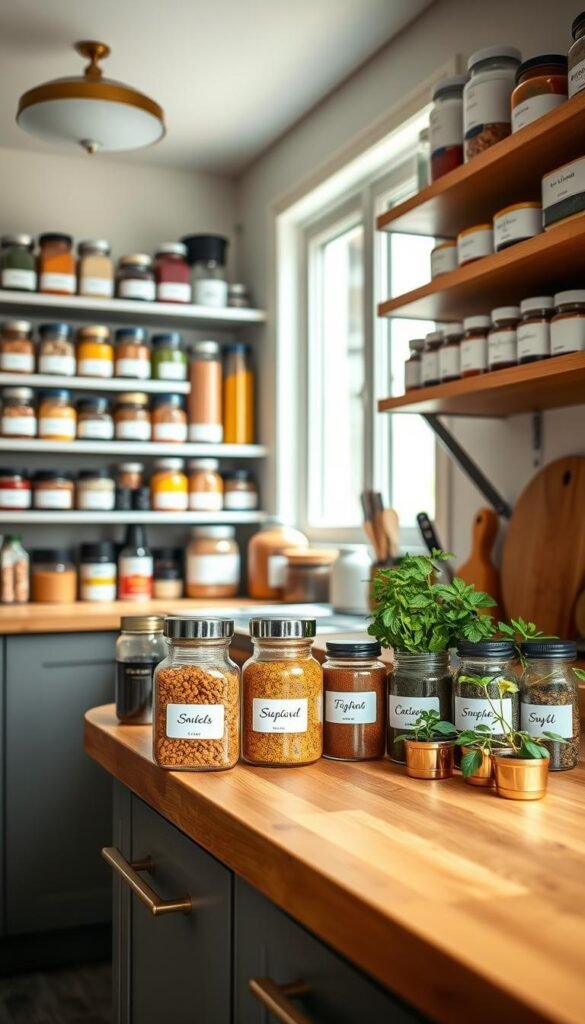
Why this matters: when you can spot jars and cans quickly, you waste less time and less food. Clear zones cut search time and keep meal prep calm.
Expandable spice risers (14–27 inches)
What they do: raise rows of jars for full-front visibility in shallow cupboards.
Pro: quick visibility for many jars. Con: back-row labels can still be hard to read unless you add top labels.
Lazy Susan turntables for deep corners
Use an 11-inch turntable for pantry shelves and a 16-inch model for deep base cabinets.
Placement tip: put tall bottles in the center and shorter jars around the edge so nothing blocks view or access.
Labeling shortcuts that save time
Top labels (the Julia Child method) let you read jars from above. Alphabetize key spices or group by meal zones—taco night, baking, weeknight basics—to grab what you need fast.
„Spend five minutes each month checking spices. Toss duplicates and expired food before they clog your shelf.“
- Who it’s for: renters and daily cooks who need low-effort order.
- Low-maintenance routine: a 5-minute monthly spice check prevents duplicates and waste.
- Renter-friendly note: risers and turntables require no drilling and work in most cabinets and pantries.
| Tool | Why use it | Main drawback |
|---|---|---|
| Expandable spice riser (14–27 in) | Makes jars visible in shallow cupboards | Back-row labels need top-labeling to read |
| Lazy Susan (11″ / 16″) | Best for deep cabinets and hard-to-reach corners | Takes round footprint; may not fit odd shelf sizes |
| Top labels & meal zones | Saves time and reduces expired items | Needs consistent re-labeling when items change |
For a practical mix of renter-friendly organizers and affordable picks, check this organizer roundup: organizer finds on a budget.
Rolling Carts and Slim Gap Storage for Pantry Overflow
A narrow rolling cart can turn a cluttered pantry zone into a mobile prep station you push where you need it.
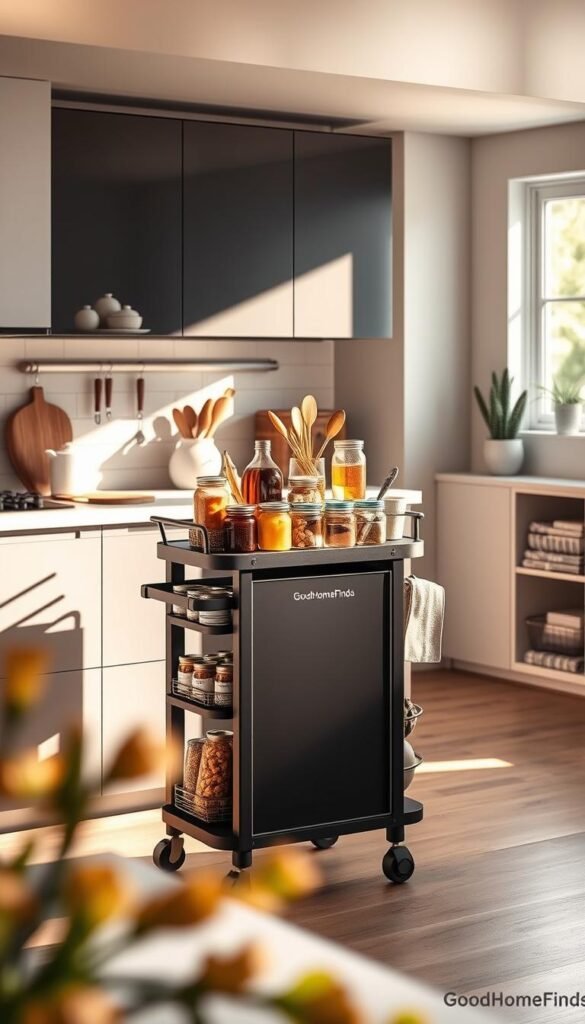
When you need a cart: no pantry, not enough cabinets, or food and tools scattered across the room. A utility cart collects items and keeps them within arm’s reach while you cook.
Utility carts as a portable pantry
Choose a cart with sturdy trays, solid casters, and raised sides to stop bottles from toppling. Wheels matter in tiny apartments because you will move the cart to clean, prep, or create temporary counter space.
Three-tier slim carts for gap storage
Slim 3-tier carts fit narrow gaps beside the oven or fridge. Measure gap size before buying. The IKEA Råskog is a proven option: three trays (13×17 in), large casters, bottom shelf fits bottles up to 11 in, and about 15 minutes to assemble.
Prevent tipping and heat exposure
Keep heavy items low and lighter items on top. Don’t overload the top tray. Use a stove gap cover to reduce splatter near the oven and keep oils, paper goods, and plastics away from heat.
- Pros: movable pantry, quick setup, doubles as prep surface.
- Cons: can tip if overloaded; may need a visual-friendly style in shared rooms.
- Who it’s for: renters with limited cabinet storage and cooks who need flexible storage on wheels.
| Cart type | Key feature | Best for | Main caution |
|---|---|---|---|
| Utility cart (IKEA Råskog) | Sturdy trays, large casters | Portable pantry and prep | Watch top-load tipping |
| Slim 3-tier gap cart | Narrow profile for gaps | Dead zone beside oven or fridge | Measure gap before purchase |
| Decorative rolling cart | Higher-end look for open rooms | Studios where appearance matters | Cost and weight limits vary |
| Temporary folding cart | Lightweight, storable | Micro rooms with rare use | Less durable for daily heavy loads |
Alternatives by apartment size: micro rooms often need one slim cart only. Studios may choose a nicer looking cart to reduce visual clutter. In larger flats, a full utility cart works as a dedicated pantry place and extra prep surface.
Small-Space Dishwashing and Drying Setups That Keep the Sink Clear
A cluttered sink stalls every step of a meal, so plan a drying setup that clears the basin fast. A compact system keeps your prep zone usable and reduces cleanup friction.
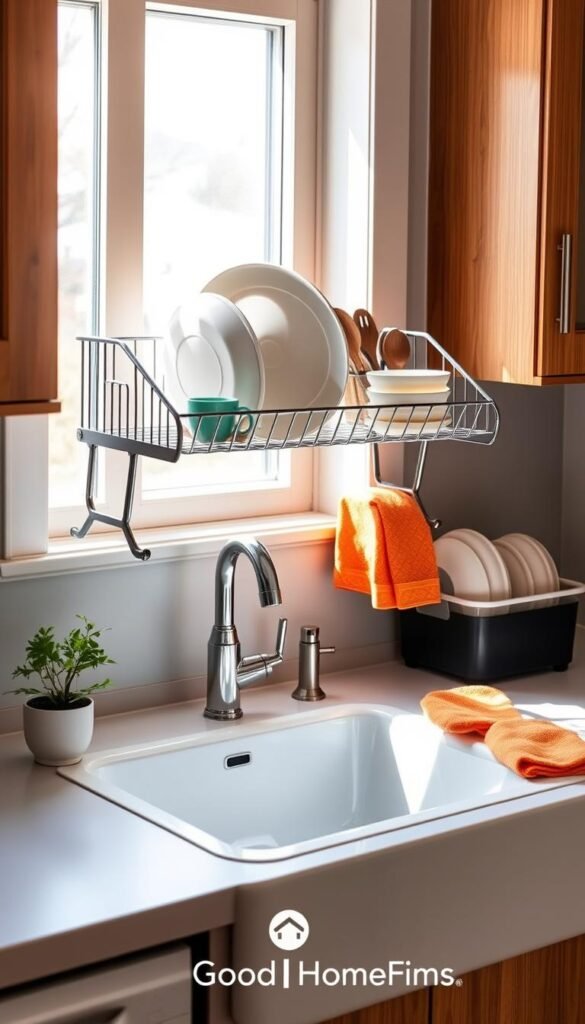
Two-tier drying station
Pair a roll-up rack over the sink with a stacking shelf rack beside or above it. The roll-up rack drains directly into the sink. The shelf rack creates a second tier for cups and plates.
Pros: frees counter space, speeds drying, stores flat or lifts away.
Cons: needs a stable fit and rust-resistant materials near constant water.
Under-cabinet baskets for dish supplies
Hang wire baskets under a cabinet to hold sponges, gloves, and soap backups. Choose Command-style hangers or over-cabinet hooks for renter-friendly installs.
Quick tip: keep liquids upright and replace cloths weekly to avoid mildew.
Countertop dishwasher considerations
Countertop appliances can save time but demand planning. Check where the unit drains — a sink adapter or a bucket may be required. Measure footprint and confirm noise levels will work in your living space.
Tradeoffs: saves labor but uses precious counter space and may add a cord and hose near water.
| Setup | Why use it | Main caution |
|---|---|---|
| Two-tier rack | Maximizes drying without clogging counters | Choose stainless or coated metal to resist rust |
| Under-cabinet baskets | Keeps cleaners off counters and within reach | Check adhesive weight limits |
| Countertop dishwasher | Automates washing for daily loads | Plan drain, power, and counter footprint |
„A 2-minute nightly drying station reset prevents tomorrow’s cooking from starting with a mess.“
Safety checklist: keep cords and plugs away from standing water, pick wipe-clean finishes, and avoid loading heavy wet items on weak adhesive mounts.
Produce Storage That Frees Counters and Reduces Food Waste
A hanging fruit system keeps produce visible and off your work surface so you have real counter space to use.
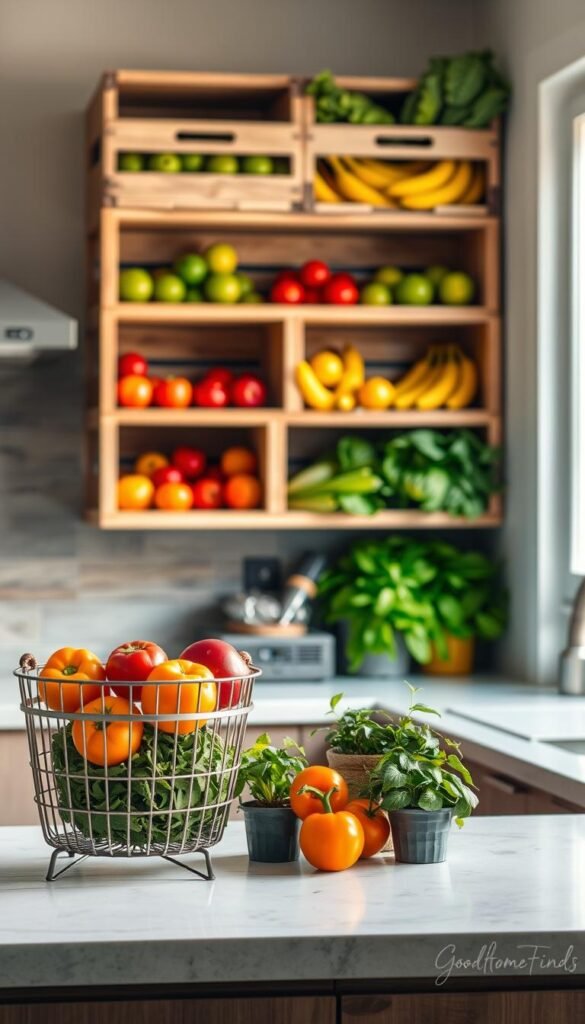
Hanging tiered fruit baskets
Why use them: a 3-tier hanging basket uses vertical space and improves airflow. Rounded baskets reduce pressure on soft fruit and cut bruising.
Quick setup: choose adjustable clips and extra chain if your ceilings are high so you can lower baskets for easy access.
Stackable produce baskets (counter or wall)
Stackable baskets can sit on a counter or mount to walls with renter-friendly brackets. Look for wipe-clean tops and removable plastic inserts to protect fruit and catch drips.
- Pros: frees counters, improves visibility, and reduces waste by keeping fruit aired and grouped.
- Cons: needs a safe hanging place and can interfere with doors or walkways if placed poorly.
- Best for: daily cooks who buy fresh food often. Occasional cooks can use one stackable basket to keep things simple.
Placement and care tips
Keep bananas and delicate fruit separate. Avoid direct heat near the oven and don’t block airflow or shelves. Wipe baskets weekly to prevent sticky buildup and fruit flies.
| Option | Why it works | Main caution |
|---|---|---|
| Hanging 3-tier | Uses vertical space; gentle rounded baskets | Requires sturdy overhead place; clearance check |
| Stackable wall/counter | Flexible placement; wipe-clean inserts | Measure counter height for stability |
Over-the-Door and Over-Cabinet Organizers for Hidden Storage
Thin door storage works because it uses the narrow unused gap behind doors. It frees shelf room without stealing walking space. This approach reduces visible clutter and keeps everyday items ready.
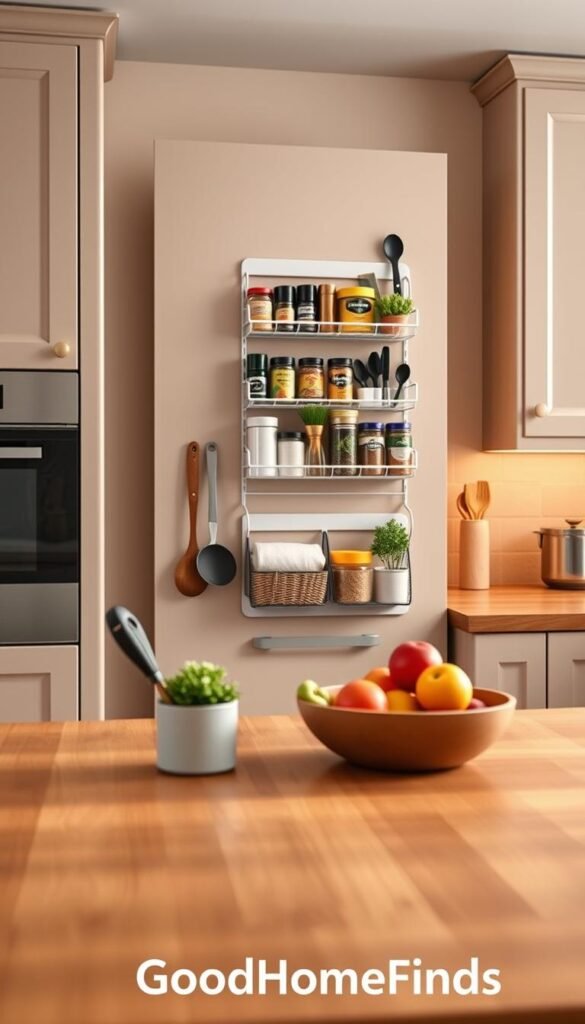
Over-cabinet door caddies for pans, cutting boards, and lids
What they do: hold sheet pans, cutting boards, and lids upright so they don’t stack into a mess.
Measure door thickness before you buy. If a door is too thick, the caddy may not close or it can misalign hinges.
Over-the-door organizers for spices, snacks, wraps, and refills
Use over-the-door pockets or slim racks to store wraps, canned goods, and cleaning refills. They keep frequently used items visible and easy to grab.
- Pros: instant hidden storage, no drilling, clears counters.
- Cons: can scratch or bend doors if overloaded; use protective pads and watch weight limits.
- Who it’s for: renters who want renter-friendly installs and people aiming to reduce visual clutter.
“Use thin door space first — it gives storage without changing the room’s flow.”
| Feature | When to use | Main caution |
|---|---|---|
| Over-cabinet caddy | Sheet pans, lids, cutting boards | Measure door thickness; avoid heavy loads |
| Over-the-door pocket/rack | Wraps, snacks, small cans, refills | Keep heavy jars low; check hook strength |
| Command hooks inside door | Light tools, towels, measuring cups | Adhesive weight limits; replace if loose |
Renter-friendly tips: choose adjustable hooks and removable hangers. Avoid screws. Put heavy items on lower racks. If a cabinet door is too narrow, mount the caddy on the side of a rolling cart or on a pantry closet door.
Safety notes: keep chemicals behind child-safe latches if kids or pets are present. Don’t overload flimsy doors. Use protective pads to stop scratching and to preserve hinges.
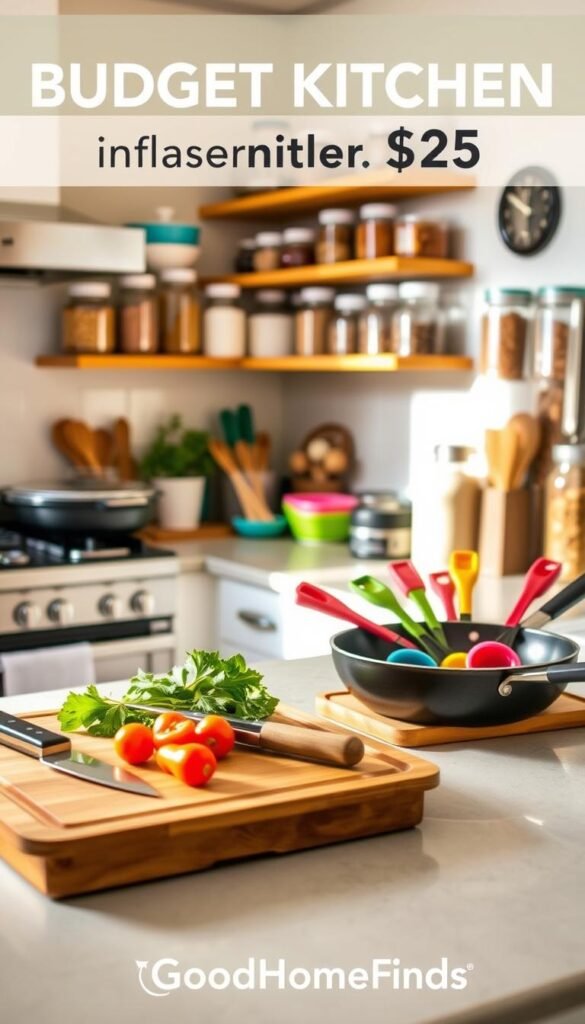
Budget Picks Under $25 That Make a Noticeable Difference
Under $25 upgrades should fix one daily annoyance fast: clutter, wasted counter space, or tools that hide when you need them. Pick items that install in minutes, remove cleanly, and give real value for low cost.
Command-style hooks for lightweight tools and towels
What: adhesive wire hooks to hang spatulas, towels, and oven mitts.
Pros: renter-friendly, instant access, low cost.
Cons: weight limits—don’t hang heavy pans. Remove by pulling the tab slowly to avoid damage.
Who it’s for: students and first apartments that need fast, removable storage.
Roll-up dish rack, stove gap covers, and compact drawer organizers
Roll-up dish rack: gains temporary counter space over the sink and drains directly. Tradeoff: not built for heavy stacks of dishes.
Stove gap covers: stop crumbs falling beside the oven and reduce splatter in slim cart gaps. They keep cleaner edges near hot zones.
Compact drawer organizers: turn narrow drawers into tidy storage for cutlery and small tools. Downside: they limit space for oversized gadgets.
Magnetic add-ons: paper towel bar, clips, and small racks
What: magnetic paper towel holders, clips, and slim racks mount to the fridge side for vertical storage.
Pros: no-drill, reclaims wall space, keeps tools visible.
Workaround: for non-magnetic doors add an adhesive magnetic sheet first, then attach organizers.
Who this set is for
These budget picks suit students, first apartments, and short-term rentals. They are practical, renter-safe, and focused on improving counter space and storage without permanent changes.
| Item | Pro | Con |
|---|---|---|
| Command-style hooks | Fast install; hangs towels & tools | Weight limits; check tab removal method |
| Roll-up dish rack | Temporary extra prep surface | Not for heavy loads |
| Stove gap cover | Prevents crumbs; protects slim cart items | Must avoid heat and burners |
| Magnetic paper towel bar | Clears counters; uses fridge side | Needs magnetic surface or sheet |
Best Options Under $50 for Bigger Space Gains
Upgrading to a wheeled prep station is where organization turns into usable space. At this price range you buy back real prep room, not just tidy bins. A single under-$50 upgrade can free your main work surface and keep daily appliances off the countertop.
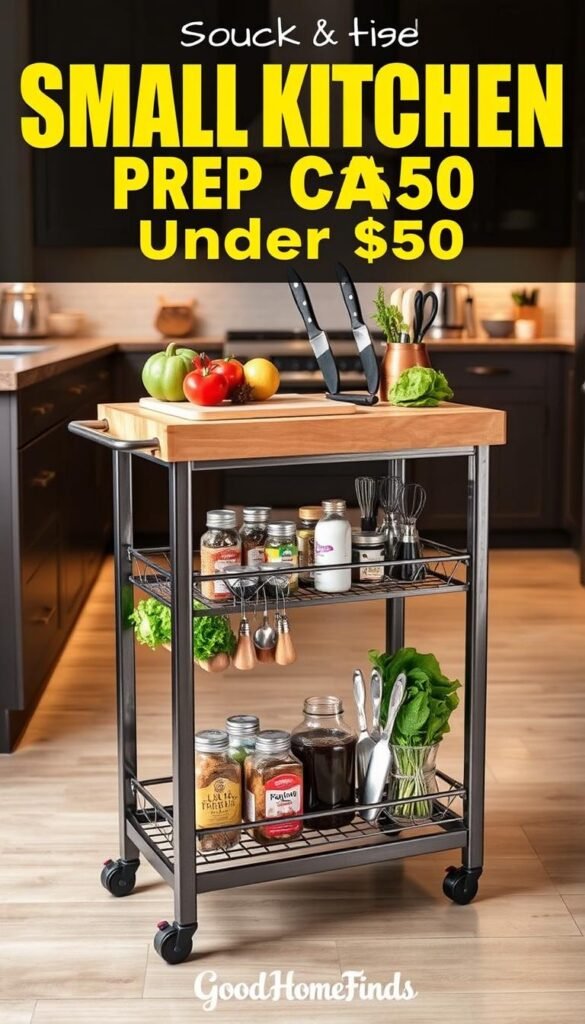
Rolling microwave / prep carts
Why it helps: a rolling cart gives a dedicated surface for a microwave or cutting board and keeps your counter clear.
Pros: extra work area, adjustable shelves, mobile prep zone.
Cons: can block a walkway in a galley room; watch overall footprint.
Setup tips: lock wheels if available, keep heavier appliances on lower shelves, and secure a cutting board top for stable prep.
Sturdier utility carts for pantry and appliance storage
Why it helps: a metal cart with solid casters acts as a portable pantry and small-appliance garage.
Pros: deep trays hold jars and mixers, casters improve mobility, quick assembly.
Cons: low-quality wheels can tip; tray depth matters for balance.
Safe placement: avoid direct oven heat, route cords to avoid trip hazards, and anchor or lock wheels on uneven floors.
Best for: daily cooks who want a steady prep zone and fewer appliance swaps during cooking.
| Upgrade | Key feature | Best for | Setup & safety |
|---|---|---|---|
| Rolling microwave/prep cart | Dedicated countertop; adjustable shelves | Daily cooks needing extra prep surface | Lock wheels; heavy items low; secure cords |
| Sturdy utility cart (metal) | Deep trays; quality casters | Pantry overflow and appliance storage | Check caster rating; keep away from heat |
| Slim gap cart | Narrow profile for tight spaces | Micro rooms with limited floor area | Measure gap; avoid crowding walkways |
Safety, Durability, and Easy Setup: What to Check Before You Buy
Start by mapping heat, steam, and traffic so new gear lasts and stays safe around daily use. A quick check saves returns and avoids hazards in a renter-friendly layout.
Heat and steam zones near the oven and sink
Keep adhesives, woods, and thin plastics away from direct oven heat and constant steam from the sink. Heat shortens lifespan and warps parts.
Microwave-on-fridge setups or carts near the oven can trap heat. If an item will face steam or grease, choose metal with a wipe-clean finish.
Weight limits for adhesive hooks and over-door hardware
Always check rated weight and go lighter than the max. For daily use, plan at 60–75% of the listed limit to avoid failure.
Slip resistance, rust resistance, and wipe-clean finishes
Pick non-slip feet for trays and rust-proof metal near wet zones. Wipe-clean surfaces cut maintenance time and stop grime buildup.
Kid- and pet-friendly placement for knives, chemicals, and cords
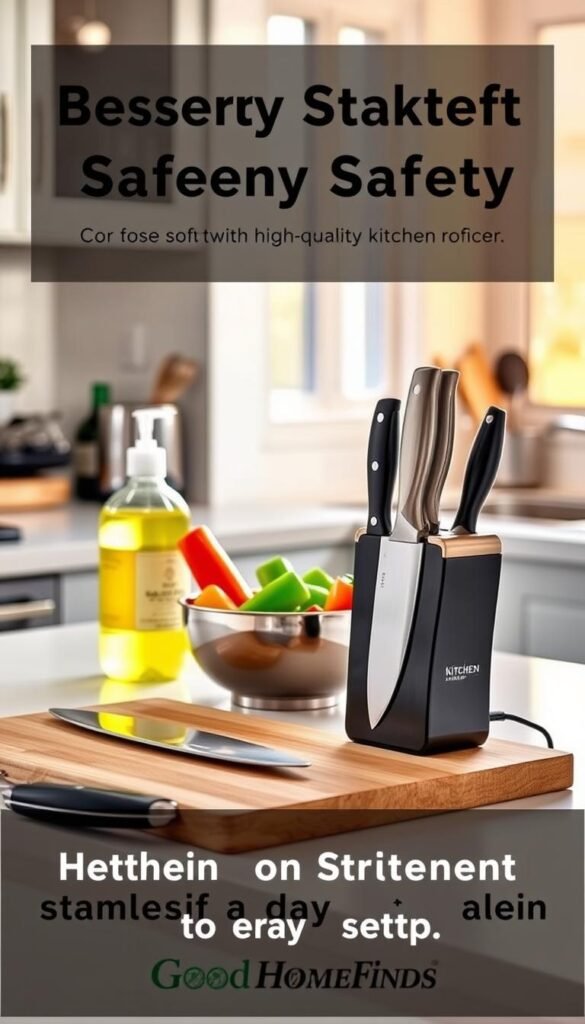
Mount magnetic knife bars well above reach or store blades in locked drawers. Keep cleaners locked and route cords so they cannot be pulled down by pets.
„If you can’t install it neatly in 10–20 minutes, it may not be renter-friendly for your space.“
- Buyer checklist: map heat/steam zones; confirm weight limits; prefer non-slip, rust-resistant finishes; place sharp tools and chemicals out of reach; test install time under 20 minutes.
- Tradeoffs: heavier metal lasts longer but costs more; adhesive is easy now but weaker near steam.
| Risk | Action | Why it matters |
|---|---|---|
| Heat/steam | Choose metal or move away | Prevents warping and adhesive failure |
| Overloaded hooks | Use rated mounts; go lighter | Avoid falls and broken doors |
| Slippery trays | Add non-slip feet | Stops spills and dropped items |
Best-For Guides and Alternatives by Apartment Size
Quick guide: which picks fit your layout depends on how you move through the room. The same gadget can be a game-changer in one layout and a traffic hazard in another. Follow the “one big surface” rule: keep one reliable prep zone clear for daily cooking.
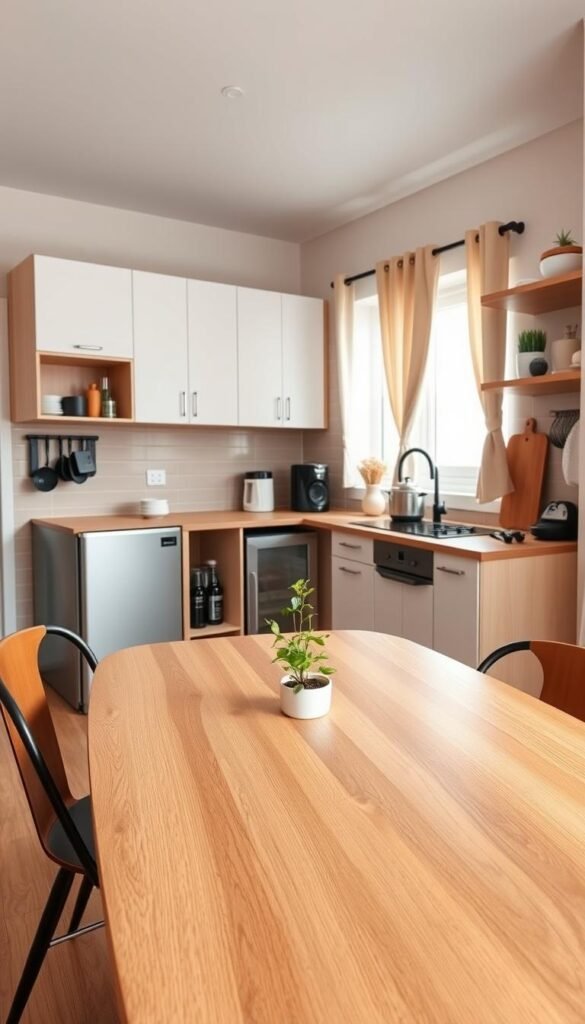
Micro kitchens and kitchenette layouts
Prioritize renter-friendly items that add surface without crowding. Go for a sink or stove cover, a roll-up drying rack that drains into the basin, magnetic fridge-side storage, and a single slim rolling cart that can double as a prep cart or pantry.
Skip: bulky countertop organizers and multi-tiered appliance stacks that eat precious counter area.
Galley kitchens
Focus on vertical storage and in-cabinet efficiency so you don’t block walkways. Use under-shelf baskets, rails, and slim wall shelving. Keep heavy items low and traffic paths clear to avoid pinch points when two people pass.
Skip: wide carts or island-style surfaces that obstruct the flow down the run.
Studio apartments
Reduce visual clutter because the cooking area shares the living room. Use over-door caddies, uniform jars, and closed baskets to hide contents. A decorative rolling cart can look intentional and move to the living area when you need prep space.
Skip: open shelving overloaded with mixed items; it makes the room feel messy.
Upgrade ladder (renter-friendly): start with a
„Pick what matches your room’s traffic and heat map, not what looks clever in photos.“
| Layout | Priority | What to avoid |
|---|---|---|
| Micro kitchenette | Sink/stove covers, fridge-side magnets, one slim cart | Bulky countertop organizers |
| Galley | Vertical racks, under-shelf baskets, in-cabinet organizers | Wide carts that block walkways |
| Studio | Hidden storage, uniform containers, mobile cart | Open overloaded shelving |
Daily Routines and Low-Maintenance Habits to Keep a Small Kitchen Functional
Routine beats one-time fixes; simple daily steps protect your work surface and save time. These habits are easy to repeat when you’re tired and they keep your space useful for real life.
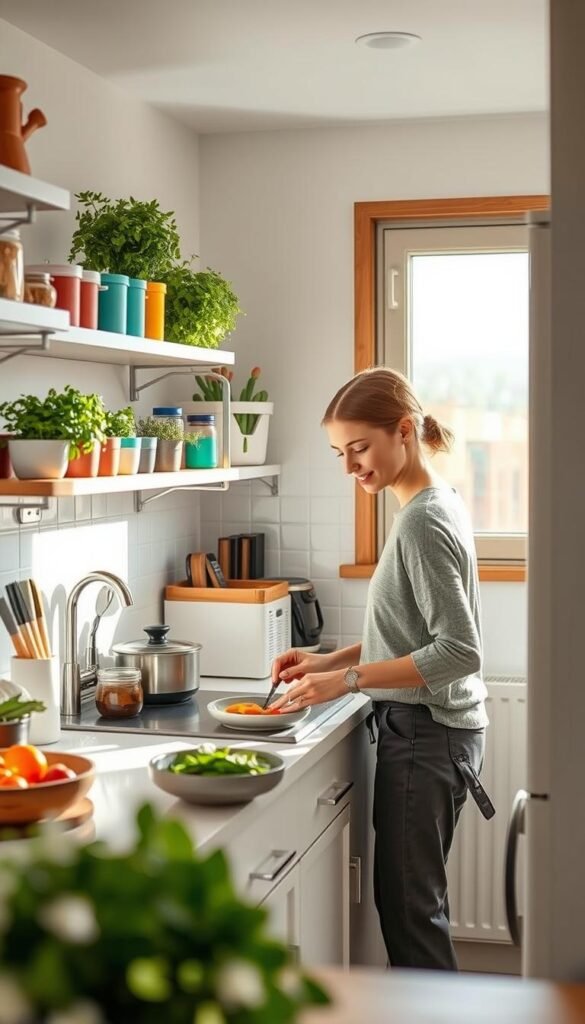
Reset routine (5 minutes)
Clear counters. Return tools to their zones. Wipe crumbs and fold any towels.
Reload the dish station and roll up drying racks so your counter space is ready for the morning.
Weekly 10-minute maintenance
Wipe sticky shelf edges and relabel spices or pantry jars if top labels are fading.
Rezone pantry items so the things you use most sit upfront. A short weekly check prevents slow clutter growth.
“One in, one out” rule
If you add a new appliance or gadget, remove one that does the same job. This keeps storage manageable and stops duplicates from accumulating.
„Make habits simple. If a routine takes longer than five minutes, it won’t stick.“
Quick dish-control habit: don’t let drying racks become permanent. Roll up, reset, and reclaim the sink area each night.
Extend these same low-maintenance systems to bathrooms, closets, and entryways. Use under-sink zones, one-bin closet categories, and a daily drop zone by the door so the whole home stays calmer.
| Habit | Frequency | Benefit |
|---|---|---|
| 5-minute reset | Daily | Keeps counter space clear and tools ready |
| 10-minute maintenance | Weekly | Prevents sticky shelves and expired pantry items |
| One in, one out | When adding items | Stops slow clutter growth and limits duplicate appliances |
Conclusion
,
Try two renter-friendly changes this week. Pick a quick under-$25 fix and one upgrade under $50 if you cook often. See how each change affects your prep flow and adjust.
Measure pinch points first. Declutter, reclaim your main prep surface, then add vertical or hidden storage that won’t require drilling.
Focus on practical categories: sink or stove prep covers, in-cabinet shelf gains, fridge-side magnetic racks, and one sturdy cart for pantry overflow. These ideas free counter and make daily tasks simpler.
Respect heat and weight limits. Keep knives and cleaners out of reach of kids and pets. Choose portable gear so your upgrades move with you to the next kitchen.
Keep a short reset routine. Simple maintenance keeps space useful and worth the effort.