
You’re shopping for tiny upgrades that make daily life easier, not miracle organizers that add clutter. This guide follows a practical, Amazon-first approach inspired by BuzzFeed Shopping and House Beautiful. You’ll get vetted picks that free floor areas, clear counters, and speed up routines like morning coffee or packing lunch.
Most items land under $25. A few are labeled “worth the stretch” so you can decide. Each pick has a quick real-life example, pros and cons, who it’s for, and what to avoid—like flimsy plastic or rust-prone metal.
Safety and quality checks are up front: food-safe materials, no sharp edges, anchor needs, and tipping risk. You’ll also get DIY alternatives and renter-friendly tips. Expect clear calls on price-value and how each tool truly performs in a tiny home.
Key Takeaways
- Focus on items that free floor and counter areas for daily flow.
- Amazon-first picks make buying, shipping, and returns easy.
- Most options cost under $25; a few premium calls are noted.
- Look for food-safe, rust-proof, and anchor-ready construction.
- Avoid oversized pieces marketed as compact.
Best small space finds that make tiny homes feel bigger fast
Start with tools that save time and clear sightlines; you’ll feel the change fast.
What “useful” means: it removes a daily annoyance without adding steps. Think: a hook for the remote, a lid organizer so you stop hunting, or a rail that lifts mugs off the counter.
Make the room feel larger by lifting storage up, keeping sightlines open, and cutting the number of items on counters and the floor.

Quick wins you can do this week
- Hooks and wall rails to keep items off tables.
- Under-shelf baskets that use hidden vertical space.
- Slim rolling carts for mobile storage when you need it.
- Dividers and organizers to stop stacks from toppling.
Why Amazon-first matters: availability and fast delivery mean you fix the problem this week, not someday. Measure first, but know returns are easy if an item won’t work in your layout.
No hype: if a product adds steps to your routine, it’s not a win. Favor low-friction, renter-friendly options that improve daily life and follow simple visual design basics: lighter visual weight and fewer bulky pieces make the same room feel calmer.
How we picked these tiny-home products under $25
Every pick had to prove it saves you time or clears a recurring headache. If an item added steps, we scrapped it. If it saved minutes every day or solved a weekly annoyance, it stayed.

Price-value check: what’s worth paying for (and what isn’t)
Our rule: under $25 should either save you time daily or stop a repeat problem. Items like Velcro strips (~$9) and a lazy susan (~$10) often hit that mark.
Worth paying for: solid mounting hardware, thicker materials, non-slip bases, and rust-proof finishes. These cut replacements and headaches.
Skip: gimmicky viral gadgets with tiny capacity, suction cups that fail, and oversized racks that create new clutter.
Quality and safety standards to look for
Safety first: food-contact items must be food-safe. No sharp metal edges. Check weight limits for mounted pieces.
Prefer non-drill options for renters, but note adhesives can fail in humid spots. Hinge and over-door mounts often work without damage.
What we skipped: hype features, flimsy materials, and oversized “solutions”
We avoided products that promise a miracle but add steps. Flimsy plastics, tiny bins, and bulky racks that block sightlines were cut.
Examples we favored instead: magnetic knife strip (~$18) over a countertop block, bamboo lid organizer (~$23) instead of a deep tote.
Measurement checklist before you buy
- Cabinet depth
- Shelf clearance
- Door swing and drawer height
- Wall stud spacing
- Under-sink plumbing obstacles
Who it’s for: renters, roommates, and anyone looking to declutter without heavy installs.
Alternatives: DIY dividers, repurposed magazine holders, or simple bins when a cheaper version does the same job.
Living room small-space solutions that don’t eat up floor space
You don’t need bulky furniture to get order — start by moving everyday items off tables and up on walls.

Hook-and-loop Velcro strips for remotes and small devices
Practical, boring, life-changing. Stick VELCRO Brand Sticky Back (~$9 on Amazon) inside an end table, to the side of your media console, or under an armrest. Then attach the matching strip to remotes or a small game controller.
Real life: one strip on a remote and one inside a console means no more digging into cushions before you sit down.
- Pros: renter-friendly, cheap, instant habit fix.
- Cons: adhesive can fail in humid rooms; replaceable but simple.
- Avoid: using them on delicate finishes without testing first.
Rustic wood floating shelves to get books and decor off tables
Rustic wood floating shelves (often under $25 on Amazon) lift books and light decor off the coffee table and clear sightlines. They give your living area a cleaner look and a bit of style without taking floor or table real estate.
- Who it’s for: anyone who stacks magazines and cups on the table because there’s nowhere else.
- Watch out: check weight limits and use proper anchors; avoid kits with weak anchors that sag.
When a narrow table behind the couch beats a coffee table
A slim console behind the sofa can act as a coffee-table alternative when the walkway is tight. Many models sit slightly above $25, so treat this as a budget stretch or DIY project.
Pros: adds surface without blocking floor flow. Cons: can be a shin-bumper if placed too close.
- What to avoid: deep coffee tables that force you to sidestep in a tiny room and floating kits with weak anchors.
- Tip: measure the walkway first and pick a low-profile piece to keep the living room feeling open.
Kitchen counter space savers you’ll use every day
A few targeted swaps will free your kitchen counter and speed up prep.

Magnetic knife strip
Why: Replaces a bulky knife block and clears a top-of-counter footprint. Typical price: ~$18.
Safety note: Mount into a stud or use strong anchors. Keep blades high and out of kids’ reach.
Over-the-cabinet cutting board organizer
Saves time by letting you grab one board in one move rather than pulling a stack from the cabinet. Price around $18.
Under-shelf baskets
Create bonus shelf storage for mugs, wraps, or snack bars without new cabinets. Best for sturdy shelves with enough clearance. Avoid thin wire baskets that bend under weight.
Lazy Susan turntable
Use in deep cabinets and pantry corners so jars don’t hide in the back. Pick non-slip or two-tier options if you stack items. Budget-friendly at ~$10.
Foldable silicone bottle and can stacker
Keeps cans and bottles steady in the fridge so you can see what you have. Great for seltzer or canned soup households. Cost roughly $9.
| Item | Typical Price | Who it’s for | What to avoid |
|---|---|---|---|
| Magnetic knife strip | $18 | Home cooks who need counter room | Weak magnets, low mounts |
| Over-cabinet board organizer | $18 | Anyone with crowded cabinet boards | Requires enough cabinet depth |
| Under-shelf basket | $22 | Snack and mug storage seekers | Thin wire baskets that sag |
| Lazy Susan | $10 | Pantry and deep cabinet users | Slippery bases without grip |
| Silicone can stacker | $9 | Fridge organizers, beverage households | Cheap silicone that tears |
Tupperware and food storage organizers that save time on busy mornings
Mornings get smoother when lids live in one place instead of a jumbled drawer. If you pack lunch or grab leftovers on the way out, the small search for a matching lid adds up to wasted time.

Bamboo lid organizer so you stop hunting for matching tops
Consider a bamboo drawer caddy or lid organizer (about $23). Slide lids into separated slots by size and the next unload from the dishwasher is one quick move.
Real life: unload, slide lids into slots, close the drawer, and you’re done—no mystery lid pile when you pack lunches.
Cheaper alternatives: DIY dividers and repurposed magazine holders
If you want a budget way to organize, make dividers from cardboard or thin plastic, or turn a magazine holder on its side inside a cabinet.
- Pros: bamboo looks tidy and stays rigid.
- Cons: measure drawer width and height first; some “universal” racks don’t adjust.
- Who it’s for: busy households, meal-preppers, and anyone juggling mixed sets of containers.
- Avoid: flimsy plastic that warps near warm appliances and poorly adjustable racks.
Bedroom space savers for nightstand clutter and tight closets
A few targeted swaps in the bedroom can cut nightly clutter and speed your morning routine.

Bedside caddy organizer (~$21)
Why: Replace a full nightstand when floor room is tight. A caddy holds your phone, glasses, book, and charger within reach.
Real life: in a narrow bedroom with a tight walkway, a caddy stops the nightly search for a charger and keeps the floor clear.
Space-saving hangers (~$20)
Who it’s for: anyone who needs to double hanging capacity in a closet quickly. Great for shirts, light jackets, and outfit sets.
Adjustable drawer dividers (~$24)
Benefit: Keep socks, tees, and underwear visible. This saves time on busy mornings because you can grab a set without digging.
Under-bed zippered storage bags (set ~$13)
Use: Store off-season bedding and clothes. Pick clear-top bags with strong zippers to identify contents fast.
- Pros: budget-friendly, renter-friendly, and quick to install.
- Cons: hangers can make browsing harder; under-bed bags need a clean under-bed place to work well.
- Avoid: hangers with sharp edges that snag fabric and storage bags with weak seams that split.
| Item | Typical Price | Who it’s for | What to avoid |
|---|---|---|---|
| Bedside caddy organizer | $21 | Those without room for a nightstand | Thin fabric that sags under weight |
| Space-saving hangers | $20 | Closet users needing more hanging capacity | Sharp hooks or slippery finishes |
| Adjustable drawer dividers | $24 | Anyone who wants fast, visible drawers | Non-adjustable rigid dividers |
| Under-bed zippered bags (set) | $13 | Seasonal clothing and bedding storage | Opaque tops or weak zippers |
Bathroom storage finds that work for renters and tiny layouts
Rent-friendly bathroom upgrades can add drying and storage without drilling or big expense. These picks keep towels and toiletries off the floor and make the room feel neater with minimal change to walls or fixtures.

Behind-the-door hinge towel hanger (no drilling)
Why it works: hangs on the door hinge so you avoid drilling into a wall or door. Typical price: ~$24 on Amazon. Towels dry faster and you stop draping them on chairs or the shower rod.
Under-sink organizers: sliding drawers, bins, and stackable baskets
Sliding drawers give full access when plumbing allows. They are great if you need to reach items at the back without crawling under the sink.
Simple bins are best when pipes block horizontal slides. Use narrow bins to keep cleaners upright and visible.
Stackable baskets add vertical storage but only choose stable designs with wide bases to avoid tipping.
Measurements and safety
Map the cabinet no-go zone around the P-trap and shutoff valves before you buy. Measure width, depth, and the height to the bottom of the sink so organizers actually fit.
Quality notes: favor rust-resistant finishes or plastic in humid bathrooms. Check for smooth edges to avoid scrapes when you reach in.
What to avoid
- Avoid cheap metal that rusts quickly in a humid bathroom.
- Avoid tall, wobbly stacks that tip when you pull one item out.
- Avoid organizers that ignore cabinet plumbing and won’t slide in.
Who this is for: renters, small-apartment bathrooms, and anyone with no linen closet who needs vertical, renter-friendly storage without wall damage.
Laundry and utility-zone organizers for slim gaps and awkward corners
Turn an awkward inch between appliances into useful, mobile storage. A narrow 3-tier rolling utility cart (about $20 on Amazon) slides into the gap beside a washer, fridge, or pantry and keeps cleaning supplies upright and reachable.

Real life: detergent, stain remover, and sprays stay visible. You stop buying duplicates because you can see what you have.
Quick picks and why they work
- Slim rolling utility cart (~$20): fits a 2–4″ gap, holds bottles upright, and rolls out when you need it.
- Clear over-the-door pocket organizer (~$9): stores batteries, lint rollers, sewing kits, and tabs so small items don’t float in drawers.
Pros, cons, and what to avoid
- Pros: plenty of visible area, renter-friendly, Amazon-ready, and easy to reposition.
- Cons: carts can tip if overloaded on top; pocket organizers may swing if too heavy.
- Avoid: carts with weak wheels and pocket organizers with tiny stitching that tears under weight.
| Item | Typical Price | Who it’s for | What to avoid |
|---|---|---|---|
| 3-tier rolling utility cart | $20 | Apartment dwellers with narrow gaps | Weak plastic wheels; shallow tiers |
| Clear over-the-door pocket organizer | $9 | Anyone who needs visible small-item storage | Thin stitching and heavy items that swing |
| Slim freestanding bin | $12 | Utility closets and laundry rooms | Unstable bases that tip when pulled |
| Magnetic canister set | $15 | Metal-sided washers or fridges | Weak magnets that slip over time |
Entryway and “drop zone” ideas that keep storage up high
Use vertical solutions at the door so clutter never turns your hallway into a catchall. This keeps sightlines clean and your entry feeling like an intentional part of your home.

Wall hooks plus a simple basket to keep sightlines clean
The problem: shoes, keys, bags, and mail pile up fast. A tossed jacket or mail stack makes the whole entry read as messy.
The fix: mount a hook rail high and add a single basket below for mail and sunglasses. One hook per person keeps bags off the floor and off the table near the door.
Why this beats a bulky entry cabinet
Hooks use vertical storage so you keep floor space clear. Cabinets eat the walkway and narrow a tight hall.
Install note: pick anchors or hit a stud for heavier loads like backpacks. For renters, choose over-door or adhesive-backed rails tested for weight.
- Real life: each person hangs one bag; the basket holds mail to process later.
- Avoid: oversized benches that become catchalls and hook rails with low weight ratings.
- Who it’s for: narrow halls, tiny homes, and anyone fed up with the pile by the door.
Wall storage and floating pieces that visually open up a room
Floating shelves and wall racks change how a room breathes by reducing visual bulk. They free floor area and keep sightlines open so the room feels larger without adding bulky cabinets.
Why open shelving can feel lighter than closed cabinets: open shelves let light pass and show more wall and floor. That visual continuity makes the room read as bigger. Glass or thin wood shelves reduce the look of mass while still holding daily items.

Open-shelving trade-offs and what to store
Open shelving looks tidy only when items stay organized. Use it for everyday dishes, mugs, a few neat bins, and decorative items you use often.
Avoid storing messy stacks, loose cords, or worn paper piles. Those items defeat the clean look and make the shelf read as cluttered.
Safety notes: studs, weight limits, and anchors
- Find studs when possible. Anchoring into a stud gives the highest load safety.
- Match anchors to wall type. Use hollow-wall anchors for drywall and toggle bolts for heavier loads.
- Respect weight limits. Never exceed the manufacturer’s rating; remember books and glass add up fast.
Renter-friendly tips: choose lighter shelving kits with rated anchors or removable rail systems that spread load. For heavy items, use permanently mounted shelves into studs—even in rentals, you can patch later.
What to avoid: floating kits with weak hardware, shelves over tight walkways where you might hit your head, and overloading narrow brackets.
Who this is for: anyone aiming to reduce furniture footprint and keep a room visually calm. The right wall-mounted design can make the room feel open while staying practical for daily use.
Windows, corners, and niches: hidden spots tiny homes forget
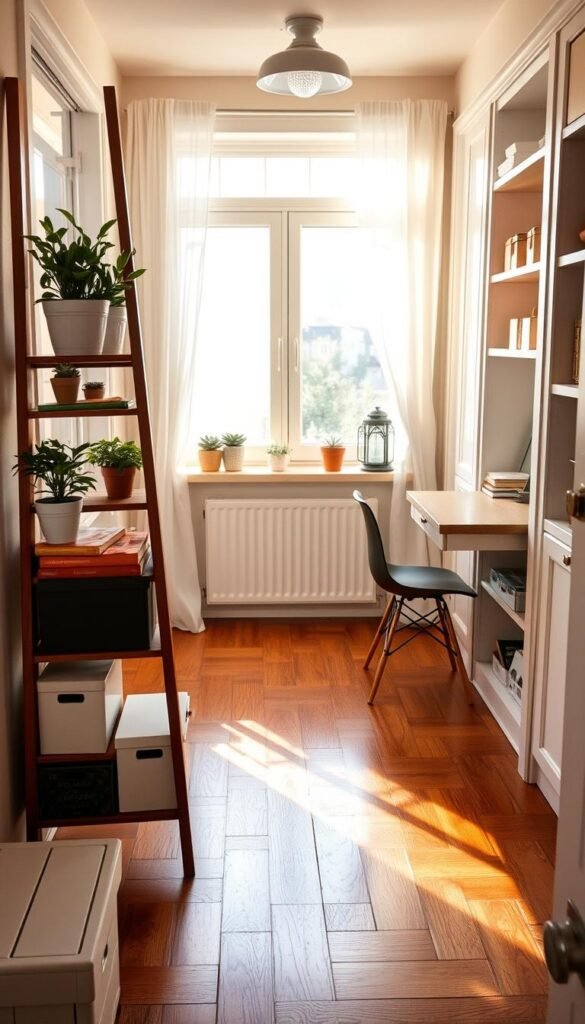
Before you buy another piece of furniture, look around the room for spots that already exist. Windows, corners, and built-in niches often hold useful storage or seating without adding bulk. Using them well keeps the floor clear and preserves natural light.
Window-area ideas that keep light and add function
Create a low-profile window seat with shallow storage underneath. Choose a bench no taller than the sill so the view and light stay unobstructed. A slim shelf under the window can hold plants, baskets, or frequently used items without blocking the view.
Corner-first thinking for narrow rooms and powder rooms
Corners are often wasted. Swap bulky items for corner shelving or a compact corner sink in a powder room. Corner fixtures free up the main area and make narrow rooms feel less pinched.
Turn niches into purposeful zones
Use an existing niche as a mini desk, coat niche, or open shelves. Built-ins read as intentional and remove the need for extra pieces that eat into walkways.
Quick checklist
- Scan for window ledges and shallow bays before buying new furniture.
- Measure corner depth so corner units don’t protrude into traffic paths.
- Repurpose a niche with fixed shelves or a floating desktop to avoid bulky additions.
| Area | Practical option | Who it helps | What to avoid |
|---|---|---|---|
| Window ledge | Low bench with storage | People who want seating without blocking light | Tall benches that block the view |
| Corner | Corner shelf or sink | Narrow rooms and powder rooms | Units that stick into walkways |
| Niche | Built-in desk or open shelving | Older homes with odd pockets; renters who can use removable anchors | Adding freestanding furniture that clutters the floor |
Multifunctional thinking: make one piece do the job of three
Choose one versatile item that replaces three single-purpose pieces. In a tiny home, that approach wins you usable floor area and reduces visual clutter. The goal is fewer objects that actually get used every day.
Where it helps most: eating, working, and hobbies. A fold-up wall table can be a desk by day and a dining table by night. Nesting surfaces stack when you don’t need them. Drop-leaf tables expand only when guests arrive.

Fold-up and multipurpose surfaces for flexible living
Practical examples: a wall-mounted fold-up table, a nesting set that tucks under a console, or a drop-leaf table that doubles as a sideboard. These pieces let one surface serve many roles without adding more furniture.
Trade-offs to consider: durability, wobble, and setup time
Be honest about limits. Folding parts can wobble if legs or brackets are thin. Hinges wear faster when they are cheap. Setup time matters: if opening a table takes too many steps, you may not use it.
| Feature | Why it matters | Look for |
|---|---|---|
| Stable legs | Prevent wobble when in use | Locking leg braces, metal or solid wood |
| Solid brackets | Support weight over time | Steel brackets with zinc coating |
| Reliable locks | Keeps surfaces fixed when open | Positive click locks or keyed latches |
| Serviceable hardware | Parts you can replace | Standard hinge sizes and screws |
Who this is for: you if you need a desk by day and a dining table at night, or a family that needs flexible surfaces for crafts and meals.
Avoid: ultra-cheap folding mechanisms that pinch fingers or don’t lock. Skip gimmicky „3-in-1“ items that sacrifice sturdiness for marketing copy.
Bottom line: pick multifunctional design that reclaims usable floor area without making daily routines harder. Durability beats novelty every time.
Right-size your furniture for small rooms without sacrificing comfort
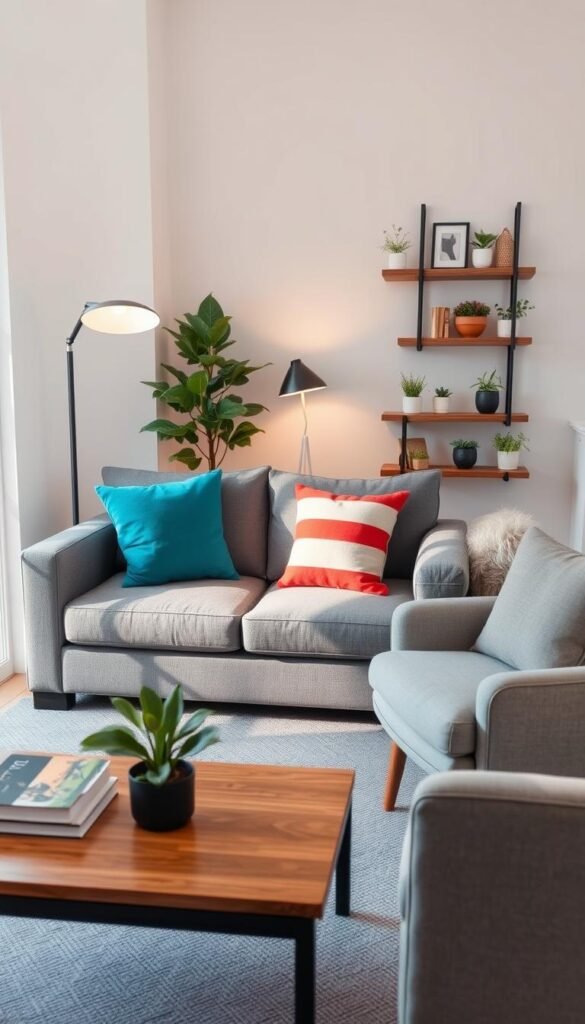
Pick furniture that feels right for how you live, not the biggest piece that fits the floor plan. Right-sizing means comfort-first choices that respect proportions. That keeps the room usable and calm.
Why low-profile tables and lighter visual weight help
Low-to-the-ground tables and open-leg furniture reduce visual bulk. Lighter colors and slender frames let light travel across the room. That makes the living area read larger without swapping out seating.
Practical test and what to avoid
If you need to turn sideways to pass a table, it’s too deep for your floor plan. Oversized sectionals can swallow a room and block pathways. Deep coffee table tops become shin hazards and collect clutter.
- Alternatives: a narrow table behind the couch, nesting tables, or a smaller table with open legs.
- Who this is for: studio apartments, tiny living rooms, and anyone who wants a calmer look with full comfort.
- Avoid: bulky pieces that block walkways or make cleaning harder; clutter follows hard-to-reach spots.
Product-by-product evaluation template to shop smarter on Amazon
Use this short, repeatable checklist to judge listings fast and shop with confidence.
Why it’s useful:
Define the exact routine the item fixes. Note one clear problem — lost lids, crowded counters, or unstable stacks — and the concrete way the product saves you time each day.
Who it’s for:
List living situations the item suits: renters who avoid drilling, roommates sharing shelves, families needing safer storage, or studio dwellers who need a compact set that works for many people.
Pros and cons:
Read reviews for patterns. Praise often flags sturdy materials and easy setup. Complaints reveal failure modes: adhesive peeling, rust, bent wire, or cracked plastic. Record the common praise and common failure.
Price-value verdict:
Decide if the listed price justifies materials and hardware. Spend $20–$25 when brackets, thicker metal, or certified food-safe finishes matter. Go cheaper when the job is light duty or a DIY version does the same thing.
Alternatives and DIY:
Note quick swaps: repurposed magazine holders for lids, tension rods for hanging, or a simple hook rail instead of a deep cabinet rack. These cheaper options often match function at lower price and less commitment.
Safety and quality checks:
Verify food-safe labels for anything that touches food. Check weight limits and tip resistance. Confirm photos show scale and include mounting hardware. For rentals, prefer no-drill or removable-anchor versions.

| Template Section | Quick checks | What to flag |
|---|---|---|
| Why it’s useful | Routine improved; time saved | Vague claims; no use case shown |
| Who it’s for | Renters, families, roommates, studio users | No audience notes or staged photos |
| Pros / Cons | Common praise vs common failures | Repeated complaints about adhesives or rust |
| Price-value verdict | $20–$25 for durable hardware | Overpriced cheap materials |
| Alternatives / DIY | Magazine holder, hooks, repurposed bins | No DIY suggestions listed |
| Safety / Quality | Food-safe, weight limits, tip tests | Missing specs or unclear dimensions |
What to avoid when buying small-space products online
Avoid buying before you measure; a single missed inch can make an organizer useless. Take a moment to map door swing, cabinet depth, and shelf clearance before you add items to cart. That simple habit saves money, time, and the hassle of returns.

Common mistakes that waste money
Skipping measurements is the top mistake. Don’t assume “standard” fits your layout.
- Door swing — an over-the-door hanger is worthless if the door won’t close or it hits a light switch.
- Cabinet depth and shelf clearance — under-shelf baskets, under-sink drawers, and board organizers often fail because depth was ignored.
- Fridge and back clearance — measure the back and top of appliances so rolling carts and magnets fit safely.
Red flags in listings
Watch product pages closely. Missing specs often hide real problems.
- Vague materials (no metal grade or food-safe note).
- No weight limit listed for wall or shelf mounts.
- No close-up of mounting hardware or how the piece sits on the floor or wall.
- Photos that hide scale — if you can’t tell how big it is, reviews will tell you later.
Returns and damage issues: reduce headaches with fast delivery
Pick sellers with fast shipping and easy returns. Buy from Amazon-first listings when possible so you can test fit within the return window.
„Try it in place the day it arrives. If it won’t work, start the return while inside the window.“
Read reviews for key words: „bent,“ „rust,“ „fell,“ „doesn’t fit,“ and „returned“ to spot patterns fast. That saves you from ordering stuff that fails in real life.
| What to measure | Why it matters | Avoid if missing |
|---|---|---|
| Door swing and clearances | Ensures hooks and hangers don’t block or break | Over-the-door items that prevent door closing |
| Cabinet depth & shelf height | Makes under-shelf baskets and organizers fit | Too-deep racks that wedge or leave gaps |
| Appliance back/top clearance | Allows rolling carts and magnetic mounts to sit flush | Magnets that slip or carts that block vents |
Final what to avoid: oversized solutions that create clutter, products that demand perfect conditions (like suction cups in humid bathrooms), and listings with missing specs. Measure, read reviews, and favor quick returns so your apartment or home gets useful gear, not extra junk.
Conclusion
Conclusion,
Tackle one visible clutter problem and you’ll feel the change across the whole room. Start with a single kitchen, bathroom, bedroom, or living room spot and choose 2–3 practical organizers that cut daily friction.
Buy less, choose better: favor under-$25 versions that you’ll use every day. Measure first, order from Amazon for fast delivery, test fit, and return quickly if it fails.
Mount wall items correctly and respect weight limits. Pick rust-resistant finishes for the bathroom and avoid sharp edges near a bed or table.
If a product seems pricey, try a DIY divider or a simple bin instead. Then use the evaluation template to judge the next item so your apartment gets useful storage, not more stuff.


14 Comments