
This is a fast, renter-friendly reset that helps you clear floor clutter and make daily clothes easy to grab. You are not aiming for perfection. You are aiming for usable space and simple routines that stick.
Start with a timer and three piles: keep, donate, and maybe. Move fast. Wipe shelves, pull items out, and make quick choices. The short time box cuts second-guessing and builds momentum.
Arvind moved faster once he used clear rules: toss things you haven’t worn, keep seasonally useful items, and decide in 30 seconds when possible. This method works in small apartments and across multiple storage spots without drilling or damage.
At a glance: prep with a timer, do pull-out + wipe-down, use category time blocks, and finish by staging donations for pickup or drop-off. Later sections list practical, budget-minded products (under $25 and under $50) so upgrades stay cheap and quick.
Key Takeaways
- Set a short timer and aim for a fast reset, not perfection.
- Use a three-pile system: keep, donate, maybe.
- Renter-friendly fixes—no drilling or permanent changes—are the priority.
- Simple rules reduce overthinking; momentum leads to real progress (Arvind example).
- You’ll get product suggestions later, with clear budget tiers and practical links like storage cheap vs premium.
Prep Your Space and Mindset for Fast Closet Work
Set a short timer, cue upbeat music, and clear a small work area before you touch any garments. This keeps you moving and stops rabbit holes like trying on outfits or re-folding everything.

What to grab: trash bag, donation bag, a relocate bin, cleaning wipes or spray, and a laundry basket for maybes. Place the donate bag by the door and the keep pile on your bed.
Focus and pace
Use a phone timer (30 or 45 minutes works). Play music or a podcast to reduce pauses. The goal is fewer interruptions, not motivation boosts.
Four practical piles
- Keep: daily and seasonal items you wear now.
- Donate: items in good shape that you won’t use; bag by the exit.
- Toss: damaged or stained stuff—trash bag ready.
- Relocate: anything that belongs in another room or is for selling later—a single bin you can carry out.
Quick rule: if you need more than 10 seconds to decide, it goes in relocate or sell later. This prevents the space from becoming a holding zone for random house items.
Safety note: keep a single walking lane clear. Don’t stack bags above knee height in narrow hallways. Stable bags and low stacks cut trip hazards.
Mindset reset: you are not judging past purchases. You are making your space work for your life now.
Start checklist
- Timer on
- Music on
- Piles placed
- Cleaning cloth ready
- Relocate bin by the door
When you’re ready for product ideas, see curated budget-friendly organizers at organizer finds for budget upgrades.
Closet One Hour Method: A 60-Minute Process That Actually Gets Results
Give yourself sixty focused minutes and a clear plan before you touch any garment.
Pull everything out and reset. Take all items out fast so you can see what you have. Wipe rods, shelves, and drawers. A clean surface prevents shoving things back and makes decisions easier.
Rapid-fire decision rules: donate if an item is in good shape but unused; toss if stained, torn, or overly worn; relocate if it belongs elsewhere; mark “sell later” only if you will list it within seven days.

Use a realistic 60-minute breakdown: 0–5 min prep, 5–10 min pull-out, 10–15 min wipe-down, then category sprints and a 5-minute cleanup. Time block by category (shirts first, then pants, outerwear, shoes, accessories) to avoid stalling.
Handle maybes without trying things on. Put them in a single bin and book a separate 20-minute try-on later. Today is about progress, not perfection.
Placement by frequency: keep daily clothes at eye level and front. Store seasonal or rarely used items up high or down low. Group similar pieces so you reach less and find more.
- A quick win: move most-worn tees forward and group by type to reduce clutter immediately.
- Shared spaces: do one side at a time to keep the process tidy.
Fast finish: bag donations now, tie the toss bag, move relocate items to your car or doorway, and clear the floor so the space is usable tonight.
For cheap, practical organizer ideas that fit renter life, see best space solutions.
Renter-Friendly Closet Storage Upgrades Under $25 and $50
Choose a single renter-friendly upgrade that frees up visual space fast. Pick what annoys you most and buy that first. Shop your house first for spare baskets or boxes before purchasing.
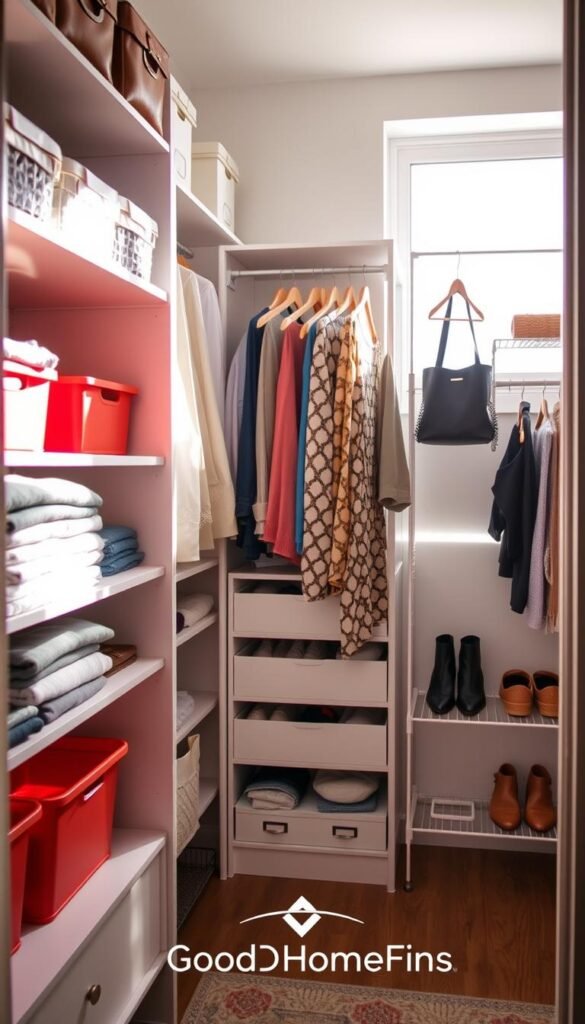
Under $25: slim hangers to cut bulk, tension rods for a second hanging tier, shelf dividers, and over-the-door hooks. These add usable storage without drilling.
Under $50
Hanging shelves, stackable bins, and a freestanding garment rack hold more. Tradeoffs: hanging shelves need weight checks; racks should be secured to avoid tip-over.
Small-item control
Use fabric bins, labeled boxes, and drawer organizers for socks, belts, and small items. Tape a photo to a box as a quick label if you don’t have a labeler.
„Start small and fix the biggest daily snag first.“
Quick comparison
| Type | Setup | Footprint | Best use |
|---|---|---|---|
| Slim hangers | Very fast | Low | Rod crowding |
| Stackable bins | Easy | Medium | Seasonal shoes |
| Hanging shelves | Moderate | Low | Folded shirts |
Safety tip: check weight limits, avoid overloading tension rods, and choose snag-free materials. For more renter-friendly fixes, see this small-space mix guide: small-space fix ideas.
Keep It Organized With Daily Routines and Easy Maintenance
A quick daily reset that takes five minutes keeps small piles from becoming permanent.
Daily reset: Hang today’s outfit, return shoes, drop accessories into a single tray, and clear any new pile before it becomes the chair in your room.
Make every item easier to put back than to drop. That simple rule is the most important maintenance way to avoid a full redo next week.

A five-minute reset routine
Do the same short step each morning or evening. It becomes automatic. You’ll stop new stuff from piling up.
Seasonal rotation with labeled bins
Move off-season garments and shoes into labeled or photo-labeled bins and store them up high. Swap them every 3–6 months so it’s a scheduled step, not a big project.
Apartment-size alternatives
- If you have no door, choose matching bins and keep only daily items visible.
- With a single hall closet, assign zones by person or category to prevent it from turning into a catchall.
- For a tiny reach-in, go vertical and store folded pieces upright, like books, so you can pull one without toppling a stack.
Overflow strategies for other rooms
Redirect non-clothing stuff to better spots. Put rare appliances in a kitchen cabinet, backup toiletries under the sink, and use entryway trays for keys and bags.
| Problem | Renter-friendly fix | Frequency | Why it works |
|---|---|---|---|
| Piles on chair | Daily five-minute sweep | Daily | Prevents accumulation |
| Seasonal overflow | Photo-labeled bins up high | Every 3–6 months | Simple swap, protects space |
| Hall closet catchall | Assign zones by person/category | Monthly check | Keeps things accessible |
| Random house items | Redirect to proper zones | As needed | Stops the space from filling with non-closet things |
Get-rid cadence: a 10-minute purge monthly and a deeper review twice a year keeps you from facing years of backlog.
Practical rule: for every new clothing thing you bring in, choose one to donate. It’s a small step that protects your space over the year and keeps maintenance doable.
When you need compact storing ideas for other rooms, check this small kitchen solutions page for renter-friendly tricks you can adapt.
Conclusion
Finish by bagging donations and clearing a small walking path so the reset actually sticks. Use a timer and the simple flow: prep, pull-out, wipe-down, rapid decisions, category sprints, and a fast finish. This keeps the task focused and repeatable in about an hour.
Simple rules beat overthinking. Progress beats perfection. Small renter-friendly upgrades—like slim hangers or a hanging shelf—solve a lot of daily frustration with minimal cost.
Maintenance is part of the method. A five-minute reset each day stops clothes and other things from turning into new piles.
Next step: take the donation bag to your car or schedule a pickup today. For related entryway tips, see the entryway fast vs full guide.