Practical, budget-friendly gear for a simple home brew routine.
You want a tidy spot that helps you make a great cup fast. This guide sticks to real tools under $25 that save time, cut mess, and keep counters usable. You’ll get honest notes on why each item is useful, who it suits, and what to skip.
We focus on a compact station that fits small spaces and renter setups. Expect picks that are easy to clean, renter-friendly, and available on Amazon for fast delivery. No oversized gadgets. No trendy extras that don’t improve your daily cup.
Quick brewing tips from Bean&Buddies: pick a method, measure with a scale, and use water near 195–205°F (90–96°C). Those small changes boost consistency more than flashy tools.
Key Takeaways
- Practical items under $25 that save time and reduce mess.
- Designed for small spaces and renter-friendly stations.
- Amazon availability and fast shipping are priorities.
- Simple habits—measure and proper water temp—improve taste most.
- No big appliances or decorative shopping lists; focus on daily use.
Pick the Right Spot for Your Coffee Corner at Home
Choose a place that fits your routine. Start where you naturally begin each morning. That keeps steps minimal and reduces spills or trips across the house.

Small kitchen corner vs. living room nook vs. under-stairs area
Small kitchen corners work when counters are tight. They keep water and plugs nearby. Noise is limited but traffic can be an issue during busy prep.
Living room nooks free the kitchen. They are calm for solo mornings. But you may carry mugs farther and risk drips across the room.
Under-stairs setups use unused area and add storage. A compact shelf fits a grinder and kettle. This is renter-friendly and keeps the main kitchen clear.
What to check first: outlet access, water access, and cleanup distance
Outlet-first checklist: one safe plug, no cords across walkways, and a surge strip if needed.
Water access: if the sink is far, keep a small pitcher or refill habit to avoid drips.
Cleanup distance: if you must walk across the house to dump grounds, the station will get messy fast.
Real-life setup examples
| Type | Pros | Cons |
|---|---|---|
| Corner kitchen | Near sink and plug, quick refills | Can crowd counters during prep |
| Living room nook | Calmer mornings, frees kitchen | Longer carry to sink, possible drips |
| Under-stairs area | Extra storage, renter-friendly shelves | May need extension for water or plug |
Small-space example: one tray, one airtight canister, and mugs on hooks to free counter area in a tiny apartment.
Busy-morning example: place the station near the fridge and trash so you don’t zig-zag during rush hour.
Design tip: match the station to your kitchen palette so it feels intentional without extra purchases.
Plan a Layout That Saves Time and Keeps Counters Clear
Arrange your gear so your hands travel in a straight line from water to mug. That reduces spills, cuts steps, and keeps your prep space usable. Aim for a setup that fits your daily rhythm and renter rules.

Countertop-only, bar cart, shelf-and-rail
Countertop-only: machine or kettle at the back, a wooden tray up front to corral spills, canisters to one side, and mugs within arm’s reach. This is the fastest way to brew on tight counters.
Bar cart: top shelf for brewing, bottom shelf for backups and filters. Choose a sturdy cart so it won’t wobble when you press or pour. It’s renter-friendly and movable when you need floor space.
Shelf-and-rail: use a small shelf and peg rack for mugs and hooks for tools. Store vertically so the counter holds only what you use every day.
„Keep the layout simple: water → coffee → brew → dump grounds → rinse.“
Smart basics to use: a tray to contain mess, peg racks for mugs, and a rail to free drawer space. Avoid overcrowding with too many ‚coffee things‘, stacking mugs too high, or placing the station under vulnerable cabinets.
For more compact kitchen ideas see best small kitchen solutions.
Everyday Coffee Corner Finds Under $25 That Actually Help
Pick fewer, smarter items that earn their place by cutting mess and saving time. Each pick below is practical, renter-friendly, and easy to source on Amazon. I note price-value, pros/cons, who it helps, what to avoid, and cheaper alternatives.

Tray (wood or plastic)
Why it’s useful: contains drips and makes wiping fast.
Pros: wood looks warm; plastic wipes clean. Cons: wood needs sealing; thin trays warp. Who: small counters. Avoid: flimsy, warped trays. Cheaper option: repurpose a baking sheet.
Mug hooks / under-shelf rack
Saves cabinet space and speeds grab-and-go mornings. Check weight limits and choose food-safe finishes. Alternative: Command hooks or a simple peg rack.
Clear airtight canisters
Keep beans, grounds, sugar, and cocoa fresh and visible. Buy food-safe glass or BPA-free plastic with a good gasket. Avoid flimsy lids; mason jars work as an inexpensive swap.
„Use a scale and aim for 195–205°F water—small steps that improve consistency more than fancy gear.“
| Item | Price-value | Best for |
|---|---|---|
| Scoop-and-clip | Under $10 — high value | Bagged beans, tight storage |
| Budget digital scale | $10–$20 — repeatable results | Anyone chasing consistent ratios |
| Mini knock box alternative | Under $15 — durable option | Espresso drinkers without a drawer |
Other small wins: reusable mesh filter (less waste), microfiber towels for quick wipes, small ramekins for sweeteners, and a space-saving mug tree when you only rotate a few mugs. Look for Prime-eligible, high-review basics and focus on simple materials over gimmicks.
For more targeted gear under $25 see best kitchen finds on Amazon.
How to Choose a Coffee Maker for Your Corner Without Overspending
Pick a brewer that matches your morning pace, not marketing promises. Start by noting how you make coffee on weekdays versus weekends. That single question narrows choices fast.

French press, pour-over, drip, or espresso: quick fits
French press: budget-friendly and compact. Pros: full-bodied cup, no pods. Cons: more cleanup and some sediment. Best for you if you like a richer brew and don’t mind rinsing.
Pour-over: cheap and storable. Pros: clean cup and small footprint. Cons: needs a kettle and a few focused minutes. Best for a quiet ritual and tight counters.
Drip machine: button-and-go convenience. Pros: makes multiple servings quickly. Cons: watch bulky footprints and needless controls. Best for families or anyone who needs multiple cups fast.
Espresso machine: rewarding but costlier. Pros: real espresso and milk drinks. Cons: needs a grinder and regular cleaning. Best if you make espresso drinks daily and will use it often.
Counter-space checklist and upgrades that matter
- Measure height and depth for lids, steam, and storage.
- Avoid oversized machines, proprietary pods, and flashy apps.
- Invest in a scale, airtight storage, and a decent kettle—these improve your brew more than extra machine features.
„Choose routine over features; a simple maker plus good habits beats a gadget you never use.“
For small-space solutions and layout tips see small-space solutions.
Stock the Essentials for Better Coffee at Home (Beans, Grind, Water)
You can dramatically improve your daily cup by focusing on three things you control: beans, grind, and water. These are cheaper fixes than a new machine and easier to keep up.

Beans vs. grounds: what’s practical for weekday mornings
Whole beans give the best flavor if you will actually grind them. They are worth it for daily brewers who care about taste.
Pre-ground is fine for rushed weekdays. Tip: pre-portion grounds into small jars so you can make coffee fast without measuring when you’re half-awake.
Grinding basics: why “fresh enough” beats expensive gear
A basic burr grinder is a good mid-range buy for regular brewers. It gives consistent particle size without a big price tag.
If you drink coffee a few times a week, store-ground in small bags or weekly batches is acceptable. Upgrade only if you brew every day and notice flavor loss.
Water temperature and measurement: an easy routine you can repeat
Use a budget kitchen scale for repeatable ratios. Measuring saves beans and avoids wasted cups.
Target water around 195–205°F (90–96°C). No thermometer? Boil, then wait 30–45 seconds before pour. It’s reliable and fast.
Finally, use clean, good-tasting water. A simple filtered pitcher and food-safe canisters keep beans fresh and safe.
„Small, repeatable habits beat expensive gear. Make your ritual simple and you’ll do it every day.“
For a compact guide to building a steady station, see this coffee bar at home.
Make It Comfortable and Nice-Looking Without Buying Random Decor
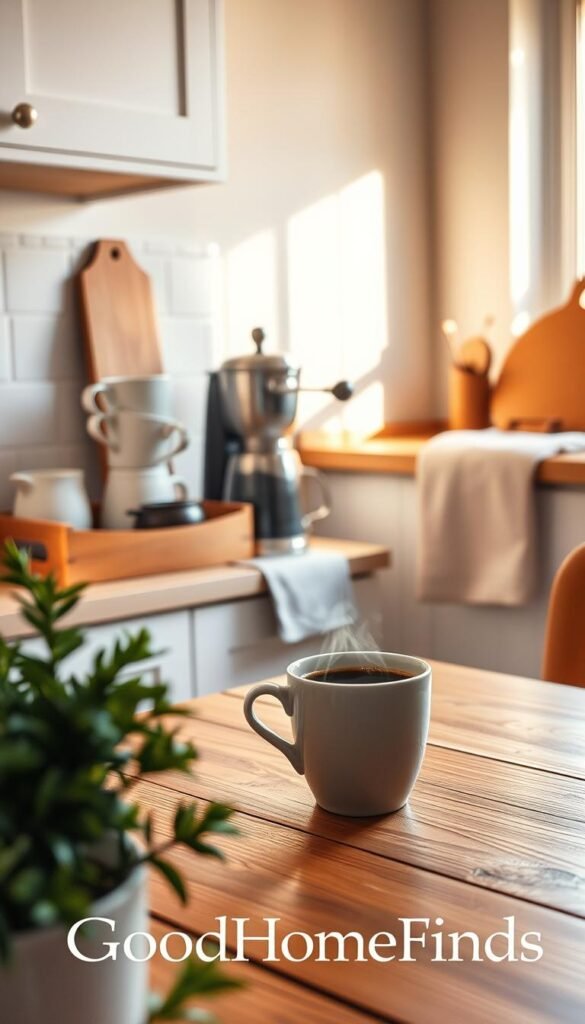
Bright, calm lighting and a few purposeful items make a small station feel designed, not cluttered. Keep the look simple so the area stays tidy and useful.
Lighting that works
Natural light helps you see colors and works best in the morning. A small lamp makes a living room nook feel cozy after dark.
Safe candle use: choose a stable holder, keep candles away from towels and paper, and never place them under shelves or near steam.
Simple style rules
Pick one lane: match your kitchen color palette or stick to neutrals. This prevents a mismatched look and keeps cleaning easy.
Wood accents add warmth. You do not need expensive furniture. A small wood tray or shelf gives the same effect for less.
Personal touches that earn their space
Display a couple of favorite mugs, one small plant that tolerates low light, and a book you actually read with your cup. These items pull double duty: useful and personal.
Seasonal swaps that don’t create clutter
Rotate mugs or swap one small print or wreath for the season. Remove the item when the season ends. Avoid bins of themed objects.
„Intentional, minimal styling helps you keep the station clean and find what you need faster.“
| Focus | Budget option | Why it works |
|---|---|---|
| Lighting | Small plug lamp | Makes a nook feel cozy without rewiring |
| Material | Small wood tray | Adds warmth, hides drips, durable |
| Personal | Two favorite mugs + plant | Useful display, low clutter |
Real-life idea: a living room nook with a bar cart, a lamp, and two favorite mugs stays guest-ready and easy to wipe down. For more simple styling tips see cozy station ideas or a minimalist setup guide. For practical storage solutions check organization ideas.
Safety, Quality, and Maintenance for a Coffee Station That Lasts
Keep maintenance simple so your station stays useful, safe, and pleasant to use every day.
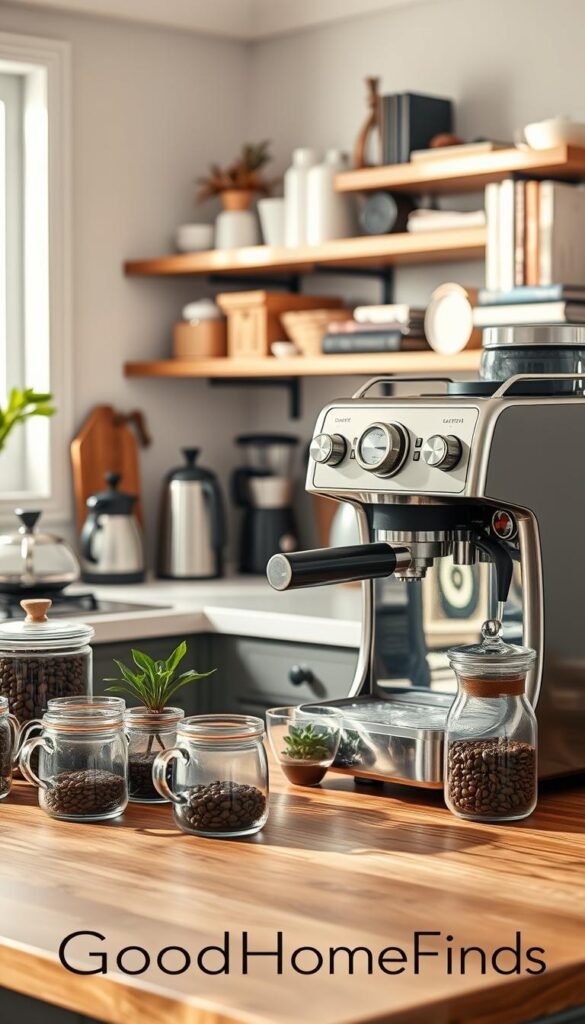
Food-safe materials and heat resistance
Choose mugs, canisters, and trays labeled food-grade. Look for BPA-free or glass containers and heat-resistant trays near kettles or a hot machine.
Avoid thin plastics that warp or melt. Store beans and grounds away from direct sunlight and stove heat.
Daily and weekly cleaning
Rinse the coffee maker basket and carafe each day. Wipe spills immediately with a microfiber towel to prevent sticky build-up.
Once a week run a simple descaling or vinegar cycle on the maker and deep-clean grinder parts. Buildup affects taste and slows brew time.
Grinder and espresso care
Brush out grounds after each use. Old grounds make fresh brews taste stale. Keep a small brush in the tray for speed.
If you use an espresso machine, wipe the steam wand after every steaming and empty puck bins daily. A compact knock box prevents sink damage.
Restocking rhythm and what to avoid
- Check beans and filters mid-week; restock on weekends.
- Buy only the essentials you’ll use in a week or two to prevent waste.
- Avoid leaving water in reservoirs for days, ignoring descaling, or storing beans near heat.
Practical tip: keep a small descaling kit and a couple microfiber towels in your tray. For quick maintenance guides see maintenance tips for your coffee maker and smart restock ideas at kitchen problem mix. For inspiration on a tidy setup check a small station example.
„A short maintenance habit keeps taste high and cleanup low.“
Conclusion
Quick checklist to finish: pick a small place that fits your routine, set a tidy layout, add a few under-$25 helpers, and keep a simple cleanup habit.
Starter list: tray, airtight container, mug storage, a microfiber towel, and an optional budget scale. These practical picks improve your daily ritual more than flashy gadgets.
Make the station fit your home, not the other way around. If kids use the kitchen, place hot items and cords safely out of reach.
For layout inspiration and product tips, see coffee bar ideas and practical setup steps at organized station tips.
Final check: if you can brew, wipe, and reset your coffee station in a few minutes, the space is working as it should.