This guide shows you what practical appliance upgrades do for daily meals in small apartments. You’ll get honest pros and cons, renter-friendly concerns, and a clear comparison of budget vs premium options.
“Cooking helper tech” here means gadgets that cut hands-on steps so you can finish dinner without hovering over the stove. I’ll look at real examples, including the Thermomix® TM7™ — $1,699 in the US, a quiet unit with an insulated mixing bowl, 10-inch touch display, and guided recipes — and simpler smart companions.
You’ll learn how each device changes your routine, whether it saves real time or just steps, and how noise, steam, storage, and power matter in a shared building. I’ll also test setup time, maintenance, and when an all-in-one replaces other tools.
Short promise: no hype. You’ll leave knowing what’s worth it, what’s annoying, and what to skip if you live in a small space or share walls with neighbors.
Key Takeaways
- Gadgets should save real time, not just steps.
- Noise, steam, and storage matter as much as features for renters.
- Expect trade-offs: convenience vs counter space and power use.
- We compare budget models, premium units like the TM7, and smart companions.
- No device fixes bad ingredients or tiny counters, but the right tool can make meals easier.
Real benefits of cooking helper tech for everyday meals
Practical appliances can shave minutes off weeknight prep and cut the mental load of juggling pots and pans.
Less time spent on prep and multitasking for weeknight cooking
You save time because one device can chop, stir, and heat. That means less chopping, fewer pots, and fewer “watch the pan” moments.
Real example: make a blended soup while steaming vegetables above. Set a guided mode, clean a counter, and plate when it pings.
More consistent results for recipes and repeatable dishes
Consistency matters. The same oatmeal texture, the same smooth soup, the same rice result reduce guesswork and wasted food.
„Fewer failed meals means less takeout and less stress at home.“
Small-kitchen wins: replacing multiple appliances with one device
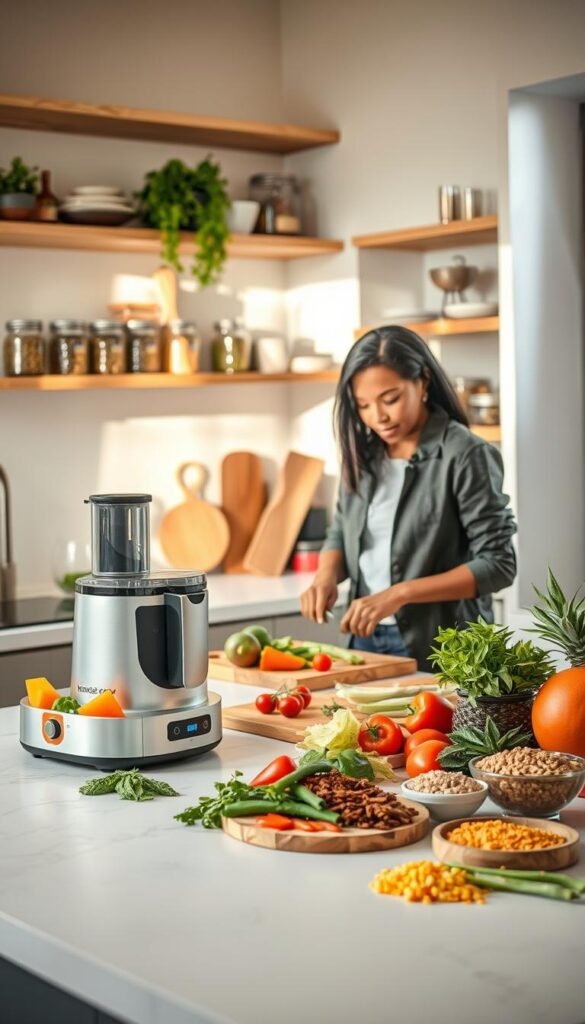
One all-in-one can replace a blender, steamer, and saucepan if you use those functions often. That frees storage space in a small kitchen.
Safety and confidence: guided steps, insulated parts, and hands-off moments
Guided steps reduce mistakes. An insulated mixing bowl and a quiet motor—features of models like the Thermomix® TM7™—add safety and lower noise.
Tradeoff: you still load ingredients, plan portions, and clean up. Also plan for steam clearance and a permanent spot if you rent.
| Benefit | Real result | Renter note |
|---|---|---|
| Less prep time | Faster weeknight meals, fewer steps | Keep device on a dedicated counter to avoid moving it |
| Consistency | Repeatable recipes with predictable texture | Use guided modes to avoid guessing |
| Space savings | Replaces multiple single-use items | Only worth it if you use the functions regularly |
| Safety | Insulated parts, timed steps, less splatter | Allow steam clearance and proper ventilation |
- Energy: multi-function use can save power versus several separate appliances.
- Cleaning: most parts need washing; check dishwasher compatibility.
- Try similar, lower-cost items before committing; compare features and daily value.
For quick shopping ideas and tested small-kitchen finds, see best kitchen finds.
Which cooking helper device fits your kitchen and cooking style
Pick a unit that matches how you actually cook and where you live. Small counters, shared walls, and a tight schedule change what’s useful. Below are practical options and honest notes so you can decide fast.
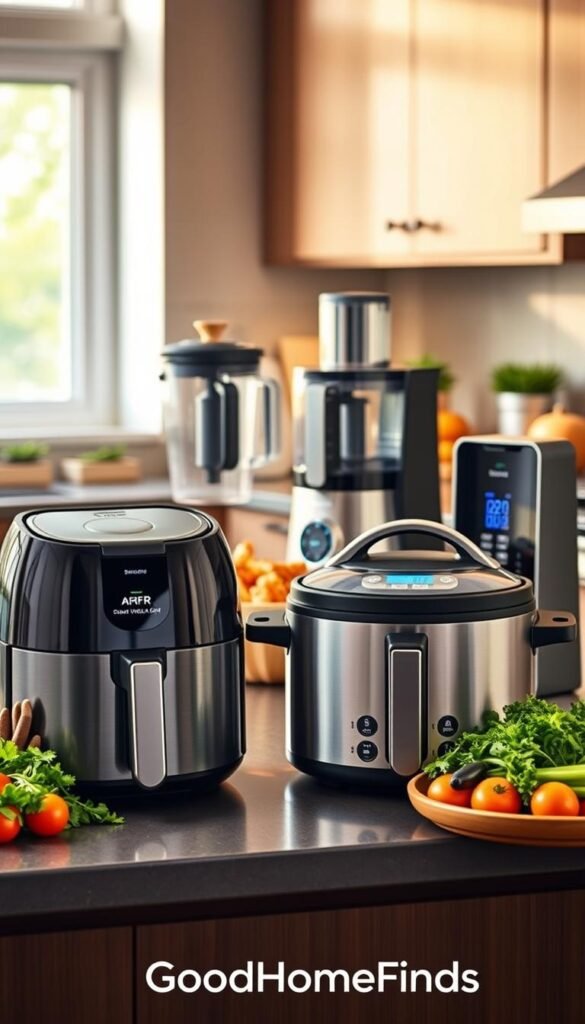
All-in-one smart cookers for cooking, steaming, and guided recipes
What they do: mix, heat, and steam in one bowl. They save prep and cut pots to wash.
Who needs this: users who cook several nights a week, hate juggling timers, or want repeatable meal results.
Pros: space-saving, consistent results, guided recipes reduce mistakes.
Cons: counter footprint, regular cleaning, and less freedom if you like to improvise.
Smart kitchen companions that reduce “what’s for dinner” friction
Services like upliance.ai act as friction reducers. They suggest menus, sync shopping, and guide steps so you spend less time deciding.
Best for content-focused users who film or test dishes. Guided steps make workflow predictable. You still need good lighting and neat placement for video.
Luxury robotic kitchens: who they’re for and who should skip them
Moley and similar systems aim at high-budget homes. They can help you cook like a trained chef for select dishes.
„You’re buying an ecosystem, not just a gadget.“
Skip these if you rarely cook, prefer cold lunches, or dislike long service plans. Hidden constraints include installation space and ongoing support.
| Type | Best for | Quick note |
|---|---|---|
| All-in-one | Frequent weeknight cooks | Good balance of value and space |
| Smart companion | Indecisive users | Low hardware, high guidance |
| Robotic kitchen | Luxury buyers | High cost, high automation |
- Who needs this: you if you make dinners most nights and want less micromanaging.
- Who should skip: you if you rarely cook, avoid cleaning, or hate appliance noise.
Budget vs premium comparisons you can feel every day
Deciding between a budget model and a premium unit comes down to everyday trade-offs you can feel at dinner.
Upfront price vs long-term value. A premium unit like the Thermomix® TM7™ ($1,699 US) often reduces active meal time and decision fatigue. If you use it several times a week, fewer takeout nights and less wasted food can offset the cost.
Noise and open-plan apartments
Quiet matters. Blending, chopping, and steam can interrupt calls or sleep. The TM7’s “silent” motor positioning helps, but test blending sound, vibration on your counter, and night-time disruption before you buy.
Power and energy habits
Smaller batches and avoiding long preheats cut energy use. One all-in-one can be more efficient than running multiple appliances. Use lids and full loads when possible to save electricity.

Space, storage, and real capacity
Think beyond footprint. Count vertical steam clearance, cord reach, and where the bowl stores. The TM7 bowl holds 2.2 liters; the Varoma® set totals 6.8 liters and gives 45% more steaming space vs TM6—useful when you steam proteins and veg together.
Recipe ecosystem and control
Guided recipes give consistency and cut decision time. Manual modes offer texture control for dishes that need a human touch. Choose based on whether you value repeatable results or full control.
„Premium often buys less hands-on time and more consistent dishes; budget covers basics if you don’t need guided steps.“
| Factor | Budget units | Premium units (example: TM7) |
|---|---|---|
| Upfront cost | $50–$400 | $1,699 |
| Daily time savings | Moderate if used often | High with guided recipes |
| Noise | Variable, often louder | Designed for lower noise, test on counter |
| Energy | Efficient for simple tasks | Efficient for multi-function use; avoid extra appliances |
| Space & capacity | Smaller bowls, less steam space | 2.2 L bowl; 6.8 L Varoma® set, more steaming room |
Quick recommendation: If you cook at home most nights and want consistency, premium can be worth it. If you make few meals at home or value low cost, a budget unit will cover basics.
For meal planning help and tested small-kitchen ideas, see a recommended meal planning guide and a round-up of smart small-kitchen finds.
Setup time, maintenance, and common mistakes to avoid
Start with a realistic setup plan. Unbox the unit, pick a permanent spot, wash removable parts, and run a short first recipe so you learn pacing without stress.
Setup time expectations
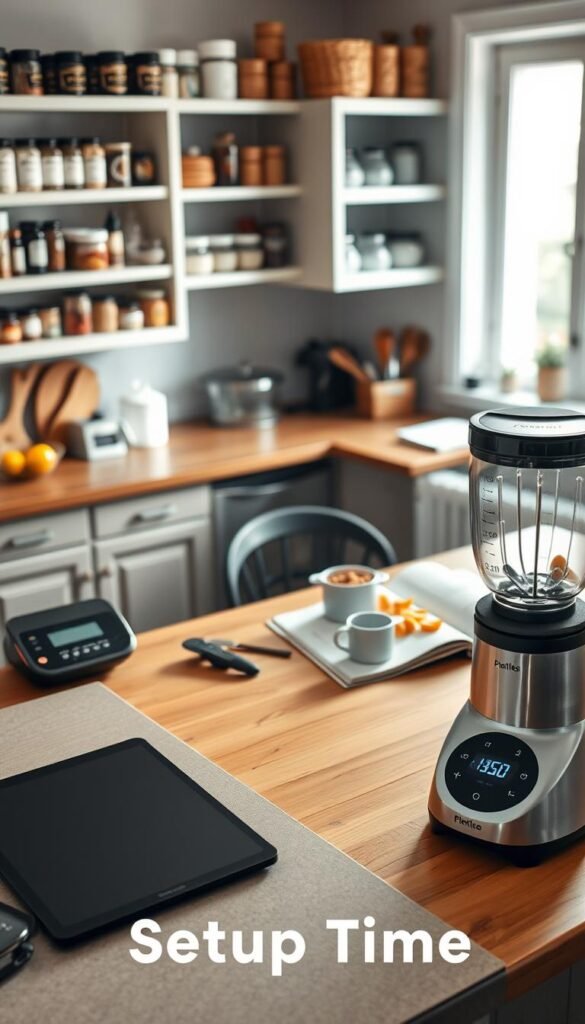
Setup time usually takes 30–60 minutes the first day. You’ll sort parts, find a stable counter, and complete a trial cycle to check fit and steam clearance.
The first recipe run-through teaches portion sizing and how to avoid overflow. That matters in a small apartment where sinks and counters are limited.
Cleaning reality
Dishwasher-safe parts save time. For example, with the Thermomix® TM7™, all parts except the base go in the dishwasher.
Wipe the base with a damp cloth and never scrub components on rough surfaces where the manual warns against it.
What takes longest: removing food from tight corners, washing seals, and fully drying parts to prevent odors in a small home.
Common mistakes
Common mistakes include overcrowding the bowl or steamer and expecting zero effort after purchase. Don’t skip safety steps like locking lids and allowing steam to clear.
Avoid trying to multitask heavily in your first week. Rushing increases spills and adds cleanup time.
Apartment-friendly placement & ongoing upkeep
Leave vertical clearance above the unit and don’t shove it under low cabinets. Secure the cord so it cannot snag and avoid unstable carts that amplify vibration and noise.
Check seals and blades regularly. Handle attachments carefully and build a short weekly reset routine so the device stays pleasant to use. If cleanup feels manageable, you’ll use it for more meals; if not, it will sit unused.
| Area | Expectation | Practical tip |
|---|---|---|
| Initial setup | 30–60 minutes | Run a short test recipe to learn controls |
| Cleaning | Dishwasher parts, base wipe | Rinse quickly; dry seals fully to avoid odors |
| Common mistakes | Overcrowding, rushing | Measure portions and follow guided steps first |
| Placement | Steam clearance, stable surface | Keep away from low cabinets; manage cord path |
| Upkeep | Periodic seal and blade checks | Weekly quick clean and inspection |
Extra resources: For detailed maintenance tips, see a practical guide to cleaning and care for kitchen gadgets and a list of common operational pitfalls to avoid in professional settings: 7 common operational mistakes.
Conclusion
The right unit saves you small, repeated hassles that add up to real time back each week. Choose a tool that fits your space, budget, and how much cleanup you will accept. One clear win is fewer steps for the same result.
Focus on five checks: noise, power use, countertop space, safety features, and maintenance. A premium option like the Thermomix® TM7™ ($1,699 US) offers guided steps, a quiet design, dishwasher-safe parts (base excluded), and an insulated bowl for safer handling.
For research on usability and safety features see a lab study on smart-kitchen assistance. For meal planning and AI support see this AI assistant summary. For tested small-kitchen finds under $20 see smart small-kitchen picks.
Low-risk next step: pick one go-to recipe and one weekly meal. Try it with a budget unit first, then upgrade if it truly saves you time and hassle.