
Daily Drop Pro combines multi-program points search with deal alerts to cut planning time. The free Limited tier gives you a taste. Pro normally runs $149/year, but you can test budget-friendly options under $25 or $50 before you commit.
We search. You save. That is the core promise. This review defines the daily drop system as a repeatable, low-friction way to search points, track balances, and act on deals without living in 15 browser tabs.
You will learn what Daily Drop Pro does well and where it is limited. I will show who in the United States benefits most and how to decide if it is worth paying for in 2026.
Practical baseline: you still verify award space and book on airline or hotel sites. This tool is for planning and alerts, not for final bookings. Treat travel like a small-space routine. Use simple tools, minimal setup, and a predictable workflow you can keep up with.
Key Takeaways
- Daily Drop Pro saves time by scanning multiple programs and sending alerts.
- Limited tier is free; Pro is $149/year but test options exist under $25 or $50.
- This is a planning and alert tool — you still book on carrier or hotel sites.
- Best for people who want fewer tabs, fewer wasted points, and less decision fatigue.
- Renter-friendly tips and low-effort setups make it suitable for small spaces.
What the Daily Drop System is and what it promises travelers
Think of Daily Drop Pro as your single workspace for points searches and curated deal alerts. You type one route or hotel name and the tool scans many loyalty programs so you don’t hop through a dozen portals. That saves you time and mental effort.

„We search. You save.“ means practical steps you can repeat. You enter basic trip details. The service shows award options and highlights notable deals. You then verify and complete booking on the airline or hotel site.
Tab overload is a common pain. Multiple logins, different award calendars, partner quirks, and hidden fees make comparisons slow. This tool reduces that noise so you can plan in one tidy spot and clear your workspace fast.
When it shines
- Flexible travelers who can move dates or airports to get value.
- People who want to stretch transferable points without becoming full-time hobbyists.
- Anyone living in a small space who prefers one consistent planning routine.
The newsletter and alerts fit into a simple triage: check, act, or archive. That keeps notifications useful, not spammy. Use a five-minute habit each morning and the whole process stays renter-friendly and low-effort.
Who Daily Drop Pro is best for in the United States
Here’s a clear guide to which travelers get the most value from Daily Drop Pro and how it fits typical U.S. habits. The tool centers on alerts that originate from US and Canada airports and lets you choose origin airports so results match where you actually fly from.

Beginners who want guided searches and clear next steps
If you have miles or points but don’t know alliances or partner quirks, this fit is for you. The tool gives a guided path from “I have points” to bookable options. You still verify on airline sites, but you avoid learning every rule at once.
Frequent flyers chasing deals from a home airport
If you monitor one home airport, you care about deal speed and match filters by region, month, and price. The alerts tune to your preferences so you see relevant options quickly and act on a good trip.
Families and couples coordinating access and responses
Coordinating points across people is messy. Shared access for up to five devices helps you act fast when a deal hits. Pro members get a community and 1:1 redemption support for tougher redemptions.
Household tip: keep a shared “travel admin” checklist in your notes app. One person can claim the alert, confirm balances, and book without a long back-and-forth.
Practical note: if your points come from transferable credit card programs, you’ll usually get more options than with a single airline’s miles.
Daily Drop Pro plans and pricing: Free Limited vs Pro subscription
A clear budget test helps you decide whether a paid plan gives real value for your trips. The Limited tier is free and useful for hands-on trials. Pro is an annual subscription billed at $149/year, with occasional promos that shave about $50 off the price.

What you can do with the free Limited membership
Use Limited to run up to five points searches and to see how results display. You can test award and hotel lookups, try the interface, and get a few notifications so you learn the workflow.
This is a renter-friendly way to explore without commitments. Treat it like a one-week homework: run searches, save notes, and verify how alerts arrive.
What Pro unlocks day to day
Pro gives unlimited searches, more tailored alerts, and up to ten origin airports. That changes daily habits: you can tune filters, watch more deal alerts, and act faster when a valuable option appears.
The real decision point is usage. $149/year is worth it if you use the tool enough that one saved booking or a cheaper itinerary covers the fee.
Promos, timing, and budget test plans
Sales like $50 off land around major promotions such as Labor Day or Black Friday. Treat promos as bonuses, not the main reason to subscribe.
- Under $25 test: Keep Limited and buy a cheap home setup—cable clips and a notebook—to speed planning.
- Under $50 test: Use Limited plus a password manager or secure key vault often discounted under $50 to log in faster when alerts hit.
Fine-print mindset: if a promo includes a physical perk, check eligibility and refund rules first. That avoids accidental commitments and keeps your routine low-commitment and renter-friendly.
Feature deep dive: Flight Points Search for miles, points, and award space
Think of Flight Points Search as a translator that shows how the same route prices out in different loyalty currencies. It compares award options across programs so you can see which miles or points give the best value.

How it compares to Google Flights-style browsing
Google Flights compares cash fares and schedules. This tool does that for award pricing. It surfaces partner routes and oddball redemptions that can beat the cash fare.
Filtering by cabin and trip goals
Choose economy or business class early. That single filter changes which results matter. Business-class redemptions can justify a subscription faster.
Reality check: verify before transferring
„Always confirm award space and fees on the airline site before moving points.“
Quick checklist:
- Confirm award availability on the airline or program site.
- Confirm cabin for every segment.
- Confirm taxes, fees, and transfer times.
Speed and accuracy
Reviewers note searches can be slow and not 100% accurate. Use this tool to narrow options, then allow an extra 3–5 minutes for verification.
Practical habit: lock your dates and passenger count before you search. Do a simple deal math: compare points + fees to the cash price to decide if the redemption is worth it.
Hotel Points Search: finding award nights across major hotel programs
Save time by viewing award nights from several hotel brands in one clean list. The search scans seven major hotel groups so you start with a useful shortlist instead of hopping brand to brand.

What’s included
- Hyatt
- Hilton
- Marriott
- IHG
- Accor
- Choice
- Wyndham
How to avoid wasting points
Each brand has different calendars and pricing. That makes hotel award searches a time sink.
Sort results by distance, points cost, and value. That helps you avoid burning points on a mediocre location.
Practical workflow
Screenshot or save your top two or three hotel options before comparing fees and cancellation terms. Treat the tool as a fast shortlist generator.
Reviewers note occasional map/list mismatches and filters resetting. Expect quirks and always verify on the program site.
Small-space routine
Keep confirmations tidy. Use one digital folder for award screenshots and booking receipts. This prevents paper clutter and makes repeat bookings easy.
| Filter | Why it matters | Action |
|---|---|---|
| Program | Shows which points currency you’ll use | Pick one or two preferred programs to focus searches |
| Points cost | Shows raw redemption amount | Compare to cash price before transferring |
| Distance / Location | Ensures convenience and saves transit time | Prioritize hotels within practical distance |
Deal alerts that fit your routine: cash deals, points deals, and notifications
Set alerts that match your real travel plans so notifications help, not distract. Good setup means fewer interruptions and faster action when a strong deal appears.
Cash deal alerts let you pick regions, months, and a max price. That makes cash offers useful instead of noisy. Choose destinations you’ll realistically visit and a price ceiling that matches your budget.

Points deal alerts: bookable award space, not guesses
Points alerts notify when award seats are actually bookable. That saves you manual searching. When a points alert lands, verify availability and transfer windows fast.
How notifications arrive
Pick the app for speed, email for a searchable trail, or both for fast action plus record-keeping. Push is best when you must act quickly. Email is best for planning later.
Five-minute deal triage to avoid alert fatigue
Use this short routine each morning:
- Scan alerts and dismiss irrelevant ones.
- Save only matches to your flexibility and budget.
- Verify availability, then book or archive—no endless “maybe” pile.
„If you ignore alerts for two weeks, tighten your filters; fewer, better notifications beat constant noise.“
Renter-friendly home tip: keep a no-drill over-the-door pocket organizer for passport, spare charger, and a small notebook. That creates a quick travel station so you act fast without cluttering your home.
Deals move fast. If an alert matches your plan, move quickly but use safety nets like 24-hour cancellation when possible. This keeps action calm and practical while saving you time and stress.
Home airport strategy: getting better deals without living at a major hub
Your choice of airport shapes how many meaningful deals and points offers land in your inbox.
Start simple. Use Limited to set one true home airport. That keeps alerts focused and reduces noise.

Pick one plus nearby reposition hubs
Choose your real home airport first. Then add 1–2 nearby hubs you can reach by car or a short flight. Use those hubs only when savings justify travel time and cost.
What to expect by airport size
Major hubs: expect about 3–5 points deals per week. Small regional airports: more like 1–2. Plan differently for each volume.
Deciding whether to add more origins
- Add only airports you would actually use. Extra origins create pointless notifications.
- On Pro, don’t fill all ten unless you travel from them frequently.
- Repositioning helps when a nearby hub consistently shows better flights or award availability.
No permanent changes: keep flexibility over complexity. Your goal is workable options that let you book, not endless optimization.
„Good enough to book beats perfect and never leaving.“
Small-space tip: keep a packed reposition kit in a tiny cube—chargers, meds, and basic toiletries—so an unexpected deal or quick trip is easy to execute.
Points Wallet and account organization: tracking miles, credits, and perks
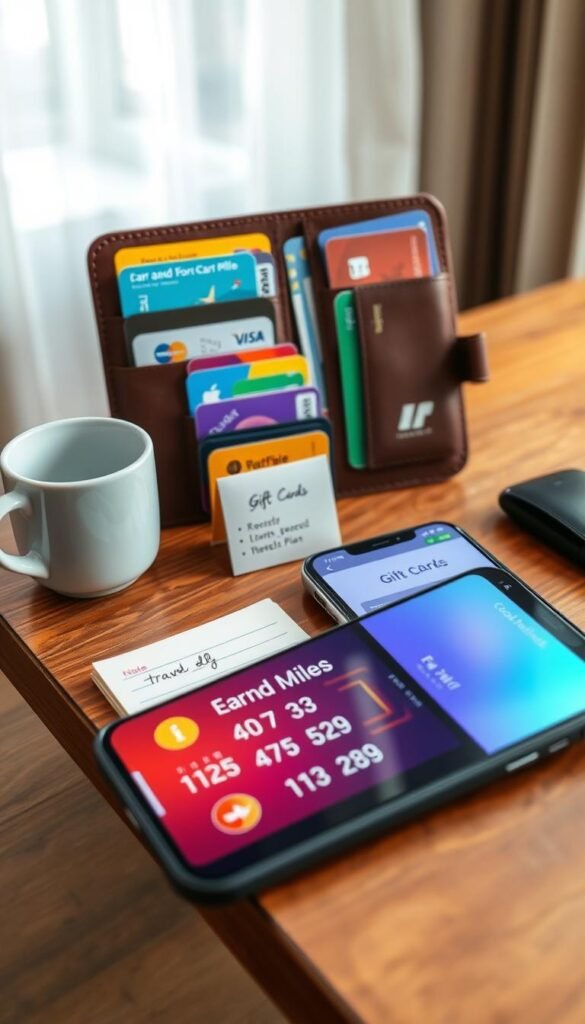
One central wallet turns scattered card and loyalty info into a usable snapshot for trips. It pulls visible balances, credits, and perks from banks and major programs so you stop guessing whether you have enough points to book.
What it does well
The wallet gives a single view of your points and credit perks across accounts. That reduces the “where did I earn that?” confusion when comparing options.
Benefit: faster decisions. You spend less time logging into multiple sites and more time booking.
Maintenance routine
Some balances are manual or self-reported. Keep a lightweight cadence: a weekly 3-minute check or update right after any booking or transfer.
Honest note: skip updates and the wallet becomes noise. A small habit keeps it reliable.
Practical workflow
- Confirm balances in the wallet.
- Run a search with those real numbers.
- Verify availability on the program site.
- Transfer points only when you’re ready to book.
- Store confirmations in one digital folder.
Renter-friendly tip: use a slim stackable letter tray labeled “To Book / Booked / Receipts” to keep travel admin off counters and tidy at home.
„Keep a short note with your favorite program names and transfer rules so you save time and avoid re-learning the same steps.“
Booking workflow: how Daily Drop Pro sends you to Google Flights and partners

Booking cash deals: where to finish the sale
Alerts link cash offers to Google Flights for a quick calendar view. Use that to confirm dates and schedules.
Rule of thumb: when possible, book direct with the airline. Direct bookings give you better support, simpler changes, and fewer third-party headaches.
Booking points searches: step-by-step prompts
- Confirm award space on the partner or program site.
- Check cabin and fees for every segment.
- Only transfer points when you’re ready to complete the booking.
- Complete checkout on the loyalty site or partner as instructed.
The tool guides this flow but does not replace the program checkout. You still log in, verify, and finalize the reservation.
Timing and a simple safety net
Deals can vanish fast. Act quickly, but don’t rush transfers until availability is confirmed.
U.S. departures: remember the 24-hour free cancellation rule. You can lock a fare and then re-check details calmly.
Small-space admin tip: keep one “Booked” email folder and a single cloud folder for PDFs and screenshots. This saves time and keeps confirmations tidy.
„Lock it, verify it, then tidy your records so a good booking stays durable and stress-free.“
Coverage and limitations: airlines, loyalty programs, and what’s “not supported”
Coverage varies by program, and that affects which award options you will actually see. The tool searches many major airline programs and some international partners. That makes it useful as a first pass, not a final check.

Which airline programs are included
The service queries United, American, Delta, Alaska, Southwest, Air Canada, Virgin Atlantic, JetBlue, and Hawaiian.
It also pulls partner and international programs such as Avianca, Singapore, Flying Blue, Turkish, British Airways, Aer Lingus, Etihad, Aeromexico, Cathay Pacific, and Qatar. Hotel inventories cover seven major groups.
Why a „not supported“ message matters
Not supported means a match you expect may not appear. If you favor a niche program, the tool can miss specific redemptions or partner routings.
„If your favorite program isn’t indexed, the search will not show that exact redemption.“
Realistic workarounds
Use the tool to shortlist likely routes and then verify one or two favorite programs manually. Search by a supported partner that often mirrors the niche program’s availability.
- Shortlist top options in the app.
- Cross-check balances and award space on the program site.
- Transfer points only after confirmation.
The world angle and alerts
Alerts focus on US and Canada origins, but points and hotel searches work globally. That helps you plan international trips even if alerts are regional.
Bottom line: the tool cuts your search work and surfaces good options. It does not replace manual checks when you rely on a single, specific program.
Setup, safety, and durability: what to know before linking accounts
A quick setup and a few guardrails protect your accounts and speed future bookings.

You can log in on up to five devices. That supports couples and small families. Keep a simple rule: one person manages settings so notifications and filters stay consistent.
Device sharing and household use
Five-device access works well for partners who co-manage travel. For larger households, limit edits to one or two admins. That prevents accidental changes to alerts or linked accounts.
Privacy and security checklist
Setup checklist:
- Enable two-factor authentication where available.
- Use a password manager and unique passwords for each account.
- Confirm notification preferences on day one so alerts arrive where you want them.
Link only accounts you actively use. Fewer connections mean less maintenance and lower risk. Wallet can pull bank and program balances, but you don’t have to connect every card or account.
Routine: review connected accounts quarterly. Remove stale links and change passwords if you suspect exposure. Pro members get extra tools, so check those settings after any billing change.
„A system is only useful if it’s easy to maintain.“
Renter-friendly tip: keep a small tech tray by your entry—no drilling—so a spare charger and a security key live where you go. This keeps logins smooth and your home clutter-free.
Keep settings simple. Durable habits beat complex setups you won’t maintain. If you want a comparison of renter-friendly setups, see this renter setup comparison.
Pros, cons, and value: is Daily Drop Pro worth it in 2026?
Deciding whether Pro membership pays off comes down to real savings, not promises. Look at how many bookings you expect, how often you run searches, and how much risk you accept with points transfers.

Pros that repeatedly show up in user feedback
- Faster discovery: one workspace finds options across programs so you save time hunting.
- Easy shortlisting: wallet view and alerts speed decisions and reduce tab clutter.
- Pro perks: community help and redemption support for trickier bookings.
Cons that can cost you time or points
- Searches are sometimes slow and not fully accurate.
- Not every loyalty program is indexed, so you may miss specific award routes.
- Risk of transferring points before you verify award space or cabin class.
Value test: when the subscription pays for itself (and when it won’t)
Simple rule: if you book one strong award or avoid a bad transfer because of an alert, the $149/year fee can be justified. If you rarely check alerts or make one trip a year, the free tier and DIY tools may be enough.
| Feature | Limited | Pro | DIY (airline/hotel sites) |
|---|---|---|---|
| Searches | Limited | Unlimited | User-run |
| Alerts | Basic | Tailored | None |
| Customization | Low | High | Manual |
| Effort required | Medium | Low | High |
Practical decision: if you won’t check alerts and run searches at least a few times per month, stick with the free option and combine simple tools. If you chase business-class redemptions or multiple trips, Pro often delivers the value you need.
Alternatives for different traveler “sizes” and trip frequency
Match your planning tools to the size of your trips and the space you live in.
Small apartment traveler
You take one main trip a year. Keep it simple and renter-friendly. Use the free newsletter and Google Flights to watch cash calendars. Save notes and screenshots in one folder. Avoid paying for subscriptions unless you can justify the cost within 60–90 days.
Mid-size traveler
You travel a few times a year and hold several cards. Alerts tuned to months and regions save time. Consider a low-cost trial of Daily Drop Pro to see if tailored alerts beat manual searches. Balance convenience with budget and keep a short checklist before any transfer.
Heavy traveler
You redeem often and chase premium seats. Unlimited searches and fast triage habits matter. Pro-level tools replace many tabs and cut decision time. Use a rigid five-minute routine for alerts so you act quickly on business class opportunities.

- Newsletter for inspiration and occasional curated deals.
- Google Flights to map cash calendars and itineraries.
- Airline and hotel portals for final award verification and booking.
When Pro replaces the stack: it reduces tabs, surfaces partner sweet spots, and bundles alerts and points search. If you miss fewer deals and save time, an upgrade pays off.
„Start with free tools; upgrade only when you can point to a real use case in the next 60–90 days.“
Small-space routine tip: keep a travel planning kit in one drawer — passport pouch, backup card, SIM tool, and a tiny notepad. That keeps planning tidy and actions fast at home.
Want to test the newsletter and tools before upgrading? Try this quick starter link: test the newsletter and tools.
Conclusion
Here’s a calm wrap-up to help you test the service without overcommitting.
Daily Drop Pro helps you find points and cash deals faster and builds a repeatable workflow for travel planning. Start on the free Limited tier and try a few searches and alerts via app or email.
If you travel often, are flexible with dates, or coordinate plans with others, Pro (about $149/year, with occasional ~$50 promos) can save real money. If you take one trip a year, stick with the free option and DIY tools.
Quick next steps: set your home airports, tighten alert filters, run searches for flights and hotels, verify availability on airline or hotel sites, then transfer miles or points only when ready. Use 24-hour cancellation for U.S. departures as a safety net.
Keep confirmations organized digitally and maintain a 3-minute weekly Wallet check if you link accounts. The subscription is worth it when it saves you cash or prevents a costly points mistake; otherwise, keep it simple and use the free tier. For transparency on links and support, see our affiliate disclosure.