Welcome. You’ll get a tight list of small, practical items that cut fuss and save you time at home. These picks are budget-focused and mostly under $25. That price point matters when you want real savings without clutter.
Each item solves a common annoyance. Expect fixes for messy charging, food storage trouble, midnight trips, and pantry chaos. I prioritize Amazon availability and fast delivery so you can get solutions this week.
You’ll see honest pros and cons. I call out gimmicks and bad materials. I also include quick mini-guides on how to choose, what to avoid, and cheaper alternatives when they make more sense.
Safety and quality checks are part of the picks. Look for food-safe materials, basic electrical certifications, and sturdy construction. This is practical advice you can use in real life, no hype, just useful tools that work in small spaces and rentals.
Key Takeaways
- Mostly under $25 so you can stretch your budget.
- Items solve specific home annoyances with clear pros and cons.
- Amazon availability and fast delivery are prioritized.
- Mini-guides show how to choose and what to avoid.
- Safety checks include food contact and electrical basics.
- No hype—just honest, practical picks for everyday use.
What “Daily Saver” Really Means (and How We Picked These Finds)
We selected compact products that reduce repeated hassles and save you time. The focus is practical, renter-friendly, and geared to small spaces. You want items that work in real life, not gadgets that look good in an ad.

Selection rules and price logic
Most picks sit under $25. The price cap is simple: a low-cost item is worth it if it gets weekly use.
This way, small buys earn their keep by replacing disposables or cutting steps out of a chore.
Amazon-first filter
We favor items easy to compare on Amazon for reviews, fast shipping, and simple returns. That makes testing low-risk in rentals or shared homes.
Everyday problems targeted
- Messy food prep and leaky leftovers
- Sink clutter and limited counters
- Nighttime tripping hazards and outlet fights
How we judge real value
Durability, ease of cleaning, and habit replacement matter most. If a tool stops a repeat purchase or cuts time each week, it passes.
„Practical > trendy. If it doesn’t simplify a routine, we skip it.“
| Rule | Why it matters | Quick check |
|---|---|---|
| Under $25 | Low-risk, high-repeat use gives fastest return | Would you use it weekly? |
| Renter-friendly | No permanent install, small footprint | Fits a small shelf or drawer? |
| Proven, not hyped | Real reviews and clear function beat viral claims | Are results documented? |
What we skip: overcomplicated multi-tools, unclear add-ons, and products that promise results without proof. Use this evaluation framework to spot a good buy next time, and check this short round-up for more budget options: top finds under $20.
Quick Money-Saving Habits That Make These Finds Go Further This Month
Use quick budget checks to spot tiny wastes and reroute that money to useful buys. A few small habits will stretch your savings across the month without heavy finance work.

Use 50/30/20 in plain English
50/30/20 means 50% for needs, 30% for wants, and 20% for savings or extra debt payments. Look at last month’s card and bank totals. Circle regular charges that feel optional.
Move one small charge into the 30% bucket and cut a similar want. That freed cash funds one useful buy from the list and still keeps your essentials covered.
Cut subscription creep and streaming cost
Scan statements for repeats: streaming, apps, and memberships. Pick one to cancel this month.
Set a calendar reminder on the day you start any free trial so you won’t be billed after 30 days. Many cancellations are painless if you just follow the provider’s cancel flow.
Track prices before you click
Don’t let “sale ends today” push you into an impulse buy. Pause 24–48 hours on non-essentials.
Use Camelizer for Amazon price history and Honey for coupon checks. Compare sellers and reviews to confirm a real deal. These habits turn small wins into month-long savings.
Daily saver finds for a smoother kitchen routine
Small, practical upgrades in the kitchen repay you every time you cook or pack a lunch. Start with tools that cut steps and reduce mistakes. That way, small buys become true time-savers you reach for all week.

What to prioritize for food prep, storage, and cleanup
Choose items you’ll use at least weekly. Think measuring that stops guesswork, containers that seal without leaks, and strainers that speed draining.
Pick compact tools that are easy to store. If it needs special racks or large space, skip it for a rental kitchen.
Amazon-friendly picks help you compare reviews and get quick replacements if needed.
Safety and quality checks for anything that touches food
Look for food-grade silicone and BPA-free plastics. Check manufacturer care instructions and heat ratings.
- Verify strong seals on bags and lids.
- Prefer clear, durable measuring marks over painted ones.
- Confirm dishwasher-safe claims you can validate in reviews.
„Practical and safe beats trendy and fragile—if it smells chemical or has weak reviews, pass.“
Next: specific kitchen picks with pros, cons, and cheaper alternatives to help you choose what’s worth buying.
Kitchen Upgrade: Measuring Spoons and Cups Set That Stops Recipe Guesswork
A reliable cup-and-spoon set is one of the simplest upgrades that pays off every morning. It removes small friction so you make the same thing twice without frustration.

Why it’s useful
Accurate measuring cuts repeat effort. When you use exact amounts, recipes behave. That saves time and reduces waste.
Real-life examples
Measure the same scoop for your coffee each morning. You get the flavor you expect. No re-brewing, no wasted grounds.
For baking, clear spoons and cups stop guesswork. Cookies and quick breads rise and brown reliably when measurements are correct.
Price-value evaluation
Look for a simple stainless-steel or heavy BPA-free plastic set under $15. It’s worth it if markings don’t fade and pieces stay rigid after washing.
Pros / Cons
- Pros: easy-to-read marks, nesting storage, dishwasher-safe options, and a ring that opens cleanly.
- Cons: some cheap sets have sharp edges, flimsy connectors, or painted labels that fade fast.
Who it’s for
This is for beginner cooks, busy parents, and anyone in a small kitchen who wants fewer „why did this turn out weird?“ meals.
What to avoid
Avoid novelty shapes, unclear labels, and sets missing 1/8 tsp or 1/3 cup. Also skip glued rings or painted numbers that wear off.
Alternatives and cheaper options
Buy a basic plastic set if you need a low-cost stopgap. Or buy only the sizes you use most and replace worn pieces as needed.
„Good tools make routine tasks predictable and less stressful.“
Food Storage Win: Reusable Silicone Bags for Lunches and Leftovers
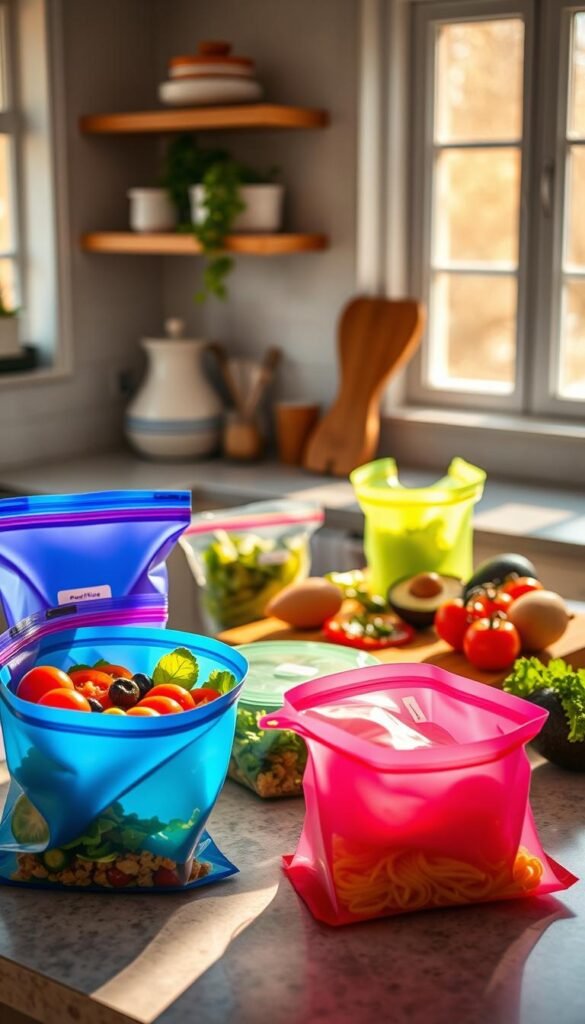
Silicone food bags make packing, storing, and reheating snacks easier each week. They cut single-use waste and reduce sticky, leaky lunch moments.
Why it helps
They seal better than thin zip bags and fit in small fridges without bulky containers. Many are freezer-safe and oven- or microwave-ready for quick reheats.
Weekly routine example
Pack snacks on Sunday. Rinse the bags after each use. Repeat the same set for the week. This saves money and shortens prep time each morning.
Price-value evaluation
Starter sets usually run $10–$25. The set is worth it when the seal stays tight after repeated use.
Pros / Cons
- Pros: strong seals, freezer-friendly, less clutter than tubs.
- Cons: slow to dry, some retain odors, cheap models can be hard to close.
Who should buy & what to avoid
Great for parents, meal preppers, and anyone trimming waste without changing routines.
Avoid listings that don’t state food-grade silicone, show weak seals, or have unclear cleaning instructions.
Alternatives
Use thicker reusable freezer zip bags a few times or inexpensive stackable containers you already own if budget is tight.
„A tight seal and clear food-grade labeling are the two things that make reusable bags worth the switch.“
Small Tool, Big Time Saver: Clip-On Strainer for Pasta and Veggies
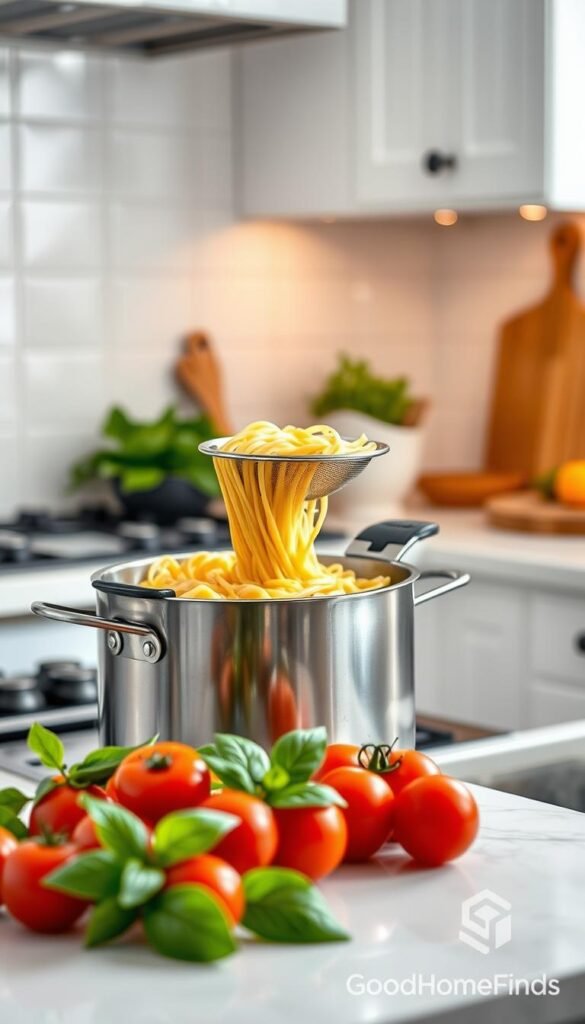
A clip-on strainer turns a full colander routine into a one-handed move that fits small kitchens. It saves space and cuts cleanup time without fancy features.
Why it’s useful
Drain straight from the pot. Clip the strainer to the rim, hold the lid, and pour. You avoid hauling a bulky colander and reduce drips across the counter.
Real-life: drain pasta or steamed veggies with one hand while keeping the pot steady with the other.
Who it’s for
Perfect for apartment cooks, dorms, RVs, and anyone who hates storing large strainers. It fits tight cabinets and small sinks.
What to avoid
- Avoid weak clips that slip off mid-pour.
- Skip plastic models not rated for high heat.
- Choose designs with wide drain holes so water evacuates fast.
„A compact strainer saves time and space—just check clip strength and heat resistance before you buy.“
| Feature | Why it matters | What to check |
|---|---|---|
| Clip strength | Prevents slips and spills | Firm metal or reinforced plastic clips |
| Material | Handles boiling water safely | Heat-safe silicone or stainless steel mesh |
| Drain speed | Reduces steam exposure and time | Large, well-spaced holes |
Safety tip: always drain away from your body and keep a steady grip to avoid steam burns.
Cleanup Shortcut: Dish Brush With Soap Dispenser That Reduces Sink Clutter
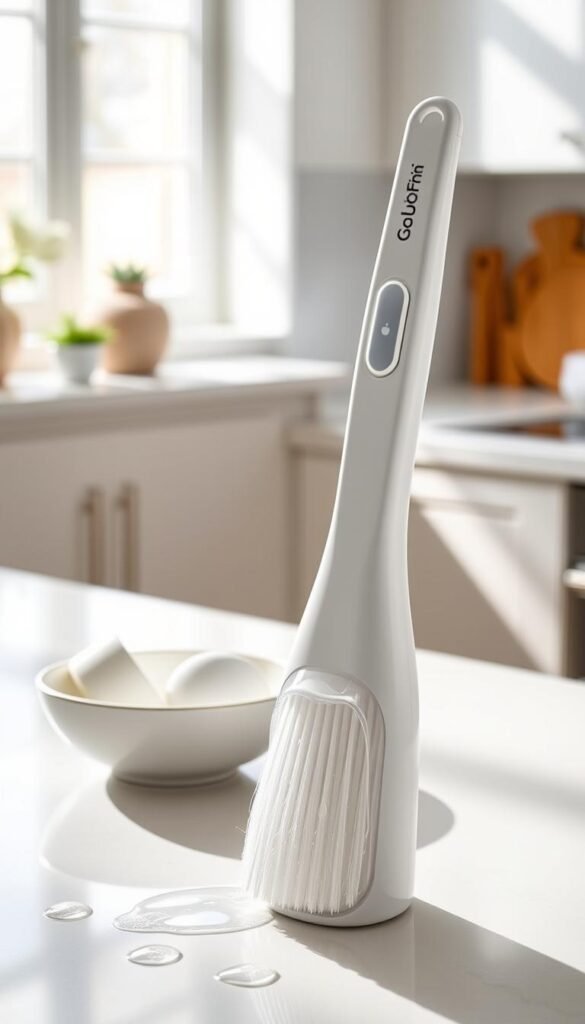
A single tool that holds soap and scrubs saves space and time at the sink. It combines two steps into one and removes a separate bottle from your counter. That small change keeps the area neater and cleanup faster.
Why it helps
One-handed soap control means you don’t over-pour. You reach, press, and scrub. The brush keeps soap off the rim and reduces messy drips.
Real-life example
After a late-night dinner, you can scrub the pan immediately. No hunting for a pump. No greasy fingerprints across the counter. It speeds the „clean as you go“ habit.
Price-value evaluation
Many reliable models sell for under $12. It’s worth it when the pump button doesn’t jam and the head stays secure after weeks of use.
Pros / Cons
- Pros: less clutter, faster spot-cleaning, better soap control.
- Cons: some units leak, trap gunk, or have pricey replacement heads.
Who it’s for
Busy households, small kitchens, renters, and anyone who wants quick cleanup without extra bottles.
What to avoid & Alternatives
Avoid models with weak seals, overly soft bristles, or hard-to-clean designs. Alternatives include a basic scrub brush plus a small refillable pump, or a sponge paired with a soap-dispensing tray.
„Less clutter at the sink leads to faster cleanup habits you actually keep.“
Nighttime Safety: Motion Sensor Night Lights for Hallways and Bathrooms
Small motion lights create a gentle path of light so you don’t stumble in the dark. They cut trip hazards and keep overheads off when you need brief illumination at night.

Why it’s useful
Hands-free lighting reduces fumbling and sudden brightness that wakes others. Motion sensors give a soft glow only when you pass, making movement calmer and safer.
Real-life example
At midnight you walk to the bathroom. A sensor lights the hall and the bathroom entrance. You get a clear route without flipping a harsh ceiling light.
Price-value evaluation
Multi-packs under $25 are common. That price lets you cover a hallway, bathroom, and stair landing without breaking the budget.
Pros / Cons
- Pros: renter-friendly, low power, automatic, easy to install.
- Cons: some sensors over-trigger, battery models need recharging, cheap units can be too dim.
Who it’s for
Families with kids, older adults, renters, and anyone with dark halls or stairs will benefit most.
What to avoid & Alternatives
Avoid lights that run hot, lack clear lumen ratings, or have reports of flicker and battery swelling.
If you want simpler options, try a plug-in night light without a sensor or a small rechargeable puck light with a tap control.
„Choose lights that give enough glow to see your steps but not so much that they blind you at night.“
| Feature | Why it matters | What to check |
|---|---|---|
| Brightness | Safe visibility without glare | Look for lumen specs (10–50 lm for halls) |
| Heat | Prevents burns and fire risk | LED bulbs, low-temp housings, good reviews |
| Battery type | Maintenance and long-term cost | Rechargeable Li-ion or AA/AAA replaceable cells |
Safety tip: pick LEDs with clear lumen numbers and choose battery styles you’ll actually maintain. For more budget-friendly solutions, see this quick home problem solver mix for related picks and combos.
Emergency Light Backup: Mini Lanterns for Power Outages and Car Glove Boxes
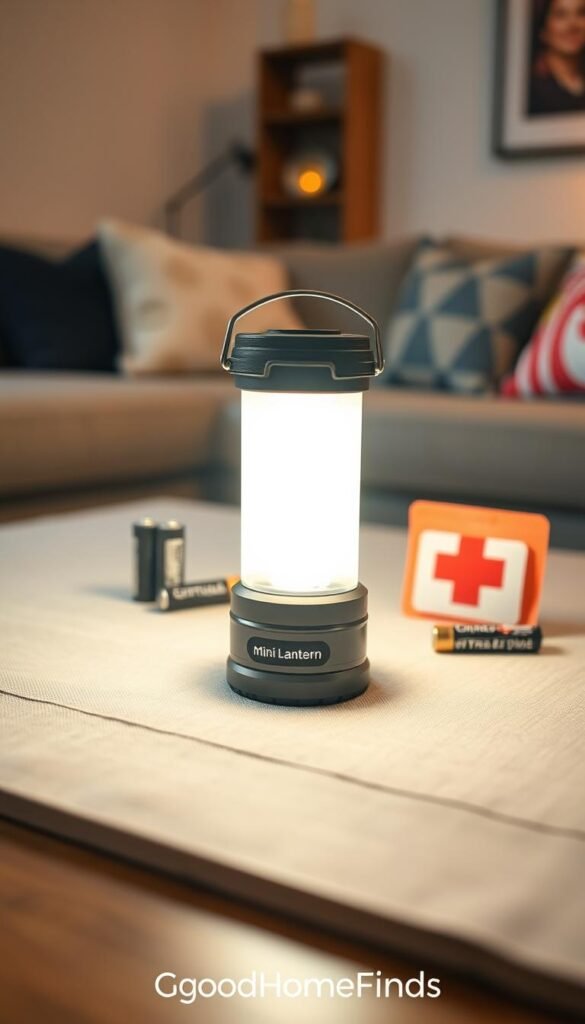
When the lights go out, a small lantern gives steadier room light than a flashlight and keeps both hands free. These units sit well on a table and spread light across a small space. That makes them better for reading, moving safely, or doing quick repairs.
Why it helps
Mini lanterns are easy to set down and provide 360° illumination. You can light a hallway or a small room without juggling a handheld torch. Multi-packs are affordable—example: a 2-pack Pogo Dual COB LED Mini Night Lantern listed at $9.99 on Amazon.
Who benefits
- Renters who want renter-friendly gear.
- Commuters who keep one in a glove box.
- Families and anyone who needs a simple backup lamp.
What to avoid
- Avoid dim “toy” lanterns with unclear lumen specs.
- Skip models with odd battery types or hard-to-find replacements.
- Watch out for unstable bases or fiddly on/off controls.
Quick quality note: prefer stable bases, easy switches, and output bright enough for walking or reading. Test units periodically and store batteries separately or check them to prevent leaks.
„A small lantern in a hallway closet and another in your car covers two common emergencies with minimal cost.“
Phone and Charging Find: Multi-Port USB Charger to End Outlet Fights
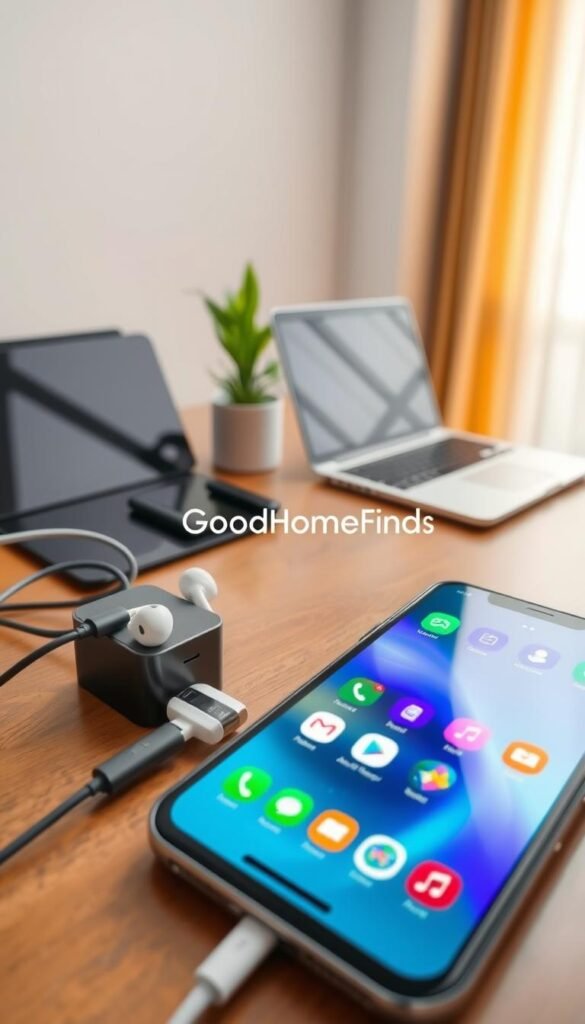
A compact multi-port USB charger can end the nightly scramble for outlets and cut clutter on your nightstand.
Why it’s useful
One brick replaces many. You free up wall space and reduce loose chargers. That means fewer trips to swap plugs and less risk of loose cables getting damaged.
Real-life example
Plug your phone, earbuds, and tablet into one unit and charge them overnight. You wake with all devices ready and one tidy charging station instead of three bulky blocks.
Price-value evaluation
Look for models in the $15–$25 range. They are worth it when each port provides steady current and the unit stays cool after several hours of charging.
Pros / Cons
- Pros: fewer wall plugs used, easier travel, one organized spot for family or roommates.
- Cons: cheap models can slow-charge devices, ports may fail, and some units run warm with multiple devices.
Who it’s for
Families, shared apartments, content creators, and anyone with a crowded nightstand will get the most benefit.
What to avoid
Avoid no-name chargers with inflated wattage claims or no safety markings. Skip units that lack clear specs or have mixed reviews about heat and longevity.
Alternatives and cheaper options
If you prefer simplicity, a dual-port charger or a quality power strip plus original brand bricks works fine. Power strips add flexibility but keep an eye on cord stress and heat.
Safety and quality considerations
Check for UL (or equivalent) listing and manufacturer heat-management notes. Use decent cables to avoid cable failure as the weak link. If a unit runs hot with three devices, it’s not worth the cheap price.
„Pick a model with clear wattage per port and a good safety listing—cheap convenience isn’t worth a burned cable or a fried device.“
| Feature | Why it matters | What to check |
|---|---|---|
| Safety certification | Reduces fire and electrical risk | UL, ETL, or FCC listing shown in specs |
| Per-port output | Ensures devices charge at expected speeds | Look for amps/watts per port (e.g., 18W USB-C) |
| Heat management | Prolongs life and keeps charging safe | Good ventilation, low operating temps in reviews |
| Cable quality | Prevents failure under load | Use short, certified cables; avoid flimsy freebies |
For more budget-friendly tech picks and combos that work well in small spaces, check these best Amazon picks under $25.
Cable Chaos Fix: Short Charging Cables and Velcro Ties for Nightstands
Short cables and a few tidy ties solve most bedside cable chaos with almost no effort. Swap long cords for 6–12 inch leads and anchor the spare slack with a Velcro tie. The result is less tangling and fewer cables dangling off your nightstand.

Why it’s useful
Short cables cut trips and accidental yanks. They stay put so you don’t wake up to a phone on the floor.
Real-life setup: keep a 6–12 inch cable for your phone on the nightstand and secure the loop with a soft Velcro tie. You’ll stop hunting for loose ends and save seconds every night.
Who benefits
- Small bedrooms and shared charging stations.
- Anyone tired of messy cords around the bed or desk.
- Content creators and commuters who need a tidy charging spot.
What to avoid
Avoid ultra-cheap cables with poor strain relief and flimsy connectors. Skip ties that leave sticky residue or snag fabrics.
Quick quality note: look for reinforced ends, good longevity reviews, and a soft tie material that won’t fray or stick to upholstery. Prioritize Amazon listings with clear specs and fast delivery.
„A short, anchored cable keeps your charging routine predictable and your nightstand neat.“
Smart Storage Under $25: Clear Bins for Fridge and Pantry
Clear storage bins turn fridge and pantry chaos into a quick visual inventory. You see what you have fast. That means fewer mystery jars and fewer impulse buys at the store.

Why it helps
Visibility is the core benefit. When items are visible, you use them before they spoil. You save time hunting and avoid duplicate purchases.
Real-life example
Keep yogurts in one clear bin and produce in another. When you open the fridge you instantly spot two tubs of yogurt and a nearly-empty bag of spinach.
That small check prevents an „oops“ grocery trip and cuts waste across the month.
Price-value evaluation
Starter sets of 3–6 clear bins often sell under $25. A single set is enough to organize snacks, sauces, or breakfast items without overhauling every shelf.
Pros / Cons
- Pros: faster meal prep, easier restocking, and lower spoilage.
- Cons: thin bins can crack if dropped, some warp in heat, and not all are dishwasher safe.
Who it’s for
This is ideal for busy households, renters, and small-space kitchens. It also helps anyone trying to cut down on food waste and stretch grocery budgets.
What to avoid
Avoid cheap plastics that smell, models without a clear BPA-free label, and bins that list no dishwasher guidance. Sizing matters—measure shelves before you buy.
Alternatives and cheaper options
Repurpose shoebox-sized containers you already own or use dollar-store bins for pantry-only items. These are fine for dry goods but skip them in the fridge unless rated for cold storage.
„Seeing what you own is the simplest way to stop buying duplicates and to cut food waste.“
| Feature | Why it matters | What to check |
|---|---|---|
| Material | Durability and food safety | Look for BPA-free, thick plastic or Tritan |
| Dishwasher-safe | Ease of cleaning | Top-rack safe or hand-wash guidance in specs |
| Size & fit | Actual usability in your fridge/pantry | Measure shelf depth and door clearance before buying |
Safety note: prioritize BPA-free labeling and decent crack resistance. Follow care instructions—some bins are hand-wash only.
For more budget-friendly organizer ideas that work well in small kitchens, check this collection of organizers under $25 to compare styles and sizes.
Closet and Laundry Helper: Mesh Wash Bags That Prevent “Ruined in the Washer” Moments
A low-cost mesh bag can turn a chaotic laundry load into predictable results.
Why it helps
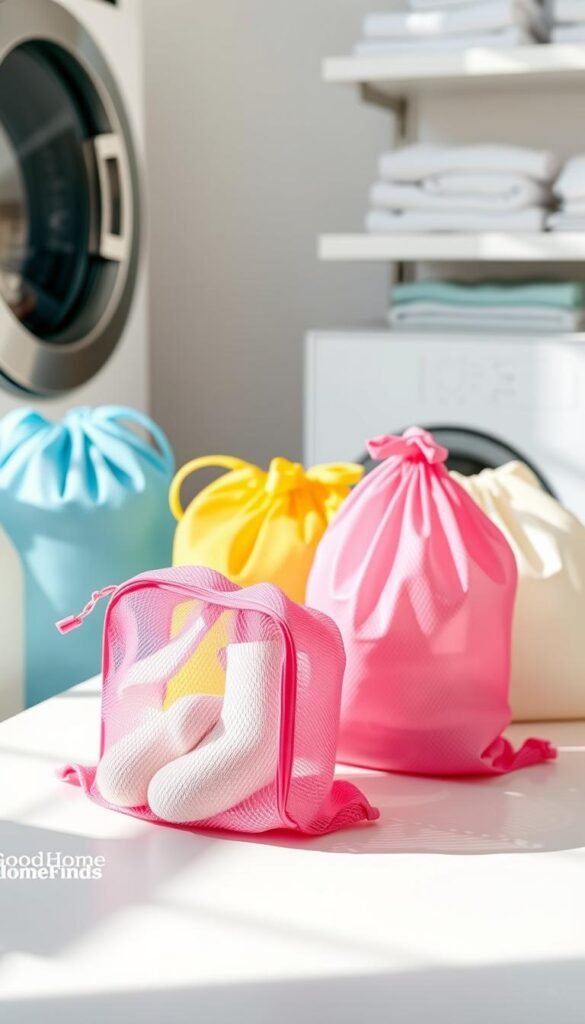
Mesh wash bags protect delicates, keep pairs together, and stop tiny items from vanishing into the drum or lint trap.
Use one for socks, bras, and reusable cleaning cloths. They prevent tangling and reduce snags so your pieces come out ready to dry and fold.
Who benefits
- Anyone washing delicates or lace.
- Households with kids and lots of small socks.
- People using shared or coin-op laundry rooms who want their items contained.
What to avoid
Avoid bags with weak zippers that pop open, rough zipper edges that snag fabric, or mesh so thin it tears quickly.
| Feature | Why it matters | What to check |
|---|---|---|
| Zipper cover | Prevents snags | Smooth zipper flap or sewn guard |
| Seams | Durability under stress | Reinforced stitching |
| Sizes | Avoid overstuffing | Set with small, medium, large bags |
„Pick an Amazon-friendly set with smooth zipper covers and reinforced seams—you’ll save time sorting and avoid ruined laundry.“
Comfort That Pays Off: Basic Draft Stopper for Doors and Windows
A simple draft stopper can turn a chilly room into a noticeably warmer spot without changing your thermostat. It blocks cold air at thresholds and reduces drafts from windows and doors. That makes the room feel more comfortable right away.

Why it’s useful
Blocks air leaks so you feel warmer with the same heater settings. Small gaps under doors and around windows cost you heat and cause your system to run more.
Real-life example
Your bedroom stays less chilly at night. You end up lowering heater runtime and see small monthly savings on energy. NerdWallet suggests plugging leaks as a practical way to reduce electric bills, and a draft stopper is one of the easiest fixes.
Price-value evaluation
Look for a renter-friendly model in the $10–$20 range. That price is worth it if the stopper fits the door snugly and stays put while you open and close the door.
Pros / Cons
- Pros: quick install, renter-friendly, immediate comfort, possible energy savings.
- Cons: poor fit removes benefit, fabric can trap pet hair, some adhesives damage paint.
Who it’s for
This is ideal if you live in an older home, a drafty apartment, or a rental with thin doors. It also helps anyone trimming utility spikes this month.
What to avoid
Avoid one-size-fits-none lengths, scratchy bottoms that can mark floors, and units that stop the door from closing safely. Skip products that require permanent glue in rentals.
Alternatives and cheaper options
If you need a zero-cost stopgap, roll a towel at the threshold. Other renter-friendly choices include removable weatherstripping tape or a foam door sweep for consistent gaps.
| Feature | Why it matters | What to check |
|---|---|---|
| Fit | Prevents slipping and keeps air sealed | Measure door width and gap before buying |
| Material | Durability and pet-hair resistance | Choose dense fabric or neoprene with washable cover |
| Attachment | Renter-safe vs. permanent | Look for removable Velcro or no-adhesive designs |
| Price | Value for seasonal use | $10–$20 models with good reviews are usually worth it |
„A simple draft stopper is a low-effort way to boost comfort and trim heater time.“
Health on a Budget: Upper-Arm Blood Pressure Monitor Deals Worth Watching
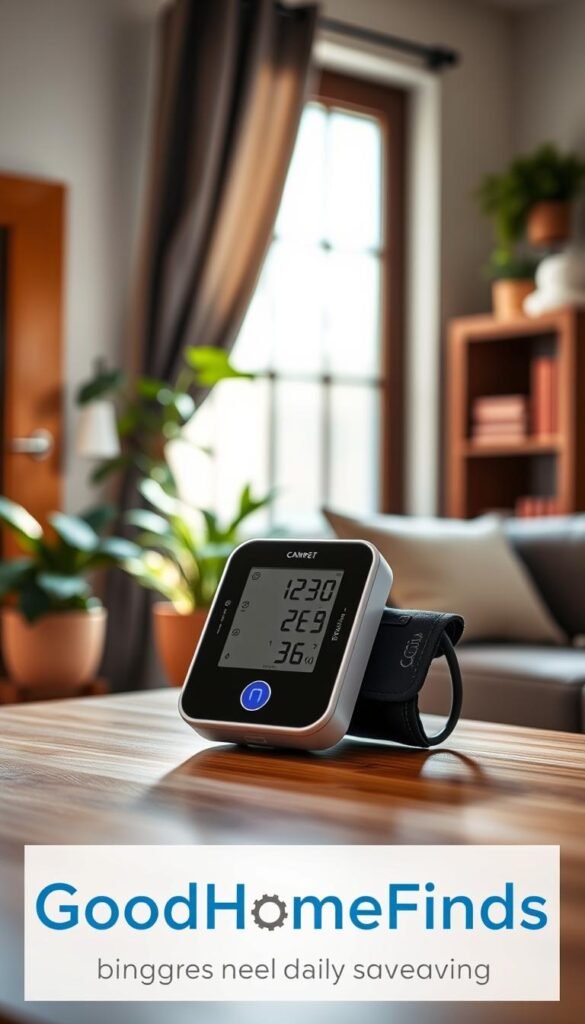
A compact upper-arm cuff turns sporadic readings into useful health patterns. You get repeatable numbers you can share with a clinician. That makes home tracking practical and actionable.
Why it’s useful
Upper-arm monitors are more accurate than most wrist units when used correctly. They help you spot trends without repeated pharmacy trips. That consistency gives you context for treatment and lifestyle changes.
Real-life example
You check in the morning and evening for a week. Instead of driving to a store to confirm one reading, you bring a short log to your appointment. That saves time and provides better data.
Price-value evaluation
Deals can push good models near $25. For example, the Greater Goods Smart Pro-Series was listed at $19.99. At that price, a solid upper-arm monitor is worth it for routine checks.
- Pros: convenience, quick readings, trend tracking.
- Cons: cuff sizing issues, user error can skew results, some apps complicate simple checks.
Who it’s for
Adults monitoring blood pressure, caregivers, and people who want reliable numbers to share with clinicians.
What to avoid
Avoid wrist-only devices for clinical accuracy, unclear cuff size ranges, and sellers with weak return policies.
| Quality Check | Why it matters | What to confirm |
|---|---|---|
| Cuff fit | Accuracy depends on correct size | Measure upper arm and match range |
| Calibration | Ensures long-term accuracy | Brand reputation and user reviews |
| Return policy | Easy replacement if defective | Clear returns and warranty |
„Pick a well-fitting cuff and a seller with easy returns—those two things protect your health data and your savings.“
For purchasing guidance and international shopping help, see this shopping guide.
Shop Smarter on Amazon: Price Tracking and Coupon Tools That Prevent Overpaying
Before you hit buy, a few checks can save serious cash on small, useful items. Use simple tools to confirm a real discount and avoid marketing tricks. This keeps your purchases practical and budget-friendly.

Why it’s useful
Price tracking helps you spot true savings instead of sale theater. You learn regular highs and lows so a “limited” price no longer forces a rushed buy.
Real-life example
You find a pot lid with a flashy 30% off tag. A quick history check shows the product drops to that price every few weeks. You wait a few days and grab it when an extra promo code appears.
Browser extensions that help
Camelizer (Camelcamelcamel) offers Amazon price history so you see past highs and lows. Honey auto-tests coupon codes across stores and can apply them for you.
What to avoid
- Avoid fake list prices that only exist to make discounts look bigger.
- Ignore countdown timers designed to rush you. Take a moment.
- Be wary of sellers with few sales or suspicious review patterns.
Cheaper manual options
If you prefer no extensions, try a wishlist or cart-and-wait approach. Leave items in your cart for a few days. Revisit the price with a clearer head; sellers sometimes send discounts later.
„Track prices over time and test coupons so your purchases are smart, not rushed.“
| Tool / Method | What it does | When to use it |
|---|---|---|
| Camelizer (price history) | Shows Amazon price highs, lows, and averages | Before buying claimed “limited” sales |
| Honey (coupon auto-apply) | Tests available coupon codes across retailers | When checking out across multiple stores |
| Wishlist / Cart-and-wait | Manual patience to spot real drops or seller coupons | If you prefer no extensions or want a low-tech approach |
For more automated tracking and alerts, consider this guide to Amazon price drop alerts and tracking. Use these methods to buy the practical items on this list when timing is actually good and the savings are real.
Conclusion
One modest change can cut repeated hassle and make routines smoother fast.
Focus on practical, affordable choices. Pick one small problem to solve first — messy storage, a dark hallway, or outlet fights. Make sure the item will get weekly use before you buy.
Check materials and safety basics: food-contact labels, electrical certifications, and battery/heat notes. Track prices for a few days and compare sellers so you buy at the right time this month.
Prioritize listings with clear specs, solid reviews, and easy returns. For transparency about links and recommendations, see this disclosure. Small, intentional buys pay off more than impulse purchases.