Quick, practical steps to make small spaces feel usable again without damage or drama. You’re not chasing perfection. You want visible, usable space you can maintain.
Renter-friendly promise: no drilling, no wall damage, just adhesive hooks, tension rods, over-the-door racks, and freestanding solutions that fit apartments.
Clearing clutter saves time and reduces stress during moves or life changes. Shift your question from “it’s not hurting anything” to “How is it helping?” That helps you let go faster and use your home better.
This guide gives a quick-start plan, simple decision tools for burnout, budget picks under $25 and under $50, safety notes, pros and cons, and apartment-size alternatives. You’ll get room-by-room tactics and multiple methods to match your energy.
Think practical. Focus on what you use, what fits, and what makes daily routines easier. And remember: donating can help, but the long-term win is bringing less in.
Key Takeaways
- Aim for usable space, not perfection.
- Use renter-friendly, no-drill tools and freestanding options.
- Quick wins matter when you’re stressed or moving.
- Budget tool choices cover under $25 and under $50 options.
- Ask “How is it helping?” to speed decisions.
- Focus on long-term buying habits for real sustainability.
Quick-start prep to declutter without getting overwhelmed
Pick one visible spot and give it a single sprint so you can move on. This keeps work short and shows instant wins.
Start now checklist: grab two boxes, a laundry basket, and a trash bag. Label each container—labeling beats perfect containers every time.
Timer plan
Set 10, 20, or 30 minutes depending on your energy. Work until the timer ends. Stop when it does so the task doesn’t swallow your day.
Staging and safety
Use one spot for keep, one for outgoing, and one box for items to bring home later. Put an old towel under piles to protect vinyl or wood floors.
- Keep walkways clear.
- Don’t stack unstable boxes.
- Avoid blocking doors or exits.
Momentum reset: after a sprint, drink water, take two minutes, then decide on another round.
| Step | Tool | Why it works |
|---|---|---|
| Pick area | Small surface (drawer, counter, entry) | Visible progress builds momentum |
| Sort | Boxes, laundry basket, trash bag | Four-box method without fancy gear |
| Protect | Old towel or blanket | Prevents floor scratches in rentals |
Fastest way to start: set a clear timer, pick a tiny area, and move for the full minutes you chose. For small laundry zones, see a useful guide on laundry room solutions.
How to declutter fast when decision fatigue hits
Breathe and pick one small surface to work on. Use a clear, repeatable method so your mind doesn’t stall. The goal is quick, renter-friendly progress that you can keep doing.

Use the four-box method
Set four containers: keep, trash, donate/sell, and bring home. Keep the boxes close so you stop walking room to room. This limits wandering and speeds outcomes.
Fast decision script
Pick up one item. Ask the four quick questions: Do I use this? Do I like this? Does it fit? Do I need this? Place the thing immediately based on your answer. No side quests.
Rescue rules and the 20/20 rule
If you hesitate more than ten seconds on low-value things, default to donate or trash depending on condition. Use the 20/20 rule: if an item is replaceable for under $20 and under 20 minutes, let it go.
Hide-it box strategy
Pack questionable items into an unmarked box, date it, and store it out of sight for one week. Keep only what you truly miss or have a longer need for. This breaks emotional ties without drama.
| Problem | Quick rule | Why it helps |
|---|---|---|
| Decision fatigue | 10-second default | Reduces mental load and stops stalling |
| “Just in case” items | 20/20 rule | Removes fear of loss for cheap, replaceable things |
| Sentimental hesitation | Hide-it box for a week | Tests real need without guilt |
Quick mindset tip: you’ve already paid in money and space. Stop paying with your time and stress. Ask, “How is this helping?” If it isn’t supporting daily life, it’s costing you.
Decluttering methods that match your time, energy, and space
Choose a method that fits the time you have and the energy you actually feel today. Match the approach to your room size and how long you can work in a day. Pick one method for a week so you don’t mix systems midstream.
Ski slope zones
What it is: Work corner-to-corner in a single room so piles never overrun your floor.
Best for: one-room overwhelm and low-energy days. Pro: keeps progress visible. Con: takes multiple short sessions.
Packing Party
What it is: Box most items, unpack only essentials, then reassess after about three weeks.
Best for: pre-move or full-home resets. Pro: forces clear decisions. Con: can feel extreme; plan storage and labels.
Minimalism Game
What it is: Remove 1 item on day 1, 2 items on day 2, and so on. Builds daily momentum without big marathons.
Best for: steady daily habit and small-space routines. Pro: low barrier. Con: requires daily follow-through.
Category-first (KonMari-style)
Sort by category and save sentimental items for last so you build confidence first.
Maintenance: one in, one out
Adopt a simple rule: when you bring something new in, send one thing out. This keeps your space from quietly refilling.
Quick pick: If you need tools, try budget-friendly organizers from this organizer finds list to support whatever course you choose.
Room-by-room strategy that keeps you from “Tinkerbell-ing” around your home
Finish one clear zone fully, then move on — this stops the constant shuffle between places.

Finish a room before hopping to another
Tinkerbell-ing is when you pick up an item and carry it into another room, then lose focus. That habit slows the whole process. Use a single bring home box to hold items that belong elsewhere. Return them only after the current room reaches a usable baseline.
Easy-first sequence
Work in this order for clear wins:
- Trash
- Recycling
- Dishes and cups
- Obvious duplicates
- Papers (save for later)
- Sentimental items last
Paper plan and renter-friendly pause
Handle papers when you are rested and hydrated. Set a separate short session. Limit scope to one folder or one pile at a time.
If you must pause, consolidate items into labeled, stackable bins. Keep them out of walkways and don’t block closets or exits.
| Step | What to aim for | Why it works |
|---|---|---|
| Finish one room | Clear surfaces & walkways | Prevents mess spread |
| Use bring-home box | Hold items for other places | Keeps focus in the room |
| Paper session | One pile, water nearby | Reduces fatigue and bad choices |
Progress beats perfect. Use this simple rule with shared spaces: agree on one staging place so family or roommates can avoid tripping over sorting piles.
Kitchen: small-space, no-drill products that clear counters and drawers
Smart, renter-friendly solutions turn crowded drawers and counters into calm zones.
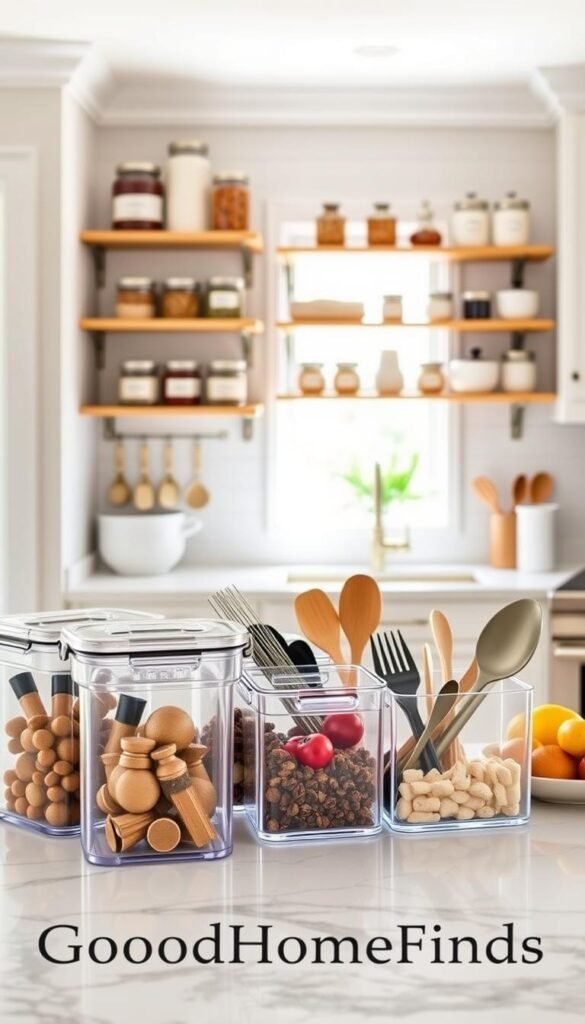
Common pain points: duplicate utensils, overflow gadgets, and flat-surface piles that steal usable space. These things slow cooking and make decisions harder.
Under $25 picks
Adjustable drawer dividers to tame utensil chaos. Shelf risers double cabinet height so plates and mugs stack safely. Label tape makes things visible at a glance. Non-slip liners stop shifting and protect cabinet surfaces.
Under $50 upgrades
Over-the-cabinet hooks for towels or mugs keep counters clear. A tension rod under the sink creates a hanging zone for spray bottles. Stackable bins build temporary storage without drilling.
Pros / cons you can use
- Bins hide visual clutter but need labels to avoid mystery boxes.
- Risers boost visibility yet can collect crumbs; wipe weekly.
- Drawer organizers give the quickest daily access but must match drawer size.
Best for and apartment alternatives
Roommates benefit from labeled shared zones. Tiny kitchens win with vertical risers and one bin per category. Frequent cooks should keep daily tools in the most reachable drawer.
In studios, create mini-zones (coffee, cooking, cleaning). Larger kitchens can use category zones for baking, meal prep, and pantry overflow.
| Product | Why it helps | Best use |
|---|---|---|
| Adjustable drawer dividers | Organize utensils; reduce rummaging | Small drawers, shared kitchens |
| Shelf risers | Double vertical space; improve visibility | Cabinets with tall gaps |
| Over-cabinet hooks & tension rod | Clear counters; create hanging zones | Under-sink and cabinet doors |
| Stackable bins | Category bins without drilling | Pantry shelves or open cabinets |
Safety & durability: pick non-slip bases, avoid overloading hooks, and store heavy items low. This reduces cabinet wear and prevents accidents.
Easy maintenance routine: nightly 2–5 minute reset — put away dishes, wipe counters, and return only daily-use items. Add a weekly sweep for expired items and loose things to stop slow buildup.
For more renter-friendly finds that fit these tips, see this best organization finds.
Bathroom: renter-friendly clutter control for toiletries, towels, and under-sink chaos
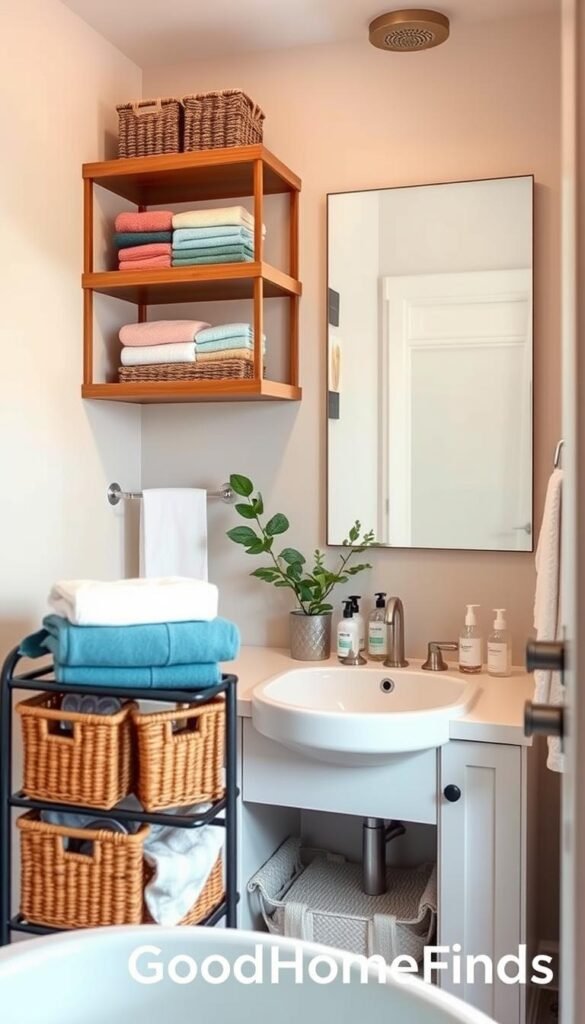
Start by naming the real bathroom problems. Too many toiletries, no staging spot for daily items, and under-sink chaos cause more time wasted than actual mess. Pick one shelf or the under-sink area to fix first.
No-drill vertical solutions
No-drill vertical storage saves wall paint and works in rentals. Use an over-the-door organizer for hair tools and extras. Add a tension-rod caddy under the sink to create hanging zones without damage.
Under $25 essentials
Group daily-use items into small bins to cut search time. A compact turntable holds your morning picks. Keep a microfiber cloth set nearby for quick wipes and to stop mildew before it starts.
Under $50 upgrades
Stackable drawers and lidded bins hide backups and calm counters. These pieces give you clear homes for skincare and makeup overflow so visible surfaces stay tidy.
Safety and durability
Look for moisture-resistant materials and non-slip bases. Leave airflow space in bins to reduce mildew. Wipe wet shelves weekly and never store damp towels in closed containers.
Pros / cons and best-for
- Open caddies: faster morning routines but look busier.
- Closed bins: slower access but give visual calm.
- Best for: shared bathrooms (label bins), skincare collectors (turntable + backup bin), families (separate kid/adult zones).
| Problem | Solution | Why it helps |
|---|---|---|
| Too many toiletries | Small bins + labels | Reduces decisions and saves time |
| Under-sink mess | Tension-rod caddy | Adds vertical space without drilling |
| Wet surfaces | Microfiber cloths + airflow | Prevents mildew and extends product life |
Quick tip: create simple homes for daily things so mornings run smoother. For comparisons on storage choices that fit renters, see these storage choices.
Closets and clothes: fast wardrobe decisions plus space-saving storage that won’t damage walls
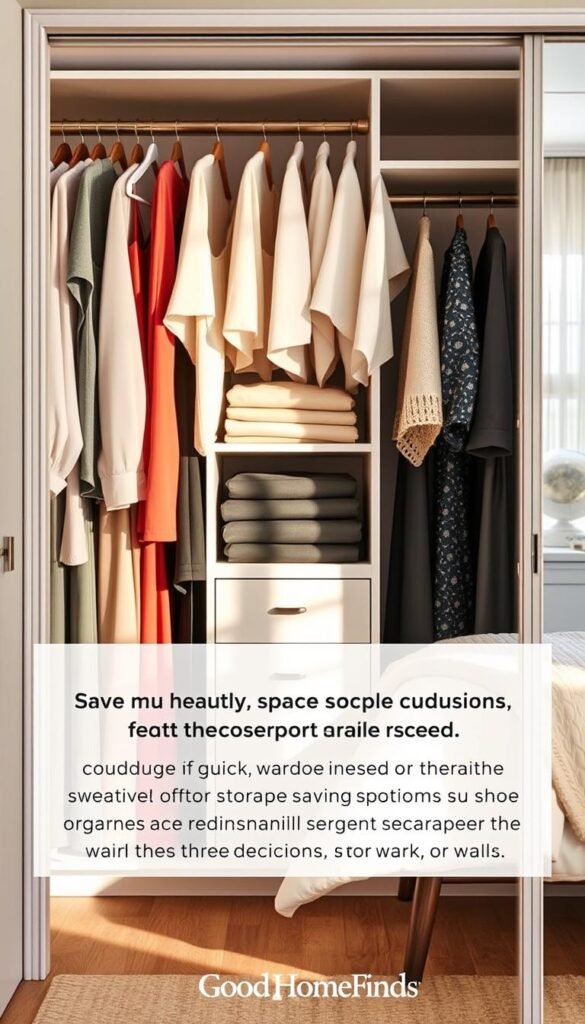
Make your closet work for daily life by using fit as the main filter for every piece you own. Ask the single question: Does it fit now, or is it within a realistic size up or down? If not, it usually costs more space than it’s worth.
Fast clothing rules
Keep only what you wear or can wear soon. The one-touch rule on laundry day helps: put garments away into their defined home immediately so piles don’t return.
Under $25 renter-friendly picks
- Slim hangers to gain rail space quickly.
- Shelf dividers to stop stacks from toppling.
- Hanging organizers for shoes or sweaters.
- Sock and underwear trays to end drawer chaos.
Under $50 upgrades
Rolling under-bed bins hide seasonal clothes and save closet room. Collapsible lidded boxes keep things dust-free and pack up fast for moves.
Pros / cons
| Storage type | Pros | Cons |
|---|---|---|
| Under-bed bins | Maximizes floor space; hidden | Requires pulling out; can collect dust |
| Hanging storage | Visible and quick access | Can crowd a small closet |
| Collapsible boxes | Great for movers; stackable | Less breathable for long-term garments |
Best for
Capsule-curious renters: slim hangers + dividers to keep fewer, better clothes visible.
Small closets: hanging organizers and trays to define home for items and stop morning rummage.
Frequent movers: collapsible boxes and rolling bins that pack and unpack quickly.
Optional hide-it test: place borderline clothes into a dated box for one week. If you don’t miss them, let them go or pass them on.
Entryway: stop the daily pile-up with drop zones that work in rentals
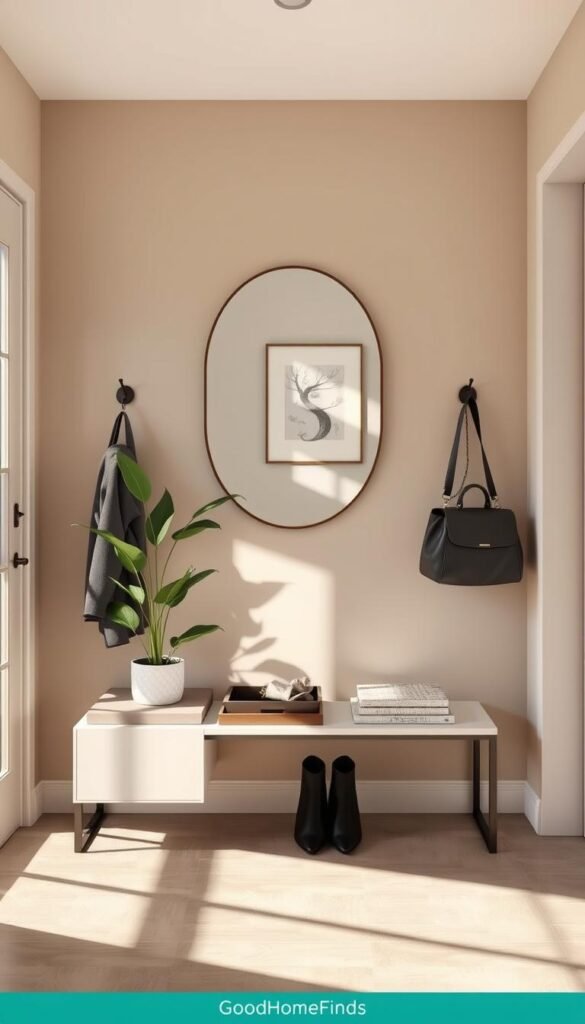
The spot by your front door sets the tone for every room that follows—make it simple and reliable. Treat this place as the home’s filter so clutter has less chance to spread.
Budget setup under $25
Quick picks: adhesive hooks for keys and bags, a small tray for mail and loose change, and a shoe mat to define the drop zone in a small space.
Upgrades under $50
Choose a slim shoe rack for daily pairs, an over-the-door rack if floor space is tight, or a freestanding coat stand for strict rental rules.
Pros and cons
- Hooks: fastest, low footprint; limited capacity.
- Racks: hold more shoes; take floor space.
- Baskets: hide items; risk becoming a misc trap.
- Drawer: add a divider tray so small items don’t become a daily mess.
Two-minute front door reset
Hang keys and bag. Sort mail into action/recycle. Line up shoes and clear the floor. Do this once each day to save time and prevent piles.
| Solution | Best for | Why it works |
|---|---|---|
| Adhesive hooks | Small apartments, renters | Zero-drill, quick access for keys and bags |
| Slim shoe rack | Couples or daily-use shoes | Organizes pairs without big footprint |
| Over-the-door rack / coat stand | Studios with limited floor space | Creates vertical storage and defines the drop zone |
Donation, recycling, and “get it out today” strategies that keep momentum
Make removal the visible finish line: items out the door equals real progress. Leaving bags by the door steals space and kills momentum. Finish a sorting session by moving things so the work feels done.

When you’re frozen: box it and go
Seal the box, put it in your car or by the exit, and drop it at a local donation center today. If pickup is available, schedule it during errands. This simple script removes doubt and frees your space.
“Take my stuff” swap with friends
Invite a few people over or set a short window in a group chat. Let friends claim useful things first. It’s faster than listing online and often rehomes items you’d otherwise keep.
Sell vs. donate: protect your time
Sell only higher-value items (roughly >$30). Price around 20% of original to move faster. Bundle low-value things or donate them instead of spending hours chasing small returns.
Recycling and long-term impact
Keep a recycling bag during sorting so recyclable things don’t end up in trash. Be honest: not every donation avoids landfill. The best long-term way to reduce waste is to buy less and buy with intent.
| Action | When to use | Why it works |
|---|---|---|
| Drive to donation center | If you’re stalled | Removes items immediately and restores space |
| Take-my-stuff swap | Many small items | Quick rehoming with low effort |
| Sell online | Valuable items | Earns cash but costs time |
Renter-friendly tip: tie drop-offs to errands so removal is part of your week, not a separate project. That keeps momentum and keeps your home usable.
Simple comparison tables to choose the right tools for your apartment size
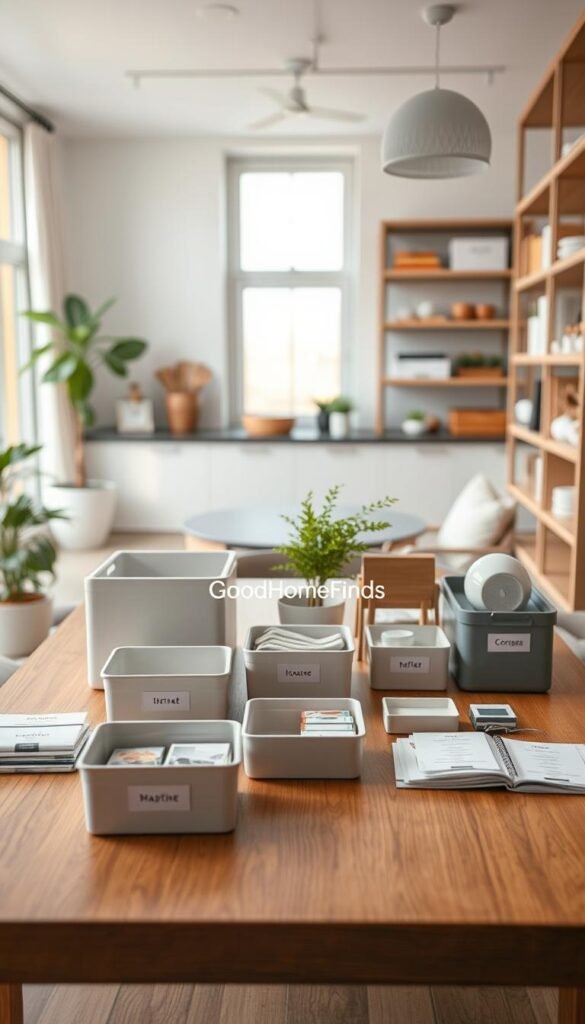
Match one practical process with one storage solution and you’ll see steady improvement in small spaces. Use these quick tables to pick renter-friendly tools that fit your energy, schedule, and walls.
Method comparison
| Method | Best for | Time needed | Energy level | Mess level / burnout risk |
|---|---|---|---|---|
| Four-box | Quick sorting | 30–90 min | Medium | Low mess / low burnout |
| Timer sprints | Busy schedules | 10 / 20 / 30 min | Low | Low mess / very low burnout |
| Packing Party | Pre-move reset | Several hours | High | High mess / medium burnout |
| Minimalism Game | Daily habit | 5–15 min/day | Low | Low mess / low burnout |
Storage solution comparison
| Solution | Pros | Cons | Setup speed | Cleaning & visibility |
|---|---|---|---|---|
| Bins (lidded) | Calm look, stackable | Need labels | Medium | Low dust / low visibility |
| Baskets (open) | Quick access, stylish | Shows clutter | Fast | Easy wipe / high visibility |
| Drawer dividers | Fast daily use, tidy | Must match drawer size | Medium | Hidden / low dust |
| Over-the-door | Vertical space, renter-friendly | Weight limits | Fast | Visible / medium dust |
Small vs larger apartment priorities
| Size | Top priorities | Quick wins |
|---|---|---|
| Small apartment | Vertical storage, drop zones, fewer duplicates | Over-the-door racks, slim shelves, one in/one out |
| Larger apartment | Category zoning, maintenance routine, clear homes | Dedicated bins per room, drawer systems, labeling |
Practical notes: open baskets speed daily sorting but show mess. Lidded bins look calmer but need labels to avoid mystery boxes. Drawer solutions give the best daily access for utensils and clothes.
„Choose one method and one storage approach per room to keep the process simple and sustainable.“
Safety & durability: pick non-slip bases, moisture-resistant materials for bathrooms, and respect weight limits on over-the-door organizers.
For closet-specific gear that fits renters, check these closet space solutions.
Quick pick: adopt one decluttering method and one storage style per room. That single rule makes progress repeatable and keeps your space usable.
Conclusion
Small, steady actions make a big difference in how your home feels each day.
Start with one small area today. Set a timer for a short sprint and remove one bag or box of items so you feel immediate relief.
Keep a light daily reset. Spend five minutes each day returning things to their homes and clearing one surface. This saves you time later and protects progress.
If you stall, use the four-box method and ask the quick questions: use / like / fit / need. Put borderline items into a dated hide-it box and move on.
Work by category when emotion is high. Books and paper are good middle steps before sentimental things. For a couple sharing space, agree on one small zone at a time.
In the next two weeks, finish one room at a time, schedule one donation drop-off, and do one weekly sweep for trash or expired items.
Final note: you’re creating space for more life — more calm, more time, and a home that works for you.