Practical, renter-friendly devices that cut wasted power without remodeling. This roundup focuses on small, affordable tech you can add to an apartment or small home to reduce waste and improve comfort.
What we mean by these products: plug-in timers, smart plugs that stop phantom draw, better bulbs, and small heating/cooling helpers. Most picks are easy to install and fit tight spaces.
Heating and cooling often make up about a third of bills. Standby electronics and poor lighting habits are other big sources of waste. One device won’t cut your bill in half, but a few practical upgrades add up.
How we evaluate each item: potential for real reductions, safety risks (heat, overload), setup time, small-space fit, and simple maintenance. If you want quick, real wins for renters or busy households, start here and learn what’s worth paying for.
Key Takeaways
- Focus on plugs, lighting, and heating/cooling helpers for real impact.
- Look for clear safety marks and simple setup in small spaces.
- Stacking a few devices gives the best results; no single gadget is a silver bullet.
- Prioritize units that monitor power and show real use to save money.
- For budget options and tested picks, see this short roundup at best budget home gadgets.
Real benefits: What energy-saving gadgets can do in a small US home
You don’t need a full remodel to reduce what you pay for power each month.
Practical upgrades target always-on draw and big-load systems. Smart plugs and advanced strips stop phantom draw from TVs, streaming boxes, consoles, and chargers. That alone trims waste you likely don’t notice.
Heating and cooling usually make up the largest share of bills. A smart thermostat that adjusts temps by schedule or presence often delivers faster, bigger savings than a dozen plug-in items.

„Focus on devices that run the most hours first, then automate the small stuff.“
When it matters and when it doesn’t
- You get real wins from automating fans, space heaters, or HVAC schedules.
- Swapping a rarely used lamp to a smart bulb is a tiny win.
- Control high-draw devices to reduce overheated outlets in older apartments.
| Problem | Typical fix | Expected impact | When to pick |
|---|---|---|---|
| Phantom draw | Smart plug / advanced strip | Small to medium | Devices left on 24/7 |
| HVAC waste | Smart thermostat | Medium to large | Heating cooling is dominant |
| Overloaded outlets | Distribute loads, use rated plugs | Safety improvement | Older apartments |
Simple rule: focus first on items that run the most hours or draw the most power. Then automate the forgotten stuff. For tested, renter-friendly picks, see this short roundup at home problem solver mix.
Who needs this: The best energy-saving upgrades by lifestyle and space
Small choices in plugs and controls can change how your home runs day to day. Start by matching fixes to your routine and room size.
Apartment renters who need plug-in, no-drill options
Pick slim smart plugs, advanced power strips, and LED bulbs. They require no wiring or drilling and keep outlets usable. Use slim plugs behind couches or beds to avoid blocked sockets.
Busy households that forget lights and small appliances
Set simple schedules for lights, coffee makers, and bathroom fans. Automations are „set and forget“ in a good way. Don’t put high-draw heaters on basic plugs.

Work-from-home setups
Group monitors, chargers, and printers on an advanced strip to cut phantom draw. That reduces clutter and makes shutdown quick between calls.
Hot or cold climates
In extreme climates, a smart thermostat with remote sensors (Ecobee works with many systems) gives the biggest returns. Combine room sensors with ceiling fan automations to lower HVAC runtime.
- Best match: renters → plug-in upgrades; WFH → advanced strips; climate-driven homes → thermostat + sensors.
- Tip: check noise and size before you buy to keep small spaces livable.
For a renter-focused comparison and quick picks, see our renter setup comparison.
Energy saving gadgets roundup: Best options for plugs, lighting, heating, and daily electronics
This roundup lists practical plug, lighting, and thermostat options that work well in small homes.

Smart plugs and outlets
What they do: let you schedule lamps, fans, and chargers. Use the TP‑Link Kasa Smart Wi‑Fi Plug Slim EP25 for indoor tracking.
Pros: instant control, usage reporting. Cons: can block a second outlet; check power ratings.
Advanced power strips
These cut phantom draw from monitors, speakers, and docks. They are an easy fix for work-from-home setups.
LED bulbs and smart lighting
Replace old bulbs with LED first. WiZ 60W A19 Color LED fits apartments and adds scheduling without fuss.
Smart dimmers, motion sensors, and thermostats
Use the TP‑Link Kasa HS220 dimmer for whole-room light control. Motion sensors work well in halls and bathrooms.
For heating and cooling, the Ecobee Smart Thermostat Enhanced with remote sensors fixes hot or cold rooms faster than many plug-in items.
| Category | Example | Best for | Setup |
|---|---|---|---|
| Smart plug (indoor) | TP‑Link Kasa EP25 | Lamps, chargers | Minutes |
| Outdoor plug | TP‑Link Kasa EP40 | Porch lights | Minutes |
| Smart dimmer | TP‑Link HS220 | Whole-room lights | Wiring required |
| Thermostat | Ecobee Smart Thermostat | Heating/cooling control | Moderate |
Premium and backup notes: Span Smart Panel and Savant Power System offer circuit-level control for deeper work. For outages, consider BioLite Core or Zero Breeze Mark 3 for short-term fridge or cooling support.
„Start with plugs and bulbs. Add room control only where it changes comfort or run-time.“
Budget vs premium comparisons: What’s worth paying for (and what isn’t)
You can get real monthly wins without buying the most expensive system on the shelf.
Smart plugs come in two flavors: basic schedule-only models and versions that monitor use. Buy a monitoring plug like the TP‑Link Kasa EP25 if you will check data and hunt down high-draw devices in a WFH setup.
Practical rule: pay extra for monitoring only when you act on the reports. Otherwise choose a reliable basic plug for simple on/off schedules.

Lighting: bulbs vs smart controls
Standard LED bulbs are the best budget win for most kitchens and living areas. They cut runtime and costs without fuss.
Smart color bulbs and dimmers add flexibility and mood control. Use a smart dimmer (TP‑Link HS220) when multiple fixtures share a room. If you only have one lamp, a plain LED usually gives more value.
Heating and cooling
Entry-level smart thermostats lower bills with schedules and geofencing. Add remote sensors (Ecobee) when rooms run uneven so you don’t overheat the whole apartment to fix one cold corner.
Premium systems and who they fit
Span, Savant, and AI platforms like EcoFlow fit homeowners with solar, batteries, or a need for circuit-level control. They offer deep visibility and automation but carry higher cost and install time.
| Category | Budget pick | Premium pick | Best for |
|---|---|---|---|
| Smart plugs | Schedule-only plug | TP‑Link Kasa EP25 (monitoring) | WFH setups or device troubleshooting |
| Lighting | Standard LED bulb | Smart dimmer (TP‑Link HS220) | Kitchens, living rooms, multi-fixture rooms |
| Thermostat | Entry smart thermostat | Ecobee with remote sensors | Uneven apartments, frequent home use |
| Whole-house control | None (not recommended for renters) | Span / Savant / AI systems | Homeowners with solar or battery systems |
„Pay for features that change behavior or comfort. Skip gear that only looks smart.“
For practical tips on lowering your heating bill, see lower your heating bill. For appliance purchase advice, check how to save money on new. For a cheap vs premium comparison, see cheap vs premium storage.
Setup time: How long these devices take to install (and how hard it really is)
Some upgrades take two minutes; others need a licensed electrician and a weekend. Here is a realistic run-down so you know what to expect before you buy.
Quick wins in minutes
Smart plugs, advanced strips, and LED bulbs often need only a plug and an app. Install one, set a schedule like off at 11 pm, and you start to see results in days.
Measure outlet spacing first and pick slim plugs for tight spots behind couches.
Moderate installs
Smart thermostats and fan controls usually take more time. You may turn off breakers, swap wires, and confirm compatibility with your HVAC. Some fan controls, like Lutron Caséta, may need a bridge for full app and voice control.
If you’re unsure, get help. Mistakes can trip breakers or damage wiring.
Long installs
Smart panels and whole-home systems (Span, Savant) are major projects. They require an electrician, permits, and planning. These are for homeowners, not quick weekend installs.
Compatibility checklist & maintenance
- Check Wi‑Fi strength in remote rooms; consider a hub like Homie Pro Mini for weak spots.
- Confirm voice assistant support: Alexa, Google, Apple.
- Older HVAC may need an adapter for a smart thermostat (check Ecobee compatibility).
- Plan occasional app/firmware updates, sensor battery swaps, and schedule checks after outages.
„Real gains come from matching the right device to the room and being realistic about the time it takes.“

| Install type | Typical time | Difficulty | Best for |
|---|---|---|---|
| Smart plug / LED bulb | 2–10 minutes | Easy | Renters, small rooms |
| Smart thermostat / fan switch | 1–3 hours | Moderate | Homes with compatible HVAC |
| Smart panel / whole-home | Days to weeks | High (pro required) | Homeowners, solar/battery systems |
For tested product guidance and timeline examples, see this smart-home device guide.
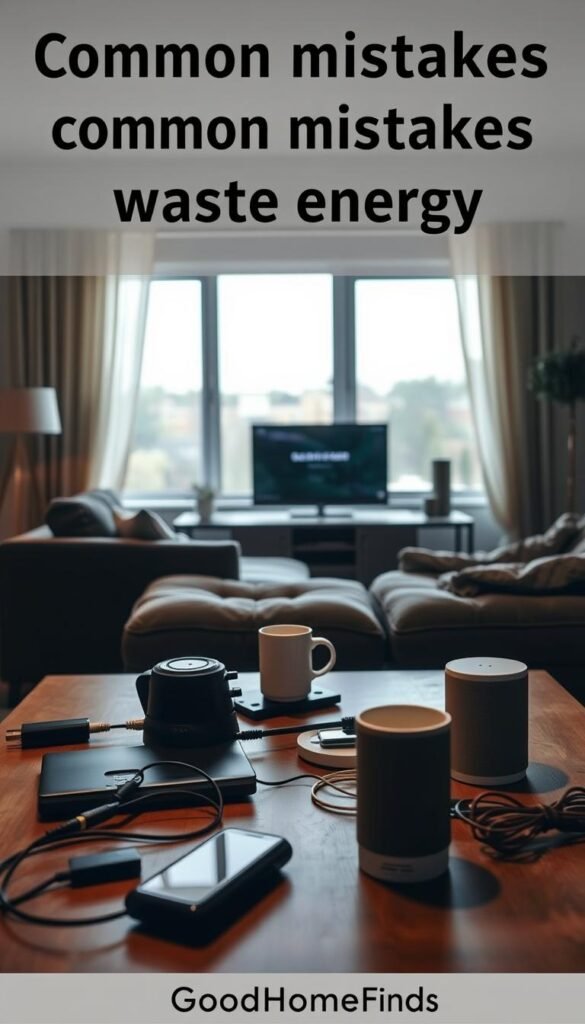
Common mistakes that waste energy (even with smart devices)
Even well‑chosen tech fails when it doesn’t fit your room or routine. Small apartments expose the flaws fast: bulky plugs block sockets, devices won’t sit behind a couch, or you end up using unsafe adapters.
Space and fit: pick slim plugs and measure outlet spacing. If a plug blocks a second socket, you may stop using it, and that erases the benefit.
Noise and power: anything with a fan—portable AC, dehumidifier, or purifier—can be too loud for a bedroom. If noise annoys you, you’ll run it differently and your usage may rise.
Automation and ratings
Over-automating creates routines that run when you don’t need them. Start with one simple schedule per device.
Safety: don’t put high-draw appliances on basic smart plugs unless the plug lists the rating. Overheating and trips are real risks.
Phantom loads and maintenance
Not every charger is worth controlling. Focus on full desk setups and entertainment centers where monitoring reveals real energy use.
Skips in upkeep break automations. Dirty filters, dead sensors, or outdated apps let schedules fail silently.
„Fewer, well-chosen devices that you check monthly beat a complex setup you ignore.“
- Do a 5‑minute monthly check: review schedules, glance at usage, confirm large loads are truly off.
- For common household habits that waste power and how to fix them, see this quick guide.
- For common mistakes when choosing devices, read this practical checklist.
Conclusion
Target repeatable waste and you’ll see real results without fuss.
Start with the big, repeatable draws: heating and cooling habits, always-on electronics, and lights you forget. A simple starter kit works well in small spaces.
Starter path: one monitoring smart plug for the mystery draw, an advanced power strip for your desk or TV, and LED bulbs where lights stay on longest.
Check ratings, avoid overloading outlets, and don’t put high-draw appliances on basic plugs. Do quick monthly checks so schedules and sensors keep working.
Homeowners can add a WaterSense smart sprinkler controller to save about 7,600 gallons a year; models like the Rachio 3 use local weather to skip needless runs. For more on whether these tools work, see do energy-saving devices really work.
The best energy saving gadgets are the ones you use every day, fit your space, and cut bills without extra hassle.