Make a simple, renter-friendly entry drop zone that works in tiny spaces. Think of it as the first safe place your everyday items land when you walk in. It is not a mudroom. It is a practical spot for keys, mail, water bottles, and quick returns.
You can build a working setup without drilling. Use adhesive hooks, magnetic bars, over-door racks, or a slim rolling cart. I’ll show quick fixes under $25 and stronger upgrades under $50, plus renter-friendly alternatives when you can’t mount things.
Done looks like five core elements: a small-item landing spot, a hanging solution, a shoe area, paper control, and quick-clean supplies. The best system is the one you actually use daily. It should cut clutter, not create a new pile.
Safety matters. You’ll get tips on weight limits, tip-over risk, and kid/pet placement before you buy or mount anything. Practical, easy, and worth it for real life.
Key Takeaways
- Define the first „safe place“ for your things as an entry drop zone.
- Build a no-drill setup in small spaces using renter-friendly tools.
- Five core elements make a functional system you will use daily.
- Follow a budget ladder: options under $25 and under $50.
- Simple maintenance keeps the area useful: quick nightly reset and a weekly paper sweep.
- Check safety: weight limits and stable casters matter for durability.
- For more small-space storage ideas, see small kitchen solutions.
What a Drop Zone Is and Why It Works for Everyday Life
Think of this as the one place your hands empty into the same way every day. A practical, renter-friendly spot stops scattered things from taking over small spaces.
A simple definition
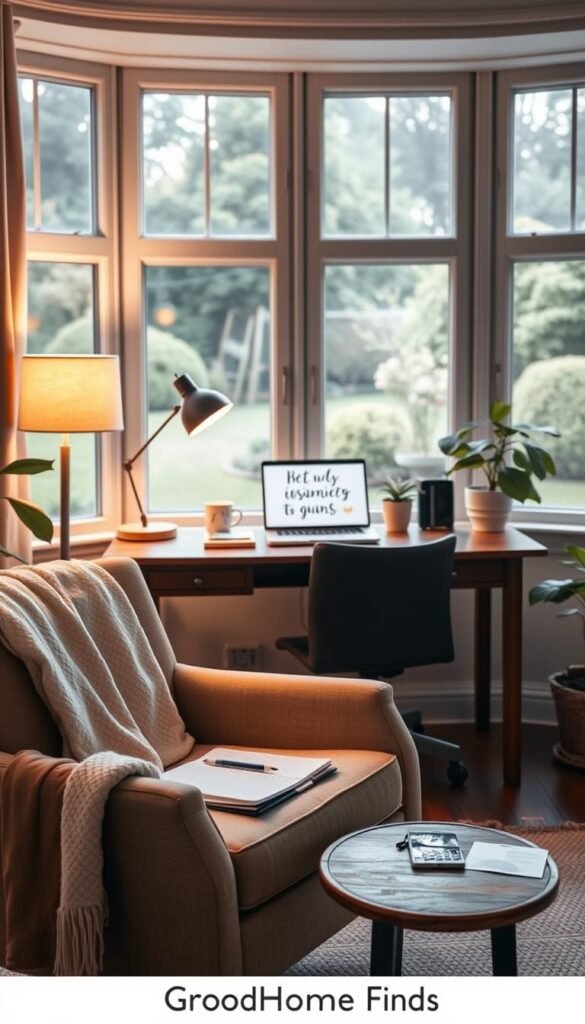
A drop zone is a safe, efficient place to set down items fast. Safe means nothing rolls, leaks, or gets stepped on. Efficient means you can grab essentials quickly when you leave.
Common items
- Keys and mail that otherwise disappear or spread.
- Shoes and bags that pile and block walkways.
- Water bottles, library returns, and must-mail-today papers.
How it reduces clutter hot spots
One reliable landing area beats several small piles across your home. You build the system around what you actually carry in and out, not a staged photo.
Quick test: if you can grab what you need in 30 seconds on the way out, the system works.
For more practical setups and renter-friendly ideas, see best entryway storage solutions.
| Common Problem | Why It Happens | Simple Fix |
|---|---|---|
| Missing keys | No consistent place | Small hook or bowl at the landing spot |
| Scattered mail | Paper left on counters | Wall pocket or small basket for action items |
| Shoe piles | No designated floor area | Slim tray or small rack by the landing |
Drop Zone vs. Mudroom: What’s the Difference?
What makes a system stick is a clear place to put things as soon as you walk in. A mudroom is literally a room with hooks, benches, and storage. A drop zone is a behavior: the single spot you use every day.
How a mudroom can still fail without a true spot
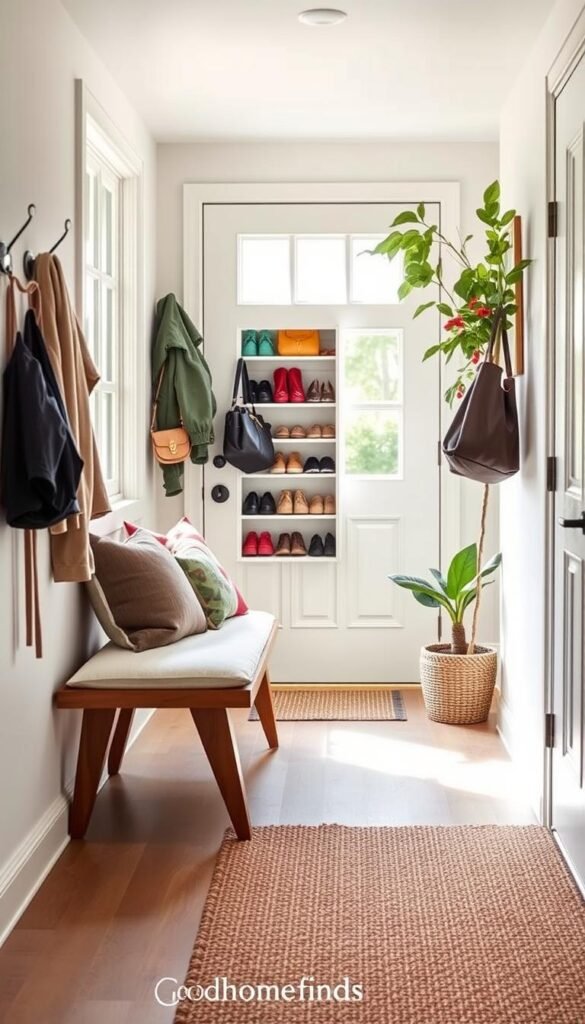
Even a well-designed mudroom can fail if there’s no obvious surface or bin for small, time-sensitive items.
Common failure points:
- Hooks without a tray mean keys and mail end up on the counter.
- Boot shelves exist, but backpacks still block the path.
- Large furniture hides the habit of “set it down now.”
When a hallway, entryway, or laundry corner works better
Pick the location that fits your routine, not the one that looks ideal on paper.
In small homes, a few inches of wall near the door, a hallway end, or a laundry corner can be the best zone. Use hooks, small baskets, slim shelves, or a freestanding rack.
Quick test: track where you put things for three days. The spot you already use is often the right one.
For renter-safe ideas for a laundry room micro-zone, see laundry room solutions. Later sections cover no-drill installs and damage-free upgrades.
Choose Your Entry Drop Zone Location (Even If You Have Almost No Space)
Find the place you stop on the way in and build around that habit. That simple rule makes a small system actually used.
Narrow hallways and vertical fixes
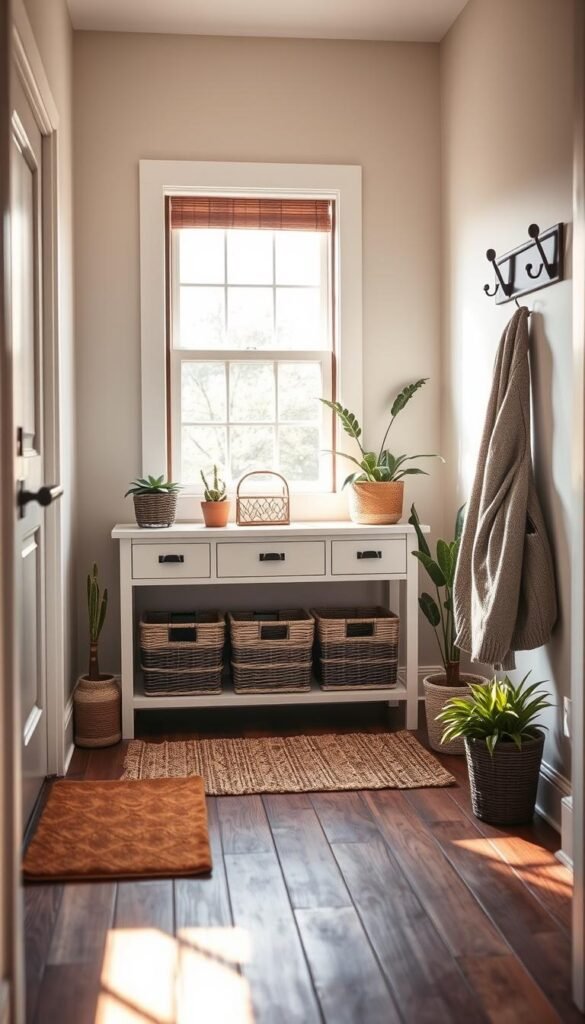
In tight halls, go up not out. A slim bookcase or tall shelving unit fits against the wall without blocking the path.
Use wall-mounted rails, hook strips, or floating shelves to keep the floor clear. These choices preserve flow while adding storage.
Behind-the-door and closet-adjacent solutions
For renters, over-the-door hooks and hanging racks work well and are removable.
Create a buffer just outside a closet so backpacks and shoes don’t vanish into a messy interior. A narrow shoe tray or slim shelf does the trick.
Turn an unused corner into a mini command area
One small surface plus a vertical element can control paper and reminders.
Mount a cork tile or slim file pocket above a tiny table or stool. This gives you a compact place for keys, mail, and quick notes.
„Choose the spot you already use—habit beats design every time.“
- Quick rule: protect the door swing and keep a clear path.
- Safety: avoid heavy freestanding pieces where they can tip.
- Renter-friendly: prefer over-the-door and freestanding vertical options.
For more small-space ideas for another room, see bathroom space solutions.
Measure, Map, and Decide What Your Household Actually Drops
Begin with a quick survey: what lands on the nearest surface when you walk in or head out?
Measure the space you can spare. Note wall width. Note depth from the door. Check the door swing so nothing will block the way.
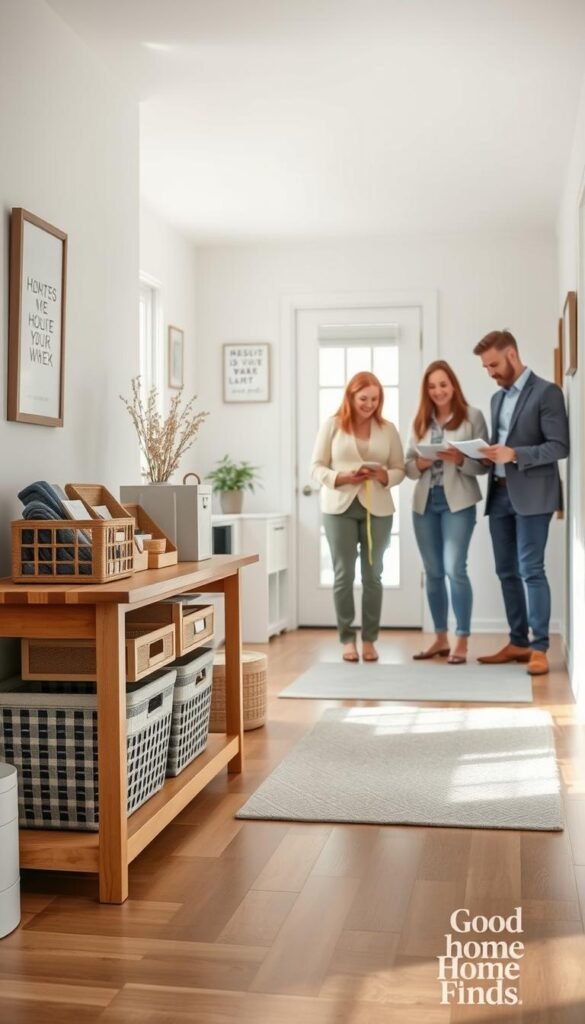
The “in/out” list: what comes in daily vs. weekly
Create two columns: daily and weekly. List items and things you actually carry each day. Put less-frequent items in the weekly column.
Family vs. solo setups
Solo setups work best as one streamlined station. Keep keys, mail, and a single tray or drawer for small stuff.
For a family, assign a basket or drawer per person to avoid mix-ups. Labels help, and assigned zones stop blame and speed grab-and-go routines.
Preventing pileups: cap each category to a single container
Follow the one-container rule: one mail sorter, one key tray, one return bin, one shoe area. If something overflows, either reduce what goes there or increase the single container size.
- Quick measuring routine: wall width, spare depth, door swing.
- List habitually: make an in/out list to match real use, not idealized plans.
- Choose containers: open baskets for fast tossing; drawers for calm and hidden small stuff.
- Boundary: if it doesn’t fit, it belongs in closet or dedicated storage.
Practical step: try the system for one week, tweak container sizes, and keep what helps you leave the house in under 30 seconds.
For budget organizer ideas that work with these measurements, see affordable organizer finds.
Renter-Friendly Setup Rules: No Drilling, No Damage, Easy Remove
You want solutions that leave paint and trim untouched while standing up to daily use. Start by setting clear renter rules: removable, low-residue, and rated for real loads.
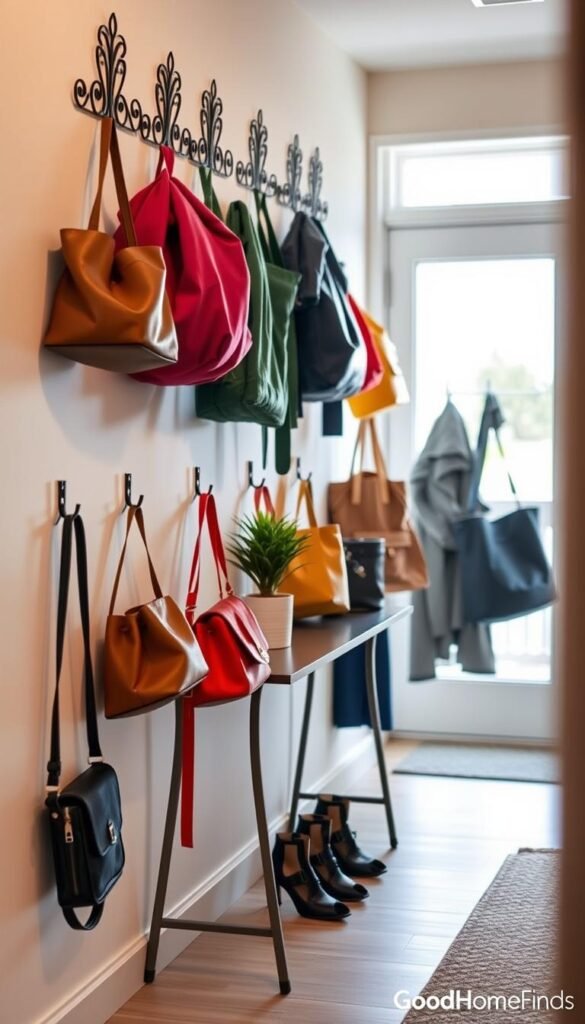
Adhesive hooks and strips: when they work and when they don’t
Pros: fast to install, invisible on smooth surfaces, great for small accessories and keys.
Cons: they fail on textured paint, dusty walls, or humid spots. Respect weight limits. Test one hook before committing to a cluster.
Over-the-door racks and hangers for coats, bags, and accessories
These handle heavier coats and bags better than most adhesives. They avoid wall damage and add high-capacity hanging without tools.
Watch for door clearance and potential rattling. Choose padded hooks to protect paint and hinges.
Freestanding coat racks and slim shelves for “zero wall” apartments
Freestanding pieces work where you can’t use the wall. They give vertical storage without mounting.
Pros: portable, often include storage or a bench. Cons: tip risk and visual bulk. Pick a stable base and place near cabinets or a closet if possible.
- Quick decision guide: use adhesive hooks for light accessories; pick over-the-door racks for coats and heavy bags; opt for a freestanding rack or slim shelves if walls are off-limits.
- Cabinet-adjacent hack: attach removable organizers to the side of a cabinet or tuck a slim unit next to existing furniture to gain concealed storage without damage.
Safety and Durability Checks Before You Buy or Mount Anything
Small mistakes in mounting cost more than a better anchor—so plan for safety first. Treat safety as part of the budget. Replacing broken hooks, fixing damaged paint, or repairing tipped furniture adds real expense and hassle.
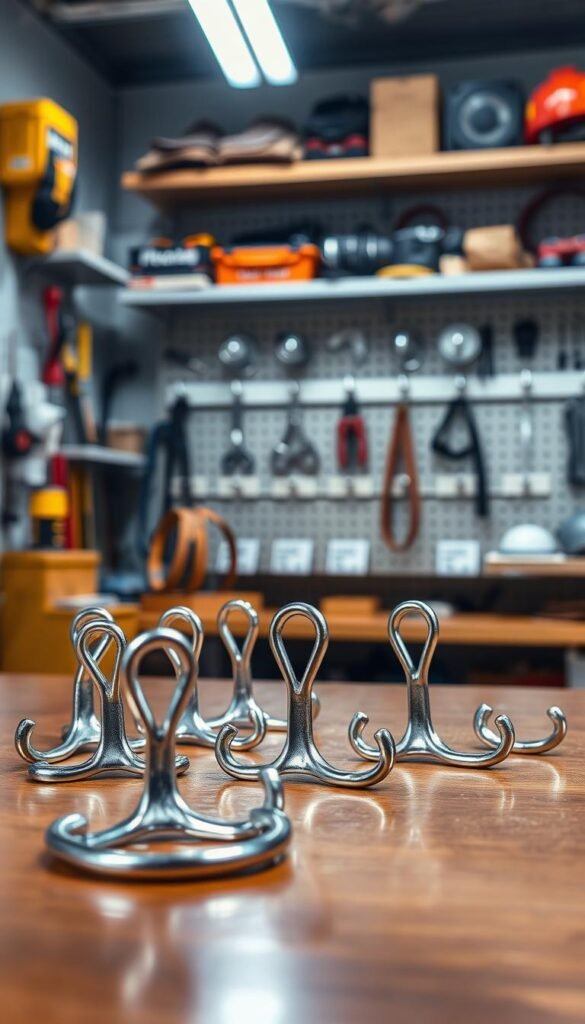
Weight limits and load placement for hooks and rails
Check the label on every hook and rail. Note the maximum weight and the surface it fits.
Simple rule: heavier bags hang closest to the wall or mounting point. Spread load across multiple hooks when possible.
| Item | Suggested max per hook | Placement tip |
|---|---|---|
| Light accessories | 0–2 lbs | Single adhesive hook |
| Medium bags/coats | 2–10 lbs | Use multiple hooks or a rail |
| Heavy bags/backpacks | 10+ lbs | Anchor to studs or use a fixed rail |
Tip-over risks and renter-friendly anchoring alternatives
Freestanding shelves and slim bookcases can tip easily, especially in narrow areas. Pick pieces with wide bases and a low center of gravity.
Renter-friendly fixes include anti-tip straps that loop to furniture and a stud (if allowed) or choosing shorter, heavier units that are harder to topple.
Kid- and pet-safe placement for small items and cleaning supplies
Store cleaning supplies in high cabinets or in a door-mounted organizer inside a cabinet so they stay out of reach.
Keep hazardous items locked or in drawers with latches. Use lidded containers for sharp or tempting items like batteries, coins, or scented products.
- Budget note: spending a little more on proper anchors and stable furniture saves on repairs later.
- Avoid glass catchalls at floor level. Use shallow trays or nonbreakable bins instead.
- Keep leashes and small accessories in closed cabinets or labeled drawers to prevent pets from grabbing them.
Entry Drop Zone Basics: The Five Core Elements to Include
Design the area to catch the things that most often go missing or make messes. Below is a simple checklist you can follow to build a complete system without overbuying.
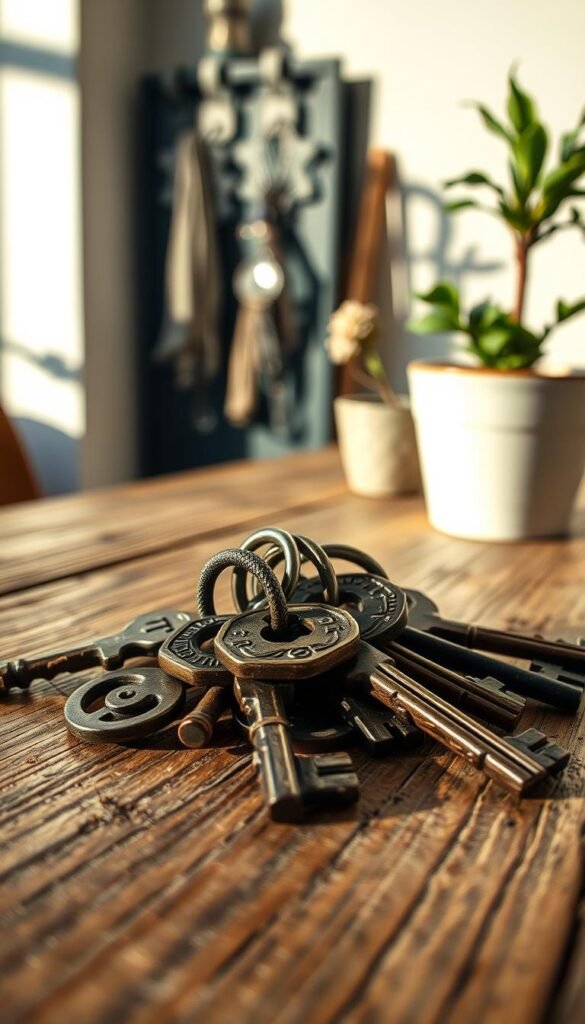
A landing spot for small essentials
What to use: a tray, bowl-style basket, or a shallow drawer. This keeps keys, wallet, and sunglasses from vanishing into random surfaces.
Hanging space for coats, bags, and leashes
One or two strong hooks or an over-the-door rack beats a chair for daily use. Hooks make coats and bags easy to grab and put away.
A shoe drop-off that protects floors
Designate a shoe area with a wipeable mat or shallow tray. It stops dirt and wet shoes from spreading and is easy to clean.
A paper and mail corral
Use wall-mounted file folders or a magazine file on a shelf. Keep all mail and “must act today” papers in one visible spot so they don’t migrate to the table.
A quick-clean supplies spot
Store wipes, a small brush, and a refillable cloth in a low cabinet or a labeled bin. Keep supplies accessible but out of reach of kids and pets.
- Quick checklist: tray + hook(s) + shoe mat + mail file + small supplies container.
- Renter-friendly options: adhesive hooks, over-the-door racks, freestanding trays, and removable wall files.
- If you only do one thing: pick one hook, one tray, and one shoe mat to form the habit. Expand later if needed.
Budget Buys Under $25 That Solve the Biggest Entryway Problems
Small, cheap swaps can cut your daily door chaos in half within an afternoon. Start with the highest-impact buys first. These fixes cost little and change the way you leave and come home.
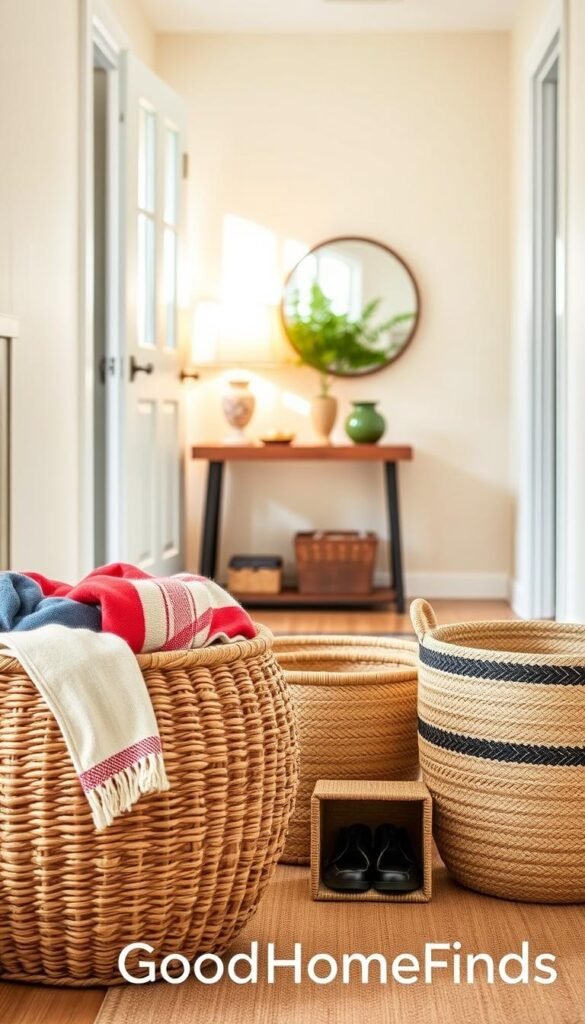
Catchall trays, small baskets, and bowl-style bins
Pros: trays look tidy; baskets hide clutter. Best-for: fast households pick bowl-style open bins for quick toss-and-go.
Cons: trays can overflow; baskets may become a junk bin if you don’t limit categories.
Shoe drip tray hack
Use a large plastic tray with a metal cooling rack on top. Wet shoes sit above the tray so water drains and the sole dries faster.
Best-for: rainy climates, dog walkers, snowy regions, or anyone tired of damp floors.
Labeling basics that actually work
Buy simple label tape or tag labels and keep one bin per category. Labels only help when categories are obvious and limited.
| Item | Typical cost | Pros | Best for |
|---|---|---|---|
| Bowl-style basket | $8–$15 | Fast access; hides small items | One-person homes; grab-and-go |
| Catchall tray | $5–$12 | Clean look; flat surface for mail | Neat-surface users |
| Tray + cooling rack | $10–$20 | Catches drips; speeds drying | Wet-weather homes; pet owners |
| Label tape / tags | $3–$8 | Makes return simple; low cost | Families, roommates, busy days |
Best Finds Under $50 for a Stronger, More Reliable Drop Zone
Look for a few durable, low-cost upgrades that stand up to daily wear. Think of these as durability upgrades that replace temporary fixes.
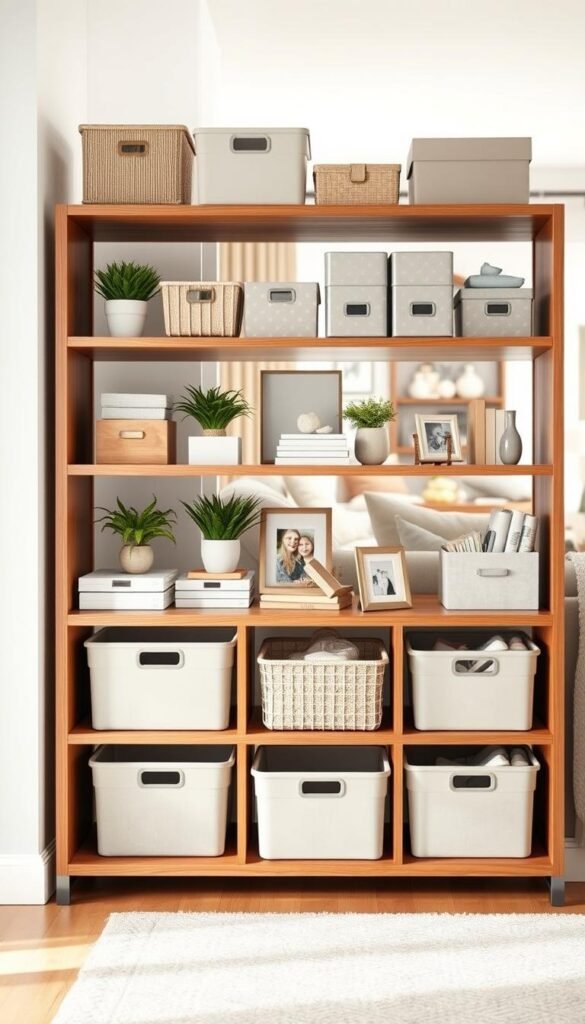
Slim freestanding shelves and small bookcases
Why they help: shelves create vertical storage in tight hallways and keep baskets and trays off the floor.
Pros: more capacity, tidy look, easy to style. Cons: tip risk and can block flow if too deep.
What to check: depth (8–12″), base width, and whether you can anchor to a stud or use anti-tip straps.
Storage ottomans and compact benches
A bench gives a seat for shoe routines and hides supplies inside. This encourages consistent habits.
Best for: families, older adults, anyone who needs a place to sit while putting on shoes.
Stackable lidded boxes
Boxes cut visual clutter and keep seasonal accessories like hats and gloves tidy. They stack to save floor space and can sit inside cabinets or under a bench.
| Item | Typical cost | Pros | Best for |
|---|---|---|---|
| Slim bookcase / shelves | $30–$50 | Vertical storage, holds baskets and mail | Narrow halls, small room corners |
| Storage bench | $40–$50 | Seating + hidden storage, supports shoe routines | Families, older adults |
| Stackable lidded boxes | $10–$25 | Dust-free, stackable, neat | Seasonal accessories, extra gear |
| Alternative setup | $15–$40 | Vertical rack + shoe tray for no-floor-space rooms | Studios, tight entryway spaces |
Hooks, Racks, and Hanging Solutions That Don’t Wreck Walls
Smart hooks and racks make the most of tiny walls without heavy work.
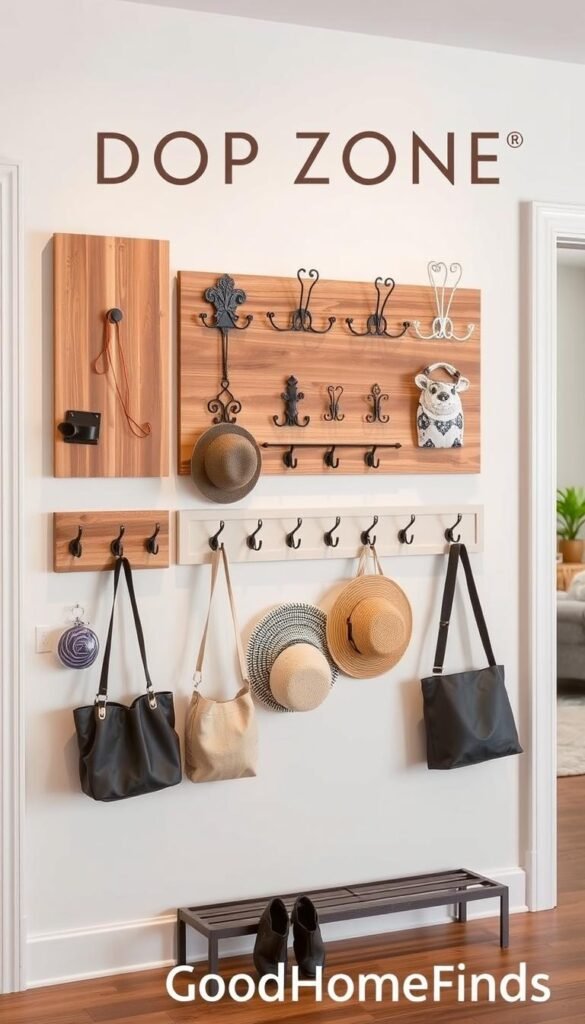
Multi-hook rails vs. single hooks
Why hanging stops clutter: it gets bulky items off the floor fast. That alone cuts trip hazards and visual mess.
Multi-hook rails — pros: spread weight, look tidy, and make assigning spots easy. Great for coats and shared bags.
Multi-hook rails — cons: need proper mounting. Strong adhesives may fail on textured paint.
Single hooks — pros: flexible placement and good in tiny walls. They fit odd nooks.
Single hooks — cons: items can crowd and slip if hooks sit too close. Heavy bags may pull them loose.
Staggered heights and real-use categories
- Set lower hooks for kids so backpacks are reachable and independent.
- Reserve higher hooks for adult coats and fragile accessories.
- Keep leashes by the door, umbrellas over a drip tray, and hats in a small hanging caddy.
| Solution | Best for | Pros | Cons |
|---|---|---|---|
| Multi-hook rail | Family coats & bags | Even weight, tidy look | Needs good mounting |
| Single hook | Small nooks, quick spots | Flexible placement | Can overcrowd |
| Over-the-door rack | Renter-friendly hanging | No wall damage, holds heavy items | Watch door clearance |
Tip: leave one empty hook as an overflow spot so a busy day doesn’t break the whole system.
Shoe Storage That Fits Apartments: From Studio to Multi-Bedroom
The easiest shoe routines happen when seating, storage, and floor protection work together.
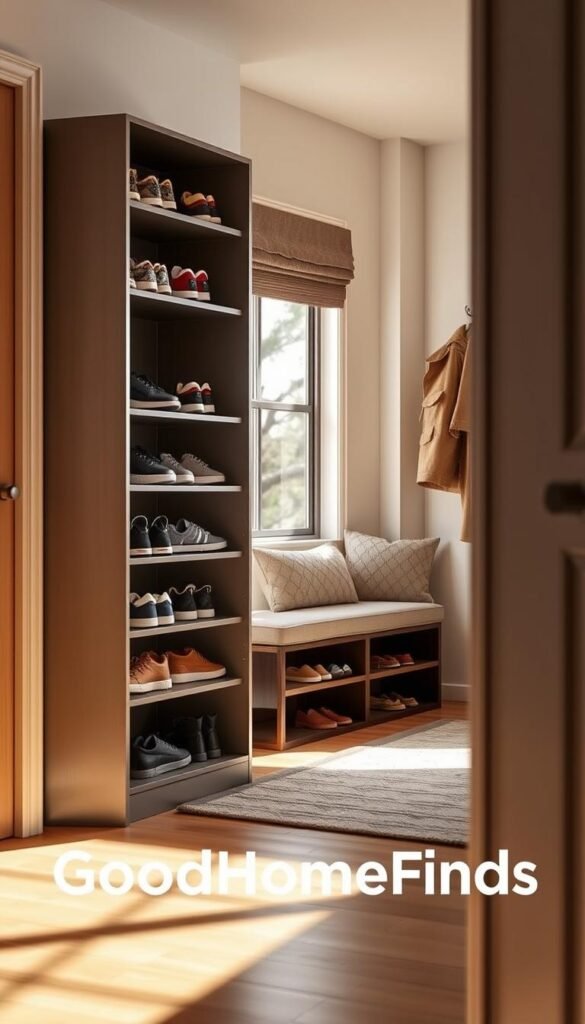
Studios
In tight studios, favor slim racks and vertical organizers that use height, not floor area. Pick an under-bench bin if a compact bench fits. This keeps shoes accessible and off walk paths.
One-bedroom apartments
Create a simple flow: sit on a bench, place shoes into cubbies, and drop keys in a tray. Repeating this sequence makes the habit automatic and fast.
Families
For a family, open cubbies with labeled baskets work best. Assign one basket per person to stop early-morning piles. Open slots speed grab-and-go routines for kids.
Pros and cons: open vs. closed
Open cubbies ventilate and are faster, but look busier. Closed storage hides clutter and dust, yet can trap odor and needs more upkeep.
- Reality check: storage fails when it’s too far from the door or hard to use with one hand.
- Decision rule: if you hate visual clutter, choose closed; if you value speed, choose open cubbies and one-pair-out discipline.
- Floor tip: always pair shoe storage with a tray or wipeable mat to catch water and dirt.
| Apartment Type | Recommended | Why |
|---|---|---|
| Studio | Slim rack or under-bench bin | Saves floor space; keeps shoes reachable |
| One-bedroom | Bench + cubbies | Creates a simple sit-store routine |
| Family | Open cubbies + labeled baskets | Speeds morning exits and reduces piles |
Mail, Keys, and “Leave-the-House” Items: Build a Mini Command Center
A compact command center stops paper from spreading across counters and eating your time. Set one small place by the door or near a cabinet to catch mail and to-go items before they migrate into the house.
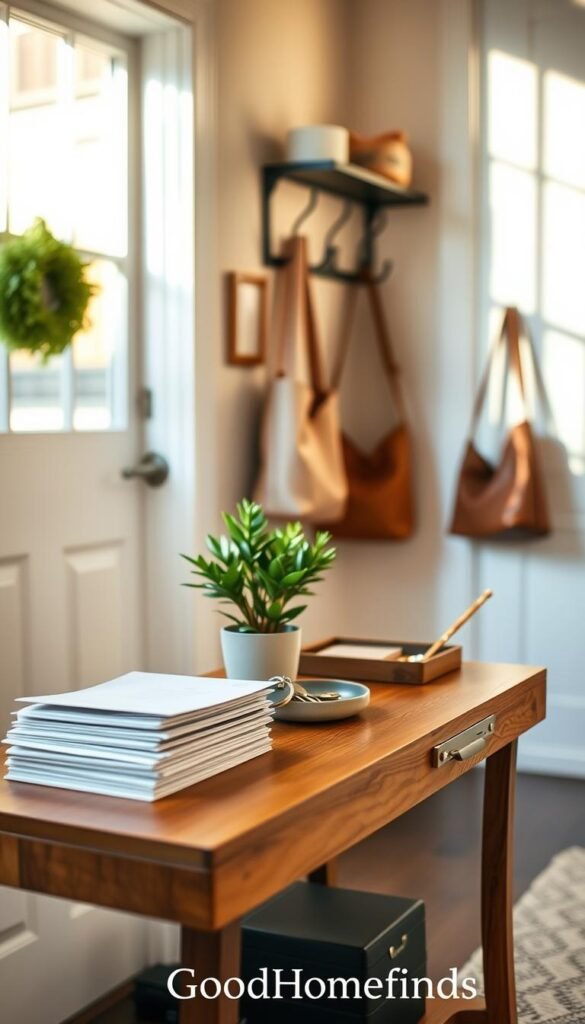
Wall-mounted files and magazine holders
Use wall-mounted file folders or magazine files to sort post into inbox / action / file. This keeps mail visible and prevents the pile that grows overnight.
Pros: quick access, saves counter space, encourages handling mail once. Cons: some mounts need careful adhesive choice for renters.
Removable bulletin board for reminders
Cork tiles with self-adhesive strips make a renter-friendly bulletin area. Use them for calendars, school notes, and a simple leave-the-house checklist for the office items you need.
Pros: no drilling, easy repositioning. Cons: not for very heavy clips or bulky items.
Staging for must-mail and returns
Create two small spots: a “must-mail today” tray and a return-to-store bag or bin. Keep that bin by the cabinet or near the door so returns leave on the next trip.
If you prefer hidden storage, use a small drawer unit or shallow cabinet. Empty those drawers weekly so outgoing items don’t stagnate.
- Keep one hook or bowl for keys to speed exits.
- Label files for quick sorting: bills, replies, and receipts.
- Add a short checklist for office gear: badge, charger, laptop.
| Solution | Best for | Quick tip |
|---|---|---|
| Wall files / magazine holder | Visible mail control | Mount at eye level for fast sorting |
| Cork tiles with adhesive | Reminders & calendars | Use light clips; replace strips annually |
| Drawer / cabinet | Hidden outgoing items | Set a weekly emptying rule |
For more renter-friendly gear and small-space products, see best home finds for renters.
Add-On Zones That Make Mornings Easier (Without Adding Clutter)
The smartest extras are invisible most days and indispensable on busy mornings. Add-ons should remove a single pain point. They should not create another surface to clear.
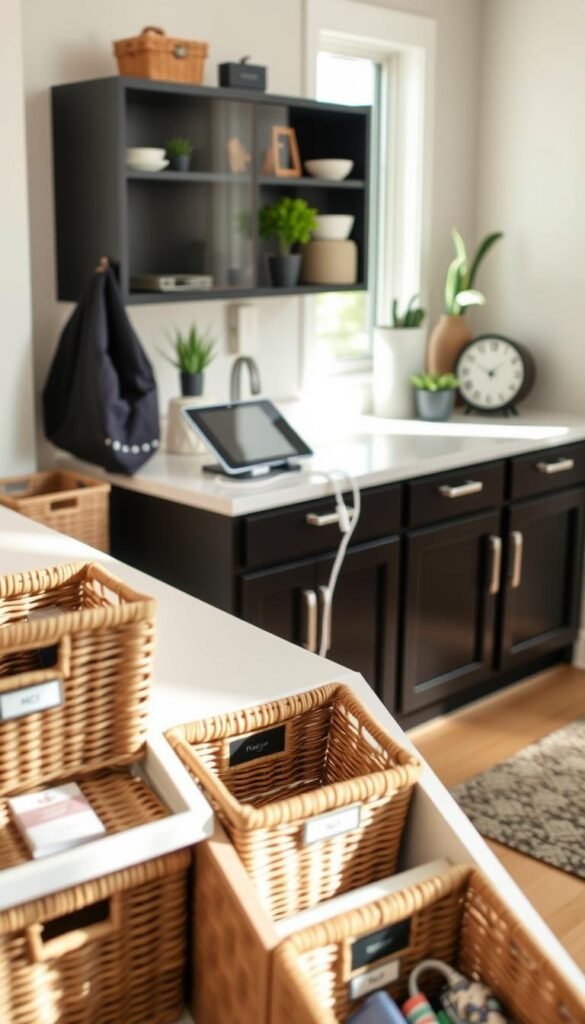
Charging station: cord control and placement
Keep one power strip tucked into a small container. Coil spare cords inside the box so cables don’t sprawl across the floor.
Tip: use short Velcro ties and a labeled pouch for adapters. Place the station near the landing but away from wet shoes and coat drips.
Safety note: anchor the strip or use a heavy base so pets can’t pull cords.
Water bottle basket system to save the kitchen
Keep a single basket for bottles near the door so they don’t pile in the kitchen sink. Use an acrylic divider or narrow container so bottles stand upright.
This upright trick stops spills and makes grabbing a bottle instant. Limit the basket to one type of item so it stays useful.
Pet gear cubby: one spot for all walk supplies
Use one basket or cubby for leashes, waste bags, towels, and a spare toy. Label it and keep it low but not on the floor to avoid wet messes.
Having pet accessories together cuts frantic searching and makes walks smoother for you and your pet.
„Limit each add-on to one container and one job — if it doesn’t get used weekly, it doesn’t belong.“
- Principle: add-ons must remove friction, not add clutter.
- Placement: near the main landing but clear of wet or high-traffic drip paths.
- Keep it tidy: one container per job — charging, bottles, pet supplies.
Easy Daily Routines and Maintenance to Keep the Drop Zone Working
Spend one minute each day to keep the area tidy and useful. Small habits prevent piles and make the system easy to use when you’re rushing out.
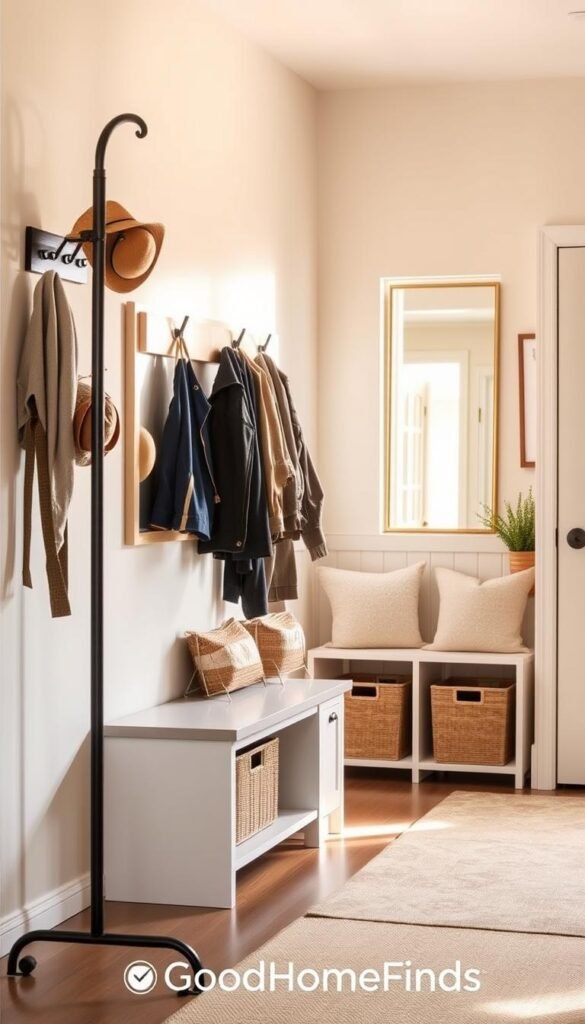
The 60-second reset
Every evening or when you return home, do a quick loop: hang coats, put shoes into the shoe area, drop keys in the tray, and place mail into its slot.
Weekly paper sweep
Set a weekly time, like Sunday night. Sort papers into three options: recycle, file, or action. No “maybe” stacks.
This prevents build-up and keeps your small storage usable.
Quick floor strategy
Use a wipeable mat or shallow tray under shoes to catch water and dirt. Keep one small caddy of cleaning supplies nearby for quick wipe-downs.
Practical tip: shake or wipe the mat weekly and launder if needed.
- Keep baskets for like-items so everything has a clear home.
- Clear surfaces nightly; a clear landing keeps the system working.
- Accept imperfect days; consistency matters more than perfection.
| Routine | Frequency | What to keep nearby |
|---|---|---|
| 60-second reset | Daily | Key tray, coat hook, shoe mat |
| Paper sweep | Weekly | Mail sorter, recycle bin, file folder |
| Mat care | Weekly or as needed | Wipeable mat, small brush, cloth |
| Supplies check | Monthly | Wipes, cloth, spare baskets |
The goal isn’t perfection; it’s a usable way to leave and return without stress.
Extend the “Drop Zone” Habit to Other Small Spaces in Your Home
Give each problem area one clear home and the rest of the house stays calmer. This is the same habit you used at the door: one container, one hook, one small surface per task. Repeat it in the kitchen, bathroom, closet, and laundry to stop clutter from migrating.
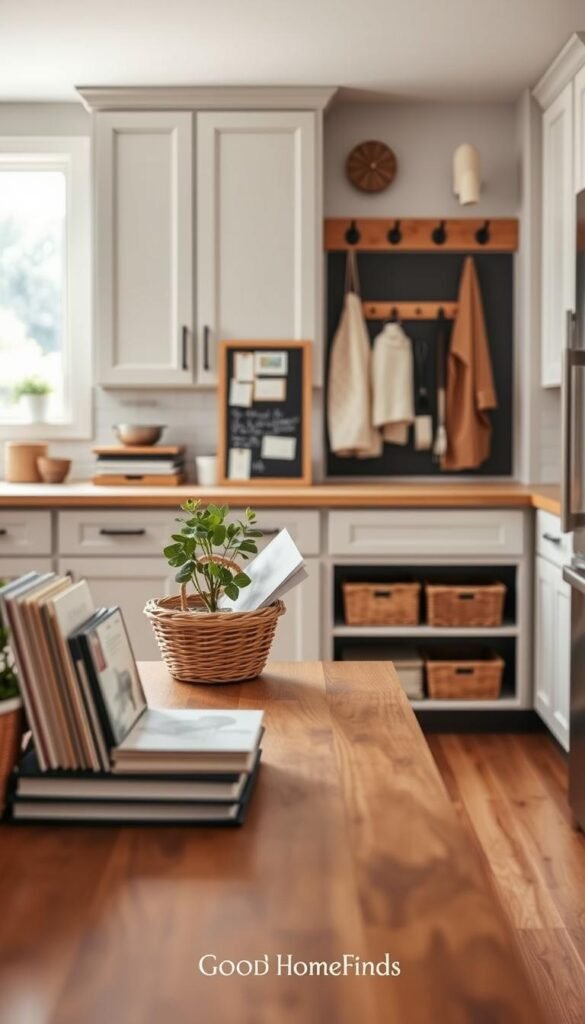
Kitchen: a tiny command center
Create a compact kitchen command area with a mail organizer, a wall calendar, and a charging station. Keep the mail holder shallow and the calendar visible so papers don’t spread across counters.
Renter-friendly tip: use adhesive wall files and a small freestanding caddy for chargers. This keeps the kitchen clear and makes leaving faster.
Bathroom micro-zone
Use small baskets or shallow drawers for daily items. Limit each container to one category: face, hair, or grooming. That prevents toiletries from crowding the sink and makes nightly resets simple.
Closet and bedroom
Add a pair of hooks and a couple of bins to stop the chair-pile cycle. One bin for “worn-but-not-dirty” clothes keeps laundry off chairs. Hooks hold bags, robes, and frequently used outer layers.
Laundry corner
Turn a small laundry shelf or corner into a grab-and-go area. Use three baskets for sorting (delicates, lights, darks) and a hook for bags or an ironing board. A labeled system speeds transfer from hamper to machine.
One rule: one home base per problem keeps clutter from traveling. Mild effort upfront becomes daily ease.
| Room | Small setup | Renter-friendly options |
|---|---|---|
| Kitchen | Mail organizer + calendar + charging caddy | Adhesive wall files, freestanding caddy |
| Bathroom | Baskets or shallow drawers for daily items | Stackable trays, adhesive drawer units |
| Closet / Bedroom | Hooks + bins for worn clothes and bags | Over-the-door hooks, fabric bins |
| Laundry corner | Hooks + three sorting baskets | Freestanding sorter, removable hooks |
Keep it consistent: treat each room as its own small station. The more you assign one task to one container, the less mess you manage across your home.
Comparison Tables: Pick the Right Entryway Setup for Your Space
Match your room size and habits to a simple setup that actually holds up. The three tables below compare common small-space solutions so you can choose fast without extra fuss.
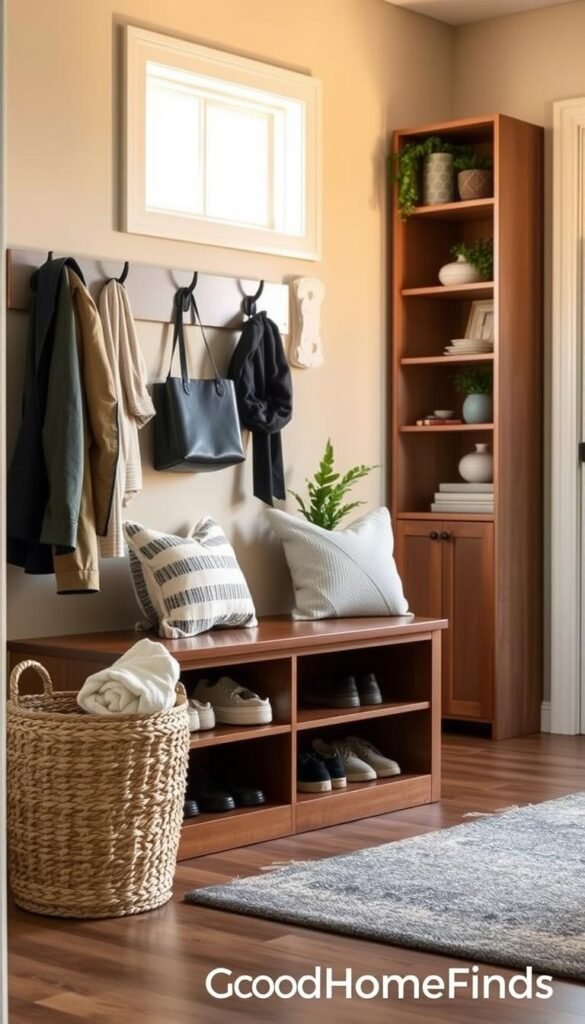
Small entry vs. long hallway vs. no-entry apartments
| Space | Footprint | Best vertical options | What to prioritize | Practical example |
|---|---|---|---|---|
| Small entry | 6–14 sq ft | Slim shelf, wall file, single hook | Shoe containment, quick hanging, mail | Behind-door rack + slim tray |
| Long hallway | narrow length, more wall area | Tall slim bookcase, multi-hook rail | Vertical storage, multiple hooks, styling | Hallway-end slim shelf with baskets |
| No-entry apartments | No dedicated spot near door | Freestanding rack, small bench with storage | Portable storage, tip safety, compact footprint | Coat rack + tray or small bench with bins |
Open baskets vs. drawers vs. lidded boxes
| Storage | Pros | Cons | Best for | Durability / maintenance |
|---|---|---|---|---|
| Open baskets | Fast toss, visible, cheap | Looks busy, can become junk | Quick grab-and-go habits | Low; shake out weekly |
| Drawers | Visual calm, small-item control | Can hide clutter; slower access | Keys, chargers, small supplies | Medium; clear monthly |
| Lidded boxes | Reduces visual clutter, stacks | Harder to access; can store forgotten items | Seasonal gear, overflow storage | High; check contents seasonally |
Adhesive hooks vs. over-the-door vs. freestanding
| Hooks | Setup time | Durability / weight | Removability | Common failure / safety |
|---|---|---|---|---|
| Adhesive hooks | Minutes | Light loads (0–5 lbs typical) | High if used on smooth surfaces | Peel risk on textured paint; test first |
| Over-the-door | Very fast | Good for coats and bags | High; avoids wall damage | Door clearance / pinch risk; check swing |
| Freestanding | Short (assembly) | Variable; watch tip risk | High; portable | Tip-over risk; use anti-tip straps |
„Pick the simplest solution that fits your path and your daily habits.“
Quick help: if you want more product ideas for tiny spaces, check this small-space finds guide for renter-friendly storage options.
Conclusion
The easiest wins come from a tiny habit you repeat each time you come home.
Recap what you built: a practical drop area that matches what you actually carry. Aim for one landing spot, one hanging solution, and one shoe method to start. That simple trio changes how things move through your house.
Make the routine repeatable. Keep a 60-second reset each evening. Hang coats, clear shoes, and put mail in its slot so the system stays useful.
Begin with budget buys under $25 for quick wins. Move to sturdier pieces under $50 when you need more capacity. For renters, prefer over-the-door or freestanding options over heavy adhesive mounts.
Do one safety check before you finish: stabilize furniture, respect weight limits, and store supplies out of reach of kids and pets. Keep a visible must-mail/must-return spot so those items actually leave the home.