
Practical, renter-friendly steps to reclaim the first few feet of your home without drilling or a remodel.
You’ll learn a simple plan that treats the space as a landing strip. Start by resetting flow: check door swing, traffic, and light before you add storage. This prevents buying storage on top of chaos.
The goal is clear: you walk in, drop things once, and the area stays tidy with a 30-second daily reset and a five-minute weekly routine. Expect solutions under $25 for basics and smart upgrades under $50 where they actually help.
We’ll use a three-zone layout—outerwear, grab-and-go, and sit-and-shoes—so you cut backtracking and decision fatigue. Common triggers like shoe piles, coat heaps, mail stacks, and missing keys get a dedicated fix in each zone.
Key Takeaways
- Reset the space first to avoid wasted purchases.
- Start budget-friendly: under $25 basics, upgrade under $50.
- Use a three-zone layout for consistent daily use.
- Pick renter-safe, no-drill options to add hanging and storage.
- Maintain with a 30-second daily reset and 5-minute weekly tidy.
- Prioritize clear path, stable furniture, and no trip hazards.
- Read more layout and product ideas at entryway fast vs full.
Reset the Space Before You Buy Anything
Start by emptying the area just past your front threshold to judge flow, light, and what truly fits. This is your landing zone for a reason: you need clear sightlines before any shopping.

Clear, observe, and measure
Clear the first three feet inside the door so you can see true traffic patterns. Walk through with a bag and note where you turn, where things hit walls, and where shoes become trip hazards.
Sort with three simple questions
- Does it belong at the leave/arrive moment? Keep only the items you use when you come or go.
- Have you used it in the last 90 days? Apply the 90-day rule for duplicates and seasonal gear.
- Where does it belong to reduce backtracking? Move things to kitchen, closet, or car if that reduces steps.
Clean for function, not show
Wipe top-to-bottom: door frame, light switch, walls, baseboards, and then the floor. Lift the mat and vacuum under it. If the area smelled damp, dry shoes and drop humidity under ~55% before you add soft storage.
Quick finish: leave the floor empty for a minute and measure. That empty moment is how you plan storage that actually works for your house and your routine.
When you’re ready for product ideas that match what you measured, see best entryway storage solutions.
Design an Entryway That Works in the Fewest Moves
Map the front zone into three clear areas so you arrive and leave with one smooth sequence. This reduces trips and decision fatigue. Start by sketching the floor and marking where people turn and drop items.

Outerwear zone
Keep one or two go-to coats, jackets, and everyday bags here. Give each person 1–2 hooks so items don’t pile up.
Mount adult hooks at about 68–72″ and kid hooks at 42–48″. Store seasonal pieces in a closet or bin, not in this spot.
Grab-and-go zone
Pick a single spot for keys and mail to stop migration to counters. A small console or wall pocket works well.
Add a charging point only if it reduces cords on the surface. This keeps the spot tidy and functional.
Sit-and-shoes zone
Use a stable bench about 17–19″ high and 14–16″ deep. It prevents leaning, wobble, and shoe piles.
Store today’s shoes under or beside the bench to keep the floor clear and safe.
Safety rules
- Clear way: keep ~36″ of walkway for safe passage.
- Stable furniture: avoid tall, tippy pieces in narrow halls.
- Hook strategy: limit to 1–2 per person so the system stays usable.
Who benefits: singles like compact consoles, roommates need labeled zones, and families should add kid-height hooks so kids can help.
Quick decision guide: once zones are mapped, storage choices are obvious and you stop buying what won’t fit. See more small-space ideas at small-space ideas.
Measure First, Then Pick the Right Storage for Your Space
Start with three numbers: clear width, usable depth, and how far the door travels. These tell you what fits and what will block the path. Measure for people and bags, not just furniture dimensions.
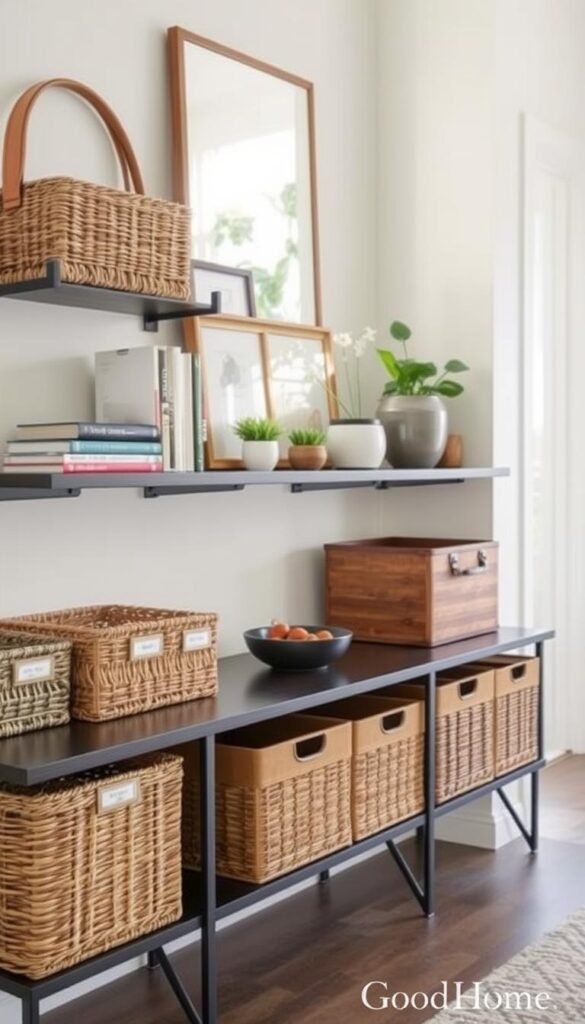
Quick measuring checklist
- Width: clear walk space you can spare.
- Depth: how far a unit can extend without trip hazards.
- Door clearance: swing radius so nothing blocks the door.
Common layouts and practical ideas
Micro-entry in a small apartment needs ultra-slim solutions. Pick a shallow rack or a slim bench that holds today’s shoes and a small tray.
A hallway entry benefits from tall, narrow pieces that keep the walkway open. Families will want larger capacity and labeled baskets for each person.
If your front door opens straight into the room, use vertical tricks: wall hooks, an above-door shelf, and a slim shoe tower to keep the floor clear.
Closet-friendly upgrades without renovating
Add tiered shoe racks, an extra high-use shelf with baskets, and a better hang strategy. Going top-to-bottom in a closet expands function without construction.
Durability checkpoint: if a piece wobbles during measuring, don’t buy it. Stable tall units beat wide, tippy furniture in narrow rooms.
Buy list framework: measure first, note depth and width, pick either a tall narrow cabinet, an above-door shelf with baskets, or a slim bench. Shop only what fits the numbers.
Wall Storage Without Damage: Hooks, Racks, and Slim Ledges
When floor room is limited, use vertical solutions to keep things reachable and the walk path open.

Why wall-mounted pieces work: slim organizers free floor space and group keys, mail, and light bags in one spot. Pick multi-function units with a narrow ledge plus hooks so small items land together.
Renter-friendly mounting options
- Adhesive strips — best for light loads like keys or a single bag. Test weight limits and replace strips yearly.
- Over-the-door hooks — zero wall contact and good for coats and towels on a door.
- Magnetic hooks — ideal for metal doors or fridges; hold light items only.
Quick comparison
| Type | Pros | Cons |
|---|---|---|
| Slim wall organizer | Consolidates mail + hooks; looks neat | Needs good anchors for heavy coats |
| Freestanding coat rack | No wall work; high capacity | Takes floor space; can tip |
| Over-the-door hooks | No drilling; simple install | Blocks door swing if crowded |
Pros, cons, and safety checks
Individual hooks give flexibility. Hook rails spread weight and look cleaner. Vertical boards pack function into narrow corners.
Check weight ratings. Avoid sharp hook shapes that snag bags or coats. Test for wobble before daily use.
Best-for guide: singles need a minimal key-and-bag setup. Roommates benefit from labeled hooks. Families add kid-height hooks. Pet owners set one hook for leashes.
For closet-friendly storage ideas that pair with wall solutions, see closet space solutions.
Stop Shoe Piles at the Door With Slim, Easy-Clean Shoe Storage
Choose a compact system so shoes are usable, not piling up. Keep only your today’s pairs near the door and move extras to a closet. This rule cuts overflow and makes daily routines simple.

Best layouts and moisture control
Put a washable tray on the bottom shelf for wet or muddy shoes. A 10–12″ deep unit fits most narrow halls. Flip-down styles can go even slimmer while still holding a pair or two.
Budget picks under $25
- Stackable shoe shelves for flexible height.
- Simple boot tray for wet shoes and winter mess.
- Labeled baskets — one basket per person keeps things tidy.
Budget picks under $50
- Narrow shoe rack towers for vertical capacity.
- Compact shoe benches that give a ~17–19″ seat and hidden storage.
Pros / cons and apartment alternatives
Open racks make grab-and-go easy but show more visual disorder. Enclosed or flip-down styles look neater and save depth, though they limit tall boots and airflow.
For studios, pick slim vertical racks and store off-season pairs elsewhere. Families should pick higher capacity units, labeled baskets, and a wet zone for winter days so floors stay protected.
Maintenance and safety
- Wipe shelves and rinse trays weekly to control odor.
- Keep storage out of the 36″ walk path so it prevents trips instead of causing them.
- For more budget vs premium storage ideas, see storage cheap vs premium.
Create a Drop Zone for Keys, Mail, and Everyday Items (Even Without a Console Table)
Design a landing spot that matches how you walk through the door so keys and mail land where you expect them. A clear routine makes daily life simpler and prevents paper and small items from spreading through the house.

Console table setup: place one tray on top for daily pocket items and add drawer organizers for coins, sunglasses, and small tools. Keep a single charging spot near an outlet. Hide extra cable length so the surface stays tidy.
No-table solutions: use a slim wall ledge, a small basket on a bench, or a magnetic key rack on a metal door or fridge. These renter-friendly options keep items reachable without taking floor space.
Mail that won’t multiply
Create IN and OUT slots and make a weekly emptying routine. Put bills in IN, action items in OUT, and recycle or file weekly. This stops piles and makes sorting fast.
| Solution | Pros | Cons |
|---|---|---|
| Tray on table | Quick drop; visible | Shows mess if not emptied |
| Drawer organizer | Hidden, keeps small items sorted | Needs a table with drawers |
| Wall command center | No floor footprint; combines hooks and slots | Limited weight for keys and bulky mail |
- What belongs here: daily-use keys, current mail, phone, and one bag. Move backups to closets.
- Troubleshoot: losing keys means the spot is too far from the door. Mail pile-up means you need an OUT action each week.
Add a Place to Sit That Doubles as Storage
A simple seat changes how people use the space and keeps shoes from piling up.

What to look for
Comfort: aim for about 17–19″ high and 14–16″ deep so sitting and shoe changes feel natural.
Materials: choose wipeable tops and stable legs. Test for wobble on uneven floors.
Bench vs. stool vs. chair
- Storage bench: most function. Shelves, drawers, or baskets hide gear and seat people.
- Stool: tucks away and frees the walkway, but holds less.
- Chair: comfortable, but it can steal path space in narrow halls.
Durability note: daily seating stresses joints and hardware. Pick sturdy fastenings over trendy looks.
„A well-placed bench makes shoe changes faster and stops small items from spilling into the rest of the home.“
Under-bench baskets and organization
Give each person a basket for gloves, hats, and kids‘ items. Add one basket for dog leashes and food scoop so pet gear stays separate from coats and bags.
| Option | Pros | Cons |
|---|---|---|
| Storage bench | Seating + hidden storage; anchors sit-and-shoes zone | Needs depth; heavier to move |
| Stool | Small footprint; easy to store | Little storage; can tip if narrow |
| Chair | Comfortable seating; stylish furniture piece | Often blocks walk path; less storage |
Buying checklist: comfortable height, wipeable surface, stable legs, felt pads for floors, and light enough to move without damage.
Make It Stick With Low-Effort Daily Routines and Seasonal Swaps
Small, repeatable habits are the real reason a tidy landing stays tidy. Pick routines that take under a minute each day and five minutes once a week. These tiny actions keep shoes, mail, and coats from wandering into the rest of your home.
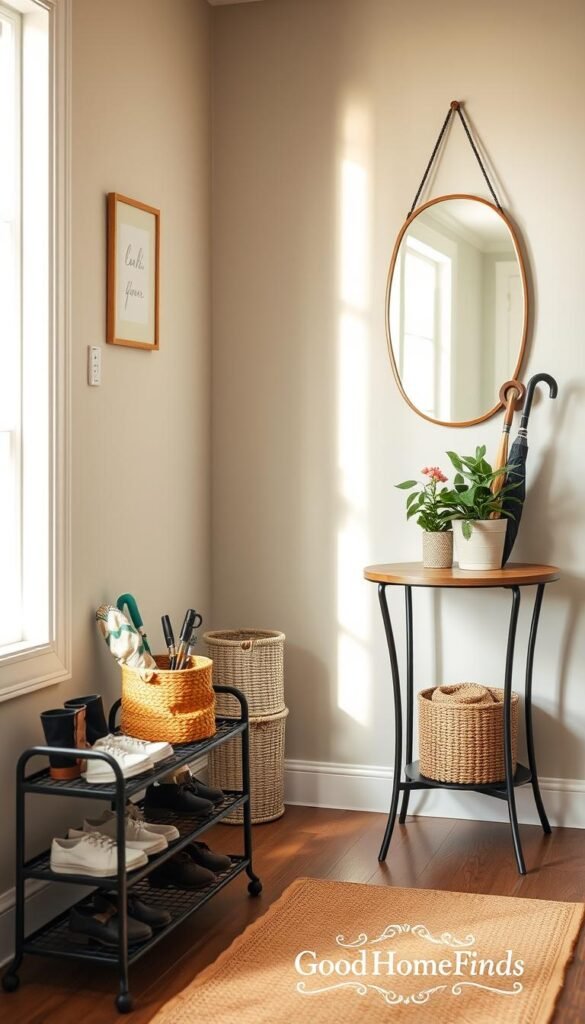
The 30-second daily reset
Do this every time you come in: clear the landing place, put shoes back in their spot, and hang the coat you wore. It takes under 30 seconds and prevents piles from forming.
The 5-minute weekly reset
Set a single weekly time to empty IN mail, rinse the boot tray, and run a quick vacuum across the floor. This removes grit and prevents odors before they start.
Seasonal rotation that actually works
When winter ends, move heavy coats and boots to the closet or a storage bin. Swap in light jackets and fewer shoes so the area stays easy to use.
Family systems that reduce overflow
- Give one to two hooks per person. This stops hook overload and sets a clear place for each person’s items.
- Mount adult hooks ~68–72″ and kids ~42–48″ so children can hang their own coats.
- Label baskets or hooks for roommates and children so everyone knows their place.
Maintenance tips for longevity
Put wet shoes straight on a washable tray and dry them before storing. Keep humidity under ~55% to reduce odor instead of masking it.
Protect the floor: use a washable mat, wipe up salt and grit quickly, and keep heavy dripping items contained near the tray.
Practical note: routines are what turn a one-time clean into lasting order. If you need simple tools to help, see this home problem solver mix for budget-friendly ideas that work in real life.
Conclusion
Focus on results: a single rack, a dedicated spot for keys, and a simple shoe plan will change how your house starts and ends each day.
Follow the simple sequence: reset the space, define three zones, measure, then add only the storage you proved you needed. That keeps decisions honest and purchases useful.
Choose renter-friendly wins: wall hooks and adhesive solutions, slim shelves or a narrow bench, and a small closet rotation for off-season items. Use one tray or table top for daily mail and a drawer or shelf for small things.
Start budget-first: basics under $25, upgrades under $50 only where daily friction persists. Pick one problem—shoes, keys, coats, or mail—and solve it this week. Let that small success carry you through the rest of the entry and the room.