Make mornings easier and evenings less chaotic. You’re building a practical drop zone—not an Instagram set you can’t use. Professional decorator Houna Bech says a welcoming, organized entryway “sets the tone for the rest of the home,” and that’s the goal here.
You’ll get budget-friendly recommendations, mostly under $25, plus a few worth-it exceptions clearly labeled when they solve real problems. Expect items that stop lost keys, curb clutter, and cut trips back inside.
This short guide previews useful categories: key control, hooks, trays, shoe storage, rugs, mirrors, lighting, and baskets. Quick Amazon shipping matters for daily fixes. I’ll also note safety tips—what to mount into studs, renter-friendly alternatives, and what to avoid.
Key Takeaways
- Focus on practical, daily-use items that save time and reduce clutter.
- Most picks are under $25; a few are labeled “worth it” for real problems.
- Use stud-mounted hardware for heavy loads; prefer removable options if you rent.
- Guests notice clear floors and a tidy drop zone more than pricey furniture.
- For compact solutions and more small-space ideas, see best small space finds.
Small entryway, big impact: what to prioritize for a smoother routine
Small, practical tweaks near the door make exits and returns faster. Start with one rule: every item you touch as you come in gets a home. Houna Bech warns that organization combats clutter and chaos. This simple habit prevents things from landing on counters and chairs.
The “drop zone” rule for keys, mail, and bags
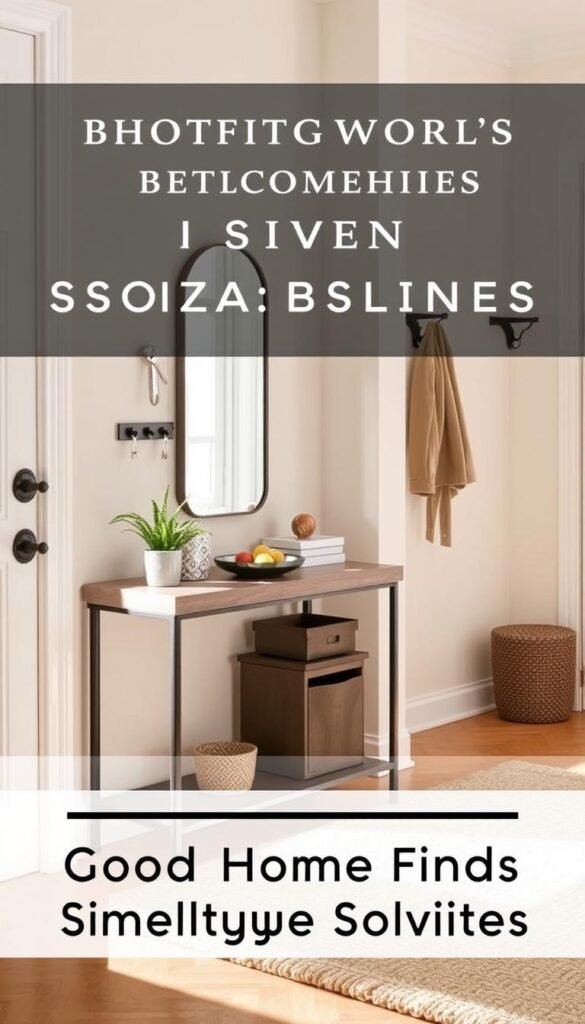
Drop zone: give keys, mail, sunglasses, dog leashes, and work badges a dedicated spot. A single tray, hook, or small basket stops random piles. Keep the spot within arm’s reach of the door for fast exits.
How to choose pieces that fit tight spaces and high traffic
Prioritize wall space first. Use hooks or rails, then add vertical storage like slim shelves.
Choose floor pieces only if they don’t block the hallway or door swing. Favor wipeable surfaces and metal for durability.
Quick quality checks that prevent wobbles, wall damage, and returns
- Measure clear path, door swing radius, and drawer clearance before buying.
- Check mounting hardware and weight ratings in product details.
- Look for non-slip rug backing and reviews that mention stability.
- For renters, avoid heavy over-the-door hooks that scratch paint; small patchable holes are usually fine.
If you want more compact storage ideas, see best entryway storage solutions for renter-friendly picks and simple setups.
Entryway finds that actually save time every day
Practical picks cut daily friction — no more last-minute panic at the door. You want a set of easy, reliable choices that make leaving the house smoother. Think of small wins: no key scramble, clear floor, and a quick coat grab.
What “useful” looks like
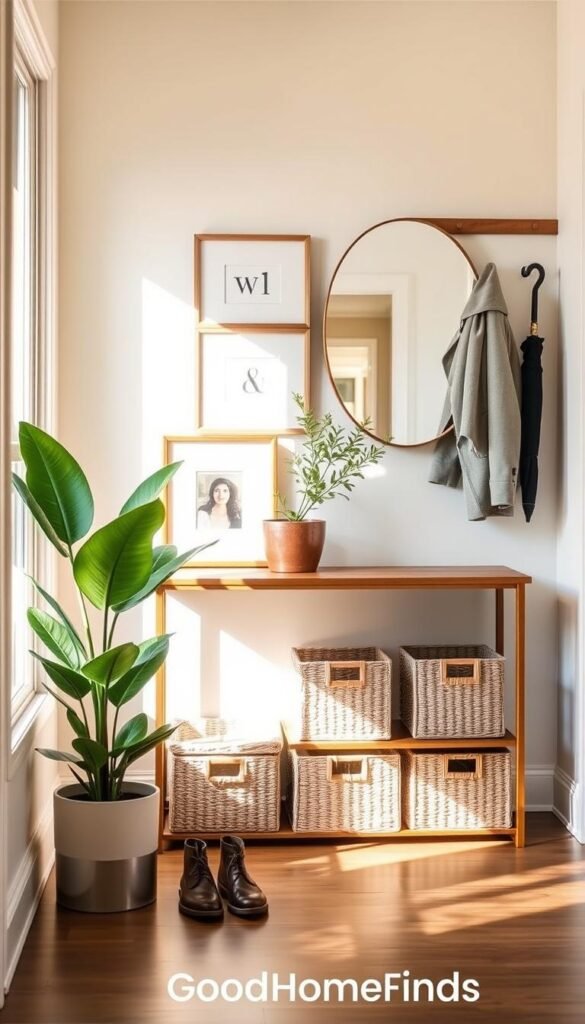
Useful means fewer lost items, less clutter, and faster exits. A single hook or rail saves minutes each run to the door. A low-profile tray keeps wallets and sunglasses in one place.
How to keep it affordable without buying flimsy gear
Start with two high-impact basics: a wall key rail and a set of sturdy hooks. Add small organizers later once the routine sticks. This strategy avoids buying decorative pieces that don’t perform.
- Spot flimsy gear: very light racks, weak adhesive, thin metal that bends, and trays that tip.
- Value lens: if an item saves you two minutes daily, its return on time is immediate.
- Be realistic: a full bench isn’t necessary for narrow halls; wall-mounted options often work better.
Choose pieces that match your household—kids, roommates, or pets—so the setup actually gets used. For a deeper layout comparison, see the fast vs full guide.
Wall-mounted key rail that stops the daily key hunt
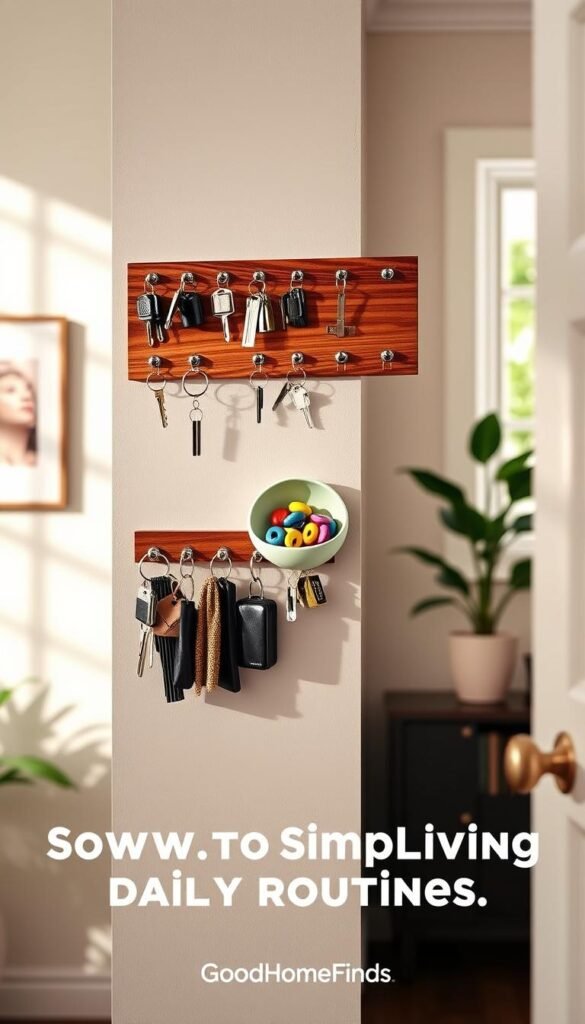
A single wall-mounted key rail can stop the morning scramble faster than a dozen decorative bowls. Make it the first habit: walk in, hang keys, and leave without a last-minute search.
Product idea and why it works
Franklin Brass wall-mounted key rail — about $13 on Amazon — is a top budget pick. It’s simple, easy to install, and ships fast. For busy households, this is high ROI: no more “where are my car keys?” at 7:45.
Who it’s for
This is ideal for renters who can patch small holes, families that misplace keys, and anyone who wants a reliable place by the door for daily essentials.
Pros, cons, and what to avoid
- Pros: quick install, tidy look, uses vertical wall space, easy habit to keep.
- Cons: limited capacity if many key sets; bulky fobs can crowd the hooks.
- Do not: rely on weak anchors or screw only into drywall for heavy loads. Avoid placing the rail where it will snag clothing or hit the door swing.
Alternatives
If you need a renter-friendly or ultra-cheap option, try adhesive hooks for very light keychains or a small wall basket if you prefer a drop spot over hanging. When in doubt, mount into a stud or use rated anchors for safety.
Coat hooks and racks that don’t make your wall look messy
Coats and backpacks on chairs make any small hall feel chaotic; a simple rack turns that mess into order.
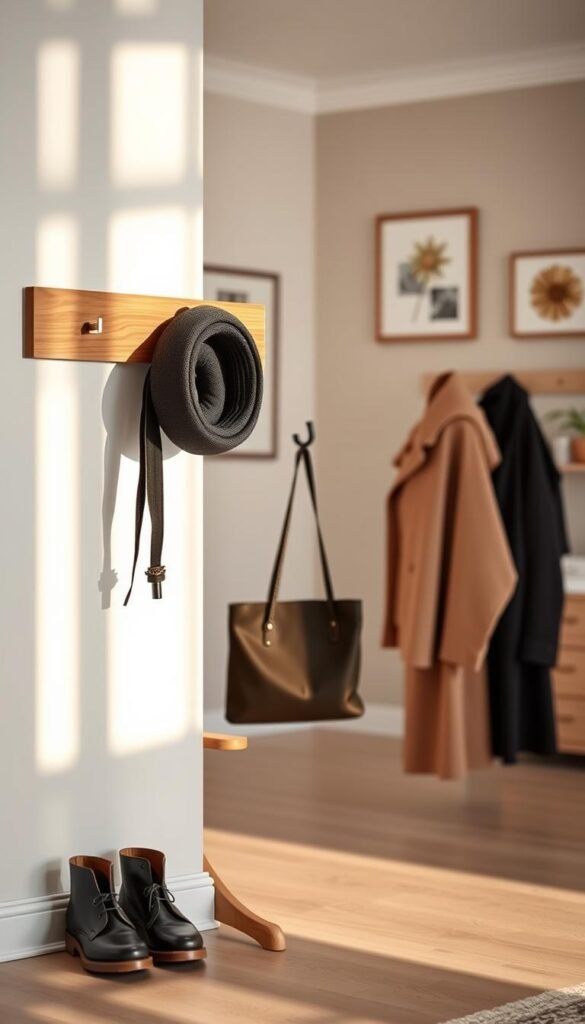
Budget pick: the Pipishell coat rack runs about $25 on Amazon. It hangs several jackets without taking up floor space and gives kids one clear place to hang backpacks the minute they walk in.
Why it helps
A rack changes the default from dropping to hanging. That single move saves time and keeps the hallway clear for exits and shoes.
Who it’s for
This is practical for apartments, narrow halls, and families where each person has multiple coats or bags. It’s a small, renter-friendly upgrade that improves daily flow.
Pros and cons
- Pros: vertical storage saves floor space, easy access, keeps outerwear visible.
- Cons: can wobble if overloaded; a busy rack can make the wall look cluttered.
What to avoid and alternatives
Avoid over-the-door hooks that slam or scratch paint. Instead, try a few heavy-duty single hooks spaced apart for a cleaner look. If you want a tidier style and don’t mind spending more, a hidden-hook shelf rack hides hangers while adding shelf storage.
Catch-all tray that corrals the “pocket dump” without clutter
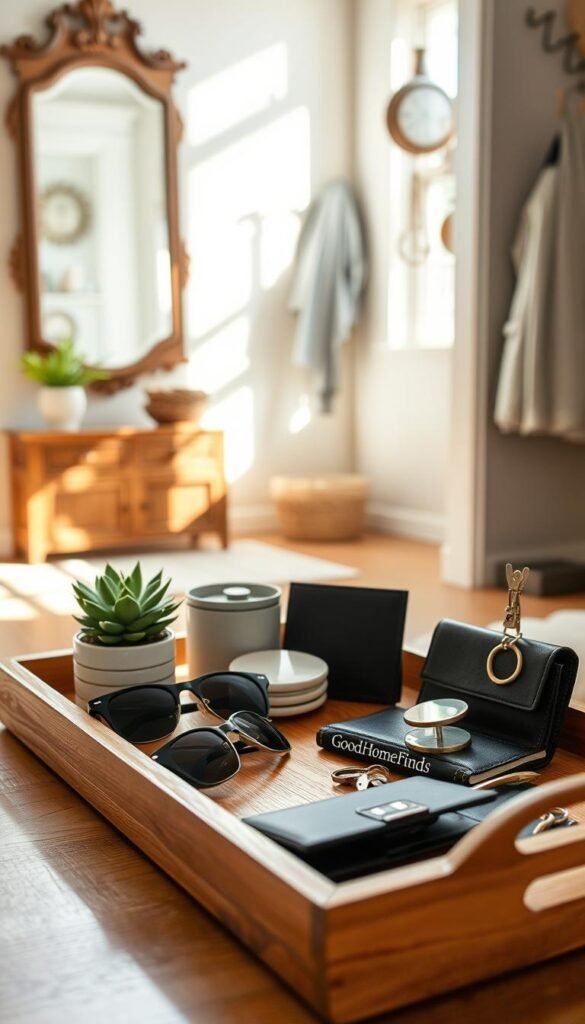
A dedicated catch-all tray gives every small item a clear home by the door. Use it on a console or small table so mail, sunglasses, and wallets stop migrating to counters.
Why a hand-woven tray works
Designer tip: Julie K. Beuerlein recommends a prominent tray to corral loose items and mail.
A visible tray makes emptying pockets automatic and keeps surfaces tidy.
Real use, who it’s for, and what to avoid
Drop wallets and earbuds into one tray and your morning exit becomes one grab, not five. This is ideal if you have no console drawer or share a small table with roommates.
Avoid shallow trays that tip and unfinished weaves that snag jewelry or knit gloves.
| Option | Price | Durability | Cleaning |
|---|---|---|---|
| Hand-woven rattan tray | ~$40 | Good | Spot clean |
| Plastic/metal tray | $10–$20 | Very good | Wipe clean |
| Thrifted serving tray / small basket | Varies (cheap) | Depends | Wipe or hand wash |
Styling tip: keep the tray as the main display and limit extra decor so it stays functional as storage for everyday items.
Small trinket dish for coins, rings, and AirPods
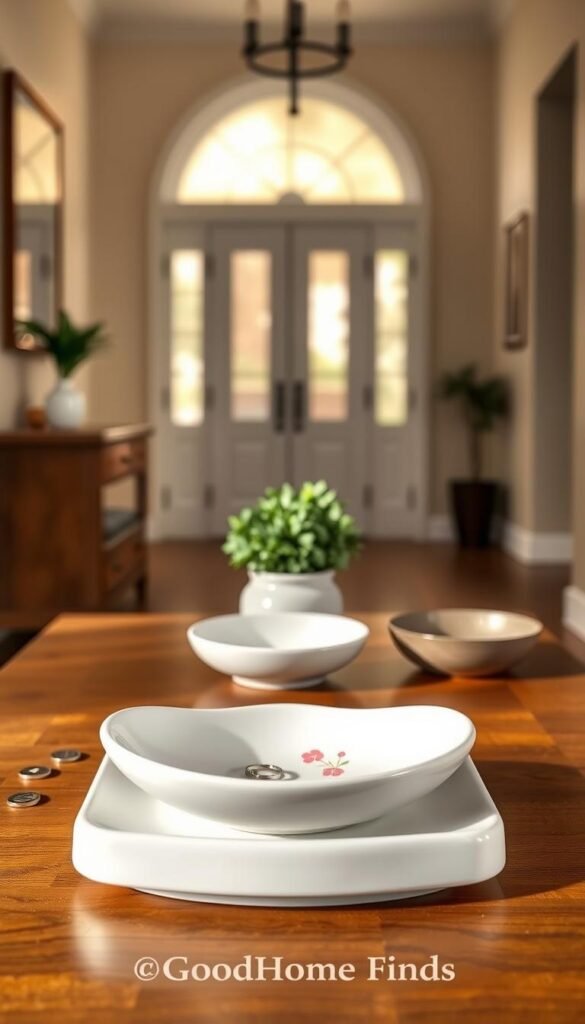
A tiny dish can be the simplest upgrade that keeps small essentials from vanishing into couch cushions. The Ccinppy ceramic trinket dish is a solid budget pick at about $12 on Amazon. It’s under $25 and gives you one quick place to drop rings, coins, and earbuds as you come through the door.
Why it works
One-handed drop: set the dish on a narrow bench, small shelf, or console so you can empty pockets with one motion. Real life: drop your ring in the dish before washing hands and you won’t leave it on the sink edge.
Who it’s for
- Minimalists and small-space homes.
- Shared households where tiny pieces disappear into common areas.
Pros and cons
- Pros: cheap, tidy, giftable, easy to clean.
- Cons: limited capacity; not for bulky items like sunglasses cases.
What to avoid and cheaper options
Avoid sharp-edged ceramics and dishes with unstable bases near ledges. If you want a softer or cheaper option, try a thrifted saucer or a small bamboo bowl for less break risk.
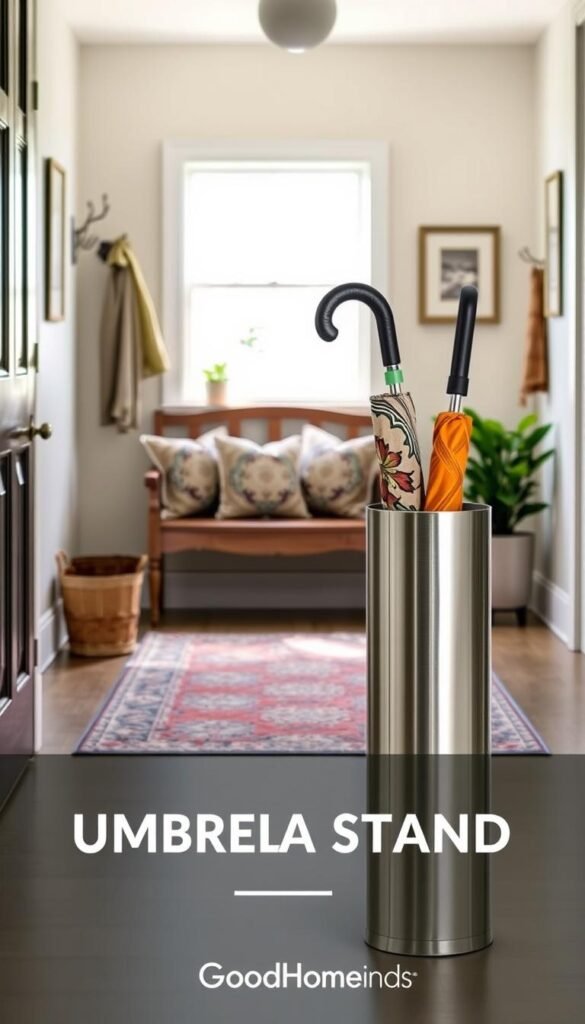
Umbrella stand that prevents puddles and last-minute scrambling
A well-placed umbrella stand turns wet gear into a neat, safe spot instead of a floor problem. Wet umbrellas often drip across the hallway and foyer and create slippery trails, especially when several people come in at once. Put a stand near but not inside the door swing so it won’t be knocked over in tight space.
Why it helps
After a storm, umbrellas go straight into the stand instead of leaning on the wall or leaving puddles. You won’t be mopping a trail through your home every time it rains.
Who it’s for
This is practical if you live in rainy or snowy regions, walk the dog often, or manage kids with umbrellas. It’s also useful in busy homes where multiple people enter at once.
What to avoid
- No drip tray: stands without a tray just pass water to the floor.
- Rust-prone materials: avoid thin metals that flake or corrode when wet.
- Door interference: don’t place the stand in the door swing or a tight path.
Budget vs premium and alternatives
You don’t need a designer option. A tall plastic bin with a towel inside or a boot tray works well and costs little. Look for stands with removable drip trays if you prefer a cleaner look.
Worth-it note: the Yamazaki umbrella stand is a durable, stylish premium option if your budget allows. For most homes, Amazon-first affordable metal or plastic stands are practical and renter-friendly.
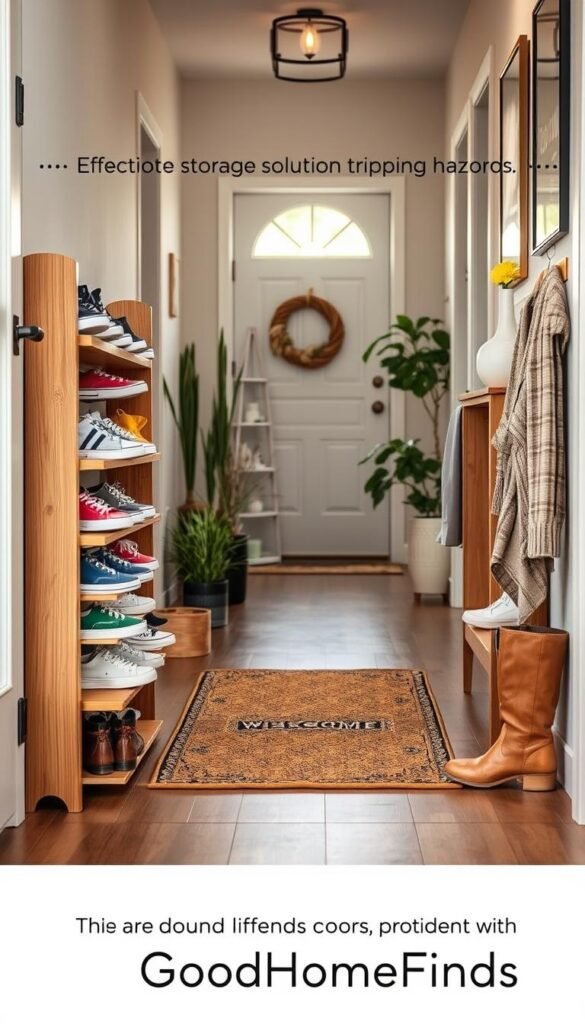
Shoe storage that reduces tripping hazards in the foyer
A cluttered shoe pile is a common trip hazard that makes even a tidy hall feel tight. Start with a safety-first mindset: clear walkways cut accidents and improve your first impression the moment guests arrive.
Under-$25 buys that work
Stackable shoe slots double capacity on a small footprint. An over-the-door organizer uses near-zero floor space and keeps pairs off a bench or mat.
When to upgrade
If you want a calmer, streamlined look, step up to a slim shoe cabinet like the ChooChoo model (~$110). That’s the move when cheap organizers look busy or you need closed storage.
Guests aren’t stepping over sneakers anymore, and you don’t have to do the grocery “shuffle sideways” to get inside.
Who this helps
Families, roommates, and anyone with a narrow entry or no closet. These solutions work in rental homes and small space setups.
Pros, cons, and what to avoid
- Pros: cheap organizers free floor space fast and reduce trips.
- Cons: overfilled units look messy and can block ventilation for wet shoes.
- Avoid: fabric pockets that trap moisture and unstable stacking shelves on uneven floors.
Alternatives
Consider a lidded basket for slippers to hide clutter, or a boot tray in winter to contain slush.
| Option | Typical Price | Best Use |
|---|---|---|
| Stackable shoe slots | Under $25 | Double shoes in narrow racks |
| Over-the-door organizer | Under $25 | Zero floor footprint, lightweight pairs |
| Slim shoe cabinet (upgrade) | ~$110 | Closed storage, tidy look |
For more compact storage tips and mixed-solution setups, see small-space fixes.
Doormat and entry rug that keeps dirt outside and floors safer
A tough mat at the threshold stops most mess before it ever hits your floors.
Start with a rugged doormat you trust. Let that one catch mud and grit right at the door. When budget allows, add a washable runner for the hallway to protect wood and tile.
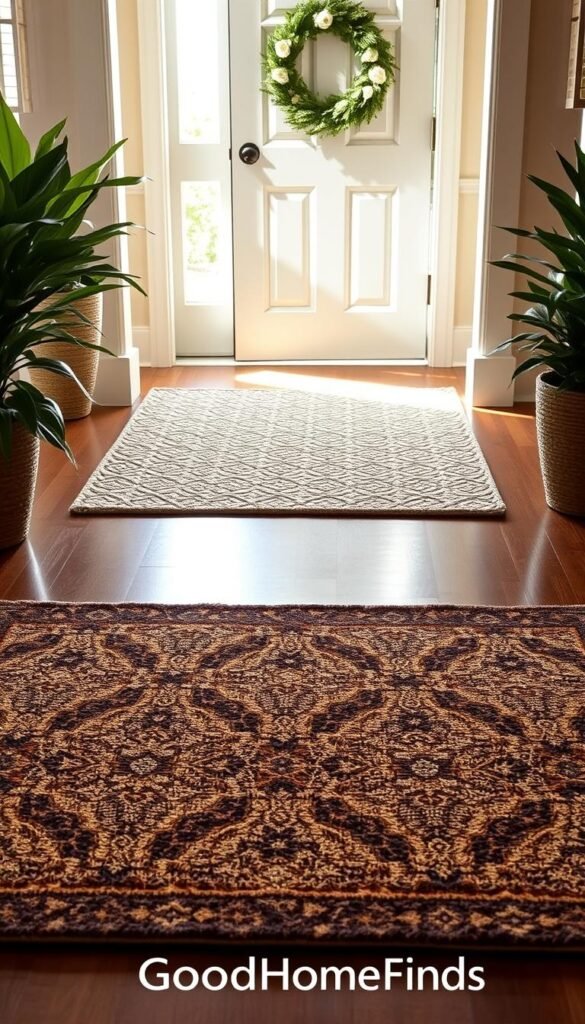
Real life: muddy shoes rarely reach the room beyond the runner. You sweep less and you don’t scrub scuffs every weekend.
- Who it helps: pet owners, rainy climates, high-traffic homes, and anyone tired of constant vacuuming.
- Price note: washable rug options often start around $40–$45 on Amazon, but they last longer than cheap mats.
Pros: washable patterns hide stains and look better longer. Cons: some rug backs slide on hardwood without a pad.
What to avoid: rugs with no non-slip backing, thick piles that catch under doors, and sizes that block swing. Cheaper options include a low-profile indoor/outdoor mat plus rug tape on corners. Add a thin rug pad for safety where needed.
A small upgrade at the threshold cuts cleaning time and protects floors from frequent wear.
| Step | Typical Cost | Best Use |
|---|---|---|
| Tough outdoor doormat | $10–$30 | Stops dirt at the door |
| Washable runner rug | $40+ | Protects hallway, hides stains |
| Low-profile indoor/outdoor mat + tape | $15–$30 | Budget option, slip tape corners |
Check door clearance and avoid raised edges to reduce trip risk. For curated mat recommendations, see this best door mats guide.
Mirror near the door for a faster “last look” and more light
A small wall mirror gives you one last quick check and instantly brightens a narrow hall.
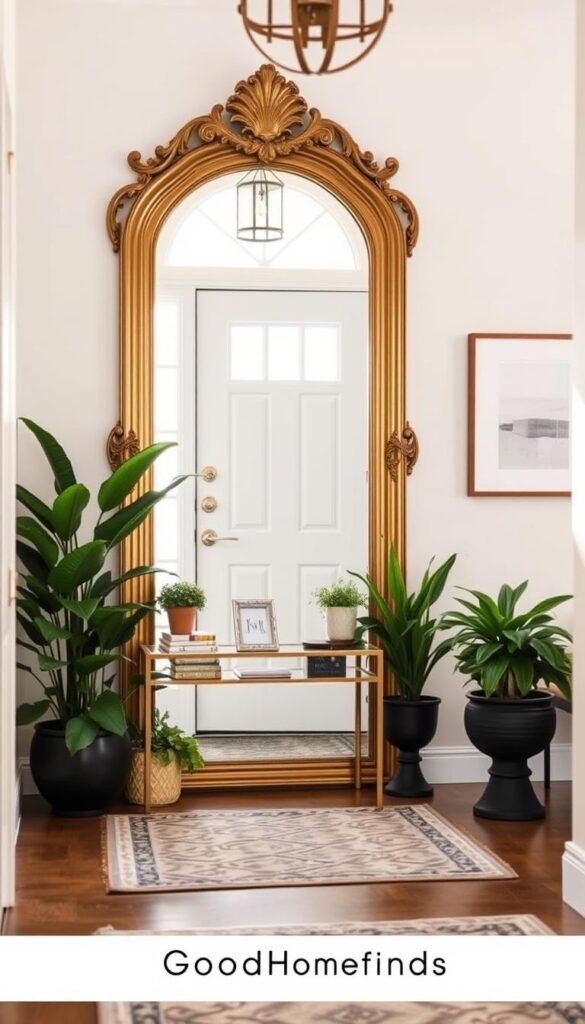
Why it’s practical: a mirror speeds the “last look.” You catch lint, makeup smudges, and crooked collars before you step out. It also bounces natural and artificial light, so a dim passage feels larger without adding furniture.
Source idea and price-value
The Dumos Circle Mirror runs about $26 on Amazon. It’s slightly over $25, but it’s a daily-use upgrade that often ships fast and changes how the area functions.
Who benefits
This works well for small entryway spaces, dim hallways, and anyone who leaves in a hurry and wants a reliable final check.
Pros, cons, and what to avoid
- Pros: big visual payoff for little money; daily usefulness; adds perceived space and light.
- Cons: careful mounting is required, especially on drywall.
- Do not: use cheap hangers or place the mirror where a door can hit it. Avoid mounting in high-impact zones.
Alternatives and safety tips
If you can’t drill, try a full-length over-the-door mirror. Watch for door swing, scratches, and extra noise. For wall-mounted options, confirm the mirror weight and use rated anchors or find a stud.
A compact mirror is a small step that saves time daily and makes a narrow hall feel more open.
| Option | Typical Price | Best Use |
|---|---|---|
| Dumos Circle Mirror (wall) | ~$26 | Quick touchups; brightens small halls |
| Full-length over-the-door mirror | $20–$40 | Full outfit check without drilling |
| Adhesive peel-and-stick mirror | $10–$25 | Renter-friendly, light use only |
Soft entryway lighting that eliminates harsh overhead glare
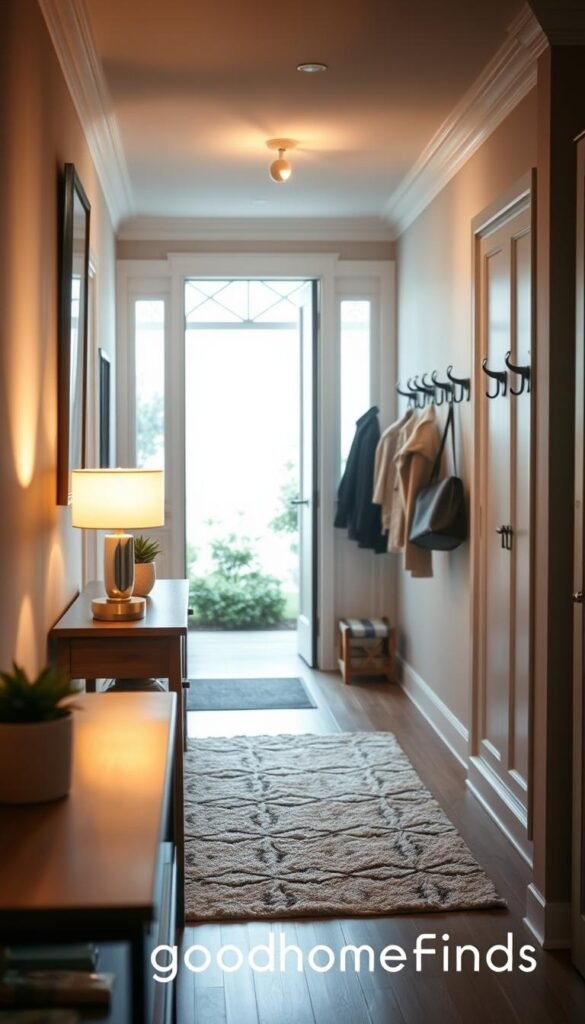
A warm, low lamp takes the sting out of late-night returns and keeps the house quiet. The goal is a softer, layered light so you don’t get blasted by a ceiling bulb the moment you walk in.
Safety and budget-first options
Cordless lights reduce trip hazards in a narrow hallway because there are fewer loose cords near the door. The O’Bright cordless LED table lamp is a solid cord-free option (around $45). It’s worth the premium when you need flexible placement and multiple brightness settings.
Under-$25 approaches that actually work
- Plug-in mini lamp + warm LED bulb — easy, cheap, and gives a cozy glow without harsh blue tones.
- Motion night lights — hands-free for late returns and good for kids or parents with sleeping children.
Real use, who benefits, and what to avoid
In real life, a soft lamp lets you find keys and shoes without flipping on every light and waking the household. This is practical for renters, dark foyers, parents with sleeping kids, and anyone who comes home late.
- Avoid cheap no-name batteries or chargers — they fail and can be a fire risk.
- Avoid top-heavy lamps on narrow consoles that tip when bumped.
Keep cords tight to the wall, choose warm bulbs for calm color, and place lamps where they won’t block the door path.
For basics on safe, stylish entry lighting, see front entry lighting basics.
Storage basket to hide scarves, gloves, and “incoming” clutter
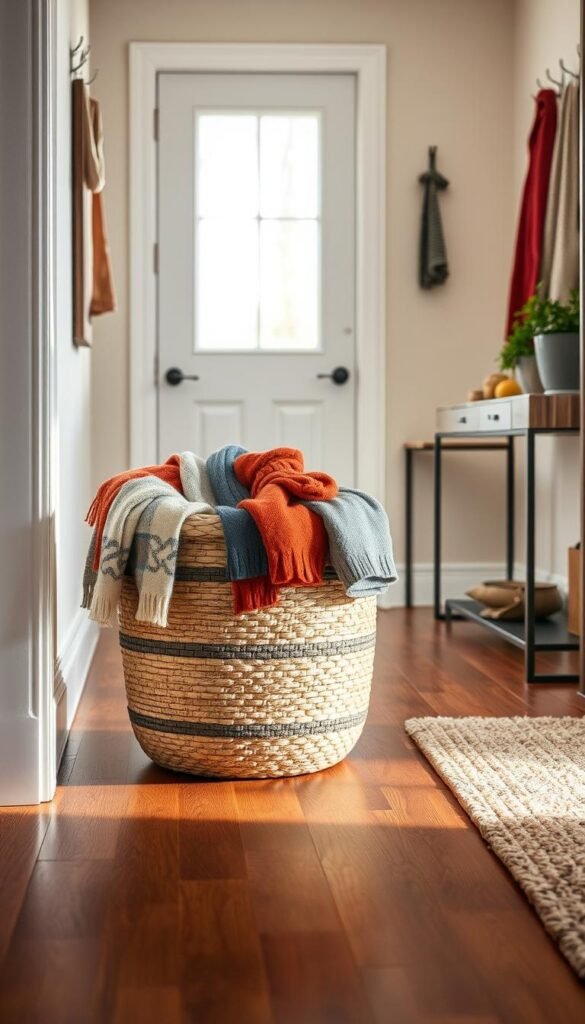
A basket gives you visual calm and a quick place to stash seasonal clutter the moment you walk in.
Why it helps
One container, instant order. Use a single storage basket on a bench or under a shelf to keep mittens and hats from littering your daily path.
Real life: winter gloves go straight into the basket instead of living on the bench or getting scattered across the room. That one habit cuts morning fumbling and visual clutter.
Who benefits
- Families in seasonal climates who need quick access to cold-weather gear.
- Small homes and tight halls without a closet by the door.
- Anyone who wants simple, renter-friendly pieces that are easy to move.
What to avoid and alternatives
Avoid baskets with strong chemical smells or rough fibers that snag scarves and knit gloves. Skip very shallow models that overflow the first week.
Alternatives: soft fabric cube bins for a gentler finish, or a lidded plastic tote in a mudroom corner for wet gear. For styling tips, see decorate with baskets.
A single, well-sized basket turns piles into one tidy habit.
Quick tips: choose a size that fits your routine — too small overflows, too large becomes a catch-all. Pick a material you can wipe, shake, or vacuum easily. Affordable Amazon options prioritize function and smooth finishes over trendy weaves; the pricier hyacinth baskets (~$65) look nice, but budget pieces often do the practical work better.
Picture frame sets for a low-effort gallery wall that feels personal
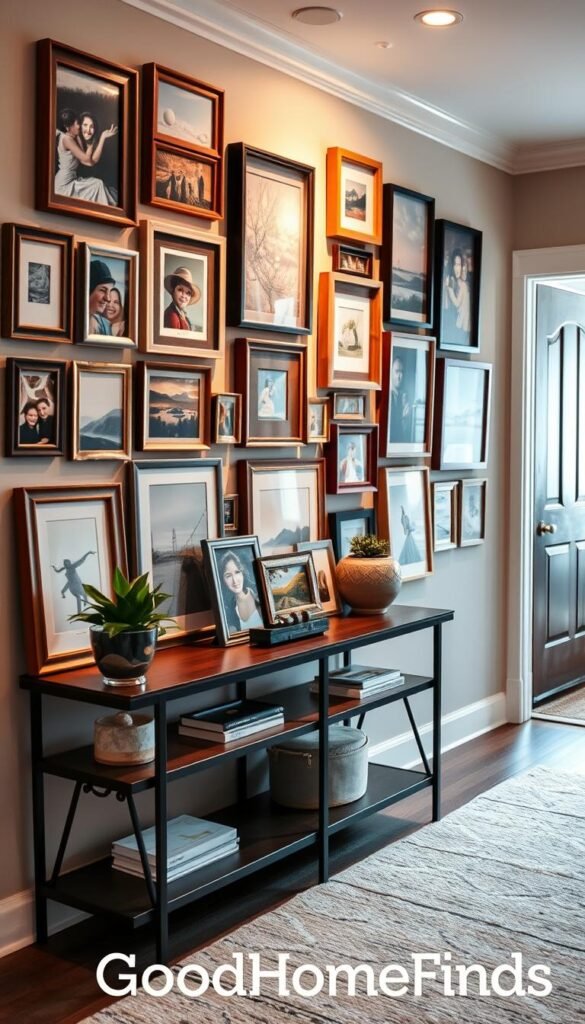
A curated set of frames gives a small hall personality without taking up floor space. A wall gallery turns blank walls into a focal point and keeps walkways clear. It’s a simple decor move that reads intentional and personal.
Source idea and honest budget note
Bsrhome picture frame set runs around $38 on Amazon, so it’s usually above the under-$25 goal. That said, it’s a fast way to start a cohesive look because the frames match and arrive ready to hang.
Budget workarounds
- Start with three frames instead of a full set. Print a few favorite photos and expand over time.
- Mix in thrifted frames for character and lower cost.
- Use removable strips for renter-friendly hanging to avoid patching walls later.
Why it’s useful
Gallery walls improve first impressions without adding bulky furniture that can block narrow paths. They make a long hall feel intentional and help your home look lived-in, not generic.
Who it’s for
Renters who prefer removable strips, homes with blank long walls, and anyone who wants art that feels personal and easy to change.
Practical tips and what to avoid
- Plan the layout on the floor first to keep spacing even.
- Keep a simple color palette so the display feels calm, not cluttered.
- Avoid heavy frames with weak hanging hardware and don’t place frames where a door can bump them.
For a quick how-to on arranging frames, see this gallery wall guide.
Simple scent upgrade that feels welcoming without being overwhelming
A small scent upgrade can make your home smell clean and cared-for right away.
Source idea: the Cocorrína reed diffuser set runs about $18 on Amazon. It’s an affordable, no-flame option that runs quietly in the background.
Why it helps: a subtle diffuser gives a clean-house vibe at the door. In real life, pet odors don’t greet guests and your first impression improves immediately.
- Who it’s for: apartments, pet owners, or anyone who prefers scent without candles.
- Pros: low maintenance and consistent scent; no flame risk.
- Cons: too strong if all reeds are used in a small entry; oils can irritate skin.
Safety and what to avoid: keep the bottle away from kids and pets and out of direct sun or heat. Don’t place where it can be knocked over. If you have sensitive skin, avoid touching the oils.
Alternatives and quick tip: baking soda odor absorbers neutralize smells, or tuck lightly scented sachets into a basket. Start with fewer reeds and move the diffuser if it gets too intense. These simple options give practical fragrance control without fuss or fire.
Vase or greenery that makes the entry feel finished (on a budget)
One tidy vase with a pop of color makes a small table look deliberate, not accidental.
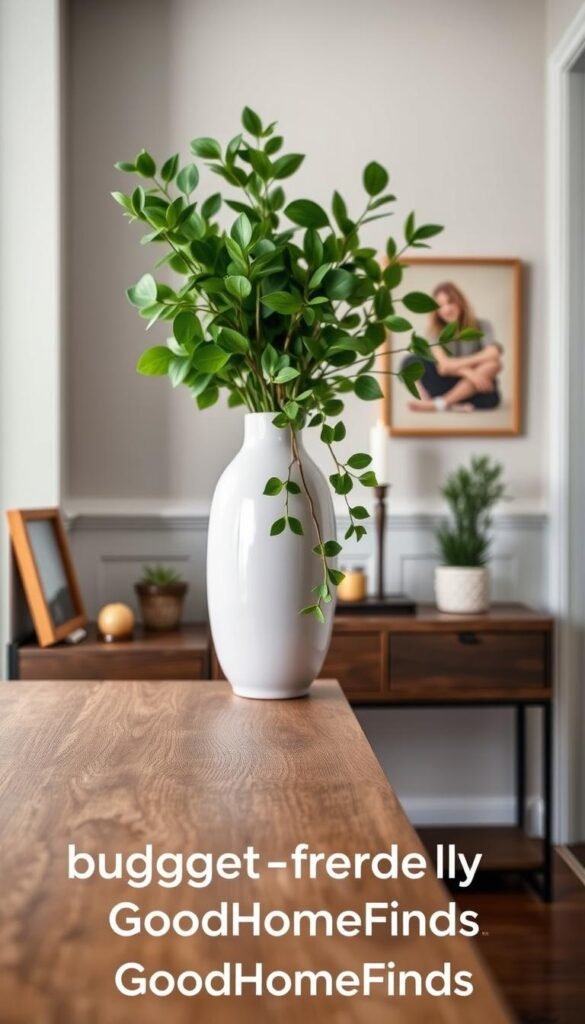
Why it’s useful: a single vessel or a stem of flowers gives the space an intentional finish. It reads as styled, not messy, and it doesn’t compete with your drop zone.
Low-maintenance choices
Faux stems, dried flowers, or a hardy low-light plant are practical picks. Faux stems never need watering and stay neat. Dried flowers add muted color and texture without upkeep.
Who this helps
This is for anyone with a tiny console or narrow shelf. If you have a small table or a compact console, one simple piece keeps the surface from becoming a catch-all.
What to avoid
- Avoid tall, top-heavy vases that tip when bumped near the door.
- Skip real plants if light is poor and you won’t water them.
- Don’t crowd the surface—stick to one vase or one plant for a clean look.
Budget tip: choose a small, sturdy vase you can wipe clean. A single stem or a compact faux arrangement is cheap and long-lasting.
| Option | Cost | Maintenance | Best use |
|---|---|---|---|
| Small glass bud vase | $8–$20 | Low (replace water weekly) | Single fresh flower or stem |
| Faux stem arrangement | $10–$25 | None | Color without upkeep |
| Hardy houseplant (low-light) | $15–$30 | Medium (occasional watering) | Greenery that survives low light |
Safety and quality considerations for entryway items (especially from Amazon)
Treat every wall hook and slim cabinet like a small safety job, not decor. A fast check now prevents spills, scrapes, and returns later. Use simple tests and clear rules when you shop online.
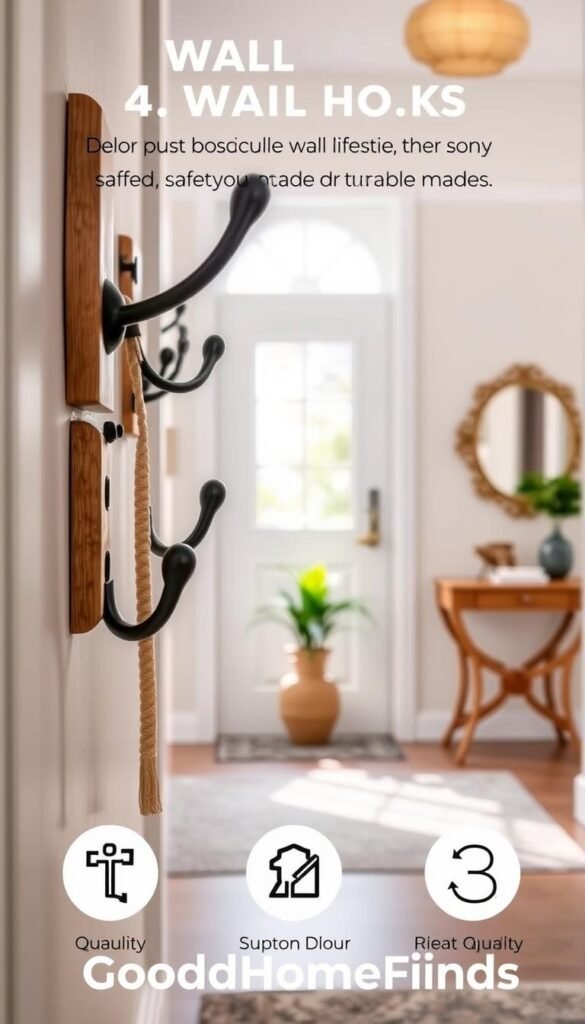
Mounting and weight limits: anchors, studs, and preventing tip-overs
When you plan to hang anything on a wall, find a stud if possible. If not, use anchors rated for the load. The number on the listing matters more than how sturdy it looks.
For tall furniture, attach anti-tip straps. Place narrow pieces away from the door swing to avoid accidental bumps.
Slip risks: backing, pads, and door clearance
Check for non-slip backing on any rug. Add a rug pad when you have hardwood or tile.
Always test door clearance so rugs do not bunch under the door and cause trips.
Materials and finishes: off-gassing, splinters, sharp edges, rust
Watch for strong chemical smells on new wood or painted furniture — that can mean off-gassing. Inspect cheap wood for splinters and ceramics for sharp edges.
For wet zones, choose rust-resistant metal or plastic. Avoid thin metals that corrode with umbrella drips.
Battery and charging basics for cordless lights
Buy lights from reputable brands and use the supplied charger. Don’t use damaged batteries and keep charging areas tidy and away from flammable clutter.
- Amazon checks: scan reviews for “wobbly,” “strong smell,” or “returned” patterns.
- Renter-friendly tip: small patched holes are fine; avoid repeated over-the-door damage that’s harder to fix.
| Issue | Quick check | Fix or upgrade |
|---|---|---|
| Mounting strength | Look for stud instructions and anchor type | Use toggle anchors or mount to stud |
| Tip-over risk | Tall narrow furniture near doors | Install anti-tip straps; relocate piece |
| Slipping rugs | No non-slip backing noted | Add rug pad or tape corners |
| Material issues | Strong smell or rough wood | Air out, sand edges, or return |
For compact furniture options and hardware basics, see this guide on entryway furniture buying.
Conclusion
Rather than more stuff, choose one practical piece that earns its place each day.
Keep it simple: focus on routines and the right storage so your entryway stops wasting time. Start with a keys solution, then add hooks or a rack for jackets, shoe control, a rugged rug or mat, and a mirror or light only if you need them.
Use wall space, keep the walking path clear, and avoid oversized furniture that shrinks the space. Pick finishes and color that match your home or farmhouse style so additions feel intentional.
Quick safety note: mount into studs or use rated anchors, add non-slip pads, and follow battery/charger guidelines for cordless lights.
Measure your door swing, choose one dedicated place for mail and keys, and you’ll feel the difference immediately. For ideas on separating areas, see creative divider ideas.