Quick promise: these are small, practical picks that solve recurring annoyances around the home and kitchen without costing much.
Budget focus: most options aim for under $25. Prices change, so I prioritize value, specs, and durability over one fixed tag.
I evaluate each item by how it saves time, reduces waste, improves organization, or prevents bigger problems later. Expect notes on Amazon-friendly shipping, easy returns, and listing signals that feel trustworthy.
Each listing will show why a tool is useful, who it helps, what to avoid, pros and cons, and smart alternatives. No gimmicks. No viral hype. Just things you’d use on a busy weekday in a small kitchen, rental, or family routine.
Safety basics — food-contact materials, heat ratings, adhesives, batteries, and pet-safe hardware — are called out when they matter.
Key Takeaways
- Practical picks aimed at under $25 with a value-first view.
- Each item chosen for time savings, waste reduction, or organization.
- Amazon delivery and return notes help you buy faster and safer.
- Simple pros/cons and alternatives make skimming easy.
- No hype; recommendations fit small spaces and renter limits.
How to choose everyday essentials that actually save time and money
Favor items that deliver steady, practical value rather than trendy features. Start with a simple rule: if it needs frequent care or only one task, it probably won’t be worth it.
What “good value under $25” looks like on Amazon
Good value means durable enough for daily use, easy to clean, and not overly specialized. Look for clear dimensions, listed materials, and care instructions. Expect real photos, not only studio shots.
Fast delivery, returns, and avoiding sketchy listings
Prioritize Prime or clear delivery dates. A cheap item that takes weeks to arrive or is hard to return costs you more time than you save.
„A good buy is one that fixes a small problem quickly and reliably, not a gadget that promises magic.“
Safety and quality basics
Check food-contact claims, explicit heat ratings for silicone, and what “BPA-free” covers. Clear labeling beats marketing terms. If a listing hides specs, skip it.
| Buy Rule | What to check | Why it matters |
|---|---|---|
| Materials & care | Stainless/safe silicone, wash instructions | Lasts longer, easier maintenance |
| Delivery & returns | Prime, delivery date, simple returns | Replaces broken items mid-week without hassle |
| Listing signals | Brand name, real photos, full specs | Avoids scams and fake reviews |

Follow these checks and you’ll spend less over the years. This is the best way to keep small chores quick each day and help the people in your home rely on tools that work.
Everyday life finds for the kitchen that cut daily friction
Tiny upgrades—an organizer, a strainer clip, a reliable timer—cut the small frictions that add up each evening.
Why small tools win: they remove one awkward step at the exact moment you’re busiest. A cheap timer stops burnt dinners. A clip-on strainer drains pasta without extra bowls. Magnetic spoons keep measuring simple.
Map to common weeknight pain points:
- Storing half-used produce instead of hunting bags.
- Draining pasta fast so you can finish other tasks.
- Measuring with one hand while stirring.
- Cleaning greasy pans without soaking the whole sink.
These picks fit tight counters and renter-friendly kitchens. They stack, tuck, or hang in a small place and won’t crowd your building’s limited storage.
Modular approach: buy only what matches your routine. Amazon availability matters for quick replacements and compatible refills like dish wand heads.
Not life-changing, but worth a few dollars. Over repeated times, the minutes saved feel real.

Explore more practical combos that solve common home problems.
Silicone stretch lids to replace plastic wrap and reduce waste
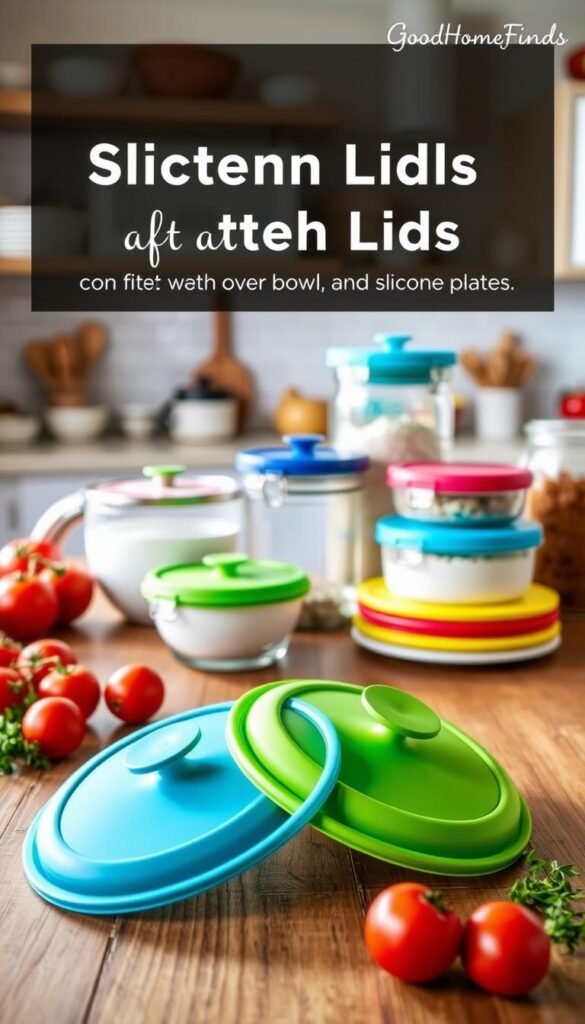
Flexible silicone lids seal odd bowls, cans, and cut produce so you can stash food fast.
Why it’s useful
They snap on in seconds. They stretch to fit irregular shapes and cut down on single-use wrap. For quick storage and transport they often beat flimsy cling film.
Who benefits
- Meal preppers and small kitchens.
- Anyone saving half produce or leftovers without extra containers.
- People who want renter-friendly, low-cost swaps for plastic.
Price-value evaluation
A decent multi-size set under $25 is worth it if the silicone is thick, labeled food-grade, and lists a heat rating. Cheap thin sets from unknown brands warp after a few washes.
| Feature | What to check | Quick note |
|---|---|---|
| Material | Food-grade silicone | Must state composition |
| Heat rating | Microwave/boil max temp | Needed for hot food |
| Size range | Multiple diameters | Avoid sets with only tiny lids |
Pros and cons
- Pros: reusable, fits odd shapes, stacks well.
- Cons: can pick up odors, may pop off if overstretched.
What to avoid
Skip ultra-thin lids without heat data or vague „BPA-free“ claims. Avoid sets from sellers with poor photos or no specs.
Alternatives — beeswax wraps, reusable container lids, or a simple plate as a zero-cost option.
Real-life example: Press a lid over half an avocado and it remains snug in the fridge. No single-use bag, no brown spot, and no need for crushed ice or extra steps that folks used years ago.
Magnetic measuring spoons that stay together and don’t get lost
Magnetic measuring spoons cut the small, repeated frictions that slow down recipes. They nest neatly, stick as a set, and make it simple to grab the right measure without rifling through a crowded drawer.
Why it’s useful
Magnets are the feature that matters. The magnetic join keeps all spoons paired. That saves you time when a recipe asks for quick scoops. Sets under $25 are common on Amazon and often have the best value for daily use.
Pros and cons
- Pros: easier storage, faster access, and less chance of losing the 1/4 tsp that vanishes at the worst times.
- Cons: magnets can attract metal dust in a messy drawer. Some budget sets use weak magnets that won’t hold through repeated washing.
What to avoid
Avoid flimsy thin metal that bends, unclear markings that fade, and nonstandard sizes that don’t match common recipes. Look for stamped or etched labels so the measurements stay readable after many washes.

Real-life example
You’re stirring a sauce with one hand. You need a pinch of salt. With magnetic spoons, you lift the set, snap off the right spoon, and measure one-handed. No drawer dump. No lost part. Just the spoon on the wall of your routine.
| Buying factor | What to check | Why it matters |
|---|---|---|
| Magnet strength | Firm hold when stacked | Keeps set together during storage and washing |
| Label type | Stamped or etched markings | Won’t fade after dishwasher cycles |
| Material | Stainless steel, not thin plated metal | Resists bending and metal dust buildup |
Clip-on silicone strainer for pasta, veggies, and quick draining
For tight kitchens, a silicone clip-on strainer turns any pot into a quick draining station.
Why it’s useful
It clips to the rim so you can pour hot water away without hauling a colander. You rinse berries and drain pasta while the food stays in the pan. That saves a dish and two hands.

Who it’s for
This tool fits small kitchens, dorm-style apartments, or anyone short on cabinet space. It’s handy if you cook for one or two. It also helps in a busy city kitchen where storage is tight.
Price-value evaluation
It’s worth buying when the clip grips firmly, the silicone feels thick, and a heat rating is listed. A good clip-on will last years and keep you from juggling hot pots.
What to avoid
- Avoid strainers with tiny holes that clog easily.
- Skip clips that don’t fit common pot rims.
- Don’t buy listings with no material or heat data.
Cheaper option
If budget matters, a basic handheld mesh strainer works as a reliable backup. It takes more room but is sturdy and simple to trust.
„Test the clip with cold water first. A weak grip is a spill risk — especially with boiling water.“
For affordable recommendations, check this kitchen picks on the site for a compact clip-on that balances price and function.
Oil sprayer or refillable mister for faster, lighter cooking
A refillable oil sprayer lets you coat pans and trays with a quick, controlled mist instead of pouring or dabbing. It’s a simple tool that speeds prep and keeps oil use consistent.

Why it’s useful
Use it to mist a sheet pan, grease an air-fryer basket, or lightly finish roasted veggies. The real benefit is consistent coverage and faster prep on a busy day, not miracle dieting.
Pros and cons
- Pros: less mess, better portion control, refill with your preferred oil instead of aerosol cans.
- Cons: some nozzles clog, some models stream instead of misting, and they need occasional cleaning to stay reliable.
What to avoid
- Avoid mystery plastics with no material data or designs that can’t be fully cleaned.
- Skip listings that promise a perfect mist with no maintenance.
Amazon tip: pick wide-mouth bottles for easy refills and look for reviews with a clear image of the spray pattern.
„Mist a sheet pan in seconds, then move on—no pooled oil and no paper towel fuss.“
Non-scratch dish wand with replaceable heads for quicker cleanup
A simple non-scratch dish wand combines soap and scrubbing so you finish cleaning faster and with less fuss. It keeps your hands away from hot grease and speeds up rinse cycles.

Why it helps
A dish wand puts soap and scrubbing in one tool. That makes cleanup faster and reduces the chance dishes pile up overnight. Replaceable heads mean you swap only the scrubber, not the whole handle.
Who benefits
This is practical for busy households, small apartments, and anyone who dislikes touching greasy pans. It fits tight counters and is renter-friendly.
Safety and quality to check
Watch for bristle shedding or pad breakdown. Loose fibers can stick to cookware or clog drains.
Use dish-safe detergents and avoid harsh solvents that degrade plastic or irritate skin if you use the wand every day.
Amazon buying tip
Pick a model under $25 with clear refill listings and Prime delivery. Confirm refill heads are sold separately and have fast shipping so the handle stays useful.
Real-life example
You hit a greasy sheet pan right after roasting. With a non-scratch wand and soap loaded, you scrub and rinse in under a minute. No soaking. No scrubbing later.
„A replaceable-head wand is a small part of the kitchen, but it saves time and keeps chores from piling up.“
| Feature | Check | Why it matters |
|---|---|---|
| Replaceable heads | Easy to buy and swap | Keeps handle usable long-term |
| Non-scratch material | Silicone or soft nylon | Protects pans and coatings |
| Refill availability | Prime or quick ship | Prevents a useless handle |
Microfiber cleaning cloths that outperform paper towels
Microfiber wipes pull grime away instead of spreading it, so one pass usually does the job. They grab dust, grease, and fingerprints on stainless steel faster than disposable towels. That saves time and cuts trash.

Why it’s useful
Quick pickup: microfiber traps particles in tiny fibers. You tidy counters, appliances, and glass with fewer strokes.
Color-code cloths for kitchen, bathroom, and glass so cross-contamination stays out of the picture.
Price-value evaluation
A multi-pack under $25 usually pays for itself in a short period compared with ongoing paper purchases. Over years the savings remain clear.
What to avoid
- Avoid ultra-cheap cloths that shed lint or lose absorbency after a few washes.
- Wash without fabric softener so the cloths keep absorbing well.
Alternatives
Swedish dishcloths offer lower lint and a sponge-like feel for spills. They dry fast and are compostable at end of life.
“I wiped a sticky counter in one pass and tossed the cloth in the wash instead of burning through a roll of paper.”
| Use case | Best cloth type | Why |
|---|---|---|
| Stainless steel smudges | Microfiber polishing cloth | Leaves no streaks or lint |
| Sticky countertops | Thicker microfiber towel | Absorbs grease fast |
| Quick spills | Swedish dishcloth | Sponge-like, low lint, compostable |
For curated picks that pair well with microfiber, see this daily cleaning mix.
Command-style hooks and adhesive organizers for no-drill storage
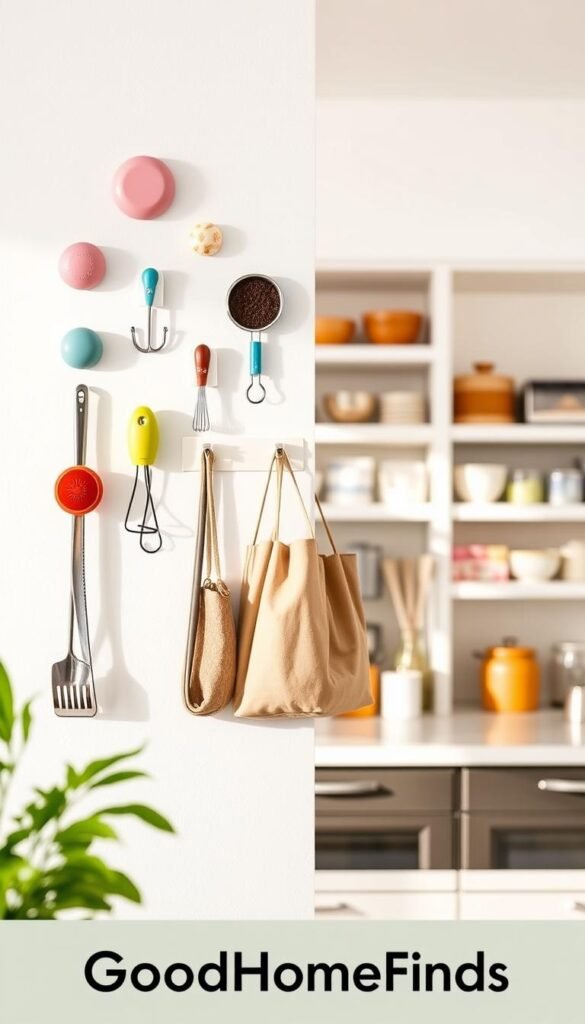
Adhesive hooks and organizers give you extra storage exactly where you need it, without drilling holes or marring surfaces. They work well in small kitchens, rental units, or a shared building where permanent changes aren’t allowed.
Why it’s useful
Instant vertical storage: stick hooks to the inside of cabinet doors, blank walls, and the side of a pantry to keep tools in reach. They free up drawers and make each place more functional.
Pros and cons
- Pros: fast install, clean removal, renter-friendly, cheaper than hardware.
- Cons: weight limits matter, some surfaces won’t hold, adhesive can fail near heat.
What to avoid
Avoid off-brand strips with vague weight ratings. Don’t apply to dusty or greasy surfaces. Never hang very heavy pots or items exposed to oven heat.
Practical tip & real-life example
Clean with rubbing alcohol, let dry, press firmly, and wait the recommended time before loading weight. A simple use is hanging oven mitts and measuring cups inside a cabinet door so you stop digging through a crowded drawer while you cook.
For renter-specific installs and no-damage options, see a helpful renter-friendly organization guide.
Honest expectation: these work great for light-to-medium items. For heavy cookware, choose real hardware anchored into studs or solid walls — a solution that has lasted a century in durable kitchens.
Under-sink leak detector or water alarm for early “small drip” warnings
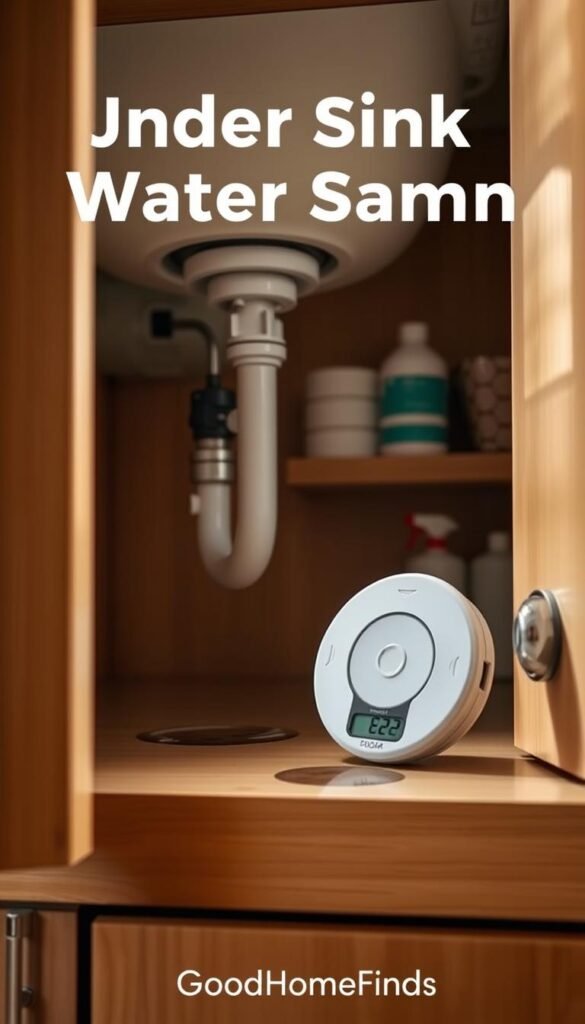
A compact leak detector gives you an early heads-up so a tiny drip doesn’t turn into a major repair.
Why it’s useful
A basic water alarm sounds when moisture reaches the sensor. That early alert helps you stop a slow leak before it warps a cabinet, ruins flooring, or invites mold.
Who it’s for
This is ideal for renters and homeowners with under-sink filters, a dishwasher line, or older plumbing. It’s practical for anyone who prefers prevention over surprise repairs.
Price-value evaluation
Under $25, a loud non-smart alarm is worth it. Fixing one leak can cost far more. The device is a small investment that pays off quickly.
What to avoid
Avoid units with weak volume, confusing setup, or unclear battery specs. Skip devices that require rare batteries or rely solely on flaky wireless connections.
Safety and placement
Pick a model that uses common batteries you keep on hand. Place it away from outlets and power strips. Set the sensor at the lowest point where water would pool.
„Test the alarm monthly so you know it will alert when it matters.“
| Factor | What to check | Why it matters |
|---|---|---|
| Volume | 80–90 dB or louder | Heard through cabinet doors |
| Battery type | AA/AAA or coin cell listed | Easy to replace and keep spares |
| Placement | Lowest point under sink, away from outlets | Detects pooling, reduces electrical risk |
For practical options and buying tips, see this water leak detector guide.
Drawer dividers and label tape for “library-level” home organization
Small dividers and clear label tape turn a messy drawer into a predictable spot. When everything has a place you stop deciding where to put things. That saves seconds every time you cook or tinker.

Why it’s useful
Dividers and labels reduce decision fatigue. Group items into consistent categories, like a library’s stacks, so you can return things fast. Labels make resets simple when your week gets busy.
Pros and cons
- Pros: faster prep (spices and tools are easy to find), less clutter creep, and simpler restocking.
- Cons: dividers must match drawer depth and can slide if not tensioned or glued.
What to look for and a cheaper starter option
On Amazon choose adjustable dividers with solid tension and label tape that peels cleanly. Clear sizing information avoids returns and wasted time.
Cheaper option: use painter’s tape and a marker to test categories before you buy permanent dividers. It’s quick, renter-friendly, and lets you try a system risk-free.
„Labeling isn’t glamorous, but it’s one of the highest ROI upgrades for daily time savings.“
| Feature | What to check | Why it matters |
|---|---|---|
| Adjustability | Expandable width or modular pieces | Fits different drawer sizes without cutting |
| Label tape type | Removable adhesive, legible print | Re-labeling is easy and surface-safe |
| Material | Durable plastic or bamboo | Resists warping and hides crumbs |
Real-life example: your „random junk“ drawer becomes labeled zones. Batteries, scissors, and tape live in their own slots. You find what you need in seconds instead of digging.
For budget-friendly organizer options and tested picks, see this organizer guide.
Reusable freezer bags for meal prep and leftovers
A good set of freezer-safe reusable bags helps you portion food quickly and reclaim freezer space. They cut plastic waste and make weekday prep faster.
Why it’s useful
Reusable freezer bags reduce single-use wrap and let you pack portions ahead of time. That saves you time in the morning and lowers the urge to grab takeout.
Who it’s for
- Meal preppers and smoothie fans who batch ingredients.
- Families managing leftovers and small freezers.
- Anyone trying to keep a compact freezer tidy and efficient.

Quality and food-safety basics
Look for clear food-grade labeling, thick seams, and a secure closure. These details mean the bag will last and protect food quality.
| Feature | What to check | Why it matters |
|---|---|---|
| Material | Food-safe silicone or PEVA with FDA notes | Prevents leaching and holds up in the freezer |
| Closure | Double zip or slider | Stops air and freezer burn |
| Thickness | Reinforced seams, no thin corners | Ease of cleaning and longer use |
What to avoid
- Bags with tiny corners that trap food and are hard to clean.
- Closures that don’t fully seal or separate after washing.
- Cheap silicone that holds odors even after multiple washes.
Practical tip: freeze bags flat to save space and label them with a washable marker so you know what’s inside the next day.
Real-life example: pack smoothie portions (fruit plus greens) into individual pouches. They thaw quickly and blend in minutes with no freezer burn. Over the years this method paid off for a friend who kept an easy routine since a kid was two years old and now uses the same approach weekly.
These sets are often priced under $25 and are worth the small extra care. They need washing and full drying, but if you use them each week they pay back in saved time and less waste.
best reusable food storage bags and a few budget picks under $25 are practical places to start.
Digital kitchen timer or time cube for fewer burned meals
A reliable timer takes cooking off your mental to-do list so you can do other things without risking dinner. This is an affordable, practical tool that prevents forgotten pots and overcooked meals.

Why it’s useful
Dedicated timing reduces mistakes. You stop relying on memory when you’re multitasking. A clear alarm or tactile cube helps when you’re stirring, answering a call, or helping kids with homework.
Price-value evaluation
Under $25 gets you a loud alarm, readable display, and simple buttons that don’t frustrate mid-recipe. Basic digital timers are flexible for custom minutes. Time cubes are quicker to set if you prefer a tactile, one-press option.
Pros and cons
- Pros: consistency, fewer kitchen mishaps, easier routine building, and a simple way to split prep into repeatable steps.
- Cons: cheap buttons can fail, some alarms are too quiet, and small displays may be hard to read from across the counter.
Real-life example: You set a timer for roasted veggies and it saves the tray while you answer a call. No smoke, no late scramble.
Amazon tip: check reviews for alarm volume, magnet strength for fridge mounting, and battery type so replacements are easy. For smart cooking inspiration and other time-saving kitchen gear, see curated picks.
Pet essentials inspired by “leash-level” control: basic hands-free leash add-on
Use a hip-mounted leash adapter to stay balanced and keep one hand available during walks. Hands-free leash add-ons — a waist belt or clip system — are practical, budget tools under $25 that make short trips smoother.

Why it’s useful
Free one hand. A belt or clip keeps the leash at your hip so you can hold a phone, a coffee, or a grocery bag without dropping control.
Holocene-era rock art shows dogs on leashes thousands of years ago, reminding us that better control during a walk is an old need—people used restraint as a practical tool years ago.
Who it’s for
- Commuters walking a dog before work.
- Parents pushing a stroller or carrying a toddler.
- Runners who prefer a steady hand-free setup.
- Any man or woman managing one dog in busy areas.
What to avoid
Avoid weak clips, thin webbing that twists, and adjusters that slip. Skip kits with tiny plastic buckles or unclear weight limits. These fail when you need them most.
Safety considerations
Locking hardware: choose metal locks or carabiners that latch. Test each connection before walking.
Reflective stitching: pick visible seams if you walk at night. It helps drivers and other walkers see you and your dog.
Fit tip: adjust the belt so it sits on your hips and does not ride up when your dog changes pace. That keeps your feet steady and reduces strain.
Quick reality check: this is not a training device. It helps control and convenience, not correct behavior.
„You can pick up after your dog without dropping the leash, and you feel more stable on your feet when the dog pulls.“
| Feature | What to check | Why it matters |
|---|---|---|
| Hardware | Locking metal carabiner | Prevents accidental release during a pull |
| Webbing | Flat, 25–40 mm wide | Resists twisting and feels stable at the hip |
| Visibility | Reflective stitching or strip | Improves safety for night walks |
| Adjustability | Clear clip or buckle with range | Fits different waist sizes and stays in place |
Used properly, a basic hands-free add-on is an inexpensive way to make walks easier. It helps you manage tasks while keeping your dog secure and the walk on the right way.
Small “history-proof” home upgrades: smoke/CO alarm batteries and outlet labels
A fresh battery and a clear label can stop a small problem from turning into a day-long hassle.
These are low-cost, practical upgrades that matter more than flashy features. New batteries for smoke and CO alarms and readable outlet or breaker labels reduce risk and save time when something goes wrong.
Why it’s useful
Reliability over bells and whistles. Fresh batteries keep alarms loud and dependable. Clear labels on circuits and outlets let you isolate power without guessing.
History-proof in practice: this is the kind of habit that protects a home across a year, a century, or for many centuries—basic care that does not depend on trends.

What to buy
- Reputable batteries: Duracell or Energizer long-life AA/AAA or 9V packs.
- Label solutions: pre-printed breaker labels or write-on thermal tape that resists heat and humidity.
- Simple tools: a flashlight and a permanent marker rated for plastics.
Real-life example
During a brief outage, you need to flip the right breaker fast. With a clearly labeled panel you find the correct switch in seconds. You avoid turning off the fridge or the whole apartment by guessing.
What to avoid
- Cheap, no-name batteries that die unpredictably.
- Labels that peel near heat-producing walls or inside hot panels.
- Tiny, faint type you can’t read in low light.
Quick process tip: replace batteries annually, test the alarm right after, and note the replacement month on the inside cover. That simple routine keeps alarms active and your breaker map accurate.
„Small, boring upgrades often pay for themselves the first time they save you from a preventable repair.“
| Upgrade | Buy suggestion | Why it matters |
|---|---|---|
| Alarm batteries | Duracell/Energizer long-life AA, AAA, or 9V | Consistent power and predictable lifespan |
| Breaker/outlet labels | Pre-printed or write-on thermal tape | Readable under low light and resists humidity |
| Label placement | Inside panel cover and next to the outlet | Find the circuit at the place you need it |
Conclusion
Pick one small upgrade that solves your most common kitchen hassle and use it until it actually sticks.
Choose tools that match your routine. Buy the timer, microfiber cloths, or drawer organizers first. Add convenience items like an oil sprayer or clip-on strainer only if you’ll use them often.
Quick quality check: look for clear materials, realistic specs, and reviews that mention years of use. Prioritize safety—food-contact parts should list material, leak alarms need sensible placement, and pet gear must use solid hardware.
Don’t chase hype. Favor reliable options you can reorder quickly. Save this list, restock what you use, and return any item that fails within the return window. For a reflective take on small routines and cultural context, see the Critique of everyday life conclusion.