This short intro shows you a renter-friendly, no-drill way to tame a small apartment fridge and keep food safe.
Your unit has microclimates: the back is usually coldest and the door is warmest. That means placement affects freshness, temperature control, and waste.
You’ll learn how to map your spots, use a simple what goes where plan, and set up in minutes with removable bins, trays, labels, and a thermometer. The approach is practical for mini fridges and standard apartment models.
Safety comes first: stop raw-protein drips, protect ready-to-eat items, and keep temps steady to reduce foodborne risk. A FIFO habit helps you use older foods first and cut waste.
Expect budget tiers: quick fixes under $25 and upgrades under $50. For product picks and space solutions, see a short list of helpful organizers here. The same zone thinking can simplify closets, bathrooms, and entryways later in the article.
Key Takeaways
- Small changes can boost safety and reduce waste.
- Use clear, removable bins and labels—no drilling required.
- Place raw proteins low, ready-to-eat items high, and keep a thermometer handy.
- Follow FIFO to rotate foods and save money.
- Budget options work: essentials under $25, useful upgrades under $50.
- Zone logic also helps other small apartment areas.
Why fridge zones matter for everyday apartment living
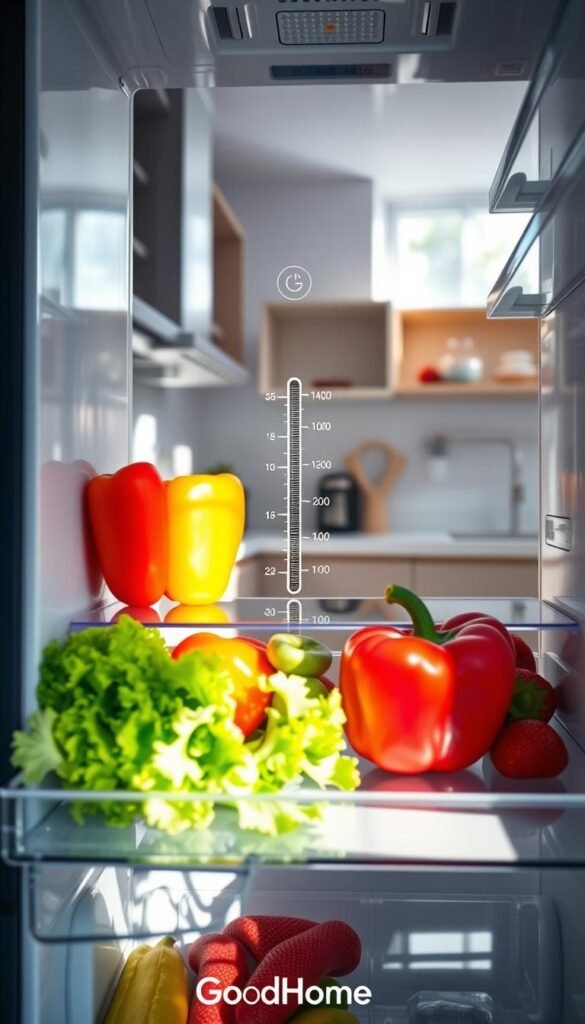
Air moves unevenly inside compact units, so some shelves stay colder and others warm up faster. That unevenness creates simple microclimates you can use to keep food safer and last longer.
Microclimates: temperature and humidity aren’t the same everywhere
Cold air pools at the back and low spots. The door swings open the most and is the warmest place. The top shelf sees more fluctuation because heat rises.
Rule of thumb: aim to keep the interior under about 75% full so air can circulate. Overpacking blocks airflow and makes temperatures less reliable.
How better placement reduces waste, saves time, and lowers risk
When items live in consistent spots you waste less. FIFO habits help: older foods move forward so you eat them first. That means fewer forgotten leftovers and fewer duplicate buys.
Keeping raw protein low prevents drips onto ready-to-eat food. Stable cold temperatures slow bacterial growth and improve safety.
Energy efficiency bonus: spend less time searching
Knowing where things belong shortens door-open time. Less warm air exchange means the appliance works less and holds temperature better. In tight apartments that adds up to real savings in both time and life of food.
„A small layout change can cut waste and speed up weekday cooking.“
- Cold back = long-lasting perishables.
- Middle shelves = steady items you use daily.
- Door = items that tolerate mild swings.
Fridge zones guide: map the coldest spots, warmest spots, and most stable shelves
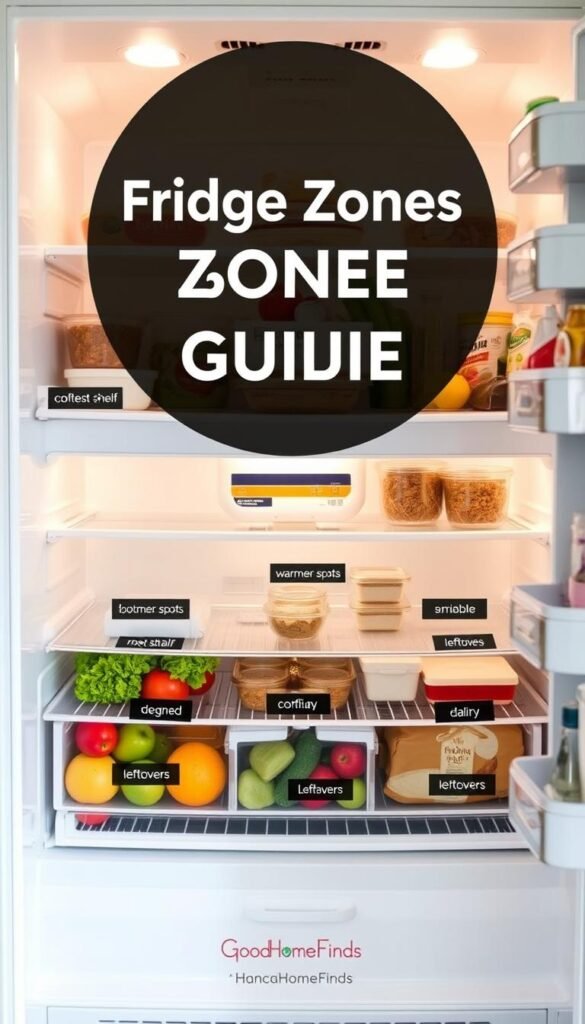
Map the interior by where items chill longest and where they warm first. This quick map fits most U.S. apartment models and helps you place food where it lasts longest.
The back area: coldest and best for perishables
The back runs coldest because it sits near the cooling element and is less exposed when the door opens. Expect about 0–3°C (32–37°F) here. Use this spot for items that need the coldest temps.
Bottom shelf: cold plus spill protection
The lowest shelf is both chilly and a safety net. Place raw items there to protect other foods from drips. That simple placement reduces cross-contamination risk.
Middle shelves: the steady zone
Middle shelves hold the most stable temperatures, roughly 4–6°C (39–43°F). Put daily staples and eggs here for consistent freshness.
Top shelf and door: warmer, more variable spots
The top shelf sees fluctuations because heat rises. Keep ready-to-eat items you use quickly on top.
The door is the warmest and swings with each opening. Store condiments and beverages there where mild warming is acceptable.
Crisper drawers and humidity
Drawers control humidity through vents. More airflow = less humidity; less airflow = more humidity. Use higher humidity for leafy vegetables and slightly drier settings for many fruits and other produce.
Quick verification: leave a fridge thermometer in the back, middle, top, and door for 24 hours. Compare readings to learn your unit’s actual pattern and adjust placement accordingly.
| Location | Typical Temp (°C) | Best For |
|---|---|---|
| Back / Bottom | 0–3°C | Raw proteins, long‑keeping perishables |
| Middle shelves | 4–6°C | Daily staples, eggs, opened dairy |
| Top shelf | 5–7°C | Leftovers, ready‑to‑eat items |
| Door | 6–8°C | Condiments, drinks, items that tolerate swings |
| Crisper drawers | 8–10°C (varies) | Higher humidity for vegetables; drier for many fruits |
For simple organizers and renter-friendly tools to implement this map, check practical picks at best organization finds. Small changes make a big difference in safety and waste reduction.
What goes where: a zone-by-zone food storage plan that prevents cross-contamination
Start by assigning each shelf a clear job so food stays safe and easy to find.
Simple rule: ready-to-eat on top, raw proteins on the bottom. Gravity then works for safety, not against it.
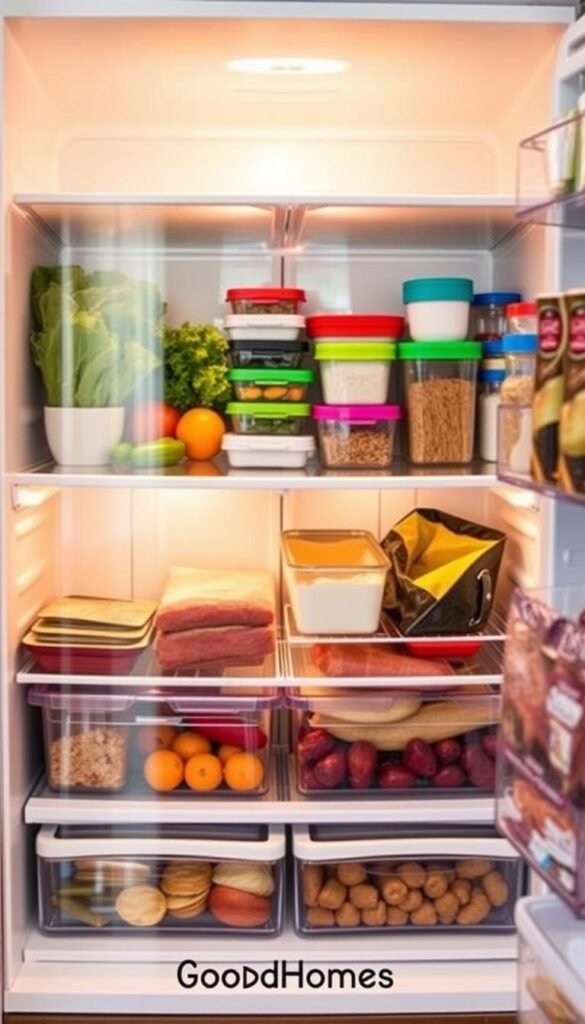
Bottom / back: raw meat, poultry, and seafood
Store raw meat on the lowest shelf at the back to catch drips. Use a rimmed tray or a lidded, leak-resistant storage container as drip insurance.
Middle / back: eggs and temperature-sensitive items
Place eggs and dairy products in the middle-back where temps stay steady. The door swings and warms, so avoid storing milk or delicate dairy products there.
Upper shelves: leftovers and ready-to-eat foods
Keep leftovers and ready foods high and visible. Reserve a front „eat first“ spot and label containers with a made-on date to follow FIFO.
Door: condiments, water, and juice
Store condiments, juice, and beverages in the door. These items tolerate mild warming and frequent opening.
Drawers: produce and ethylene separation
Keep leafy vegetables separated from ethylene-producing fruits like apples and avocados. Group vegetables so you can see what to use.
| Location | Best for | Quick tip |
|---|---|---|
| Bottom / back | Raw meat, poultry, seafood | Rimmed tray or sealed container to prevent drips |
| Middle / back | Eggs, dairy, sensitive items | Stable temps; avoid the door for milk |
| Upper shelves | Leftovers, ready-to-eat foods | Label with date and keep an „eat first“ spot at the front |
| Door | Condiments, drinks, juice | Good for long-shelf-life items that tolerate swings |
Practical upgrade: ditch soggy cardboard. Re-pack into stackable glass or BPA-free containers for odor-free storage and a tidier small space.
Set up your fridge in under an hour with renter-friendly tools and zero drilling
Reset in 60 minutes: empty the unit, toss expired items, wash surfaces with hot, soapy water, dry, then reload by placement. Start bottom/back for raw proteins, middle for staples, top for ready-to-eat, and door for condiments.
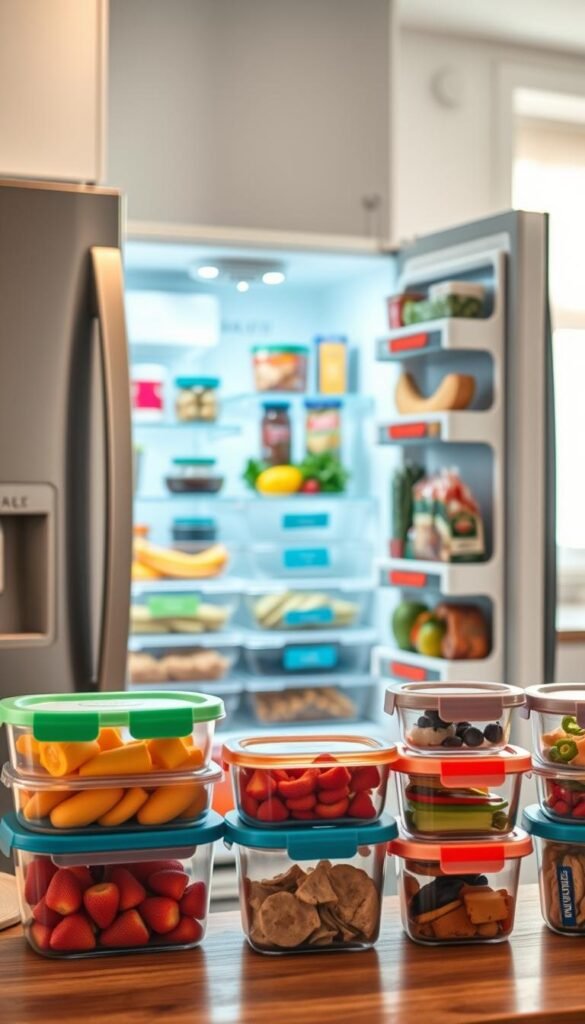
The reset method
Work shelf by shelf. Use a rimmed tray or a lidded bin as a dedicated drip zone for raw protein to catch leaks.
Zones within zones
Group similar items in clear bins so you can pull a category out. A lazy Susan on a middle shelf solves the „lost back“ problem for jars, yogurt cups, and spreads.
Stackable containers and pull-out solutions
Square, stackable storage containers save space and keep air flowing. Shallow pull-out bins prevent small things from disappearing in the back.
| Organizer | Best for | Downside | Price |
|---|---|---|---|
| Clear bins (2–4 pack) | Group snacks, breakfast | Can scratch if thin | Under $25 |
| Rimmed tray / sheet pan | Drip zone for raw items | Takes shelf room | Under $25 |
| Turntable (lazy Susan) | Small jars, avoid lost back | Limited weight | Under $50 |
| Leak-resistant containers (glass) | Long-hold leftovers, proteins | Heavier, pricier | Under $50 |
Budget picks: a thermometer, clear bin set, painter’s tape + marker, and reusable liners. Upgrades: a sturdy turntable, larger matching bin set, and sealable leak-proof containers.
„Small, removable organizers change how you use limited space.“
Tip: the same clear bins and labels work well in bathroom cabinets, closets, and entryways. For more compact solutions, see a short list of small-space picks at best small kitchen solutions.
Daily routines that keep foods fresh longer (without extra work)
A few simple routines will make leftovers easier to find and last longer. These steps take little time and cut food waste.
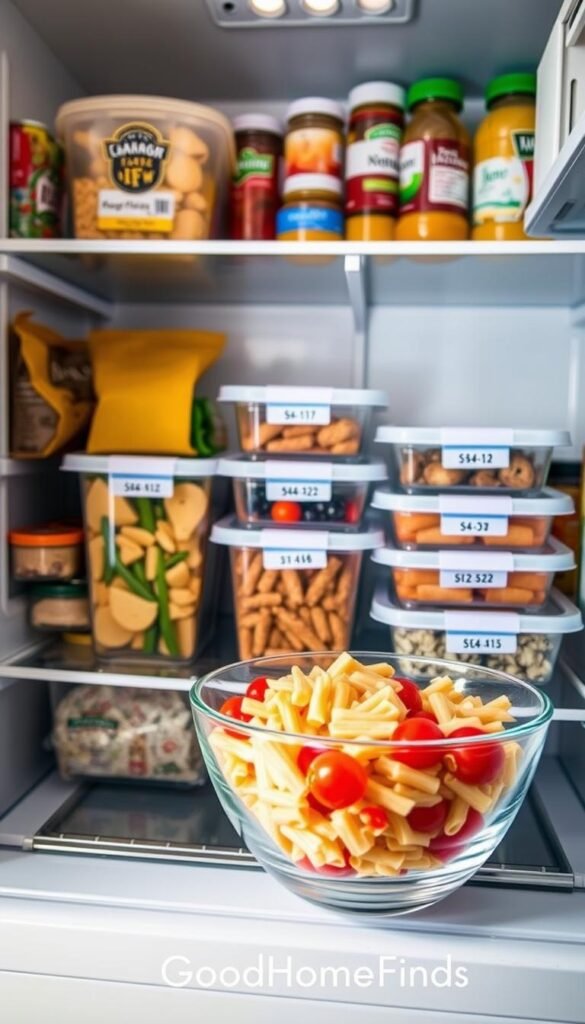
FIFO made easy: when you put groceries away, move older items forward and place new ones behind. Do this as you unpack. It only takes two minutes and sets up automatic rotation.
“Front of shelf” strategy
Dedicate a visible front spot for ready-to-eat leftovers. If it’s at the front, you see it and eat it. Label each container with the cooked date so you never guess.
Meal-prep flow that fits your space
Pick stackable containers sized to your shelves. Portion into grab-and-go servings that fit one shelf depth. That saves time when cooking and makes meal choices obvious.
Weekly use-it-up plan: set one night to clear produce and leftover items. Make one simple dish that uses what’s about to expire. This lowers food waste without extra cooking time.
| Routine | What to do | Benefit |
|---|---|---|
| 2-minute restock | Move old items forward, new ones back | Automatic FIFO, less waste |
| Label with date | Write cooked date on containers | Stop guessing, use by priority |
| Front leftovers zone | Reserve visible front shelf spot | Higher likelihood of eating leftovers |
| Stackable containers | Choose sizes that stack and allow airflow | Save space and reduce door open time |
If you share a unit, add a labeled „eat first“ bin so roommates spot quick-use items. Small habits become the easiest, most effective way to cut waste and save time.
Easy maintenance for a clean, safe fridge all year
Keeping your unit tidy is simple and renter-friendly. A short weekly check plus a deeper clean every 1–2 months protects food, reduces waste, and keeps temperatures steady. These small habits are worth it in tight spaces.
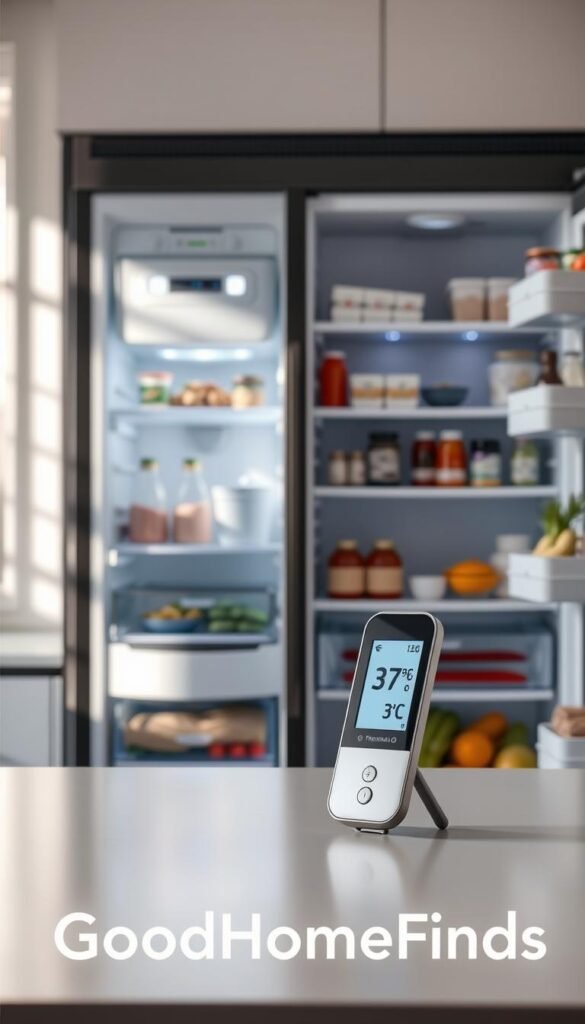
Cleaning cadence
Do a quick weekly reset: toss obvious trash, wipe sticky spots with hot, soapy water, and reorganize any out-of-place items. This takes five minutes and prevents small messes from becoming bigger problems.
Every month or two, pull shelves and drawers. Wash them, dry them, and inspect for mold or stains. A deeper scrub reduces bacteria and mold spores that can spread to other foods.
Spill response
Wipe spills immediately. Fresh liquid seeds mold and lets bacteria travel to nearby foods. Use a rimmed tray for raw proteins so a single leak won’t force you to scrub multiple shelves.
Temperature check
Set the thermostat around 37–40°F and verify with a fridge thermometer. Place the thermometer on different shelves for 24 hours to spot warm spots. Adjust placement of items based on those readings.
Door seal and airflow basics
Check the door gasket monthly. Look for gaps by closing a dollar bill in the seal; if it slips out easily the gasket may need cleaning or replacing. Keep the unit under ~75% full so cold air can circulate and shelves stay more consistent.
- Weekly: 5-minute tidy and spot wipe.
- Monthly/bi-monthly: remove shelves, deep clean, inspect gaskets.
- Always: use a thermometer and a dedicated tray for raw proteins.
Bonus: the same quick reset habit works well in bathroom drawers and entryway catch-alls—toss trash, wipe surfaces, and return items by zone. For small-space product picks that help with maintenance, see a practical roundup at kitchen problem mix.
Common fridge organization mistakes and how to fix them fast
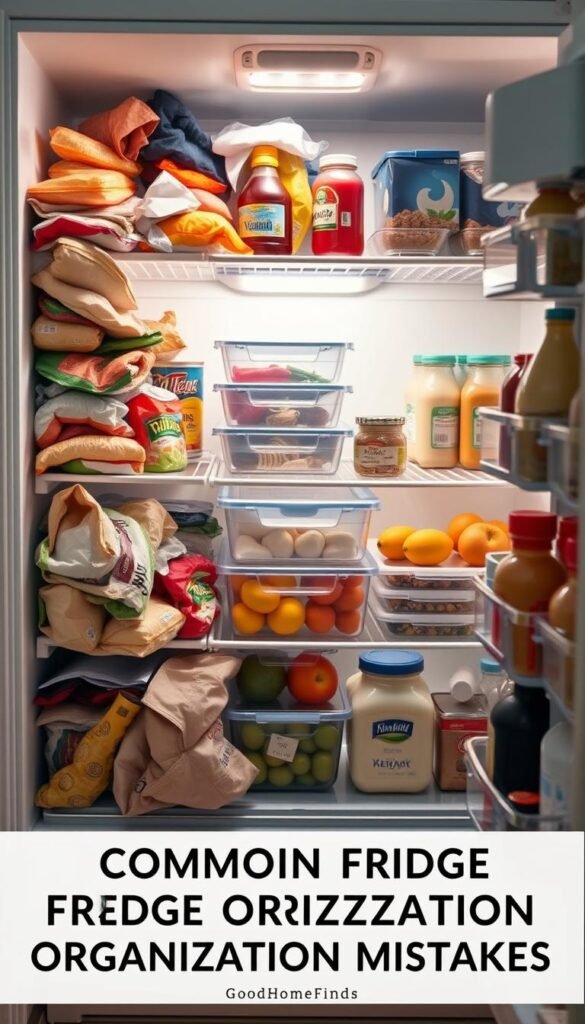
Overpacking shelves
Too-full shelves block airflow and raise internal temperature. Aim for under ~75% full so cold air moves freely.
Quick fix: pull one crowded category into a clear bin. That frees airflow and keeps similar items together.
Putting milk in the door
The door is the warmest spot and swings often. If you drink milk fast, the door is fine for short-term use.
If milk sits days, move it to the middle/back for steadier temperature and longer life.
Hot leftovers and cooling
Hot food raises interior temperature. Portion large batches into smaller containers so they cool fast.
Then refrigerate within two hours to limit time in the danger zone.
Mixing raw and cooked foods
Keep ready-to-eat items above raw meat. Use sealed containers and a rimmed tray on the bottom shelf to catch drips.
Rule of thumb: cooked = lid; raw = lid + secondary barrier.
| Mistake | Why it matters | Fast renter-friendly fix |
|---|---|---|
| Overpacked shelves | Blocks airflow, uneven cooling | Use 1 clear bin for one category; keep space around items |
| Milk in the door | Warmer, variable temps | Keep if used quickly; otherwise move to middle/back |
| Hot leftovers | Raises internal temp, delays cooling | Divide into small containers then chill |
| Raw + cooked together | Cross-contamination risk | Store raw low with a tray; seal all containers |
- Simple reset: one „catch-all“ bin for small packets.
- Choose glass or BPA-free containers; glass resists odors.
Layouts and alternatives for different apartment fridge sizes
Tight kitchen spaces call for a layout that matches how you cook and shop. The right plan depends on unit size, who uses it, and how often you cook.
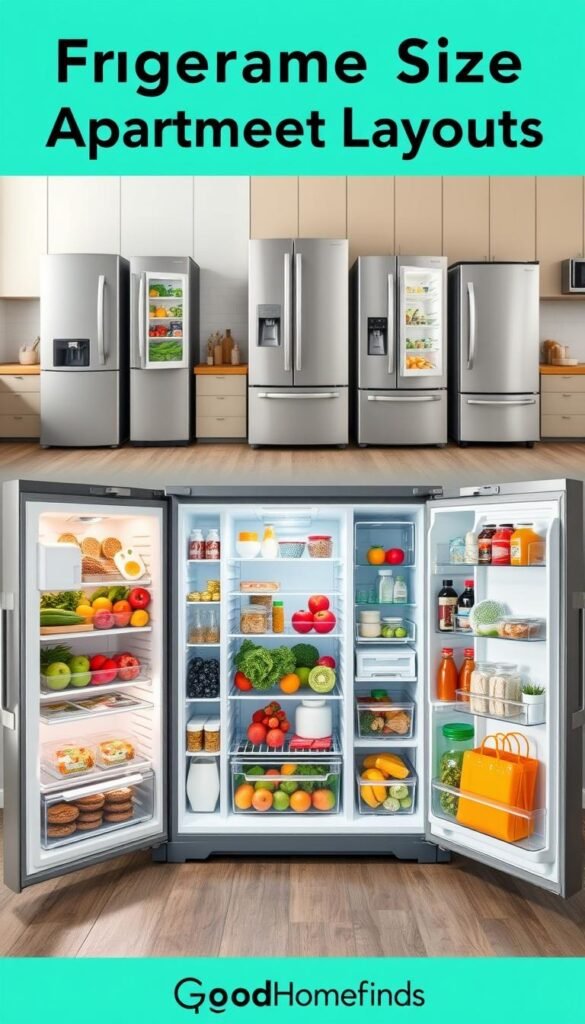
Mini setup
Use one bin per category: breakfast, drinks, proteins, snacks. Reserve a clear front shelf as an eat first spot for leftovers. This keeps the small space tidy and reduces door-open time.
Standard apartment setup
Map dedicated spots: bottom/back for raw items, middle for dairy and eggs, top for leftovers, door for condiments and drinks. Put each category in a small bin so items don’t wander across shelves.
Roommate and no-drawer workarounds
Assign labeled bins or shelves per person and mark a condiments boundary. If your unit lacks drawers or humidity control, use vented produce bins. Open vents for lower humidity and close them a bit for leafy greens to keep higher humidity.
| Fridge type | Cooking style | Recommended layout | Organizer picks |
|---|---|---|---|
| Mini | Quick snacks, minimal cooking | 1 bin per category + „eat first“ shelf | Clear stackable bin, small lazy Susan |
| Top‑freezer / Standard | Regular meal prep | Bottom/back proteins, middle dairy/eggs, top leftovers | Vented produce bins, rimmed tray, labeled bins |
| Shared / Roommate | Mix of meal prep and quick meals | Assigned shelves/bins + condiments boundary | Clip labels, clear bins, condiment tray |
Overflow tip: store unopened condiments or extra drinks in a closet bin so your fridge space stays for perishables. Small changes make daily life easier and cut waste.
Conclusion
Conclusion
Close with a compact plan you can use the same day. Map your cold spots, place raw proteins low/back, keep leftovers visible up front, and use the door for condiments. Manage produce humidity and avoid overpacking to keep temperature steady and cut waste.
Two worth-it tools: a reliable fridge thermometer and a few clear bins or a rimmed tray. They create removable setup without drilling and make storage durable and renter-friendly.
Daily routine: use FIFO and keep an „eat first“ front spot so leftovers don’t vanish. Lids on everything, raw below cooked, and a drip barrier under meat are easy safety wins.
Maintenance promise: a five-minute weekly tidy and a monthly deeper clean keeps smells down and food safer. Reuse this bin-and-label approach in your bathroom or closet for more small-space wins. For compact product picks, see this list of small-space finds.