Living in a tight, dark hallway or just a small entry strip by the front door can feel limiting. You can still build a practical micro-entry that stops clutter and handles keys, mail, shoes, bags, outerwear, and pets.
You’ll get renter-friendly, no-drill ideas that cost under $25 and under $50. These choices focus on durability, safety, and easy setup. Start by making one reliable landing zone for the things you touch every time you come and go.
Visual fixes matter. Use low-profile flush mounts to avoid bumps. Add a mirror to bounce light. A runner gives grip and personality. Contrast the ceiling and trim or add a ceiling line to make a narrow hallway look longer.
This guide keeps real life in mind. You’ll learn quick steps you can reset in under five minutes. No bulky furniture. No risky installs. Just practical, renter-safe solutions that are worth the time.
Key Takeaways
- Define the space: Treat the area by your door as a functioning entry.
- Stop clutter: One landing zone for keys and mail prevents piles.
- Brighten and stretch: Use mirrors, runners, and ceiling contrast to widen the look.
- Rent-friendly fixes: Adhesive hooks, trays, and plug-in lighting work under $50.
- Daily routine: A two-minute reset keeps the entry usable every day.
- Safety first: Choose stable products and non-slip rugs near the door.
- Learn more: For quick vs full setups, see fast vs full entryway.
Map Your “Micro-Entry” Zone in a hallway with no hall
Begin with a simple sketch: door arc, safe walking lane, and a tiny drop spot.
Measure the door swing and mark the clear walking lane on the floor. That tells you how much usable space you really have. Narrow pass-throughs can’t take deep furniture, so plan for shallow fixes.
Decide the landing type based on that sketch. If the door clears the floor, use an over-the-door organizer. If floor space exists, choose a slim tray or narrow table. If you have a blank wall, install a vertical hook-and-shelf system.
- Studio: favor vertical wall systems and labeled hooks.
- Small one-bedroom: build a closet “entry kit” to keep bulk items out of the way.
- Shared passage: assign clear zones so everyone knows their spot.
Must-haves in order: keys/mail, shoes, bags/outerwear, pet gear. Keep heavy items low and test adhesives on an unseen patch. If the micro-entry is extremely tight, borrow storage from a closet, bathroom, or kitchen—reserve this area for daily-use items only.
„Design for daily habits, not maximum capacity.“
For quick product ideas that fit these layouts, see best entryway storage solutions.
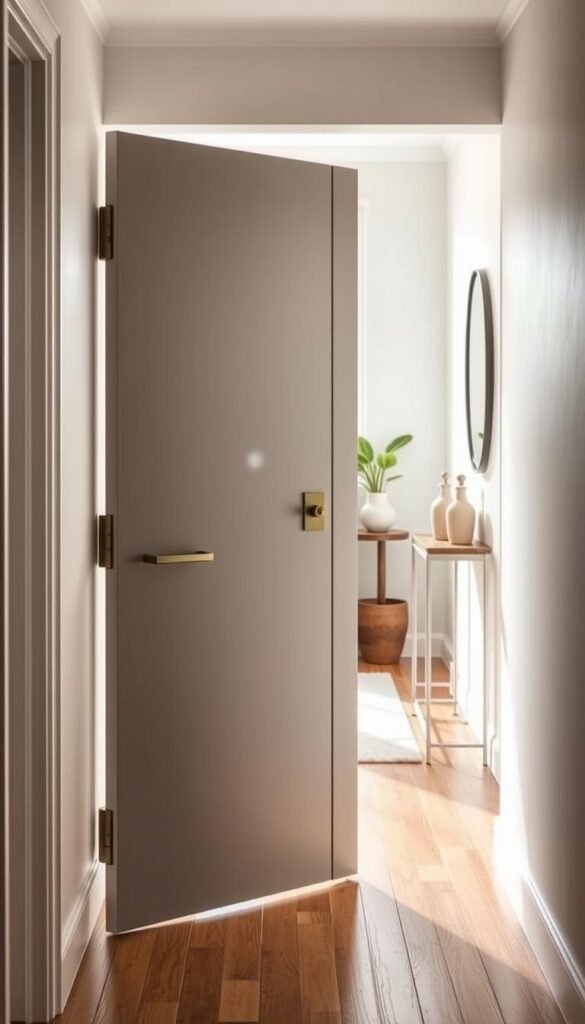
Brighten a dark, tight entry with light, mirrors, and visual “stretch” tricks
You can transform a dim, cramped entry by combining ambient, task, and accent lighting without any wiring. Start small and focus on safe, renter-friendly options that boost brightness and reduce bumps.
Layer your lighting: ambient for overall light, a task lamp near your drop spot, and a small accent light to highlight art or a plant. Choose plug-in sconces, battery puck lights, or outlet night-lights for easy setup.
Pick low-profile fixtures and compact lamps so people don’t knock them in a narrow hallway. Flush mounts or slim table lamps work best near doors and turns.
Place a mirror opposite a light source to double natural light and create an illusion of depth. Reflect calm items—art or a plant—rather than clutter.
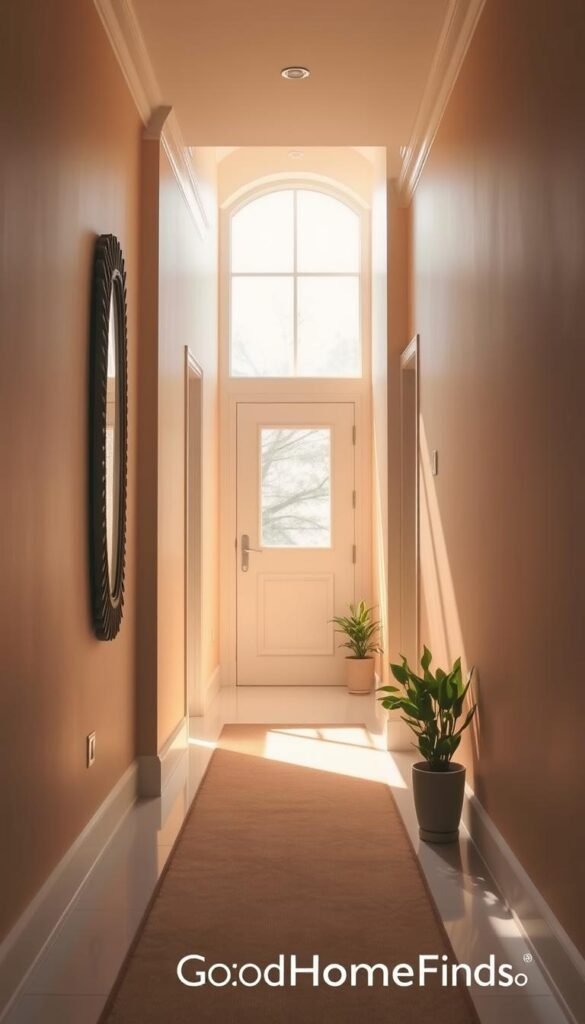
Use a runner for grip and personality. Select the right width, add a non-slip pad, and avoid thick piles that trip or catch pet nails.
For light, paint, and trim ideas that stretch a small space, see small-space fix mix. Keep finishes durable and surfaces easy to clean.
„Design for daily habits, not maximum capacity.“
No-drill storage and drop-zone products under $25 and $50
Find low-cost, renter-safe storage that fits slim entry areas and keeps daily clutter under control.
Peel-and-stick vs over-the-door hooks
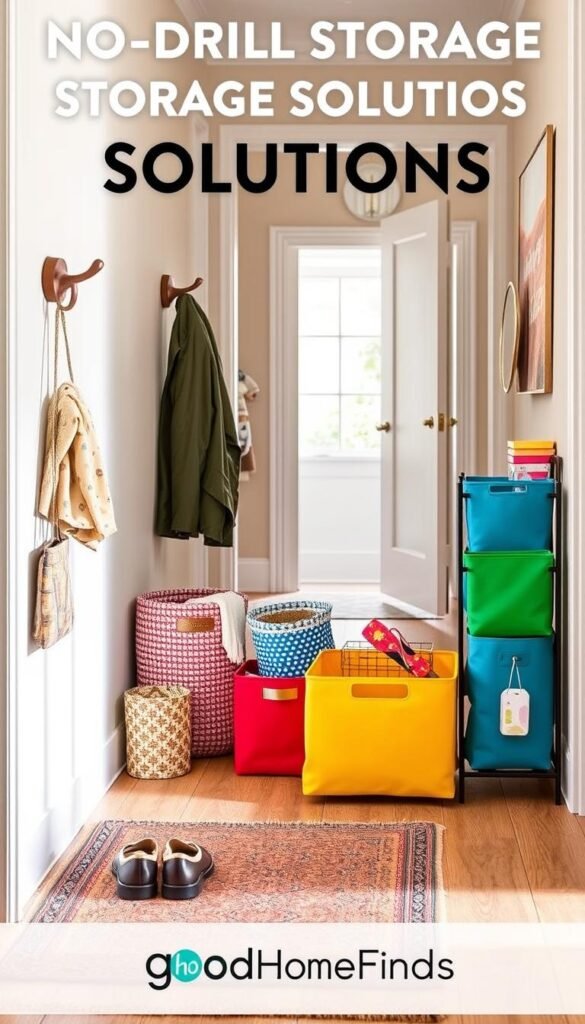
Peel-and-stick: cheap, clean look, best for light keys and masks. Pros: easy install. Cons: can fail in humidity and under heavy coats. Safer alternative: small freestanding coat tree for apartments.
Slim shoe storage & console substitutes
Under $25: stackable shoe racks, washable door mats, adhesive key pockets. Under $50: narrow ledges, slim floating trays, vertical shoe towers for more storage.
Mail and key control
Use magnetic holders on metal surfaces, small adhesive pouches, or a countertop tray so mail and keys stop migrating across the room.
| Best fit | Smallest footprint | Most storage | Easiest setup |
|---|---|---|---|
| Studio | Adhesive key pocket | Vertical shoe tower | Peel-and-stick hooks |
| One-bedroom | Narrow ledge shelf | Stackable racks | Over-the-door organizer |
| Shared flat | Wall-mounted tray | Freestanding coat tree | Magnetic hook strip |
Durability checklist: verify adhesive rating, choose wipeable finishes, pick moisture-resistant mats, and respect weight limits for kid- and pet-safe placement.
„Five-minute reset: align shoes, hang bags, sort mail; weekly sweep; seasonal swap to closet storage.“
For cross-space tips, move overflow shoes to a bedroom closet or store pet wipes in the bathroom. For compact kitchen-inspired bins and trays ideas, see small kitchen solutions.
Conclusion
Close the project by defining one clear drop spot and committing to a short daily reset.
Pick a micro zone that keeps the walking lane clear. Treat that area as your primary place for keys, mail, shoes, and a quick grab bag.
Focus on the biggest wins first: better lighting, one mirror, and one controlled drop spot. These simple moves brighten a tight space and cut clutter fast.
Choose renter-friendly upgrades that travel well. Durable hooks, washable mats, and slim organizers work in many homes and different hallways.
Keep visual interest low. Limit wall art to a few pieces so the area feels intentional, not crowded. Use paint and trim choices to reflect light and define edges.
One small routine is the thing that keeps this plan working: five minutes each day. For a staged upgrade plan, see our renter setup comparison.