
You need your place to look pulled together, and fast. This guide gives practical, renter-friendly steps to conceal clutter around your home without drills or permanent changes. Use quick zones and simple containers to get visual calm in minutes.
Start by grouping like items into bags or boxes. Stash them in unused closets, under the bed, or in cool, powered-off appliances when needed. These quick moves buy time and make later sorting easier.
What to expect: This is a visual fix, not a deep clean. You’ll get renter-safe storage tips and two budget lanes: under $25 options and items that are worth the spend under $50.
Across the article you’ll use a zone method — kitchen, bath, bedroom, entry — then reset with a short daily routine. I’ll flag safety rules for kitchen and laundry stash spots and suggest durable, wipe-clean picks that stand up to daily use.
Key Takeaways
- Quick grouping and stashing makes fast results.
- Use unused closets, under-bed bins, and cool appliances carefully.
- Renter-friendly picks require no drilling or permanent change.
- Budget options under $25; higher-value tools under $50.
- Follow a zone-based reset and short daily routine for lasting order.
Hide everyday mess without stress: a fast triage plan for real life
A five-to-fifteen minute plan can turn a chaotic room into a calm one fast. Start with a clear goal: make surfaces look tidy and keep the system renter-friendly.
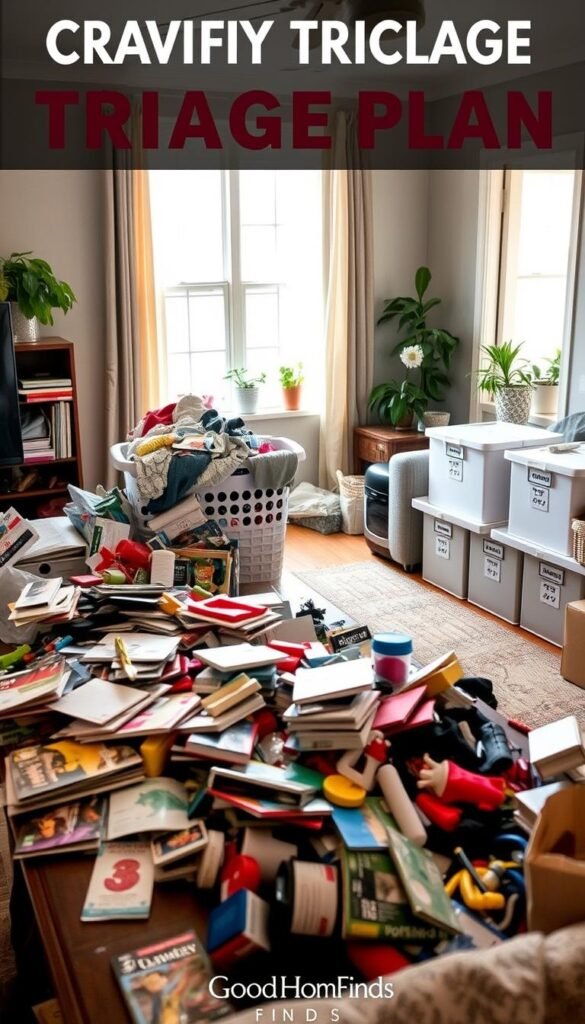
Quick triage timer: set a 5‑15 minute timer. Move through zones you see first. Focus on counters, entry tables, and visible floors.
Decide what to stash vs. donate
Ask three quick questions for each item: Is it useful? Does it spark joy? Does it function for your life now? If two answers are no, put it in a donate pile instead of repeatedly moving it.
Group small essentials first
Mini stuff—batteries, chargers, pens—creates most visual clutter. Gather these into one pouch or small bin so they are easy to find later.
Box and bag, then stash
Use spare totes, paper bags, or zip pouches to group like things before stashing. Label each bundle with masking tape and a marker. This keeps closets from turning into a junk graveyard.
„Sort fast. Label clearly. A small routine beats a big scramble later.“
- Use simple containers you already have.
- Follow the box-first rule so future-you can sort quickly.
- Do a 2-minute daily reset: clear one surface and check labeled bundles.
| Container | Best for | Renter-friendly |
|---|---|---|
| Spare tote | Bulkier soft items, toys | Yes — reusable |
| Paper bag | Donate pile or recycling | Yes — disposable |
| Zip pouch | Small essentials (batteries, pens) | Yes — compact |
For budget gear ideas, check these best budget finds. These renter-friendly tips keep things simple and help prevent future clutter.
Quick-hide spots you already have (no shopping, no drilling)
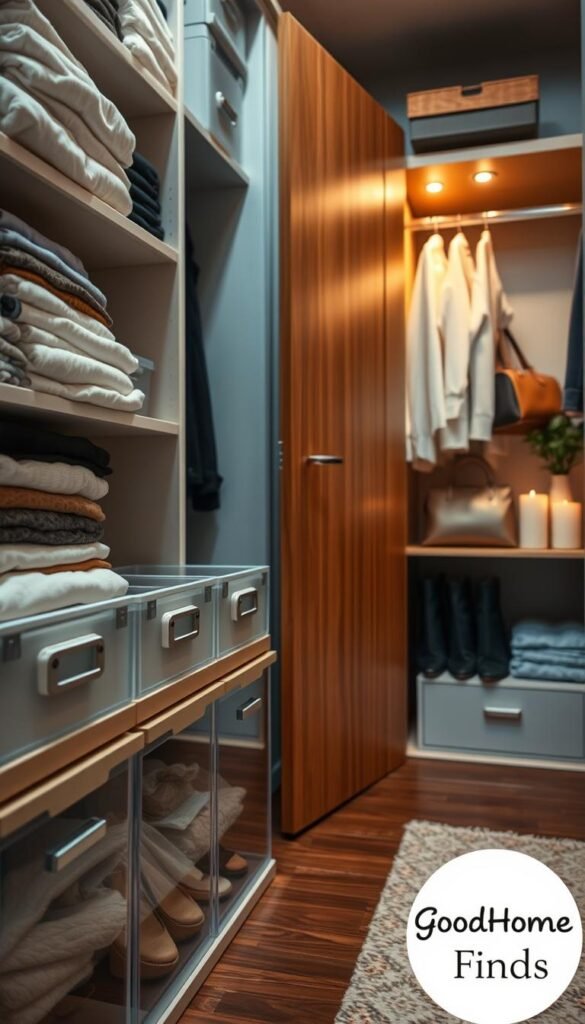
Closets and unused cabinets as instant buffers
Pick a sensible buffer zone. Choose a closet or cabinet close to the room so you’re not trading one problem for another.
Temporarily stash clothes, kids’ toys, and countertop clutter there. Do not put items you will need during the visit.
Junk drawer upgrades
Open lid-free boxes work well inside a drawer. Use one box for batteries, one for tape and scissors, one for chargers.
This keeps the drawer functional and prevents small things from spilling when you pull it open.
Under-bed options
A bed skirt plus low-profile boxes creates instant visual calm. Narrow boxes slide easily and stay out of sight.
Downside: check these bins weekly so they don’t become a black hole.
Car trunk overflow
Use the trunk for bulky, soft items like extra blankets or larger toys as a last resort.
Safety note: avoid fragile items and remove anything that could be damaged by heat or cold.
Return path plan: after guests leave, empty one stash spot at a time. This prevents migration and keeps your place organized.
| Spot | Best for | Pros | Cons |
|---|---|---|---|
| Closet | Clothes, toys | Large capacity, out of sight | Can hide everything if unchecked |
| Cabinet | Small boxes, bins | Easy access, renter-friendly | Not for items needed during visit |
| Under-bed box | Seasonal linens, bags | Invisible, space-efficient | Needs weekly check |
| Car trunk | Blankets, bulky soft toys | Frees home storage space | Weather risk; last-resort only |
Safety-first “hide it fast” tricks in the kitchen and laundry room
Quick safety checks let you clear kitchen surfaces without creating new risks. Use appliance and cabinet buffers only as short-term storage and follow simple rules so no one gets hurt and nothing is ruined.
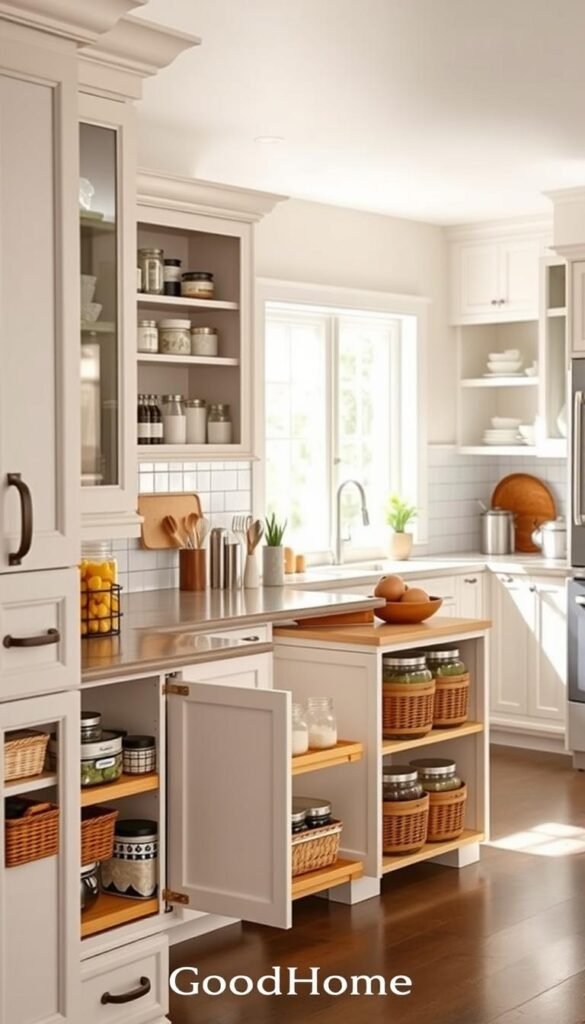
Dishwasher as a fast buffer
Place dirty plates, bowls, and utensils in the dishwasher to remove visible clutter when guests arrive. This works best for unexpected visits and when you won’t need those items right away.
Pros: clears counters fast; keeps dishes contained. Con: you must run the cycle later and avoid blocking spray arms so dishes still get clean.
Oven use — strict safety checklist
Only use the oven if it is completely OFF and fully cool. Store metal pans and trays only. Never put plastics, aerosols, or paper inside.
- Confirm the oven is cool.
- Remove items before reheating or cooking.
- Do not block vents or leave perishable food inside.
Why: this prevents fire risk and melted items that harm the appliance and your rental.
Washer and dryer — emergency-only spots
Toss bulky soft items into the washer or dryer as a last-resort stash. Mark it in your head, then check before any cycle. Rule: always open and inspect before starting the machine.
Do not place papers, aerosols, or anything meltable in these appliances. They can damage the drum or cause hazards.
„Use appliances as short-term buffers, not long-term storage.“
Quick renter-friendly micro-reset (5 minutes)
- Clear counters → move loose items into the sink/dishwasher.
- Fill one empty cabinet catch bin with small clutter from the table.
- Stash bulky soft things in the washer/dryer only if you’ll check before use.
| Spot | Best for | Key safety note |
|---|---|---|
| Dishwasher | Plates, utensils | Avoid blocking spray arms; run later |
| Oven | Pans, trays | Only cool and OFF; remove before cooking |
| Washer/Dryer | Blankets, soft bulky items | Inspect before any cycle; emergency use |
Well-placed baskets and bins that make clutter disappear in seconds
Place a few well-chosen baskets where clutter usually lands and you cut cleanup time to seconds. This is the „strategic basket“ idea: set containers on the floor, by the sofa, and on a table so a one-pass tidy becomes routine.
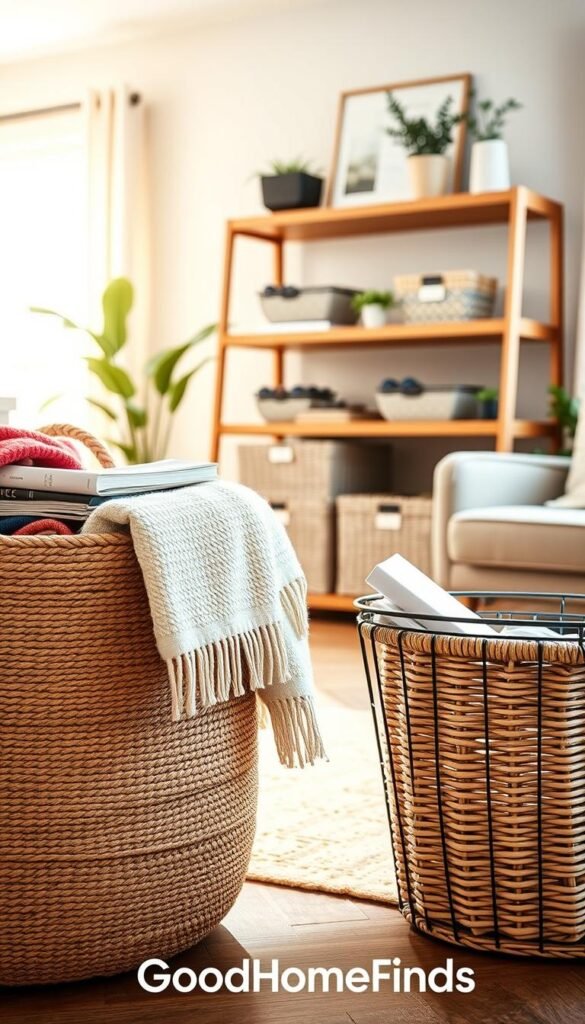
Best styles and features
Look for sturdy handles, a wide opening, and a wipeable liner. Choose materials that don’t snag fabrics. A medium dump basket plus a small tabletop tray covers most needs.
Open bins vs. lidded boxes
Open bins give fast access but add visual noise. Lidded boxes look calmer but can become „out of sight, out of mind.“ Use open baskets for nightly sweeps and a lidded box for long-term storage.
Who this works for
Great for families with kids, pet owners, roommates, and anyone who wants a nightly reset. Put one bin per person, or one per zone, then do a quick two-minute purge daily so the system keeps working.
| Budget | What to prioritize | Renter-friendly pick |
|---|---|---|
| Under $25 | One durable dump basket + small tabletop bin | budget basket pick |
| Under $50 | Lidded option or matched stackable set; mini organizer for small stuff | Stackable lidded boxes |
| Apartment size | Studios: vertical stackables. Multi-room: tote or hamper per room | Space-saving stackable bin |
„Empty the main basket once per day. If it overflows, the whole system fails.“
Hidden-storage furniture that earns its square footage
Choose furniture that doubles as useful storage and real seating to get the most from tight rooms.
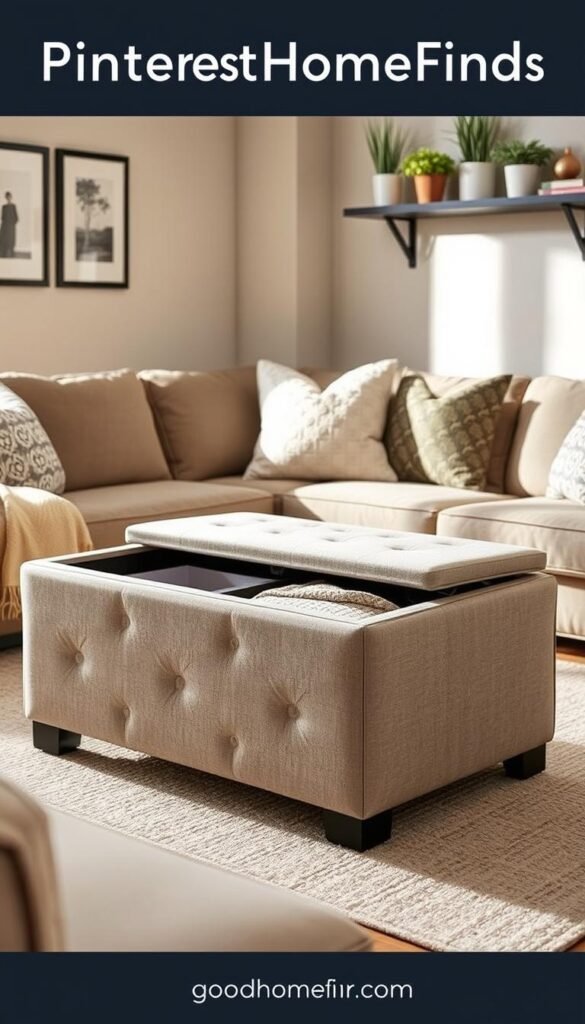
Storage ottomans and benches for living rooms and small entryways
Why it works: ottomans let you stash blankets, board games, and chargers while offering extra seats.
Assign one ottoman to a category — kids’ toys, throws, or tech — so things stay easy to find.
Check hinges, lid support, and upholstery for easy-clean surfaces and kid safety.
Armoires and tall cabinets for bigger “awkward stuff”
Use a freestanding cabinet to tuck away bulk paper goods, extra blankets, or oversized toys.
Renter-friendly note: choose freestanding units that do not require wall changes.
Vintage suitcases as end tables that hide games and odds-and-ends
Stack a suitcase as a budget-friendly end table to store board games or cables.
They look stylish but trade off fast access for a neat appearance.
| Piece | Capacity | Footprint | Setup time |
|---|---|---|---|
| Ottoman | Medium — blankets, games, small toys | Small to medium | 5–10 minutes |
| Bench | Medium — shoes, throws | Medium | 5–15 minutes |
| Armoire / Tall cabinet | Large — bulk paper goods, oversized items | Large | 15–30 minutes |
Pros / Cons: durability, kid safety, easy-clean surfaces
- Durability: solid-feel pieces last longer; avoid flimsy materials for high-use spots.
- Kid safety: look for soft-close hinges and rounded corners.
- Easy-clean: wipeable fabrics or hard finishes save time and last in daily use.
„Pick the piece that matches your biggest clutter type: soft goods, paper goods, toys, or random daily items.“
Quick routine: do a five-minute one-container-per-night reset so furniture stays useful instead of becoming a black hole.
For renter-friendly, easy-setup options and quick space solutions, see this short guide: small space fixes.
Over-the-door and no-drill vertical storage for tight apartments
When floor space is scarce, use the back of a door to add instant vertical storage. These racks and baskets give you extra room without holes or hardware changes.
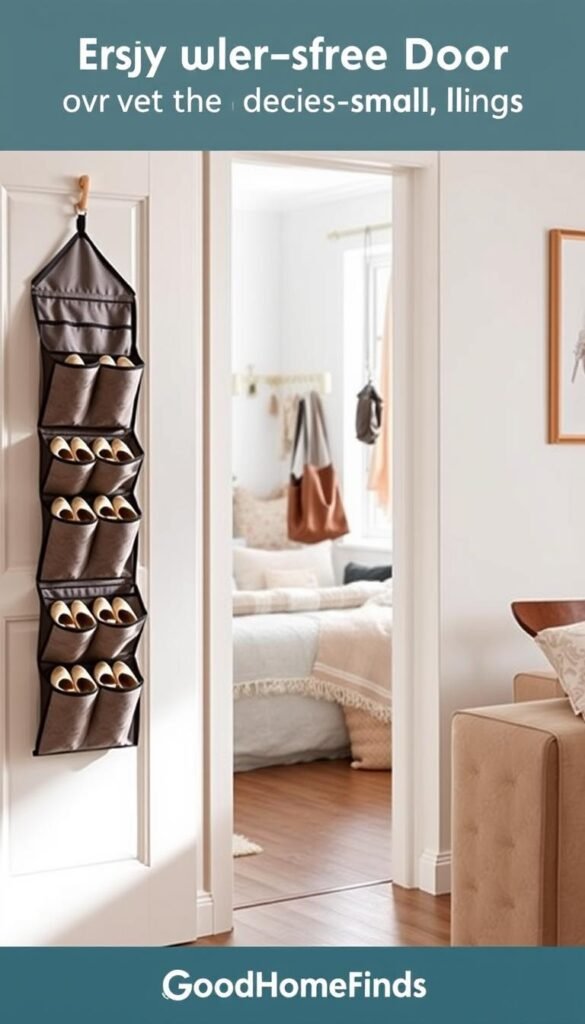
Over-the-door baskets and racks for towels, toiletries, and cleaning supplies
Choose slim over-the-door baskets for towels in the bathroom. Use tiered racks for toiletries if you share a sink. Near the kitchen, hang a caddy for sprays, wipes, and dish brushes.
Door-friendly setup tips to prevent scratches, slamming, and wear
- Fit felt pads where metal contacts paint to prevent scratches.
- Check clearance so the door closes without scraping the frame.
- Use soft-closing hooks or add a rubber bumper to reduce slamming.
- Avoid heavy hardware that distorts the door; pick lightweight metal or reinforced plastic.
Best for: renters who need more storage space without losing floor space
Why it works: vertical options expand usable space fast. They move easily when you relocate and cost little.
Shared-apartment tip: assign zones on the door so toiletries and supplies stay put. Use labeled baskets to stop drift onto counters.
„Over-the-door solutions add functional storage space without a single drill.“
One tradeoff: door storage can look busy. Pair baskets with lidded containers for visual calm.
For renter-friendly picks that help with laundry and quick stashes, see a related guide on best laundry room solutions.
Under-bed storage that keeps floors clear and bedrooms calmer
Make the area under your bed work harder with narrow boxes and soft zip bags that slide in and out easily. This gives you grab-and-go storage for seasonal clothes, extra linens, and gift wrap without cluttering the room.
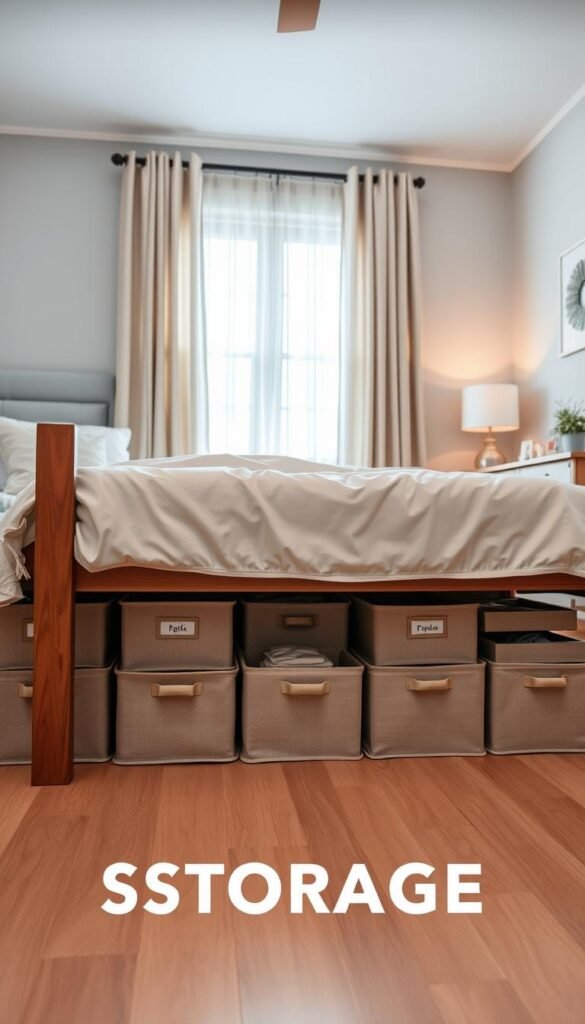
Narrow bins and soft zip bags for seasonal items and extra linens
Bins protect contents from dust and keep everything stacked neatly. Choose low-profile plastic boxes on rollers if you want smooth sliding access.
Soft zip bags compress to fit tight clearances and are lighter to pull from under a low bed. They work well for bulky but soft items like blankets.
Pros / cons: dust control, sliding access, and staying in control
- Pros: closed boxes limit dust and make the room look calmer.
- Cons: overpacked containers are hard to slide and become forgotten.
- Rule: one in, one out each season to stop under-bed storage from becoming a long-term pile.
Alternatives for low-clearance beds and shared bedrooms
If your bed sits low, use slim vacuum bags or store boxes vertically in a closet with labels. For shared rooms, assign one container per person so no one digs through another’s items.
„A bed skirt or dust ruffle improves concealment and makes quick stashes look intentional.“
| Option | Best for | Pros | Cons |
|---|---|---|---|
| Narrow plastic bin | Seasonal clothes, linens | Dust protection, stacks | Heavier to pull |
| Soft zip bag | Bulky blankets, pillows | Flexible, light | Less rigid protection |
| Vacuum-seal pouch | Thin closets, low beds | Shrinks items, saves space | Needs careful packing |
For renter-friendly product ideas and a budget vs. premium comparison, see this quick guide on storage cheap vs premium. Keep the system simple and check boxes seasonally so your room stays clear and functional.
Entryway drop zone solutions for keys, shoes, bags, and everyday stuff
The entry sets the tone for your whole home, so a small plan here yields big results.
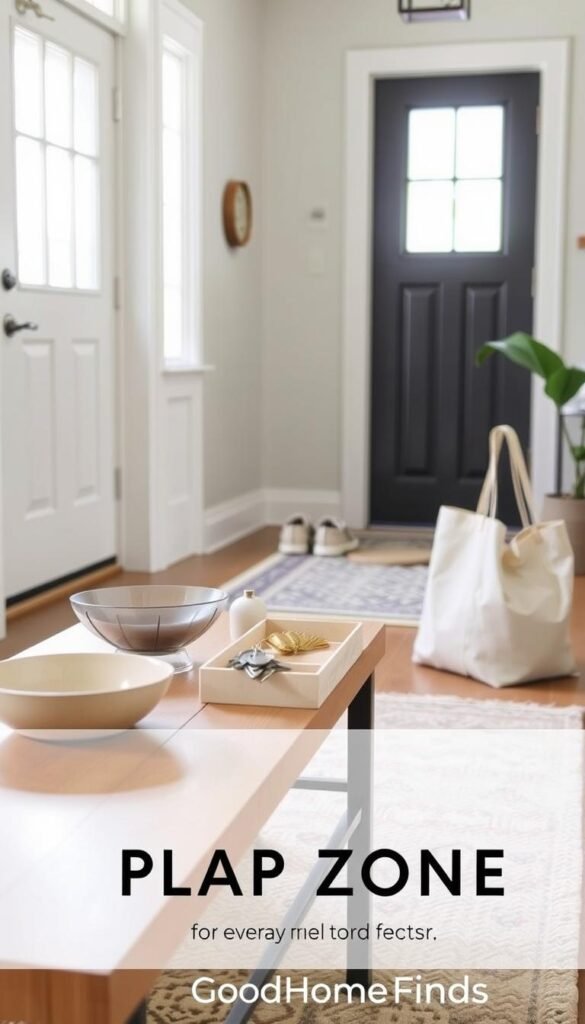
Why this place matters: a calm entry makes the rest of your space feel cleaner. Guests see the threshold first. A neat entry reduces stress for a family and speeds daily comings and goings.
Chest of drawers or slim cabinet
A chest of drawers or slim cabinet catches keys, mail, and dog gear fast. Use simple dividers in one drawer for small items and a labeled bin on top for outgoing mail.
Basket system and bins
One basket per person or per category stops the “everyone drops everything” pileup. Bins work well for shoes, backpacks, and chargers. Do a 60‑second nightly reset: empty pockets, return shoes, and put bags in their bin.
Folding screen camouflage
A folding screen masks awkward gear like strollers and bikes without drilling. It’s renter-friendly and portable. Con: it needs a corner to sit in and can look bulky if overused.
„A small drop zone buys minutes and keeps your place feeling intentional.“
| Option | Space | Speed | Look / style |
|---|---|---|---|
| Slim cabinet / chest of drawers | Small footprint; vertical | Very fast — pull a drawer | Neat, polished design |
| Basket station / bins | Flexible; scalable | Fast daily use; needs purge | Casual, homey |
| Folding screen | Requires corner space | Quick visual cover, slower access | Decor-forward; hides awkward items |
Small-apartment alternative: create a micro drop zone beside the door with one bin and one catch tray. It saves space and still keeps key items organized.
Kitchen clutter control for countertops, cabinets, and the “always messy” table
Keep the kitchen counters useful by creating a simple drop kit you can move in one hand. This stops mail and chargers from claiming the table and gives you a clear surface fast.
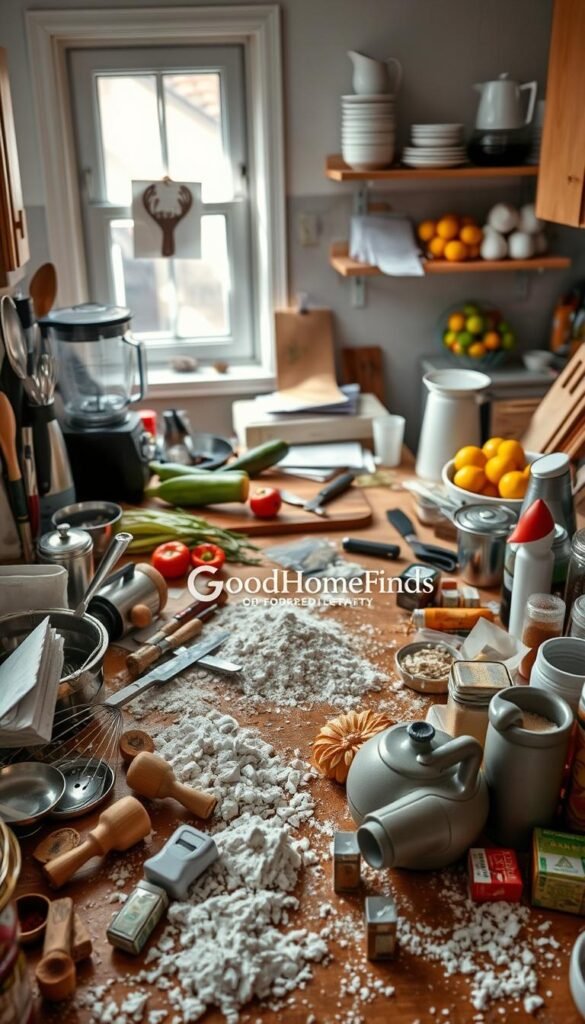
Counter-clear kit
What to keep: one shallow tray for daily-use items and one lidded box for random stuff. The tray holds your keys, phone, and current charger. The box hides receipts, coupons, and loose cords.
Cabinet catch-bin method
Pick an underutilized cabinet and keep a single labeled bin inside. Sweep loose items into it during quick tidies. Schedule a 15‑minute sort later so the bin does not become a long-term graveyard.
Recycling and trash concealment
Use a lidded can or a slim pull-out bin beside a cabinet. A discreet corner bin with a lid keeps recycling out of sight and controls odors. No drilling required.
Best for and pros/cons
Best for: small kitchens with limited drawers, shared counters, and households that cook daily.
- Pros: hidden storage looks calm and frees surface space quickly.
- Cons: keep true daily tools within arm’s reach so cooking stays efficient.
„A two-minute table reset after dinner prevents mail and chargers from colonizing the dining spot.“
Bathroom and closet zones that hide mess while staying hygienic
Small bathroom surfaces show clutter fast, so a quick plan saves time and stress.
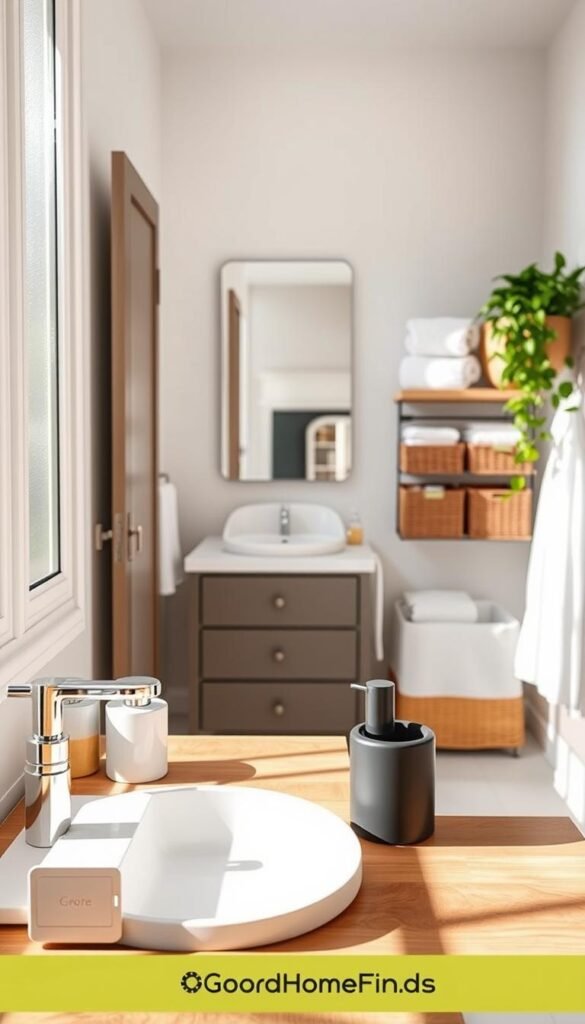
The bathroom challenge: counters are small and visible. Choose closed, wipeable storage that keeps toiletries and spills contained. Avoid porous baskets where leaks can soak through.
Behind-the-curtain emergency stash
Treat the space behind a shower curtain as emergency-only. Only use this if the shower will not be used while items are there.
Safety & hygiene rule: keep items off the floor, use a plastic tote, and remove everything before the next shower. Do not store perishables or open liquids.
Closet binning for quick restock
Divide your closet into categories: toiletries, towels, and backup supplies. Use labeled bins so you can restock shelves without rifling.
Product tip: choose clear, wipe-clean plastic bins or canvas boxes with removable liners for easy washing.
Two-minute daily purge
- Return stray products to their labeled bin.
- Toss empties and wipe any drips.
- Reset the main basket so it’s ready for the next day.
Studio alternatives
No linen closet? Use an over-the-door organizer, a slim rolling cart, or one lidded bin under the sink. These save space and keep essential items accessible.
„Keep storage closed, wipeable, and labeled so clutter stays controlled and supplies are ready when you need them.“
| Solution | Best for | Pros | Cons |
|---|---|---|---|
| Wipeable plastic bins | Toiletries, backups | Easy-clean, stackable | Plastic look may not suit decor |
| Canvas bins with liners | Towels, soft items | Softer look; removable liner | Not ideal for leaks |
| Over-door organizer | Small space / studio | Vertical use of space; no drilling | Can look busy if overloaded |
| Under-sink lidded bin | Cleaning supplies, extras | Hidden, compact | Limited capacity |
Conclusion
Wrap up by committing to small daily steps that save you time and reduce stress. Quick stash now, sort later. Use labeled bins and one clear spot per category so tomorrow is easier.
Starter kit: under $25 buy one high-impact basket or bin. Under $50 add a lidded box and a second zone for calm. For bargain picks and practical organization ideas, start small and measure before you buy.
Focus by zone: entry for keys and shoes, kitchen for a counter tray, bedroom under-bed boxes, bathroom wipeable bins. Follow safety rules when using appliances as temporary spots — visual calm isn’t worth an accident.
Do a two-minute daily reset and a 10-minute weekly sort. Your home should work for real life. The best design is the one that saves you time every day.