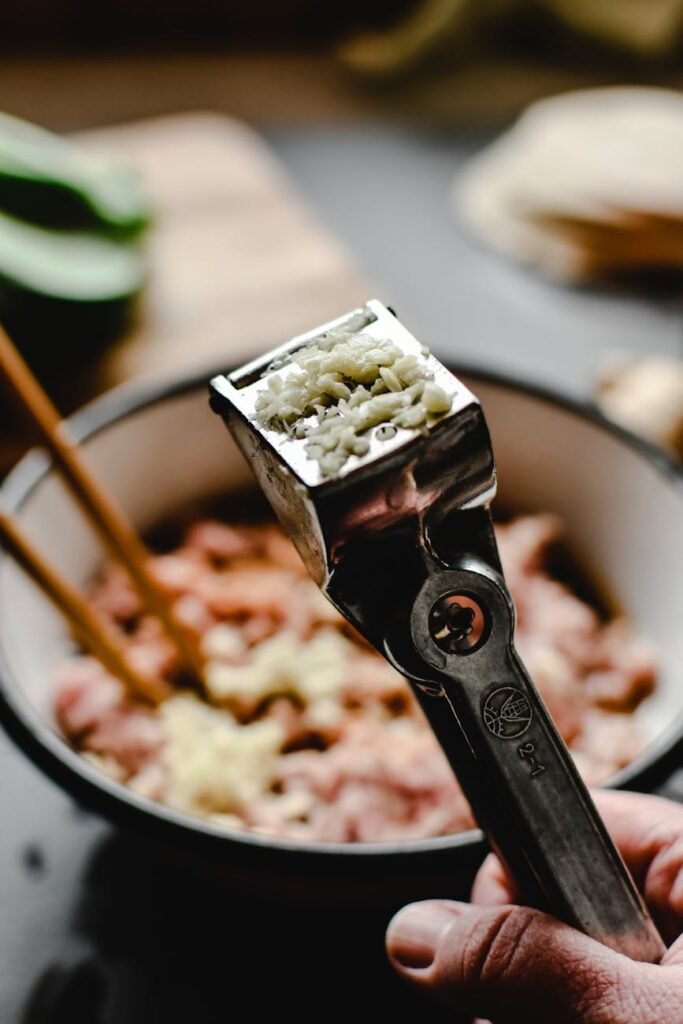
Quick, practical picks to make daily life easier without a big budget.
Kitchen 5+5 means five small upgrades for the kitchen and five useful home helpers. Most picks are under $25, easy to swap out, and available on Amazon for fast delivery.
Use this guide by zone. Skim to the part that fixes your biggest annoyance first. Buy one or two items, then build from there.
Selection rules: items should save time, cut mess, or stop repeat problems. If a product does none of those, skip it. For each pick you’ll get why it helps, who it’s for, quick price-to-value, pros and cons, what to avoid, and cheaper alternatives.
I’ll call out basic safety checks like food-grade materials and heat resistance. Expect to notice faster prep, fewer wet counters, and less “where is that?” searching within a day.
For more carefully tested finds and extra budget options, see this short list on best Amazon finds.
Key Takeaways
- “Kitchen 5+5” = five kitchen upgrades + five home helpers that actually make daily life easier.
- Most items are practical, under $25, and available with fast Amazon delivery.
- Buy one thing that fixes your top annoyance first, then expand.
- Check for food-grade materials, heat resistance, and weak adhesives.
- Each pick includes pros/cons, who it fits, and cheaper alternatives.
Why the modern five-zone kitchen approach makes these finds worth buying
The old triangle kept fridge, cooktop, and sink close with a few clear steps between them. That concept worked when one person used the room and no island blocked traffic.
Today many homes are open-plan. An island, homework at the table, or two people cooking can turn those three points into crowded paths. You lose time when items wander, counters fill up, or tasks collide.
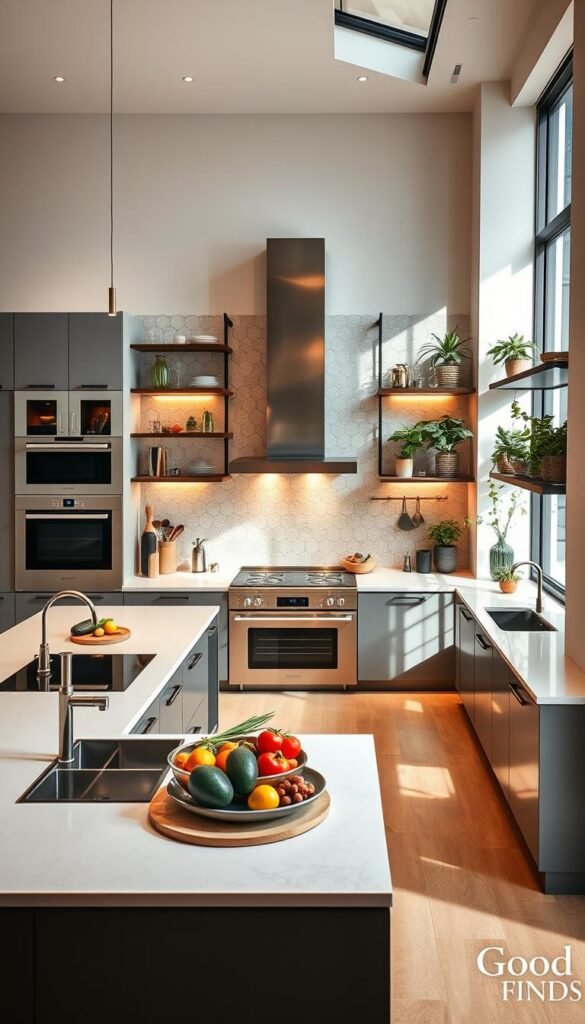
Why a five-zone approach helps
The idea is simple: give each task its own spot so tools live where you use them. Fewer steps and fewer hand-offs mean fewer spills, fewer forgotten items, and faster weeknight meals.
The five zones, plain and practical
- Cooking: stove and oven — keep hot tools here.
- Cleaning: trash → sink → dishwasher flow. Clear this path.
- Consumables: fridge and pantry plus an unpacking spot.
- Non-consumables: pots, plates, and serving items near dining areas.
- Preparation: protect ~4 feet of clear counter and ~15 inches beside the sink.
„Match tools to the zone where you actually use them. That’s the point of this approach.“
| Zone | Common problem | Quick fix |
|---|---|---|
| Cooking | Too many people near the stove | Keep utensils and hot pads stored at the stove |
| Cleaning | Dish pileups block workflow | Install a sink caddy and clear trash path |
| Preparation | No clear counter to work on | Reserve one uninterrupted surface for prep |
| Consumables & Non-consumables | Searching for ingredients or plates | Group items in labeled bins near use |
Homeowners use rooms differently now. This design approach helps you avoid a full remodel. Each pick in this guide targets one zone and cuts friction in real life.
Kitchen 5+5 picks that save time in every kitchen zone
Simple swaps can cut your prep time and stop small messes from turning into big ones. These picks focus on fewer spills, faster cleanup, and less searching across each zone.
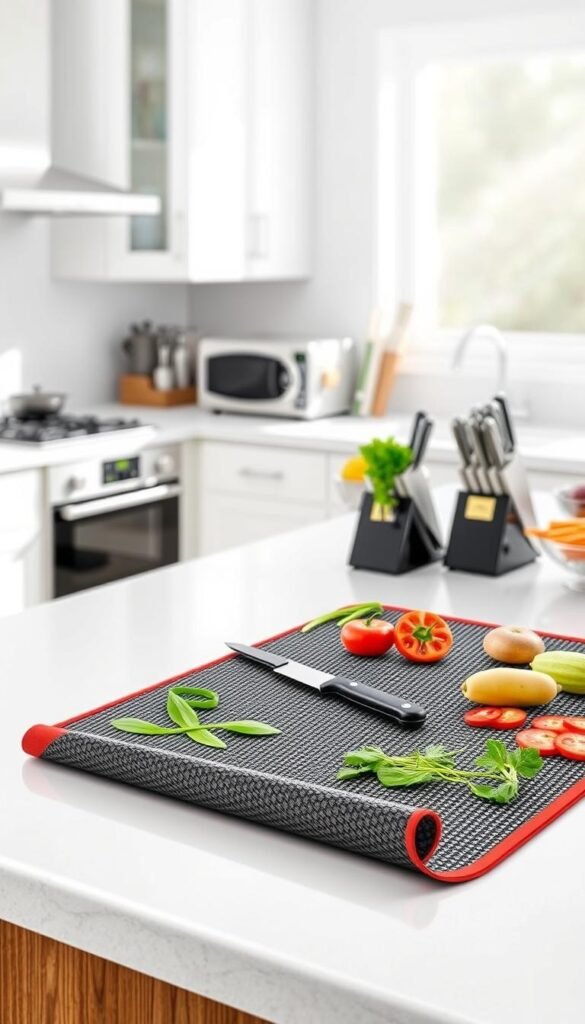
Flexible cutting mats (prep area)
Why useful: lift chopped food straight into a pan with no scatter. Who it fits: renters, meal preppers, and small-space cooks.
Price-to-value: usually a multi-pack under $25. Look for food-grade plastic and a non-slip texture.
Bench scraper (prep area)
Why useful: scoops herbs, moves dough, and cleans crumbs in one pass. Great for bakers and anyone who hates extra wiping.
What to avoid: rough metal edges or flimsy handles. Cheaper alternative: a plastic dough scraper with a safer edge.
Sink caddy & bottle brushes (cleaning zone)
Sink caddy: keeps sponge and brush draining so the sink area stays dry. Pick rust-resistant stainless or ventilated plastic. Avoid weak suction mounts that trap grime.
Bottle brush set: reaches narrow bottles and straws. Skip sets with shedding bristles or exposed wire tips. If you only need one brush, a long single brush is a budget alternative.
Clear pantry bins (consumables area)
Why useful: group snacks and lunch items so you grab one bin and go. Measure shelves first and avoid odd sizes that waste space.
Quick example: dump bars into one bin and the kids can pull a snack without digging.
| Item | Best for | Price-to-value | Quality checks |
|---|---|---|---|
| Flexible cutting mats | Small-space prep, meal preppers | Multi-pack under $25; high value | Food-grade plastic, non-slip, avoid thin warped mats |
| Bench scraper | Bakers, fast cleanup fans | Under $10; durable steel worth it | Smooth edges, solid handle; avoid rough metal |
| Sink caddy | Anyone with limited counter space | $8–$20; choose ventilated models | Rust-resistant or easy-clean plastic; avoid trapped-drain designs |
| Bottle brush set | Gym bottles, parents, straw users | $6–$15; multi-size value | No-shed bristles, coated wire; avoid flimsy handles |
| Clear pantry bins | Busy households, kids, small pantries | $10–$20 per set; measure shelves | Sturdy plastic, proper fit; avoid crack-prone bins |
Quick checklist: does this reduce steps, protect prep space, or keep cleaning tools contained? If not, skip it. For more tested small-solution picks see best small solutions.
Affordable home finds that reduce clutter across living, dining, and utility areas
Small fixes that stop daily clutter loops in your living, dining, and utility areas make a bigger difference than a deep clean. These renter-friendly items cost under $25, arrive fast, and usually install without tools.
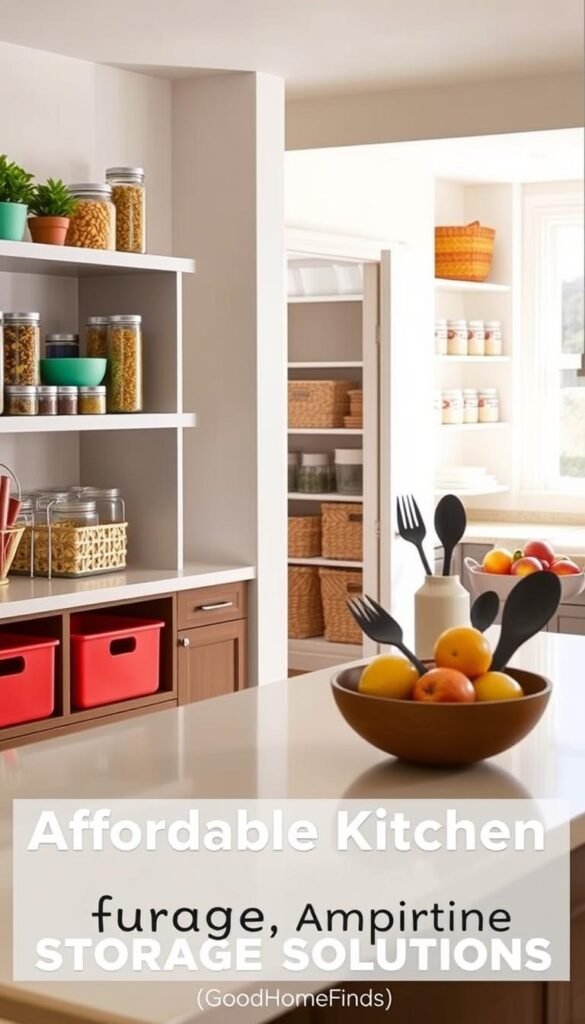
Adhesive hooks — entry and living area
Real life: keys and bags stop landing on counters and chairs.
Pros: no drilling, quick install. Cons: adhesive can fail on textured walls.
Who should buy: renters, small-space homes, families with backpacks. Alternative: a freestanding over-the-door hook rack.
Mesh delicates bags — laundry/utility
Real life: socks stay paired and fragile items don’t snag.
Pros: protects clothes and organizes loads. Cons: overstuffing reduces cleaning effectiveness.
Who should buy: anyone tired of lost socks. Alternative: use a pillowcase with a secure knot.
Cable clips — living and family areas
Real life: chargers stay where people sit so you stop buying extras.
Pros: reduces visible cable clutter quickly. Cons: some adhesives leave residue.
Who should buy: WFH households and families. Alternative: twist ties or Velcro wraps.
Labeled spray-bottle set — cleaning supply storage
Real life: grab the right cleaner fast and keep refills consistent.
Pros: clear routine, fewer mismatched bottles. Cons: labels can peel; cheap bottles may leak.
Who should buy: people who mix DIY cleaners. Alternative: reuse store-brand bottles and mask-tape labels.
Under-shelf basket — storage anywhere
Real life: add hidden space for wraps, napkins, or batteries without new furniture.
Pros: instant extra storage. Cons: reduces clearance for tall items.
Who should buy: apartment dwellers and small closets. Alternative: small slide-out bins.
| Item | Best for | Pros | Budget alternative |
|---|---|---|---|
| Adhesive hooks | Entry, living area | No drilling; quick install | Over-the-door hook rack |
| Mesh delicates bags | Laundry/utility | Protects fabric; keeps socks together | Pillowcase with knot |
| Cable clips | Living, family area | Cut cable mess; chargers stay put | Twist ties/Velcro wraps |
| Labeled spray bottles | Cleaning storage | Consistent refills; clear routine | Repurposed store bottles + tape |
Buy for the spot, not the trend: measure shelf thickness for under-shelf baskets and match hooks and clips to your surface. For more small-space solutions see best small-space finds. These basics are ideal for fast Amazon delivery and easy returns if sizing is off.
What to avoid when buying under-$25 essentials on Amazon
Before you click buy, learn a few simple checks that stop bad purchases fast. The right small purchase saves time and hassle. The wrong one creates clutter and regret.
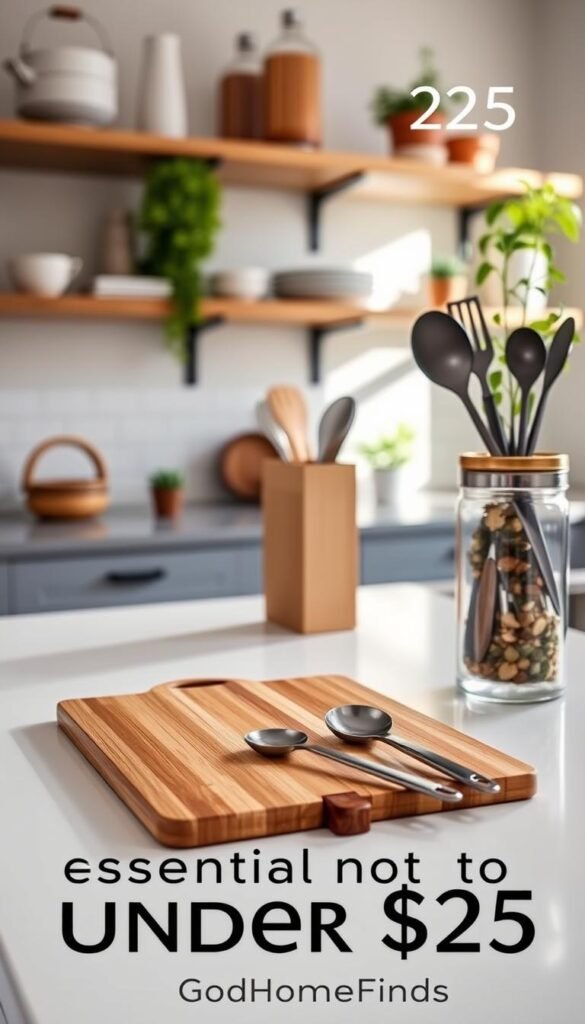
Quality and safety checks
Quick rule: check materials, edges, and heat tolerance.
Food-grade means BPA-free plastics or marked food-safe silicone. For anything near heat, look for stated heat resistance or oven-safe notes. Avoid tools with unfinished metal edges or a long list of adhesive-failure complaints.
Skip feature overload
Bulky gadgets eat prep area and rarely deliver. If a tool does one narrow task and nothing else, skip it.
Choose durable multipurpose items that match your layout and how you work during cooking, preparation, and cleaning.
Fast-delivery basics
Prioritize well-reviewed, simple tools and easy-to-replace consumables first. They arrive fast and you can swap them if needed.
- Two-minute Amazon checklist: material labeled food-safe, no sharp unfinished edges, heat tolerance noted, recent reviews mention durability, and it solves a repeat problem.
- Red flags: reviews that describe a chemical smell, cracking plastic, rust, or adhesives that “fell off in a day.”
- Review-scan tip: focus on repeated real-life details like “drains well,” “fits standard bottles,” or “doesn’t rust.” Ignore vague praise with no specifics.
Remember: you don’t need a remodel to improve flow. The practical way today is to add the right element in the right place and avoid cluttered trends. For more tested budget picks see this Amazon haul guide, curated under-$25 finds, and renter-friendly options at renter finds mix.
Conclusion
Begin by solving your most frequent annoyance with one reliable tool. Pick a prep item (cutting mats or a bench scraper), one cleaning fix (sink caddy or long bottle brush), and a single pantry bin to tame clutter.
Measure once before you buy. Check shelf depth, cabinet thickness, and counter clearance so the parts actually fit.
Use renter-friendly add-ons to block daily pile-ups. Adhesive hooks, delicates bags, and cable clips stop repeat mess without drilling.
Follow this buying rule: if it doesn’t save time, cut mess, or make daily use easier, skip it. Choose fewer, better basics and keep a small starter kit on hand.
For more closing tips and a compact starter plan see the conclusion tips and a practical starter-kit plan. Small, steady upgrades help homeowners and make everyday life in your kitchens noticeably better.