This guide shows how to group items by the task you do so you stop hunting through random cabinets every night. The idea is simple: set up food storage, non-consumables, prep, cooking, and cleaning areas that match your cooking flow.
You can use no-drill, renter-friendly fixes and cheap buys to make each area work. Expect practical product ideas under $25 and under $50 like bins, turntables, risers, drawer dividers, caddies, and no-damage hooks. I’ll note pros, cons, and who each pick suits.
Safety and easy maintenance matter here. I cover knife access, chemical storage, heat-safe landing spots, and stable stacking so the system is tidy and safe for daily use.
Use this guide one zone at a weekend. Then keep it with a short daily reset. The same mindset also helps with small bathroom, closet, or entryway setups. For more small-space ideas, see a curated list of small solutions for compact spaces.
Key Takeaways
- Group items by task to cut steps and clutter.
- No-drill solutions make changes renter-friendly.
- Budget picks under $25 and under $50 can be very effective.
- Five core areas cover most needs; add optional zones if you have space.
- Focus on safety: secure knives, chemicals, and heat zones.
- Implement one zone per weekend and maintain with a quick daily reset.
Why Zones Beat the Work Triangle in Today’s Kitchens
Modern home cooking needs systems that match how you actually live, not an idealized layout from the 1940s. A simple task-led approach keeps tools and staples where you use them most. That shortens steps and makes daily meals less stressful.

What a task-based setup means and how it improves workflow
Task areas are small, dedicated spots for prep, cooking, food storage, cleaning, and non-consumables. You place things close to the action so you move in a clear flow: prep → cook → clean. This is practical in apartments and open-plan homes where counters double as workspaces.
When the triangle still helps and when it does not
The classic triangle maps sink, stove, and fridge for appliance placement during remodels. It works as a baseline for big changes.
But, if your layout is fixed or multiple people use the room, task areas are more flexible. They let you adapt without drilling or redoing appliances.
How task areas cut steps, clutter, and decision fatigue
Here’s a quick example: scramble eggs. Pull eggs from the fridge, prep at a clear counter with tools nearby, cook with utensils within reach, then toss scraps and wipe at the sink area. Fewer trips. Fewer pauses.
- Reduce steps: fewer repeated trips to random drawers.
- Cut clutter: items get homes near where they matter.
- Lower decision fatigue: you stop wondering where things belong.
| Approach | Best for | Strength | Limit |
|---|---|---|---|
| Work triangle | Remodels and appliance planning | Clear appliance layout | Less flexible for multi-use rooms |
| Task-based setup | Renters, small spaces, open plans | Flexible, renter-friendly, reduces steps | Needs intentional placement of things |
| Hybrid | When appliances can move slightly | Balances structure and adaptability | Requires some planning |
Safety note: keep knives, cleaners, and heat tools in separate marked areas to avoid accidents. If you want quick fridge organization tips that work with this approach, see a helpful guide on fridge space solutions.
Plan Your Kitchen by Zones Without Remodeling
Start with a short, real-life audit to see how your space actually works during a normal day.

Quick audit: how you actually use your kitchen day to day
Spend 10 minutes noting what you cook most, where groceries land, where dishes pile up, and where you get interrupted. Write it down. This reveals where to place key tools and small appliances so you save steps and strain.
Declutter first so every item has a home
Pull one cabinet or drawer at a time. Toss expired food and recycle packaging.
Create a donation box and drop it by the door on trash day. Use the one home rule: every tool and ingredient gets one primary place in a zone.
Traffic flow and renter-friendly setup rules
Keep main walkways clear. Make sure doors open fully and the fridge and dishwasher don’t block exits.
- Prefer adhesive hooks, over-cabinet hooks, tension rods, and freestanding shelves.
- Group small appliances together to spot duplicates to donate.
- Label bins (snacks, breakfast, baking) so roommates return items correctly.
Safety tip: store heavy items low, keep knives protected, and separate chemicals from food storage. For common fixes and a quick product list, see this kitchen problem mix.
Zone Mapping for Small Kitchens, Galley Layouts, and Open Concept Spaces
Place prep between the fridge and sink so the most-used steps sit within arm’s reach. This simple rule improves flow in tight layouts and shared apartments.
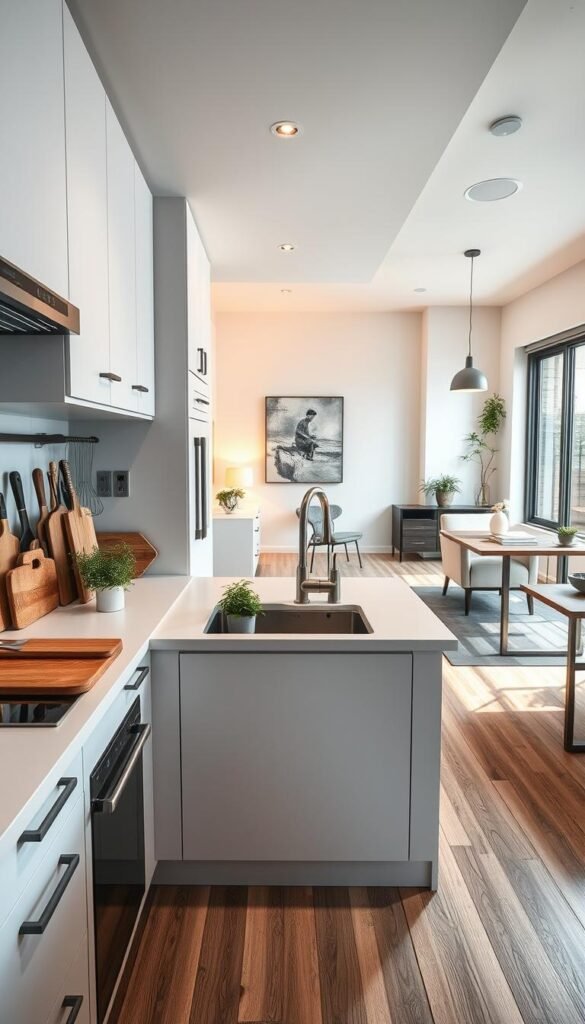
One-wall setups
Stack tasks vertically. Use upper cabinets for seldom-used items and lower drawers for heavy daily tools.
Reserve a short counter strip as a dedicated prep zone. Add a slim cart if you need extra work surface.
Galley kitchens
Split the run: one side for prep and storage, the other for cooking and cleaning.
This keeps two cooks from crossing paths and makes the layout feel larger.
L-shaped and islands
Put prep at the elbow near the fridge. Keep pans and utensils next to the range.
Decide what your island is for: main prep or a baking area with mixer and pans.
Open plans and shared flats
Hide cleaning supplies in matching caddies to keep the visual line clean.
For roommates, assign small owned shelves and maintain shared tool zones to avoid bottlenecks.
| Layout | Best use | Renter-friendly fix | Tip |
|---|---|---|---|
| One-wall | Stacked storage | Rolling cart | Prep between fridge & sink |
| Galley | Split workflow | Over-shelf organizers | One side prep, one side cook/clean |
| L-shaped / Island | Elbow prep or baking island | Counter caddy, mixer station | Keep heat landing near oven |
| Open concept | Visually contained cleaning | Matching under-sink bins | Define owned shelves for roommates |
Small tip: if you need quick products, see renter-friendly picks and tools in this renter-friendly fixes.
Food Storage Zone: Pantry, Fridge, and Everyday Staples
Make unpacking easier by keeping your pantry and fridge near a small landing surface. This gives you a place to set grocery bags and sort items for quick food prep.

„Store everyday items at eye level, weeknight staples in one bin, and backstock higher or deeper.“
Renter-friendly, no-drill tools that solve common problems
Use clear bins, shelf risers, and turntables to stop lost packets and wasted space. Stackable containers tame half-open bags and make shelf edges neat. These fixes require zero permanent changes.
Budget picks
- Under $25: small clear bins, a basic turntable, bag clips, a wipeable fridge bin, and a lidded snack tub.
- Under $50: sturdier stackable containers, a deeper turntable for oils and sauces, modular bin sets, or a slim freestanding shelf for one-cabinet pantries.
Pros, cons, and quick guidance
Clear bins: easy visibility but can waste space if oversized.
Turntables: great for deep corners; avoid overloading to stop wobble.
Stackable containers: airtight and neat; need regular refilling and labeling.
Shelf risers: double vertical space but check cabinet height first.
Who this works best for
Studios do well with tighter categories and one backstock bin. Families benefit from kid-accessible snack bins and a baking section. Bulk shoppers need heavy-duty containers and a dedicated backstock shelf.
Easy maintenance
Create a weekly „use-it-up“ shelf or bin for items that need eating that week. Do a 2-minute wipe of sticky spots each week so the system stays worth it long-term.
Non-Consumables Storage Zone: Dishes, Glasses, and Everyday Items
Smart placement makes unloading faster and keeps counters clear. Store everyday plates, bowls, and flatware within one step of the dishwasher or drying rack. This small rule makes you more likely to put things away each night.

Drawer and cabinet reach strategies for tight spots
In narrow cabinets, store plates vertically with a simple rack so you can slide one out without shifting a stack.
Stack bowls on a stable base and nest a few to save space. Move rarely used serving pieces higher or deeper.
Assign a single drawer for daily flatware near the dishwasher so you avoid crossing the room each meal.
Quick comparison
| Option | Setup effort | Cost | Visibility | Stability |
|---|---|---|---|---|
| Open bins | Low | Low | High | Medium |
| Drawer organizers | Medium | Low–Medium | Medium | High |
| Shelf inserts | Medium | Medium | High | Medium–High |
Safety, durability, and kid-safe placement
Stacking limits: don’t stack plates or bowls past a point where pulling one risks a tumble. Keep heavy stacks low.
Store sharp tools locked or high. Avoid open countertop knife displays if small children or pets can reach them.
Use sturdy risers only for non-breakables and choose low-profile organizers for fragile glassware.
Apartment-size tips: in a studio, keep fewer place settings and nest bowls. In larger units, dedicate one cabinet for entertaining so daily items stay uncluttered.
Maintenance: a nightly dish unload + reset keeps the non-consumables area useful. For more renter-friendly picks and small solutions, see a curated list of practical organization finds on best organization finds.
Preparation Zone: Counter Space, Tools, and Food Prep Basics
A good prep area gives you a clear work surface and the few tools you use every day within arm’s reach.

Protect and expand your work surface
Use temporary surfaces that tuck away when not needed. Over-the-sink boards and cool stovetop covers add instant prep space. Slim rolling carts park out of the way and act as a second table for meal prep.
What to keep within arm’s reach
Checklist: a cutting board, protected knife storage, a nesting set of bowls, a small utensil set, a compost container, your most-used oils and spices, and a measuring cup. Store these where you can grab them without crossing the room.
Budget upgrades that are renter-friendly
- Under $25: drawer dividers, a countertop caddy, non-slip mat, spice packet bin, or small tray to corral daily items.
- Under $50: a sturdy over-sink board, a better drawer organizer set, a freestanding spice riser, or a compact rolling cart.
| Option | Pros | Cons | Best for |
|---|---|---|---|
| Countertop caddy | Fast access to oils and salt | Can look cluttered | Everyday cooks |
| Magnetic organizer | Saves counter space | Needs safe placement | Small-space cooks |
| Drawer dividers | Hidden and tidy | Limits oversized tools | Multi-apartment households |
| Rolling cart | Extra surface, mobile | Takes storage space when parked | Meal preppers |
Five-minute daily reset
Wash and dry the main board. Return oils and spices to their tray. Clear mail and random items. Wipe the worktop. This simple routine keeps the prep zone ready and safe for the next meal.
Cooking and Cleaning Zones That Work Together
Create a clear landing spot near the oven and a short path to the sink to speed meals and cleanup. This simple rule saves steps and prevents burns.

Cooking essentials
- Pots and pans: store the weekly set near the range.
- Utensils: keep core utensils in a crook or drawer next to the stove.
- Lids: corral in a basket for fast access.
- Heat-safe landing: reserve a clear counter or trivet beside the oven for hot trays.
Cleaning flow
Scrape and pre-rinse at the sink. Load the dishwasher without crossing traffic paths.
Place trash and recycling where you create waste—near the prep and sink area.
Safety musts
- Knife storage: sheathed in a block or magnetic strip out of reach of kids.
- Chemicals: keep cleaners under the sink but separated from food. Add a child-safe latch if needed.
- Oven habits: never carry hot pans through tight walkways; use the landing spot.
Renter-friendly storage wins
- Under-sink caddies to protect supplies from leaks.
- Over-cabinet hooks for towels and gloves.
- Pull-out bins for trash/recycling that fit without drilling.
| Option | Speed | Cleanliness | Visual clutter | Child safety |
|---|---|---|---|---|
| Countertop utensil crock | Fast access | Needs frequent wiping | Higher | Lower |
| Drawer organizer | Moderate | Cleaner (hidden) | Low | Higher |
| Cabinet bin | Moderate | Very clean (closed) | Low | High |
Best-for guidance and maintenance
Studios: combine cooking and prep storage tightly and use vertical bins. Larger apartments: separate daily cooking tools from baking tools so each area stays friction-free.
Daily rhythm: rinse and load after meals, wipe the stove in 60 seconds, and restock tabs, sponges, and bags weekly so cleanup never stalls.
Conclusion
Pick one high-impact spot and treat it like a tiny project you can finish in an afternoon.
When your setup matches what you do each day, cooking and cleaning take less effort and your space feels calmer. Start with food storage or prep this week, then move to dishes and the cooking/cleaning flow.
Try a quick „test cook“: make a common meal and watch where you backtrack. That tells you what to move or corral next. Zones can overlap and evolve—if you brew coffee daily, a small coffee tray and a nearby drawer solve a lot.
Maintenance: five minutes to clear the prep area and a quick dish rhythm beat one big reset. Keep heavy things low, avoid overstacking breakables, sheath knives, and store cleaners away from food.
Use simple bins and a clear system first. For more small-space finds to finish your setup, see this curated list of small-space solutions.