Your renter-friendly, no-drill plan makes work surfaces usable again without damage or big spend. Start with one reset day to clear clutter, sort what stays, and put most items away. This first step cuts prep time and stress on busy nights.
Next, create simple zones for prep, utensils, and daily items. Use trays, containers, and vertical no-drill holders to keep things intentional. Neutrals help reduce visual clutter and give a clean, practical style that fits small spaces and rentals.
Plan for quick wins under $25 and modest upgrades under $50. Shop your home first to avoid duplicates. The method of clear surface + zone + container works in a bathroom sink area, a closet shelf, or an entryway drop spot.
Safety note: leave extra space near heat and water. Choose materials that stand up to moisture and heat for items stored nearby.
Key Takeaways
- One reset day makes a big difference for daily use.
- Renter-friendly, no-drill solutions protect surfaces.
- Small buys and home-sourced items keep the budget low.
- Trays and vertical storage make the area feel intentional.
- The same approach works in bathrooms, closets, and entries.
What “Calm” Looks Like on a Kitchen Counter (and Why It Matters)
Clearing the main workspace creates usable space and reduces daily friction. A clear center work area, grouped essentials at the edge, and no mystery piles are the basic look of a calm surface.
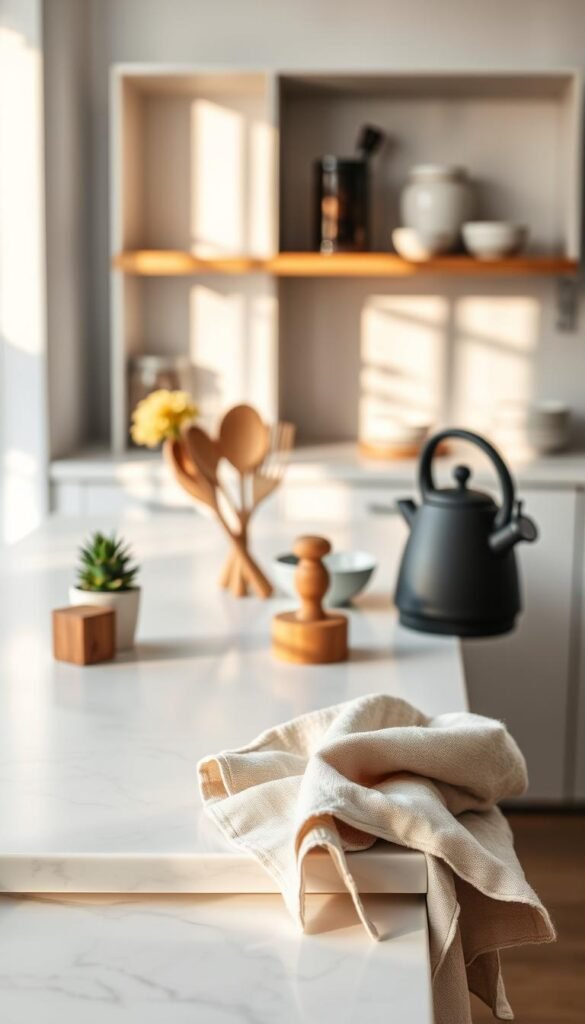
Less clutter, more function
Keep only items you use every day in sight. If it does not earn daily use, tuck it in a drawer or bin. This rule cuts cleaning and searching time.
How it helps cooking and daily life
With a reliable prep zone you do not move things to make space. Wiping a mostly clear area takes seconds. Wiping around many objects takes minutes and feels annoying.
Safety and small-space tips
Heat zones: keep toasters and air fryers clear of nearby plastics. Cord control: use clips and avoid daisy-chaining strips behind wet areas. Route cords away from sinks and burners.
- One active soap and sponge system only.
- Limit appliances to those that earn their spot.
- Use leaning boards to hide outlets and tame cords.
| Focus | What to keep | Why it matters |
|---|---|---|
| Prep center | Cutting board, knife, one oil | Saves time when cooking and reduces mess |
| Cleaning zone | Soap, sponge, dish towel | Makes quick wipes quick and reliable |
| Appliance rule | 1–2 daily-use appliances | Prevents appliance creep and frees space |
In shared homes, zones act as boundaries. Marking a spot for each person cuts arguments and lost items. For more practical fixes, see smart storage ideas.
Reset Day: Clear, Sort, and Deep-Clean Without Overthinking It
Start your reset day by clearing every surface so you can see what you actually own. Set a timer for 60–90 minutes. Work in short bursts so the task feels finite and doable.
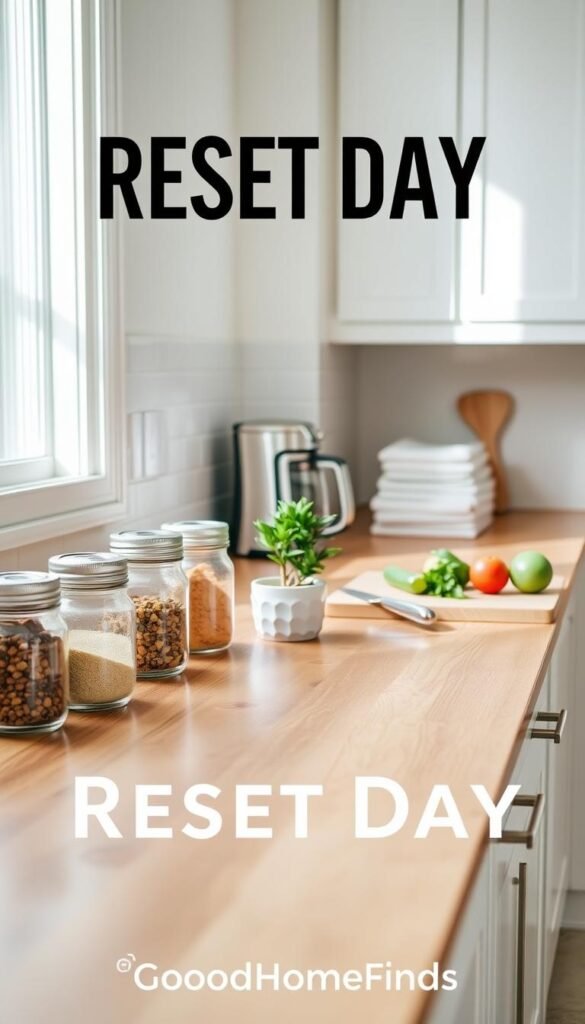
Pull everything off and shop your home first
Remove all items and place them on a table. This makes duplicates obvious and helps you reuse what you already have.
Reuse ideas: a shallow tray for oils, a small bin for gadgets, a vase as a utensil crock. Avoid impulse buys; test home items before you store anything new.
Quick scrub checklist
- Start near the sink and work outward.
- Wipe crumbs along the backsplash line.
- Tackle sticky spots by coffee stations and syrup areas.
- Remove greasy film near the stove with a mild degreaser.
- For hardwater stains at the faucet base try Iron Out or a Mr. Clean Magic Eraser.
Decide what earns space
Use one simple rule: daily items stay; weekly items get a nearby home; rarely used things go higher or deeper in cabinets.
This keeps the main work area functional and cuts cleaning time over the years.
Renter-friendly surface protection
Protect surfaces with wipeable mats under coffee gear, a small tray under oils, and a heat-safe pad under hot appliances. Seagrass placemats work for gentle protection and look tidy.
Why it helps: fewer rings, fewer sticky drips, and less deep cleaning later. It also reduces damage risk when you move out.
| Task | Tool / Product | Budget |
|---|---|---|
| Decant soap | Refill dispenser | Under $10 |
| Faucet hardwater | Iron Out or Mr. Clean Magic Eraser | $5–$12 |
| Appliance landing | Wipeable mat / heat pad | $8–$25 |
| Temporary sorting | Shallow tray / small bin | Reuse from home |
Apply the same reset to the bathroom counter (limit to daily skincare and soap), the entryway (one tray for keys and mail), and a closet shelf (categorize into bins). Once clean, put back only what earns the spot by daily-use and safety rules.
For compact storage ideas that pair with this reset method, see best small kitchen solutions.
Kitchen Counter Calm: Build Countertop Zones That Stop the “Dumping Ground” Effect
Give each activity a clear landing spot so things stop migrating across the surface. A simple zone plan prevents random piles and makes the area feel intentional. This works in rentals and tiny spaces because it needs no drilling or fixed hardware.
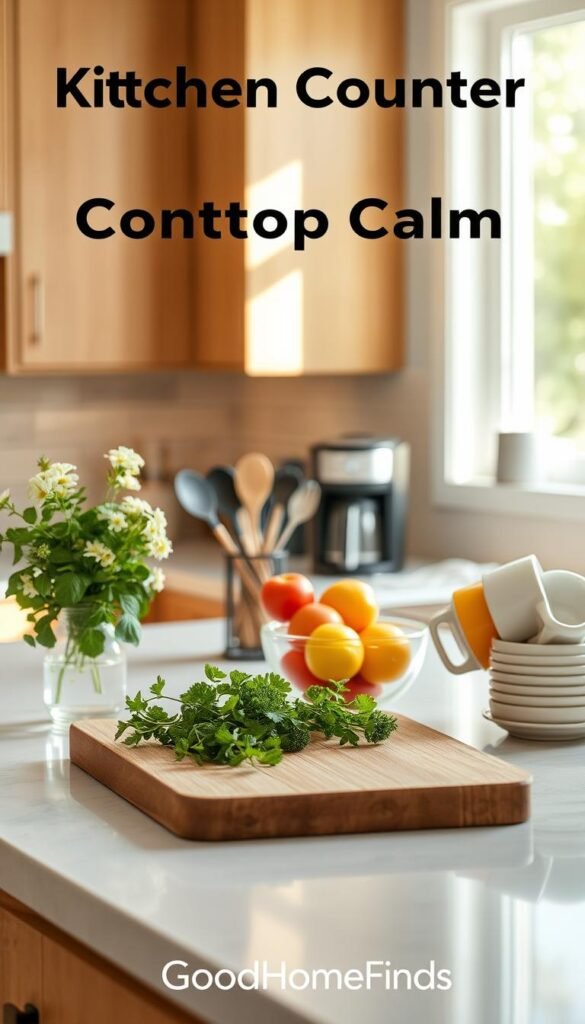
The zone method
Coffee zone: machine + mugs + one canister. Route cords with clips so the spot stays wipeable and safe.
Prep zone: keep the center free. Store knives in a block or magnetic strip inside a cabinet. Keep one cutting board accessible and stand extras vertically against the backsplash to hide outlets and reduce cord tangles.
Clean-up zone: put soap and sponge in a small caddy. Limit bottles to one refillable dispenser and choose water-resistant containers that rinse clean fast.
Trays and small-space strategy
Use a tray to define a place for oils, salt, pepper, and a daily utensil crock. Trays make wiping quick and keep spills contained.
Group items to edges and corners. Protect the runway in the middle so you always have usable work space. Leaning boards add height, hide outlets, and reduce visual clutter without taking up the countertop footprint.
Safety notes
- Keep flammables and paper away from heat.
- Route cords away from sink edges and avoid overloading outlets.
- Choose heat- and water-resistant materials near appliances and sinks.
| Container | Best for | Pros | Cons | Safety |
|---|---|---|---|---|
| Tray | Oils, salt/pepper, soap sets | Flat, easy to wipe, defines a zone | Limited capacity | Choose heat- and water-resistant materials |
| Basket | Coffee pods, snacks, mail (temporary) | Hides visual clutter | Can become a “stuff bin” | Keep away from stove and splash |
| Turntable | Vitamins, sauces, frequent bottles | Maximizes corner use | Can look busy if overfilled | Pick a sturdy, non-slip base |
Want quick product ideas that fit this approach? Check curated picks for everyday use in the best kitchen finds. Keep the plan simple and rotate items seasonally so the space keeps its sense of order.
Budget-Friendly Organizers Under $25 and Under $50 (No Drilling Required)
Small, smart buys can clear chaos fast and keep daily tasks moving. Start with low-cost staples and add one upgrade that actually creates usable space.
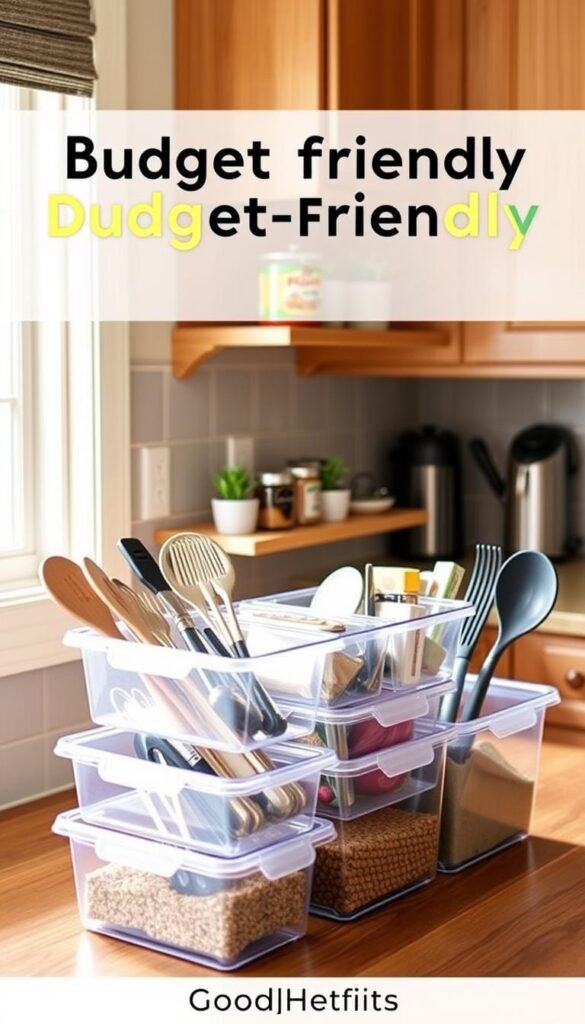
Under $25: quick staples
Adhesive hooks for towels and oven mitts, cord clips to route cords away from the sink or stove, sponge caddies to contain wet mess, slim bins for daily-use packets, and simple labels to stop random piles.
Under $50: workspace upgrades
Consider an over-the-sink rack for drying and holding sponges, a countertop shelf riser to double vertical storage, and stackable canisters for coffee or snacks.
Clear vs. opaque and placement tips
Decanting dish soap into a pump dispenser reduces bottle clutter and makes wiping easier. Clear containers show inventory; opaque bins hide visual noise and help you create calming views.
| Product | Pros | Cons |
|---|---|---|
| Over-sink rack | Frees counter space, dries items | Needs stable fit, watch rust |
| Stackable canisters | Organized pantry look | Clear can show mess; opaque hides inventory |
| Adhesive hooks & clips | Cheap, renter-friendly | Avoid over steam-heavy walls |
Who this is best for
Roommates: labeled bins and a shared drop tray. Busy families: baskets that cap categories. Frequent cooks: tray systems plus heat-safe mats. Tiny kitchens: vertical risers and corner turntables.
Durability & safety checks: pick rust-resistant metal near water, BPA-free plastic, silicone or stainless near heat, and non-slip bases. Avoid adhesives where steam accumulates and keep plastics away from hot appliances.
Style That Stays Practical: Neutrals, Natural Materials, and Better Light
Choose a limited palette so your visible items read as a single, practical set. A restrained color palette reduces visual noise and makes real life feel tidy even when things are in use.
Simple palette rule: pick one or two neutral base tones and repeat them across soap, tray, canister, and utensil holder. Lighter tones reflect more light and help small spaces feel larger and easier to work in.
Add warmth with one wood element and one stone or marble accent rather than many small pieces. That single wood board or tray brings warmth while a small marble spoon rest handles oily spots.
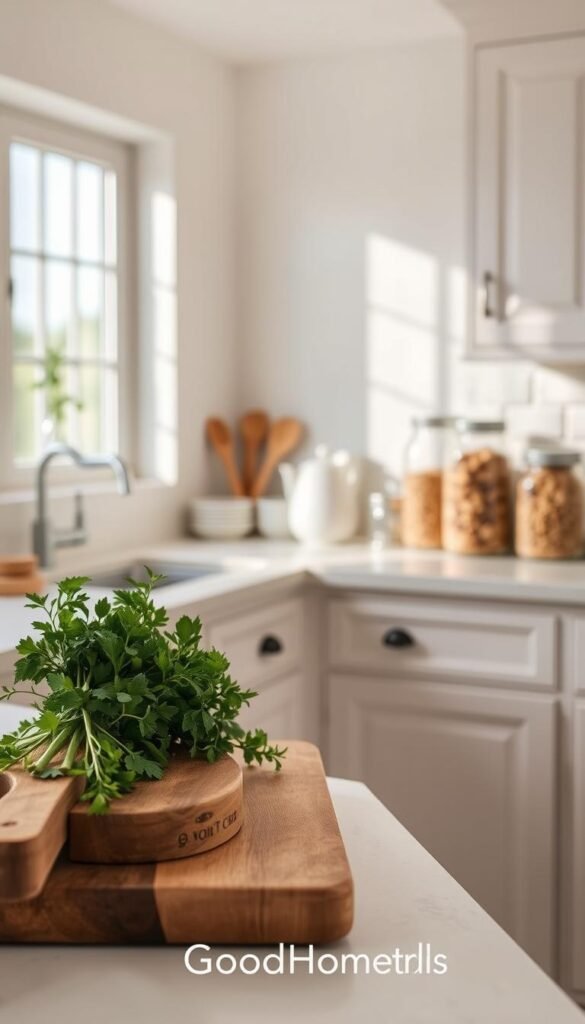
Nature and mood lighting that earn their spot
Choose a small plant, a single branch in glass, or a fruit bowl you actually use. Nature elements add life without extra clutter.
For light, pick renter-friendly, no-drill options: a small plug-in mini lamp or stick-on under-cabinet lights. Keep cords and lamps away from splash and heat. Good light improves the mood and the practical look of your work area.
Tray comparison for daily mess
| Tray | Pros | Cons | Best for | Cleaning |
|---|---|---|---|---|
| Wood tray | Warm look, lightweight | Can stain if unsealed | Dry zones and daily tools | Wipe promptly, avoid soaking |
| Marble tray | Easy wipe-down, stable | Can chip or etch | Oils, salt & pepper zone | Mild soap, avoid harsh acids |
| Rattan tray | Hides clutter, adds texture | Harder to deep-clean after spills | Dry coffee/tea corral or mail | Vacuum/brush crumbs, spot clean |
Style is useful when it stays easy to clean. If an item makes wiping harder, it does not earn the spot—even if it looks good on day one.
Need renter-friendly styling hacks and affordable picks? See practical finds and suggestions at renter-friendly styling picks.
No-Drill Vertical Solutions for Tiny Kitchens (Walls, Cabinets, and “Hidden” Storage)
When horizontal room runs out, look up: walls and cabinet sides are your fastest no-drill storage upgrade.

Go vertical and treat walls as usable real estate. Leaning wood boards add texture, hide outlets, and tuck cords behind a neat surface. Keep just 1–3 boards to avoid clutter and preserve a usable work place.
Renter-friendly wall and cabinet moves
Removable adhesive strips hold lightweight tools and art. Clean and dry the wall before sticking. Respect weight limits and test one strip before mounting a set.
Use slim, adhesive-mounted bins inside a cabinet door for foil, wraps, or seasoning packets. An under-shelf basket gives extra shelf room without hardware.
Magnetic and adhesive alternatives
Magnetic bars work well for metal utensils when mounted securely. Choose strong magnets and place them away from heat and kids’ reach.
„A strong magnet and careful placement make a safe, no-drill knife solution when you follow weight and clearance rules.“
Setup and durability checks
- Test adhesives on a hidden spot and follow manufacturer weight limits.
- Avoid textured paint and peel slowly; use gentle heat if removal is stiff.
- Keep adhesive mounts away from constant steam or direct appliance heat.
| Solution | Best for | Durability tip |
|---|---|---|
| Leaning wood boards | Hide outlets, add texture | Keep dry; choose sealed wood to resist stains |
| Removable adhesive strips | Light tools, art, hooks | Clean surface; respect weight limit |
| Magnetic bar | Utensils, knives (metal) | Strong magnets; place away from heat and kids |
| Cabinet-mounted slim bin | Wraps, foil, small packets | Use adhesive rated for cabinet surfaces |
Apartment-size alternatives: studio galley rooms benefit most from vertical layering and over-sink racks. One-bedroom renters can create a dedicated cabinet zone for backups. Shared spaces work better with labeled shelves and assigned bins so everyone knows their place.
For quick, practical small-space fixes that pair well with these no-drill options, check curated ideas that keep systems simple and renter-safe.
Conclusion
Treat this as a four-step habit you can do in minutes, not hours. Reset → decide daily-use → zone → maintain is the simple loop that keeps the area useful and easy to clean.
Daily (under two minutes): clear the center, return items to zones, wipe the main prep area, and tidy cords so the counter stays safe.
Weekly (ten-minute): toss trash, re-home stray items, quick scrub by the sink, and restock only what you actually use. Choose renter-friendly pieces, protect surfaces, and avoid drilling.
Budget wins come from fewer items, one good tray, and a couple of small organizers. Pick durable pieces you will use for years rather than decorative clutter that slows cleaning.
Apply the same zone-and-tray method to the bathroom sink, a closet shelf, and an entryway — see practical choices in entryway fast vs full.
Your next steps: pick a reset day, choose 2–3 zones, buy one organizer if needed, and commit to the two-minute nightly close-down to protect your time and peace of mind.