Practical tools make daily cooking and baking easier. This guide cuts the hype and shows what to buy first for small spaces and real life. You’ll learn which basic measuring tools truly help: cups, spoons, a digital scale, and a reliable thermometer.
What to expect: fewer recipe surprises, less waste, and faster cleanup in tight apartments. I focus on renter-friendly gear that saves energy and is easy to clean.
You’ll get clear buyer advice: budget vs premium, volume versus weight, glass or plastic, and whether angled cups fit your shelves. I’ll explain setup for scales and thermometers and point out common mistakes that still cause inconsistent results.
This is a buyer’s guide, not a wishlist. If you bake a lot, some upgrades are worth it. If you meal-prep or rent, you’ll see what to skip. The goal is repeatable outcomes without overthinking.
Key Takeaways
- Focus on a few reliable tools first: cups, spoons, scale, thermometer.
- Weight (scales) gives consistency for baking and precise cooking.
- Choose dishwasher-safe and low-noise options for apartment life.
- Budget and premium paths are both practical; know the trade-offs.
- Setup and simple habits matter more than owning every gadget.
- This guide is aimed at renters, students, meal-preppers, and home bakers.
Why accurate measuring matters more than you think
How you measure a cup of flour can decide whether muffins rise or sink.
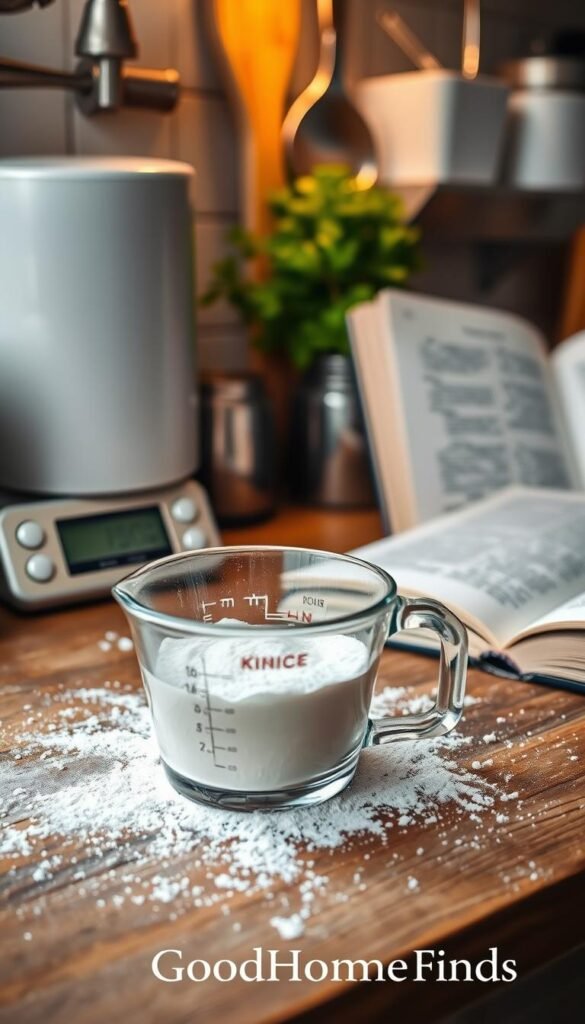
Cooking lets you adjust as you go. You can taste a soup and add salt. Baking does not work that way. Once batter goes in the oven you can’t fix ratios.
Small measurement errors matter most in baking. Too much flour even by 1/4 cup can make cookies dense or cakes dry. Flour and liquid balance changes texture and rise quickly. Accurate measurements cut failed batches and wasted ingredients.
Volume vs weight: why a “cup” of flour can change results
A cup depends on technique. Scooping packs flour to about 150g. Spoon-and-level yields closer to 125g. That gap ruins outcomes if you repeat a recipe and expect the same result.
- Decision rule: If you bake often, use a scale. If you mostly cook, good cups and spoons usually suffice.
- Ingredient density varies—brown sugar, powdered sugar, and flour behave differently in cups.
- In small apartments wasted batches cost time and money. Accuracy helps avoid that.
| Situation | Best practice | Why it helps |
|---|---|---|
| Baking cakes or breads | Use a digital scale (weight) | Consistent rise and texture; repeatable recipes |
| Everyday cooking (soups, stir-fries) | Use quality cups and spoons | Fast prep; easy corrections by taste |
| Small-space meal prep | Combine nesting cups and a compact scale | Less waste; fewer re-dos; fits limited storage |
Real benefits you’ll notice in a small apartment kitchen
A few renter-friendly tools cut waste, speed prep, and make cleanup less annoying. Real benefits show up fast when space and ingredients matter.
Less waste, fewer re-dos, and easier recipe scaling
Accurate measuring stops wasted batches. When you bake, one reliable scale helps you halve or double recipes without messy math. That saves time and food when you only have a few usable hours.
Cleaner counters: fewer spills with spouts, stable cups, and bowl scales
A tempered glass liquid cup with a curved spout and sturdy handle pours cleaner than a random mug. Stable sets like the Sur La Table cups tip less. And compact Escali scales with bowls keep the mess contained instead of spreading batter across your counter.
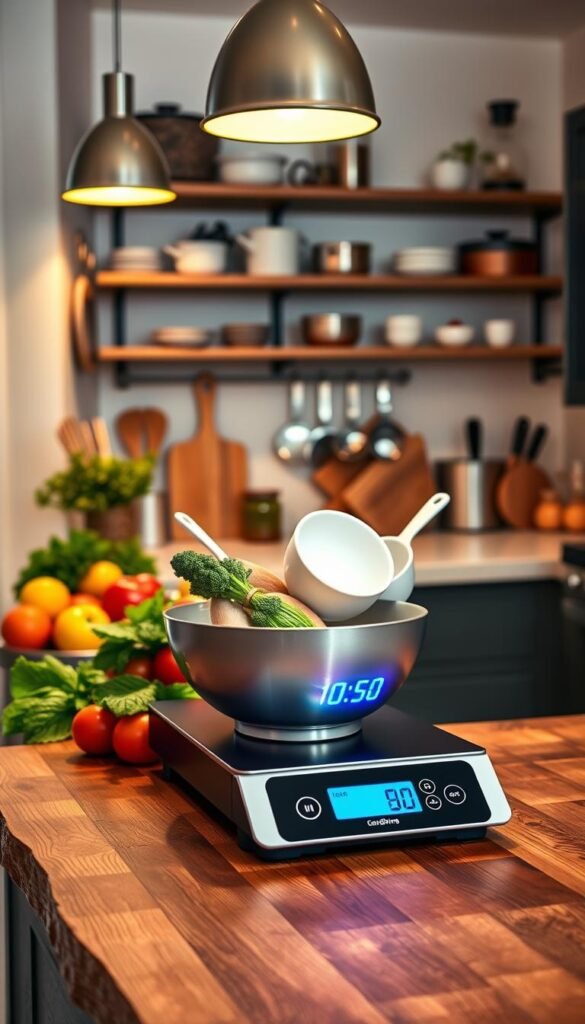
Fewer drips mean fewer slips on slick floors. Clear markings on a glass cup reduce hot-liquid guessing. A simple workflow tip: weigh directly into one bowl to cut dishes and lower the risk of spills while you cook.
- Honest note: better tools don’t fix a bad recipe, but they remove common inconsistency so you can trust results.
- For renter life this means fewer stained counters, less cleanup, and less frustration when your prep area doubles as a dining table.
Want compact, real-world picks? Check this list of practical finds for small spaces: best kitchen finds.
Who needs this (and who can keep it simple)
A few smart pieces can give you repeatable results without stealing shelf space. This section explains who should invest in a basic set and who can start smaller.
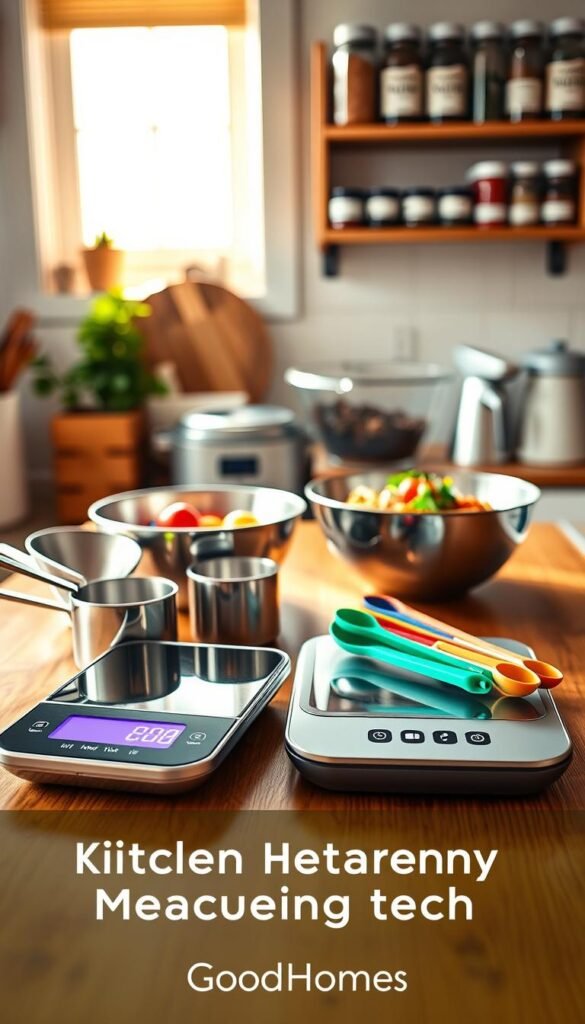
New renters, students, and first-time setups
You need a reliable baseline. A nesting set of cups and a clear spoon set keeps first recipes from feeling random. Odd sizes, like 2/3 or 1/8, are small upgrades that save time.
Home bakers chasing repeatable results
If you bake often, consistency matters. Use a scale and a compact set so recipes turn out the same every time. Pro chefs rely on weight; you can too without pro gear.
Meal-preppers and portion control
A digital scale helps portion food without dirtying extra bowls. That matters when your sink is small and you want minimal cleanup.
Gift buyers and minimalists
A practical starter set is a thoughtful gift. Pick nesting pieces with readable markings. They store flat and won’t become clutter.
- Who can keep it simple: mostly cooks who rarely bake—start with sturdy cups and spoons, add a scale later.
- Small-space tip: prioritize nesting sets, fewer pieces, and readable sizes for fast daily use.
Kitchen measuring tech essentials: what to buy first
Buy the essentials in an order that respects your budget and shelf space. Start small and add items only if you use them.
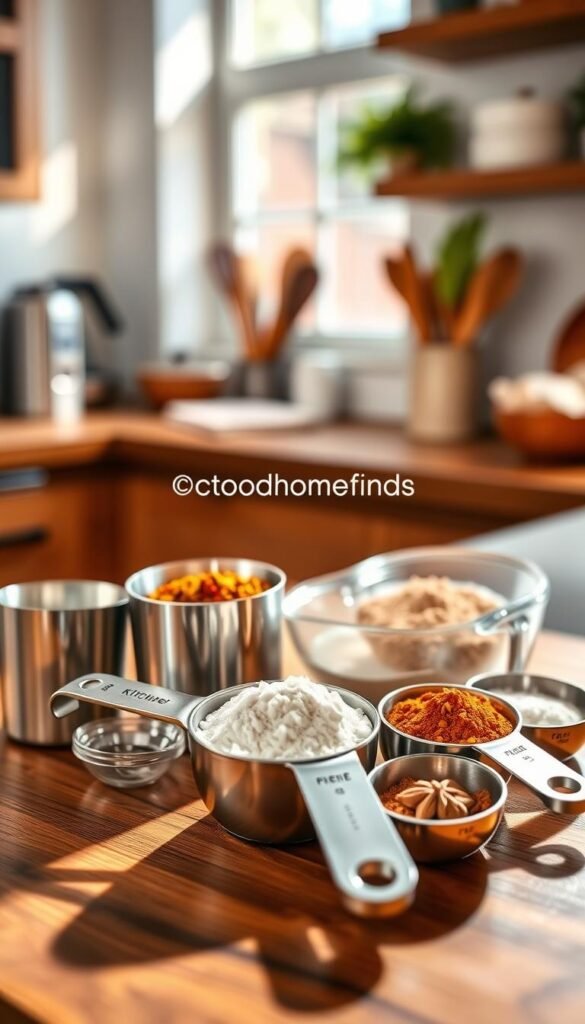
What to buy first
1) A set of dry measuring cups and a set of measuring spoons. Dry cups are for flour, sugar, and other dry ingredients. Fill to the top and level for consistent results.
2) One clear liquid measuring cup with a pour spout. Liquid measuring cups have headroom so you can pour without overflow. Angled cups (OXO) let you read from above in tight spaces.
3) A compact digital kitchen scale. A good scale with tare saves dishes—measure multiple ingredients into one bowl. Escali models are small and often include a bowl to cut mess.
4) A basic thermometer if you bake bread, test candy, or cook meat. Thermometers are easy to use and worth the small cost.
Quick shopping checklist
- Readable markings
- Stable base and non-slip handle
- Nesting storage and dishwasher-safe parts
- Odd-size measuring spoons (Sur La Table) to skip conversions
Materials and design that hold up (and stay readable)
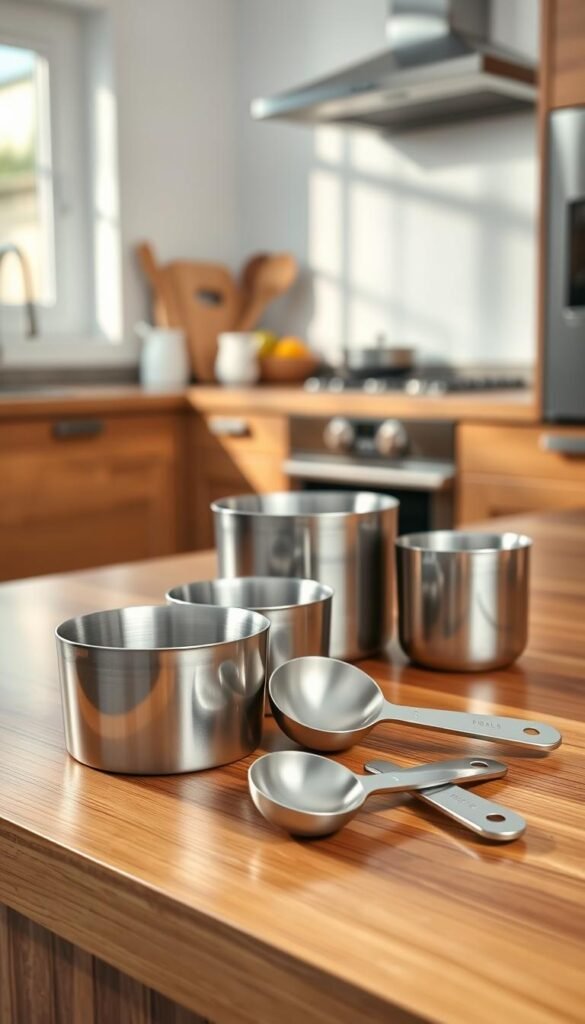
Stainless steel vs plastic
Stainless steel holds shape longer and resists stains. That makes stainless steel measuring sets a solid long-term buy for daily use.
Plastic is lighter and quiet. But it can warp in dishwashers and absorb odors. Warping changes accuracy over time.
Glass vs plastic liquid cups
Tempered glass, like Anchor Hocking, handles heat and keeps lines clear. It can still break if dropped.
Plastic rarely shatters and is lighter. It may get cloudy, which hurts readability.
Angled cups and lasting markings
OXO-style angled cups let you read from above. That helps when counters are crowded.
Look for etched or molded markings. Printed lines fade first. High-contrast marks help in low light.
Where silicone helps
Silicone grips and non-slip handles add safety. Avoid flexible bodies when exact leveling matters.
Quick checklist
- Choose durable materials for long-term accuracy.
- Prefer etched markings over printed ones.
- Pick angled liquid measuring cups for tight spaces.
| Material | Pros | Cons |
|---|---|---|
| Stainless steel | Durable, resists stains, long-lasting markings | Can dent; cheap sets may have sharp edges |
| Plastic | Lightweight, quiet, less break risk | Can warp, cloud, and hold odors |
| Glass | Heat-tolerant, clear markings (Anchor Hocking) | Can shatter on impact |
Tip: For small spaces, pick a single durable set you trust. For compact recommendations, see these practical finds.
Budget vs premium options: what you’re really paying for
Deciding between thrift and upgrade comes down to daily annoyance reduction.
Measuring cup and spoon sets: where budget sets work fine
Budget sets give you a usable set that nests, stacks, and fits a drawer. Basic measuring cups and measuring spoons often have readable marks and decent durability for casual cooks.
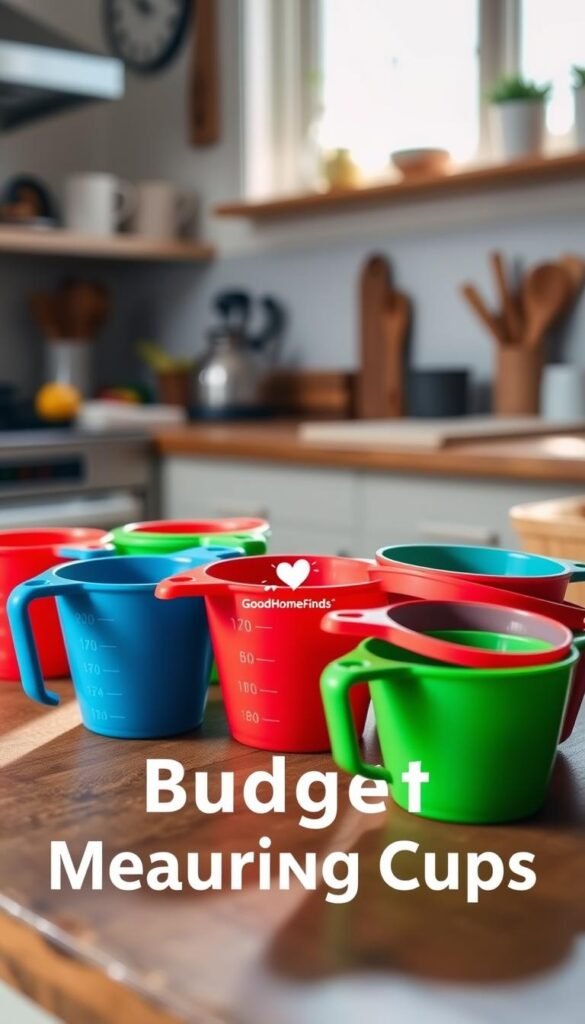
When premium is worth it
Premium improves stability, smoother edges, and markings that last. A stable set with an extra 2/3 cup saves frustration. Sur La Table-style pieces feel solid and read easily.
Scales: basics vs nicer models
Basic tare-and-go scale works for most tasks. Upscale models add clearer displays, faster response, and an included bowl to cut mess. Escali-style scales are compact and renter-friendly.
„Premium rarely buys raw accuracy. It buys better fit, fewer spills, and less time fixing mistakes.“
| Item | Budget | Premium | Value for small spaces |
|---|---|---|---|
| Measuring cups | Readable, nests | Stable, etched lines, extra sizes | High — fewer spills, fits drawers |
| Measuring spoons | Works, basic sizes | Smoother edges, durable marks | Medium — long-term wear matters |
| Scale / bowl | Tare function, compact | Fast display, included bowl, slim body | High — saves dishes and counter space |
Smart path: start budget for cups and spoons. Spend a bit more on a reliable scale if you bake or meal-prep regularly.
Space requirements, storage, and apartment-friendly picks
In tight spaces, the right storage choices keep your counter clear and your prep fast.
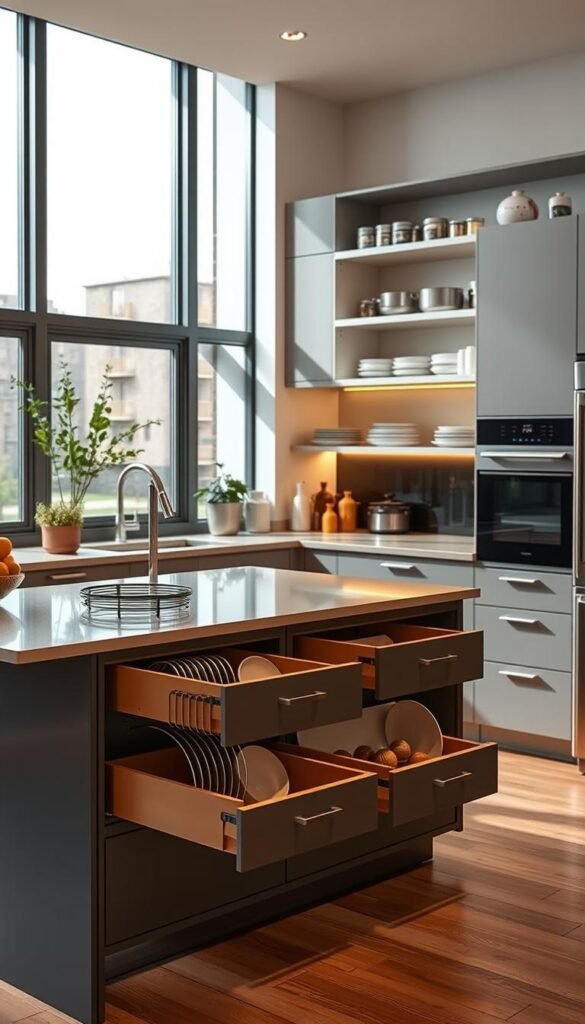
Space requirements: plan around one shallow drawer and a small cabinet. A nesting set of cups and spoons stores as one unit and fits a single drawer without sprawl.
Nesting sets are first on the list. They stop loose pieces from spreading and make daily use quick.
Nesting sets, stackable glass, and slim scales
Choose stackable glass liquid cups if your cabinet height allows. If not, keep one reliable 2-cup glass for pours and store extras.
Look for slim scales with a flat profile you can slide vertically next to boards. Escali-style models are compact and not bulky, so they tuck away like a cutting board.
Counter vs drawer rules
Keep the scale on the counter if you meal-prep daily. Store the rest in a drawer to protect markings and reduce visual clutter.
Dishwasher-safe choices for faster cleanup
Stainless steel and tempered glass tolerate dishwasher cycles and speed cleanup in small sinks. Prefer etched or molded marks—printed lines can fade with harsh dishwasher use.
Micro-setup tip: use one bowl on the scale to measure multiple ingredients. It cuts dishes and lowers cleanup time.
For compact storage ideas and pro tips, see this short guide to smart storage features: apartment storage features.
Setup time: what it takes to start using each tool
A quick initial setup makes day-to-day use feel effortless and reliable. Most tools are ready right out of the box. The real work is learning one small technique for repeatable results.
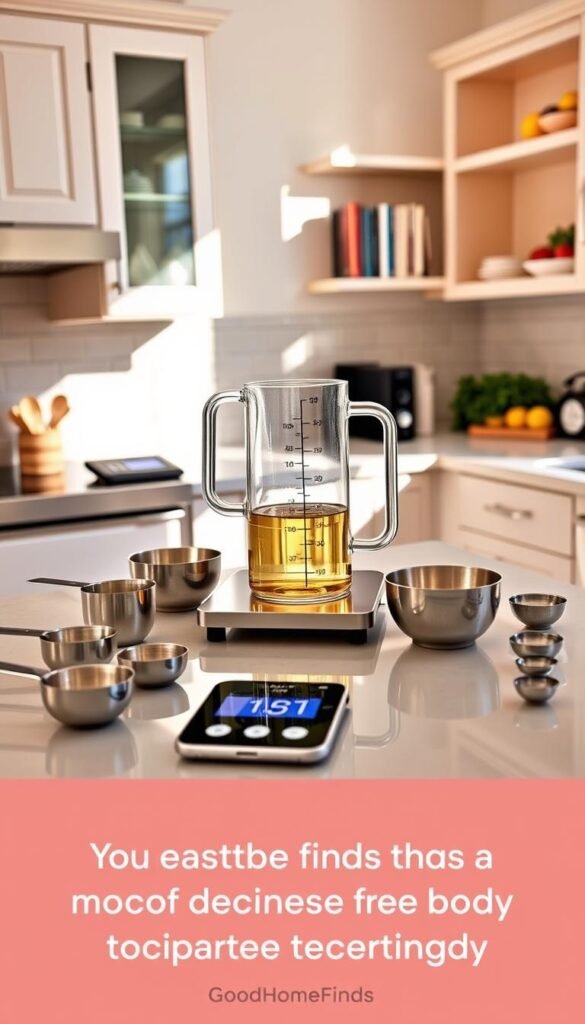
Measuring cups and spoons
Zero setup. You only need one technique: spoon the flour into the cup, then level it with a flat edge. That cut simple step keeps results consistent.
For sugar and spices, fill to the line or use the spoon to avoid heaping. Practice once and it becomes automatic.
Digital kitchen scales
Setup difficulty is low. Insert batteries, place the scale on a flat surface, and power on. Press tare to zero the bowl. Tare lets you measure multiple ingredients in one bowl and saves dishes.
Do a first weigh-in with flour or sugar to confirm the display reads expected values. Once you try tare once, using the scale becomes a ten-second habit.
Thermometers
Thermometers need a quick trust check. Put the probe in an ice-water mix; it should read about 32°F. Put it in boiling water and it should read near 212°F.
That short check makes the thermometer reliable for baking and food safety. Battery-powered models are renter-friendly and store easily.
| Tool | Initial steps | Setup time |
|---|---|---|
| Measuring cups | Unpack and practice spoon-and-level for flour | Under 5 minutes |
| Measuring spoons | Sort sizes, avoid heaping, use flat edge to level | Under 5 minutes |
| Kitchen scale | Insert batteries, place on flat surface, learn tare, test with flour | 5–10 minutes |
| Thermometers | Battery check and ice/boiling accuracy test | 5 minutes |
Practical note: once you complete these quick checks, daily use is fast. Reliable setup reduces guesswork, protects food safety, and saves time in small spaces.
Common mistakes that ruin measurements (and easy fixes)
Everyday mistakes in how you measure add up fast. Small technique slips can change a recipe’s outcome. These fixes are practical and renter-friendly. Try one at a time and you’ll notice steadier results.
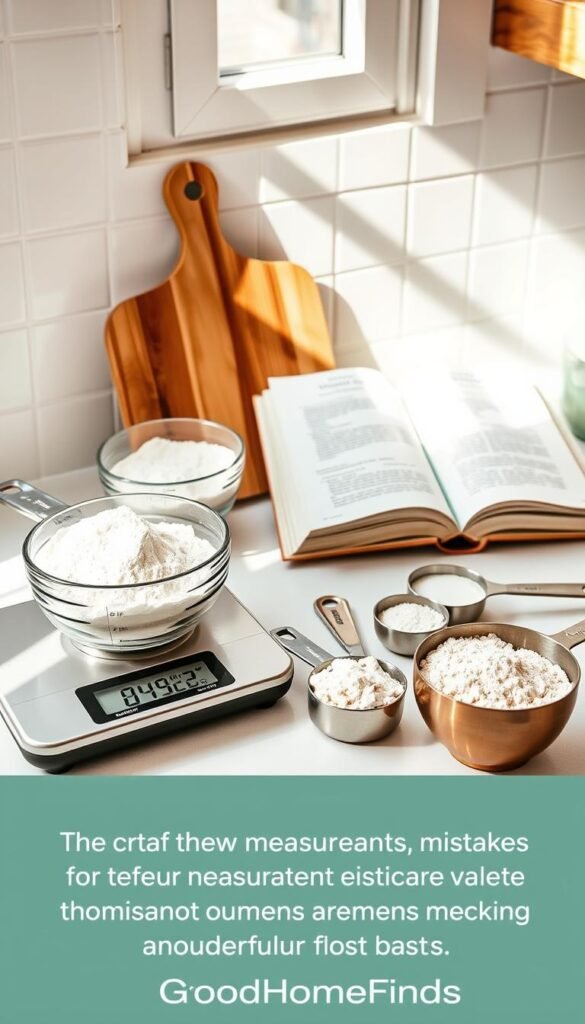
Scooping flour vs spoon-and-level
Scooping packs flour and can add about 15–20% more in a cup. That extra flour makes baked goods dense.
Easy fix: keep a spoon in your flour container. Spoon into the cup, then level with a straight edge. Repeat the same method every time.
Reading liquid lines from the wrong angle
Reading from above or a tilted view causes overpours. Tall cups magnify the error.
Easy fix: lower yourself to eye level when you pour. Or use angled liquid measuring cups to read from above when counter space is tight.
Packing vs not packing and heaping spoons
Brown sugar is usually packed. Powdered sugar normally isn’t unless a recipe says so. Heaping spoons are inconsistent.
Easy fix: follow the ingredient rule. Use level spoons for dry spices and pack only when the recipe requests it.
Forgetting tare and using the wrong tool
If you forget tare on a scale you double-count the bowl. That shifts measurements across a whole recipe.
Also, dry cups are for leveling; liquid cups give headroom for pours. Swapping them adds error and spill risk.
Final note: these are technique problems, not you problems. Fixing them makes even basic tools and a simple scale work much better. For a deeper look at common measurement errors, see measurement mistakes in baking.
Power consumption, noise levels, and maintenance (the unglamorous truth)
What your scale needs to run and how you care for it will decide if it lasts or drifts.
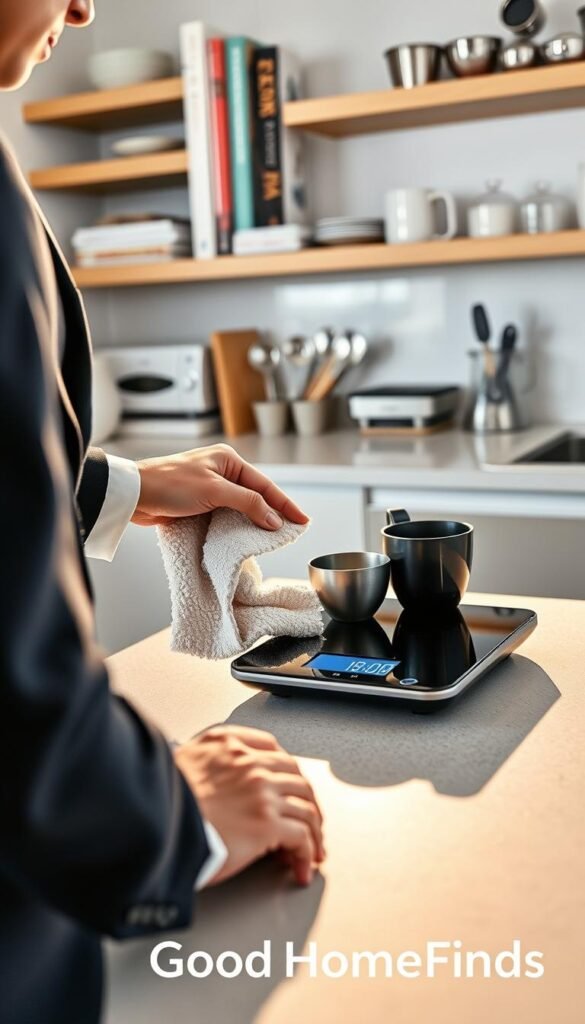
Power: batteries vs plug-in and battery habits
Most digital scales run on batteries and use very little power. They often include auto-off to save energy. That is great for small spaces and renters.
Batteries cut cord clutter and let you store the scale vertically. Plug-in models avoid swaps but can be awkward where outlets are scarce. Replace batteries early if readings get odd. A monthly quick accuracy check helps catch drift.
Noise and daily use
Nearly all measuring tools are silent. Scales may beep on power or tare. If you share living space, pick models with mute or keep them where beeps won’t bother roommates.
Cleaning, materials, and upkeep
Stainless steel holds up best. Dry steel and stainless steel promptly after washing to prevent rust spots. Avoid harsh scrubbing over printed markings.
Dishwasher-safe parts are handy, but repeated hot cycles can fade printed lines. Etched marks last longer. Silicone grips help prevent slips, but check seams so grime doesn’t hide.
When to replace and a simple routine
- Replace warped plastic cups, faded markings, or bent spoons.
- Replace a scale that drifts or reads inconsistently despite fresh batteries.
- Simple upkeep: wipe crumbs, store flat, swap batteries early, and do a quick accuracy check monthly.
Practical tip: for compact, renter-friendly picks that balance durability and daily ease, see this short set of practical finds: daily life finds.
Conclusion
Wrap up by focusing on three easy choices that improve everyday results. Start with a reliable set of cups and spoons, add one clear liquid cup, then upgrade to a compact digital scale when you want repeatable baking and easier recipe scaling.
Better measuring is not perfection. It removes avoidable mistakes so your recipes work the same way more often. That saves ingredients, time, and energy in small spaces.
Small-apartment wins: less mess, fewer dishes, simple storage, and safer pours and temps. For accuracy basics see professional measurements for pros, and for compact picks browse these everyday finds.
Buyer tip: pay first for readable marks and durable build. Buy premium features only if they match how you cook and bake daily.