This guide shows you what you can realistically do in 60 minutes to make cooking and cleanup feel manageable in a small rental. You’ll get a renter-friendly reset with no drilling, safe tools, and simple daily routines that keep things usable all week.
Plan and action overlap. You’ll clean while the oven and water heat. That reset + cook logic turns idle time into progress. Expect a cleared main counter, an empty sink, and a fridge layout that stops leftovers from getting lost.
The cooking workflow is practical. Use sheet pans, a large pot for blanching, and low-sugar store sauces to produce 4–5 days of mix-and-match meals. You’ll also see renter-safe storage tips like stackable containers and front-row labeling.
Lastly, you’ll find budget choices under $25 and under $50 with pros, cons, and alternatives to fit studio or apartment sizes. This won’t fix everything, but it makes daily life easier today. For more renter problem fixes, check this helpful resource: renter-friendly solutions.
Key Takeaways
- Clear one main counter, empty the sink, and set a fridge layout to avoid forgotten leftovers.
- Work while the oven and water heat to combine cleaning and cooking efficiently.
- Make 4–5 days of reheatable meals using sheet pans, blanching, and simple sauces.
- Use removable, heat-safe tools and stackable containers for small-space storage.
- Budget upgrades under $25 and $50 can speed the process without permanent changes.
- Adopt short daily routines: a 2-minute nightly wipe and a weekly 10-minute reset.
What “Kitchen in One Hour” Means for Real Life in a Small Apartment
A short, intentional reset makes daily meal prep faster and less stressful in tight spaces. This is about usable changes you can finish in 60 minutes, not a full remodel.
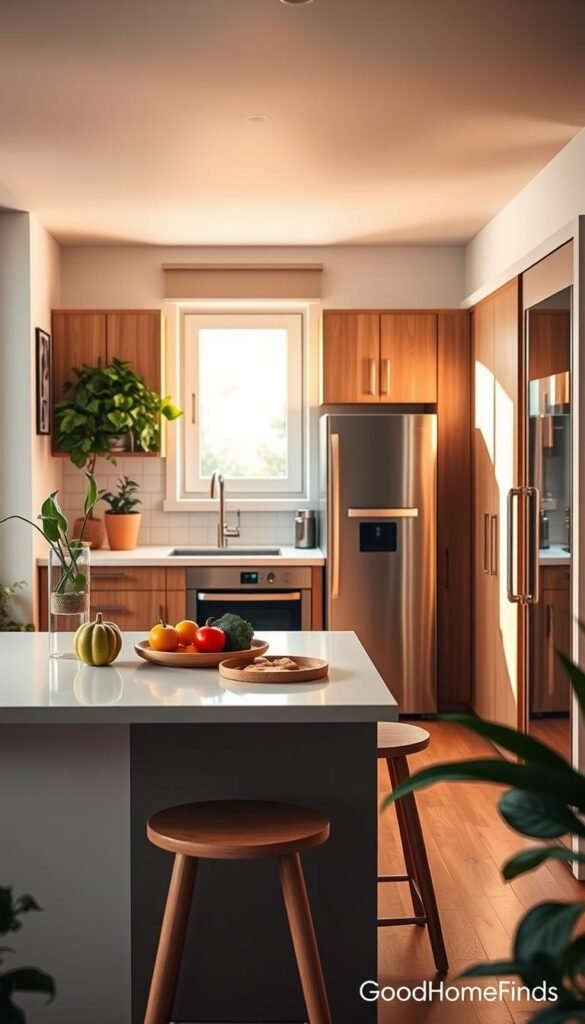
The goal: less clutter, faster meals, fewer dishes, safer flow
Practical wins include fewer items on the counter, a clear stove area, and a simple path: fridge → sink → prep → cook. These wins keep your evenings moving.
What you can realistically improve in 60 minutes (and what to save)
- Clear the main surfaces and create a dedicated hot zone for pans and tools.
- Remove one extra appliance or drying rack that blocks your workflow.
- Safety first: keep oils and towels away from burners and reduce clutter near the sink.
- Realistic outcome: a functional reset and a week’s set of meal components, not a full pantry decant.
- Save deep cabinet clean-outs, cookware replacement, and nonessential décor for later.
Decision rule: if an item won’t help you cook, clean, or eat this week, it shouldn’t live on the counter. Follow this and weeknight dinners become quick easy wins instead of chores.
For renter-friendly tools that speed this work, check this helpful list of best kitchen finds.
Your One-Hour Game Plan: The 60-Minute Timeline That Actually Works
Follow a tight, practical timeline that turns an hour into a real meal-prep win. This plan assumes one oven, one large pot, and a small counter. It keeps steps short and safe.
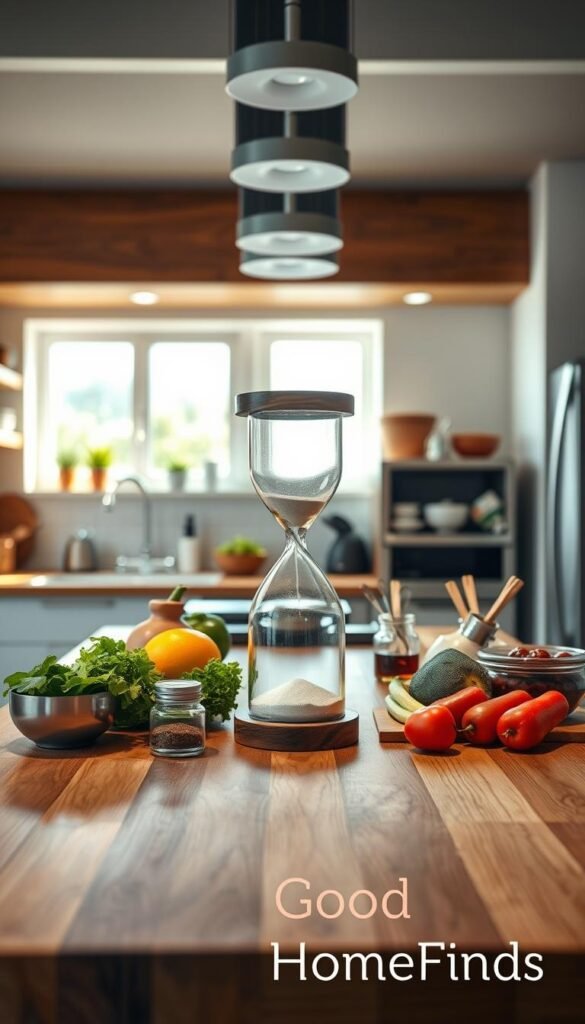
Minute-by-minute checklist: reset, cook, cool, store
- 0–5 minutes: unload or stack-dry dishes. Clear one counter. Set cutting board, knife, and two sheet pans.
- 5–15 minutes: preheat the oven to 425F and start a very large pot of water with the lid on to speed boiling.
- 15–35 minutes: roast potatoes at 475F (~25 minutes) or bake proteins to safe temps. Blanch veggies in boiling water and drain well.
- 35–50 minutes: cool proteins in wide, shallow containers with lids off. Finish rice (600g rice to 800g water).
- 50–60 minutes: label, front-row the next two days, and store sauces upright to avoid spills.
How to overlap oven, pot, and counter tasks to save time
While the oven heats, start the pot and prep rice. Line pans with parchment for faster cleanup. Use the idle minutes while things roast to wash and reset the counter.
Safety first: hot pans, sharp knives, and cross-contamination shortcuts to avoid
„Use one cutting board for raw protein, wash hands often, and keep a dedicated hot-pan landing zone clear of clutter.“
Don’t do this: rinse raw chicken, stack hot containers with lids on, or hide knives under towels. These shortcuts backfire in small spaces.
| Step | Why it matters | Quick tip |
|---|---|---|
| Boil large pot early | Saves minutes and speeds blanching | Keep lid on until boiling |
| Shallow cooling | Faster, safer chill; prevents soggy texture | Leave lids off until cool |
| Hot pan zone | Prevents burns and spills | Clear a counter corner as landing zone |
For renter-friendly tools and a short list of essentials, see renter-friendly essentials.
Set Up Your Space Without Drilling: Renter-Friendly Kitchen Tools That Make the Hour Easier
A few no-drill fixes can turn cramped storage into fast access for your daily routine. These small changes cut the time you spend hunting for towels, utensils, and timers during quick easy prep.
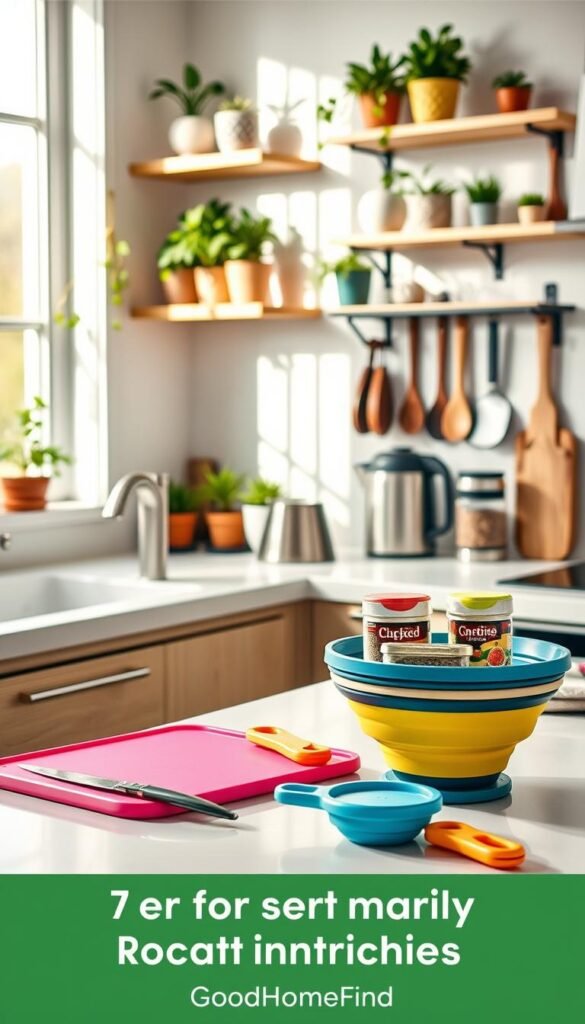
Damage-free mounting basics
Removable hooks hold light tools and mitts. Over-cabinet towel bars keep linens off counters. A tension rod stores spray bottles or towels away from heat.
Durability checklist
- Adhesive weight limit: 3–5 lbs for small hooks.
- Heat tolerance: avoid adhesives within 6 inches of burners.
- Steam risk: glue can loosen near the sink; prefer hooks on finished cabinet doors or over-cabinet options.
Pros, cons, and who it’s for
Micro-kitchen renters benefit most from vertical solutions. Standard apartments can add over-cabinet bars without crowding. If adhesives fail in humid units, choose over-cabinet hooks or freestanding caddies.
| Tool | Best for | Limitations |
|---|---|---|
| Removable adhesive hook | Light utensils, mitts | 3–5 lbs; fails on textured paint |
| Over-cabinet towel bar | Standard doors; quick towel access | Adds edge clearance; not for thin cabinet tops |
| Tension rod | Under-sink or inside cabinets | Not weight-bearing for heavy caddies |
Bottom line: pick a small set that is worth it for daily use. The goal is fast access so your prep flow stays smooth and you don’t waste time during the reset and cook timeline.
Grocery List for 4–5 Days of Meals (Ingredients + Smart Swaps)
Buy smart components that mix and match so you cook less and eat better all week. Start with proteins, fast-cooking veggies, flexible carbs, and a couple of sauces you’ll actually use.
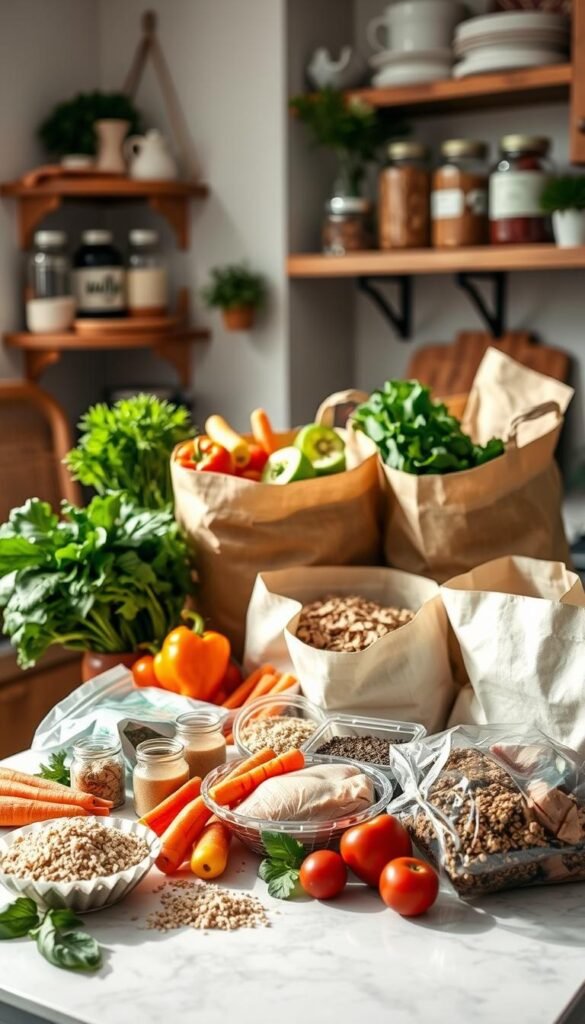
Core components
- Proteins: ~2 lb boneless skinless chicken breast and ~2 lb salmon. Both reheat well and portion easily.
- Veggies: broccoli, Brussels sprouts, thick-cut carrots, kale or chard. They blanch or roast fast and keep texture when dried.
- Carbs: rice, small potatoes, and sweet potatoes for bowls, tacos, or sheet-pan sides.
- Pantry basics: salt, pepper, olive oil, garlic powder, onion powder, chili flakes.
- Sauces: pick 1–2 labels like teriyaki, sesame-ginger, gochujang, pesto, or tomatillo salsa. Choose low-sugar options with short ingredient lists.
Budget and small-space swaps
If salmon is pricey, swap for canned salmon, tilapia, or shrimp. For chicken breast, thighs or a rotisserie chicken save time and money.
Buy bagged slaw or pre-washed greens if you lack sink space. Pick fewer sauce profiles so bottles don’t clutter a small fridge.
Waste tip: plan 1–2 sauce flavors for the week. Rotate next week to keep variety without leftover bottles taking over.
For more renter-friendly ingredient ideas, see daily-life finds mix.
Cook Proteins Fast: Sheet Pan Chicken Breast and Salmon in the Oven
Tackle proteins with a simple two-tray routine that gives you cooked, ready-to-store meals and minimal cleanup.
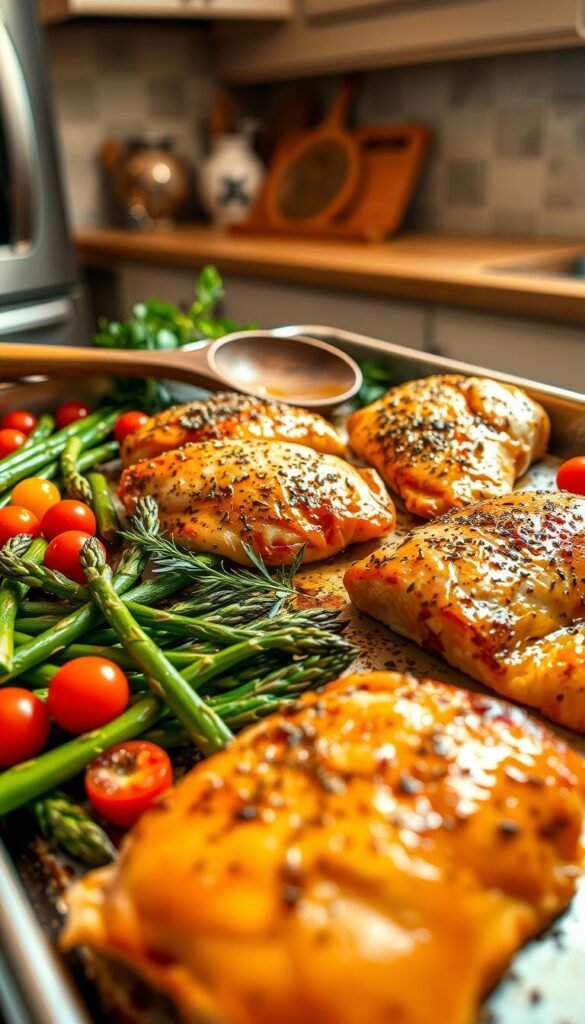
Temperature and timing targets for juicy results
Bake at 425F (220C) on parchment-lined trays. Check the salmon at about 15 minutes; aim for 130–140°F (55–60°C) for flaky results.
Chicken breast usually needs 20–25 minutes. Target 150–160°F (65–70°C) so the meat stays juicy and safe.
Sheet pan setup for easy cleanup
Line both sheet pans with parchment. Leave space between pieces so air circulates and browning stays even.
Check fish first at ~15 minutes and pull that tray when it hits temp. Then remove the chicken as it finishes. If you have only one pan, cook chicken first, rest it, then bake the salmon.
Cooling and storing for best texture and safety
Move cooked protein to wide, shallow containers. Leave lids off until the food cools to avoid condensation and soggy texture.
Seal and label once cool. Practical tip: parchment is the renter-friendly upgrade that saves scrubbing and sink time.
„Cool flat and cover later to keep texture and food-safe temperatures.“
| Step | Timing | Why it matters |
|---|---|---|
| Salmon check | ~15 min | Prevents overcooking; flaky at 130–140°F |
| Chicken finish | 20–25 min | Juicy at 150–160°F; safe reheating |
| Cooling | Wide containers, lids off | Reduces condensation; keeps texture |
Vegetables in Minutes: Blanch Once, Eat All Week
A single boiling pot speeds meal prep by handling multiple veggies at once instead of pan-cooking batches. It saves time and limits pans in a small rental. You’ll keep texture and cut fridge smells when you follow a simple flow.
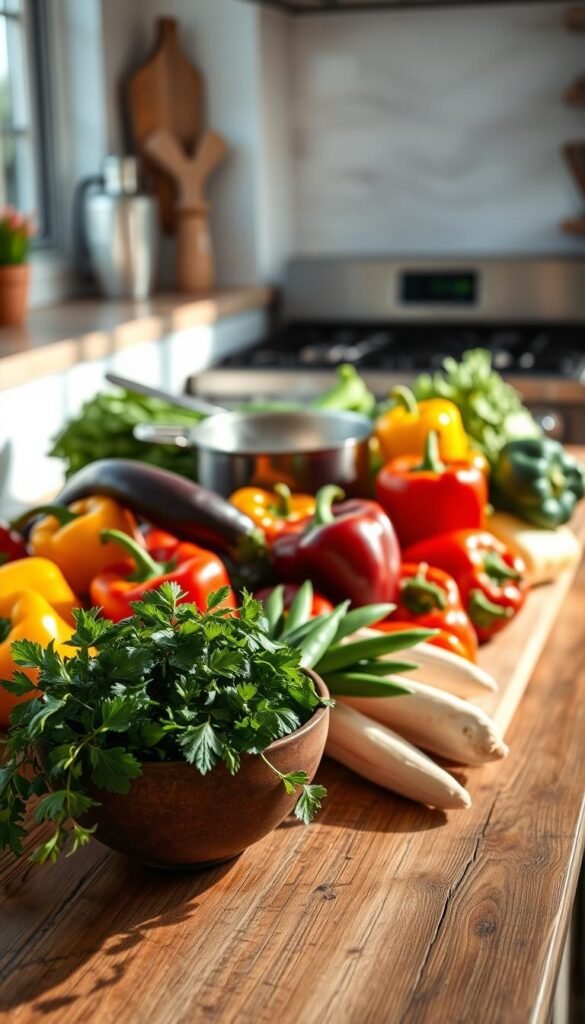
Why a big pot works
When you heat one large pot, water reaches boil faster than heating several small pans. That means you can blanch several vegetables back-to-back and use the same water. It uses less energy and saves cleanup time.
Quick timing guide
- Broccoli — ~90 seconds in salted boiling water.
- Carrots — 3–4 minutes for fork-tender but crisp results.
- Kale — ~2 minutes so leaves stay bright.
- Brussels sprouts — 3–4 minutes depending on size.
Drain, dry, and store
Drain on a clean wire or cooling rack so steam escapes and liquid doesn’t pool. Pat dry with paper towels and place in paper towel–lined containers. This prevents soggy veggies and reduces fridge odors.
Cheap swaps: green beans, spinach, or mixed frozen bags blanch quickly and cut cost. Don’t leave cooked food sitting out; cool and store promptly for safety. Blanched vegetables reheat in under a minute and pop into bowls, salads, or tacos.
| Task | Timing | Why it helps |
|---|---|---|
| Boil one large pot | Start early | Saves time; multi-veg batches |
| Drain on rack | Immediately after blanch | Prevents condensation and sogginess |
| Paper towel-lined storage | Store chilled | Absorbs moisture; reduces smells |
Rice and Roasted Potatoes: The Two-Carb System for Mix-and-Match Meals
Make rice and roasted potatoes the backbone of your weekly meals so you cook once and mix flavors all week. This two-carb system keeps meals flexible and reduces daily prep.
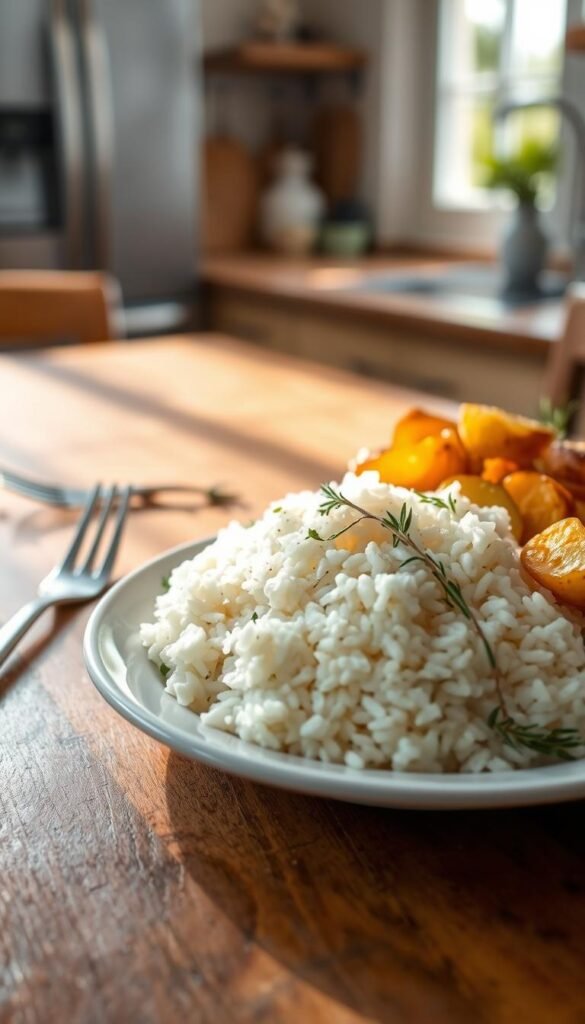
Hands-off rice and quick roast timing
Use 600g rice + 800g water and a large pinch of salt. Cook on the white rice setting and walk away. Once it starts, you reclaim counter space for other tasks.
If you lack a colander, rinse the grain in the pot insert and drain carefully. Cooling in a shallow layer preserves texture for reheating.
High-heat roasted roots for flavor
Toss baby potatoes or sweet potatoes with oil, salt, pepper, and a bit of garlic. Roast at 475F (245C) on parchment for ~25 minutes. Place cut side down so baby potatoes crisp faster.
- Keep seasonings simple so both carb types pair with any sauce.
- Store potatoes with a paper towel to manage moisture.
- Alternatives: microwaveable rice packs or frozen diced potatoes for tight shared spaces.
„A steady grain and a tray of roasted roots make weekly meals easy to assemble and reheat.“
| Option | Best for | Why |
|---|---|---|
| Fresh rice | Texture control | Hands-off cook, cool shallow for reheating |
| Baby potatoes | Crisp sides | Cut side down at high heat for fast browning |
| Frozen dice | Minimal prep | No knife work; saves time in small spaces |
Make a Sauce Station That Doesn’t Take Over Your Fridge
A small, well-organized sauce corner gives you big flavor without extra shopping. Sauces let you rotate flavors across proteins, grains, and veggies so meals feel new without extra prep. In tight fridges, a focused station prevents bottles from hiding and leaking.
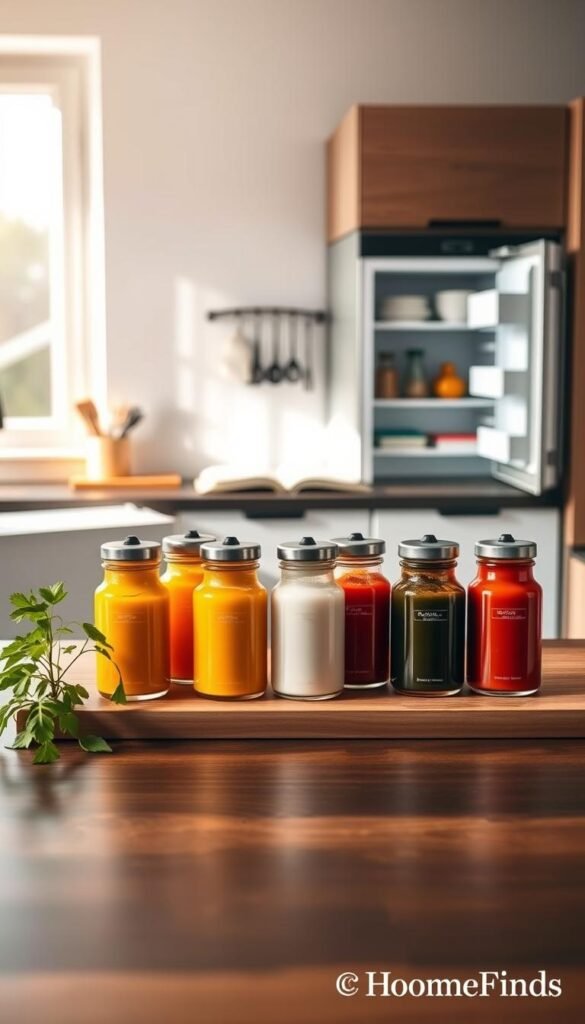
Go-to flavors to keep handy
- Gochujang sauce — spicy, savory depth for rice and bowls.
- Teriyaki sauce — a sweet-savory base for protein and roasted roots.
- Sesame ginger dressing — great for salads and salmon.
- Pesto — concentrated herb flavor you can thin with oil.
- Tomatillo salsa — bright, acidic mix for tacos and bowls.
- Chili crisp — an easy finish that adds heat and crunch.
Fridge strategy and upright storage
Keep 3–4 core sauces max if space is tight. Rotate weekly so bottles don’t pile up. Use a narrow fridge bin for tall bottles or a small turntable if your shelf is deep.
If door pockets are slim, stand thin jars there to save shelf space. For shared units, collect your sauces in one labeled bin so roommates don’t shuffle them to the back.
Pick low-effort, low-drama options
Don’t be a hero: buy store-bought sauces with short ingredient lists and low sugar. Read labels for sugar content, then scan for a short ingredient list and familiar items you can pronounce.
| Problem | Simple fix | Why it works |
|---|---|---|
| Leaky threads | Wipe bottle necks weekly | Stops sticky buildup and cross-contamination |
| Worst offenders | Store leakiest jars in a small tray or zip bag | Contains spills and protects nearby items |
| Hard-to-reach bottles | Use narrow bin or turntable | Keeps bottles upright and accessible |
Easy mix ideas that add no work
- Pesto + olive oil — loosen for a quick dressing.
- Tomatillo salsa + lime — bright finish for fish or tacos.
- Teriyaki + a dab of chili crisp — sweet, spicy glaze in seconds.
„A compact sauce station gives you variety without extra groceries.“
Turn Your Components Into Meals: Bowls, Salads, and Tacos You’ll Want to Reheat
Use simple assembly recipes to convert cooked proteins, grains, and veggies into ready meals for the week. These are designed for quick reheats and minimal fridge space.
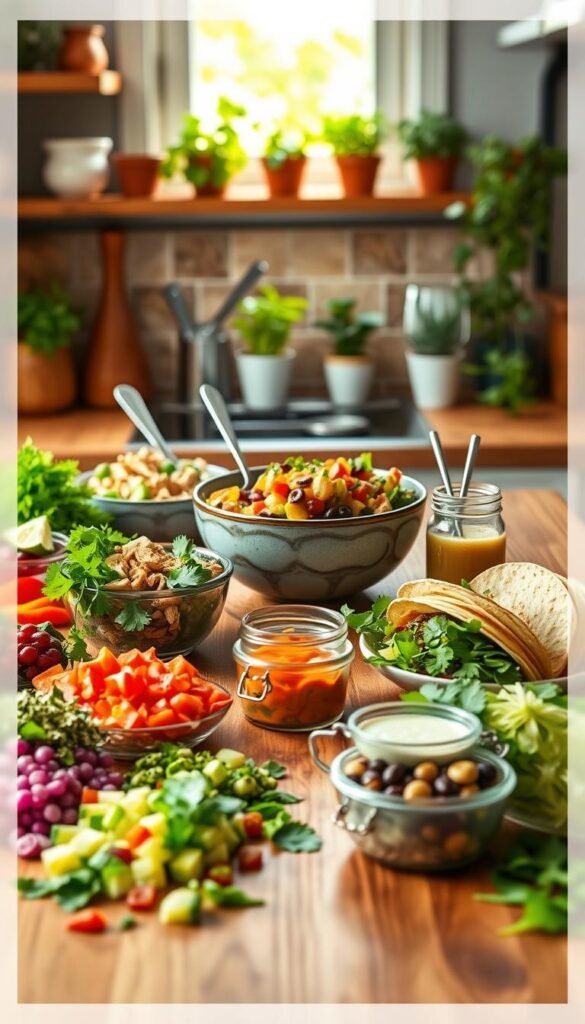
Reheat rule: warm rice and roasted veggies first, then add fresh toppings like arugula, avocado, or pickled onions. This keeps texture and reduces overcooking.
Mediterranean chicken salad
Slice reheated chicken and place over arugula with roasted red peppers, olives, and feta. Whisk balsamic + grainy mustard + olive oil for a fast dressing. Pickled red onions add bright acid without extra cooking.
Sushi-inspired salmon salad
Use bagged slaw mix or shredded cabbage, add cooled flaked salmon, avocado, and a sprinkle of furikake. Drizzle sesame ginger dressing for an easy, high-reward bowl.
Kimchi rice bowl
Layer warm rice, reheated chicken, and mixed veggies. Top with kimchi and a controlled dab of gochujang sauce. Add sesame and scallions. This is a fridge-cleanout-friendly template.
Salmon teriyaki bowl
Serve rice with broccoli, Brussels sprouts, and reheated salmon. Top with teriyaki and a small amount of chili crisp if you want heat. A little goes a long way to protect leftovers.
Chicken tomatillo and fish tacos
Make a quick slaw: shredded cabbage + pinch of salt + honey + lime juice + oil. It holds better than lettuce in a small fridge. Fill tortillas with reheated protein, slaw, and a squeeze of lime.
„Reheat rice and veggies first, then add delicate greens and avocado to keep meals fresh and safe.“
Swaps: Use beans when protein is short. Replace broccoli or Brussels with leftover roasted veggies. These swaps keep recipes flexible without extra shopping.
| Meal | Key steps | Fridge-friendly swap |
|---|---|---|
| Mediterranean chicken salad | Warm chicken, toss arugula, add feta, olives, quick dressing | Rotisserie chicken or beans |
| Sushi-inspired salmon salad | Flake salmon, use bagged slaw, add furikake, drizzle sesame-ginger | Canned salmon or tofu |
| Kimchi rice bowl | Warm rice, add veggies and chicken, top kimchi + gochujang | Frozen mixed veg or beans |
| Salmon teriyaki bowl | Warm rice and veggies, top salmon and teriyaki, finish with chili | Use leftover roasted fish or tofu |
| Tacos (chicken or fish) | Warm protein, quick slaw, lime juice, assemble in tortillas | Beans or roasted veg for filling |
Sheet Pan Dinners Within an Hour: Minimal Cleanup, Maximum Dinner Momentum
Sheet pan meals cut decision fatigue: one tray, predictable timing, and very little scrubbing. They work well for small spaces because you use fewer tools and get steady results. This keeps cleanup fast and your sink free for a quick nightly wipe.
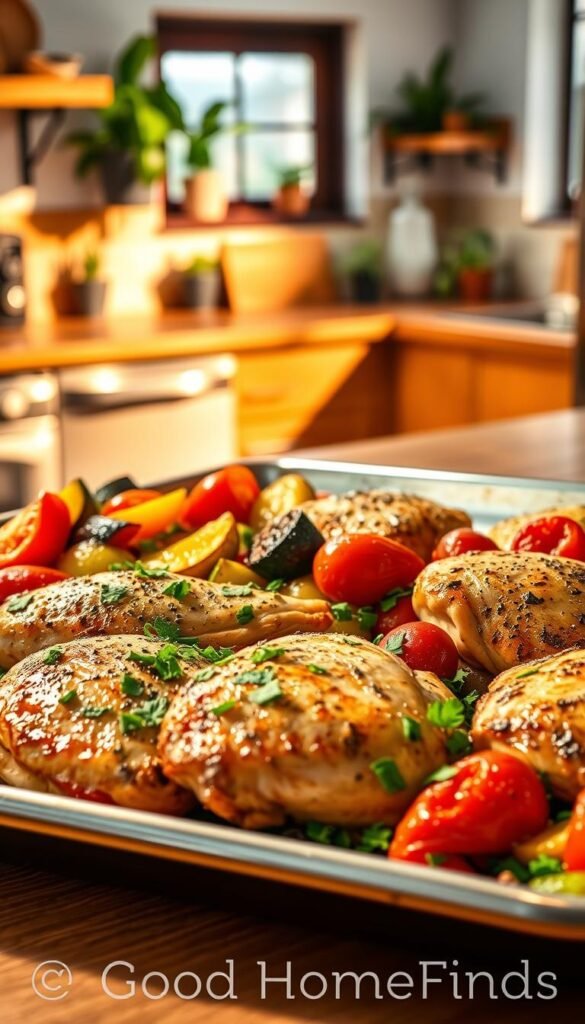
What makes them reliable on busy weeknights
Simple math: protein + quick-cooking vegetables + small potatoes equals a full meal. Roast on parchment and you usually skip soaking and scrubbing. The tray delivers consistent heat, so your cooking becomes predictable.
Easy swaps for season and budget
Use any variety of small potatoes or baby potatoes. Swap broccoli for Brussels in winter, or use zucchini and cherry tomatoes in summer. Frozen veg works when fresh is pricey.
Pick proteins by time and needs
- Chicken: higher protein, longer roast time; pick this when you need protein for the week.
- Fish (salmon): faster in the oven, good for midweek speed and texture.
- Shrimp: quickest; ideal when time is tight.
Budget backup: add canned beans to roasted veggies and rice for a complete meal when meat is expensive. Keep a „sheet pan kit“ (parchment, a spatula, and a timer) in one drawer so weeknight dinners stay quick easy.
„A single tray dinner saves prep, limits dishes, and leaves you more time for the rest of your evening.“
| Protein | Approx. Roast Time | Why Choose |
|---|---|---|
| Chicken | 20–25 min | Best for higher protein needs and meal prep |
| Fish | 12–15 min | Faster, delicate texture, midweek option |
| Shrimp | 6–8 min | Fastest; great when time is tight |
| Beans (backup) | Use warm with roast | Budget-friendly protein substitute |
Under-$25 Renter-Friendly Kitchen Upgrades That Save Space Immediately
A few smart, under-$25 purchases make daily prep smoother without permanent changes. These picks fit small rentals, set up fast, and free a usable corner of counter space right away.
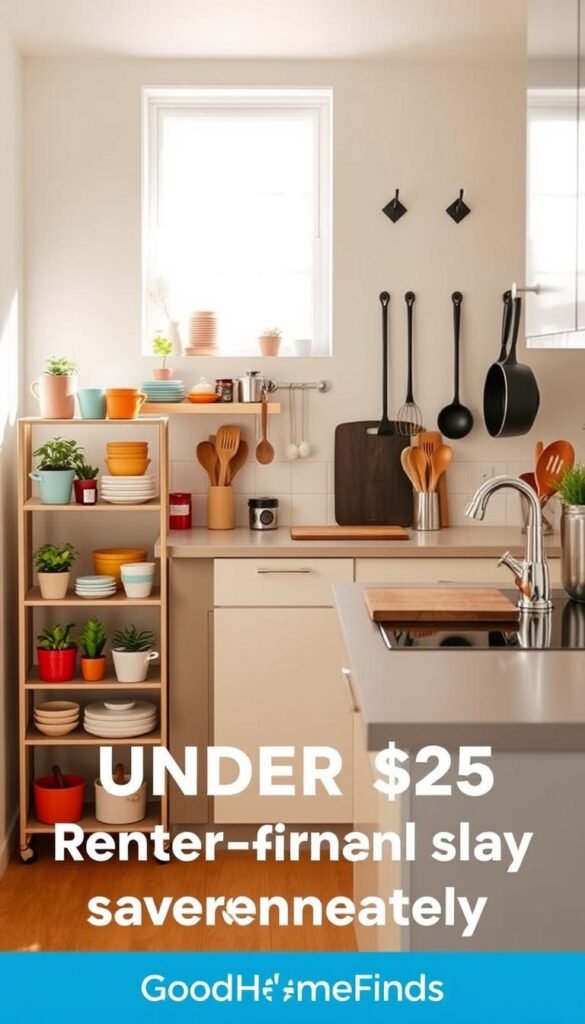
Best for tiny spaces
Over-cabinet towel bar: hangs a towel off a door to clear a counter corner. Easy to remove and no tools needed.
Adhesive utensil hooks: hold light spoons and small tools. Stick to smooth surfaces only; avoid textured paint.
Sink caddy: keeps sponges and soap off the rim and reduces standing moisture.
Best for cooking faster
Magnetic timer: clips to the fridge or oven for visible reminders and better time management during prep.
Heat-safe spoon rest: reduces drops and saves wiping near the stove.
Prep bowls (nested set): contain mise en place and shrink counter clutter while you work.
Pros, cons, and who each item suits
- Over-cabinet bar — Pros: frees about 144 sq in (clears one counter corner). Cons: adds a small lip to door. Best for micro-kitchen renters who need vertical space.
- Adhesive hooks — Pros: fast setup. Cons: adhesive weakens near steam. Best for renters with smooth cabinet finishes; use over-cabinet alternatives on textured surfaces.
- Sink caddy — Pros: reduces sponge bacteria and wet rings. Cons: some models block small sinks; pick slim or suction options for tiny sinks.
- Magnetic timer — Pros: keeps you on schedule. Cons: requires a magnetic surface or counter stand. Good for standard apartments and anyone tracking time during prep.
- Spoon rest — Pros: heat-safe and low cost. Cons: needs storage when not used. Ideal for daily use near burners.
- Prep bowls — Pros: reduce back-and-forth and speed mise en place. Cons: take shelf space when stored. Best for households that batch-cook or prep for weekdays.
Alternatives and safety notes
If adhesives won’t stick, use over-cabinet hooks or freestanding caddies. For wet zones, choose suction caddies rated for sink use.
Durability tip: avoid adhesives within 6 inches of steam or heat. Wipe surfaces before sticking to improve hold and safety.
| Item | Cost | Setup time | Durability notes | Space saved |
|---|---|---|---|---|
| Over-cabinet towel bar | $8–$15 | 30 seconds | Long if not overloaded; avoid thin cabinet lips | ~144 sq in (clears one corner) |
| Adhesive utensil hooks | $5–$12 | 1–2 minutes | Good on smooth paint; weak in steam | ~80–120 sq in |
| Sink caddy (slim) | $7–$20 | 1–3 minutes | Choose rust-proof materials; suction for tiny sinks | Clears rim area; saves ~60 sq in |
| Magnetic timer | $7–$18 | 10 seconds | Durable; battery-powered, visible | Saves time; keeps workflow on track |
| Prep bowls (nested) | $10–$20 | Instant use | Dishwasher-safe options last longer | Reduces counter scatter; clears ~100 sq in |
Under-$50 upgrades that change your daily routine (without permanent changes)
A slim set of upgrades under $50 can actually change how you use your space every week. Pick items that create clear homes for overflow instead of piling more stuff on counters.
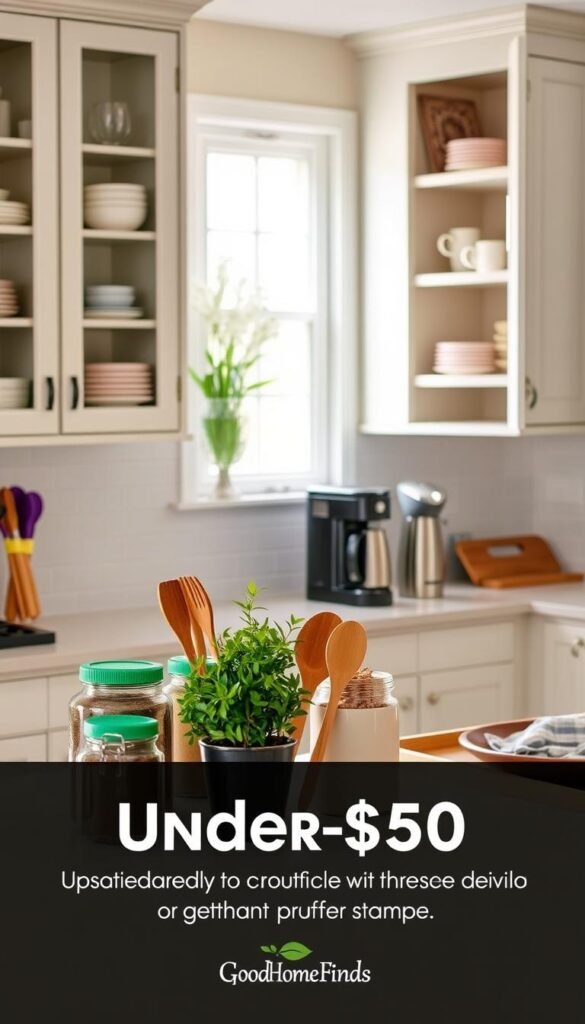
Counter control: rolling cart or repurposed shelving
Slim rolling cart: fits narrow gaps, holds pantry overflow, and moves for cleaning. Check wheel quality; cheap casters wobble.
Repurposed shelving: an over-toilet style shelf can hold bulk items if placed away from heat and exits. It adds vertical space without drilling.
Stacking food storage that actually works
Airtight rectangular containers for rice, potatoes, and prepped veggies keep layers stable and visible. Stackable shapes stop the “tower of leftovers” that collapses and leaks.
Why stacking matters: stable stacks save shelf depth and prevent spills, so you lose less food and clean less often.
Pros, cons, and durability notes
- Rolling cart — Pros: mobility and extra surface; Cons: can wobble, needs good wheels. Durability tip: pick metal frames and lockable casters.
- Containers — Pros: order and airflow control; Cons: require labeling and washing. Durability tip: check lid seals and dishwasher tolerance.
- Repurposed shelf — Pros: lots of vertical space; Cons: heavy loads can be unstable. Place heavy items low for safety.
Alternatives by apartment size
Studios: a single narrow cart or one labeled bin is usually worth it.
One-bedrooms: a rolling cart plus stackable containers works well for a weekly routine.
Shared apartments: use one labeled bin per person to avoid confusion and clutter.
| Space | Best choice | Stability | Cleaning effort |
|---|---|---|---|
| Small studio | Narrow cart or 1 bin | 3/5 | 2/5 |
| One-bedroom | Cart + stackable containers | 4/5 | 3/5 |
| Shared apt | Labeled bins per person | 4/5 | 4/5 |
„Pick upgrades that make daily use easier, not bigger. A small investment and a habit change are often more worth it than a larger purchase.“
Kitchen Zone Reset: Counters, Sink, and Stove Without Adding Clutter
Start by assigning a single task to each surface so daily work flows without obstacles. A focused reset makes the space feel larger and keeps hazards away from heat.
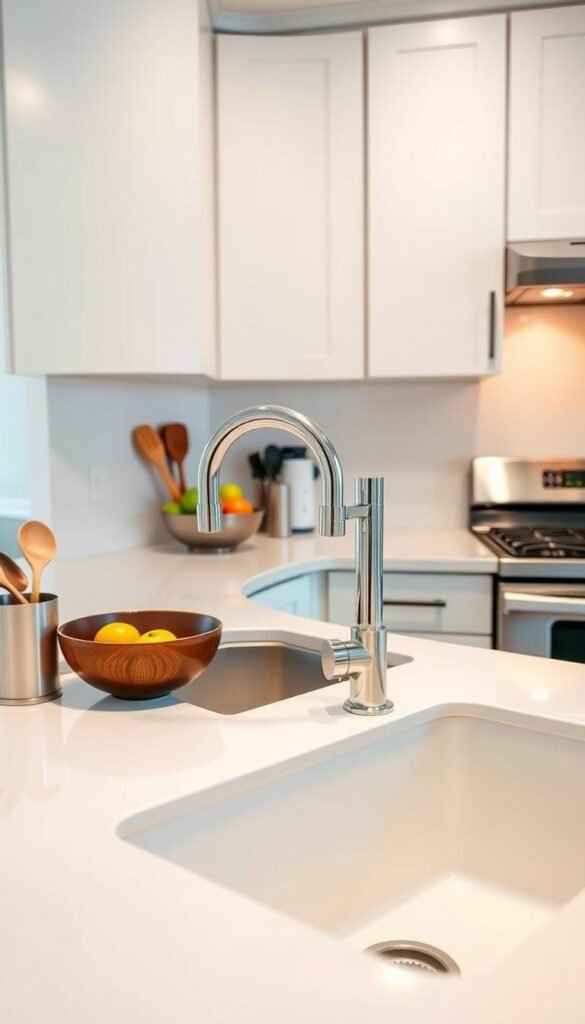
Countertop “one-touch” rule
Keep only what you use daily. If an item does not get used for daily use, store it. Give daily items a single, visible spot so you never move them back and forth.
Sink workflow
Place the drying rack so it does not block the faucet. Store sponges upright to dry faster and smell less.
Finish with a quick, 2-minute wipe after cooking. Wipe the rim and drain area to stop buildup and bugs.
Stove safety
Keep towels, paper, and hooks away from burners. Grease + open flame is a real risk. Store oil bottles a safe distance from heat and cap them tightly.
- Use a freestanding utensil crock if hooks sit too close to heat.
- Wipe oil splatter promptly; oils attract dirt and pests.
- Keep pepper and other spices grouped away from the stove edge.
„A clear counter and sink make weekly meal prep worth the few minutes of upkeep.“
| Zone | Rule | Why it helps |
|---|---|---|
| Counter | One-touch daily items only | Less clutter, faster prep |
| Sink | Rack out of faucet; sponges upright | Faster drying, fewer smells |
| Stove | No towels or hooks near burners | Reduces fire and grease hazards |
Fridge, Freezer, and Pantry: Store Meal Prep for 4-5 Days Without the Chaos
A simple storage routine protects flavor and keeps meal prep usable for days. Follow a few easy rules and your proteins, sauces, and ingredients stay visible and safe. This is renter-friendly and works in small fridges.
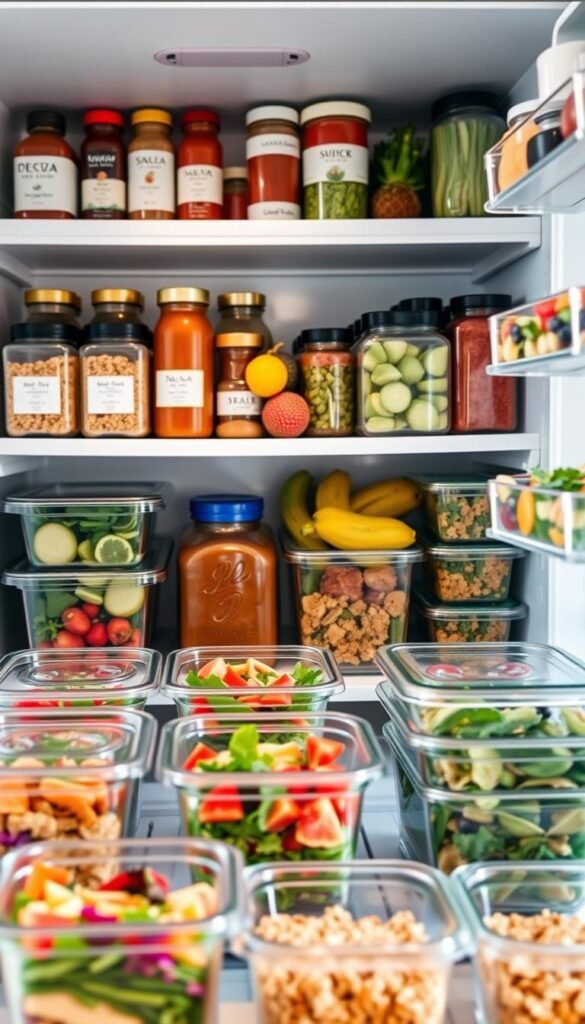
Cooling proteins safely before lidding
Move cooked chicken and salmon to wide, shallow containers right after resting. Cool with lids off in the fridge so steam escapes.
Shallow containers chill faster and cut the time food spends in the danger zone. Seal containers only after they are cool to protect texture and avoid condensation.
Labeling and front-row strategy
Use painter’s tape + marker. Write the cook date and what it is: „chicken — 3/12“ or „salmon — 3/12“.
Place the next two days of proteins and main veggies at eye level. Keep sauces and dressings together in one upright bin so bottles don’t disappear to the back.
Preventing smells and spills
- Use a washable liner or a small tray under bottles and jars to catch drips.
- Store strong-smell items like kimchi in sealed containers to avoid flavor transfer.
- Keep a shallow bin for mystery leftovers; open weekly and eat, freeze, or toss anything older than 4–5 days.
Pantry tips for tight spaces
Move rice and potatoes into stackable, clear containers so you can see levels at a glance. Don’t stash heavy jars on high, unstable shelves.
Weekly reset cue: if an item is 4–5 days old, prioritize eating or freeze it. Small habits prevent waste and smells.
„Front-row placement and clear labeling end the back-of-fridge mystery container problem.“
For renter-minded storage ideas that save space, see fridge space solutions.
Overflow Solutions for Apartment Living: Bathroom, Closet, and Entryway Tweaks That Help the Kitchen
If you want clear counters, start by giving incoming items a proper home outside food zones. The honest reason counters fill up is simple: the nearest flat surface becomes a default landing spot for keys, mail, paper towels, and bags.
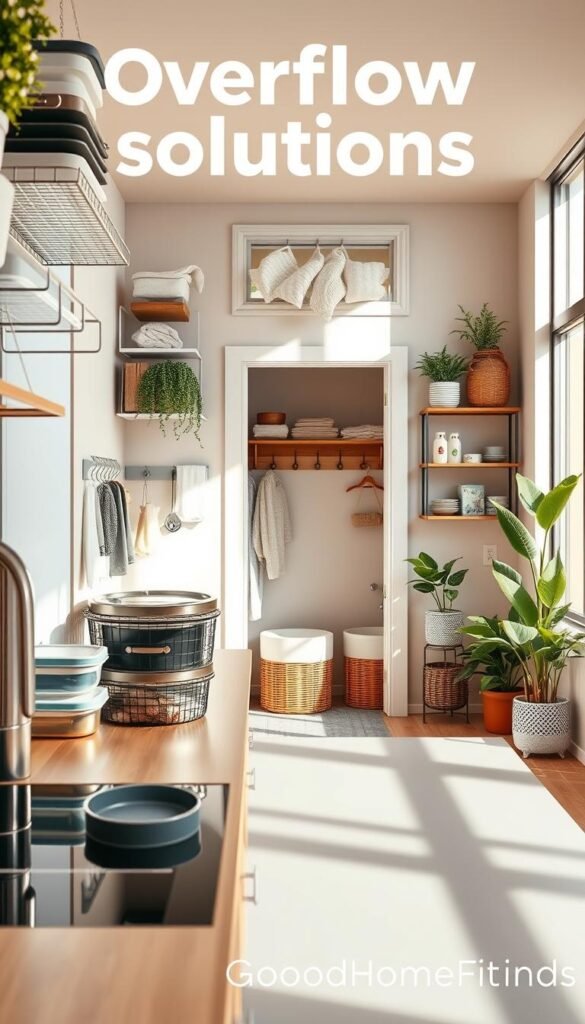
Entryway drop zone to stop counters becoming a landing strip
Set a small tray on a shoe cabinet for loose change and mail. Add removable hooks for keys and a slim basket for daily mail. These are renter-friendly, no-drill options that cut mess fast.
Closet storage for bulk paper goods and appliances
Move bulk paper products to a closet so pantry space stays usable. Store small appliances you rarely use on a high shelf or in a labeled bin. That reclaims counter room and saves prep time.
Bathroom organization to reduce kitchen creep
Keep toiletries in a shower caddy or small shelf so they don’t migrate into food cabinets. When personal items have a clear spot, your food zones stay dedicated and safe.
- Studios: use one vertical bin for overflow.
- One-bedrooms: closet bins + a door tray works well.
- Shared units: labeled bins per person prevent mix-ups.
Quick win: when overflow has a home, your next meal prep in the kitchen takes less time and your counters stay usable all week. For more renter-friendly ideas, see this list of best small kitchen solutions.
Keep It Going: 5-Minute Daily Routines and a 15-Minute Weekly Reset
A five-minute close-down and a weekly 15-minute reset protect your workflow. These small habits keep the space usable for busy days and make meal prep predictable.
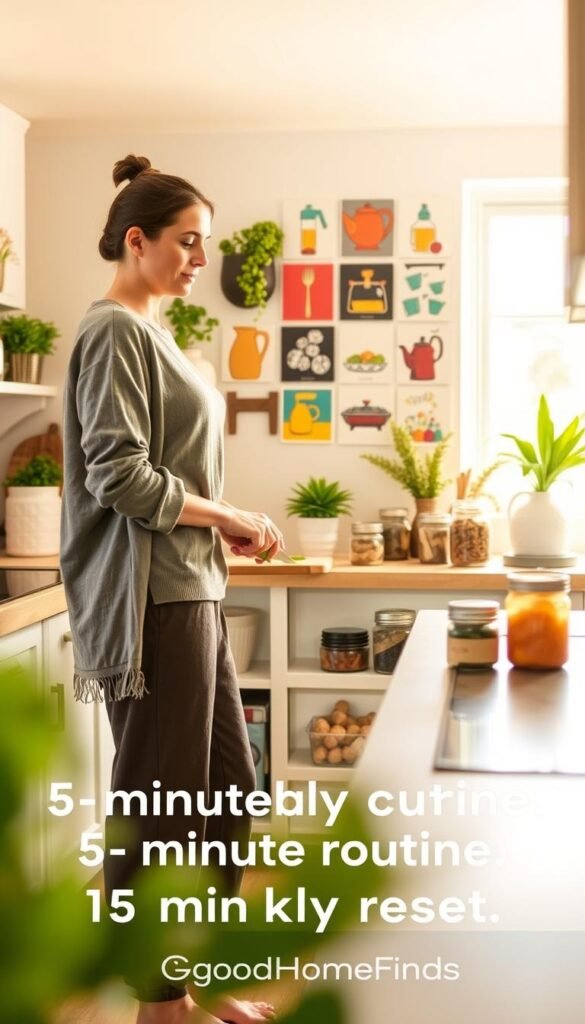
The nightly close-down: dishes, counters, and tomorrow’s quick prep
5-minute nightly routine: clear the sink, wipe the main counter, and set out one item for tomorrow’s prep (a pan, a cutting board, or a sauce jar).
Minimum viable dish routine: wash the pan and knife first so you can cook again even if other items wait. This keeps you ready and reduces friction the next day.
Weekly maintenance: toss leftovers, wipe shelves, restock sauces, reset the cart/bin
Spend 15 minutes once a week to toss expired leftovers, wipe one fridge shelf, and restock your sauce bin. Front-row the next two days of meals.
Reset any cart or overflow bin so items have a home. This short task stops clutter from compounding over the week.
When to replace items for safety and durability
If adhesive hooks slip or peel near steam, replace or move them. Swap cracked bins or ones that retain smells.
Replace worn cutting boards and chipped utensils. Damaged tools can hide bacteria or create splinters.
„Consistency beats perfection. Small, repeatable actions save you more time than occasional deep cleans.“
- Habit to prevent creep: for each incoming item, remove one outgoing item from the counter zone.
- Check adhesives every 6–12 months; swap if grip weakens.
- Label sauces and rotate them so bottles don’t pile up or expire.
| Task | How often | Why |
|---|---|---|
| Nightly close-down | 5 minutes daily | Keeps prep ready; reduces morning friction |
| Weekly reset | 15 minutes weekly | Prevents clutter and food waste |
| Safety check (adhesives/bins) | 6–12 months | Maintains durability and hygiene |
Conclusion
In small spaces, a short system beats perfect tools: repeatable steps make meal prep reliable. You can run a focused session and finish with cooked protein, grains, and prepped veggies that become multiple meals.
Follow the core method: roast sheet proteins on a lined pan, boil a big pot for quick veggies, and make two carbs like rice and potatoes. Keep temps right, cool food shallow before lidding, and clear the stove zone for safety.
Budget upgrades under $25 or $50 speed the routine depending on your apartment size. Keep a 5-minute nightly close and a 15-minute weekly reset to protect results.
Next step: pick your favorite sauces, shop once for ingredients, run the timeline, and adjust quantities to fit your fridge and routine.