
This guide helps renters and small-space residents fix everyday messes with practical, no-drill tools and reliable habits. It defines a typical kitchen problem mix in rentals: slow drains, sticky grease, stray odors, and limited storage that eat up time and counters.
The roundup previews ten solution categories rather than brand hype. Expect drain basics, grease tools, refillable sprays, liners, boil-over guards, steam-clean helpers, prep mats and boards, easy-grip utensils, and a few removable organization add-ons.
Options are flagged by budget tier: many choices fall under $25, and robust reusable picks are commonly under $50. The focus is on durability, safety, and easy setup so items suit renters who may move soon.
Readers will get clear guidance for matching a tool to a specific issue, plus quick-win routines to save time and prevent recurring problems at home. Safety notes cover cleaning combinations and ventilation for small spaces.
Key Takeaways
- Renters benefit from no-drill, portable fixes that free up counter space and move with them.
- Many durable, reusable tools are available under $25; more versatile items often stay under $50.
- Prioritize safety and ventilation when using cleaning solutions in tight spaces.
- Match the tool to the exact issue—this guide highlights categories, not brand hype.
- Adopt quick daily and weekly routines to prevent recurring messes and save time.
Common kitchen problems to solve first: safety, water, and cleanup basics
Begin with safety guidelines so small-space residents clean confidently and avoid toxic fumes. Read product labels, open windows, and run ventilation. Use one cleaner at a time and never combine products.

Cleaning safety rules for renters
Never mix bleach with ammonia, acids (including vinegar), drain or oven cleaners, or other cleaners. Mixing can create chloramines or chlorine gas. Symptoms include coughing, nausea, watery eyes, and breathing trouble; call 911 for severe exposure.
Fast diagnosis checklist
- Water flow: slow sink vs sudden clog.
- Grease film: shiny residue on stove, handles, or backsplash.
- Sticky mess: tacky spills that need soak time.
- Storage bottleneck: limited flat storage or crowded counters.
Small-space priorities and minimum kit
Choose durable tools that store flat and dry fast: silicone liners, non-scratch pads, and a refillable bottle. A minimum kit: safe cleaner, scrub tool, non-scratch pad, and refill bottle saves time and cabinet space.
| Issue | Quick sign | Starter tool | Store tip |
|---|---|---|---|
| Slow drain | Slow emptying sink | Sink strainer | Flat, under-sink pouch |
| Grease film | Shiny residue on surfaces | Non-scratch pad | Hang to dry |
| Sticky spills | Tacky surface after cooling | Soft scrub brush | Nestable caddy |
Kitchen problem mix solutions: products and DIY mixes that fix messes in minutes
A short routine plus one targeted tool often clears a clog or removes grease in minutes. Start by identifying the exact issue and choose the right item rather than buying more bottles.

Slow or clogged drain (DIY): Pour 1/2 cup baking soda into the drain, add 1/2 cup white vinegar, cover for ~15 minutes, then flush with hot water. This works best for minor buildup and grease. If water stands or backups repeat, contact maintenance—don’t rely on DIY.
- Maintenance products: flat sink strainers, removable food catchers (dishwasher-safe), and hair hooks for drains are renter-friendly.
- Enzyme gels: good for regular upkeep but not an emergency fix; check lease rules before stronger chemicals.
Grease & grime under $25: non-scratch pads, a compact dish wand, microfiber cloths, and a refillable spray bottle. Pair these with simple ingredients to cut clutter and keep cleaning effective.
Oven/stovetop under $50: liner mats, boil-over guards, and steam cleaners soften stuck spills. Pros: less scrubbing; cons: fit and storage matter.
Prep tools that prevent mess: cut-resistant mats, non-slip boards, and easy-grip utensils speed tasks and reduce stuck-on food. Better results also cut waste: use lots of water for pasta, stir, save some pasta water, and reheat leftovers at 350°F to avoid splatter.
| Problem | Tool/Cleaner | Budget | Renter note |
|---|---|---|---|
| Slow drain | Sink strainer + baking soda + vinegar + hot water | $–$25 | Portable, no-drill |
| Grease film | Non-scratch pad + refillable spray | $–$25 | Store flat, rinse to dry |
| Oven mess | Liner mat + steam routine | $25–$50 | Heat-safe fit required |
No-drill, renter-friendly organization products for small kitchens
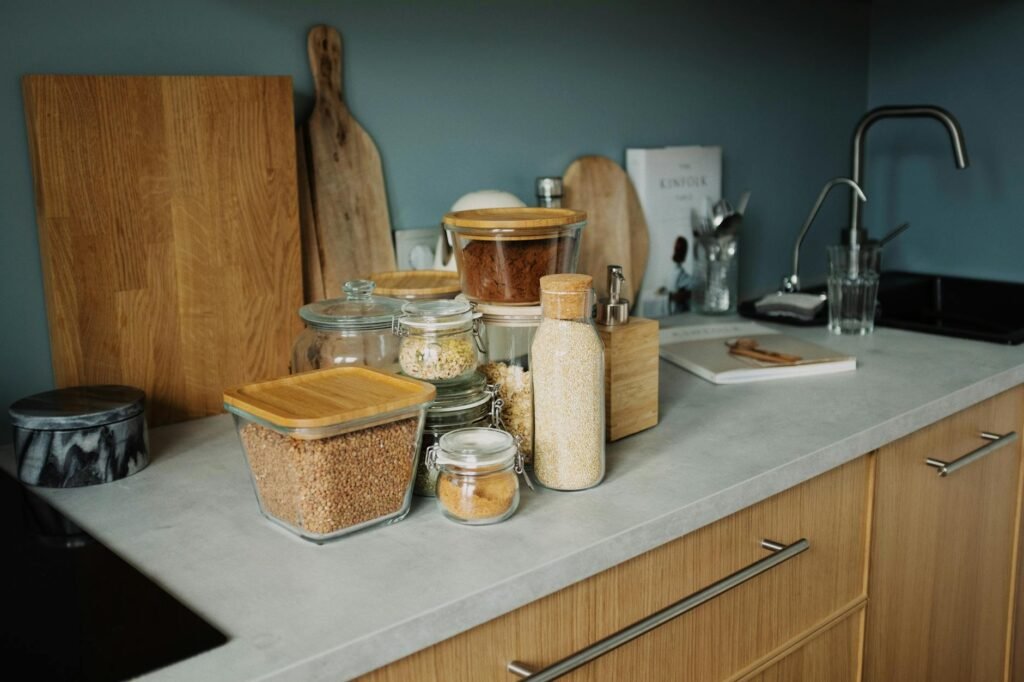
Smart, no-drill storage turns tight counters into tidy work zones that save time and reduce spills. Renters can add vertical layers and removable hooks without drilling or lasting changes.

Cabinet and counter space boosters
Tension rods create vertical storage for spray bottles, cutting boards, and towels. Under-shelf baskets add a second layer for plates or wrap. Adhesive hooks make grab-and-go zones for mitts and brushes.
Studios benefit from one- or two-zone systems with a minimal footprint. Larger apartments do best with zoned storage by task: prep, cooking, cleaning. This way items return to a consistent spot.
Fridge, pantry, and drawer systems
Choose stackable, wipe-clean bins and removable drawer dividers. Use label-free sorting: group by category so maintenance is simple. Lift-out dividers make wiping fast and durable.
| Area | Best no-drill pick | Why it helps |
|---|---|---|
| Cabinet | Under-shelf basket | Creates a second layer for plates and wraps |
| Door/side | Adhesive hooks | Clears counters with grab-and-go storage |
| Fridge/Pantry | Stackable bins | Wipe-clean, keeps items visible and grouped |
Durability & care: Prep surfaces first—clean and dry—then apply adhesives rated for humidity. Use over-cabinet hooks if adhesives are not allowed. Remove slowly to limit paint damage.
Weekly 10-minute reset: Toss expired items, wipe one shelf, and return stray items. Adopt a „one in, one out“ rule to prevent storage creep across the household, bathroom, closet, and entryway.
Conclusion
Close with a clear plan: handle the highest-impact problem first, then maintain results with a small, strong, renter-friendly starter kit. Choose one strainer, a non-scratch scrub, microfiber cloths, and a refillable bottle before adding specialty items.
Prioritize safety: never mix bleach with ammonia or acids, and use mild cleaners or ventilate when needed. The single best household ingredient for routine care is baking soda paired with vinegar for minor drain buildup.
Adopt short routines: a 2-minute nightly wipe, a weekly clean of strainers and drains, and a quick fridge reset. Reheat leftovers in the oven at 350°F for a few minutes to cut splatter and improve texture. These simple tips keep a small-space kitchen manageable and ready to move with.

16 Comments