Practical home gear beats gadget hype. This intro sets expectations. You’ll get honest pros and cons, renter-friendly suggestions, and small-space priorities like noise and power use.
By “kitchen safety tech” I mean tools that stop common accidents or spot problems early, not devices for their own sake. Expect picks that save time, cut risk, and fit a compact counter or drawer.
Sanitation and accident prevention are different but linked. A messy area raises both injury risk and food-borne hazards. Gadgets help, but clear counters, dry floors, and correct cooking temps still matter.
This article focuses on renter-friendly installs, low power draw, and small footprints. You’ll see temperature tools, sensors and alerts, stove shutoff add-ons, leak and slip prevention, safer prep tools, and simple reminder aids.
I’ll also show budget vs premium options and quick setup guidance so you can build a short “safety stack” based on your biggest risk. For starter picks, check the smart-budget picks and the best under-$20 finds.
Key Takeaways
- Focus on devices that reduce injuries and hidden food problems.
- Choose items that save time, fit small spaces, and use little power.
- Gadgets support habits; they don’t replace attention or cleanup.
- Expect clear trade-offs: some items are must-have, others are nice-to-have.
- Start with your biggest risk and add one practical tool at a time.
Real benefits of kitchen safety technology at home
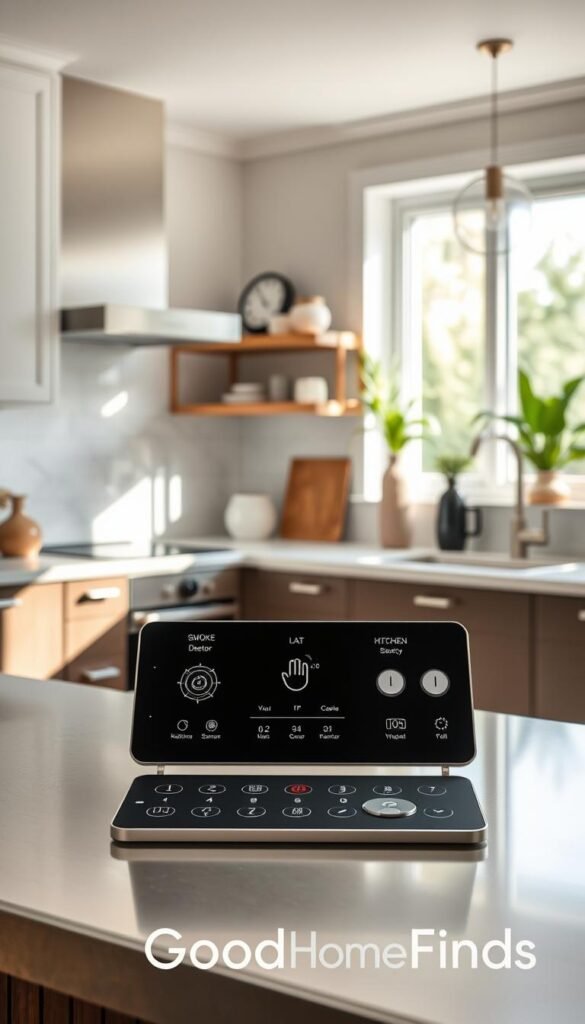
Small sensors and simple monitors stop small problems before they grow. They alert you to unsafe temps, hidden leaks, and forgotten burners. That reduces both injury and food loss in real life.
Sanitation vs. safety: what these tools can and can’t fix
Sanitation focuses on cleanliness and handling to prevent contamination. Safety prevents injuries and emergencies. You need both for good results.
Devices support your process with reminders, monitoring, and timely alerts. They help you hit safe cooking temps and keep fridge ranges steady. But they can’t clean counters, pick up clutter, or stop you from leaving hot oil unattended.
Which risks these devices reduce
Match common home problems to practical tools:
- Burns and forgotten burners: timer reminders and auto-shutoff monitors.
- Cuts and dull blades: better prep tools and clear storage to avoid accidents.
- Slips and leaks: compact leak detectors and non-slip mats near sinks.
- Foodborne illness: instant-read thermometers and fridge sensors for food safety.
Apartment-friendly factors
Think about space, noise, and power before you buy. Battery devices take little counter room and do not claim an outlet. Wall-mounted items need renter permission. Loud alarms save lives, but frequent false alerts reduce trust. Choose gear that minimizes nuisance alerts.
| Concern | Apartment-friendly option | Typical power | Benefit |
|---|---|---|---|
| Temperature monitoring | Leave-in probe or fridge sensor | Battery or low-watt plug | Protects food quality and prevents spoilage |
| Fire/forgotten burner | Timer + auto-shutoff monitor | Battery or hardwired (choose battery for renters) | Reduces burn risk and property damage |
| Leaks and slips | Compact leak detector + mat | Battery | Prevents water damage and falls |
| Cleaner storage | Labels and secure cabinet bins | None | Reduces chemical exposure and confusion |
Simple decision rule: buy a product when it reduces a real risk you face—forgetful cooking, inconsistent temps, or leaks—not for gadget appeal. For starter picks that fit small spaces and renters, see the kitchen problem guide.
Best kitchen safety tech for everyday cooking and cleaning
The right gear makes cooking and cleanup less stressful and lowers real hazards. Below are practical picks with quick pros and cons, setup time, and apartment-friendly notes. Use this to build a small, useful stack—not a cluttered drawer.
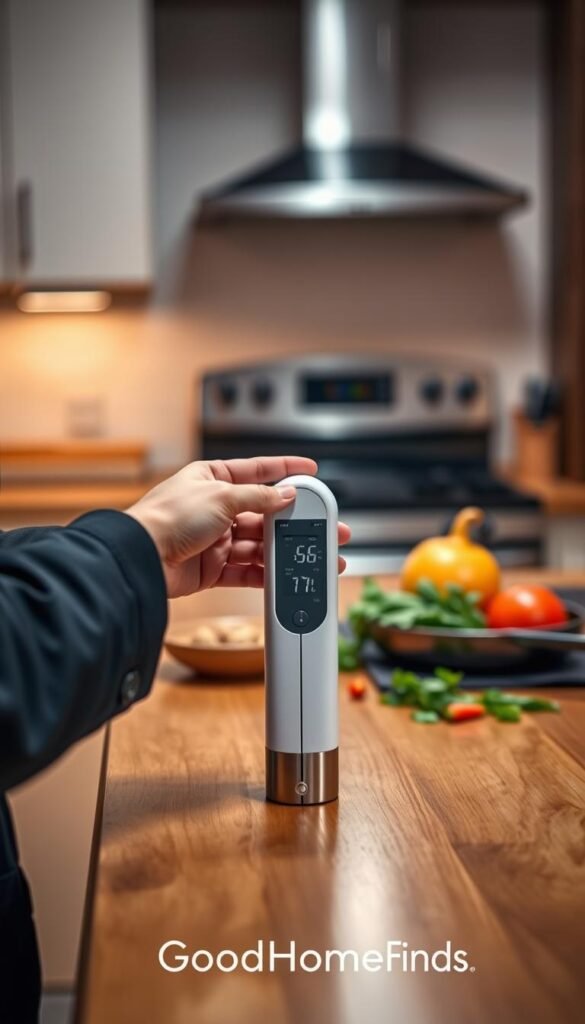
Instant-read vs leave-in probe thermometers
Best for: quick checks vs hands-off roasts and broils.
Pros: instant-read gives fast accuracy; probes prevent overcooking and reduce foodborne risk.
Cons: probes need a battery and careful placement; instant-read requires repeated checks.
Setup: minimal. Probes pair with apps or show on a small display.
Maintenance: wash probes, spot-check calibration occasionally.
Small-apartment fit: small footprint, easy drawer storage.
Fridge and freezer sensors with smart alerts
Best for: preventing spoilage after outages or an open door.
Pros: push alerts protect food quality and reduce waste.
Cons: some need Wi‑Fi; placement matters in tight fridges.
Setup: place near the coldest shelf; test alerts during setup.
Maintenance: swap batteries and check connectivity.
Simple comparison at a glance
| Product | Best for | Setup | Apartment fit |
|---|---|---|---|
| Instant-read thermometer | Quick checks on meat and dairy | None; ready to use | Excellent — small and cheap |
| Leave-in probe + app | Long roasts and smokers | Pairing and placement (10–15 min) | Good — needs fridge or drawer storage |
| Fridge/freezer sensor | Power outage and door alerts | Mounting or resting in fridge | Ideal — battery options for renters |
For starter bundles and everyday picks that fit small spaces, see these daily-life finds.
Who needs this and how to set it up without headaches
Start by matching one clear household problem to a single gadget that actually helps you solve it. That keeps purchases practical and renter-friendly. If you rent, pick battery models and no-drill mounts. If you have a busy family, choose loud alerts and simple routines. For seniors, prioritize large displays and one-button actions. New cooks should start with timers and a good thermometer.

Setup time
Quick installs (5–10 minutes): leak sensors, timers, fridge probes.
Longer tasks (an afternoon): mounting alarms, pairing multiple products, or swapping hardwired units.
Compatibility checklist
- Wi‑Fi: check signal strength where you plan to place devices.
- Phone alerts: decide if push notifications matter to you.
- Batteries: note type and replacement cost.
- Placement: choose low points for leaks and open air for temp sensors.
Maintenance reality & common mistakes
Clean probes after use, test alarms monthly, and rotate batteries on a schedule. Avoid these errors: placing sensors in cupboards, ignoring frequent alerts, and stacking devices on cluttered counters. Small checklists beat complicated systems you won’t use.
| Who | Priority product | Setup time | Why it helps |
|---|---|---|---|
| Renters | Battery leak & fridge sensor | 5–10 min | Easy install, protects food and property |
| Busy families | Loud alerts + timers | 5–15 min | Reduces forgotten pans and burns |
| Seniors / new cooks | Large-display thermometer & simple timer | None–10 min | Clear readings, better food safety |
Rollout tip: fix your biggest risk first, then add one product at a time so tools match real needs. For food handling basics see food handling guidance. Use a short checklist like the one from this checklist, and compare renter-friendly setups at renter setup comparison.
Conclusion
Close with a short plan: one small purchase, one routine, and one quick check each month.
Best first buys: a reliable thermometer, an updated smoke/CO alarm, and a compact leak detector for the sink or dishwasher zone. These three cover food temp, fire risk, and water damage without clutter.
Let technology support good habits. Keep counters clear, dry floors, and proper food storage to reduce foodborne risk and everyday accidents. For layout and design tips see designing a safe and functional kitchen.
Start on a budget: buy one item that reduces your biggest risk today. Upgrade to premium only for better reliability, alerts, battery life, and support. Learn advanced approaches at advanced techniques.
Monthly 5-minute habit: test alarms, swap batteries if needed, and wipe sensors so your gear stays useful, not drawer clutter. Small routines and steady supply basics (batteries, labels, cleaners) beat big, unused systems every time.