Short, practical, and under-$25 where possible. This is a tight, buy-first guide of daily tools to help you cook real meals at home without junk clutter.
You’ll get a clear list of minimal essentials, flagged exceptions that are worth spending more on, and quick notes on safety and quality. Items focus on everyday usefulness, faster prep, and easier cleanup.
I prioritize Amazon availability and fast delivery so you can rebuild or move quickly. The buying order starts with the core trio—cutting board, paring knife, and quarter-sheet pan—then moves to prep tools, measuring, mixing, cookware, bakeware, and a reality-check on small appliances.
Expect honest pros and cons, who benefits most (first apartments, busy families, small spaces), and clear warnings about flimsy pans, mystery coatings, and gimmicks to avoid.
For a slightly broader mix and shopping links, check this budget essentials roundup.
Key Takeaways
- Focus on practical items that save time and reduce mess.
- Most picks are under $25; exceptions are flagged when they prevent waste.
- Prioritize Amazon for fast delivery and easy replacements.
- Safety checks include food-contact materials and heat ratings.
- Start with board + knife + sheet pan, then add prep and measuring tools.
- Avoid ultra-cheap gimmicks and nonstick coatings that fail quickly.
What to expect from these budget kitchen starter picks
Think practical: durable, renter-friendly tools chosen to save you time and cut clutter. Most selections hit an under-$25 price point so you can outfit a usable set fast and on budget. Buy at $X or less guidance appears with each item.

Our under-$25 rule and when to spend a little more
The rule: most picks land under $25 on Amazon US, often with Prime shipping. Prices change, so the guide flags “buy at $X or less” for each item.
When to spend up: a chef knife you’ll keep, a pan you won’t replace in six months, or a thermometer that prevents undercooked chicken. This follows The Strategist’s advice: don’t buy things you’ll replace in a year. Mealime’s logic—choose multi-purpose tools—guides selection.
How we prioritized delivery and availability
We picked widely available brands with clear specs and steady review patterns. Fast delivery matters. Imagine moving in Sunday and needing usable gear by Tuesday dinner. That’s why consistent listings and recent reviews are a must.
Quality and safety checks we won’t skip
- Non-negotiables: stainless grade clarity, BPA-free plastics, no mystery nonstick, solid rivets/handles, heat-safe silicone.
- Food basics: avoid porous boards, replace scarred plastic, don’t use scratched nonstick.
- Longevity guide: some items should last years (tongs, colander, sheet pans); others are fine to replace when worn (nonstick pans).
Kitchen starter finds that make the biggest difference first
Pick these three everyday tools first and you’ll cook more, faster. They improve nearly every meal and reduce small accidents that waste time.
A solid chef knife option that actually stays useful
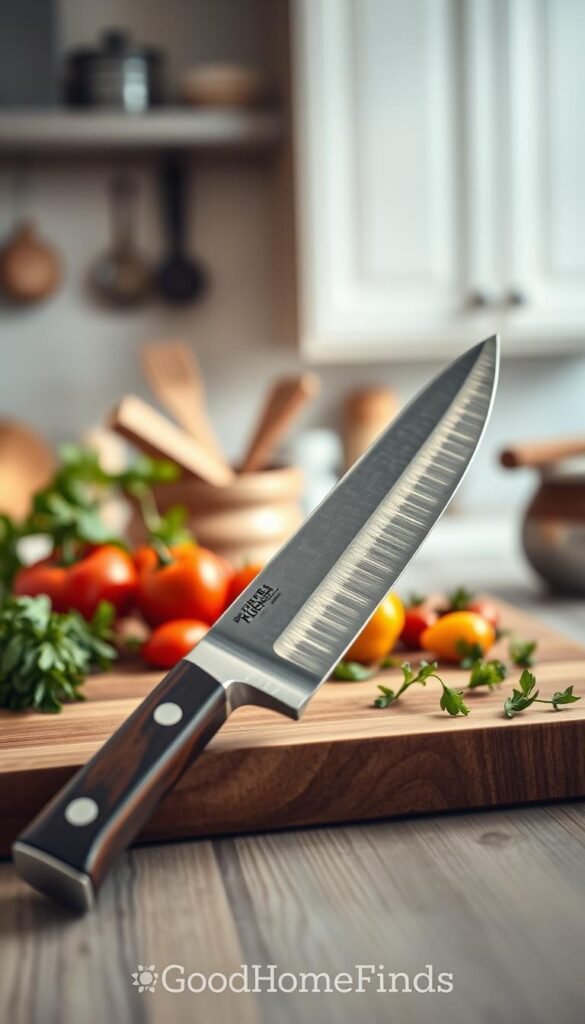
Recommendation: Victorinox 8″ Fibrox Pro chef knife.
Why it matters: a sharp, balanced blade makes slicing faster and safer. You won’t crush herbs or slip on tomatoes.
Pros: reliable edge, comfortable handle, great value.
Cons: often over $25, not a showpiece. If you can stretch, it’s worth the spend.
A reliable cutting board that won’t slide, warp, or hold odors
Recommendation: OXO Good Grips–style polypropylene cutting board with non-slip edges.
Non-slip edges matter when your hands are wet. A moving board is how cuts happen—ask anyone who’s chopped onions for tacos.
What to avoid: thin boards that warp in the dishwasher or wood that traps odors if not cared for.
A simple knife sharpener that saves dinner prep time
Recommendation: KitchenIQ 2-stage sharpener (~$6).
Real life: a quick pass or two turns a dull blade into a tool that slices a pepper in seconds, not minutes. That saves time and frustration at dinner.
Safety note: sharpen away from your hand, store knives safely, and don’t try to saw with a dull blade.
| Item | Why buy | Who benefits | Spend-more alternative |
|---|---|---|---|
| Victorinox 8″ Fibrox Pro | Durable edge, comfy handle, reliable for daily use | Anyone cooking 2–3+ nights/week | Higher-end forged chef knife |
| OXO-style cutting board | Non-slip, odor-resistant, dishwasher-safe polypropylene | Small spaces, renters, busy cooks | Thicker end-grain wood (if maintained) |
| KitchenIQ 2-stage sharpener | Fast edge restoration, cheap and compact | Anyone who uses a knife regularly | Pull-through ceramic or professional sharpening |
Prep tools that save time every day
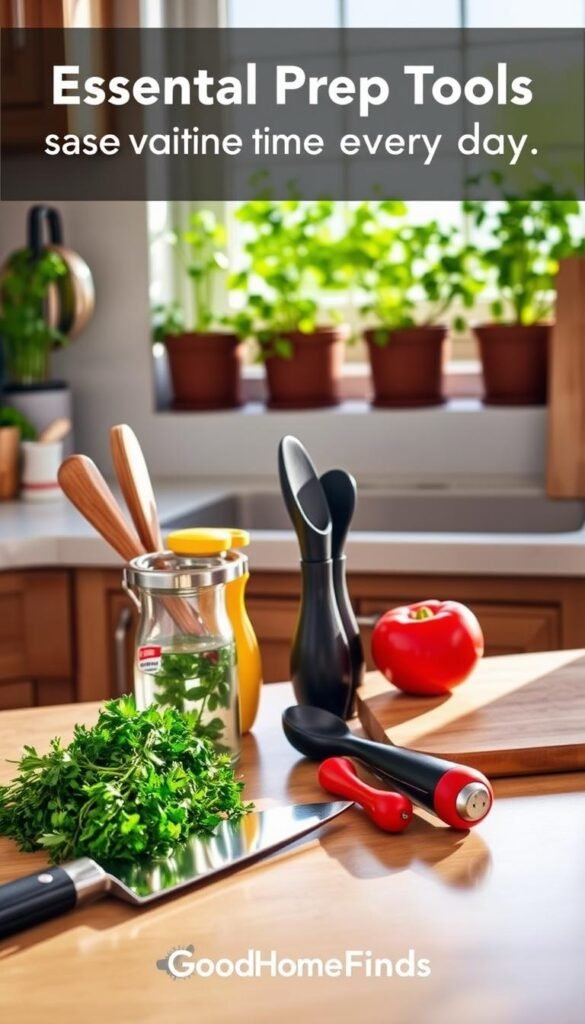
Small prep tools save real minutes and clean up fewer messes. These are items you use dozens of times a month. Pick ones that are sturdy and easy to clean.
Y-peeler for fast potatoes, carrots, and apples without wrist strain
Recommend: Kuhn Rikon–style Y-peeler for speed and less hand fatigue.
Real life: peel five potatoes for mashed potatoes in under two minutes. What to avoid: cheap peelers that chatter or rust.
Box grater or Microplane-style zester for cheese, citrus, and garlic
Choice: Cuisipro box grater if you want multi-use shredding. Microplane zester for fine zest, parmesan, and quick garlic.
Pros: box grater is versatile; Microplane is compact and fast. Cons: box graters are bulky; Microplanes can nick fingers if you overdo it. Stop before your knuckles.
Kitchen shears for chicken, herbs, and clean packaging opening
Recommend: OXO-style shears with blades that separate for easy cleaning.
They simplify trimming raw chicken and snipping herbs. Look for dishwasher-safe options and solid rivets. Avoid flimsy plastic-handled models that loosen.
Garlic press: when it’s worth it and when your knife is enough
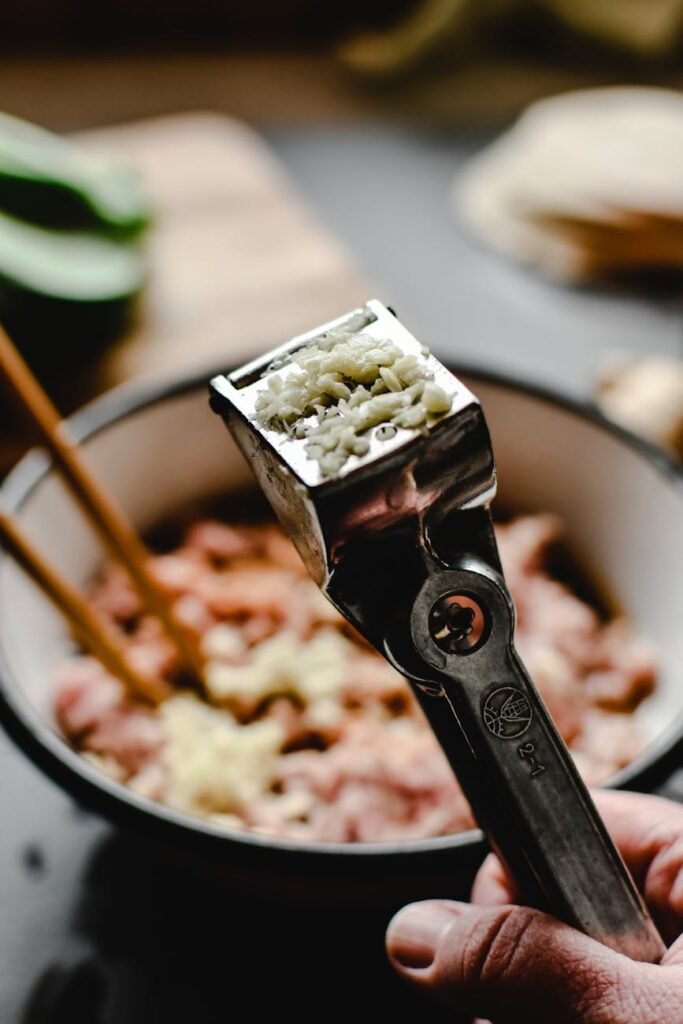
Kuhn Rikon garlic press is handy if you cook with garlic often and want consistent texture.
Alternative: smash and mince with a knife to avoid a tool to clean. Who benefits: garlic-heavy cooks who want speed. Who should skip: occasional users who prefer fewer parts to wash.
Citrus juicer for sauces and salad dressings without seeds
Recommend: Prepworks juicer with measurements for quick vinaigrettes and pan sauces.
Real life: squeeze a lemon directly into a pan sauce and skip seed fishing. Avoid tiny reamers that strain and squeeze poorly.
| Item | Why buy | Who benefits | Alternatives / Avoid |
|---|---|---|---|
| Y-peeler (Kuhn Rikon-style) | Fast, ergonomic peeling; less wrist strain | People prepping roots and apples often | Cheap peelers that rust or wobble |
| Box grater (Cuisipro) / Microplane | Versatile shredding or fine zesting | Home cooks who grate cheese or zest citrus | Oversized graters that are hard to clean |
| Kitchen shears (OXO-style) | Trim chicken, snip herbs, open packaging | Busy cooks and renters | Non-separable blades that trap food |
| Garlic press (Kuhn Rikon) | Consistent garlic texture; fast | Those who use garlic daily | Skip if you prefer knife-minced garlic |
| Citrus juicer (Prepworks) | Seed-free juice and measured amounts | Cooks who make dressings and sauces | Small reamers that don’t strain well |
For a slightly broader mix and buying links, check this smart budget mix.
Measuring tools that make food taste consistent
A few reliable measuring tools save you wasted salt, time, and second guesses.
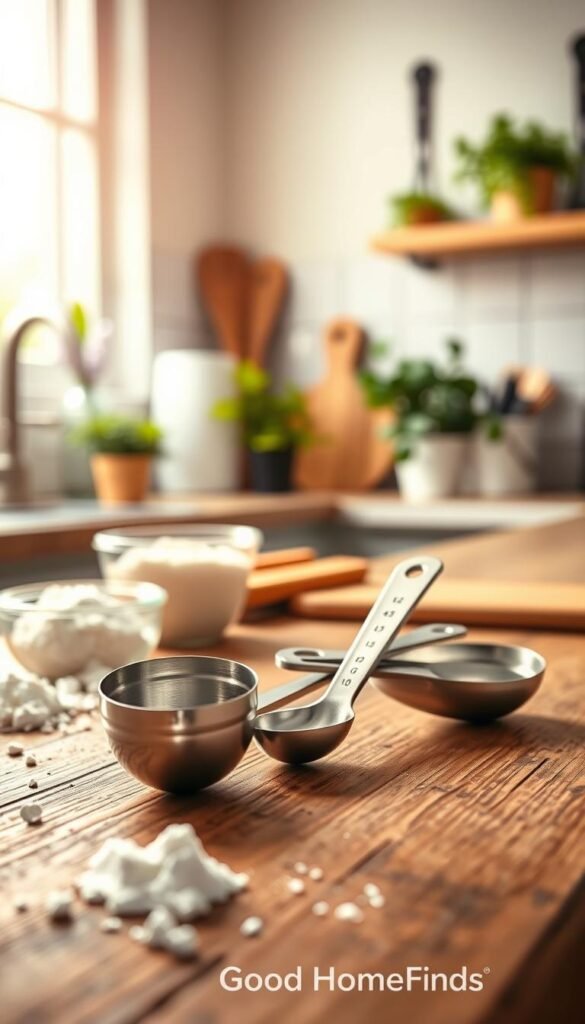
Why measure even if you don’t bake: measuring keeps sauces, marinades, and soups consistent night after night. One spoon can turn a good chili into great chili the second time you make it.
Stainless steel measuring spoons that don’t bend
Choose stainless steel spoons for durability and easy cleaning. Look for stamped markings and magnetic nesting. They resist bending and won’t trap food in seams.
Pros: long-lasting, dishwasher-safe, precise. Cons: small price bump vs thin plated spoons.
Stackable measuring cups for baking and quick sauces
Go with a nested set that stacks to save space. Stamped measurements beat printed labels that fade. A set covers dry and wet needs for baking and pan sauces.
Who it’s for: anyone in a small space or wanting reliable portions. Avoid: flimsy plastic cups that warp or separate at the seams.
Liquid measuring cup for soups, rice, and marinades
Pick a 4-cup option with a wide base and clear markings. Tempered glass or sturdy BPA-free plastic works for hot liquids. The Strategist highlights a 4-cup cup as a practical starter must.
Pros: spill prevention, readable marks, hardy for hot liquids. Cons: cheap thin plastic can flex and spill.
| Tool | Why buy | Who benefits | What to avoid |
|---|---|---|---|
| Stainless steel measuring spoons | Durable, accurate, easy to clean | Daily cooks and bakers | Thin stamped-plated spoons that bend |
| Stackable measuring cup set | Space-saving, reliable for baking and sauces | Small-space cooks, renters | Printed measurements that fade |
| 4-cup liquid measuring cup | Good for soups, rice water, and marinades | Anyone making sauces or reheating liquids | Light flexing plastic with unclear marks |
These items are widely available on Amazon and often appear in Mealime and budget guides. For more related picks and quick links, see this everyday essentials collection.
Mixing, draining, and small-batch essentials
Small, multi-use bowls and a solid colander keep prep tidy.
Glass mixing bowls: Luminarc-style glass bowls are practical. They don’t hold odors, show contents clearly, and double as fridge storage. Mix meatballs, cover the bowl, and refrigerate instead of dirtying another container.
Pros: odor-resistant, microwave-safe, stackable. Cons: avoid thin glass without heat-shock specs.
Stainless steel colander
An OXO stainless colander with feet and wide handles drains pasta and rinses greens without tipping. Look for small holes so rice or orzo won’t fall through.
Who it’s for: anyone who makes pasta, rinses beans, or needs a stable drain tool. Avoid: flimsy plastic bowls that tip or trap water.
Whisk for quick work
An OXO 9-inch whisk handles eggs, pan sauces, and smooth soups fast. Use it to blend flour into broth for a lump-free gravy in seconds.
| Item | Why buy | Alternatives / Avoid |
|---|---|---|
| Glass mixing bowls | Clear, odor-free storage and prep | Avoid thin glass; prefer tempered |
| Stainless steel colander | Stable draining for pasta & greens | Skip small-holed plastic that tips |
| 9″ whisk | Versatile for eggs, sauces, soups | Avoid loose-handle models |
Affordable cookware that covers most dinners
A few right pans cover most dinners you’ll actually make. Good cookware often costs more than $25, so set „best under $25 when on sale“ expectations and choose safe budget alternatives if needed.
Stainless steel skillet: sear meat and build sauces
Why: a stainless steel skillet creates fond when you brown meat. That browned residue makes pan sauces taste richer.
Who it’s for: you want sear, sauté, and quick pan sauces. Cuisinart-style multiclad pieces are good value if you can spend a little more.
Avoid: ultra-thin steel that warps or scorches under high heat.
Nonstick pan: your egg and cleanup lifesaver
Why: a small nonstick pan makes eggs and delicate fish easy. It saves time on scrubbing.
Notes: frame this as an “egg pan” you’ll replace eventually. Don’t overheat empty pans. Use wood or silicone utensils and retire if the surface scratches.
Small saucepan: the 2-qt workhorse
Use a 2‑qt saucepan for oatmeal, boxed mac, reheating soup, and warming sauce. It’s handy for single portions and small-simmer tasks.
Real life: heat ramen broth and soft‑boil an egg in the same pot for a fast weeknight upgrade.
Large pot basics: pasta, chili, and batch soups
Pick a pot with a thicker bottom to avoid hot spots when cooking pasta or chili. A roomy pot makes batch meals and reheating simple.
Avoid: thin-bottomed pots that scorch sauce or boil over easily.
Cast iron skillet: durable if you’ll maintain it
Pros: excellent heat retention and long life. Lodge cast iron is standard budget value.
Cons: heavy, needs seasoning, and acidic foods can strip seasoning early on.
| Piece | Why buy | Spend-more alternative | Avoid |
|---|---|---|---|
| 8–10″ stainless steel skillet | Browning meat, fond for sauces, versatile searing | Multiclad professional skillet | Ultra-thin steel that warps |
| Nonstick 8″ pan | Easy eggs, quick cleanup | Higher-end ceramic-coated nonstick | Scratched nonstick and mystery coatings |
| 2‑qt saucepan | Oatmeal, boxed mac, sauces, reheating | Thicker-base sauce pan with lid | Tiny flimsy pots that boil over |
| 6–8 qt large pot | Pasta, chili, batch soups | Heavy-bottom stockpot | Thin-bottom stockpots that scorch |
| Cast iron skillet (10″) | Heat retention, sear, long-term value | Enamel Dutch oven for acidic dishes | Unseasoned cheap cast iron with pits |
For problem-solving gear and alternatives, see this cookware problem mix.
Budget bakeware and oven items that earn their spot
Choose oven items that you’ll reach for every time you heat food, not gadgets that collect dust. Start with durable basics that survive high heat and frequent use.
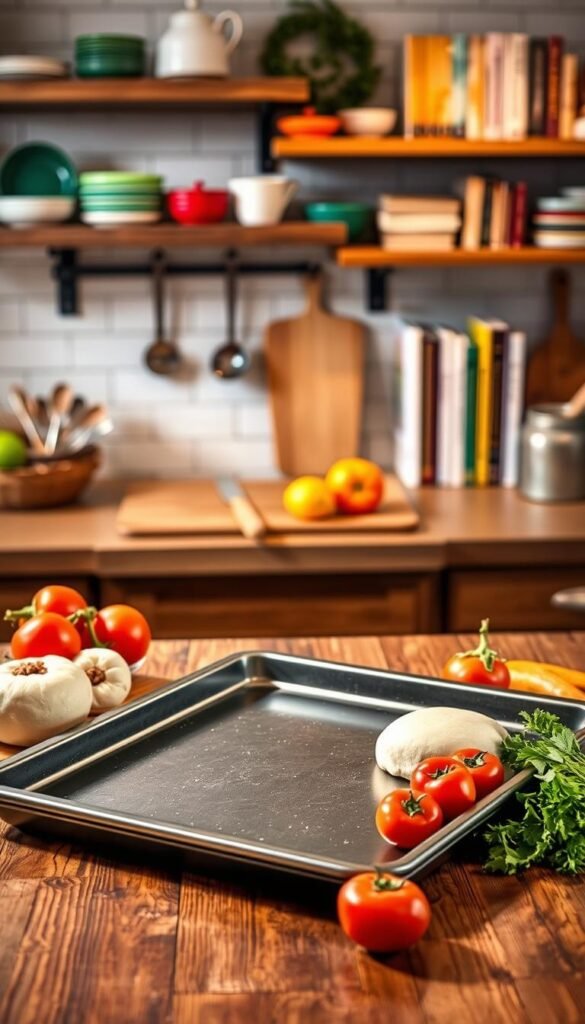
Quarter sheet pans: the most used oven piece
Why buy: a 9.5×13 quarter sheet pan roasts vegetables, bakes chicken, and reheats leftovers without crowding.
Real life: roast broccoli on one pan and cook thighs on another to keep surfaces crisp. Nordic Ware aluminum sets often land near $24 and resist warping under heat.
Avoid: cheap nonstick pans that peel or warp at high temperatures.
Muffin pan: not just for muffins
Use cases: egg bites, portioned meatloaf, and freezer breakfasts that reheat fast.
Pros: portion control and batch cooking. Cons: coated pans can need gentle hand washing.
If OXO models exceed your budget, look for a basic uncoated steel pan or a simple nonstick that lists oven-safe temps.
Simple baking-dish alternatives
If you aren’t making casseroles, an oven-safe skillet or a sheet pan doubles as a baking dish. For occasional use, disposable foil pans work in a pinch.
Safety tips: confirm oven-safe temps on labels. Avoid rapid temperature changes with glass to prevent cracking.
| Item | Who it helps | Pros | What to avoid |
|---|---|---|---|
| Quarter sheet pan (Nordic Ware) | Singles & couples, small spaces | Durable, stores flat, resists warping | Thin nonstick that peels |
| Muffin pan (OXO or basic steel) | Meal preppers, parents | Portion control, versatile uses | Delicate coatings that need hand wash |
| Oven-safe skillet / foil pan | Occasional bakers | Multi-use, good alternative to baking dishes | Non-rated pans and unknown alloy metals |
For a short list of practical essentials you can add next, see this Mealime essentials list.
Utensils that don’t melt, scratch pans, or waste drawer space
A small set of well-made utensils beats a crowded drawer full of cheap tools. Pick durable pieces and you’ll save time, avoid scratches, and reduce clutter. The goal: a few items that cover most cooking tasks.
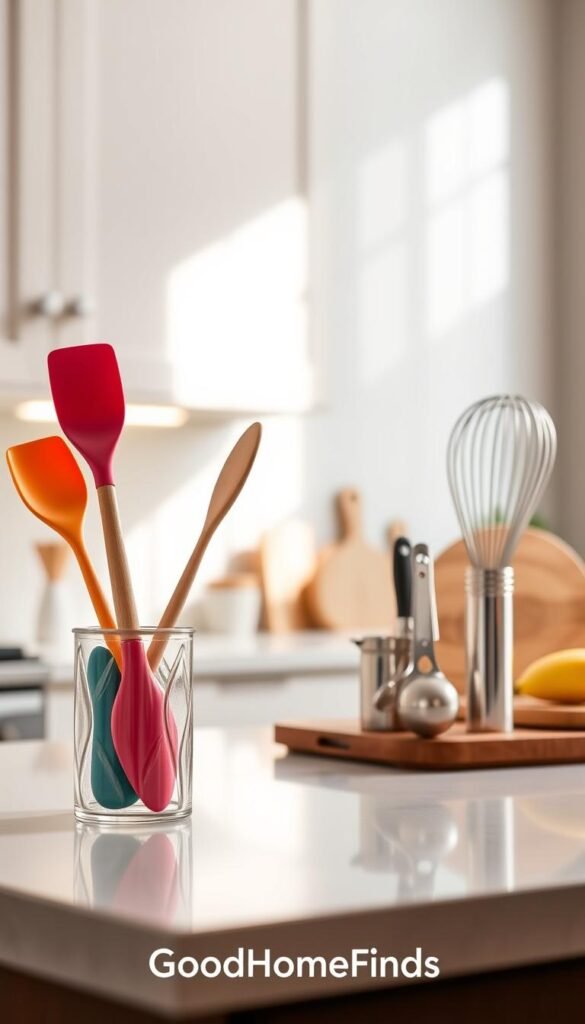
Silicone spatula
Why: great for sauces and scrambled eggs without ruining nonstick surfaces. Choose a GIR-style silicone spatula with a high-heat rating.
Pros: flexible head, heat resistant, easy to clean. Cons: cheap silicone can get floppy or smell. Avoid low-grade heads; look for solid construction and clear heat limits.
Stainless steel tongs
Why: one-handed workhorse for flipping meat, tossing salads, and handling hot food. OXO-style stainless steel tongs are reliable for daily use.
Slotted spoon
Use a stainless steel slotted spoon for boiling, blanching, and lifting food with less splashing. It helps move hot items safely and keeps pans clean.
Fish turner alternative
If you buy one turner, pick a thin, flexible steel turner for fish, cookies, and pancakes. It lifts delicate items well but avoid using it on fragile nonstick unless edges are smooth or coated.
| Tool | Who it helps | Avoid |
|---|---|---|
| Silicone spatula | Eggs, sauces, nonstick pans | Low-heat silicone that warps |
| Stainless steel tongs | Meat, salads, sheet-pan work | Thin stamped metal that bends |
| Thin steel turner | Fish, cookies, pancakes | Using on scratched nonstick pans |
For more on choosing safe silicone tools, see this guide to silicone kitchen tools.
Small appliances under $25 that are actually worth it
A few under-$25 appliances earn counter space by doing one job well. Choose units that are simple, reliable, and replace a frequent chore.
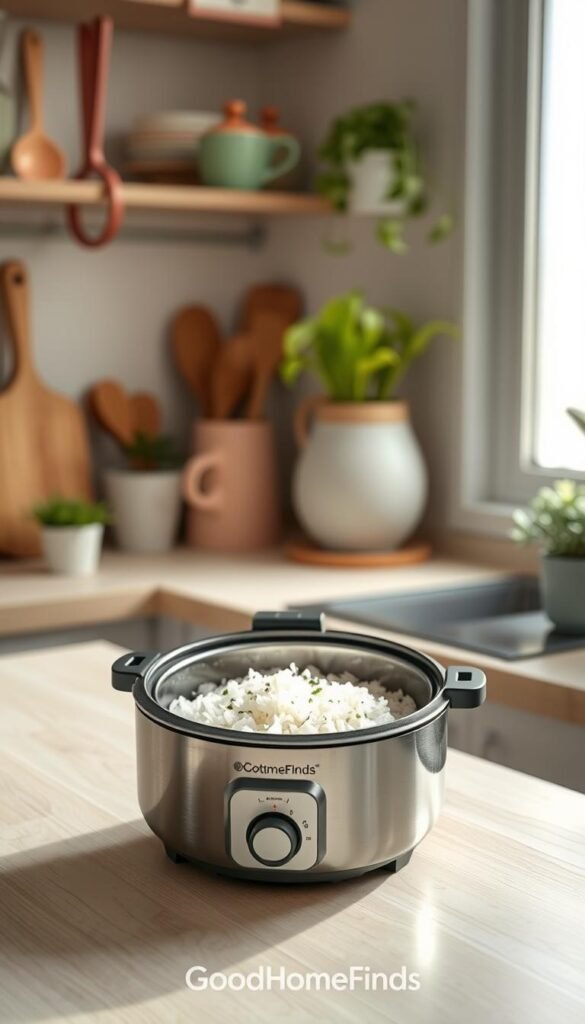
Mini rice cooker: hands-off grains and faster weeknights
Why it’s worth it: a compact ceramic-coated rice cooker (~$23) makes rice reliably without babysitting. You get steady results and fewer burned pots.
Real life: start rice, then use the saved time to stir-fry veggies. Dinner is done with less stress and better timing.
What to avoid: models that overstate nonstick, lack safety certifications, or have no replacement inner pot. Pick one with many recent Amazon reviews and spare-part options.
Blender reality check and better alternatives now
Cheap blenders are often loud and weak. They frustrate more than they help. If you make smoothies rarely, skip them.
Instead, use a jar plus whisk for dressings or a small manual chopper on sale. These tools save time and cleanup.
Upgrade later: an immersion blender is also great for soups and sauces when you can spend a bit more. It’s a true quality-of-life upgrade over low-cost blenders.
| Appliance | Who benefits | Pros | Avoid |
|---|---|---|---|
| Mini rice cooker | Singles, busy families, renters | Hands-off, consistent grains, small footprint | Poor nonstick claims, no spare inner pot |
| Cheap countertop blender | Daily smoothie users (if high-rated) | Fast, blends cold items | Low power, noisy, weak blades |
| Immersion blender (upgrade) | Soup and sauce makers | Versatile, saves pots, easier to store | Basic models underpower soups |
For more compact, practical item recommendations, look for units with steady reviews and clear specs before you buy.
What to avoid when building a starter kitchen on a budget
Avoid impulse buys that promise speed but add cleaning and clutter. Many single-purpose gadgets take drawer space and rarely beat a good knife or spatula for daily work. Think practical: one multi-use tool beats three niche items.
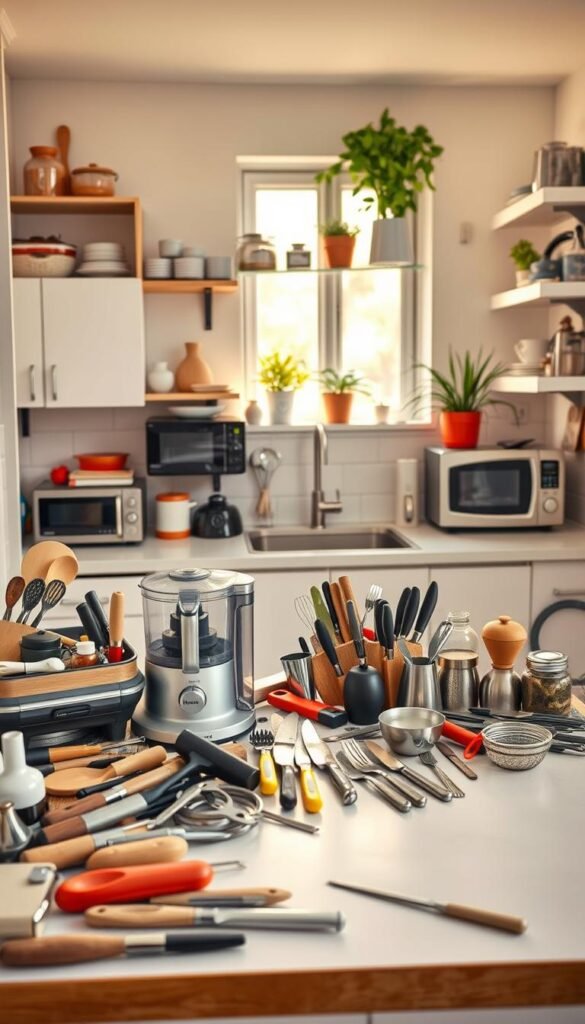
Hype gadgets and single-use traps
Spiralizers, single-slice dicers, and novelty slicers often duplicate what your main tools do. They clean poorly and multiply storage problems. If a gadget won’t be used weekly, skip it.
Thin pans, mystery coatings, and stainless red flags
Watch for very light pans that warp, vague “stone” or “titanium” marketing, or flaking nonstick reports. For stainless steel, avoid unclear ply, loose handles, or complaints of scorching—these mean thin construction and short life.
Cutting boards, plastic safety, and storage pitfalls
Plastic boards are fine when non-porous and dishwasher-safe. Replace boards with deep grooves that trap food. For storage, buy containers with tight lids and food-contact ratings—cheap plastics stain, smell, and fail under heat.
| What to watch | Smart alternative | Buy-once vs replace |
|---|---|---|
| Single-use gadgets | Good chef knife or Y-peeler | Replace rarely |
| Thin, mystery-coated pans | Budget stainless or cast iron | Cast iron lasts years |
| Worn plastic boards & poor storage | Dishwasher-safe board + quality containers | Replace boards when deeply grooved |
If price is over $25: consider used stainless pots, wait for sales on trusted brands, or buy a smaller size first. Prioritize items that should last years (tongs, sheet pans, colander) and accept that some nonstick pans are fine to replace.
Conclusion
Good daily gear saves time, avoids waste, and keeps meals consistent.
Start with a concise buy-first checklist: one reliable chef knife, one cutting surface, one trusted skillet, one pot, basic measuring tools, and a couple of sturdy utensils. These essentials cover most cooking and food prep in a small home.
Next upgrades: add a paring knife for detail work, a bread knife if you buy loaves often, and a better skillet when you cook more nights. Spend $30–$40 on an item that stops frustration; it often beats two cheap replacements over the years.
Safety note: keep knives sharp, retire scratched nonstick, and respect heat ratings on silicone and plastics.
For a compact, quality set to build from, consider an Omichef starter cookware set. Check materials, dimensions, and recent reviews before you buy, and prioritize items you’ll use every week.