
This guide gives you a quick, renter-friendly routine to leave your main space calm each night. Think of a reset as a fast check you do in 5–10 minutes. It is not a deep clean. It is a repeatable habit that keeps clutter from spreading through your home.
You’ll learn simple steps: take back items that belong elsewhere, clear dishes and trash, fold soft items, wipe surfaces, and pick up floor items. The plan uses easy storage and budget products that won’t require drilling or permanent changes.
Safety matters. Fewer cords and piles reduce trips and stumbles in small spaces. This reset helps entryways, closets, kitchen, and bathroom stay under control too.
Start tonight: set a 7-minute phone timer and do one pass. Aim for a better space, not perfection. After this routine, the article will show how to set zones, schedule weekly and deep clean checkpoints, and choose a few affordable tools that make the process faster.
Key Takeaways
- Finish a quick 5–10 minute reset each evening to keep the main area tidy.
- Focus on five actions: go-backs, dishes/trash, soft items, wipe-downs, floor pickup.
- Use renter-safe, budget tools that require no drilling or permanent changes.
- Less clutter improves safety and keeps other areas of your home manageable.
- Start with a 7-minute timer tonight—consistency beats perfection.
Why a Daily Reset Works in Small Spaces and Rentals
A short, regular check keeps compact spaces feeling open and usable. In tight apartments, one or two stray pieces on the coffee table quickly become a pile. That pile makes the whole area look smaller and harder to use.
Clutter control stops dust and messy floors from taking over. When surfaces stay mostly clear you can wipe them fast. When the floor is open, sweeping or vacuuming actually happens instead of getting postponed.
Renter-friendly rules guide every choice: no drilling, no permanent damage, no adhesive that pulls paint. Pick removable hooks, freestanding storage, and multiuse furniture that doubles as storage.
Safety basics matter. Keep walking paths clear and secure cords to cut trip hazards. Use non-slip rug pads and corner grips to stop rugs from sliding across smooth floors. Check that furniture is stable—no wobbly stacks or drawers that slide open.
Finally, choose your focus by need: trays and bins for surfaces, baskets and cord control for floors, or microfiber and wipeable finishes to cut dust. Small habits protect your time and reduce stress so this takes minutes, not weekends.
Living Room Daily Reset Routine That Takes Five to Ten Minutes
Use a brief timer and a simple checklist to restore order in five to ten minutes. Treat this as a habit, not a project. The goal is fast wins that keep the area usable and safe.
Start with a „go-backs“ pass (1–2 minutes)
Carry a small basket and scoop items that belong elsewhere. Drop them at quick spots: kitchen counter inbox, bathroom caddy, bedroom hamper. This reduces distraction and speeds the reset.
Dishes and trash (1 minute)
Clear cups, plates, and wrappers right away. A small lidded trash can near the seating area or a compact bin helps prevent odors and pests.
Soft items and styling (1 minute)
Fold throws, straighten cushions, and smooth fabric. This single move makes the entire space look tidier.
Wipe high-touch surfaces (1–2 minutes)
Use a microfiber cloth dampened with water or a gentle cleaner. Test on a hidden corner before using on wood. Wipe the coffee table, remotes, lamp switches, and side-table edges.
Floor sweep and safety pass (1–2 minutes)
Pick up toys, books, and cords first. Then do a quick sweep or vacuum down the main traffic lane to reduce slips and stubbed toes.
Air, light, and one styling trick (30–60 seconds)
Open windows when weather allows and turn on a lamp to make the space feel finished. Keep one tidy decor tray for remotes and coasters so decor doesn’t become clutter.
„If you keep moving the same items each night, that signals you need a better home for them.“
Micro next step: note recurring items and fix their home in the setup section so resets stay fast and worth your time.
Set Up Your Space Once So Daily Cleaning Stays Easy
Set up systems that let you reset the main area with no thinking. Zone the seating, coffee-table, media, and entry points so each hotspot has one clear job. When every item has a home, your reset becomes returning things—not deciding where they go.
Simple zoning and storage
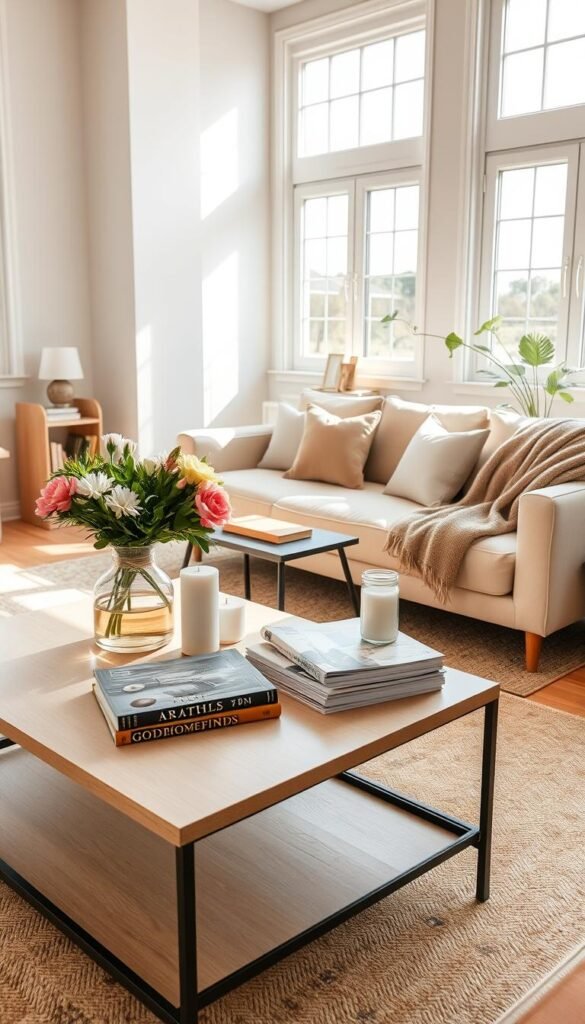
Zone 1: coffee table—one tray or shallow bin holds remotes and coasters; clear the surface each night. A lidded option works better if you have kids or pets.
Zone 2: seating—place a basket for throws and controllers. Keep only the pillows you use and store extras elsewhere.
Bookcase and media edits
Edit shelves so the bookcase and media cabinet have wiggle room. Move non-area items to kitchen, bath, or closet storage. Use labeled bins inside consoles for cords and game pieces.
Kid- and pet-friendly containment
Use two to three soft baskets for toys and rotate them every few weeks. This keeps the area tidy without removing play options.
Micro-maintenance rule
One-in, one-out for decor, blankets, and pillows prevents clutter from growing. For studios, choose multipurpose furniture like ottomans with storage. One-bedrooms can add a small entry station. Roommates benefit from labeled bins and clear shared vs personal zones.
Safety point: keep heavy pieces low, avoid tall stacks, and keep paths between sofa, coffee table, and door clear. For renter-friendly setup ideas, see small-space setup options.
Weekly, Monthly, and Deep-Clean Plan for a Living Room That Stays Fresh
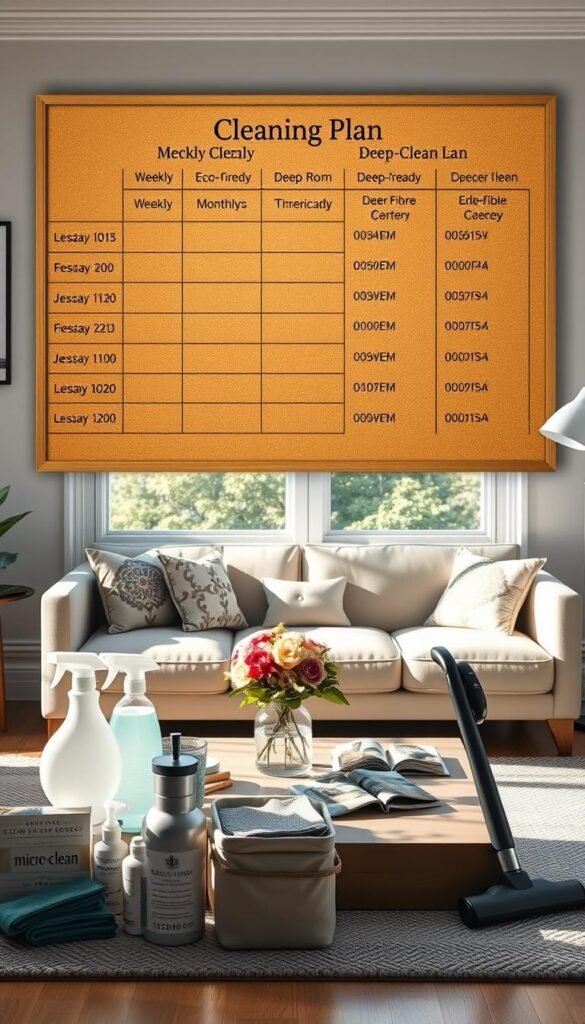
Set a short cleaning schedule so chores never pile up into a weekend scramble. Use this simple plan to move from quick resets to a low-effort upkeep routine. The rhythm below keeps surfaces tidy and limits grime build-up.
Weekly focus
Once a week, dust plants, picture frames, mirrors, lamps, and windowsills. Vacuum under couch cushions to catch crumbs and grit.
Clean floors by vacuuming, sweeping, or mopping based on your surface. Clear floors from your short resets to make this faster.
Weekly sanitize targets
Wipe remotes, light switches, door handles, and high-touch furniture edges. Use a barely damp microfiber cloth and avoid soaking electronics.
Monthly checkpoints
Check ceiling fans, remove cobwebs, dust walls and baseboards, and clean blinds. Use a microfiber cloth on a mop head to reduce bending and strain.
Seasonal deep clean (spring/fall)
Steam-clean or shampoo rugs and area rugs as needed. Refresh upholstery, wash blankets and curtains, polish wood furniture, and clean windows inside and out.
Plan these tasks around weather and drying time. This gives the best results and avoids mildew.
When it’s worth outsourcing
If you fall behind, face heavy pet hair, or have allergies, an affordable cleaning service can catch you up. Ask the cleaner to focus on floors, upholstery, baseboards, and windowsills.
Safety point: clean top-to-bottom and side-to-side. Use an extendable duster. Don’t climb on unstable chairs.
| Cadence | Key tasks | Time give |
|---|---|---|
| Weekly | Dust frames, lamps, windowsills; vacuum under cushions; floor care | 30–60 minutes |
| Monthly | Ceiling fan, cobwebs, walls, baseboards, blinds | 45–90 minutes |
| Seasonal | Rugs/area rugs, upholstery, wood care, curtains, windows | 2–6 hours (depends on range) |
Final point: set calendar reminders for each task. A steady plan keeps resets quick and makes bigger cleans less painful.
Renter-Friendly Tools and Budget Buys That Make Resets Faster
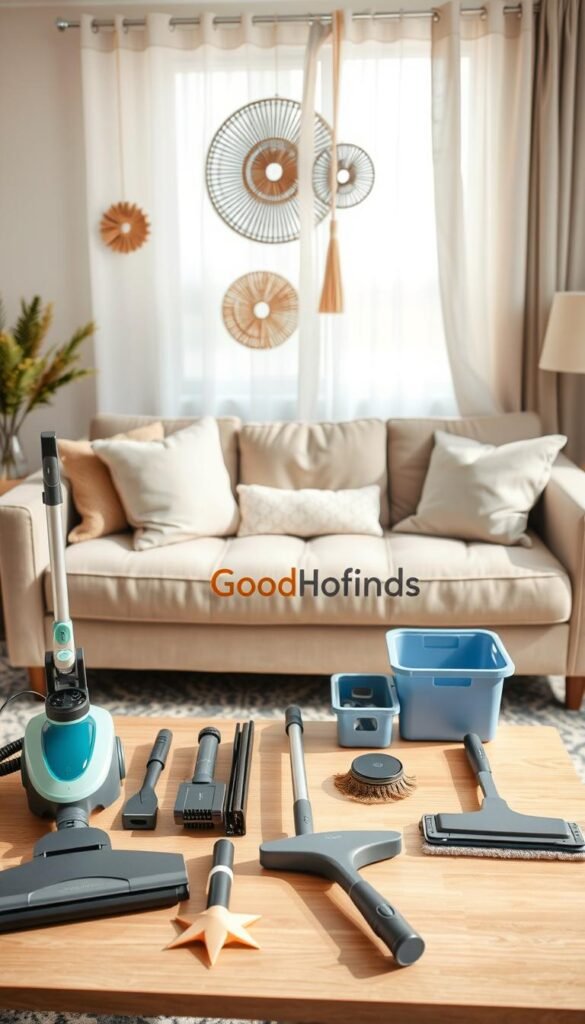
Pick a few practical buys that cut reset time and stop clutter from collecting. Buy less, choose well, and solve the same problems every night. Below are renter-safe, low-cost options that speed up tidying and protect floors and finishes.
Under $25 essentials
Microfiber cloths for streak-free coffee table wipes. A compact broom and dustpan or hand sweeper for quick floor touchups. A lint roller removes pet hair fast. Cord clips keep cables off the walk path. A small lidded trash bin prevents odors.
Under $50 upgrades
Compact stick or handheld vac for crumbs and pet hair. A washable low-profile runner for high-traffic areas. An upholstery brush tool and a slim rolling cart to stash reset supplies.
| Tool | Best for | Price range | Pros / Cons |
|---|---|---|---|
| Handheld vac | Floors, pet hair | $30–$50 | Fast, portable / limited battery time |
| Microfiber cloths | Coffee table, surfaces | $5–$15 | Cheap, reusable / need washing |
| Lint roller | Upholstery, quick pet hair | $5–$12 | Instant results / recurring cost |
| Storage | Best for | Price range | Pros / Cons |
|---|---|---|---|
| Tray | Remotes, coasters | $10–$30 | Looks tidy / can become catch-all |
| Lidded bin | Blankets, hide clutter | $15–$40 | Hides mess / needs labels |
| Soft basket | Books, throw pillows | $10–$35 | Flexible, easy to move / less structure |
Area rugs and rug pads — pros and cons: rugs add comfort and dampen noise. Use a non-slip rug pad to protect floors and prevent slips. Downsides are more cleaning and potential shifting without a pad.
Coffee table organizers vs trays vs lidded bins: organizers separate pieces but can look busy. Trays tidy surfaces fast but may collect clutter. Lidded bins hide mess quickly but work best when items are grouped and labeled.
Who this is best for: studios need multipurpose furniture and low-visual-clutter storage. One-bedrooms can add an entry console. Roommates need shared zones and duplicate charging spots. Families benefit from soft baskets and closed storage.
For tight entryways, try no-drill hooks, over-the-door organizers, or slim bins. For closet fixes and more renter-safe storage ideas, see closet space solutions.
When to consider help: a single affordable cleaning service visit can reset the baseline so your nightly reset stays a 5–10 minute habit.
Conclusion
Finish each evening with one simple reset and your space stays usable. This guide shows a fast, renter-friendly way to keep the living area calm: set zones once, do short resets, and follow a simple weekly and seasonal plan.
Remember the quick sequence: go-backs, dishes/trash, soft reset, wipe, floor pickup, then air and light. These small habits save you time and stress.
One change at a time: start with a tray or lidded bin for the coffee table or add a basket for floors. Use non-drill storage and non-slip pads for safety and durability.
Try a 7-day setup: drop zone, edit shelves, add one basket, pick a wipe-down kit, tune lighting, check rug safety, then lock in the reset habit. For compact solutions, see best small-space finds.
Next step: set a recurring evening reminder for one week, then tweak what keeps showing up without a home.