Practical gear, not hype. This guide helps you cut the specific background sounds that ruin cooking, calls, and focus in real life. You should not expect full soundproofing of your whole apartment.
You’ll learn a three-part approach: quiet the source with better fans and appliances, stop vibration that turns cabinets and floors into amplifiers, and use personal tools like ANC when you can’t change the room.
Small space reality matters. Inches, not feet, change what works. Renter-friendly fixes and simple add-ons often beat bulky upgrades. I’ll compare budget vs premium so you know when an upgrade is worth it.
Expect honest outcomes. You can lower background hum and sharp rattles but not erase unpredictable sounds like a neighbor dropping something. Quieter setups often save energy and help hearing by letting you keep volume lower.
Before you buy, I’ll give quick diagnosis steps, install time estimates (minutes vs weekend), and maintenance tips to keep results long-term. For compact, practical options and renter-safe ideas see home problem solver mix.
Key Takeaways
- Focus on source, vibration control, and personal gear.
- Small-space, renter-friendly fixes usually win.
- Expect lower background hums, not perfect silence.
- Budget vs premium is about design and fit, not features.
- Quick diagnosis and short install times save money.
Real benefits of noise control at home
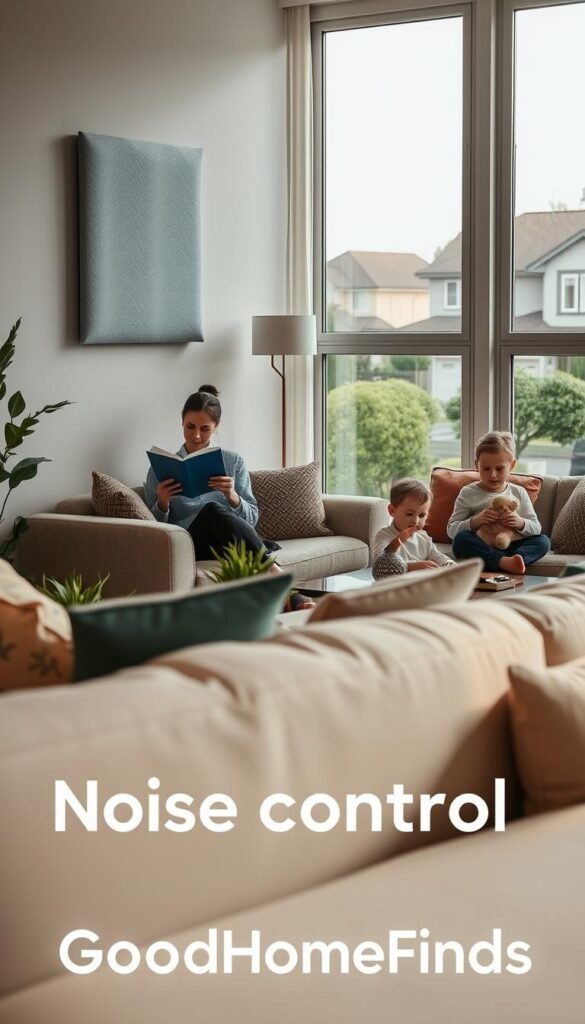
You don’t need perfect silence to win back calm and attention in your apartment. Small fixes can cut stress, improve focus, and keep you aware of timers, knocks, kids, or pets.
Lower stress and better focus without “over-silencing” your space
Less clatter helps you think. When background sound drops, you stop raising your voice or cranking volume to be heard. That reduces fatigue and makes long calls easier.
Energy savings when quieter setups also run more efficiently
Fans and hoods often get noisy when they fight airflow. Turbulence wastes energy; slowing a fan a little can cut sound and power use sharply because fan noise scales with about the fifth power of speed.
For example, a well-designed range hood at a lower setting can feel much quieter than a small unit slammed at max every night.
Hearing safety basics and why lower volume beats “powering through” noise
WHO/EPA guidance points to ~70 dB as a safer threshold to avoid long-term hearing loss. If you find yourself turning audio up to beat background noise, that’s a sign to seek better noise control.
ANC headphones can help you listen at a lower volume by cutting steady background sounds, but they aren’t perfect. Some upgrades cut operating costs, while personal gear may add small charging power and minor costs. Choose what fits your space and routine.
„Aim for quieter, not silent. Practical change often delivers the biggest daily wins.“
For renter-friendly ideas that pair well with these benefits, see best home finds for renters.
Who needs this (and who probably doesn’t)
Small apartments and shared walls change what fixes actually help most. If you live close to neighbors, thin floors, or a mixed-use room, you feel everyday interruptions more. That makes practical fixes worth your time.
Who needs this:
- People in small apartments with shared walls and thin floors.
- Anyone doing calls or studying in mixed-use rooms who needs clearer speech.
- Home cooks who face constant hum from range hoods, HVAC, or vibrating appliances.
When not to buy: If a sound is rare and doesn’t change your behavior — you don’t pause calls or avoid cooking — basic maintenance or a schedule change usually wins over new gear.

Earplugs, ANC, and the hierarchy of controls
Use engineering fixes first. Tighten mounts, add isolation pads, or swap a noisy fan before relying on personal PPE. Earplugs are fine for short bursts like a neighbor’s party or construction.
ANC works best for low, steady hum from machinery or HVAC. It struggles with close voices, doors, or sudden bangs. If you wear earplugs every day at home, change the source or your layout.
„If you’re reaching for earplugs each morning, treat that as a sign to fix the root cause.“
| Situation | Best first step | When to avoid buying |
|---|---|---|
| Shared walls / thin floors | Improve seals, add rugs, isolate appliances | Buying expensive wall panels before diagnosing |
| Mixed-use room (desk in living area) | Better mic/headset, small fan changes | Full-room acoustic remodels for small hums |
| Kitchen hum from fans or fridge | Service appliances, tighten mounts, choose quieter replacements | Headphones as a permanent fix for daily cooking noise |
Quick home diagnosis: find the real noise source before you buy anything
Start by listening closely—what the sound does often tells you how to fix it. A focused five-minute check saves money and avoids wrong purchases. Keep notes on when and where you hear it.

Steady hum vs sudden sounds
Steady hum usually points to a fan, motor, or airflow issue. It is often low in pitch and constant while the appliance runs.
Sudden clacks or rattles mean loose parts, items touching, or intermittent strikes. Those need tightening or damping, not headphones.
Low droning vs higher-pitched whine
Low droning comes from motors, HVAC, or traffic. Higher-pitched whines come from small bearings, turbulence, or tiny fans.
ANC handles low, repetitive sounds best. It struggles with sharp, high tones and random spikes.
Vibration “loudspeaker effect” and quick checks
When vibration travels into thin cabinets or frames, the surface acts like a loudspeaker. Isolation pads help, but bolts can short-circuit them.
- Timing checklist: note the appliance stage, how long it runs, and whether pressing panels changes the level.
- Distance test: stand 1 foot then 6 feet away to see if the sound is airborne or structure-borne.
- Measure: use a phone decibel app to compare noise levels over time; look for trends, not exact numbers.
Space and buying filter
Small galley kitchens favor pads, damping sheets, and lower fan settings over thick panels. Panels need clearance; they may not fit tight layouts.
Buying filter: don’t buy ANC for rattles. Don’t buy foam for a vibration problem. Don’t block vents to “trap sound.” Choose isolation or controls that match the observed type of sound.
noise reducing tech basics: what works best for different types of noise</h2>
Different sounds need different fixes; pick the right tool, not the loudest ad.

Active systems for steady hums
Active noise cancellation uses microphones and processing to generate an anti-sound wave 180° out of phase with the original. It works best on low, steady hums like AC, traffic, or equipment. Expect clear wins for constant background tones.
Pros: great for steady low-frequency audio, portable. Cons: won’t erase nearby voices, barking, alarms, or sudden clatter. Batteries or charging are required.
Passive sealing and fit
Passive suppression relies on a tight seal and dense materials. Good-fit earbuds or sealed headsets can cut mid-to-high sound by ~15–30 dB when worn properly.
Pros: simple, budget-friendly. Cons: comfort and fit matter more than brand claims for daily use.
Vibration damping and panels
Damping reduces panel vibration so casings stop acting like speakers. Constrained-layer damping works far better than cheap stick-on sheets and avoids peeling or grime traps in kitchens.
Isolation pads for structure-borne transmission
Isolation pads stop vibration traveling through frames, floors, and countertops. They help when you can feel the vibration by hand. Watch bolts and rigid mounts — they can short-circuit the pads.
„If you feel vibration, start with isolation or damping. For steady hums, try active solutions or fan fixes.“
Quick pick: feel it? isolate. Hear a steady hum? use active noise cancelling or improve fan efficiency. Keep maintenance light: charge electronics, clean fans, and keep pads secure.
Kitchen noise: the biggest wins with the least space</h2>
The kitchen is where the biggest practical gains happen with the least space taken. Small, targeted changes give real daily benefit. You can cut sound and save energy without a full remodel.

Range hoods and exhaust fans: airflow affects sound and efficiency
Most loud hoods are an airflow or turbulence problem, not just a bad motor. Smooth paths and a few feet of straight duct reduce turbulence and lower levels by several dB.
Try cleaning filters, checking for partial blockages, and running on low for longer. Fan speed falls sharply as a driver of power and sound; small drops in speed can cut running costs and reduce sound markedly.
Simple fan upgrades and renter-friendly checks
If you can’t swap the hood, clean filters, secure loose mounts, and confirm 2–3 duct diameters of straight run before bends. These steps are renter-friendly and often free.
Dishwashers and washer-dryers: what “quiet” really means
Quiet models still make pump hum, water flow, and structure-borne vibration. Test a machine in daily conditions and watch for rattles against cabinets.
Stopping rattles: damping, tightening, and clearances
Tighten accessible screws, keep panels from touching, and apply damping to the areas that ring. Covering about 80% of a thin panel can cut radiated sound substantially.
Isolation under small appliances
Use thin, grippy isolation pads under blenders, mixers, and compact washers. They reduce vibration transfer without creating wobble or safety risk.
Budget vs premium: where costs matter most
Pay more for better airflow design, motor control, and solid mounts. Premium products are worth it if you cook daily in a small space. For quick fixes and recommended steps see kitchen problem mix.
| Issue | Renter-friendly fix | Swap/Upgrade |
|---|---|---|
| Loud range hood | Clean filter, lower speed, tighten mounts | Replace with efficient hood with smooth duct design |
| Rattling panels | Tighten screws, add small damping patches | Constrained-layer damping or thicker cabinet fronts |
| Vibration under appliances | Thin grippy pads, realign feet | Anti-vibration mounts or premium isolation trays |
„Fix airflow and vibration first. Those two changes often deliver the best value and quieter daily life.“
Home office noise: clearer calls and less background noise</h2>
Clearer calls start with the right headset and a few desktop fixes, not bigger gear or room treatments.

Choosing ANC headphones for calls: what they can and can’t cancel
Active noise cancellation uses mics to make anti-sound waves. It works best for steady, low hums like AC or computer drones.
It won’t remove close voices, sudden bangs, or a loud keyboard. For mic pickup, prefer headsets with good mic processing over raw ANC levels.
Transparency mode and staying aware in apartments and shared spaces
Transparency mode keeps you safe and aware. Use it when you expect a knock, a timer, or a child nearby.
Tip: Don’t stay in full cancellation all day. Flip modes when you need to hear your space.
Computer fan noise: fix airflow, not just mask sound
Clean dust, open clear airflow paths, and avoid blocking vents. Blocking vents traps heat and makes fans spin with more power and more sound.
Quieting desk vibration
Decouple speakers and monitors with simple pads. Small isolation pads stop your desk from acting like a speaker cabinet that amplifies low-end hum.
Budget vs premium: comfort, mic quality, and real-world control
Budget headsets can work if they fit and the mic is decent. Premium gear pays off for long days, better mic processing, and natural transparency modes.
Wireless ANC needs charging; wired options give steady power for long calls.
„For calls, fix what others hear and what distracts you. Headset choice plus simple desk tweaks win most of the time.“
For tested headset options, see best headphones for work at home.
Setup time: what you can install in minutes vs a weekend</h2>
Practical setup choices save you time and hassle. Below is a clear, renter-friendly breakdown of what you can do fast, what takes a half day, and what should be planned for a weekend or skipped in tight spaces.

No-tools changes in under an hour
These moves take little time and no tools. Reposition rattling items. Add grippy pads under small appliances. Clean filters and dust fan intakes. Lower fan speeds or change settings to avoid running at max.
Half-day projects: isolation pads and simple damping
Use isolation pads under vibrating devices and apply small damping sheets to ringing panels where surfaces stay clean. Tidy cable contacts and tighten visible screws that buzz.
- Isolation: inexpensive and effective, but watch for rigid bolts that can short the pads.
- Damping: apply only to areas you can keep clean and access for maintenance.
When airflow changes need more space than an apartment allows
Some fan or duct fixes need 2–3 duct diameters of straight run to work well. That often isn’t feasible in small layouts.
If you can’t add straight runs, focus on cleaning, better speed control, or replacing the noisiest unit with a top-rated, efficient product instead of forcing duct reroutes.
Downtime planning for kitchens and workdays
Schedule hood, dishwasher, or fan work around meals. Don’t disable ventilation while cooking. For work, test headset and mic settings after hours so you don’t risk a poor call day.
„Stop rule: if a change makes a device hotter, shakier, or harder to clean, undo it. Quiet is not worth added risk.“
Quick buy checklist
- Buy first: grippy pads, simple isolation pads, basic damping sheets, and a good head‑set for calls.
- Buy later: upgraded fans or new hoods that need space for proper air runs and installation.
For details and community notes on specific models and setups, see this discussion on initial H2D thoughts.
Maintenance and operating costs: power consumption, noise, and long-term value</h2>
Plan maintenance like a subscription: small checks now save bigger bills later.

What really moves your meter
Motors and fans that run for hours change your electric bill the most. Small gadgets matter far less. If airflow is inefficient, the fan works harder, which raises both power and operating costs.
Power draw basics: what changes your electric bill the most
Long run time beats peak wattage for cost. A dirty fan or blocked vent can add silent losses in efficiency. Fix airflow before buying upgrades to get better long-term value.
Noise levels over time: wear, rattles, and when “quiet” gets louder again
Quiet gear ages. Dust, loose screws, and bearing wear bring back rattles and higher levels.
Do monthly quick checks. Tighten mounts, re-seat panels, and note any new whines. Early service is cheaper than full replacement.
Keeping fans efficient so they stay quieter
Clean filters and clear intakes. Listen for bearing changes — a new whine often means service or swap.
Tip: smoother airflow reduces both sound and power use because turbulence wastes energy.
Cleaning and hygiene: kitchen-safe materials and avoiding peel-off failures
Adhesive damping can fail in greasy, hot kitchens. Peel-off patches create new rattles and cleaning headaches.
Constrained-layer damping and easy-to-clean panels last longer. Covering ~80% of a thin panel gives real reduction; thicker panels need different approaches.
„The best long-term buys stay clean, don’t add clutter, and don’t need constant re‑sticking.“
Value frame and replacement timing
- If a fan is older and getting louder, replacing it often saves money over repeated fixes.
- Buy solutions that are easy to clean and renter-friendly.
- A small upgrade to a more efficient fan can cut both operating costs and audible levels.
Keep-it-quiet 10-minute checklist
- Wipe accessible fan blades and filters.
- Tighten visible screws and mounts.
- Clear intake/exhaust paths.
- Press panels to find rattles.
- Note any new whines for service timing.
For long-term energy ideas and greener replacements, consider green energy solutions and renter-friendly fixes at small space fix mix.
Common mistakes that make noise reduction fail</h2>
Buying the wrong fix is the fastest way to waste time and money. Start by matching the cure to the problem. That simple step avoids many common failures.

Wrong tool for the sound waves
Don’t buy based on marketing. ANC and noise cancelling gear help steady hums. They fail at sudden voices, alarms, or bangs.
Example: a rattling cabinet needs damping, not headphones.
Ignoring vibration paths
Vibration travels through bolts, feet, and rigid mounts. If a motor is hard‑coupled to a cabinet, the furniture becomes the radiating part.
Fix the connection first. See an anti-vibration feet discussion for practical cases.
Blocking airflow and raising power use
Don’t block vents to „cut sound.“ That adds turbulence, heats motors, and forces fans to spin harder.
Higher load means more power draw and often more audible output over time.
Cramped layouts and DIY panels
Crammed pads or panels can create new contact points that rattle. Tight kitchens especially need easy-to-clean fixes.
Also watch bolts that short-circuit isolation pads; a clamped pad often does nothing.
- Mistake 1: Buying by ad, not by sound type.
- Mistake 2: Treating structure-borne paths as airborne problems.
- Mistake 3: Blocking flow to block sound.
Top fixes first: diagnose, fix vibration paths, restore airflow, then add personal gear as needed. For manufacturing and connection pitfalls that affect isolation, see this piece on precision manufacturing pitfalls.
- Change one thing at a time.
- Test for real improvement.
- Only buy the next item if the problem persists.
Conclusion</h2>
This final step pairs clear actions with honest expectations so you can make steady progress at home.
Practical path: diagnose first, fix fans and rattles, add isolation or damping, then use personal gear for the leftovers. This sequence gives the best noise control and real-world wins.
Small-space rule: focus on airflow, stable mounts, and fewer vibration connections rather than bulky room treatments. That approach improves efficiency and reduces long‑term hassle.
Safety and savings: keep vents clear, avoid unsafe mounts under appliances, and use ANC to listen at lower volumes. For related research on community noise control, see noise control research.
Next 24 hours: note your loudest moment, make one no‑tools change, and measure before/after. Small reductions in steady hum and rattles make calls clearer and daily life calmer. That is real progress.