
You are building a simple setup to cut daily mess, not a magazine pantry. Start with one or two practical buys. Test them for a week. Then add more where real friction remains.
Budget promise: most picks are under $25 on Amazon, with notes when a small upgrade is worth the price. Prioritize fast shipping and easy returns to avoid sizing errors.
We cover key zones: kitchen, walls, cords and tech, bathroom, closet and laundry, plus shed or garage. Each recommendation lists why it’s useful, who should buy it, and what to avoid.
Real-life example: one clear bin with labels stopped snack clutter in a busy household. It cut “where is it?” searches and saved minutes each morning.
What “worth it” means here: saves time, frees usable space, installs easily, and meets clear safety and quality basics. You can shop with confidence.
Key Takeaways
- Start small—buy one or two items and test them for a week.
- Most recommended kits and items cost under $25; notes explain when to spend more.
- Fast delivery and easy returns reduce the risk of wrong sizing.
- Selections focus on time saved, easy install, and basic safety.
- Tips cover kitchen, walls, cords, bathroom, closet, and garage zones.
What makes a good organization starter in 2026
Start by targeting one recurring hassle, such as an overflowing drawer or wasted shelf depth. Pick tools that remove that daily friction first. The goal is clear results you notice each morning.
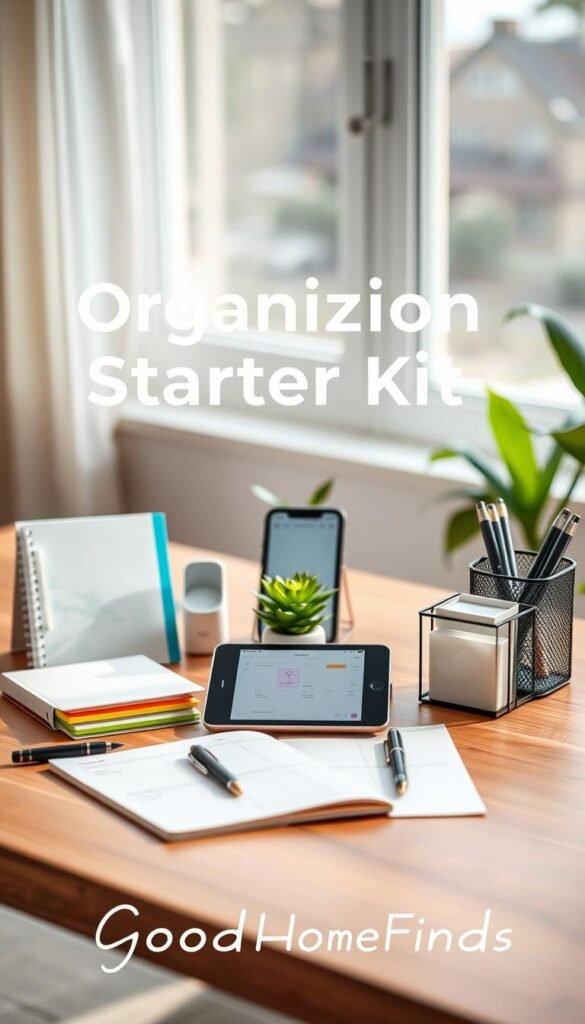
Problem-solving over looks
Choose items that fix a real pain. A single bin that fits your shelf will beat a pretty set that never gets used.
Price and value checklist
- Compare unit price per bin or divider.
- Check material thickness and included hardware so a $10 piece can out-value a discounted bundle.
- Watch “sale” banners and confirm recent pricing instead of trusting the advertised sale price or regular price.
Amazon delivery and backups
Measure before you buy. Confirm dimensions, the return window, and fast shipping. Order one test piece rather than a full kit.
Safety basics and what to avoid
- Look for food-safe, BPA-free plastics and avoid strong plastic odors.
- Respect posted weight limits and use anchors for heavy items on the wall.
- Avoid kits with too many unclear parts or weak adhesives; they add clutter not value.
For practical picks and a sensible selection of small-space solutions, see best small-space finds.
Quick-start plan: build a starter kit that actually gets used
Pick one high-traffic spot and focus on clear wins you can feel each day.
15-minute plan: choose a zone where clutter shows up daily. Examples: a kitchen counter that collects mail, an entryway pile, or a laundry landing spot. Set one small kit with two items that create an immediate drop zone and a grab-and-go bin.
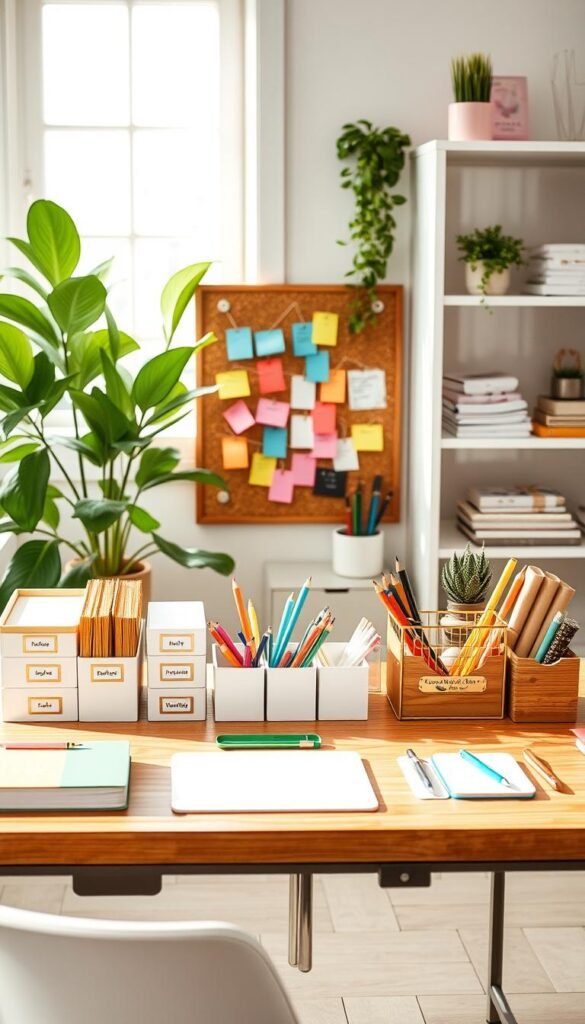
Measure before you buy
Measure drawer width and height, cabinet interior depth, under-sink pipe clearance, and available wall space. Write down shelf depth and door swing so you don’t order pieces that won’t fit.
Simple system rule
One bin in, one bin out. If a new container arrives, remove an old one. This keeps storage from creeping into unused items and preserves usable space.
- Labeling rule: label only bins you refill weekly.
- Real-life example: a counter drop-bin for mail plus a snack bin cut morning searches by minutes.
- Pros: fast setup, low cost, quick results.
- Cons: you may need a second order after confirming sizes.
- What to avoid: don’t buy large multi-piece sets before you measure; extras often become clutter.
| Zone | First items | Why it works | What to check |
|---|---|---|---|
| Kitchen counter | Drop bin + snack bin | Creates a visible home for daily clutter | Shelf depth, counter clearance |
| Entryway | Wall hook + small tray | Keeps keys and mail off surfaces | Wall stud availability, door swing |
| Laundry | Hamper + small basket | Separates daily wear from wash day | Door clearance, floor footprint |
Amazon tip: save a short list, then view similar sizes and reorder only after the first pieces prove they fit and deliver results.
Best under-$25 organization starter kit items for the kitchen
A small swap can cut morning friction and free visible counter and shelf space. Below are practical, budget-friendly items you can add one at a time.
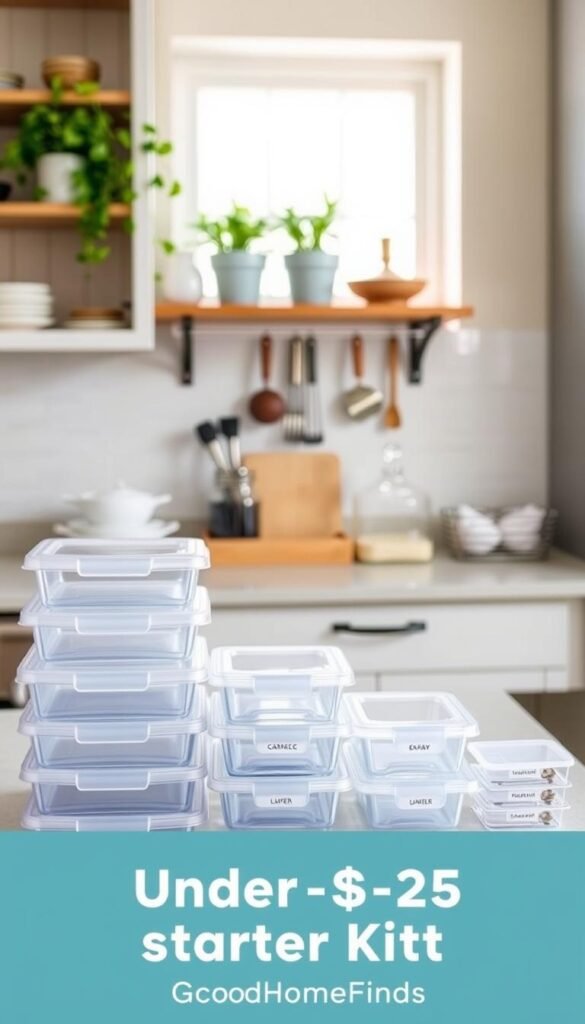
Clear pantry bins — storage that saves time
Why it’s useful: you see snacks and packets at a glance, so you stop buying doubles.
Who it’s for: busy households and meal preppers who need quick access.
What to avoid: thin plastic that cracks or bins too deep for your shelf depth.
Real life: one family stopped repurchasing granola bars after switching to one visible bin.
Drawer dividers for utensils and gadgets
Why it’s useful: no more digging for measuring spoons or gadget bits.
Who it’s for: cooks and parents who need fast grab-and-go tools.
What to avoid: dividers that are taller than your drawer—measure height first.
Under-sink pull-out organizer
Why it’s useful: turns awkward plumbing space into usable storage and keeps supplies visible.
Con: can wobble if overloaded; check weight ratings and smooth rails.
Lazy Susan turntable
Why it’s useful: eliminates back-row bottle searches for oils and sauces.
What to avoid: cheap turntables that stick; pick one with a smooth bearing and flat base.
Fridge can dispenser or stackable bins
Why it’s useful: reclaims shelf space and reduces spills.
What to avoid: flimsy plastic that bows under weight—pay a bit more for fridge-safe durability.
Food-labeling starter set
Why it’s useful: label opened dates for sauces and leftovers to avoid waste.
What to avoid: markers that bleed or labels that smear when wet.
Price-value note: dollar-store bins work fine for light snacks and napkins. Invest in stronger pieces for under-sink and fridge stacking where durability matters.
For a curated list of similar picks you can shop the best organization finds and compare price, sale, and regular price details on Amazon.
Wall organization basics: hooks, shelves, and hanging storage without damage
Use adhesive hooks and an over-the-door rack to free floor and counter space without drilling.
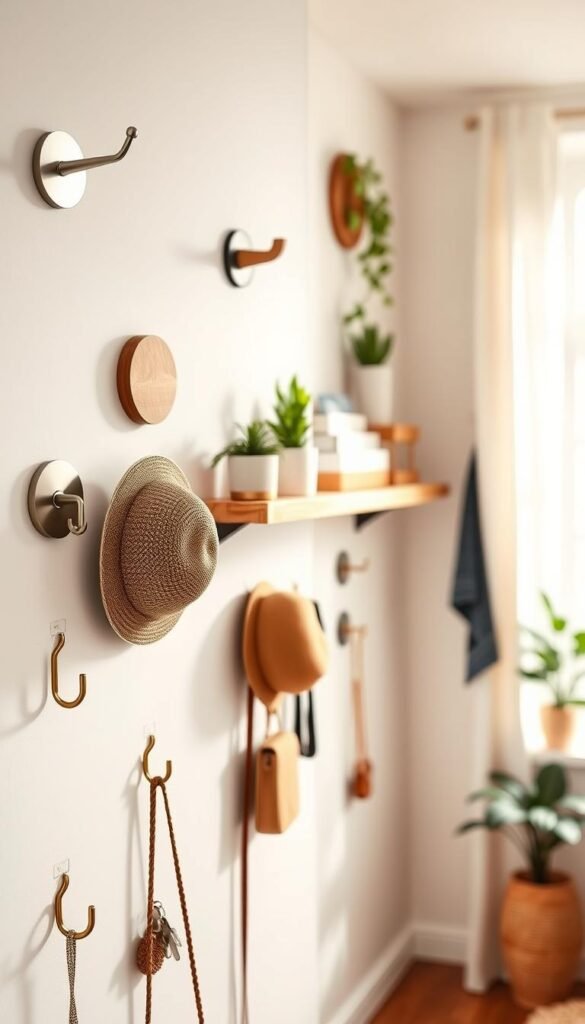
Adhesive hooks for light daily items
Adhesive hooks are a renter-friendly fix for keys, oven mitts, and measuring cups. They keep counters clear and make grab-and-go easy.
Who it helps: renters and small kitchens that need quick storage.
Tip: follow surface prep and weight limits. Typical small hooks hold 2–5 lbs. Avoid putting them near stoves or steam zones.
Over-the-door racks
Over-the-door racks work well for towels, reusable bags, or spray bottles. They create space without holes.
Con: check door thickness and closure. Some racks stop a door from latching.
What to avoid and safety notes
- Avoid flimsy plastic racks that flex under load.
- Don’t use adhesive on textured paint or dusty surfaces.
- Always respect the published weight limit and follow mounting steps.
Price & shipping note: a single sturdy over-the-door shelf often beats a multi-hook kit that bends. Confirm included pads or spacers before you buy to reduce returns and shipping hassle.
Cord and tech clutter: simple organizers that clean up fast
Quick cord fixes give you a safer, neater charging spot you actually use. Start with one small system: a few clips, a set of label ties, and a cable box for the power strip.
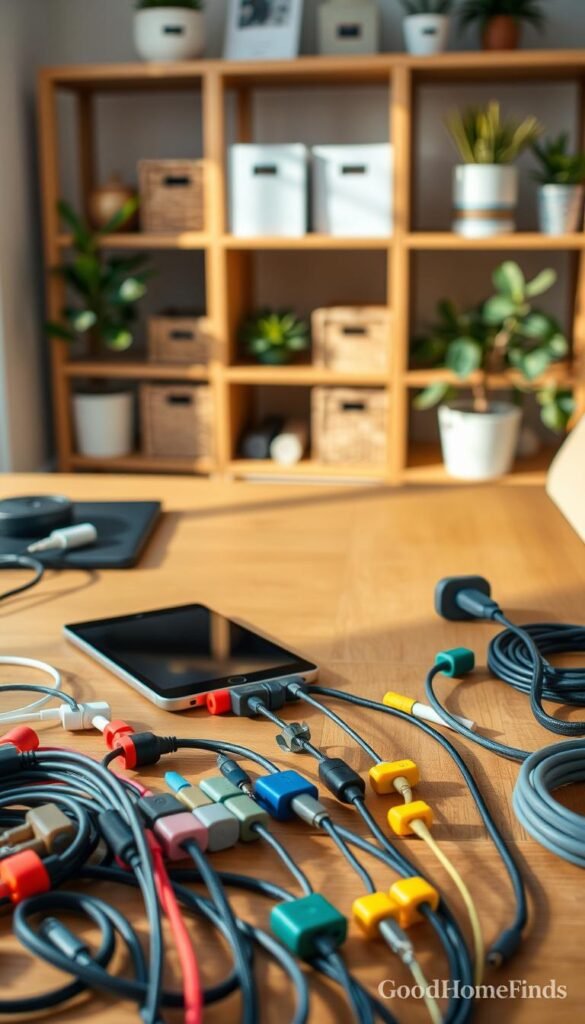
Cable clips and cord sleeves
Why it helps: keeps cords off the floor and out of vacuum paths.
Who it’s for: WFH desks and TV consoles that look messy fast.
What to avoid: clips that don’t match cable diameter or sleeves that force tight bends.
Label ties for chargers
Simple labels save time. You can identify chargers in seconds and stop unplugging the wrong device.
Tip: pick cloth or textured tags over slick plastic so labels don’t fall off.
Small cable box for power strips
Hides strips, reduces snag hazards, and looks cleaner. Don’t overcrowd it—excessive load can cause heat buildup.
- Safety basics: respect bend radius, don’t cover hot adapters, and keep chewable cords away from pets and kids.
- Price/value note: a small set of clips + labels often beats an oversized kit you never install.
- Amazon tip: filter for fast shipping, then view best cable organizers and check reviews for “fits my surge protector” and “runs cool.”
One-way rule: set one labeled charging spot and stick to it. That single system will save more time than scattering supplies across rooms.
Small-space storage wins: bathroom, closet, and laundry
Use vertical space first: a slim cart and stackable drawers turn tight spots into useful shelves.
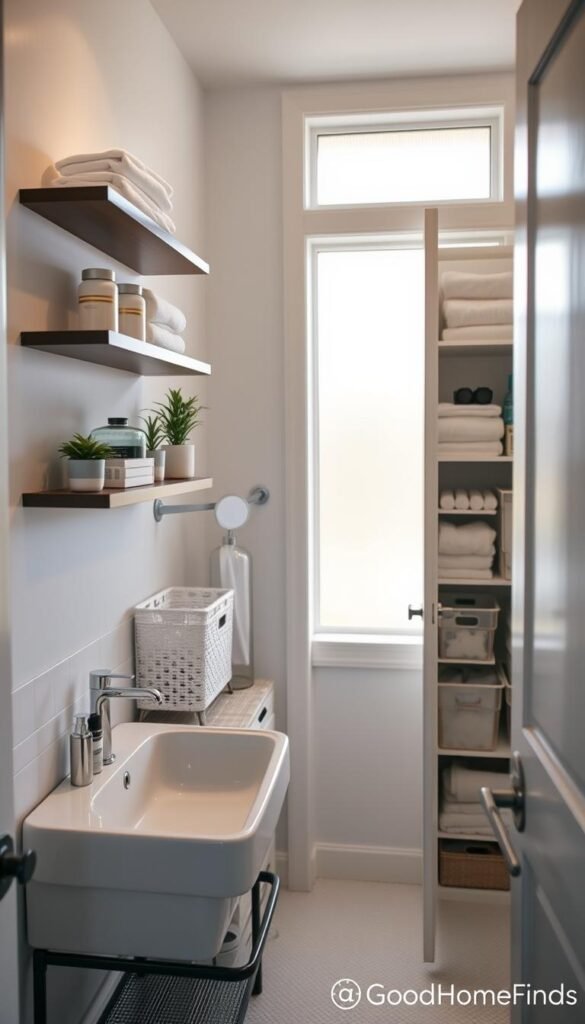
Stackable drawer bins for toiletries and makeup
Why it helps: drawers stop products from spreading across the counter. You see items at a glance and you clean up faster.
Who it’s for: shared bathrooms, small vanities, and anyone who needs a simple kit for daily supplies.
What to avoid: bins that tip when pulled or that lack lip handles. Pick clear, stable plastics with interlocking edges.
Real life: a 60-second nightly reset becomes possible because everything has a drawer bin home instead of living on the sink.
Slim rolling cart for tight gaps
Best spots: between washer and dryer, beside the toilet, or next to a fridge. A narrow cart adds vertical storage without eating floor space.
Con: weak wheels wobble. Look for metal frames, sealed bearings, and replacement-wheel options for longer life.
Price note: one good cart can replace multiple small baskets and reduce repeated buys during a sale.
Hanging closet organizer for tees and accessories
Why it works: no tools, no drilling. Hang a shelf from a rod to free drawer space and keep folded tees neat.
What to avoid: flimsy fabric that sags or tiny shelves that don’t fit folded shirts. Choose reinforced fabric or thin hard-shelf options for daily use.
Renter and dorm guidance: favor lightweight, moveable items that don’t require anchors. Dollar-store bins work for light washcloths; invest in better drawer slides or cart wheels for items you touch every day.
| Item | Where it fits | Pros | Cons |
|---|---|---|---|
| Stackable drawer bins | Vanity drawer, under-sink | Clear view, quick nightly reset | Can tip if not interlocked |
| Slim rolling cart | Washer gap, toilet side | Vertical storage, mobile | Cheap wheels wobble |
| Hanging closet organizer | Closet rod, dorm closet | No tools, adds shelves fast | Fabric sag or tiny shelves |
Where to buy: most items are easy to find on Amazon for fast delivery. For closet planning ideas see small walk-in closet ideas. For bathroom-laundry combo tips see bathroom-laundry design.
Shed, garage, and mudroom starters: when wall studs and weight matter
Start by treating the wall as the load-bearing part of your system. In sheds and garages, proper mounting and clear weight limits keep heavy tools from falling and causing damage.
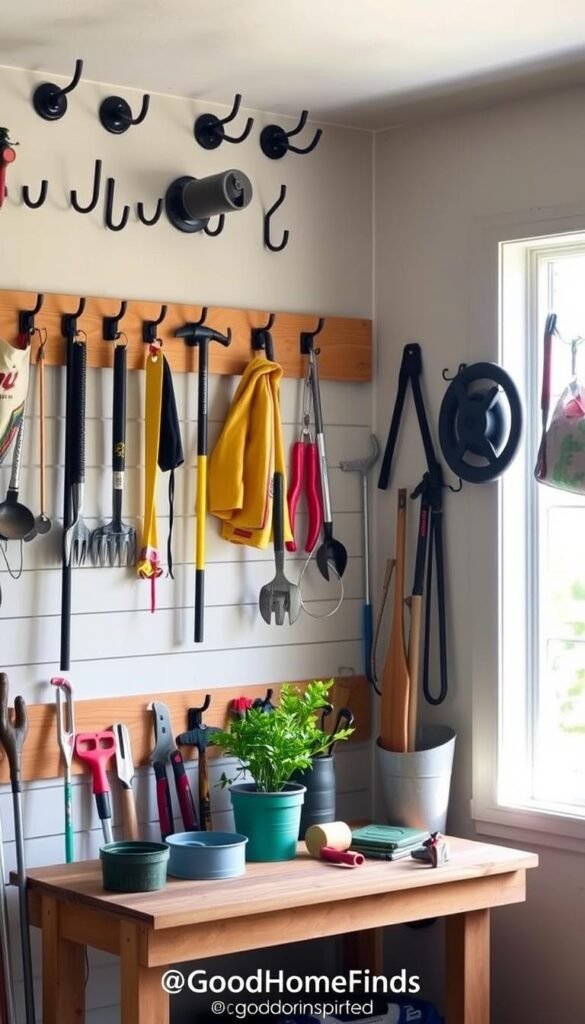
Core rule: anchors, studs, and published weight specs matter more than looks. Cheap hooks can bend and drop a rake. Stud-mounted kits and rated hardware cost more, but they remove real safety risk.
Stud-mount systems vs. budget hooks
Budget hooks are fine for light brooms and quick wins. They are cheap and often under $25. Choose ones with a clear weight rating and included screws.
Stud-mount systems cost more but hold heavy tools reliably. For example, the HangThis Up shed kit includes predrilled parts, fasteners, and a Torx drive bit. It mounts into studs and fits long-handled tools, hoses, trimmers, cords, and small items. Note: shelf brackets in that kit do not include boards—you add 10–12″ deep shelves yourself.
Premium and magnetic options
Magnetic systems are a premium upgrade if you have metal walls. Gator Magnetics lists MINI hooks at 15 lbs, MIDI at 25 lbs, baskets at 35 lbs, and MEGA at 45 lbs. Their starter kit is priced well above a basic kit, so it’s for retrofit or heavy-duty use.
Affordable Amazon alternatives and what to avoid
Look for single tool hooks, broom holders, and basic shelf brackets under $25. Pick items that publish weight limits, include mounting hardware, and note whether they need studs.
| Option | Where it fits | Pros | Cons |
|---|---|---|---|
| HangThis Up kit | Shed stud wall | Pre-drilled parts, full fastener set, Torx bit included | Brackets need boards; higher price than basic hooks |
| Budget tool hook | Garage wall or pegboard | Cheap, easy to add, often under $25 | May bend; check weight rating and hardware |
| Gator magnetic hooks | Steel tool cabinet or metal wall | High rated strength (15–45 lbs); modular | Expensive starter kits; needs metal surface |
- Who it’s for: homeowners and renters who want safer, walkable sheds and tidy mudrooms.
- Pros: fewer tripping hazards, easier access to tools, cleaner floors.
- Cons: stud work costs more and may need drills and a bit of time.
- What to avoid: hooks without published ratings, thin metal that bends, and mounting heavy tools into drywall without proper anchors.
For budget finds and quick replacements that still hold up, you can shop affordable garage and shed picks and check shipping times before you buy.
What to avoid when shopping organization products online
Before you click buy, pause and imagine where each piece will live in your home. If you can’t name a spot for every item, it may be clutter disguised as a solution.

Too many pieces that add clutter
Warning: big kits with vague purposes often sit in closets. If a kit doesn’t solve a clear daily pain, skip it.
Adhesives, weight limits, and missing hardware
Weak adhesives fail on textured paint, damp walls, or under overload. Look for clear weight limits and surface guidance.
If a listing skips screws or anchors, assume extra work and cost. Missing mounting hardware is a common red flag.
Sale signals and real price value
Discounts can hide poor quality. A crossed-out regular price doesn’t guarantee value. Compare material thickness, dims, and review photos before you shop.
Safety and quality red flags
- Sharp metal edges, strong plastic odors, and shelves that bow are immediate no-go items.
- Scan 1-star and 3-star reviews for repeat cracks, rust, missing parts, and real customer photos to view true sizing.
- Fast shipping is nice. Easy returns are more important when sizing is uncertain. Avoid final-sale listings.
Buyer mindset: buy fewer, sturdier organizers that match your space and daily habits. A better small selection now gives clearer results than impulse buys driven by a sale timer.
For help deciding where to sell or set up a small online shop for resale supplies, learn how to start an online. To compare budget vs premium storage options, view cheap vs premium storage.
Conclusion
Finish with a simple plan: measure the trouble spot, buy one under-$25 fix, and test it for a week. That small loop proves a system before you expand to a full organization starter kit.
Keep the rule: the kit you add must save daily time, not add more things to manage. Confirm dims, weight ratings, materials (food-safe where needed), and return policy before you shop or check shipping speed.
When to upgrade: move to stud-mounted or heavy-duty parts if a shed or garage needs real load capacity. Compare price to durability, not a flashy sale or the crossed-out regular price.
Next three buys to view and try: one kitchen storage fix, one wall/entry hook, and one cord-cleanup item. For conclusion starters and closing phrases see good conclusion starters. For small-kitchen solutions you can shop, view smart small-kitchen picks.