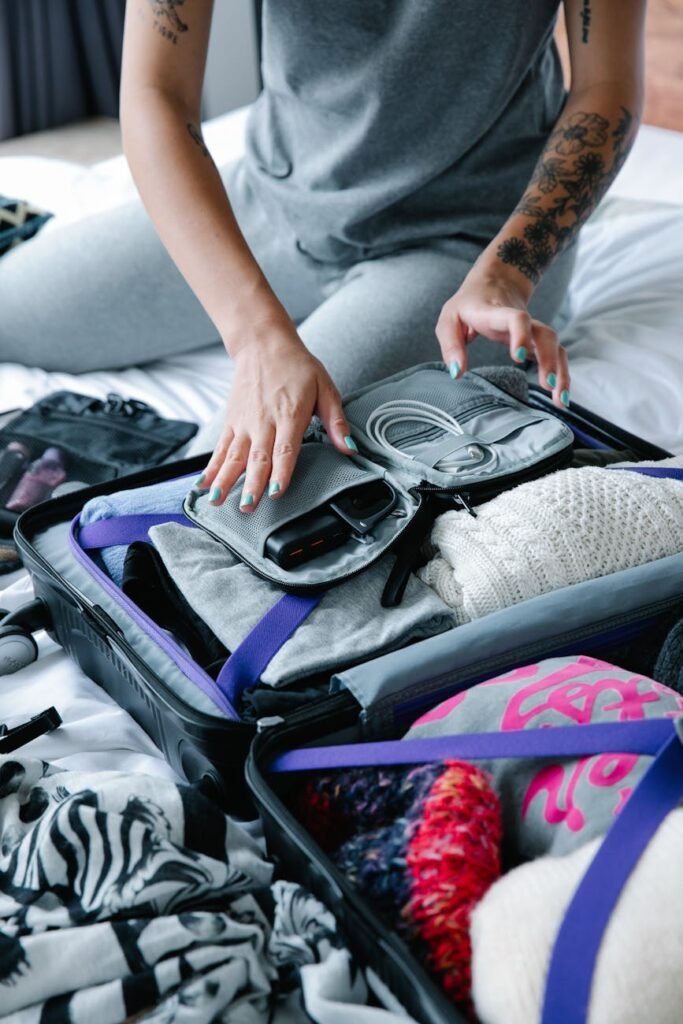
You can make home life simpler without drills or big budgets. This guide shows renter-friendly, no-drill fixes that work in small spaces. Expect practical product picks under $25 and sturdier options under $50, plus simple daily routines that cut morning rush stress.
Start small and treat this like a lifestyle change. The method is clear: sort → purge → assign a home → label → maintain. Use adhesive hooks, over-the-door racks, tension rods, clear bins, and freestanding organizers to avoid damaging rentals.
Safety and privacy come first. Choose tip-resistant pieces, keep walkways clear, and store IDs and paperwork in secure spots. You’ll also get pros/cons, durability notes, and quick setups for apartments and larger homes.
For fridge-specific space ideas and renter-friendly bins, see this fridge space guide.
Key Takeaways
- Use no-drill tools and clear bins for fast wins.
- Follow a room-by-room method: sort, purge, assign, label, maintain.
- Start with items you already have, then target buys under $25 and $50.
- Weave three core routines into life: morning check, 60-second evening reset, weekly paper + pantry scan.
- Prioritize safety: stable furniture, clear paths, and secure storage for sensitive items.
Start With the Ground Rules That Make Family Organization Stick
Start with a few ground rules that make everyday life simpler for everyone.
Commit to a lifestyle change, not a quick fix. Treat this like building a habit. Small, steady actions save you more time and stress over weeks and months.
Take it slow and win often
Work in 15–30 minute bursts. Do one drawer today and one shelf next weekend.
Small wins keep the whole household engaged and reduce burnout.
Keep it simple before you buy
Sort → purge → store. Use cardboard boxes or temporary bins while you decide what stays.
Don’t buy containers until you purge. That keeps costs low and choices clear in small apartments and houses.

“Used in the last year?” decision rule
If you haven’t used an item in a year, it’s usually safe to let it go. If you’re unsure, box it, date the box, and re-check in 12 months.
„A little consistency beats a big overhaul.“
- Why organization fails: too much change at once, no clear home for things, and buying storage before decluttering.
- Make one simple rule everyone follows: put items back in the same place.
- Turn tidying into a quick routine: a 60-second evening reset and a weekly 10-minute check.
Point to remember: This is a system for life, not a single weekend project. Repeatable habits end chaos and free up real family time.
How to organize by family with a simple home routine and system
A simple daily loop makes hectic mornings and rushed nights feel manageable. Start with one shared home base: a visible shelf or hook near the door where keys, backpacks, and papers land every day.
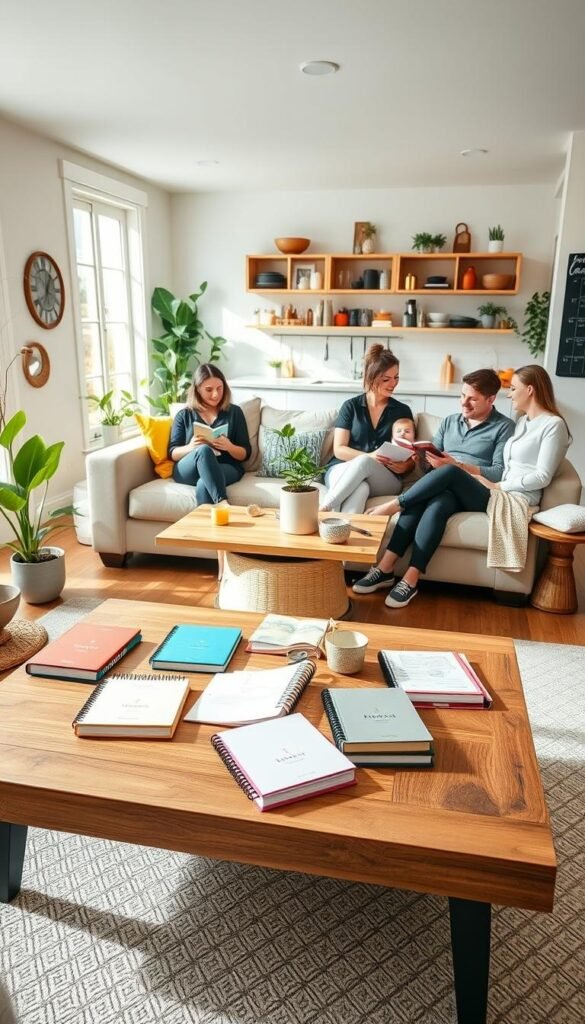
Create a shared “everything goes here” place everyone can find
Pick one spot and stick to it. Use clear bins, labeled folders, and a small tray for loose items.
Build organization into daily life: morning check, evening reset
Morning check (2 minutes): review the day’s schedule and grab grab-and-go items.
Evening reset (5 minutes): clear the drop zone and file papers into folders.
Make kids part of the routine with a nightly checklist
Give kids a short list they can do alone. Example: homework into backpack, clothes in hamper, lunch set out.
„A nightly checklist makes mornings faster and reduces last-minute searches.“
Color-coding by child to reduce mix-ups and time
Use colored pouches, hooks, and calendar markers so each child knows what belongs to them. This cuts fights and lost-item searches.
- Best for: households with school-age kids, shared rooms, or split custody.
- Renter-friendly tools: dry-erase boards, removable labels, clipboards, and colored pouches.
- Small-space alternatives: studio = one vertical wall station; larger places = split entry + kitchen command center.
Maintenance tip: Tie the loop to another daily habit, like coffee time or after dinner, so this system actually sticks.
Create a Small-Space Command Center (Even in an Apartment)
A compact command center keeps your calendar visible and paperwork under control.
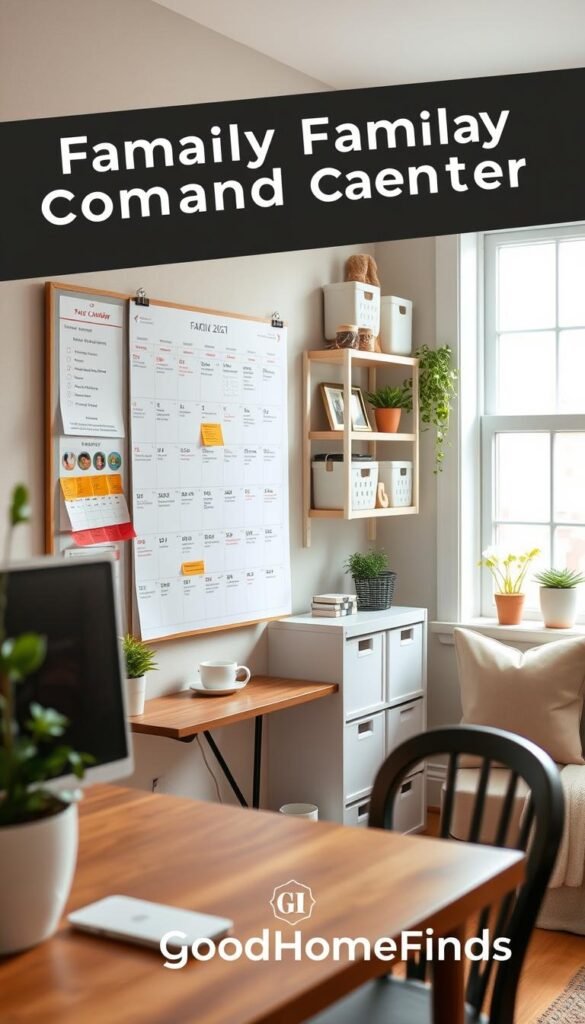
Where to place it: use a narrow wall strip, the inside of a cabinet door, or a slim desk corner. Use removable strips and hooks so nothing needs drilling.
Master calendar setup
Choose one master calendar and write everything on it. Update the page daily and color-code per person to cut missed events.
Paper flow that prevents piles
Set an „in box“ for new paper. Add labeled action folders: To Pay, To Sign, To File.
Hold one weekly filing day for the papers that need long-term storage. This keeps piles off counters and tables.
Bill-paying routine and monthly money night
Use auto-pay for stable bills and online bill pay for variable charges. Once a month, do a short „money night“ to review charges and avoid late fees.
Household binder basics and safety
Keep a binder with school, medical, insurance, and key contacts. Store passwords and account notes in a secure section.
Protect sensitive paperwork: use a small locking box or a fire-resistant pouch for IDs and birth certificates. Keep this out of direct sight but accessible to adults.
| Item | Under $25 | Under $50 |
|---|---|---|
| Wall file pockets | Removable vinyl pockets | Durable fabric pocket rail |
| Calendar solution | Clipboard monthly page | Magnetic dry-erase board |
| Secure storage | Small locking cash box | Fire-resistant document bag |
| Paper sorter | Accordion portable file | Step file folders with tabs |
Apartment-friendly tip: place the hub near the kitchen for daily use but slightly out of sight for privacy. Spend 5 minutes each day on paper triage and 30 minutes weekly on filing and calendar updates.
For a quick renter gear comparison, see this renter setup comparison.
Entryway Drop Zone Ideas for the Morning Rush (No Drilling Required)
A calm morning often starts with a smart spot for the day’s essentials. Make the front door area a true launch pad so mail, school papers, keys, and bags aren’t lost in the rush.
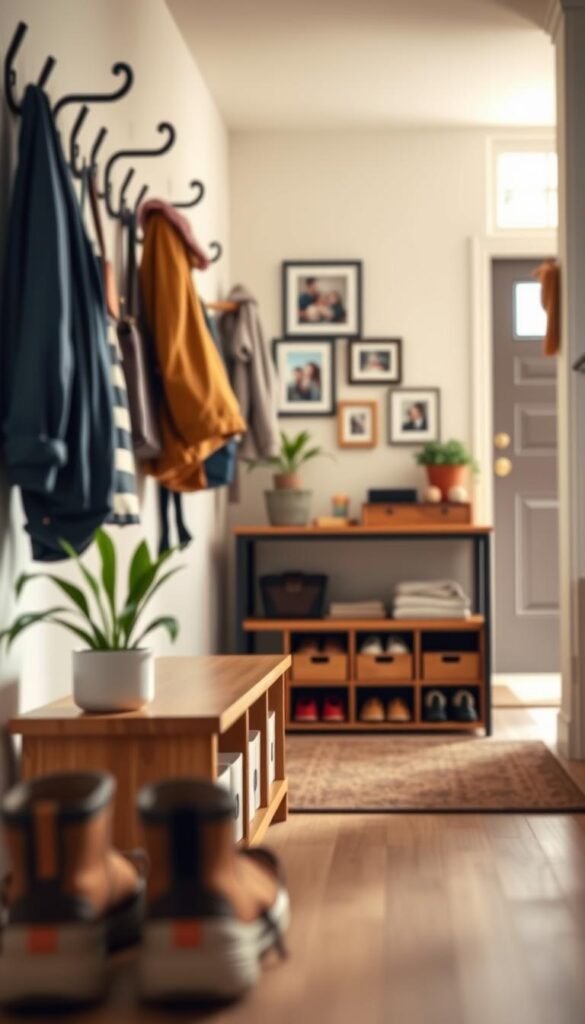
Set simple rules: everything that arrives goes into an in box. Anything that must leave goes into an out box. Sort once a day to stop paper buildup and keep school forms from piling up.
Quick landing spots that save time
Choose one consistent place for keys, wallets, and sunglasses. Use a small tray, adhesive hook, or shallow bowl. Make it a house rule: nothing gets set down anywhere else.
No-drill storage for coats and backpacks
Use over-the-door multi-hook racks, tension-mounted poles, freestanding coat trees, or slim shoe racks. Pick weight-rated adhesive hooks for lighter items and a freestanding rack for heavy coats.
Studio vs larger apartment options
Studio: a vertical rack with slim bins in a corner keeps gear compact. Larger apartment: dedicate a longer wall and give each person a zone with a hook and cubby.
„A two-minute entry reset each night—papers into folders, backpacks hung, shoes aligned—makes mornings calm.“
- Practical picks: adhesive wall hooks, over-the-door rack, slim shoe shelf, freestanding coat tree, stackable mail sorter.
- Safety: keep walkways clear and use stable racks that won’t tip with a tug.
- Routine: nightly 2-minute reset and a weekly quick paper sort keeps the system working.
| Under $25 | Under $50 | Best for / Notes |
|---|---|---|
| Adhesive hooks / wall tray | Over-the-door multi-hook rack | Setup 5 min / 15 min • Best for narrow entries and light items |
| Stackable mail sorter | Freestanding coat tree | Setup 2–5 min / 20 min • Mail & school papers control vs heavy coats |
| Slim shoe rack | Tension-mounted coat pole | Setup 10 min / 15–20 min • Good for studios vs larger entry walls |
| Adhesive key hook set | Small bench with cubby | Setup 5 min / 30 min • Lightweight vs durable, add seating and storage |
For renter-friendly gear and more specific picks, see this entryway storage solutions. Use these no-drill tools and a short nightly habit to save time each morning and week.
Kitchen Systems That Save Time: Meal Planning, Storage, and Daily Reset
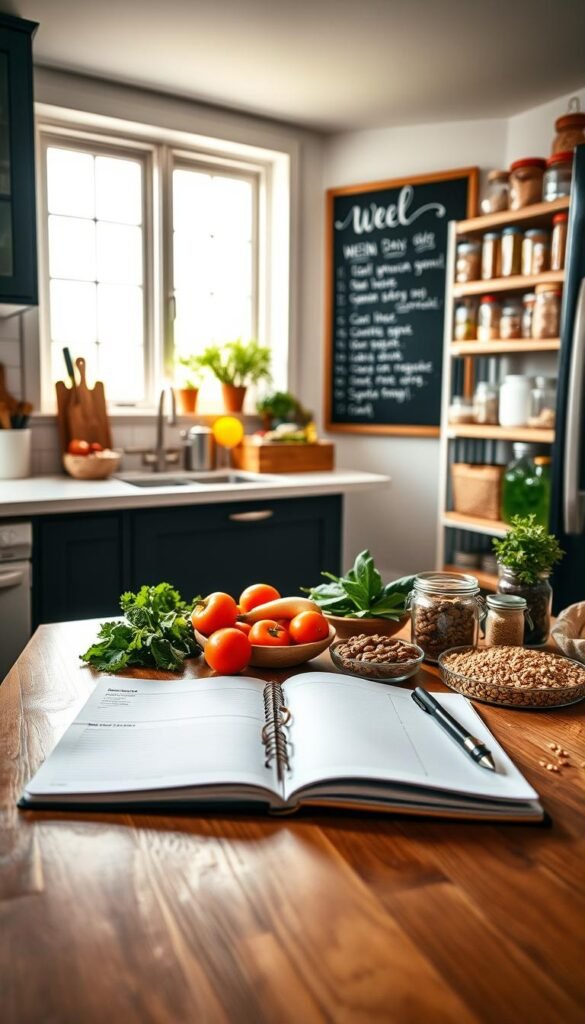
Smart defaults in the kitchen cut decision fatigue and stop extra trips to the store. Use a short weekly session to map dinners to busy nights. Pick one lighter night for leftovers so you protect one evening each week.
Weekly meal planning that cuts stress and grocery trips
Check your calendar. Choose meals for the busiest days first. Add simple, repeatable meals you can rotate. This makes shopping and dinner prep faster and steadier.
Default grocery list + fridge list pad to stop last-minute runs
Create a reusable grocery baseline. Keep a fridge list pad for items that run out midweek. Stick to the default list when you’re short on planning time.
Cabinet and drawer dividers to prevent the “bottomless pit” problem
Use spring-loaded drawer dividers and adjustable cabinet bins. Add utensil trays where you reach for things most. These no-drill fixes are cheap and quick to install.
Stacking shelves and clear bins to store staples where you can see them
Stacking shelves double vertical space and make labels visible. Clear bins stop the „lost snack“ issue and are easy to clean. Group like items and always restock to the same spot.
“Arm’s reach” layout and quick maintenance routine
Keep everyday plates, lunch containers, and snacks low. Store bulky or rare items higher. After dinner, do a five-minute reset: clear counters, load the dishwasher, wipe surfaces, and reset the sink.
Budget notes: spring-loaded dividers and small clear bins cost under $25. Choose sturdier shelf inserts or larger clear bin sets under $50 for lasting use. For more renter-friendly picks, see this best organization finds.
Bathroom Organization for Families: Shared Spaces Without the Clutter
A straightforward setup stops towel mix-ups and missing toothbrushes before they begin. Start with clear roles for common items and small, humidity-safe tools that need no drilling.
Color-coded towels and toiletry bins: assign one towel color and a small toiletry organizer per child. This reduces fights and speeds morning and night routines.
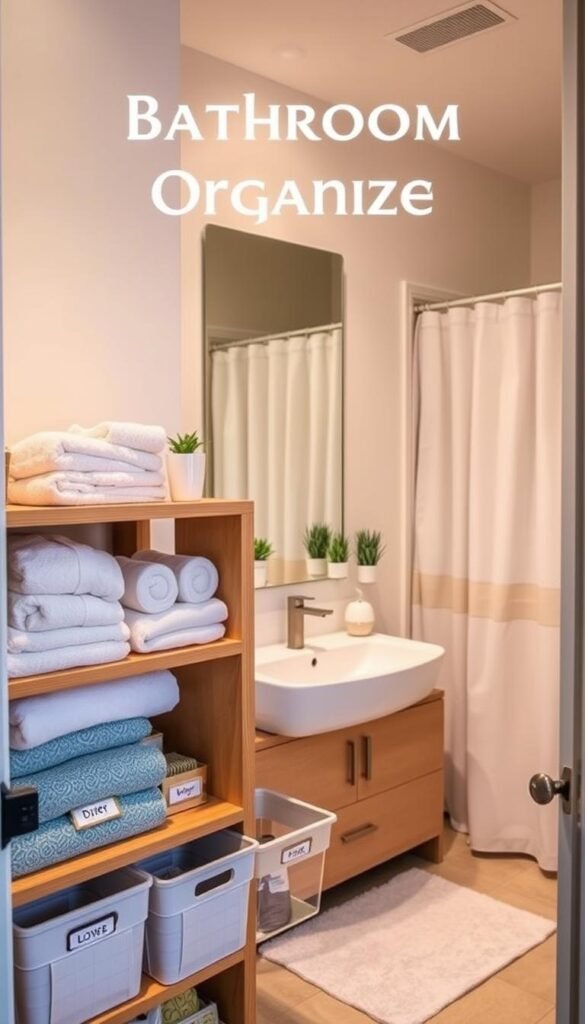
Bath toy storage and drying
Use suction baskets for tile and vented plastic bins for shower corners. Add a quick rule: empty toys to dry after each use. This prevents mildew and keeps items ready.
Under-sink solutions
Slide-out bins offer easy access to daily items. Stackable clear drawers save vertical space and show contents fast. Choose plastic that tolerates humidity and wipes clean.
„Give each child a color and a small caddy. Simple wins.“
| Type | Pros | Cons | Best use / Budget |
|---|---|---|---|
| Suction baskets | Fast install, no tools, good for tile | May lose grip in high humidity | Bath toys, under $25 |
| Adhesive hooks/bins | Stronger hold, varied sizes | Can peel paint; watch longevity | Towels & caddies, $25–$50 |
| Freestanding storage | Durable, movable, child-safe | Needs floor space; can tip if heavy | Under-sink drawers, $25–$50 |
| Vented plastic bins | Drying airflow, cheap, easy clean | Plastic may discolor over time | Toys & toiletries, under $25 |
- Safety notes: store cleaners in a high locked bin and keep heavy items off low shelves.
- Maintenance routine: a 60-second evening reset—return items, hang towels, empty toy basket to dry—prevents clutter the next day.
Closets, Kids’ Rooms, and Living Areas: Storage That Works in Real Family Life
A smart closet and kid zone can turn scattered things into usable space fast.
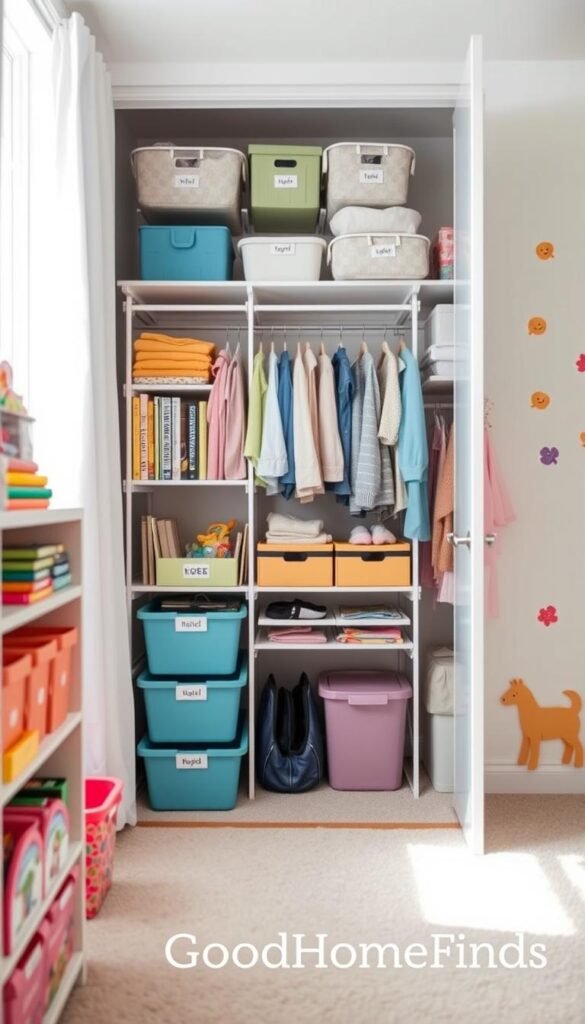
Closet doubling needs no tools. Add tension rods for a second hanging level. Use shelf dividers to stop top-shelf avalanches. Try hanging organizers for shoes and accessories.
Set up kid zones like a classroom: reading, crafts, and building areas. Use clear bins with picture labels so pre-readers know where items go. Keep most bins at eye level for each child to reduce climbing.
Toy rotation, artwork, and living room tips
Rotate toys every 3–4 months. Box a portion, store out of sight, then swap to make old toys feel new. This saves space in small rooms.
Do a monthly select-and-store for artwork. Use folders or an accordion file labeled with the child’s name and year.
- Family room: lidded boxes for remotes and chargers; shallow bins for media; one reset basket for nightly pickup.
- Small apartment fixes: under-bed bins, vertical shelving, and over-the-door pockets for instant extra space.
| Item | Under $25 | Under $50 |
|---|---|---|
| Closet boost | Tension rods, shelf dividers | Sturdier shelving unit |
| Kid storage | Clear bins, picture labels | Large under-bed set |
| Safety | Soft-close bins | Tip-resistant anchor kit |
Safety checklist: choose tip-resistant furniture, avoid climb-to-reach setups, use soft-close bins, keep walkways clear, and don’t overload high shelves.
Maintenance point: a 10-minute nightly reset and a monthly rotation + donate session keeps chaos from creeping back.
For a quick renter gear comparison, see this storage cheap vs premium.
Conclusion
Finish strong: pick three simple actions that protect your time and sanity. Use this repeatable formula: purge first, assign homes, label simply, then maintain with tiny routines.
Start today: choose one high-traffic spot (entry or kitchen), set a single drop zone, and do a 5-minute evening reset.
This week: set up a command-center calendar and paper flow, pick a filing day, and build a default grocery list for busy days and weeks.
This month: rotate toys, add a tension rod or shelf divider in a closet, and create a monthly memory file to save artwork for the year.
Budget tip: make big gains with under-$25 basics and spend up to $50 only where durability matters. See useful budget picks.
Keep it simple. The system must be easy enough that you use it on tired nights. Finally, secure heavy pieces, keep paths clear, and lock vital documents for safety and privacy.