
This is habit-first, renter-friendly small-space organizing that works in real life. You will get simple, repeatable routines and low-cost tools that make tidy the default. No drilling, no big weekend overhauls, just practical steps you can use today.

Start small. Spend 10 minutes on one drawer or a single surface. Build one-step systems that cut friction. Then add a weekly reset and a monthly maintenance check so things do not slide back.

✨ Smart Finds Picks
Shopping List
Quick picks that solve the problem fast — renter-friendly, budget-aware, and trend-led.
As an Amazon Associate I earn from qualifying purchases.

We’ll cover common pinch points: the door (keys and mail), kitchen counters, the bathroom sink, the closet “chair,” and laundry piles. Expect budget-friendly ideas under $25 and options up to $50 when durability matters. Think hooks, trays, slim carts, tension rods, and over-door racks that work for renters.

What you’ll get: easy daily bookends, a weekly rhythm, and simple monthly upkeep. Practical pros and cons and “best for” notes help you pick solutions that fit your home, your time, and your space. For compact product picks and inspiration, see a curated list of small-space finds here.

Key Takeaways

  • Focus on repeatable routines that take minutes, not hours.
  • Use renter-friendly, no-drill tools to reduce friction.
  • Start one small win at a time and add a weekly reset.
  • Most useful buys sit under $25; spend up to $50 for sturdiness.
  • Target door, kitchen, bathroom, closet, and laundry for biggest wins.
  • Choose safe, durable materials and test adhesives in humid areas.

Why habit-based organizing works better than chasing a “perfect” home

Small routines beat big overhauls when your goal is a usable, stress-free house. This is about practical moves that survive a busy schedule. Aim for systems that work when you are tired or short on time.

Set a realistic baseline. Good enough looks like a clear sink, usable counters, shoes contained, and paper sorted. Pick a weekly baseline so small messes wait until your reset instead of ruining your day.
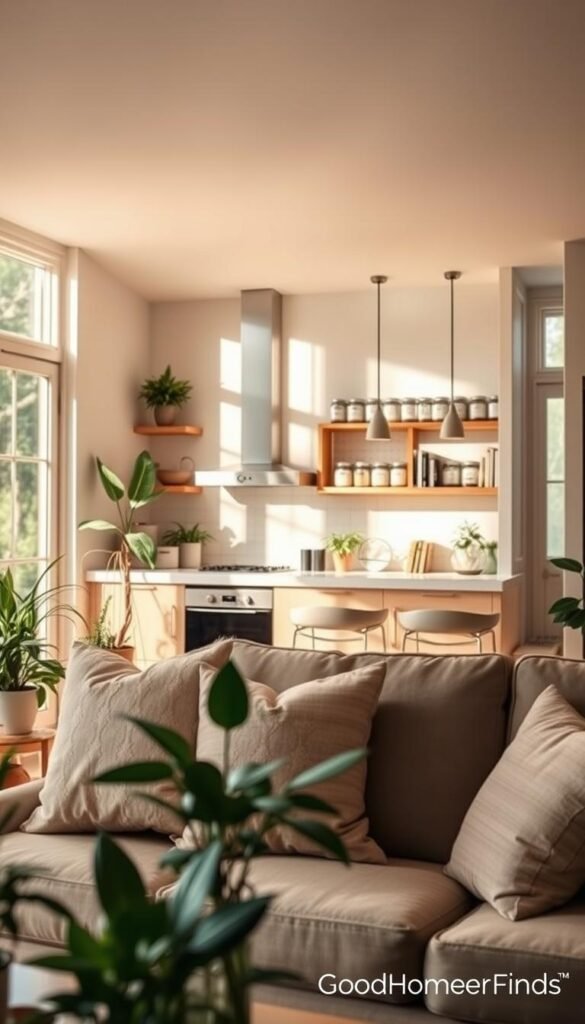
Cozy, small routines house interior styled for optimal organization, showcasing a well-organized space filled with natural light streaming in through large windows. In the foreground, a neatly arranged living area with plants, minimalistic decor, and a comfortable couch adorned with soft throw pillows. The middle ground features a spacious kitchen with open shelving displaying neatly labeled jars, emphasizing clarity and convenience. In the background, a cozy reading nook with a bookshelf filled with books creates an inviting atmosphere. Soft, warm lighting enhances the serene ambiance, suggesting harmony and ease. The overall mood is calming and inviting, promoting the idea of creating a habit-centered lifestyle rather than pursuing perfection. The image should embody the essence of "GoodHomeFinds" with a focus on functional beauty and everyday routines.

Start with one small win

Use the 10-minute method on a single drawer or surface. Set a timer. Empty the space. Trash or recycle what you do not use. Return only daily-use things and stop when the timer ends.

Find and fix friction points

If you keep leaving items out, it is usually a system problem. Too many steps, an awkward lid, or a distant hook causes drift. Do a quick friction audit and remove one barrier.

One-step rule and no-buy fixes

The one-step rule is simple: if you cannot put an item away in one motion, it will not stick. Try three no-cost moves to get organized: move the trash can closer, add one tray for keys where you actually drop them, and create a clear return zone for shared things.

How to organize by habits with simple resets and one-step systems

A few reliable routines turn small effort into steady order. Use short, repeatable moves so tidying stops being a big project and becomes part of your time each day.
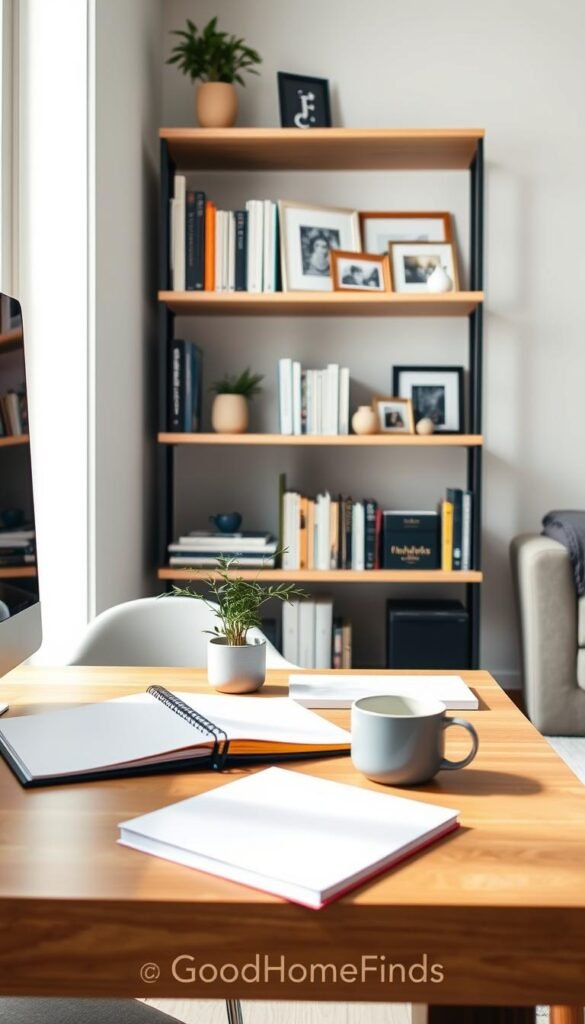
A beautifully organized workspace featuring a modern bookshelf styled as "daily bookends". In the foreground, a sleek wooden desk holds a minimalist planner, a small potted plant, and an elegant coffee mug, all softly lit by natural light streaming in from a nearby window. The middle ground showcases a contemporary bookshelf filled with neatly arranged books, some vertical and others stacked horizontally, interspersed with decorative objects like framed photos and ceramic vases. The background reveals a calming, light-filled room with soft pastel colors, emphasizing a clutter-free environment. Capture the essence of simplicity and efficient organization, reflecting a zen-like atmosphere conducive to productive habits. Lens: 50mm, angle focused on the desk with a slight depth of field. Brand: GoodHomeFinds.

Daily bookends that keep you organized every day

Morning: 5–10 minutes. Make the bed and pick up one surface. Finish one task including cleanup so things do not pile up.

Evening: 10–15 minutes. Clear counters, run a quick dish rinse, sweep visible crumbs. These two checkpoints set the tone for the days ahead.

Weekly reset rhythm

Pick one night and spend 60–120 minutes on key tasks. Groceries and pantry restock, laundry catch-up, a quick paper sort, and a fast room sweep move your week forward.

Use your shared calendar to block this time. Spend 10 minutes syncing plans with a partner or roommate so tasks land on the right day.

Monthly maintenance list

  • Clean dishwasher and washing machine.
  • Wash or replace vacuum filters.
  • Check light bulbs and refill soap dispensers.
  • Quick pantry expiration check when you restock groceries.

Rules that limit clutter automatically

One-in, one-out. Let space decide—keep about 80% of cabinets free so things are easy to use. Finish the task including cleanup to stop half-done projects.

Printable checklist idea: a short daily / weekly / monthly list kept as a phone note, fridge magnet, or inside a cabinet door so it actually gets used. For budget-friendly gear to help this routine, see a compact selection of finds here.

Entryway and mail: renter-friendly landing zones that stop clutter at the door

Create a simple landing spot at the door so keys, mail, and bags stop spreading through the apartment.
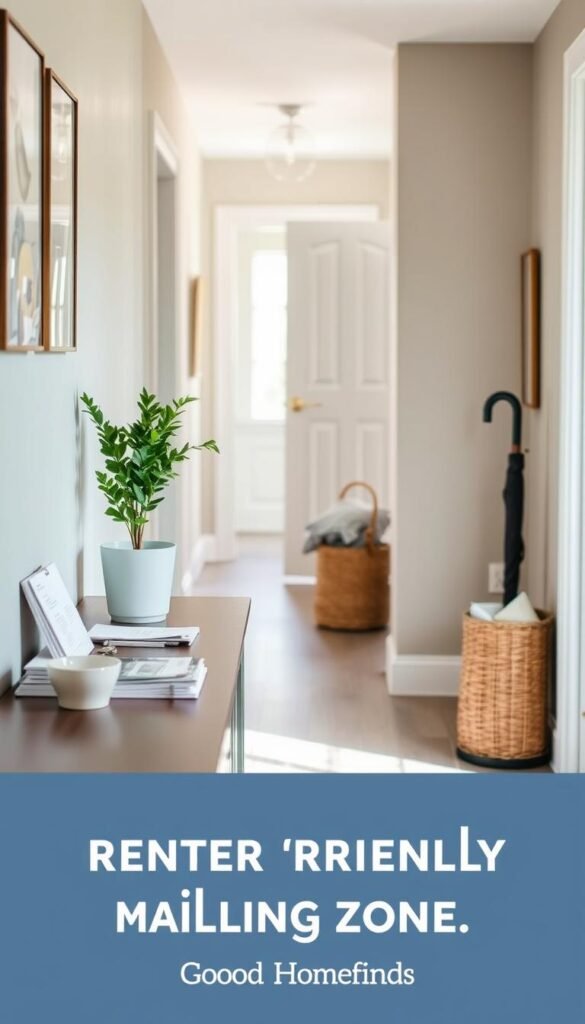
A stylish entryway scene showcasing a renter-friendly mail landing zone. In the foreground, a modern console table against a pastel wall, adorned with neatly organized mail and a small decorative bowl for keys. A chic, lush potted plant sits beside the table. The middle ground features a wicker basket for additional mail storage and a stylish umbrella stand, conveying a cozy and welcoming atmosphere. The background reveals a well-lit, inviting hallway with a subtle hint of a door. Soft, natural daylight filters in, casting gentle shadows that enhance the overall warmth of the space. The image should embody a Pinterest-style aesthetic to inspire clutter-free organization. Ensure a professional finish, reflecting the brand GoodHomeFinds.

Goal: build a one-step place that catches keys, shoes, bags, and incoming mail so clutter does not travel into every room.

No-drill drop zone kit under $25

Keep it simple. Use adhesive hooks for keys and a small tray for wallet and earbuds. Add a slim basket for incoming mail or a magazine holder mounted with adhesive strips.

Best picks: adhesive key hooks, entry tray, slim mail basket — each under $25. These items create a quick, repeatable routine.

Upgrade options under $50 for busier households

For more people, add an over-the-door hook rack, a narrow shoe shelf, or a two-tier crate. These cost under $50 and give each person a labeled spot.

Paper and package control: the three-tray station

Sort mail in minutes. Use a vertical three-tray system: To Do / To File / To Toss. Toss junk mail before it enters your counters. Spend one minute sorting when you walk in.

Pros, cons, and safety notes

  • Pros: renter-friendly, fast setup, no drilling.
  • Cons: adhesives can fail on textured paint or in humidity.
  • Safety tips: clean the wall, check weight limits, wait cure time, and place hooks away from shoulder traffic.

Small-apartment alternatives

No entryway? Use magnetic hooks on the fridge, an over-closet-door rack, or a slim shelf near the main path as your front-door zone for shoes and small stuff.

Setup Cost Best for
No-drill drop kit Under $25 Studios, singles
Over-door hook + shoe shelf Under $50 Couples, roommates
Three-tray paper station Under $25 Families, paperwork ones
Fridge/closet alternatives Under $25 Tiny apartments, shared hallways

For curated product ideas and compact solutions, see a short guide to best entryway storage. Use these small wins as a simple system to stop clutter at the door.

Kitchen habits that make dishes, groceries, and counters easier to maintain

Small kitchen routines turn messy counters into usable space in minutes.
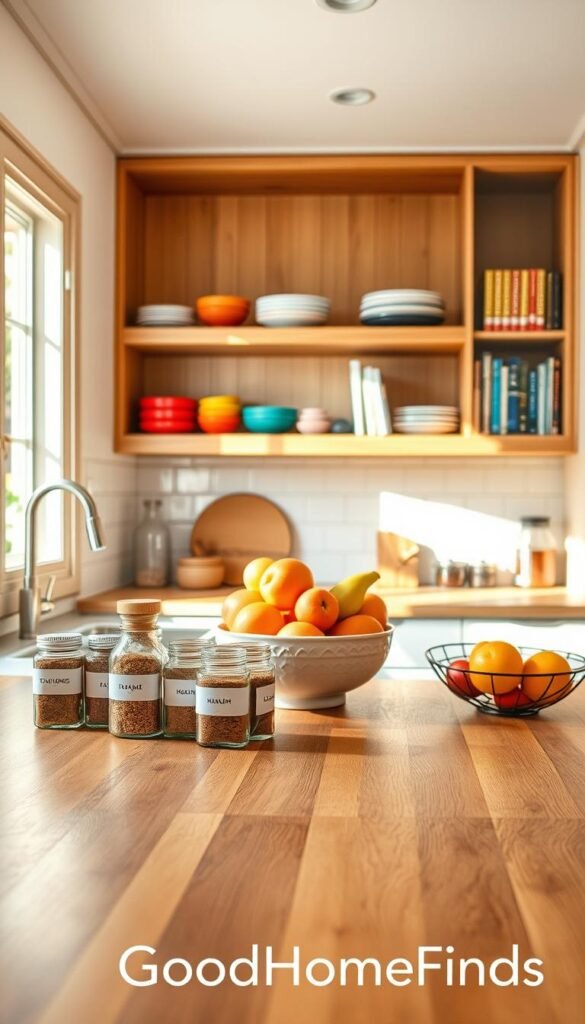
A modern kitchen showcasing organized habits for effortless maintenance. In the foreground, a polished wooden countertop is adorned with neatly arranged spices in labeled glass jars and a bowl of fresh fruits. The middle section features open shelves displaying colorful dishware and cookbooks, promoting accessibility. In the background, bright white cabinets contrast with warm, natural wood, creating an inviting ambiance. Soft, natural light streams in from a window, illuminating the scene and casting gentle shadows. The overall mood is warm and welcoming, emphasizing order and functionality. The kitchen is devoid of clutter, reflecting a lifestyle that prioritizes ease and efficiency. This is a Pinterest-style lifestyle photo capturing the essence of organized spaces. Include the brand name "GoodHomeFinds" subtly in the composition.

After-dinner reset: Spend 10–15 minutes. Load the dishwasher or wash the essentials. Wipe counters, reset the sink, and clear one hot-spot surface so tomorrow starts clean.

Make wait-time useful

Keep a spray, wipes, and a microfiber cloth within arm’s reach. When the kettle or microwave is running, wipe a short strip of counter. Store cleaning items safely out of reach of kids and pets.

Quick grocery unpacking

Create a one-counter quick-prep zone. Wash and portion produce, label leftovers, and place an „eat first“ shelf in the fridge to prevent pileups. A dishpan in the sink works for staging.

Simple, low-cost tools

  • Under $25: drawer bin set, turntable for condiments, under-shelf basket, tension rod for sprays under sink. Look for rust-resistant metal or washable plastic.
  • Under $50: slim rolling cart, pull-out cabinet shelf, larger dish rack. Choose coated metal or BPA-free plastic for durability.

„Finish the task including cleanup—if you cook, reset the tools and surfaces so the next meal does not start with a mess.“

Organizer type Habit supported Best for small space Setup time Watch-outs
Turntable Keep counters clear Studios, tiny kitchens 5 minutes Measure cabinet height
Tension rod (under sink) Staging cleaning tools Shared sinks, renters 5–10 minutes Not for heavy loads
Slim rolling cart Grocery staging & overflow Small kitchens with narrow aisles 10–15 minutes Wheels need locks on uneven floors
Compact drying mat After-dinner reset Any small kitchen Instant Hand-washable mats last longer

How this helps the rest of the home: a functional kitchen reduces visual clutter around house and makes other daily routines easier. For common kitchen fixes and product ideas, see this short guide on kitchen problems and solutions: kitchen problem mix.

Bathroom, closet, and laundry: small-space systems that don’t require drilling

Make quick resets part of your day so small messes never turn into a weekend crisis.
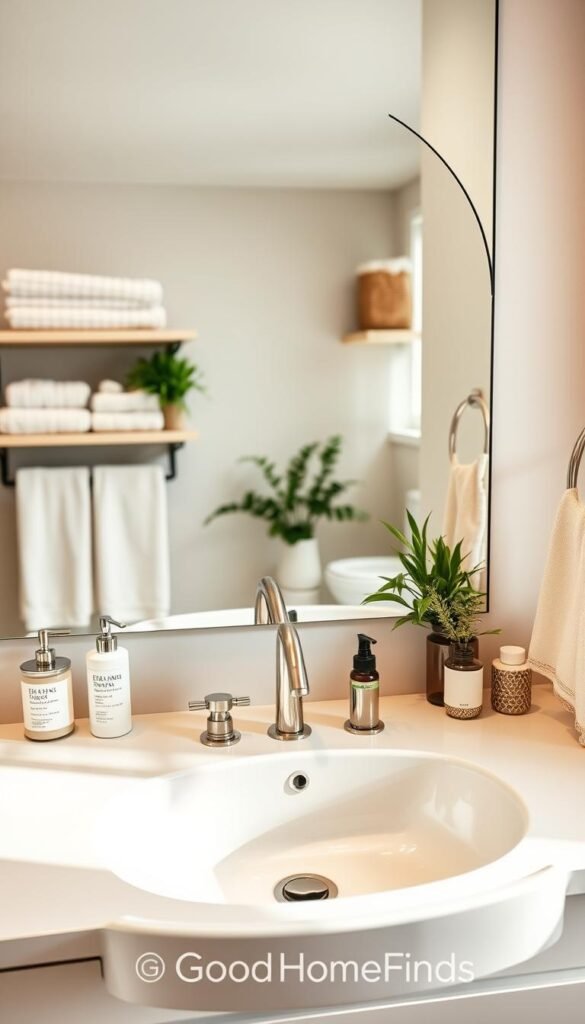
A modern bathroom sink area reset, featuring a sleek, minimalistic design with a beautifully organized countertop. In the foreground, a pristine white sink with elegant faucets, surrounded by neatly arranged eco-friendly toiletries in stylish containers. In the middle ground, an elegant mirror reflecting natural light, with soft greenery and calming decor. The background showcases a tidy arrangement of floating shelves containing neatly stacked towels and baskets, all in gentle neutral tones. Warm, diffused lighting creates a cozy and inviting atmosphere, emphasizing cleanliness and organization. Captured with a slight overhead angle to highlight the sink's functionality and aesthetic appeal. The scene embodies a serene, Pinterest-style lifestyle photo, branded subtly with "GoodHomeFinds".

Bathroom sink reset

Keep daily items corralled. Use a small tray or bin for toothbrushes, skincare, and hair ties. Wipe the counter nightly — it takes under two minutes and becomes a new habit that helps you stay organized.

Closet one-step systems

Swap bulky hangers for slim velvet hangers to save space and stop slipping. Add a simple drop-and-go bin for worn clothes instead of the chair. Use tension rods for scarves and over-the-door hooks for bags.

Laundry that won’t snowball

Do small loads often. Try micro-sorting: one hamper per person, or a two-bag system for lights and darks. For kids and family life, use picture labels and low hooks so everyone can participate.

Who it works for & safety notes

  • Roommates: separate labeled shelves and hooks.
  • Couples: shared hamper with divided bins.
  • Families: color-coded baskets per person.
Solution Cost Best for
Small sink tray / bin Under $25 Singles, renters
Velvet hangers + tension rod Under $25–$50 Studios to two-bedrooms
Two-bag hamper / per-person basket Under $50 Couples, families
Freestanding over-toilet shelf Under $50 Bathrooms with no wall space

Durability & safety: choose humidity-resistant materials, avoid overloading adhesive hooks, pick breathable hampers to cut odors, and store cleaners up high when kids are present. For compact closet picks, see closet space solutions at closet space solutions.

Conclusion

A few minutes each day build a reliable rhythm that keeps small spaces usable.

Start here: pick one friction point—mail, dishes, or laundry. Choose one simple tool and set a 10-minute timer to fix that spot today.

Make sure the system is one-step. If putting a thing away takes multiple moves, simplify until leaving it out is easier than storing it.

Use your calendar for a weekly check-in and add a short monthly reminder for maintenance. Keep 20% of shelves empty so your place works for real life.

Safety and durability: do not overload adhesives, keep walkways clear, and pick washable, rust-resistant materials.

Clutter happens. Your reset routine is what gets you back. For compact product picks and comparison ideas, see these best organization finds.


FAQ

What does “Organize by Habits Not Boxes” mean?

It means designing systems around what you actually do each day rather than trying to fit items into perfect containers. Focus on routines you repeat—morning, evening, after meals—so storage supports behavior. This keeps tasks short and realistic for renters and small spaces.

Why does a habit-based approach work better than chasing a perfect home?

Perfection needs constant upkeep and creates decision fatigue. Habit-based systems set a realistic baseline so small messes don’t derail your day. Small, repeatable actions reduce clutter over time and make upkeep feel natural instead of like a chore.

How do I set a realistic baseline so small messes don’t derail my day?

Pick one surface or drawer to maintain. Commit to a 5-minute reset morning and night. Limit decision points—keep a simple “put away” rule for items that land on counters. These micro-tasks lower friction and prevent build-ups.

What’s a good first step to build momentum in minutes?

Start with a single drawer, shelf, or the top of a kitchen island. Clear it, add one labeled container or tray, and practice a one-step return rule for items. Short wins reinforce the new routine quickly.

How can I reduce friction so putting things away becomes the default?

Make storage accessible and obvious. Use open trays, hooks, or clear bins within arm’s reach. Keep daily items where you use them. The easier it is to return something, the more likely you are to do it.

What are daily bookends and how do they help?

Daily bookends are short routines at the start and end of your day. Morning: clear a surface, set out what you’ll need. Night: 5-minute reset to return items and prep for tomorrow. They keep momentum and prevent small tasks from turning into big clutter.

What does a weekly reset rhythm look like?

A weekly reset is a predictable slot—30 minutes on the same day—to clear paper, check groceries, empty trash, and tidy high-traffic zones. It prevents slow accumulation and keeps systems working.

Which monthly maintenance habits prevent breakdowns?

Monthly checks include expired food and meds, donation pile review, and a quick fix of worn storage solutions. These small actions stop costly replacements and maintain function without major projects.

What simple rules can limit clutter automatically?

Use rules like “one in, one out” for new items, a 10-second rule to put things away immediately, and designated landing spots for mail and keys. Rules reduce decisions and create predictable flows.

How do I create a renter-friendly entryway when space is limited?

Use a compact drop zone: adhesive hooks for keys, a slim basket for mail, and a small tray for masks and sunglasses. Choose non-drill solutions so you don’t damage walls and keep everything near the door.

What’s a no-drill drop zone kit under ?

Look for adhesive hooks, an over-the-door shoe pocket, and a small desktop tray. These items create containment without hardware. They’re ideal for studios and shared hallways on a budget.

How can I upgrade the entryway kit for under ?

Add a heavier-duty adhesive hook set, a compact shelf that sticks to the wall, and a collapsible bin. These provide more hooks and containment for busy households while staying renter-friendly.

What’s a simple system for paper and packages?

Use a “To Do / To File / To Toss” station. Label three trays or folders and process mail once a day. This minimizes piles and keeps important papers visible until dealt with.

Are adhesive hooks and shelves safe for high-traffic areas?

Many brands like 3M Command offer rated weight limits and removable options. Check weight specs and follow installation instructions. For heavy or high-use items, consider freestanding alternatives to avoid damage.

What are small-apartment alternatives if there’s no entryway?

Create a landing zone near your main door on a kitchen counter or narrow shelf. Use a wall-mounted organizer on a hallway patch or a slim rolling cart that tucks into a closet when not in use.

What kitchen habits make cleanup faster than procrastination?

An after-dinner reset, a wipe-and-put-away rule while waiting for water to boil, and a grocery unpacking habit keep counters clear. Short, consistent actions beat occasional deep cleans.

What is the after-dinner reset routine?

Clear plates, load the dishwasher or wash essentials, wipe counters, and return items to their zones. Aim for 10 minutes so the kitchen is ready for the next day and you avoid buildup.

How does a use-your-wait-time setup help?

Place a cloth, spray, and a small bin within arm’s reach of common tasks. Use short waits—microwave minutes, boiling water—as opportunities to wipe or return items. It turns idle seconds into productive habits.

What’s a quick grocery unpacking habit that prevents fridge pileups?

Sort groceries into zones immediately: fridge, freezer, pantry, and counter prep. Wash produce, store meal components together, and set aside items that need cooking this week. Ten minutes prevents future chaos.

What are budget kitchen picks under and under ?

Under : basic drawer organizers, adhesive hooks, a compact dish rack. Under : a durable over-the-sink shelf, a rolling cart, or a heavier dish rack. Choose items that match your daily routines and space limits.

Which bathroom solutions work without drilling?

Use suction caddies, over-the-door hooks, tension shower rods, and adhesive shelves. They keep daily items contained and support a one-step return rule for toiletries and towels.

How do I set up a sink reset to keep surfaces clear?

Keep daily-use items in a small caddy under the sink or on a tray. After use, towel off surfaces and return the caddy to its spot. This protects counters and reduces visual clutter.

What closet space-savers support a “put it away in one step” rule?

Use simple solutions like slim hangers, hanging shoe organizers, and labeled bins on shelves. Place frequently used items at easy-reach levels so returning them takes a single, fast action.

How can laundry avoid snowballing in small spaces?

Use a compact hamper with sections for quick micro-sorting. Do small loads more often. If possible, set a weekly laundry slot so clothes don’t pile up and taking care of laundry stays short and predictable.

Which solutions suit roommates, kids, or couples best?

For roommates, use personal bins and shared labels. For kids, low bins and visual cues work well. For couples, shared zones with clear ownership and one-step return rules reduce conflicts. Choose solutions based on traffic and storage needs.

What are small-apartment alternatives and pros/cons for each solution?

Wall-mounted organizers save floor space but may limit weight. Freestanding carts are flexible but need storage space. Adhesive hooks are renter-friendly but have weight limits. Choose based on durability, budget, and daily use.

Schreibe einen Kommentar

Deine E-Mail-Adresse wird nicht veröffentlicht. Erforderliche Felder sind mit * markiert