Your apartment’s landing zone starts here. This short guide shows a renter-friendly, no-drill way to stop shoe piles, loose keys, overflowing mail, and dropped bags from taking over the rest of your home.
You’ll learn what a storage bench and an entryway bench really do: a simple waystation with built-in shelves or a lift-top for hidden storage. Stools and accent stools can serve as flexible seating and extra surface storage in tight spaces.
Before you buy, measure the doorway, list daily drop items, and pick how much hidden vs open storage you need. Aim for a 2-minute daily reset habit. Choose removable hooks and portable solutions so nothing damages your lease.
Safety first: pick sturdy seating, mind weight limits, and choose kid-friendly edges. When the front zone stays controlled, closets and counters stay cleaner too.
For quick ideas and comparisons of small-space fixes, see this short buyer’s guide on smart setups at small-space fixes.
Key Takeaways
- Set up a renter-safe landing zone that catches shoes, keys, bags, and mail.
- Measure, list daily drops, and choose open or closed storage based on mess and dust.
- Use removable, no-drill options to protect your lease.
- Adopt a 2-minute nightly reset to keep clutter from returning.
- Prioritize stable, kid-safe seating and simple furniture that pulls double duty.
Choosing the right entryway bench for your space and routine
Choosing the right seat for your front zone starts with how you actually use that space every day. Think about who uses it, how many shoes pile up, and whether you need hidden storage or quick access shelving.
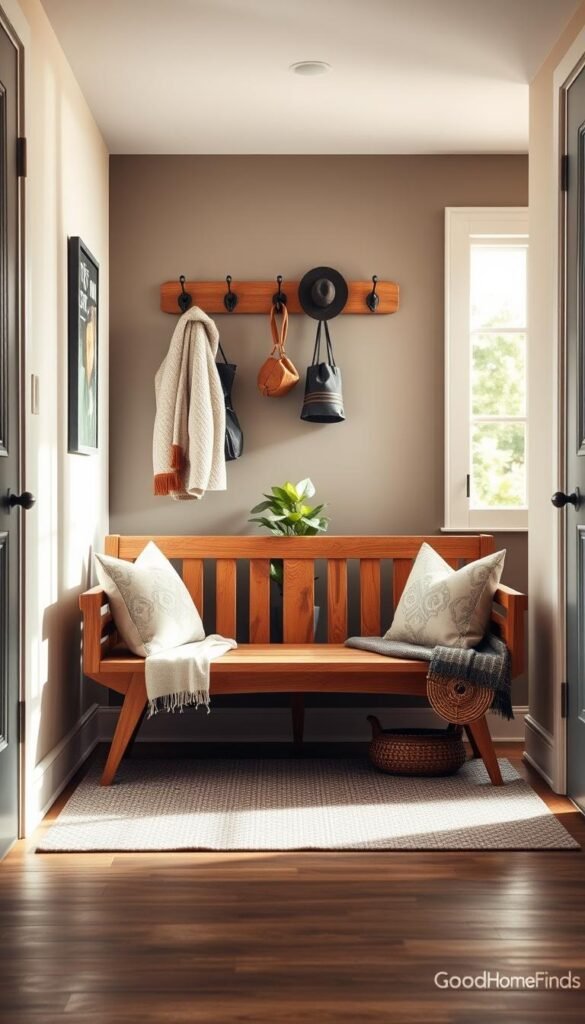
Stool vs. storage bench vs. entryway bench
Stool: Lightweight and easy to move. Best for a single person or tight alcoves. Pros: flexible and cheap. Cons: minimal storage.
Storage bench: Built-in cubbies or a lift-top hide shoes and clutter. Pros: hides mess, good for shoe-heavy homes. Cons: heavier and pricier.
Entryway bench with features: Combines seating, a drop zone, and some storage. Pros: versatile waystation. Cons: needs more clearance than a stool.
Storage styles that cut clutter fast
Open cubbies and shelves let you grab shoes quickly. Lift-top compartments hide visual clutter but add a lid to open. Doors reduce dust but watch swing space.
Size, fit, and a small-space formula
Measure depth so the piece won’t block traffic. Measure width to protect the door swing. Leave at least 30–36 inches of walking clearance for rush-hour flow.
Materials, durability, and daily use
Solid wood lasts and can be refinished. MDF/veneer looks modern and saves money but is sensitive to moisture. Check hinges for firmness; a wobbling lid is a red flag.
Performance fabric and easy-clean finishes are worth it for muddy shoes and spills.
Comfort, function, and safety
Cushioned seating makes shoe changes easier. A small tray or built-in slot for keys and phone keeps counters clearer. Confirm weight limits, smooth hinge action, and rounded edges for kid-safe use.
| Type | Best for | Pros | Cons |
|---|---|---|---|
| Stool | Minimalist singles | Portable, low cost | Little to no storage |
| Storage bench (cubbies) | Shoe-heavy households | Fast access, visible slots | Can look cluttered |
| Storage bench (lift-top/doors) | Dust-sensitive users | Hides mess, cleaner look | Heavier, slower access |
| Design-forward wood piece | Style-first renters | High-end look, refinishing options | Higher price, heavier |
Want a compact buyer’s guide and quick picks? See the best entryway storage solutions for options that suit renters and small spaces.
How to organize entry bench without drilling or permanent changes
Create a compact in-and-out station that keeps shoes, mail, and keys in one predictable place.
Set up zones on and around your seat: shoes go under, keys live in a small dish on top, bags hang on adhesive hooks or sit in a basket, and mail slides into a slim vertical file. This layout stops items from drifting into the kitchen or bedroom.
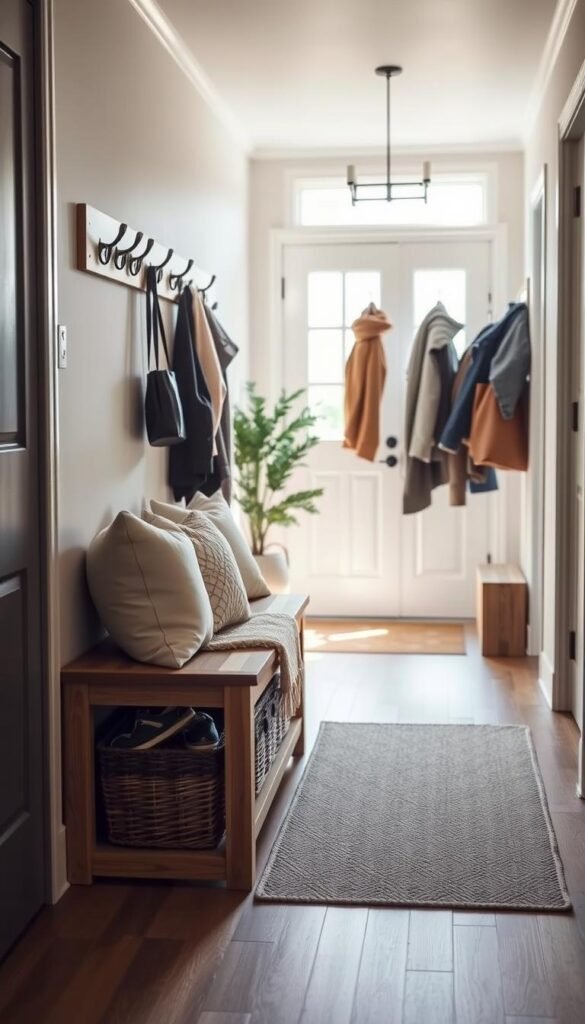
Renter-friendly add-ons under $25
- Non-slip mats that catch grit beneath shoes.
- Labelled fabric bins for each person to slide under the seat.
- Removable adhesive hooks for leashes and light coats.
- Over-the-door organizers for hats and scarves that require no screws.
Upgrades under $50 that add function
- Lidded baskets to hide clutter on open shelves.
- Stackable clear shoe boxes to keep pairs together and visible.
- Slim trays to define a tidy table-style drop zone.
- Washable runners that protect floors and cut tracked-in dirt.
Daily reset and simple maintenance
Daily: use a 2-minute reset each night. Return shoes, empty the top tray, and hang one bag per person.
Weekly: wipe surfaces, shake out mats, and sort mail at the door—trash or recycle immediately and keep one small action folder for bills.
Maintenance: air out shoes and use odor absorbers. Vacuum or spot-clean upholstery as needed. Wipe wood or MDF surfaces fast after spills and use a tray for wet items.
| Item | Cost | Why it helps |
|---|---|---|
| Non-slip mat | Under $25 | Contains dirt, protects floors |
| Removable adhesive hooks | Under $25 | Creates bag zone without drilling |
| Lidded basket | Under $50 | Hides visual clutter on open shelves |
| Stackable shoe boxes | Under $50 | Keeps pairs together, saves floor space |
Space tips that limit spillover: store spare hooks and labels in a closet bin. Put odor absorbers in a bathroom cabinet. Keep cleaning wipes in the kitchen for quick weekly surface care. These small moves keep the rest of your apartment tidy.
For more small-space storage ideas and practical closet fixes, see closet space solutions.
Entryway bench storage solutions compared: what to buy for different apartment sizes
Small apartments benefit from targeted storage choices; this section compares what works by size and household type.
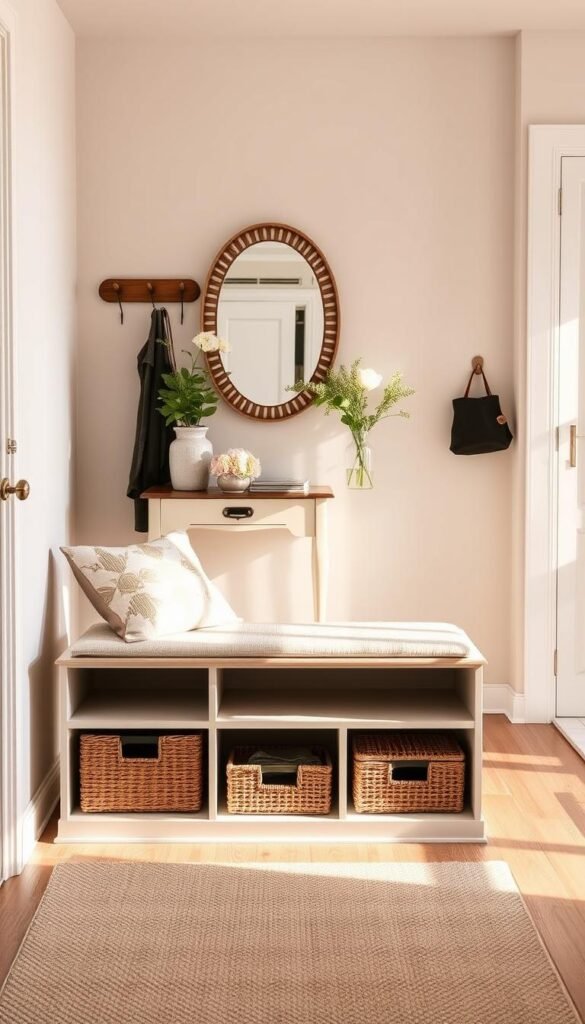
Quick comparison
| Style | Look & speed | Dust & privacy | Best for |
|---|---|---|---|
| Open cubbies | Fast access; more visual clutter | More dust; needs tidying | Singles, studio users who want speed |
| Closed storage (lift-top/doors) | Cleaner look; slightly slower access | Better dust control; hides mess | One-bedrooms, neat-minded renters |
| Narrow benches & stools | Space-saving; flexible seating | Varies by style | Micro-entries, hallways with tight clearance |
Micro-entry alternatives
Shallow benches keep door swing clear. Compact stools double as a small table for keys. A runner defines the zone and protects floors.
Room-size picks
Studio or one-room: pair a seat with a shoe cabinet that has doors and a lean mirror mounted damage-free. Use over-the-door hooks or a freestanding rack for coats.
Family and roommates
Split storage by person. Add two drop trays and choose durable, washable fabric for heavy traffic. This reduces morning collisions and keeps the living room calmer.
Pros/cons quick picks
- Upholstered: comfier for seating; needs cleaning.
- All-wood: easy to wipe; durable but firmer.
Assembly & move-friendly checklist
- Check weight and door clearance.
- Choose tool-free or minimal-tool assembly.
- Protect floors with felt pads when moving.
- Skip bulky pieces that cut walking clearance; pay for sturdy hinges and washable textiles instead.
For a quick comparison of fast vs full setups, see fast vs full.
Conclusion
Make the front zone a predictable pause point that keeps clutter out of your living space. Pick the right-size bench, then set four zones: shoes, keys/phone, bags, and mail. Protect floors with a non-slip mat and commit to a two-minute nightly reset.
Buy now vs later: start with bins, a tray, and a mat. These low-cost items deliver quick payoff. When your routine is steady, upgrade to a closed storage bench or a sturdier furniture piece for extra durability.
Renter-friendly tip: use removable hooks and freestanding furniture so nothing damages the wall. Check weight limits and pick easy-clean surfaces for long-term use.
Quick checklist: measure, choose a style, set four zones, add budget accessories, and do the 2-minute reset. For more picks and budget ideas, see best organization finds.