
Paper shows up every day. In a small apartment it becomes clutter fast, especially without a dedicated office.
You’ll learn a renter-friendly, no-drill method to tame stacks. The goal is control over perfection: find what you need when you need it.
Start with a quick triage: action, file, or trash. Then set a simple filing system and choose portable storage that fits tight spaces like the kitchen, bathroom, closet, or entryway.
KonMari for paper means discard aggressively and keep clear categories. You’ll use low-cost tools first — labels, folders, a basic inbox — with budget options under $25 and upgrades under $50 if they are worth it.
This guide stays renter-friendly: no drilling, easy removal, and portable setups you can take when you move. You’ll also get tips to keep important documents safe without locking them away from emergencies.
Plan one 25-minute session to start and finish the rest across a week. The tone is practical, helpful, and focused on what works in real life.
Key Takeaways
- Use a fast triage: action, file, trash.
- Start with cheap tools (labels, folders, inbox) before upgrading.
- Fit storage into small spaces: kitchen, entryway, bathroom, closet.
- Pick renter-friendly, no-drill solutions and portable bins.
- Protect essentials but keep them accessible in emergencies.
- Begin with one 25-minute session and build over a week.
- For product ideas and renter setup options, see a quick comparison renter setup comparison.
Why Paper Clutter Builds Up and What “Organized” Really Means
Most clutter starts with a habit: you set mail or notes down and never give them a permanent spot. Mail arrives faster than you process it. That creates a pile where you spend the most time. In small apartments that single surface becomes a daily friction point.
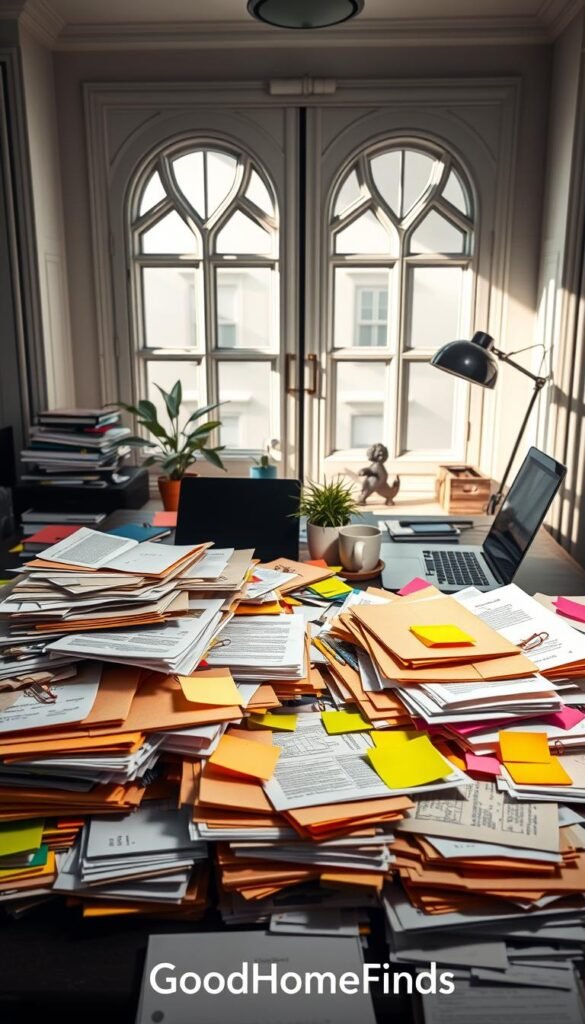
Control over perfection: the real goal is finding what you need when you need it
Being organized is retrieval plus calm. It means you can pull up documents quickly, know which items need action, and avoid late fees or missed appointments. You do not need magazine-level neatness.
Focus on function: quick labels, a visible inbox, and an archive system you can use on busy days.
Start where the stress is: the pile within arm’s reach of your laptop or desk
„Start with the paper within arm’s reach of your computer because it’s the most recent and urgent.“
That spot usually holds the newest action items. Bills, medical forms, receipts, school papers, coupons, and random „just in case“ sheets live there. Clearing that pile reduces daily stress immediately.
Use simple zones: an inbox zone for new items, an action zone for things you must do, and an archive zone for long-term documents. This renter-friendly way stops papers from drifting across rooms and keeps the system practical.
Keep sessions short. Fifteen to twenty-five minutes can reset momentum. Next, you’ll learn a quick triage method to separate action, filing, and trash so active items don’t end up lost in old stacks.
Quick Triage: Sort Paper Into Action vs Filing vs Trash (Without Overthinking)
Start by making fast choices about each sheet you touch. Touch it once. Decide: action, file, or trash. This rule stops re-reading the same bills and forms and saves time.
Create two starter piles: active paperwork and inactive paperwork
Active paperwork holds things that need you now. Examples: bills to pay, forms to sign, appointment slips.
Inactive paperwork is for records you keep. Examples: receipts, warranties, past statements you keep for a short time.
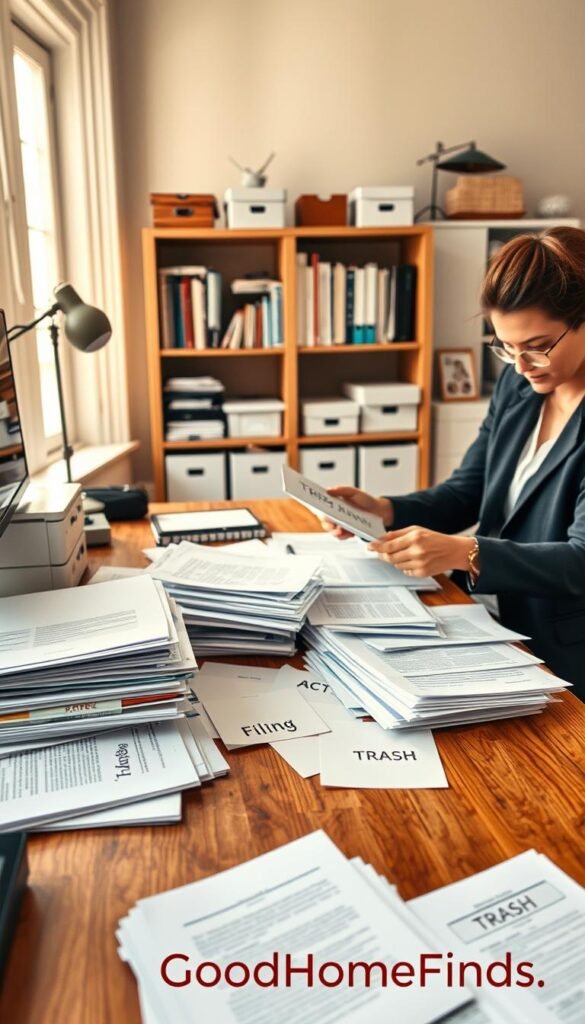
Make action items visible so you don’t “file and forget”
Keep one upright inbox where action items sit in view. Don’t tuck these into files. If you file action items, you risk forgetting them.
Use specific due-date labels instead of vague “urgent” folders
Write exact prompts: „Due 1/15,“ „Call Mon AM,“ „Return Fri“. Use sticky notes and a Sharpie so you can change labels without waste. This keeps the meaning clear months later.
Micro-sessions that work on busy days: the 25-minute timer reset
- Set a 25-minute timer. Clear the active pile first.
- Do a fast trash pass. Then file what remains.
- If you only have 3 minutes, drop new mail into the inbox and toss obvious trash.
If you’re stuck, create a „Decide Later (Date)“ folder and revisit it during your weekly reset. Once action items are under control, you can build a simple three-part filing system for the inactive files.
How to Organize Paperwork Home With a Simple Three-Part Filing System
Pick three clear buckets and you’ll cut decision time dramatically. This backbone stops new, vague folders from appearing every week and keeps your filing steady and usable.
KonMari-inspired categories that actually work
In Use — current forms, bills, and active to-dos you’ll touch within 30 days.
Limited Time — receipts, warranties, and short-term records kept for a set period.
Keep Indefinitely — birth certificates, passports, and other important documents that stay long-term.
Minimal household categories
Use a few consistent labels: home, auto, medical, taxes, kids, pets. This set covers most family needs and stops category sprawl.
For families, add simple dividers per person only where necessary, like a kids’ school slot.
Color-coding for fast retrieval
Pick three colors: one for personal/medical, one for home/auto, and one standout color for taxes. Color reduces search time when folders grow.
Where to store frequently used vs rarely used documents
Close storage: desk drawer, standing file, or a small cabinet near where you pay bills.
Deep storage: closet shelf, bookcase, or lidded file box for archives. You don’t need a full filing cabinet; a neat shelf works as a renter-friendly office zone.
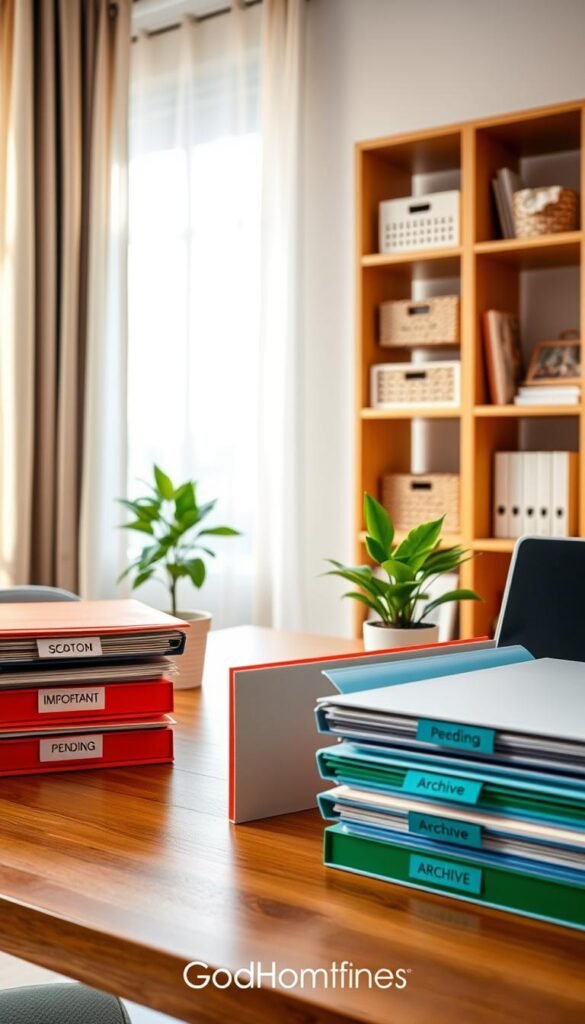
Maintenance rule: each week move completed action items into filing. Once a month thin the Limited Time folder so it does not become a new clutter source.
Next: choose renter-friendly products that fit your exact space and budget, including under-$25 and under-$50 options and small-apartment picks like the kitchen command center ideas.
Renter-Friendly Storage Products That Don’t Require Drilling (Budget Picks Under $25 and $50)
A small set of budget tools will stop counter piles and make daily papers easy to find. Start with one visible inbox for action papers, one closed box for inactive papers, and a simple label tool.
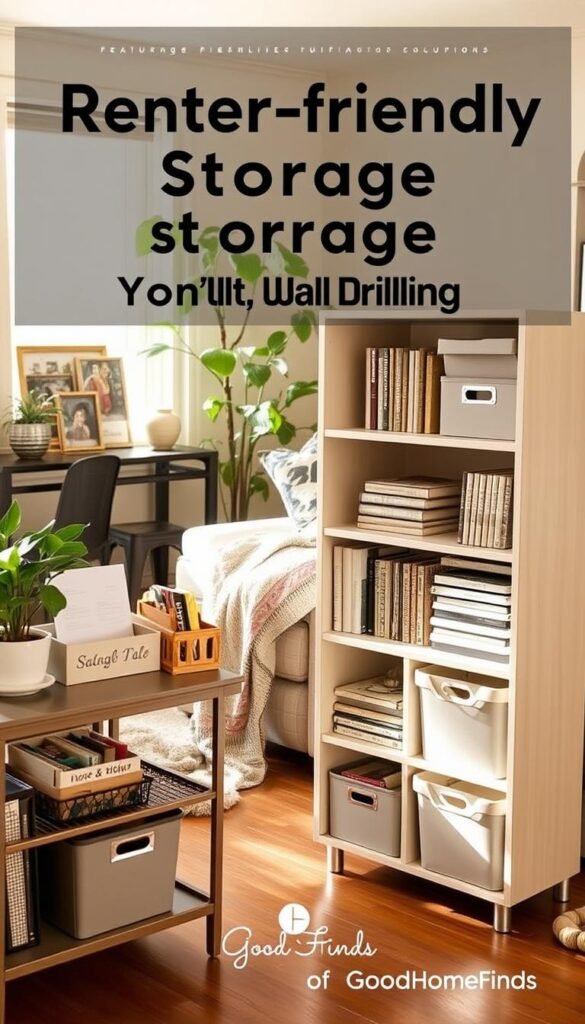
Desktop and countertop solutions
What to buy: a slim letter tray or a single standing file to sort Open, Pay, and File. This keeps bills and daily paper in view.
Closet- and shelf-friendly lidded file boxes
Why it works: a lidded file box hides visual clutter, is portable, and fits on a shelf or cabinet. Best for inactive papers you rarely need.
Vertical organizers and inbox systems
A standing file with tabbed dividers acts as a real-time inbox beside your laptop. Visibility helps you finish tasks instead of forgetting them.
Entryway drop zones without drilling
Choose freestanding trays, over-the-door pockets, or adhesive hooks plus a small basket. These ideas give mail a home the moment you walk in.
Portable mini organizers
Keep an accordion folder or index card case in your bag for receipts and coupons. Empty it weekly into your closet box or file.
Pros, cons, and best-for guide
- File box: cheap and portable. Limited capacity; worth it for most renters.
- Filing cabinet: high capacity but bulky; best for multi-person flats with space.
- Stacked drawers: great for shared sorting; can overflow if not reviewed weekly.
| Budget | Under $25 (Essentials) | Under $50 (Upgrades) |
|---|---|---|
| Studio | One desktop inbox, one lidded file box | Stacked letter tray or sturdier file box |
| Multi-bedroom | Shared inbox + per-person mini box | Stacked drawers or small filing cabinet-style unit |
| Best-for | Low cost, portable value | Better retrieval, higher capacity |
For a deeper look at cheap vs premium storage choices see a quick comparison storage options comparison.
Room-by-Room Placement: Where Paperwork Should Live in Kitchens, Bathrooms, Closets, and Entryways
Give every room a single, clear rule for what papers can stay and what must move on. This cuts roaming clutter fast and makes daily habits simple to follow.
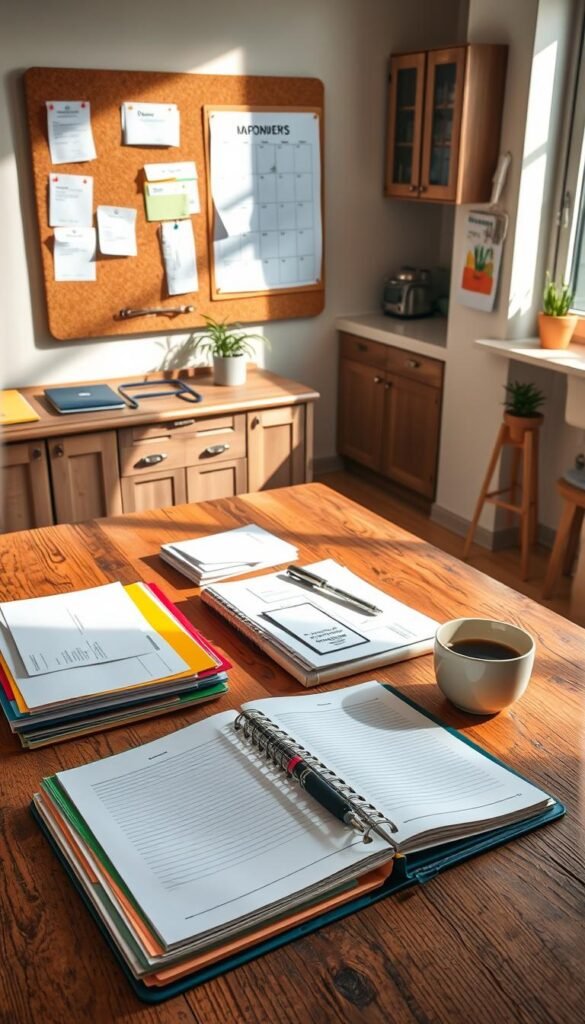
Kitchen command center (no permanent changes)
Use a countertop letter tray or a slim standing file to keep papers off counters and away from the fridge. Label three slots: Open, Pay, File. Mail drops into Open. Bills move to Pay and get cleared in your weekly routine.
Bathroom-safe exceptions
Do not store important documents near sinks or showers. Moisture damages records and causes mold.
Exceptions: a laminated emergency contact sheet in a drawer is fine. Originals belong elsewhere.
Closet “paper zone” for apartments without an office
Create one shelf with a lidded file box for archives and a small vertical file for active items. This is renter-friendly and portable when you move.
Kids’ school papers and permission slips
Give each family member a dedicated slot or folder. A simple bin or divider keeps permission slips separate from ads and helps you find items fast.
Entryway drop zone
Put a slim sorter or even a small bowl by the door. This single rule stops mail from spreading across surfaces the moment you walk in.
Studio vs multi-bedroom alternatives
Studio: one command corner near your desk that combines Open/Pay/File. Multi-bedroom: shared entryway sorter, closet archive, plus a per-person slot system.
Maintenance tip: clear the Pay slot weekly and thin the archive monthly. Make sure each room only accepts the papers assigned to it. That keeps clutter low and retrieval fast.
Protecting Important Documents and Sensitive Information (Safety, Durability, Easy Access)
Keep your irreplaceable records safe, yet easy to reach in an emergency.
What to keep forever: originals you can’t easily replace. Examples: birth certificates, passports, Social Security cards, and marriage licenses. These documents often get requested for official processes. Store them together in a clearly labeled folder or a distinct color folder so they stand out.
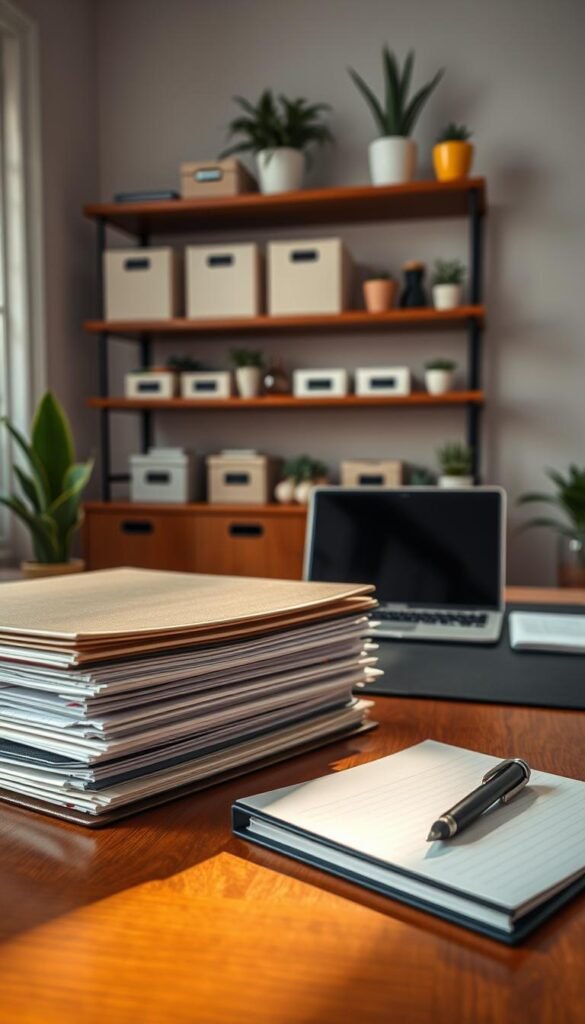
Fire- and water-resistant storage options
Small lock box — portable and quick to access. Good for renters who need easy reach.
Fire- and water-resistant portable container — larger capacity, grab-and-go for moves or evacuations.
Safe-deposit box — best security for rarely used originals. Less convenient for urgent access.
| Option | Security | Access | Best for |
|---|---|---|---|
| Small lock box | Moderate | Immediate at home | Passports, SSN cards, a few originals |
| Portable fire/water container | High | Quick grab-and-go | Families, multi-document sets |
| Safe-deposit box | Very high | Bank hours only | Rarely used originals, long-term archive |
Shred vs recycle
Shred anything with Social Security numbers, bank or credit card numbers, PINs, passwords, or signatures. This reduces identity-theft risk.
Recycle non-sensitive paper like general advertisements or drafts. If in doubt, shred the page with account numbers and recycle the rest.
How long to keep common financial documents
- Credit card statements: keep 1 year.
- Tax returns and supporting tax documents: keep 3 to 6 years.
- Credit card receipts: keep 60–90 days or until matched to statements.
- ATM receipts: keep until they appear on your bank statement.
Scan backups: scan irreplaceable documents for digital backup. Keep originals protected even if you keep scans. A scanned copy is useful for quick reference but may not replace an original in official situations.
Decision filter: ask, „Under what circumstances will I need this document?“ If you can’t name a real situation, it likely does not deserve long-term storage. Keep one consistent location, add a short checklist inside the box, and review files annually.
Conclusion
Wrap up with a practical plan so papers stop turning into a constant pile. Start at the spot by your desk. Sort new mail into action vs. file. Use one visible inbox, clear due-date labels, and a single archive area.
Daily: 2 minutes to sort mail. Weekly: 15 minutes to pay bills and clear action items. Monthly: one 60-minute session to file, shred sensitive cards and documents, and thin the piles.
Handle busy seasons by expanding your action area, then compressing back into the system. Begin with budget tools; upgrade only if volume needs it. For affordable options see these budget organizer picks.
You’re not aiming for zero paper. You’re aiming for a reliable way that saves time, lowers stress, and helps you find what you need when you need it.