
Keep your home ready for holidays and changing weather without drilling or drama.
You live in an apartment. Space is tight. This guide gives a renter-friendly plan that keeps items accessible and safe. It covers decor, holiday decorations, off‑season clothes, shoes, and occasional kitchen pieces.
You’ll learn a simple process: edit first, pick the right containers, build room-by-room zones, label, and set short monthly maintenance. A reverse-pack method makes next year faster: what you need first goes in last.
Most Americans spend over $230 a year on holiday decor. That adds up. A practical system saves time, cuts rebuying, and reduces damage. I’ll suggest budget options under $25 and $50, plus when it’s worth spending more for durability and safety.
This is about real life, not a perfect photo. The best system is the one you will actually use.
Key Takeaways
- Renter-friendly plan: no drills, no permanent installs.
- Focus: decor, clothing, shoes, and occasional kitchen items.
- Follow five steps: edit, pick containers, zone, label, maintain.
- Budget picks under $25 and $50, and tips on when to upgrade.
- Reverse-pack to save time next year and avoid repurchases.
Why seasonal item storage gets messy in apartments (and how a system saves time)
Small apartments turn a few boxes of decorations into a full-time chore. Limited closet space and no garage mean temporary piles become permanent ones. That creates daily friction and adds avoidable stress.
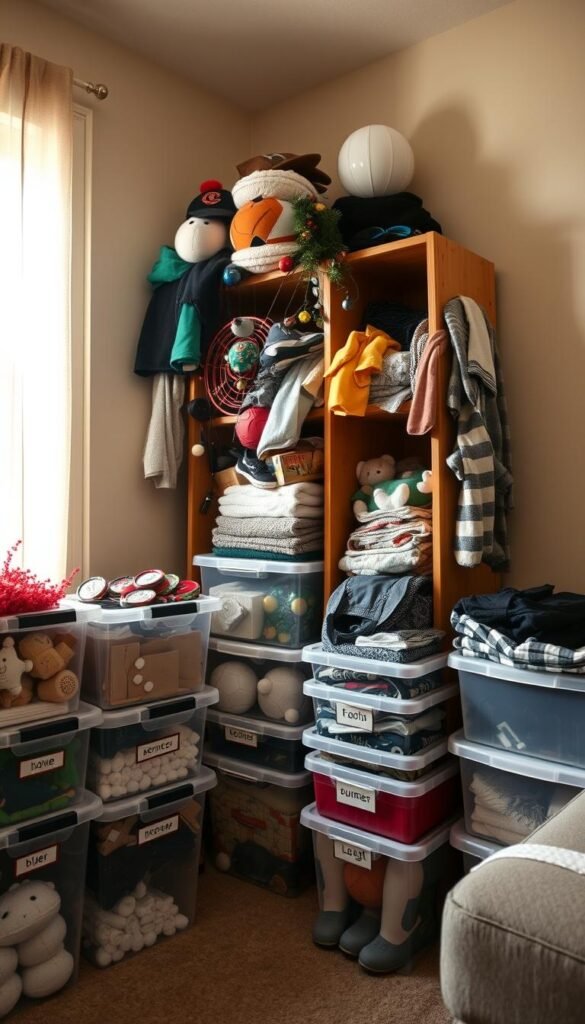
The real cost shows up over years. Crushed ornaments, tangled lights, warped wreaths, and rebought basics add up. Many households spend over $230 a year on decorations, so protecting what you already own is worth the effort.
The small-space friction points
- Closet stress: aim to keep a closet at about 80% full so it stays functional.
- Out-of-sight bins: stacked boxes become mystery boxes you avoid opening.
- Overflow zones: behind the couch, atop cabinets, or shoved under beds.
What renter-friendly storage actually means
Renter-friendly solutions require no drilling, no built-ins, and no heavy tools. You should set it up in an afternoon and remove it in minutes when you move.
Good-enough standard: readable labels, containers you can lift safely, and a clear place for each category of things. That simple system stops you from re-sorting the same items every season and saves you time the next year.
„Protect what you own, keep it accessible, and make the system easy enough you’ll use it.“
Next, you’ll start by editing items so you’re not paying to store things you don’t use.
Sort and declutter first to make storage space (without making random piles)
Before you buy boxes, decide what truly earns a spot in your closet. Start with a fast edit session. Fewer items means less storage and less clutter.
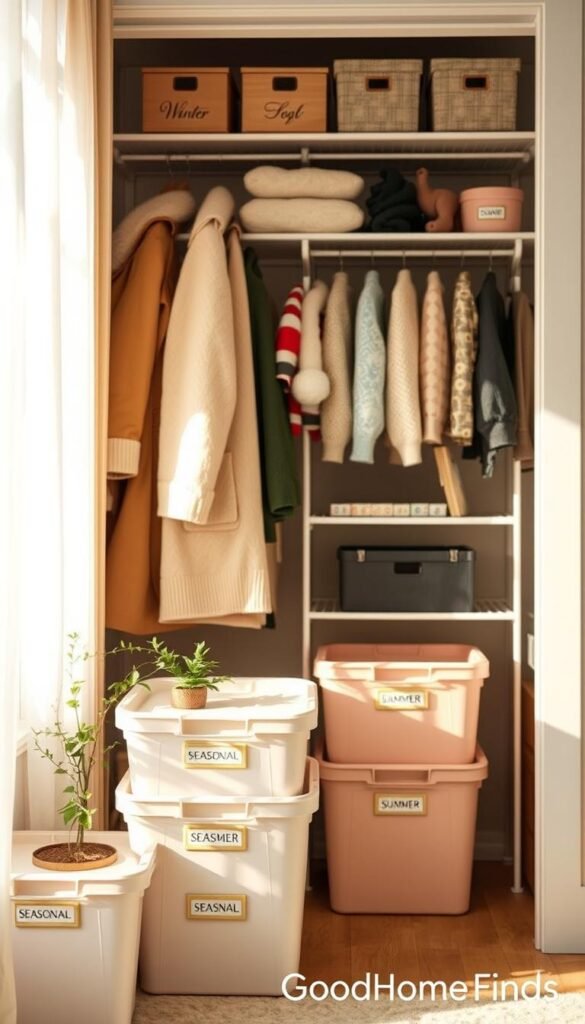
- It doesn’t fit.
- Not used in a year.
- Stained, damaged, or a duplicate you never reach for.
Random piles fail in small homes. They block walkways, steal surfaces, and become „later“ projects that linger.
Simple exit plan
- One bag for donate, one for trash.
- One box to sell, one bin to return to rooms.
- Schedule a drop-off or pickup within 48 hours so bags don’t live in your trunk.
Keep a small weather buffer: one coat, one sweater, one pair of boots. This saves you from digging through storage on a cold winter day.
Do this quick edit every season change. The goal is a closet that breathes and a storage setup that stays usable all year.
Organize seasonal decor with a reverse-packing routine that makes next year easier
Think backwards: pack today for the first things you’ll need next year. The idea is simple. Put the items you want first on top so unpacking is fast when the holidays return.
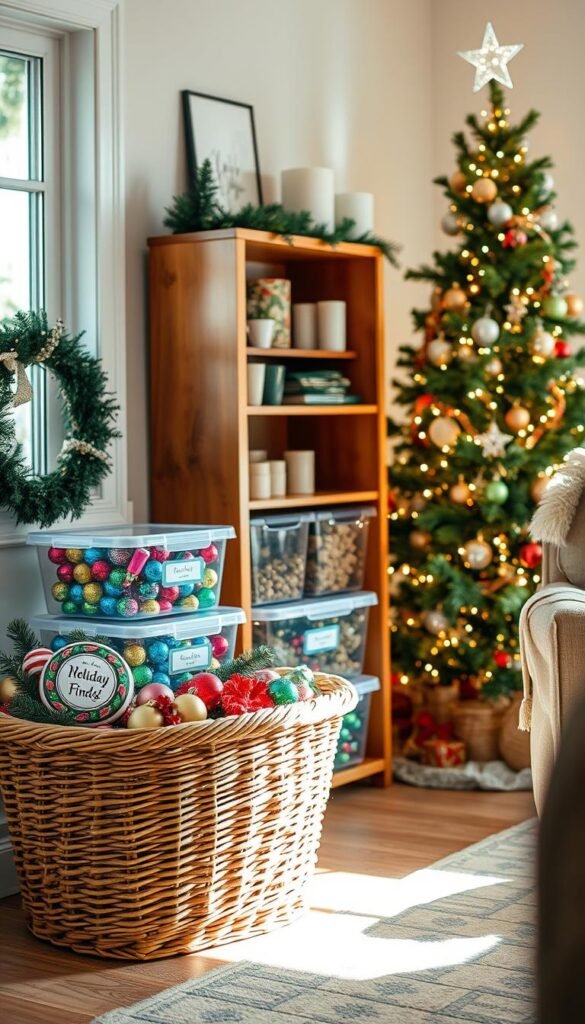
How reverse-packing works
Note what you set up first each year — tree skirt, lights, hooks, and the main ornaments. When you pack, place those last-used items on top of the bin so they come out first next year.
Set consistent category zones
Keep zones steady: tree decor, ornaments, lights, garlands, stockings, and table decor. Use one container per zone so you stop mixing items across bins.
Protect fragile items
Prevent movement, crushing, and moisture during storage months. Use compartment tray inserts for ornaments and divider boxes for delicate pieces. Wrap odd shapes with bubble wrap or natural excelsior to cut damage risk.
- Pack one category at a time, seal, then label the container.
- Use clear bins or a labeled container so you can spot contents quickly.
- Don’t overfill heavy boxes; make sure you can lift them safely.
Real-life tip: keep a small holiday packdown kit — tape, labels, scissors — with your decor so you don’t hunt for supplies later. Also check out a trusted guide for other renter-friendly storage ideas: best laundry room solutions.
Choose the right containers for seasonal storage (clear bins, fabric bins, vacuum bags)
A small investment in the right container saves time and protects what you own. Match the container to the item and to where it will live. This keeps things usable and reduces long-term damage.
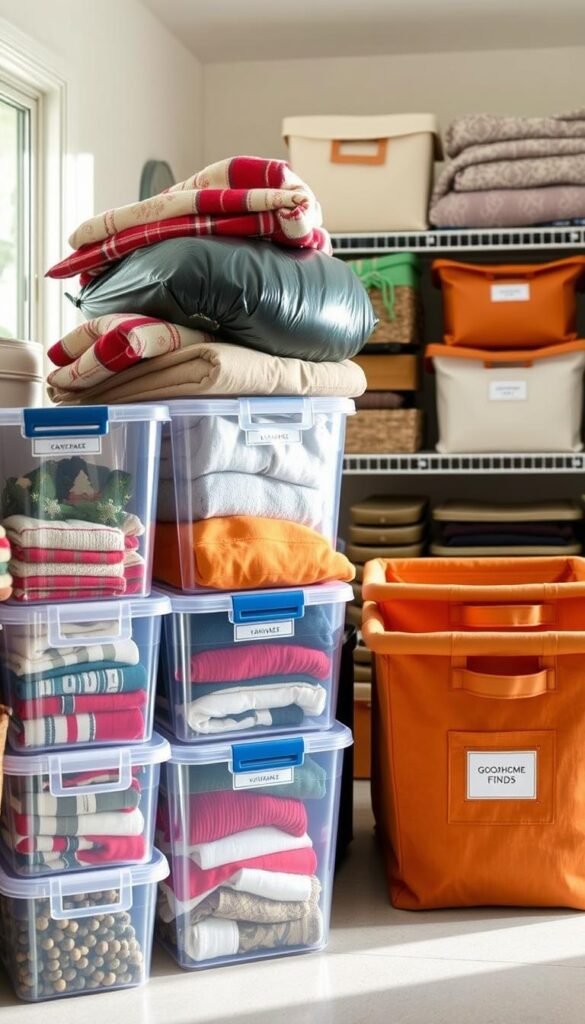
Clear lidded totes
Best for: decor, lights, and small boxes kept in a closet or under-bed.
Why: clear plastic bins give visibility and dust control. They stack safely and make quick checks easy.
Canvas or linen bins
Best for: wool, cashmere, and silk that need airflow.
Fabric bins reduce fiber stress and lower the risk of damage. Add acid-free tissue for fragile knitwear.
Vacuum-sealed bags
Best for: bulky winter coats, comforters, and summer blankets stored under-bed or on a top shelf.
They save space but can stress delicate fibers. Use vacuum bags for cotton and bulky items only.
Weather-tight options & moisture basics
For garages or sheds, choose gasketed totes with sturdy latches. Add renter-friendly protections: dehumidifier packs, cedar blocks, or lavender sachets to deter pests and damp.
„Make storage simple: clean items, choose the right bin, and label clearly.“
Quick checklist: make sure everything is clean and fully dry before sealing any container. For more on cost vs value, see storage cheap vs premium.
Budget-friendly renter solutions under $25 and $50 that actually work
A handful of targeted buys can free up closet space and cut weekly hunt time.
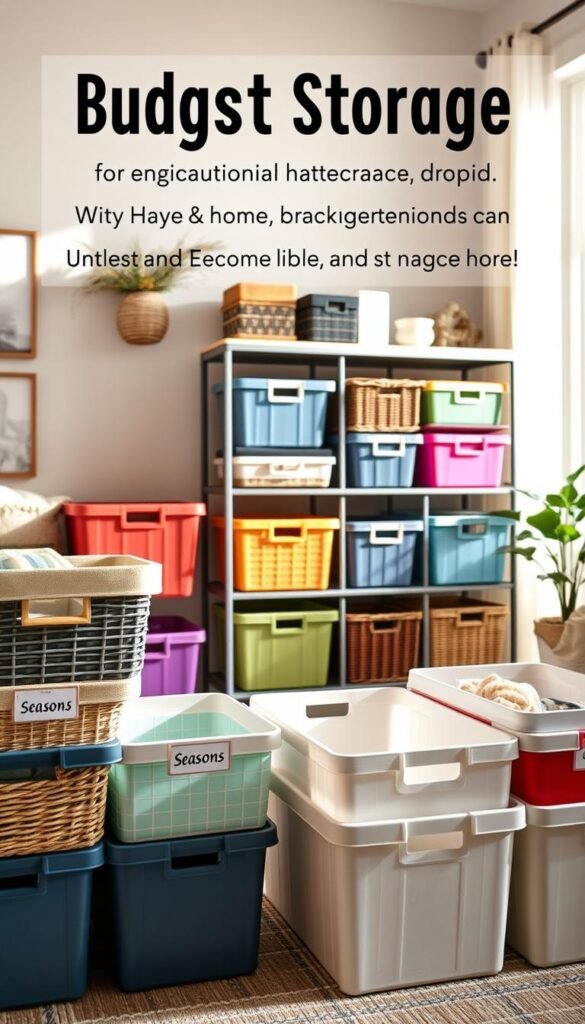
Practical picks beat expensive overhauls. A few low-cost items will improve access and reduce daily stress in small homes.
Under $25 practical buys
- Vacuum bags: best for bulky blankets and spare comforters in a studio. Use them for volume, not delicate knits.
- Cedar or lavender sachets: deter moths and add gentle scent to closed bins.
- Dehumidifier packs: protect boxes in humid closets.
- Label tape: fast identification saves time when you search later.
Under $50 upgrades that are worth it
- Under-bed zip bins: protect shoes and seasonal gear while using wasted space.
- Clear lidded totes: durable, stackable, and quick to scan for ornaments or serving pieces.
- Compartment tray inserts: prevent breakage for ornaments and fragile decor.
| Item | Best for | Pros | Cons |
|---|---|---|---|
| Vacuum bags | Bulky textiles | Max space saved | Slower access; avoid long-term on knits |
| Clear totes | Frequent rotation | Easy access; durable | Take more volume |
| Under-bed bins | Shoes, off-shelf items | Hidden but reachable | Need floor clearance |
| Compartment trays | Ornaments | Top protection; reduces breakage | Extra small parts to store |
Quick routine: keep labels, tape, and a spare sachet in one kit so packdown stays low-stress. Small buys like these are often more worth it than a big, unused purchase.
Room-by-room storage zones for small spaces (no drilling required)
A clear room-by-room plan keeps things from drifting into every corner. Set one simple zone in each room so items stop migrating and your daily routine stays smooth.
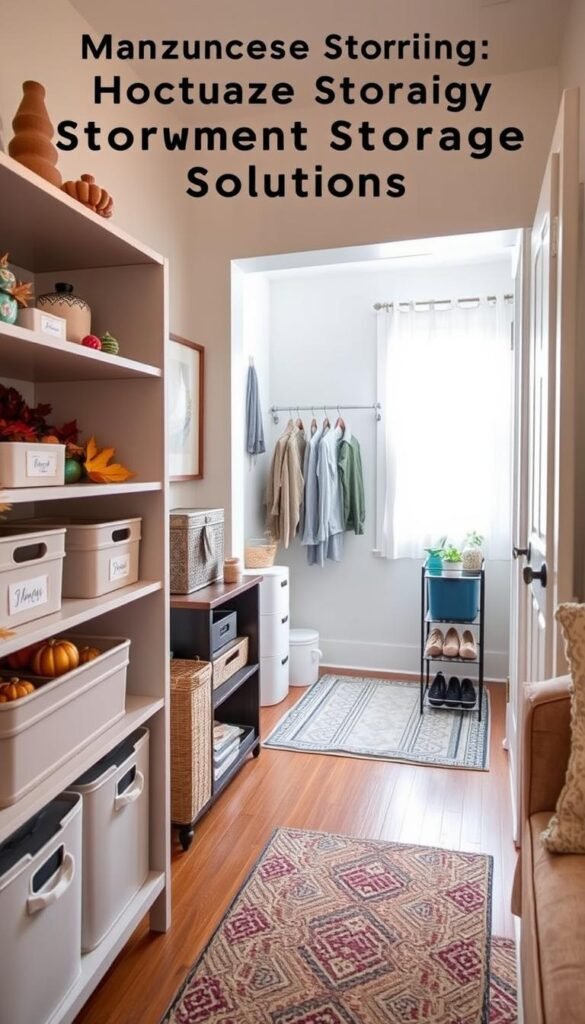
Closet space tips
Keep daily items at eye level. That way you grab what you need fast and return it easily.
Move off-season items to the top shelf or under-bed so the closet breathes. Leave a little empty space so hangers slide and you actually put things away.
Entryway control
Use a boot tray, over-the-door hooks, and labeled baskets for accessories. A single drop zone for keys and mail saves time for the whole family.
Try a one-minute nightly reset: shoes to the tray, gloves to the basket, keys in the drop spot.
Kitchen, dining, and bathroom
Give holiday serveware a higher cabinet shelf after a clean-and-store routine. Make sure everything is dry before it goes up.
In the bathroom, keep extra towels in lidded bins and add a moisture absorber if needed. No new furniture needed — clear containers and labels create zones that last.
Tip: For budget-friendly picks that fit this way of living, check budget organizer finds.
Best ways to store seasonal clothing and accessories without damaging them
Ready-to-wear next season starts with how you treat fabrics today. Store to protect, not just to hide. A small, repeatable routine keeps items usable and reduces headaches when temperatures flip from winter to summer.
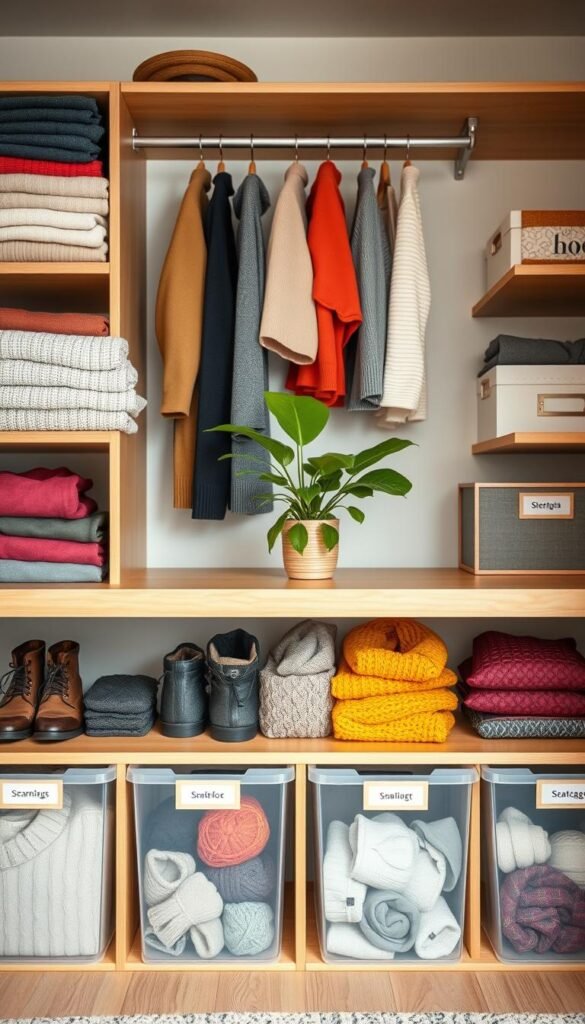
Puffy coats and fluffy items
Hang bulky coats in garment bags to avoid permanent creases and lost loft. Use wide, sturdy hangers so shoulders keep their shape.
Tip: Air them for a few hours before packing to stop trapped moisture from causing damage.
Cotton basics
Fold tees and casual cottons neatly. If space is tight, compress and place in a clear, sealed bin for dust protection and easy scanning.
Label one clear bin per function so you pull the right items fast.
Silk, wool, and cashmere
Use breathable canvas or linen bags and tuck acid-free tissue between folds. This preserves color and reduces snags and pilling.
Avoid vacuum-seal on delicates; long-term compression can harm fibers.
Leather jackets and boots
Keep leather on shaped hangers or stuff boots and bags with acid-free paper to hold form. Protect zippers and metal from scratches with soft cloth wraps.
Folding leather creates creases that can be hard to remove later.
Shoes and boots
Store shoes in compartment under-bed bins and stuff toes with paper to prevent collapsing. For boots, use boot shapers or rolled paper to keep shafts upright.
- Small-space tip: sort by outfit function (work, weekend, formal) when seasons overlap.
- Practical rule: if you wouldn’t wear it straight out of storage, clean or repair it before packing.
Labeling and inventory tracking so you can find things fast next year
Clear labels save you time and stop the „where did I put that“ scramble next year. Labeling is the fastest upgrade you can make to protect what you own and avoid rebuying.

Simple categories scale well. Use broad group names that work every year: decor, lights, ornaments, winter wear, and serving pieces. These five labels are repeatable and easy to scan when bins are stacked.
Clear-bin plus label strategy
Use clear bins for quick visibility and add paper or vinyl labels for certainty. The combo prevents rummaging and keeps fragile things safe.
- Placement: label the front, one side, and the top if the bin lives high.
- Search-friendly names: use specific names like „Tree Lights“ instead of „Misc Holiday“ — make sure the words match how you look for items.
Digital inventory for speed
For families or shared storage, add QR code stickers linked to a short phone note or spreadsheet. Scan to see a quick list of what’s inside and who last touched the bin.
Paper labels are best for small setups. QR inventories work when you have many bins across closets, under-bed zones, or multiple people accessing storage.
Quick routine: spend five minutes each time you add or remove items. Update the label or phone note so next year truly is fast. If you want other low-effort tips for small spaces, check this guide to fridge space solutions.
Comparison tables: pick the best seasonal storage setup for your apartment size
Pick a setup that matches how much storage space you actually have and how fast you need access.
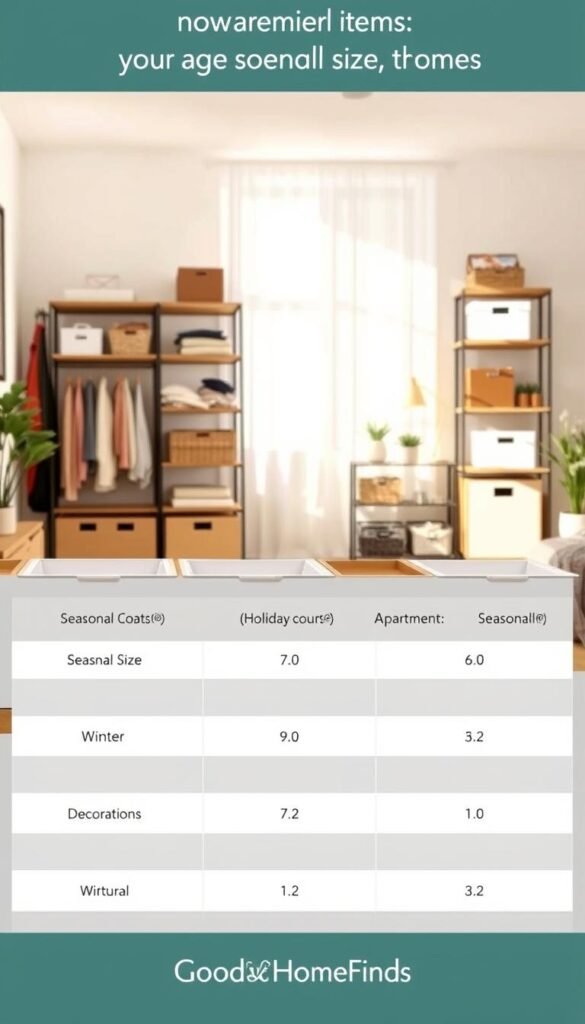
Studio and micro-apartments
Prioritize under-bed tubs, a top-shelf tote, and a behind-the-door shoe pocket. These choices save floor room and keep frequently used items within reach.
One-bedroom apartments
Create closet rotation zones and limit yourself to one-bin-per-season to stop overflow. Clear bins make quick scans easier and speed up swaps.
Two-bedroom and family setups
Use shared bins by category and kid-friendly labels. Add a simple easy-return routine so everyone puts items back quickly and the system stays usable.
Decision rules
- If you need max compression, pick vacuum bags.
- If you want fast access, pick clear bins.
- If shape matters, pick garment bags.
| Option | Cost | Capacity | Protection | Access |
|---|---|---|---|---|
| Bins | $$ | High | Good | Fast |
| Vacuum bags | $ | Very high | Low for delicates | Slow |
| Garment bags | $$ | Medium | Excellent for shape | Medium |
| Location | Convenience | Risk (moisture/pests) | Best for |
|---|---|---|---|
| Closet shelf | High | Low | Clothing, decor |
| Under bed | High | Low | Shoes, bins |
| Entry closet | Medium | Medium | Outerwear |
| Garage | Low | High | Weather-tight totes |
Practical tip: standardize container sizes so stacking is stable and swapping takes less time. For closet-focused ideas that fit renters, see best closet space solutions.
Conclusion
Wrap up with a practical checklist so your next holiday swap is fast. Follow the simple process: edit to clear space, pick the right containers, reverse-pack decor, set room zones, and label each bin. This renter-friendly system fits small homes and moves with you.
Payoff: you save time each year, protect items and decor, and avoid last-minute clutter. Start with under $25 basics like labels and dehumidifier packs. Add under $50 upgrades such as under-bed bins, clear totes, or ornament trays as needed.
One small routine keeps it working. Once a year, do a 30–60 minute check: get rid of what you didn’t use, update labels, and make sure bins are dry and not overloaded. Need compact ideas for tight kitchens? See small kitchen solutions.