
Visual organizers are simple diagrams or layouts that help you take notes and see your ideas at a glance. Think shapes, lines, and lots of blank space so each bit of information is clear and quick to scan.
Start by deciding what you want to organize. Then split the work into two layers: your physical space—bins, hooks, carts—and your information—labels, maps, simple checklists. This two-layer way saves time and stops you from hunting for things every day.
This guide focuses on renter-friendly, small-space solutions with no drilling. You’ll find practical picks under $25 for quick wins and under $50 for sturdier upgrades that last in rentals.
We’ll cover kitchen, bathroom, closets, and the entryway. You’ll get pros and cons, who each organizer is best for, and alternatives by apartment size. The goal is not perfect order. It is a repeatable routine you can use in real life.
Quick start: pick one messy zone, choose one visible container plus one label method, and commit to a two-minute reset each day.
Key Takeaways
- Use a simple graphic organizer to keep ideas and items clear and accessible.
- Layer physical solutions and information so daily routines feel automatic.
- Find renter-safe options under $25 for quick fixes and under $50 for durable upgrades.
- Follow room-by-room tips for kitchen, bath, closets, and entryway.
- Weigh pros and cons and choose organizers that fit your apartment size and schedule.
- Get started fast: one zone, one container, one label, two-minute reset.
What “visual organization” means and why it works
A clear visual structure helps your mind find the next step without wasting time. This is less about perfect order and more about making items and notes quick to scan. When the next action is obvious, daily routines move faster.
What a graphic organizer does: it uses a few shapes and lines, minimal text, and plenty of blank space to break complex ideas into steps or cycles. That simplicity supports learning and steady use. Michael Murawski describes these tools as simple shapes and lots of white space that aid note-taking and sequence building.
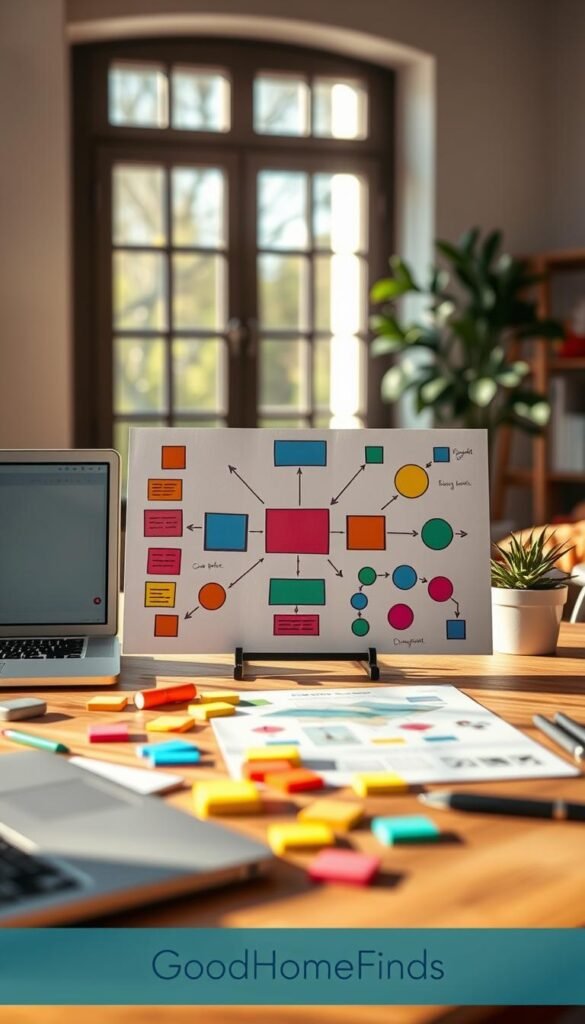
Simple structures for real life
A labeled bin is a physical graphic organizer. A fridge „use-first“ box is a visual tool. A closet category map is a quick mental reference. Each one helps you track relationships between items and cut decision time.
„Graphic organizers help connect thoughts and align teams despite their simplicity.“
- Minimal text, clear shapes: You make easier choices when categories are visible at a glance.
- Blank space matters: Empty areas keep a system flexible and prevent the „packed drawer = chaos“ cycle.
- Use repeated steps: Graphic organizers build understanding through regular review and use.
Example: map a weeknight dinner process as a short sequence—take out pan → grab spices → prep board → trash bag. That simple step list cuts forgotten actions and helps roommates share tasks.
Quick checkpoint: If a system needs too many steps, it won’t stick. Keep the next action obvious and under three moves when possible.
For small-space picks that follow this logic, check a short list of renter-friendly tools and ideas at best organization finds.
How to organize visually using graphic organizers and visual tools
Target one problem and map the few steps that fix it. Pick a daily pain point—morning rush, meal prep, or shared-bath clutter. Define what information must be visible to stop the pain.
Choose the right format
Match format to goal. Use a sequence map for routines, a tree chart for category breakdowns, and a Venn diagram to split shared vs personal items. Keep text minimal; make the center your main goal.
Quick setup steps
- Do a 10-minute mess audit and list the five items that cause the most friction.
- Pick a graphic organizer that fits those items.
- Sketch a simple diagram and label only the key elements that drive action.

Collaboration and upkeep
Agree on category names and label style with roommates or partners. Use a shared note or photo for async edits. Set a weekly two-minute check to update labels or move one hook.
Get started: one pain point, one diagram, one weekly tweak. That keeps the system useful without a big overhaul.
Pick the best visual system for your space and your brain
Pick a system that matches how you live and how your mind prefers to see things. Match the visibility level to the task and the users who will use it.
Visibility levels
Open display works for daily essentials. It speeds access and supports quick decisions. Use this for items you reach for every day.
Semi-hidden bins suit often-used items. They cut clutter while keeping content easy to scan. Clear fronts or labels help with memory and learning.
Concealed storage keeps backups and helps calm the room. Choose opaque bins and larger boxes for low-use goods.

| Level | Pros | Cons |
|---|---|---|
| Open display | Fast access; boosts engagement; shows relationships between items | More dust; higher visual clutter |
| Semi-hidden | Balanced speed and calm; forgiving when tired | Needs labels; slightly slower pull-out |
| Concealed | Clean look; low clutter; great for backups | Slower to find; risk of forgetting items |
Best fits by living situation
Studio: choose vertical, multi-use organizers and clear fronts to save space.
Shared apartment: mark ownership and set shared zones for easy collaboration.
Family rental: pick durable, safe materials and simple labels kids can read.
Dorm-style: go portable and removable so your system moves with you.
Accessibility and engagement
Make “put away” as easy as “take out.” Use one-hand openings, consistent sizes, and keep containers where the action happens.
Friction test: if you skip it when rushing, the system needs a tweak. Try fewer categories, clearer labels, or move it 12 inches closer to the drop zone.
Budget-friendly visual organization tools under $25 (no drilling required)
Small, low-cost swaps often solve the messiest daily problems fast. Pick renter-friendly choices that give clear wins without a toolbox. Below are practical product ideas, safety notes, and quick setup steps you can copy tonight.

Clear bins and stackable containers
Why they work: clear bins make stock visible so you avoid duplicates. Try acrylic shoe boxes, small pantry crates, or fridge bins under $25.
- Look for smooth edges, consistent footprints, and sturdy handles.
- Best for pantry, fridge, under-sink, and narrow closet shelves.
- Small-apartment alternative: clear nesting trays that double as drawer dividers.
Peel-and-stick labels, erasable markers, and color-coding
Peel-and-stick labels let you rename categories as routines change. Use erasable markers on clear bins for temporary tags.
Color-code by person or zone: one color per roommate or one color per zone (cooking, cleaning, backstock). This keeps information simple and repeatable.
Over-the-cabinet hooks and door-hanging organizers
Use over-the-cabinet hooks and slim door pockets to add vertical lanes without drilling. Protect finishes with thin felt pads and avoid overloading hinges.
Non-slip liners and tray dividers
Add non-slip liners and small dividers to create lanes inside drawers. They stop small items from migrating and keep a visual order that lasts daily use.
- Pros: clear bins = fast find; dividers = calm drawers.
- Cons: clear fronts can look busy; opaque choices need strong labels.
- Best-for: renters, small kitchens, shared apartments, and anyone who prefers quick wins.
- Measure the shelf or drawer.
- Pick one category per container.
- Label the front and keep one empty buffer bin for overflow.
For more budget picks and a short shopping list, see these budget organizer picks.
Upgrades under $50 that improve durability, safety, and long-term order
Small renter-friendly upgrades under $50 can make daily storage feel sturdier and safer.
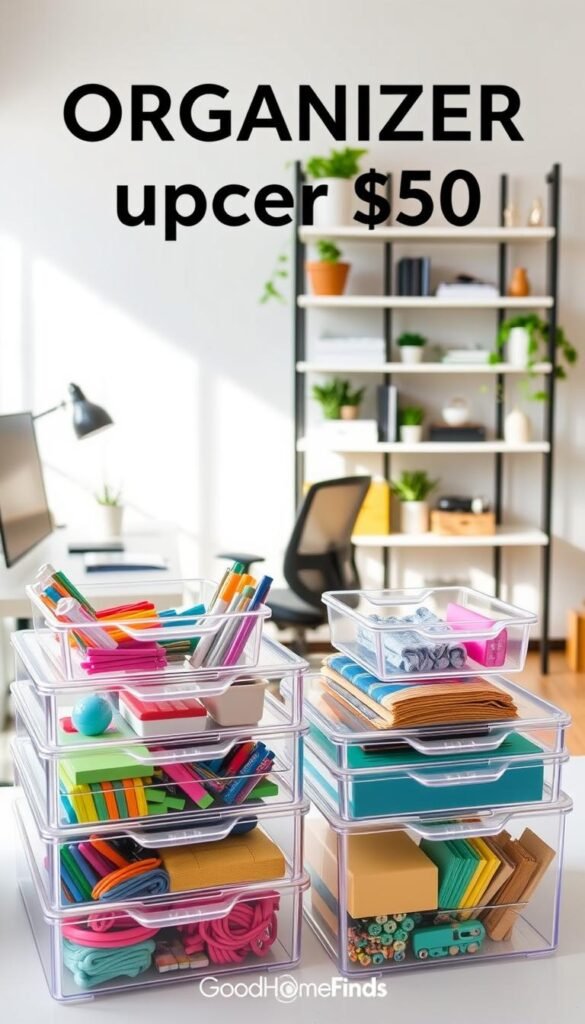
Slim rolling carts are a smart mobile organizer for tight gaps. Use them in a bathroom, kitchen, or laundry corner. A cart moves with your flow, so you clear counters fast and keep order when space is limited.
Freestanding shelving and stability tips
Pick freestanding shelves for closets and pantries when drilling is off the table. Measure depth first and choose units with stable feet or adjustable bases to avoid wobble.
Best-for: renters who need sturdy, removable shelving.
Over-the-door racks with padding
Door racks save floor space and cut rattling in shared homes. Add thin padding where metal meets paint to protect veneer and reduce noise. Check hinge fit so doors still close properly.
Command-style mounting strategies
Use adhesive hooks when drilling is not allowed. Key steps: confirm surface type, clean and dry fully, follow cure times, and respect weight limits on each strip.
- Do not hang heavy items over toilets or play areas.
- Distribute weight across multiple hooks for larger items.
- Avoid high-humidity spots unless strips are rated for moisture.
Pros/cons at a glance: freestanding units are flexible but eat floor space; door racks save room but can stress hinges; adhesive mounts are easy but have strict limits.
For practical comparisons between budget pieces and higher-end storage choices, see this short guide to cheap vs premium storage.
Long-term order note: spend under $50 when the upgrade removes daily friction—like clearing a counter—rather than adding another item you won’t use.
Kitchen: organize information and items so cooking takes less time
Turn your cooking zone into a simple sequence that saves minutes every night. Use a small graphic organizer in your head: the center is „weeknight cooking“ and the surrounding elements are prep, cook, store, and clean.

Pantry and cabinet zones that match your cooking process
Group items by task. Keep oils and spices by the stove. Store cutting boards and prep tools near your main work surface.
Put food-storage containers and leftovers where you unload the fridge. Place snacks where you actually reach for them.
Fridge “use-first” and “grab-and-go” clear bins
Use clear bins labeled use-first to reduce waste. Add a second bin labeled grab-and-go for lunches and quick snacks.
Do a two-minute weekly scan to toss or relabel leftovers. That simple routine keeps the system working and saves time.
Countertop clutter control
Limit counter items to what supports your goals. Keep a tray for coffee/tea, a small bin for snacks, and a secure spot for meds.
Trays make the counter feel tidy and let you move clusters fast when you need space.
Pros/cons: open shelving vs. labeled bins
Open shelving makes things fast to find but shows clutter and can collect grease.
Labeled bins hide mess and help learning routines, but they need consistent labels and occasional resets.
Alternatives by apartment size
Studio kitchenette: use vertical door racks and a single rolling cart as your main tool.
Full-size rental: add shelf risers, zone labels, and layered trays to create more elements without drilling.
Quick kitchen sequence map (example)
- Unload groceries
- Sort into bins (pantry, fridge, grab-and-go)
- Label leftovers
- Reset counter at night
| Feature | Best for | Trade-off |
|---|---|---|
| Open shelving | Frequent cooks who like access | Shows clutter; needs regular cleaning |
| Labeled clear bins | Shared apartments; renters | Requires labeling habit; periodic resets |
| Rolling cart | Studios and tight kits | Takes floor space; adds mobility |
When every item has one obvious home, you waste less time and cook with less stress.
Bathroom: visually organized essentials without crowding the sink
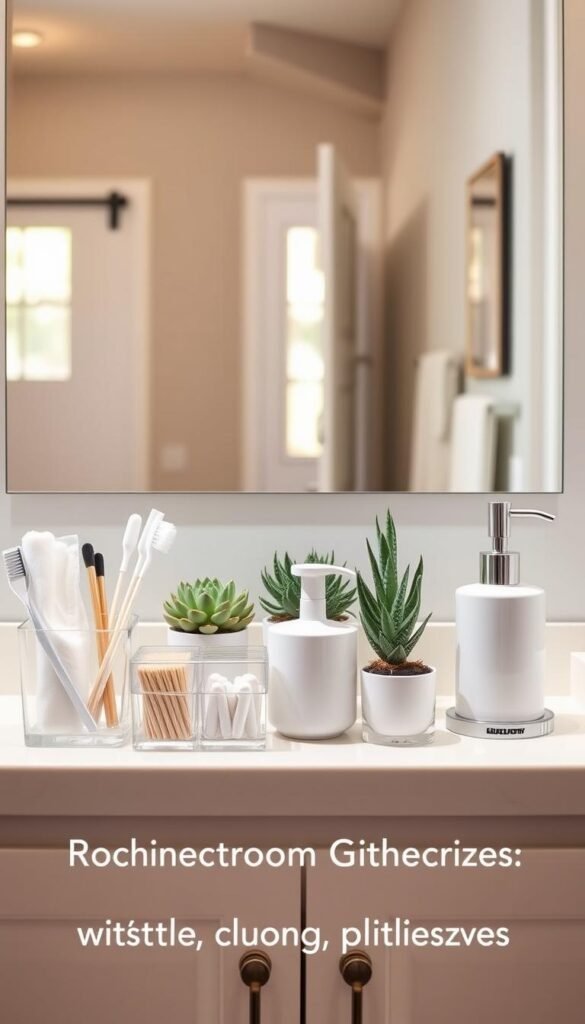
No-drill shower options give you storage without damage. Use tension poles for heavy bottles and frequent use. Pick hanging caddies for midweight items and easy reach. Choose adhesive baskets for light things and short-term setups.
Under-sink safety and quick cleanups
Use leak-safe bins to catch drips and protect shelves. Line each bin with an easy-clean mat so you can lift and rinse in seconds.
Practical rule: if a tool is hard to remove for cleaning, it will turn into grime. Pick tubs and trays you can lift out.
Daily reset: a two-minute process
- Clear the sink basin.
- Return daily items to the single tray on the counter.
- Toss empties and wipe the surface quickly.
This short step keeps shared bathrooms usable and reduces bigger cleanups later.
Durability and renter-friendly setup tips
- Prefer rust-resistant metal or BPA-free plastic in humid spots.
- Avoid overloading adhesive baskets; distribute weight across multiple strips.
- Clean surfaces, let them dry, follow adhesive cure times, then test before full loading.
| Tool | Best for | Limitations |
|---|---|---|
| Tension pole caddy | Heavy bottles; daily use | Needs ceiling-to-floor fit; can shift if overloaded |
| Hanging caddy (showerhead/rail) | Midweight items; easy grab | May rust; choose coated metal or plastic |
| Adhesive basket | Light items; temporary renters | Less weight capacity; sensitive to humidity |
„Choose organizers you can lift and rinse — otherwise maintenance becomes a chore.“
Quick setup checklist: clean and dry surfaces, follow adhesive cure times, test load gently, and use leak-safe bins under pipes. These small steps save time and keep the bathroom safe and renter-friendly.
Closets: make outfits and supplies easy to find and put back
Treat your closet like a simple map: start with one top-level label and branch down. Use a compact tree chart to split clothing and supplies into clear groups.
Build a tree chart for quick decisions
Top level: clothing & supplies. Branch into work, gym, laundry, linens, and seasonal. This use of graphic organizers shows relationships and reduces daily friction.
The chart holds key ideas and the minimal information your mind needs to pick an outfit fast.

Practical product picks
Choose slim space-saving hangers, shelf dividers, and clear shoe boxes. These organizers keep categories separated without remodeling. Clear boxes are best if you forget what you own.
Small-closet alternatives
Use a freestanding garment rack for overflow. Slide under-bed bins for off-season gear. Try a simple folding system that assigns one drawer per category. These choices match tight spaces and renter needs.
Weekly maintenance: one-bag edit
Do one small step each week. Fill a single bag with donations or recycling and stop when it’s full. This light routine keeps order and meets your goals for easy upkeep.
For more renter-friendly closet ideas see best closet-space solutions.
Entryway: create a visual landing zone that prevents pile-ups
Make the entry the simplest step of your day by giving each daily item a fast, visible home. A small landing zone saves time and protects your routines when you’re rushing out the door.
Drop zone essentials
Keep three basics: removable hooks for keys and bags, a low tray for pocket items, and a mail sorter that fits how you deal with paper.

Simple picks: adhesive hooks, a shallow catch tray, and a slim vertical sorter. These renter-friendly items make the first touchpoint work.
Cause-and-effect process
Find where clutter starts—floor, chair, or counter. Then place the organizer exactly at that spot so the default action becomes tidy.
One household rule: one step after entering—hang, drop, sort. That small ritual stops pile-ups fast.
Best-for guidance and quick brainstorming
- Kids: low hooks and a labeled bin.
- Roommates: assigned spaces for each person.
- Pets: leash station near the door.
- Deliveries: package tray + recycling bag.
Quick brainstorming: list five items that land at your door. Then assign each item a home within arm’s reach.
Safety note: do not overload hooks, keep walkways clear, and pick a stable tray that won’t slide when you drop keys.
This small, practical solution protects your time, reduces daily friction, and makes entry tasks predictable. For renter-friendly options and more ideas, see best entryway storage solutions.
Conclusion
Finish your project by picking one small zone and treating it like a tiny experiment.
When you use a graphic organizer approach, decision fatigue drops because the next step is obvious. The method helps you better understand complex ideas and keep information where your mind finds it fast.
Budget paths work: quick wins under $25 give immediate visibility and fewer duplicates. Upgrades under $50 add durability and steady order for small-space rentals.
Keep the center goal simple — calm mornings, faster cooking, less clutter — and add only the elements that support that goal. Aim for a two-minute daily reset and a short weekly review instead of perfection.
Revise, don’t restart. Swap one bin, rename one label, or move one hook as you learn. If you live with a team, agree on labels and responsibilities so collaboration helps the system.
One practical action: pick one zone today, choose one tool, label it clearly, and track the results for a week. See how much time you get back and use that evidence to plan your next project.