Quick setup, real results. This page lays out an organizer 5+5 system: ten simple zones that cut daily clutter without extra fuss. You’ll get five Amazon-friendly picks that are practical and mostly under $25, plus five realistic alternatives when a ten-compartment layout won’t fit your drawer or cabinet.
Expect brief product notes with honest pros and cons. Each pick shows who it helps, safety and quality basics, price-value comments, and what to avoid so you don’t buy flimsy inserts.
These choices save time in real life. You’ll spend less time hunting for lids, utensils, or cleaning supplies during cooking, lunch prep, or late-night cleanups. One real-life example: adding a slim lid lane stopped nightly “where’s the match” searches in a rental kitchen.
We focus on Amazon-ready options for fast shipping, easy returns, and replacements. If you want more ideas, check this shortlist of smart buys at best organization finds.
Key Takeaways
- Ten-zone setup reduces daily clutter without overcomplicating your space.
- Five budget-friendly picks plus five alternatives fit most drawers and cabinets.
- Each entry includes quick pros/cons, who it’s for, and what to avoid.
- Most options stay under $25; pricier models serve as templates you can copy affordably.
- Amazon-friendly choices favor fast delivery and easy returns.
- Good for small kitchens, rentals, and busy households that need renter-friendly solutions.
What “organizer 5+5” means for everyday home and kitchen use
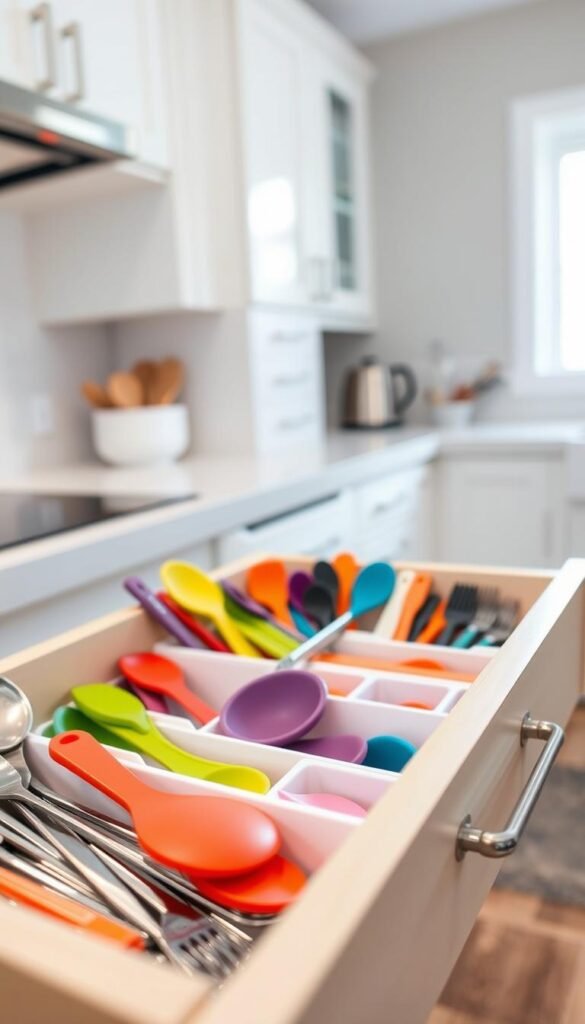
This system splits a drawer into ten practical zones so you can drop things in the right place every time. In plain terms, the idea is five primary sections plus five secondary sections. You separate tools by task: prep, cooking, baking, snacks, and kid items. That keeps daily routines simple and fast.
Common clutter hotspots include the junk drawer, the utensil drawer, the wrap/foil drawer, the snack cabinet, and the hard-to-reach back of deep shelves. These are the places a small layout saves the most time and frustration.
Quick measuring checklist (use inch)
- Measure interior drawer width in inch.
- Measure depth in inch from front to back.
- Measure height in inch inside the drawer box or cabinet.
- Measure cabinet opening and shelf-to-shelf clearance in inch.
- Measure twice at front and back — boxes can taper, and hinges or rails steal space.
The right height keeps spatulas from catching when you close the drawer. The right depth stops trays from sliding forward each time you open it.
Amazon-first buying filters and basics
Before you order, check delivery date and confirm free returns. Look for replacement parts or extra dividers if a section cracks. Good customer service means quick email replies, clear warranty terms, and visible contact info when items arrive warped.
Prioritize practical features over gimmicks: non-slip base, smooth edges, easy-clean surfaces, and modular sizing for odd drawers. Skip strong chemical smells and sharp corners. For family spaces, choose smooth finishes and low-VOC materials.
If you want more compact options and smart small-space ideas, see this shortlist at best small-space finds.
Best organizer 5+5 picks and affordable alternatives on Amazon
Begin with a full reference so you can translate a ten-zone approach to small spaces. The ECR4Kids mobile cabinet shows what a true ten-zone unit looks like in a home or playroom. Use that blueprint and pick the compact, budget-friendly fixes below.
ECR4Kids 5+5 Mobile Storage and Tray Cabinet (reference model)
Why it’s useful: Ten open zones for rotation, craft supplies, or daily drop-zones. Rounded edges and low-VOC finish make it safe for family spaces.
Who it’s for: You if you want a durable, mobile cabinet with casters and classroom-grade build. Check the 48″ W x 13″ D x 30.63″ H footprint before ordering.
What to avoid: Trays are sold separately; confirm doorways and aisle clearance before buying.

Compact picks and cheap alternatives
- 5-compartment plastic tray — Fast utensil fix. Pros: under $25, easy clean. Cons: can waste wide drawer space. Real life: keeps forks and knives visible at a glance.
- Adjustable drawer dividers — Custom lanes for wraps and odd gadgets. Pros: renter-friendly. Cons: check max height.
- Under-shelf basket — Adds a bonus shelf for mugs or snacks. Pros: no tools. Cons: avoid flimsy metal that bends.
| Item | Why useful | Price/value |
|---|---|---|
| ECR4Kids cabinet | True ten-zone reference; durable; mobile | Higher cost; blueprint for small fixes |
| 5-compartment tray | Quick drawer sorting for utensils | Under $25; great daily value |
| Adjustable dividers | Custom lanes for mixed items | Budget friendly; flexible fit |
For more small-space tips and compact cabinet solutions, see small kitchen solutions. These picks keep most products affordable and practical for everyday use.
How to choose: dimensions, features, safety, and customer service that actually matter
Start by measuring the actual interior so the kit fits without rattling or wasted gaps. A quick inch check cuts returns and keeps daily use simple.

Dimensions and fit
Measure interior width, depth, and height in inch with the drawer fully closed. Subtract 1/16″ as a safety margin for rails and hardware. Prioritize usable interior space over listed exterior dimensions.
Material and safety basics
Look for smooth edges, low-VOC finishes, and a stable base. ECR4Kids-style certifications like GREENGUARD Gold or TSCA compliance are good signals, even on budget items.
Mobility and placement
Casters help for mobile storage in a pantry or playroom. Skip wheels in tight kitchen cabinets; they add height and reduce stability.
Price-value under $25
Pay a little more for thicker plastic, non-slip feet, and adjustable dividers. Skip “bonus” compartments you won’t use; they become clutter traps.
Customer service and warranty signals
Check response hours, visible contact info, and replacement-part availability. Brands with quick email support set realistic expectations; learn more about good support at good customer service.
What to avoid
- Flimsy plastics that bow in heat
- Inserts taller than the shelf or drawer height
- Wide gaps from one-size trays
For budget-friendly product options and realistic alternatives, see budget organizer finds.
Conclusion
Finish with a simple plan: measure the interior in inch, check drawer or cabinet height, and pick a layout that fits. A compact organizer or dividers that match those numbers will be used daily.
Start with one under-$25 product that solves your top pain. Add more products or shelf risers only where you still stack items. Small changes keep the most-used items visible and cut decision fatigue.
When you order, filter for fast shipping, clear sizing photos, and easy returns. Check that the seller lists reachable customer contact and quick service before checkout.
For closing advice on how to craft a tight finish, see this short guide: closing advice. For budget vs premium trade-offs, read this overview: budget vs premium storage.