
Ready for a fresh-start reset in 2026? This short list gives you practical, renter-friendly solutions you can buy fast and put to work this week.
You’re solving the everyday clutter that keeps coming back: junk drawers, pantry corners, under-sink chaos, and overflowing closets. This guide focuses on real-life solutions for real routines — not Pinterest setups that need a remodel.
Most picks are under $25. A few premium items make the cut only if they truly save time, add durability, or do double duty. I’ll note who benefits, the pros and cons, and what to avoid so you don’t waste money.
Why Amazon? I prioritize fast delivery from the store so you can start now. You’ll get recommendations by room — kitchen, closet, bathroom, garage — plus system keepers like labels.
Quick tip: downsize first, then buy containers that match the items you kept. That step prevents overspending and keeps organizing practical and lasting.
Key Takeaways
- Solutions focus on everyday use in real homes, not staged setups.
- Most items cost under $25; premium choices are for real gains.
- Every pick includes use cases, pros/cons, and what to avoid.
- Amazon is prioritized for quick delivery and easy replacement.
- Start by decluttering; buy only what fits what you keep.
- Coverage by room plus system tools helps you build a lasting routine.
What to expect from these organizer finds in 2026
Start 2026 with realistic solutions that actually fit your daily routine. You’ll get practical picks that solve common clutter without flashy, short-lived gimmicks.

What “budget” vs “premium” means here
Budget picks are the best price-value options you can buy without regretting it. Most are under $25 and chosen for durability and matchable sizes, not the absolute cheapest model.
Premium means pay a bit more only when it saves time every day. Think sturdy shelving or pull-out trays that stop you from digging under sinks.
How we prioritize availability and delivery
We favor listings on Amazon for two reasons: consistent stock and easy matching add-ons later. Fast delivery matters, too. If it arrives the same week, you act while motivation is high.
- What we avoid: gimmicky features that don’t hold up.
- Hidden cost: cheap plastics that crack and force you to buy twice, wasting money in the long run.
- Rule to live by: measure first, then buy, then label.
| Type | Price Range | When to choose | Key benefit |
|---|---|---|---|
| Value picks | <$25 | Small gaps, simple sorting | Low cost, easy replace |
| Premium upgrades | $30–$120 | Daily-use pain points | Durable, time-saving |
| Marketplace bargains | Varies | When matching sets exist | Cheap, but may wear fast |
How we picked: everyday usefulness, time saved, and fewer “clutter magnets”
We rated every product by how it performs in real life, not how it looks on a shelf.
Three filters we used:
- Daily usefulness: you touch it often, so it must hold up.
- Time saved: it stops you from hunting for things.
- Fewer clutter magnets: it prevents future pile-ups.
Price-value check: what’s worth paying for under $25
“Worth it” means the item reduces repeat effort. Think drawer trays that stop you from re-doing a junk drawer every weekend.
We prioritise products that give clear wins in time saved and tidy routines. If it breaks quickly, it fails the test.

Safety and quality basics to look for
Check materials: food-safe plastics for kitchen bins, rust-resistant metal for baths, and clear load limits for shelves and hooks.
Adhesives matter. Prefer models with strong adhesive strips or screw-mount options and follow the clean, dry surface guidance.
What to avoid when shopping cheap
Watch flimsy plastic — it can crack, warp near heat, or slide around and cause more mess than it solves.
Avoid odd sizes and one-off sets you can’t replace later. Your system should grow, not become a mismatched pile.
„Function beats perfect aesthetics on a small space every time.“
Measure first. Measure shelves, drawers, and cabinet depth before buying so the product actually fits. Consistency makes good organization look great.
Best organizer finds budget for under $25 (the “buy now” list)
Skip the overhaul—grab a few smart items that actually change how you use space. These picks ship fast on Amazon and work in real life, not just on Pinterest.

Fab Totes foldable storage bins, 6-pack — $16.57
Why it’s useful: Pack seasonal clothes, extra sheets, and bulky comforters to keep closet shelves neat.
Who it’s for: Apartment renters and anyone with shallow shelves.
What to avoid: Do not overfill past zipper seams or store damp items.
- Pros: multiple matching storage bins, fold-flat for off-season storage.
- Cons: fabric is not pest-proof in damp basements.
- Real-life tip: label each tote and stack on a closet shelf for fast access.
Indressme cotton rope basket — ~$22.99
Why it’s useful: A soft drop zone for throws, pillows, or kids’ toys that keeps living rooms tidy in seconds.
Who it’s for: Open-plan homes that need a neat, decorative bin.
What to avoid: Avoid placing in wet areas or expecting spill protection.
- Pros: soft sides, stylish in living spaces; large 90L capacity.
- Cons: not stackable like hard storage bins.
- Real-life tip: use one by the couch for blankets and another near the door for reusable bags.
Home It mop and broom holder — ~$12.79
Why it’s useful: Keeps handles upright so utility corners stop looking and feeling crowded.
Who it’s for: Laundry rooms, garages, and small closets.
What to avoid: Don’t exceed weight limits and avoid weak adhesive on dusty paint.
- Pros: instant cleanup, better airflow for drying tools.
- Cons: performance depends on proper mounting and wall texture.
- Real-life tip: use screws on drywall for heavy loads; adhesives work on clean tile.
MISSLO over-the-door 35-pocket shoe rack — price varies
Why it’s useful: Not just shoes — store sprays, pantry overflow, or small toys to free shelf space.
Who it’s for: Small apartments and cramped closets.
What to avoid: Don’t stuff heavy bottles in top pockets or overload the door.
- Pros: many pockets, tool-free setup, instant extra storage.
- Cons: doors may not close well if overfilled.
- Real-life tip: assign pockets by category (cleaners, snacks, kids’ gear) for easy retrieval.
Criusia clear drawer organizer trays — price varies
Why it’s useful: Turn junk drawers into zones for batteries, tape, scissors, and pens so you stop digging.
Who it’s for: Anyone with cluttered drawers in kitchens, offices, or bathrooms.
What to avoid: Measure drawer depth and width before buying; add grip liners if trays slide.
- Pros: clear acrylic for visibility; modular sizing recommended by pros.
- Cons: can shift without liners.
- Real-life tip: place commonly used items near the front and extras in back zones.
| Item | Typical price | Best use | Quick note |
|---|---|---|---|
| Fab Totes 6-pack | $16.57 | Closet shelves, linens | High value; fold-flat; avoid damp storage |
| Indressme rope basket | $22.99 | Living room drop zone, toys | Stylish; soft sides; not stackable |
| Home It holder | $12.79 | Utility corners, garages | Easy cleanup; check mount method |
| MISSLO 35-pocket | Under $25 | Door storage, pantry overflow | Lots of pockets; don’t overload |
| Criusia clear trays | Varies | Junk drawers, office supplies | Pro-recommended; measure first |
Quick shopping note: Prioritize listings with clear materials, load limits, and fast shipping so you keep momentum and add matching pieces later.
Premium-but-still-practical upgrades (pay more only where it helps)
Invest where durability and daily access actually change how you use a room. These picks cost more than the cheapest option, but they repay time and reduce repeated chores.

Alasdo storage ottoman
Why buy: Hidden storage plus extra seating clears living-room clutter fast.
Who should buy: Small living rooms and bedrooms that need multiuse furniture.
Pros: engineered wood base supports up to 400 lbs. Cons: interior space is smaller than full benches.
What to avoid: overloading hinges or placing in damp basements.
Amazon Basics wire grid stackable shelves
Why buy: Add vertical shelf space in closets, laundry, or garage to stop unstable piles.
Pros: airflow, adjustable layout, reliable Amazon availability. Cons: industrial look that may not suit every room.
What to avoid: skip leveling feet and unevenly loading heavy items.
REALINN under-sink pull-out organizer (2-pack)
Why buy: Pull-outs stop kneeling and digging so you find supplies and avoid rebuying.
Pros: pro-recommended, easier access, helps contain leaks. Cons: must measure around pipes carefully.
What to avoid: forcing a fit that blocks shutoff valves.
| Item | Typical price | Best use | Quick note |
|---|---|---|---|
| Alasdo storage ottoman | $25.64 | Living room seat + hidden storage | Strong support; avoid moisture |
| Amazon Basics wire grid shelf | $25.49 | Closet, laundry, garage vertical storage | Airflow and stackable; check leveling |
| REALINN under-sink pull-outs (2) | Varies | Under-sink cabinet access | Great access; measure for pipes |
| YouCopia cookware rack | Varies | Kitchen cabinet for pans and lids | Stops pan avalanches; needs cabinet width |
| Amazon Basics rolling utility cart | Varies | Mobile storage for kitchen or office | Flexible and cleanable; avoid top-heavy loads |
Bottom line: Pay more where stability, access, and load limits stop daily friction. These upgrades save minutes and keep systems usable, not just tidy.
Kitchen and pantry organizers that prevent expired food and cabinet chaos
A few smart tweaks in the kitchen save time and prevent food waste. The goal is simple: see what you own, reach it fast, and stop buying doubles that expire in the back of the cabinet.
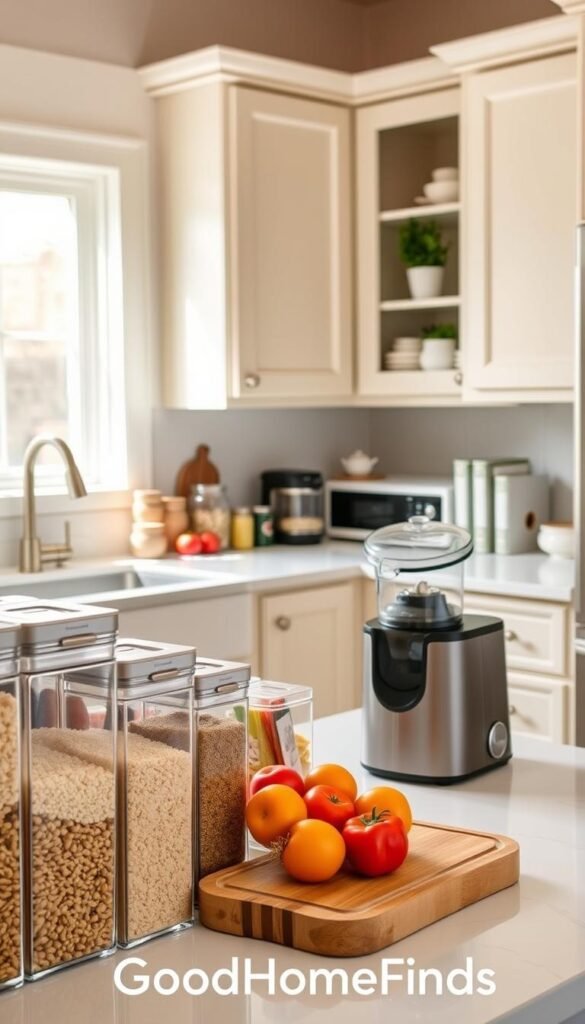
Awoke stove top shelf — $17.99
Why it helps: lifts oils and seasonings off counters so you free prep space and keep items away from burner heat.
Pros: always within reach; easy to clean. Cons: stove-dependent and requires regular wiping. Avoid heat-sensitive plastics too close to flames.
Dial Industries adjustable canned goods shelves
Why it helps: step-style racks show labels so you don’t rebuy canned goods you already have.
Who it’s for: meal preppers and bulk shoppers. Cons: needs proper cabinet width; avoid placing on warped shelves.
Turntables, foil/wrap box holders, and spice liners
Turntables (BodiCal, Oizeir) spin sauces and jars forward so items aren’t forgotten. YouCopia box holders stop torn foil boxes. SpiceLiner keeps bottles from rolling.
Pros: faster access and cleaner drawers. Cons: check sizes or you’ll waste space or have tipping bottles.
„See it, use it, stop buying it again.“
| Product | Best use | Quick note |
|---|---|---|
| Awoke stove top shelf | Oils & seasonings | Free counter space; avoid heat exposure |
| Dial canned goods shelves | Pantry cans | Labels visible; needs cabinet width |
| BodiCal / Oizeir turntables | Cabinet & fridge shelves | Fast access; not for heavy loads |
| YouCopia & SpiceLiner | Wrap boxes & spice drawers | Stops torn boxes and rolling bottles |
Safety and cheap alternatives: prefer food-safe plastics and avoid flimsy risers near glass jars. For low-cost options, repurpose clean jars for spices, use sturdy dollar-store bins for snacks, and add shelf-liner scraps to reduce sliding.
Closet and wardrobe wins: more space without a full closet makeover
A few targeted hangers change how much you see and reach in a tight closet. Small tweaks free rod space and cut the time you spend hunting for clothes.

Ginyoyo legging organizer clips — about $9.49
What it does: Vertical clips hold multiple pants or leggings so you skip folding and actually see each pair.
Pros: Big space savings and faster mornings. Rust-resistant steel and 10 rubber-coated clips hold roughly 10 pieces per pack. Amazon availability makes it easy to replace.
Cons / avoid: Clips can leave light marks on delicate fabrics. Do not clip fragile materials or overload the hook beyond its strength.
Rubberized non-slip hangers
What it does: Stops tops from sliding off and reduces floor piles.
Pros: Cleaner-looking closet and less re-hanging. Pro organizers recommend them for everyday durability.
Cons / avoid: Replace bulky suit hangers slowly. Avoid ultra-thin models that warp or snag knits.
Zedodier tank top hanger — about $8.49
What it does: Consolidates straps so one hanger holds several tanks and reclaims rod space.
Pros: Better visibility for basics and fewer crowded rods. Cons: It can tangle if overloaded. Avoid stuffing too many items on one hook to prevent shoulder stretching.
| Item | Best use | Quick note |
|---|---|---|
| Ginyoyo clips | Leggings, pants | Vertical storage; test on a small pack first |
| Non-slip hangers | Tops, blouses | Replace gradually; mix match carefully |
| Zedodier hanger | Tanks & straps | Good for small closets; don’t overload |
Who this is for: Small closets, apartment wardrobes, and anyone who wants a simple, renter-friendly system that works daily. Buy one pack first, test for a week, then scale up to keep a consistent look and fit.
Bathroom and vanity organizers that make mornings faster
Small bathroom surfaces fill up fast, and that slow, half-awake search wastes minutes every morning. A simple layout change makes your routine quicker and less stressful.

Jiavarry rotating makeup organizer: spin to find what you need
Why it helps: The Jiavarry rotating makeup unit gives 360-degree access so you spin to the product you want instead of digging through kits.
Who it’s for: People with a compact vanity, busy mornings, or many small skincare bottles. Price: about $13.59 with coupon (was ~$17.99).
Pros: adjustable trays, quick access, clears counter clutter. Cons: it’s plastic and needs regular wipe-downs to avoid sticky buildup.
What to avoid: Don’t overload tall bottles that wobble when you spin the unit.
Divided turntables for small bottles: separate categories to limit spills
Use a divided turntable (Oizeir is pro-recommended) to separate daily skincare, hair items, and first-aid. If one bottle leaks, it won’t coat everything.
Pros: cleaner categories, faster restocks, and less mess. Cons: round designs may not fit narrow shelves or deep stacked cabinets.
What to avoid: placing any tray where standing water collects or under dripping fixtures.
Materials and designs to prefer (and what to skip)
Choose rust-resistant finishes and easy-clean plasticable surfaces you can rinse and dry quickly. Metal that isn’t coated may rust and stain counters.
Avoid baskets with tight corners or fabric bottoms. Those trap moisture, smell musty, and slow drying time.
„One rotating unit for daily skincare plus one divided turntable under the sink cuts your morning search time in half.“
| Item | Best use | Quick note |
|---|---|---|
| Jiavarry rotating unit | Daily makeup & skincare | 360 access; wipe clean often |
| Oizeir divided turntable | Backup bottles and categories | Separates items; limits spill spread |
| Rust-resistant trays | Shower-adjacent storage | Avoid cheap metals and fabric linings |
Garage, laundry, and utility organizers that hold up to real use
Utility areas need storage that stands up to hard use and changing temperatures.
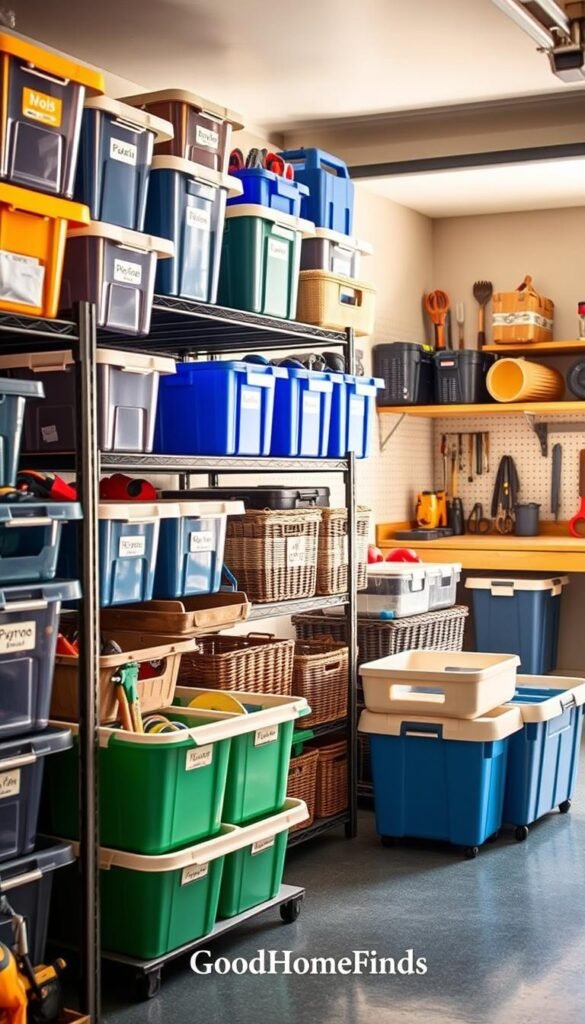
The goal is simple: durable solutions that survive drops, damp cycles, and frequent grabbing. Pick items you can stack, reach, and trust for the full year.
Sterilite stackable lidded bins (25 / 32 / 64 qt)
Why this works: Clear Sterilite bins in matching sizes stack neatly and keep contents visible so you find things fast.
Pros: clear walls, snap lids that keep dust out, often sold in a pack for quick matching.
Cons: lids can crack if over-stacked or dropped. Avoid mixing random sizes that wobble.
Real-life label example: „Holiday lights,“ „Car wash,“ „Kids‘ artwork“ — label one bin per category so you stop opening five boxes for one item.
Heavy-duty wire shelving (Amazon Basics style)
Why this works: Steel wire shelves give airflow, reduce musty smells, and make items visible at a glance.
Pros: adjustable heights, solid load ratings, and easy replacement parts on Amazon.
Cons: takes floor space and needs anchoring on uneven floors. Do not ignore load limits or place heavy objects only on the top shelf.
- Garage and laundry tip: keep detergents on a middle shelf, stain sprays in a small bin, and bulk paper goods low so you don’t lift overhead.
- Safety note: store heavy bins low, don’t overfill lids, and never stack higher than you can safely reach.
| Product | Best use | Quick note |
|---|---|---|
| Sterilite clear lidded bins (25/32/64 qt) | Seasonal decor, tools, donation holds | Stackable, visible; avoid mixed sizes and over-stacking |
| Amazon Basics heavy-duty wire shelf | Garage, laundry, utility rooms | Adjustable, airflow; anchor and respect load ratings |
| Small clear bins (multi-pack) | Hardware, small items, car care | Group similar items; label clearly for fast access |
Labels and “small supplies” that keep a system working
Small supplies and clear names are the glue that keeps storage useful. Labels stop bins from becoming mystery boxes. When everyone in your home sees a name, they can put things back.
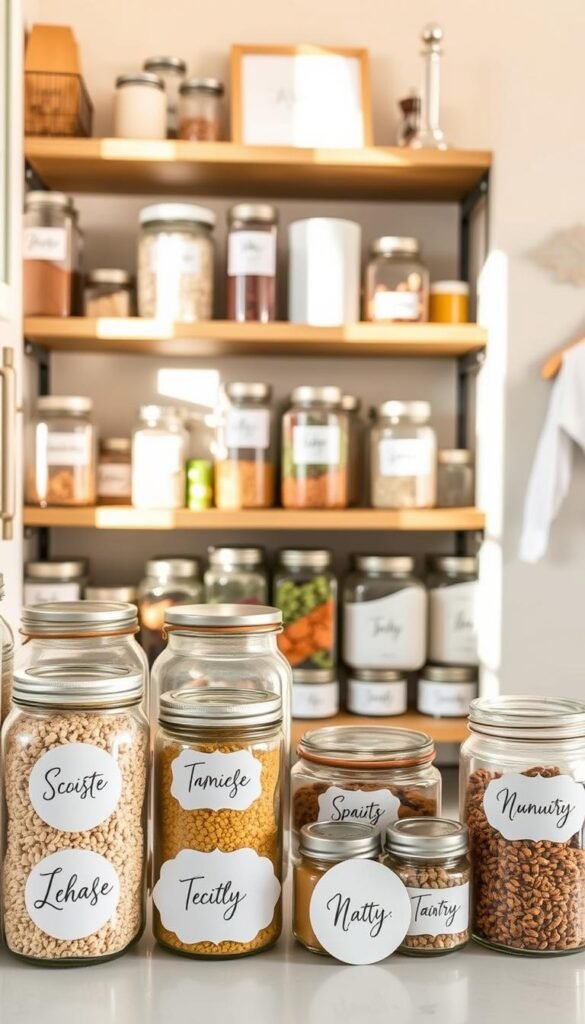
Clip-on pantry basket labels
What they do: Clip-on labels (Trohestar kits often include chalk markers) snap to baskets so you rename categories as habits change.
Pros: flexible, fast swaps, renter-friendly. Cons: best on bins with a lip; markers can smear in humid kitchens.
Who it’s for: households that adjust pantry categories often and want low-effort updates.
Brother P-touch label maker + laminated TZe tape
What it does: Prints water-resistant, laminated labels that resist peeling and spills.
Pros: clean, durable, pro-recommended for kitchens, bathrooms, and laundry rooms. Cons: higher upfront cost for the device and tape.
Who it’s for: anyone tired of reprinting or relabeling every few months.
„Label only high-traffic zones first and save money by refilling later.“
- Money tip: start with pantry staples, kids’ cups, and batteries.
- Workflow: map categories on paper → print labels → attach labels → adjust after one week.
- Amazon note: buy label refills from stable listings so you can match styles later.
| Item | Best use | Quick note |
|---|---|---|
| Trohestar clip-on labels | Pantry baskets, bins | Includes chalk markers; flexible renaming; needs bin lip |
| Brother P-touch + TZe laminated tape | Kitchens, bathrooms, laundry | Water-resistant; long-lasting; higher upfront cost |
| Label refill packs | Ongoing maintenance | Buy consistent refills on Amazon to match styles |
Cheaper alternatives and smart ways to spend less (without buying junk)
Smart swaps and secondhand scores can cut costs without creating more clutter.

Spend less without buying junk means buying fewer, better-fitting pieces instead of chasing the cheapest option at every store.
Dollar store and recycled containers: when to use them
Dollar-store bins work well for lightweight items like snack pouches, cleaning cloths, or craft supplies.
Do not use them for heavy cans, under-sink chemicals, or anything that needs strong handles.
Thrift, neighborhood boards, and Freecycle
Look for real wood shelves, baskets, or metal racks on Nextdoor, Craigslist, or Freecycle. These often outlast cheap plastic.
Measure your car and the space before pickup. A good secondhand shelf can cut replacement costs and save money long term.
Downsizing first: the zero-cost way to save space
The best trick is owning less. Remove duplicates, expired goods, and “aspirational” items you never use.
Rule of thumb: pull three things from a shelf or drawer for every one new item you buy.
„Edit first, then buy one well-fitting solution.“
What to avoid: common organizer mistakes that waste money
Buying without a plan is the single biggest mistake you can make. Measure cabinet and drawer depth, width, and height before you click. Don’t forget door clearance and under-sink plumbing when you’re eyeing under-sink solutions.
Over-stacking and overfilling causes more harm than clutter. Heavy stacks crack lids, deform bins, and can fall from shelves. Store heavy items low and leave a grab space on each shelf so you can access things safely.

Mixing mismatched styles
Random deals look fine until you need a replacement. Mismatched bins stack poorly, make expansion harder, and create wasted space. Pick a system you can easily add to from the same store or brand.
Ignoring materials and ratings
Check weight ratings, sharp edges, and plastic type. Avoid thin plastic lids for heavy loads. In bathrooms and kitchens, skip rust-prone metals near water and heat-sensitive plastic near stoves.
Practical “pause” rule
If you can’t say exactly which category will live in the bin and where it will sit, don’t buy it yet. Measure first, choose quality, and respect load limits so you save money and keep your space usable.
| Common Mistake | Why it wastes money | Quick fix |
|---|---|---|
| Buying before measuring | Returns, wasted space, ill-fitting pieces | Measure width, depth, height, door clearance |
| Over-stacking | Broken lids, cracked bins, falling stacks | Store heavy items low; leave grab space |
| Mismatched bins | Poor stacking; hard to replace later | Stick to one style or store for expansion |
| Ignoring weight & materials | Unsafe setups; early failure near water/heat | Check ratings; avoid weak plastic and rustable metal |
Conclusion
Close out with a simple plan: measure first, buy what fits, and use it daily.
Be sure to follow one clear rule: fix the part of your home that wastes the most time — kitchen cabinets, junk drawers, or closets — then add a small storage product that actually fits.
Quick checklist: favor low-cost picks under $25 and only upgrade when a premium item saves daily time (slide-outs, sturdy shelves, dual-purpose pieces).
Check safety: load limits, adhesive strength, rust resistance, and food-safe plastics. If funds are tight, thrift a shoe rack, reuse jars, or borrow a pack of bins.
Pick one spot this week, order 1–2 items with fast delivery, and set them up the day they arrive. Avoid random deals; buy what fits your measured space and real routine.
One Comment