
There is no one right way to get organized in a small house, but common errors make daily life harder. Overly complex systems and early product buys often become clutter instead of solutions.
You’ll get renter-friendly, no-drill fixes for high-impact zones today. Expect practical product suggestions with budget tiers under $25 and under $50, plus safety and durability notes.
This short guide shows what a real-life organizing mistake looks like: you buy bins, shuffle piles, and still can’t find what you need. Each entry pairs a simple fix, maintenance tips, and renter-safe tools you can stick with.
Start small. Pick one spot that slows your morning. Ask yourself: “What do you trip over, re-buy, or ‘dash and stash’ most often?” Use that to choose your first target area.
Key Takeaways
- Focus on quick wins in the entryway, kitchen, bathroom, and closets.
- Prioritize durable, moisture-safe, and weight-rated solutions.
- Measure before buying to avoid random bin clutter.
- Practical product ideas under $25 and smart upgrades under $50.
- Progress over perfection — simple systems last longer.
- Find ready options and inspiration at best organization finds.
Organizing before decluttering creates instant clutter
A quick purge before you buy storage saves time and prevents hidden clutter. If you containerize first, you often just hide excess. Those boxes become new piles in tight corners.
Fast declutter sprint: set a 15–30 minute timer and grab three bags — keep, donate, trash. Touch each item once. Move fast and trust the rules below.
How to declutter fast without burnout
Keep only what you use weekly or monthly, fits your space, or you’d buy again today. Everything else goes to donate or trash.
Burnout tip: stop after one micro-zone — one drawer, one shelf, or one cabinet. Finish a win and build progress.
Renter-friendly picks after decluttering
- Stackable bins for closet zones — flat bottoms prevent tipping.
- Clear shoe boxes to see inventory without digging.
- Drawer dividers to stop category drift in junk drawers.
Safety and durability notes: choose BPA-free plastics where food touches. Avoid flimsy lids that pop off. Pick bins with stable bases for tight closets.
Budget buys that actually help
- Under $25: set of drawer dividers, small clear shoe boxes, or two medium stackable bins for instant homes.
- Under $50: uniform bin set for a closet zone, lidded under-bed bins, or a deeper drawer system for a busy kitchen drawer.
Final goal: declutter first, then buy exactly what fits what remains. No guessing, no pile of unused containers. For budget-friendly options, see organizer finds on a budget.
Buying bins too early turns “solutions” into more stuff
Don’t let a pretty set of bins become just another pile. Pause and measure before you buy. Professionals call this the “Product Panacea” — thinking containers alone will fix the problem. They won’t.
Measure first, then buy: a quick method for shelves, closets, and cabinets
Use a tape measure and record three numbers: width, depth, and usable height. Subtract 0.5–1 inch for finger clearance.
Note door hinges, closet rods, and shelf lips that steal space. Write dimensions on a sticky note and take a photo of the shelf before you shop.
Comparison: open bins vs lidded bins vs drawer organizers
| Type | Daily access | Visibility / dust | Stackability / best rooms |
|---|---|---|---|
| Open bins | Easy | High visibility, low dust protection | Good stack, entryway & pantry |
| Lidded bins | Moderate (lift lids) | Excellent | Stackable, great for under-bed or seasonal |
| Drawer organizers | Best for small items | Visible if clear, protected if closed | Not stackable, ideal for kitchen drawers |
Quick bin math: choose sizes that tile your shelves. Two 10-inch bins across beats three mismatched baskets that waste gaps.
Test before scale: buy one test bin, confirm fit and workflow, then complete the rest of the project. This keeps your buying decision practical and budget-friendly.
Renter-friendly tips: pick freestanding, shelf-ready options. Check for reinforced handles, thicker walls, and a stable base for real-life durability. For more compact solutions, see best small-space finds.
Process to follow: declutter → measure → choose container type → label → maintain. That sequence saves money and keeps your storage useful.
These organizing mistakes make your systems hard to maintain
When systems ask for too much time, they stop working in real life. Overly complex labels and dozens of micro-categories look tidy on a board. In actual life they add steps, slow you down, and get ignored.
Why Pinterest-perfect backfires
Micro-categories and hyper-specific labels need constant upkeep. That extra work takes time and willpower you don’t have on a busy day.
Common traps include pantry sections that require precise folding, tiny labeled bins for single items, and multi-step return routines.
Simple systems that stick
Keep categories broad. Use labels like Snacks, Breakfast, or Baking. Reusable labels let you change as needs shift.
Rule to follow: if putting something away adds one extra step, you won’t do it. Leave 10–15% empty space in key bins so items go back fast.
Who benefits from low-effort setups
- Roommates: shared rules reduce friction and arguments.
- Busy professionals: quick access saves time each morning.
- Families: kid-friendly categories make returns simpler.
- ADHD-friendly routines: low-friction systems encourage consistent returns.
Pros and cons: clear, opaque, and mixed storage
- Clear containers: easy to see contents; can look cluttered if not tidy.
- Opaque bins: offer visual calm; require labels for quick finds.
- Mixed storage: budget-friendly and functional; accept some visual variety.
Safety and durability: avoid glass in low drawers for kids. Skip thin acrylic that cracks in tight spaces. Use non-slip liners under stacked bins to stop sliding.
Maintenance promise: the best system is the one you can keep up during a normal workday, not the one you perfect on a weekend.
Cleaning, tidying, and rearranging aren’t the same as organizing
Wiping down counters doesn’t make a system that helps you find things tomorrow. Cleaning removes grime. Tidying improves how a room looks. A true system assigns homes and rules so items return where they belong.
The difference between a clean room and an organized room (and why mess returns)
When you only clean, items stay nomadic. They land on any open surface and the mess comes back fast in small homes.
The fix is simple: decide what each area is for, then keep only things that match that purpose.
Stop the “rearranging remedy”: assign a purpose before you move things
Use a purpose-first plan. Pick a drawer, shelf, or cabinet and name it. For example: „Coffee shelf“ or „Batteries drawer“.
Only store items that fit. Put a small bin inside cabinets as a boundary to stop zones from blending.
Daily routine tip: a quick end-of-day reset
Spend 5–10 minutes each night. Return daily-use items to their homes. Clear one key surface like the counter or entry table.
Add one 10-minute midweek catch-up so paper and laundry don’t turn into a weekend project.
Small-space reality check: you don’t need perfection. Aim for flow that saves time in mornings and weeknights.
Quick self-audit: „Do you know where this item lives?“ If not, it still needs a home.
“Dash and stash” habits sabotage every room
Short-term stashing turns into long-term clutter if you don’t give items a true home. You clear a counter or toss things in a bag to save time. Later those piles come back as lost bills, chargers, and random stuff.

Entryway: a drop zone that stays put
Create clear boundaries. Use a small tray for keys, a hook for a bag, and a slim bin for mail.
When everything has a single spot, the entryway won’t spread clutter into the rest of the home.
Closet: zones, not piles
Divide the closet into broad zones: work, casual, off-season, accessories. Give each zone one bin.
This stops mystery piles on the floor and helps you find clothes in one quick look.
Kitchen counter: corral daily-use items
Put coffee, oils, and vitamins in one caddy or tray. You can wipe the counter and still keep prep space clear.
For compact kitchen upgrades and shopping ideas, see best small kitchen solutions.
Bathroom: keep essentials dry and safe
Use rust-resistant bins and avoid stacking items on the toilet tank. Store meds out of reach of kids and pets.
Choose moisture-safe products and place them where they stay dry each day.
No-drill tools that actually work
Renter-friendly picks: over-the-door racks for pantry and bath, metal tension rods under sinks, adhesive hooks for light items, and narrow rolling carts for gaps.
Follow adhesive cure times, clean with isopropyl alcohol first, and respect weight limits for durability.
| Tool | Setup effort | Durability | Best uses |
|---|---|---|---|
| Adhesive hooks | Very easy | Good for light loads; follow cure time | Keys, small bags, lightweight towels |
| Tension rods | Easy; no tools | Strong if metal; supports medium weight | Under-sink spray storage, small shelving |
| Over-the-door organizers | Moderate; check door clearance | Durable if slim hardware; avoid thick hooks that block doors | Pantry, bathroom, shoes, cleaning supplies |
„If an item is always being stashed, it needs a closer home — or you need fewer of it.“
Stop overbuying: fix the system first, then buy one or two products that support the purpose of that zone. That prevents new stuff from becoming new piles.
Ignoring vertical space and small-space layout wastes your best storage
Look up: vertical space is the fastest way to reclaim surfaces in tight apartments. You can’t add square footage, but you can add useful height. That clears counters, floors, and gives everything a proper home.
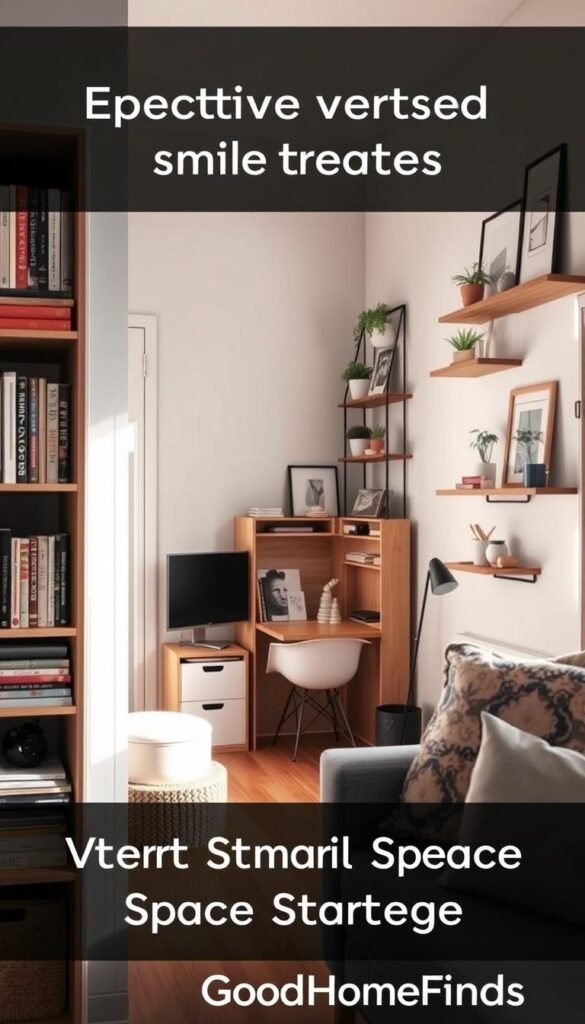
Vertical wins: practical, renter-friendly fixes
Under-shelf baskets slide onto existing shelves to hold wraps, snacks, or scarves. Check shelf thickness and clearance before buying so they fit without blocking doors.
Shelf risers double cabinet space for plates and mugs. Pick stable risers with non-slip feet so stacked items don’t wobble in daily use.
Stackable bins create pull-forward categories in closets and under sinks. Use uniform sizes so you can pull one bin without unstacking a tall tower.
Alternatives by apartment size
- Studio: slim rolling cart, over-the-door pockets, and one command center drop zone to stop clutter from traveling across the room.
- One-bedroom: reserve one closet for backstock and use under-bed lidded bins to protect off-season items from dust.
- Shared apartments: pick clear labels and neutral shared zones like Cleaning, Snacks, and Tools to cut friction with roommates.
| Product | Best use | Renter tip |
|---|---|---|
| Under-shelf basket | Cabinets, closets, desk shelves | Measure shelf lip and clearance; avoid overloaded baskets |
| Shelf riser | Plates, mugs, canned goods | Choose non-slip risers; keep heavy items lower |
| Uniform stackable bin | Closet zones, under-sink, pantry | Use same size for stability; label fronts for quick access |
„Found storage is real: use vertical space to give daily items closer homes and clear a lot of surface clutter.“
Renter safety and durability: avoid top-heavy stacks, keep heavier items low, and confirm doors still close smoothly. Don’t overload under-shelf add-ons.
Easy next step: pick one vertical upgrade in one trouble zone. Try an under-shelf basket or a riser. Once it proves useful, expand the approach.
For closet-specific ideas, see closet space solutions.
Conclusion
Small, repeatable steps win: choose one trouble spot and make a modest, practical change. Start with decluttering, then assign a clear purpose to that space.
Follow the simple process: decluttering → assign purpose → measure → choose simple containers → label → daily reset. This sequence saves time and keeps items from wandering.
Avoid the usual organizing mistakes: buying products first, overcomplicating labels, or treating tidying as a system. Simple setups beat perfect but unusable plans.
Stick to renter-friendly, no-drill tools and budget basics under $25. Do a short end-of-day reset and one small weekly check to protect your progress.
Next step: pick one entryway, closet, counter, or bath shelf. Fix the system there, prove it works, then expand. You’re aiming for easier living, not perfect order.