
Quick, practical steps to make a small space feel bigger and work harder for your daily routines.
This is a renter-friendly, no-hype plan. Start by purging what you no longer use. Then group items by how you cook and eat.
We’ll follow a simple flow: purge, zone, measure, pick containers, add renter-friendly tools, label, and maintain with a weekly reset. This method helps you save money by cutting duplicates, speeds meal prep, and lowers stress when you need ingredients fast.
Expect budget paths under $25 and $50, plus no-drill options like adhesive hooks, magnets, and a slim cart. The same logic works outside the kitchen — in a bathroom, closet, or entryway — because the habit is group + contain + label + reset.
Along the way you’ll get plain pros/cons and “best for” notes so you can choose items that suit your family and routines. If you want more small-space fixes, see this small kitchen solutions resource.
Key Takeaways
- Start by clearing out and mapping daily use to spot wasted space.
- Use renter-friendly, no-drill tools for quick wins under $25 or $50.
- Measure before you buy to avoid mismatched containers.
- Labeling keeps everyone returning items to their spot.
- Keep the system simple so it lasts with a short weekly reset.
Reset Your Pantry Fast With a Purge-and-Clean Prep
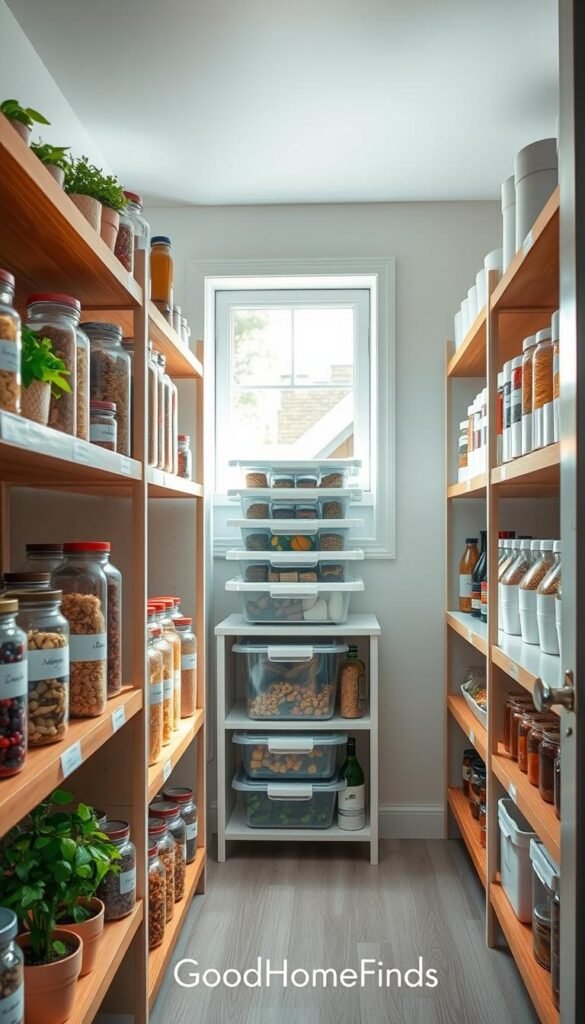
A quick purge makes the rest of the job faster and far less wasteful. Clear a counter, set a 30-minute timer, and pull every single item out so you can actually see what you own. This step helps you spot duplicates, expired food, and those „never-eat“ things that steal space from staples.
Fast sorting and safety
Sort into Keep, Toss, Donate. Be strict. Toss expired or open food that might be unsafe. Donate unopened, in-date goods to a local bank or shelf at a community center.
Quick clean checklist
- Wipe shelves with mild soap and water; avoid harsh chemicals if you store food directly on wood or metal.
- Vacuum crumbs, wipe sticky jars, and let surfaces dry before returning items.
- Remove torn boxes and trash during the purge to reclaim space immediately.
Make it repeatable
Do a 5-minute shelf sweep weekly to catch spills and prevent pests. Once a month or seasonally, repeat the full reset. For small kitchens, pair this routine with simple renter-friendly swaps like removable liners and no-drill organizers.
Want more small-kitchen fixes? Check fridge space solutions for compact storage that pairs well with this reset: best fridge space solutions.
Pantry Zones Guide: Choose Categories That Match Your Real Cooking Habits
Make your layout reflect how you eat, not how it looks online. Start by listing typical meals for the week. Match storage to those meal patterns so items are near where you use them.
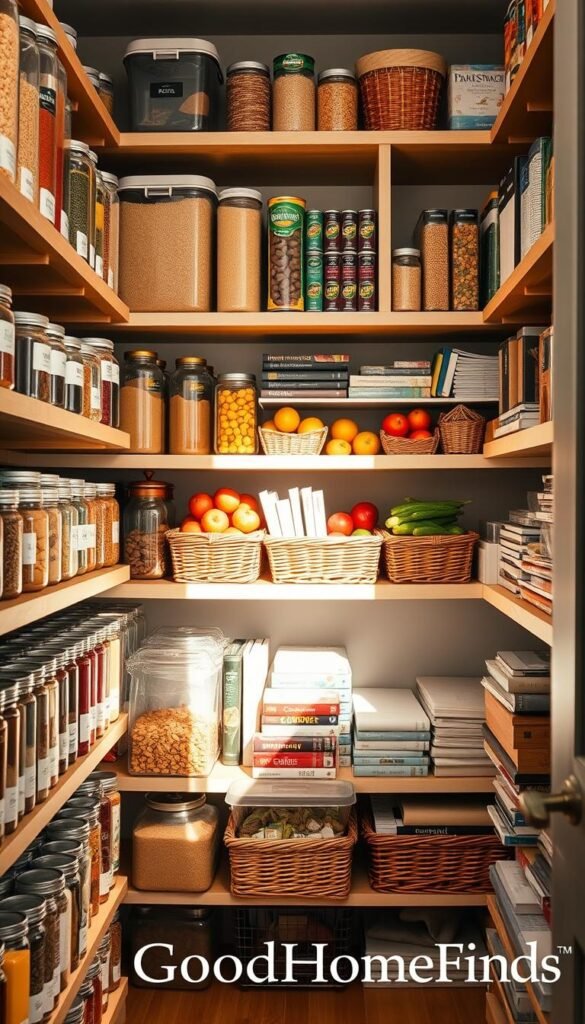
Core categories that fit most apartments
Keep five small areas: breakfast, dinner helpers, snacks, baking basics, and canned goods. If you rarely bake, shrink that section. Let your routine decide sizes.
Kid-friendly snack access
Use one clear bin for “anytime snacks” and a smaller bin labeled “ask first.” That keeps kids happy and the rest of the shelves tidy.
Diet and safety shelf
Assign a single shelf for allergy-safe or gluten-free items. This stops confusion when you are rushed and protects family members with restrictions.
„Label things the way your household talks — ‚Breakfast‘ or ‚Pasta Night‘ — so everyone returns items correctly.“
| Place | What to store | Why it works |
|---|---|---|
| Eye level | Everyday items, snacks | Fast grab for frequent meals |
| Top shelf | Backups, bulk canned goods | Out of the way but visible |
| Bottom shelf | Heavy items (water, large jars) | Safer to lift and avoids tipping |
- Label each category with clear, household-friendly names.
- Stop floating items — give every item a place or remove it.
- If you have a cabinet-only setup, use one bin per category.
Measure Your Shelves and Pick Storage That Actually Fits
Get out a tape measure before you buy anything—this step saves time and space. Measure width, depth, and height for each shelf or cabinet. Write the three numbers down and save a photo on your phone for easy shopping later.

Footprint first
Think footprint first: the best container uses full shelf depth without blocking the door or wobbling. If a product is too shallow, items get lost in the back. If it’s too tall, the door won’t close easily.
See-through containers and bins
Transparent containers let you spot levels at a glance. That visibility stops duplicate buys and cuts the time you spend hunting for ingredients.
Stack and plan vertically
Use stackable containers for wide shelf gaps and risers for short items. For deep cabinets, choose carry bins so you pull a whole group out instead of unloading the shelf.
- Quick measuring method: width x depth x height per shelf.
- Durability notes: pick easy-clean materials, non-slip bases, and crack-resistant plastics or tempered glass.
- Apartment alternative: studio kitchens often work best with one multipurpose bin per zone; family pantries can mix multiple container sizes.
„Measure once, save the numbers on your phone, and buy storage that fits the first time.“
Containers, Bins, and Decanting: What to Repackage vs. Keep in Original Packaging
A quick decision rule will tell you when to decant and when to keep original packaging. Keep original boxes and resealable bags if you use items fast and the packaging is sturdy. Repackage when bags flop, crumbs escape, or you can’t see levels.
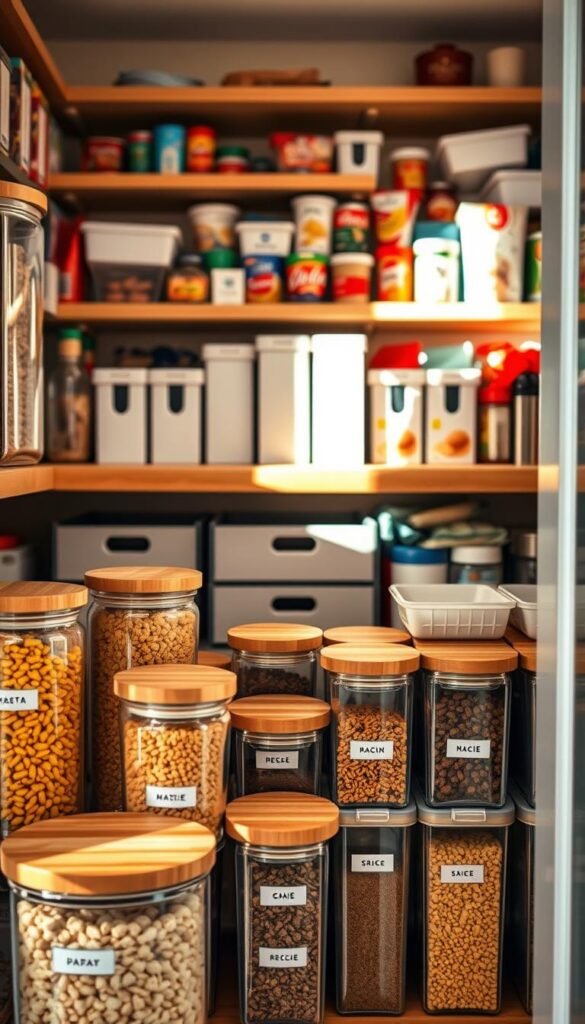
What benefits from airtight storage
Airtight containers help cereal, crackers, flour, sugar, pasta, and snack goods stay fresh, especially in humid apartments or when you buy bulk products.
Wide-mouth vs. tall canisters
Wide-mouth jars are best for baking ingredients because you can scoop without spills. Tall canisters save vertical space but can make measuring awkward.
Plastic vs. glass
Plastic is lightweight, stackable, and renter-friendly. Glass is clear and seals well but is heavier and breaks more easily. Choose what fits your routine.
„Decant where it helps; skip it where it creates extra work.“
| Product | Pros | Best for |
|---|---|---|
| Clear stackable containers | See levels, stack well, avoid duplicate buys | Cereal, snacks, pasta |
| Wide-mouth canisters | Easy scooping, good seals | Flour, sugar, baking ingredients |
| Repurposed deli tubs | No-cost, temporary use | Short-term storage, small items |
Practical tips: Label containers with contents and expiration dates. Only decant what you will maintain. For budget-friendly product picks, see this starter list.
Renter-Friendly Pantry Tools That Add Space Without Drilling
Small, no-drill tools can instantly free up shelf real estate and keep things visible. Use lightweight, removable organizers so everything lifts cleanly when you move.
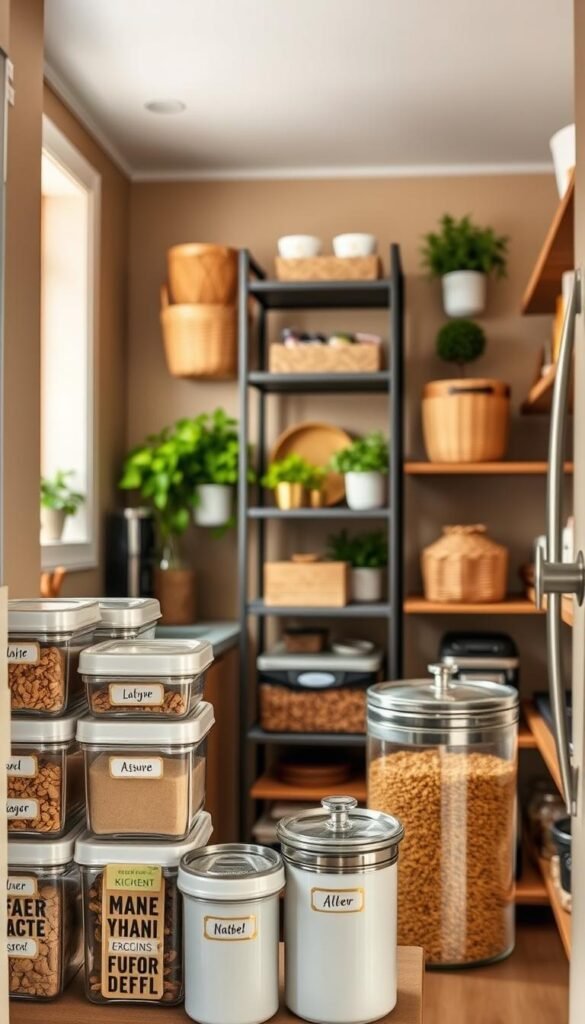
Tiered risers and canned goods
Tiered risers put cans on steps so nothing hides in the back. That reduces waste and stops repeat buys. Choose a riser with sturdy joints and a non-slip base.
Lazy Susans for tight shelves
Turntables tame small bottle chaos. Use them for oils, vinegars, snack bars, and small jars where shelves are narrow.
Pull-out and carry bins
Pull-out bins make deep shelf items grab-and-go. Carry bins are ideal for upper cabinets and heavy items. Look for reinforced handles that don’t snap.
Over-the-door organizers for micro kitchens
Door organizers add vertical storage for spices, foil, and small packets. They free drawer space and work well in studio or tiny kitchens.
- Safety rules: non-slip feet, don’t stack too high, keep heavy things low.
- Durability checks: smooth, easy-clean plastic; sturdy riser joints; strong bin handles.
- Best for: studio kitchens use one riser and one turntable; shared family setups can add several bins by category.
„Pick renter-friendly products that lift out easily—so your setup moves with you.“
For more tested, practical picks that work in small homes, see this best organization finds.
Budget Buys Under $25 and Under $50 That Make Zones Stick
Start small: a few smart buys can lock in a system that actually gets used.
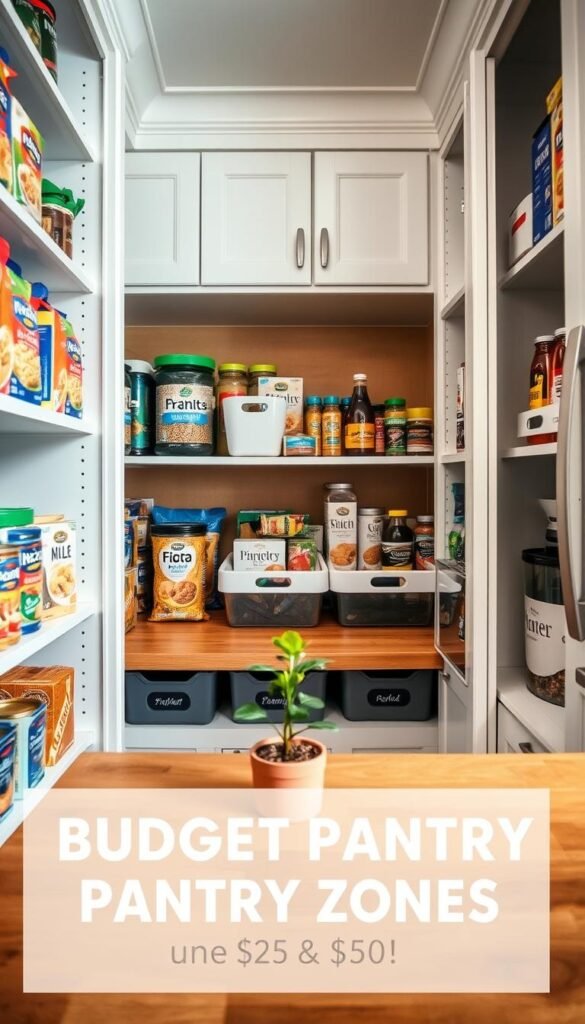
Under $25: painter’s tape + marker labels, one or two clear containers, and repurposed jars. These items let you group food quickly and add temporary labels you can change as routines shift. They are ideal for renters and quick fixes.
Under $50 upgrades
Under $50: add one simple riser and a turntable, plus a small set of airtight containers with better lids. These products improve visibility and cut time hunting for items.
Labeling that lasts
Tape labels are fast and flexible. A label maker costs more but creates consistent, family-friendly labels that help everyone return items correctly.
Who each approach fits
- Studio kitchenette: tape labels, one bin, and door storage for max flexibility.
- Shared family setup: label maker, durable containers, and clear bins for consistent upkeep.
- Cabinet-only storage: pull-out bins and a turntable to make deep shelves usable.
Quick daily routine to keep it working
Do a 60-second reset after groceries and a weekly backstock check. These small steps save time and prevent duplicate buys.
| Product | Best for | Pros | Cons |
|---|---|---|---|
| Clear containers | Visibility for staples | See levels, stackable | Take space; some cost |
| Bins | Category corralling | Group items; easy pull-out | Can hide small items |
| Riser + turntable | Small bottles, cans | Improves access; saves time | Use shelf space; limited load |
For practical, budget-friendly picks and a simple shopping list, see these budget organizer picks.
Conclusion
Conclusion
Wrap up with a short, repeatable routine that keeps your small kitchen working. Purge, clean, zone, measure, contain, label, maintain. Repeat that one simple step whenever you restock.
Do a five-minute weekly reset and a quick monthly check for expired food and goods. Keep like items together so you see what you have before you shop.
Use only portable bins and clear containers so the system moves with you. The same group + contain + label method works in a bathroom (first aid, hair, extras), a closet (work, gym, laundry), or an entryway (keys, shoes, mail).
Next practical move: pick one shelf or cabinet and apply this plan today. For more tested picks that fit small rooms and a renter-friendly approach, see these small-space finds.