This guide shows you practical, renter-friendly no-drill solutions for small-home living. You’ll get clear setup steps, safety checks, and real product suggestions that move with you. The plan focuses on adhesive strips and hooks, tension rods, over-the-door organizers, freestanding furniture, and magnetic accessories.
Start with one high-traffic spot like the entry or bathroom. That “small wins first” approach reduces friction finding keys, towels, and spices. Each list item later includes pros and cons, best-for guidance, and size-based alternatives for tight rooms and larger spaces.
Safety matters. Check weight limits, watch humidity near showers and stoves, and secure tall units to avoid tip hazards. You’ll see realistic budget picks: under-$25 starters and under-$50 upgrades such as sturdier over-door racks and slim rolling carts.
For a deeper comparison of renter-friendly setups and surface-safe removal tips, see this no-drill setup comparison.
Key Takeaways
- Define drill-free: adhesives, tension, over-the-door, freestanding only.
- Start small—fix one busy spot before expanding.
- Follow weight and humidity limits to protect walls and security.
- Budget options include under-$25 starters and under-$50 upgrades.
- Each section gives setup, removal tips, and size-based alternatives.
Why drill-free organization matters for renters right now
Lease rules make simple mounting choices matter for your security and the size of your deposit. Many leases ban permanent changes and even small holes can trigger repainting or deductions.
How “no holes” rules protect your security deposit (and your move-out timeline)
Landlords often tie deductions to visible wall repairs. That means a quick shelf installed with a screw could cost you time and money when you move. Choose methods that remove without patched holes to avoid late move-out fixes.
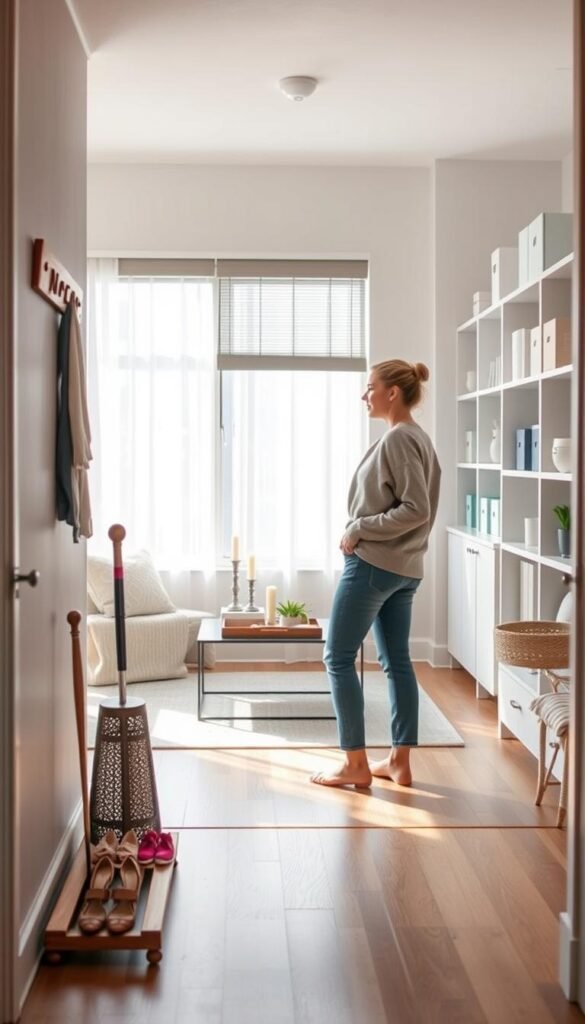
What counts as truly damage-free vs. “low damage” in a rental
Damage-free means the mount pulls off cleanly, leaves no patched holes, and risks minimal paint pull. Adhesive tabs that come off with a straight pull are a typical example.
„Even damage-free products can harm weak paint, textured finishes, or wallpaper if removed wrong.“
- Truly damage-free: removable adhesive tabs, pressure-fit rods.
- Low damage: tiny nails, picture hooks that leave pinholes.
- Not drill-free: any solution requiring drilling holes or screws.
Quick tip: photograph existing wall wear before you install anything. It’s a landlord-friendly habit that saves disputes and time.
Renter drill free fundamentals: choosing solutions that won’t fail
Choose the right approach for your walls and items: start by matching product type to the surface and the load you plan to store. A quick test saves time and security headaches later.
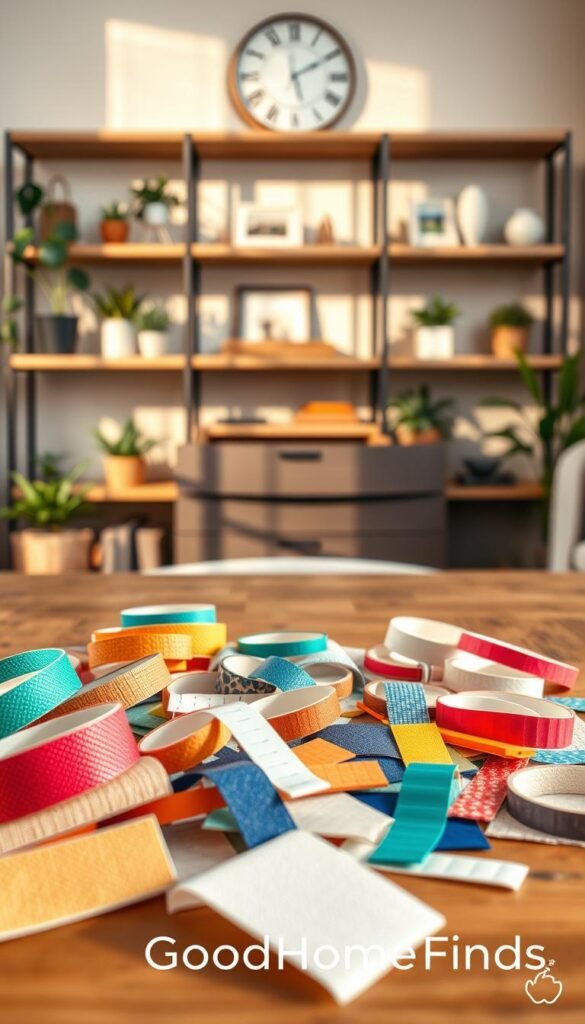
Adhesive, pressure-fit, and freestanding—where each wins
Adhesive systems work best on clean, smooth painted walls, tile, or glass. Prep with rubbing alcohol and allow ~24 hours to cure. Avoid textured paint and wallpaper.
Tension rods are pressure-fit between solid surfaces like closet sides or cabinets. They often hold up to ~10 lbs and leave no holes.
Freestanding storage adds capacity when walls aren’t reliable. Keep heavy items low to prevent tipping and use them when you move often.
Safety checks, loading rules, and removal basics
- Check weight rating and match it to items.
- Consider surface texture and moisture or steam exposure.
- Test placement with light items for 24 hours, then add weight gradually.
- For removal: clean surface first, respect cure time, and pull adhesive tabs straight down slowly to avoid damage.
Maintenance tip: re-check mounts in humid areas each season and tighten tension rods after temperature shifts to keep your setup safe and durable.
Adhesive hooks, strips, and shelves that make walls work harder
Turn an empty patch of wall into a quick drop zone for the small things you use every day.
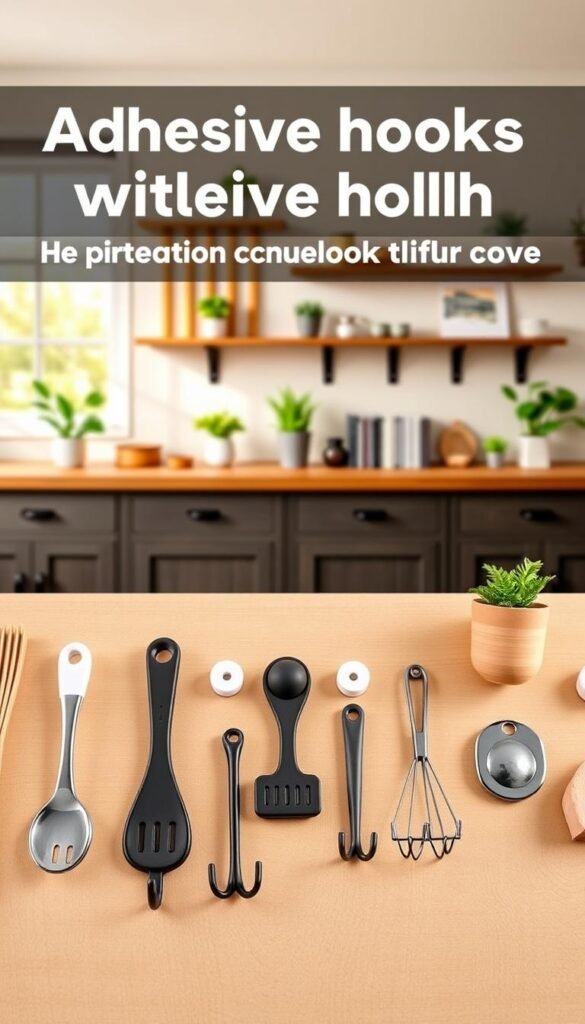
Build a simple entryway drop zone: place one hook per daily item—keys, a small bag, a leash. Add a low basket beneath for heavier coats and shoes. For coats, stick to lightweight options on adhesive hooks rated up to ~7.5 lbs.
In the bathroom, install corner adhesive shelves for daily toiletries at arm height. Keep backups higher and out of direct shower spray to avoid „steam surprises.“ Prep with rubbing alcohol, press firmly, and wait ~24 hours to cure.
In the kitchen, peel-and-stick floating shelves work near prep zones for spices and small tools. Avoid areas with high heat or grease. Magnetic organizers on the fridge are a strong alternative when walls are textured or fragile.
Quick maintenance and routine tips
- Wipe shelves weekly and check adhesive corners for lifting.
- Test a hook with a light item for 24 hours before full use.
- Follow temperature guidance (about 50–105°F) to keep bonds strong.
Pros and cons
- Pros: fast setup, flexible rearranging, space-smart storage.
- Cons: limited weight capacity, paint risk on weak finishes, reduced performance on textured wall surfaces.
Best for: smooth walls, short-term stays, and anyone who likes to rearrange often. If adhesive isn’t ideal, choose magnetic storage or a freestanding slim tower instead.
For a deeper look at budget vs. premium storage choices, see this storage comparison.
Tension rods for closets, cabinets, and awkward gaps (zero commitment)
A simple tension rod can turn wasted vertical space into practical storage fast.
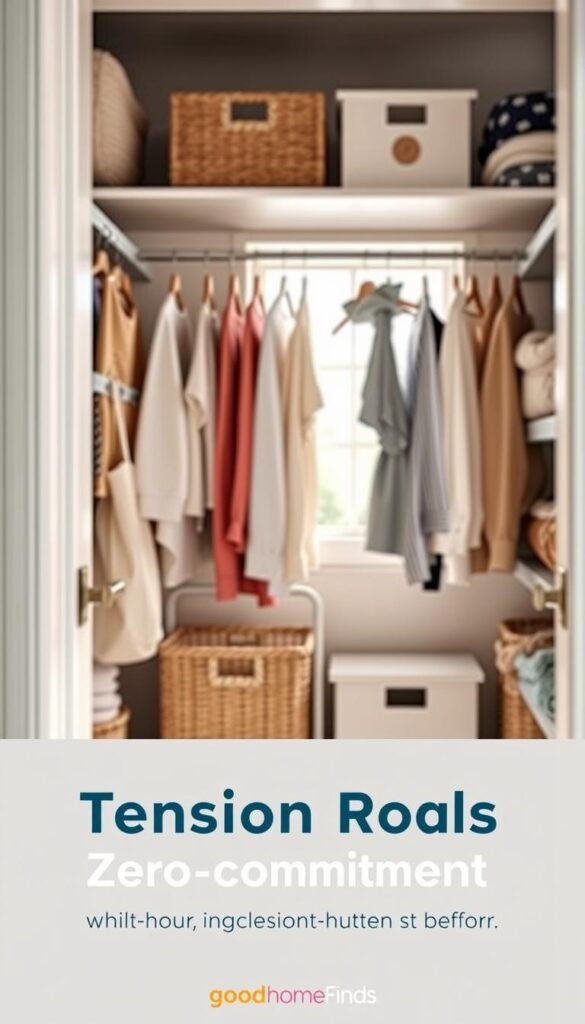
Why tension rods work: they install in minutes, leave no holes, and fit closets, cabinets, and narrow gaps. They are a top renter-friendly tool when you want extra hanging or separation without drilling.
Closet doubles
Add a second rod below your main bar to create a short-hang section. Use it for scarves, belts, or hanging pouches.
Tip: space the rods so items don’t touch the floor. Test with light garments before filling it up.
Under-sink fix
Place a rod near the cabinet top and hang spray bottles by the trigger. This clears the cabinet floor for bins or paper towels.
Weight note: many heavy-duty tension rods hold up to ~10 lbs. Start light and re-tighten after a day.
Vertical dividers
Use a rod vertically or slightly angled to keep baking sheets, cutting boards, and lids from toppling. This creates tidy vertical storage inside cabinets.
Window and kitchen hacks
Install a short rod in a narrow window or nook to hang towels, lightweight baskets, or small herb bundles. Choose spots with good airflow and no direct heat.
- Budget pick: KXLIFE 2-Pack Tension Curtain Rods ($9.79) — a cheap way to outfit multiple zones under $25.
- Quick safety check: tighten until snug, test with a light load, and re-tighten after a few days.
Pros and cons
- Pros: fast setup, no drilling, flexible units that save space.
- Cons: poor fit can slip, overtightening can dent wood or compress drywall edges, and weight limits mean heavy items are not safe.
For kitchen-specific tension rod uses and other small-space ideas, see best small kitchen solutions. This is a practical way to add storage without permanent changes.
Over-the-door organizers that add storage without stealing floor space
Use the back of a door to add neat, accessible storage without changing your walls. Over-the-door units maximize vertical storage and keep floor space clear. They work well in small rooms and multiuse units where every inch counts.
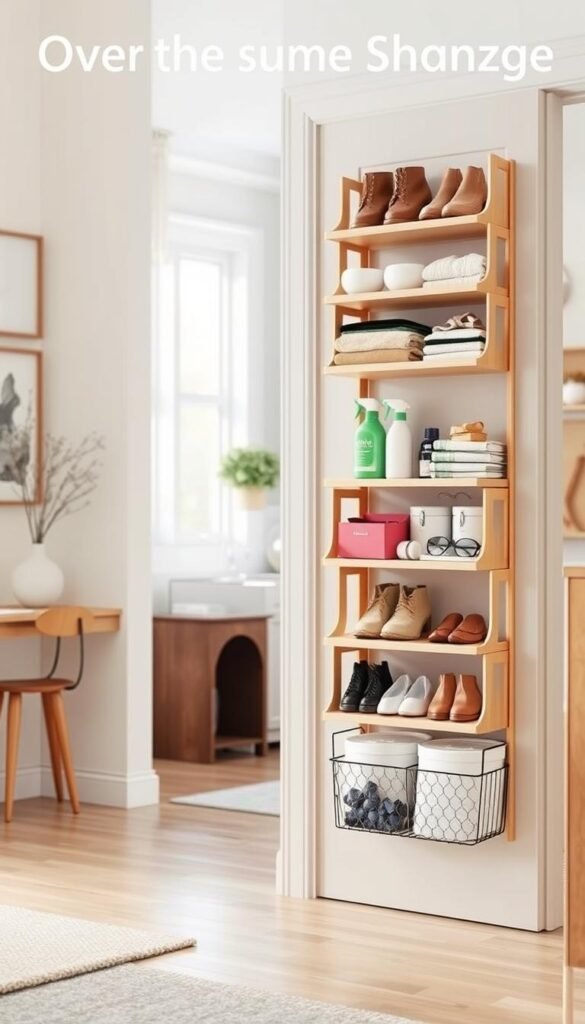
Best for tiny bathrooms
Install a towel rack over the door and add padded hooks for robes and loofahs. Padded contact points reduce noise and protect the finish. This setup keeps towels handy while preserving door function and security on hinges.
Best for kitchens and pantries
Use back-of-door pockets for snacks, wraps, and refill bottles. They clear shelf space for bulk items. Keep heavy cans off the top pockets to avoid sag and sway.
Best for bedrooms
A clear-pocket shoe organizer works double duty. Store accessories, socks, and small laundry supplies. Label pockets so daily picks stay organized and don’t turn the door into a catch-all.
- Under-$50 upgrade: Over-the-Door Towel & Storage Rack ($26.99) — sturdier, higher-capacity solution.
- Why it wins: adds hanging pieces without touching walls and keeps floor space open.
What to measure first
- Door thickness and top clearance so the door still closes.
- Hinge-side clearance and any trim that blocks fit.
- Added thickness when pockets are loaded.
Scratch-prevention & daily maintenance
Choose padded hooks or add felt pads at contact points. Store heavier items low to reduce sway. Assign zones — cleaning, snacks, grooming — and empty problem pockets weekly to keep the system useful and tidy.
Freestanding, stackable, and portable storage with big small-space impact
Choose stand-alone units when you need reliable capacity that moves with you. Freestanding furniture and modular storage give you room to grow without altering walls or risking deposits.
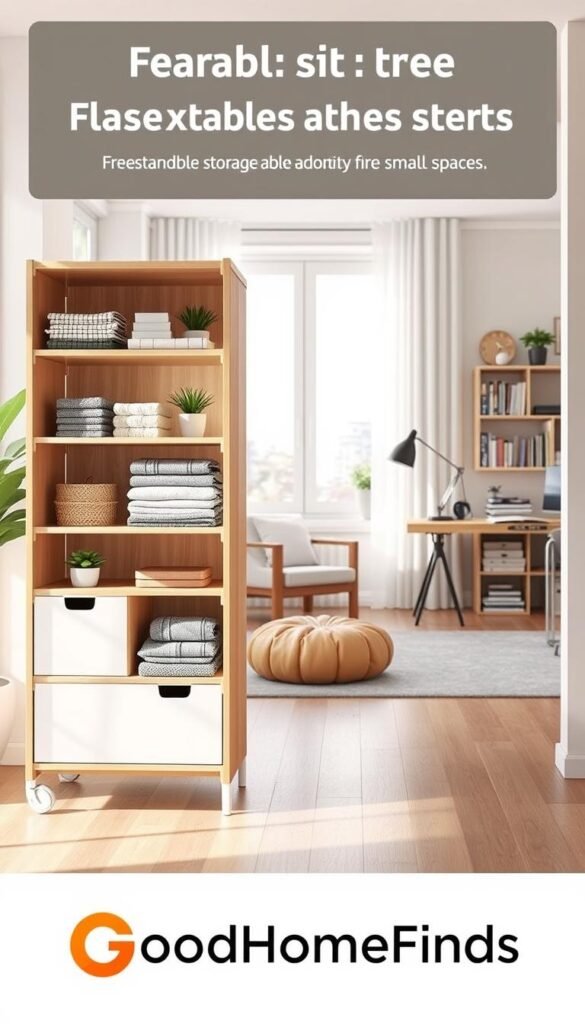
Rolling carts: flexible “extra counter” storage for kitchens and bathrooms
Rolling carts act as temporary counter space and a mobile organizer. Keep daily items on the top shelf and backups on the bottom.
Routine: wipe the top shelf nightly and roll the cart out to clean the floor beneath weekly.
Cube and modular systems: vertical storage that moves with you
Stackable cubes create tall storage without anchors. Use them as a simple room divider in a studio to make the living room feel like a distinct zone.
Ladder and leaning shelves: height without anchors
Lean shelves add vertical storage and a decor touch. Place them in corners or low-traffic paths to avoid bumps and keep them light on top shelves.
Under-bed organizers and bed risers: hidden seasonal swaps
Use clear bins or fabric drawers under your bed for out-of-season clothes and spare linens. Add risers to increase volume without permanent changes.
Furniture that does double duty
Choose storage ottomans, benches, or coffee tables with shelves to hide clutter and keep the living room tidy. These pieces deliver function and decor in one unit.
Stability and safety
- Keep heavy items low to prevent tipping.
- Avoid top-heavy stacks and place tall units away from doors that swing open.
- Do a monthly „wobble check,“ tighten unit screws, and declutter the top shelf first.
„Mirrors and good lighting can make small rooms feel larger while you optimize storage.“
For a quick mix of portable storage ideas and styling tips, see small-space fixes that move with you.
Best drill-free picks by room, apartment size, and budget
Room-by-room choices make the biggest impact when living in small spaces.
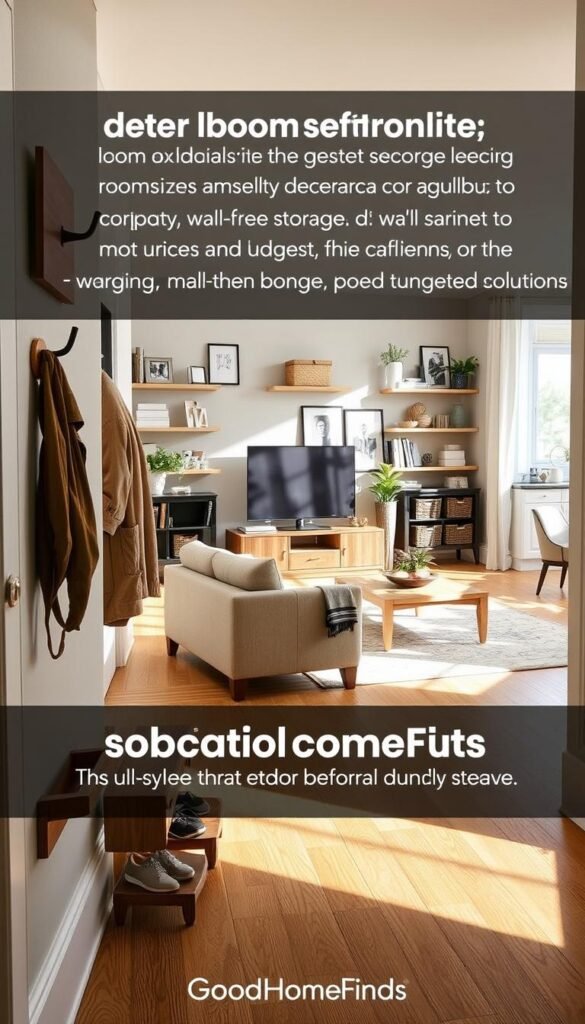
Kitchen
Use cabinet tension dividers for baking sheets and cutting boards. Add adhesive spice shelves near prep zones for easy reach. Magnetic fridge-side organizers reclaim counter space for real cooking.
Bathroom
Install adhesive corner shelves for daily toiletries and an under-sink tension bar to hang spray bottles. Over-door towel racks clear floor space and speed up routines.
Closets
Add a second rod for short-hang items and hanging organizers for folded goods. When overflow is real, a freestanding rail offers boutique-style display without altering walls. For more closet ideas see closet space solutions.
Entryway
Pair over-door hooks with a slim cube unit to house shoes and bags. Create a simple drop-zone routine: hang daily items, stash shoes low, and clear the zone each evening.
Apartments: studios, one-bedrooms, shared
Studios need zoning and portable privacy—use cubes, curtains, and rails. One-bedrooms can assign storage by room function. Shared units benefit from labeled, portable systems and door-based organizers for personal zones.
Budget picks
Under $25: tension rods (KXLIFE 2-pack ~$9.79), basic adhesive hooks/strips, simple drawer dividers, an over-door pocket organizer.
Under $50: sturdier over-door racks (~$26.99), a basic rolling cart, a small cube starter set, and premium adhesive shelf kits rated up to ~16 lbs when installed per instructions.
| Solution | Setup time | Durability | Best use |
|---|---|---|---|
| Adhesive | Fast | Moderate | Smooth walls; lightweight shelves and hooks |
| Tension | Quick | Good if fitted | Closets, cabinets, under-sink |
| Over-door | Quick | High (door-dependent) | Bathrooms, pantries, bedrooms |
| Freestanding | Longer | Highest | Studios or no-good-wall situations |
Protect your deposit: keep loads under rated weight, avoid textured paint for adhesive installs, prep with rubbing alcohol, allow ~24 hours to cure, and remove tabs by pulling straight down slowly. Use gentle heat if needed.
Conclusion
Close with a compact plan: pick one small area, install a single renter-friendly solution, and use it for a few days to see how it fits your daily living.
Prep the surface with rubbing alcohol, allow the cure time listed on the package, and photograph the wall before and after. Photos help with landlord questions and protect your security later.
Keep maintenance simple: weekly wipe-downs in kitchens and baths, monthly check of tension rods, and a quarterly declutter of over-door pockets. Remove adhesive by pulling tabs straight down and use gentle heat for any residue.
Decor tip: build a tiny photo collage with removable putty or choose one lightweight piece that elevates the look without adding holes.
Match the solution to the surface and load, stay practical, and focus on what you will actually use every day. That is the best way to make small-space storage work in your home.